

Run, Jesus, Run! stands out as an action indie casual title built around short, reflex-driven races drawn from biblical stories. Players guide a retro-styled Jesus through platforming segments where quick movement and timed miracles determine success. The experience blends simple keyboard or controller inputs with chaotic events that can alter the path, creating sessions that reward timing and adaptability over long campaigns.
Gameplay
Core movement relies on left and right controls to navigate side-scrolling stages filled with obstacles and opportunities for divine intervention. Spacebar or equivalent inputs trigger miracles that clear hazards or advance progress, such as parting waters or summoning aid. Sessions emphasize speed and precision because each race lasts only moments, forcing players to react instantly to shifting conditions. In stream setups, external inputs from viewers introduce additional variables like falling objects or sudden environmental changes that demand split-second adjustments.
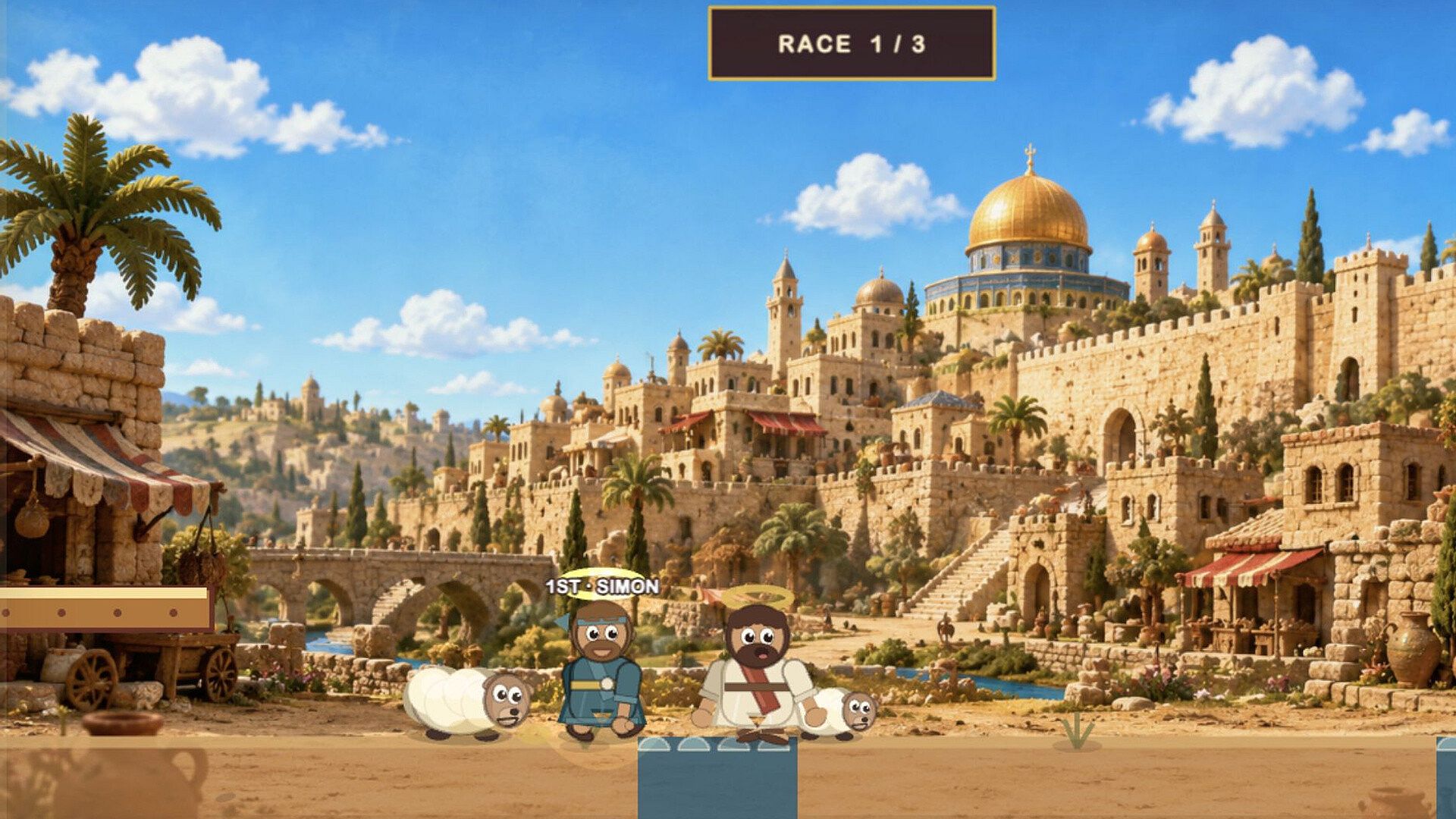
The visual style uses chunky pixel art that echoes classic platformers while depicting scenes such as wilderness trials, mass feedings, and storms at sea. Success in individual runs tallies inspired followers, feeding into larger match outcomes. This loop keeps rounds brisk and repeatable, suiting both solo practice and group play where reactions compound across multiple participants.
Game Modes
Party Mode supports up to ten players on a shared screen. Participants connect phones to the same network via a displayed QR code, turning browsers into controllers without extra apps. Everyone races together, competing to rack up the highest score through accurate navigation and miracle use before advancing to later stages.
Solo Run targets livestream creators. The player controls an apostle with mouse and keyboard while chat commands trigger in-game events. These include stampeding sheep, raining fish, swarms of locusts, rising Lazarus figures, summoned apostles, waves of Holy Water, and protective shields that can swing momentum. The setup turns audience participation into direct gameplay influence, extending the race with unpredictable biblical disasters.
Final Judgment follows three completed races. The top scorer from Party Mode or the solo runner faces off against Jesus in a best-of-three series of one-on-one battles. Each bout tests direct confrontation skills, with the first to secure two wins claiming victory and settling the overall match.
Streaming Integration
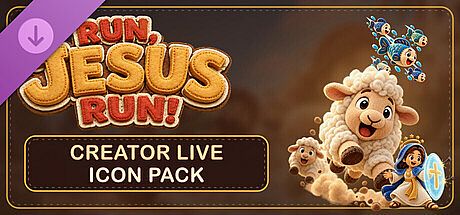
Creators benefit from built-in tools that map viewer actions to on-screen effects during Solo Run sessions. The accompanying Creator Live Icon Pack supplies ten transparent 1024 by 1024 PNG icons in a soft, playful style. These cover key elements from both the race phases and Final Judgment, such as sheep, fish, locusts, amphorae, Lazarus, apostles, God mana, summoned apostles, tsunami or Holy Water, and Mary's shield. Streamers drop the icons into overlays, event panels, or custom scenes to visually represent incoming chat triggers without disrupting the core display.
The pack focuses on recognizable moments that match the game's event system, allowing overlays to highlight exactly when a viewer-activated miracle or hazard appears. This keeps the broadcast clear and engaging for audiences following along with the biblical chaos unfolding in real time.
Is It Worth Playing?
Run, Jesus, Run! appeals to players who enjoy quick, competitive sessions with a humorous biblical theme and strong emphasis on group or audience interaction. The party format works well for local gatherings where phones serve as easy entry points, while the solo stream mode adds a layer of live entertainment that grows with chat size. Those seeking longer single-player campaigns or traditional progression systems may find the bite-sized structure limiting, but the design prioritizes repeated short bursts that fit casual play or content creation schedules. The current build supports both local multiplayer and interactive streaming out of the box, making it a specialized choice for groups or broadcasters looking for lighthearted, reflex-based competition rather than deep narrative or simulation elements.