

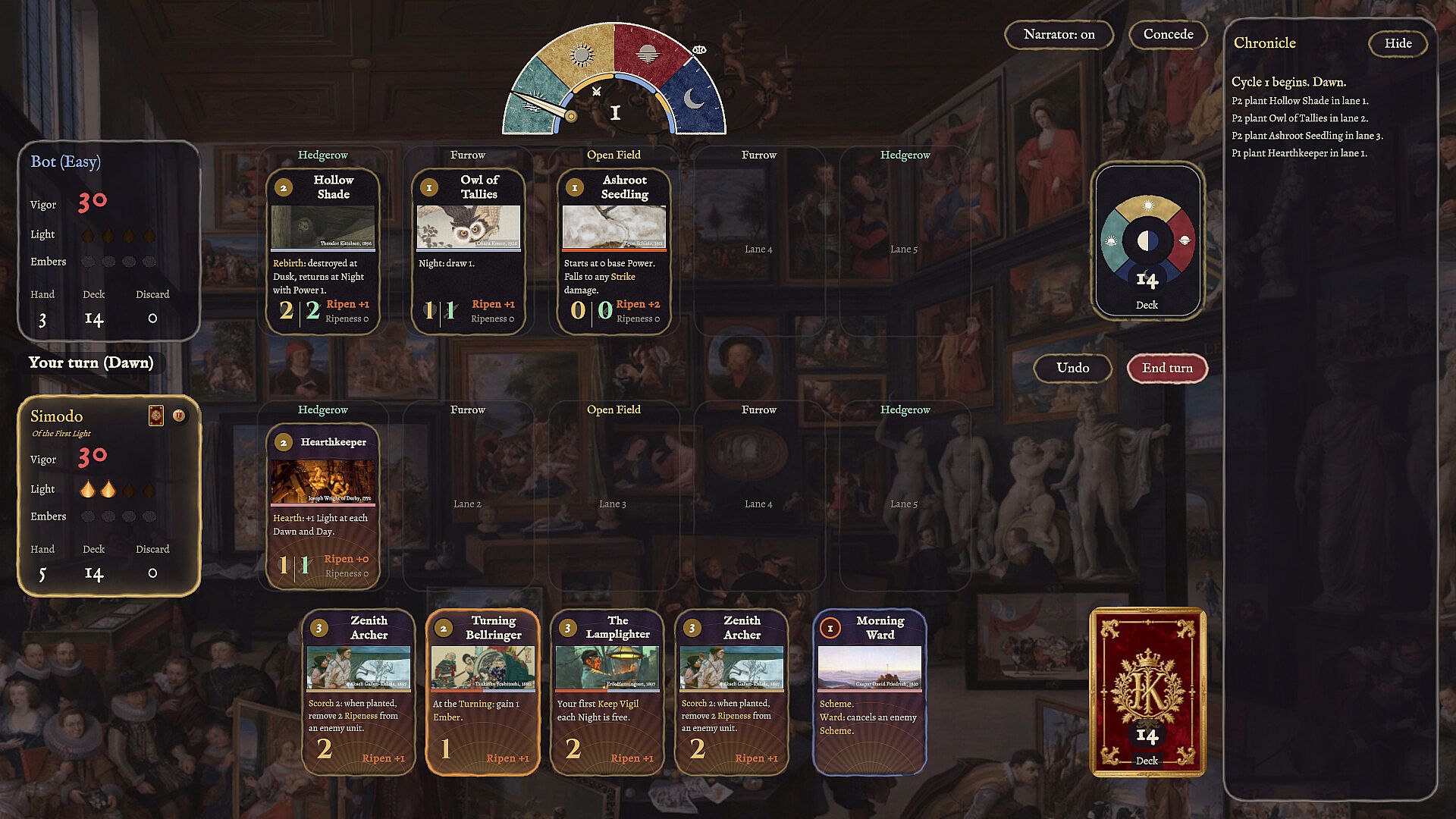
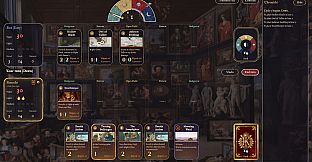
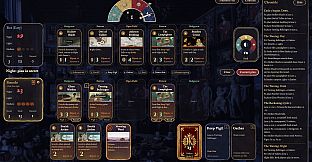
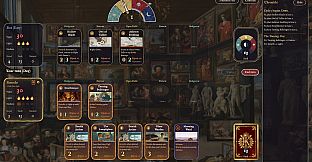
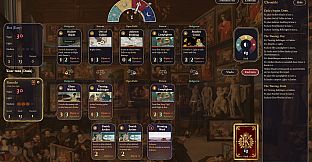
The Gloaming Hand is a free-to-play strategy card game for PC that pits two players against each other in matches shaped by a turning sky. Matches unfold across five lanes with four repeating phases that alter card values and available actions. Units planted early gain strength as time advances, while secret planning at night introduces bluffing and misdirection. The game emphasizes straightforward core rules supported by four basic actions, with deeper strategy emerging from the cards themselves.
Gameplay
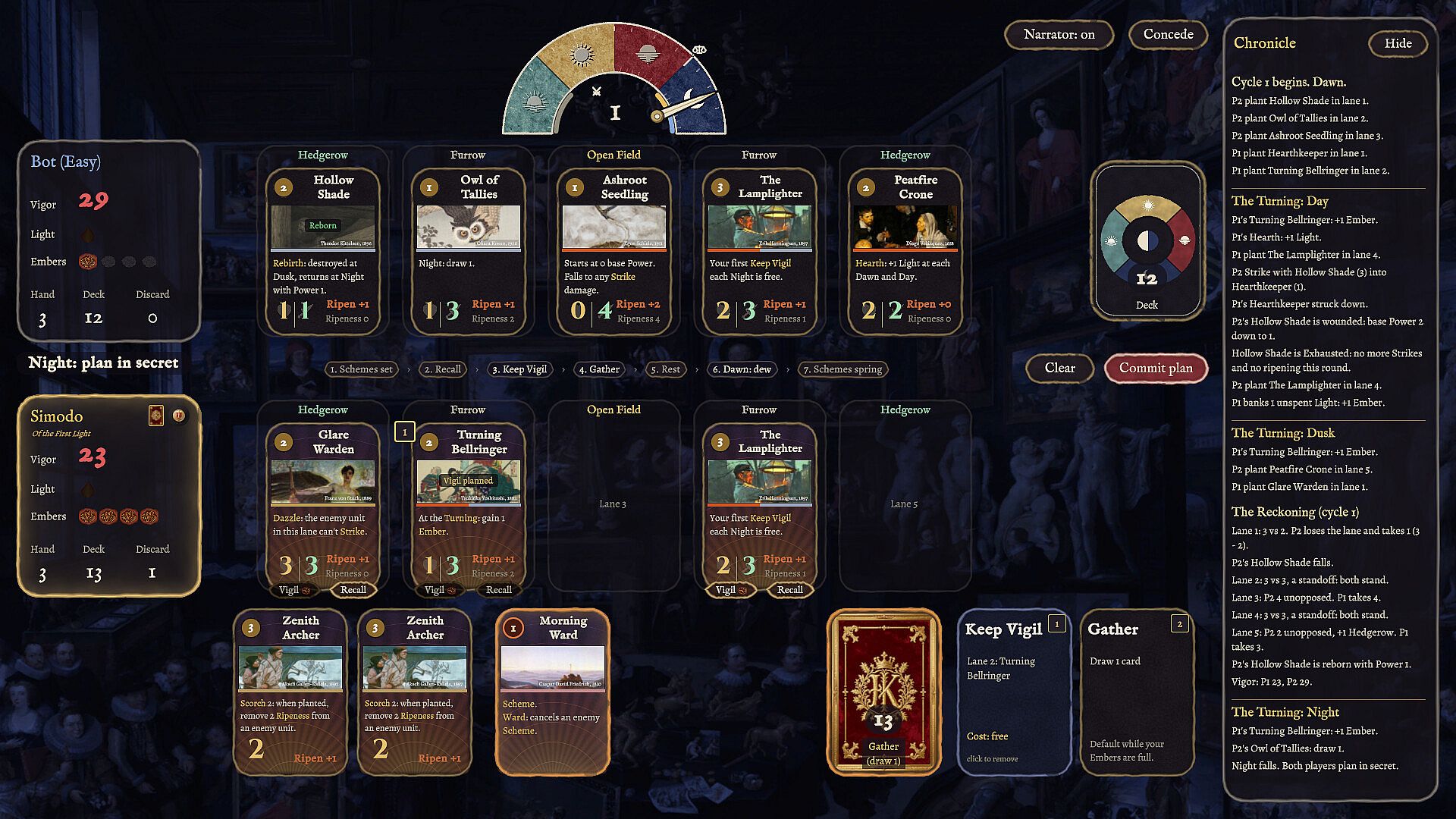
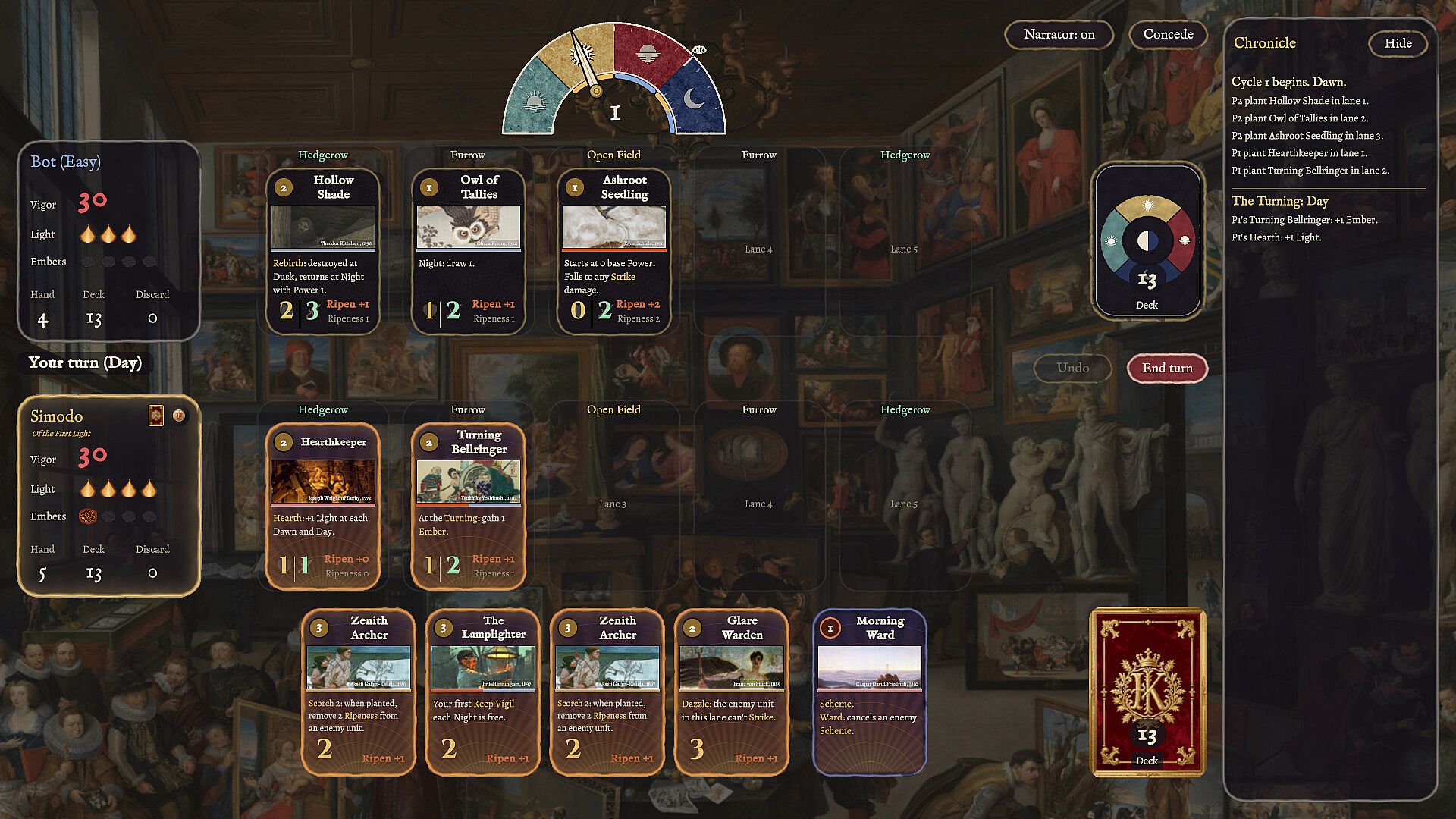
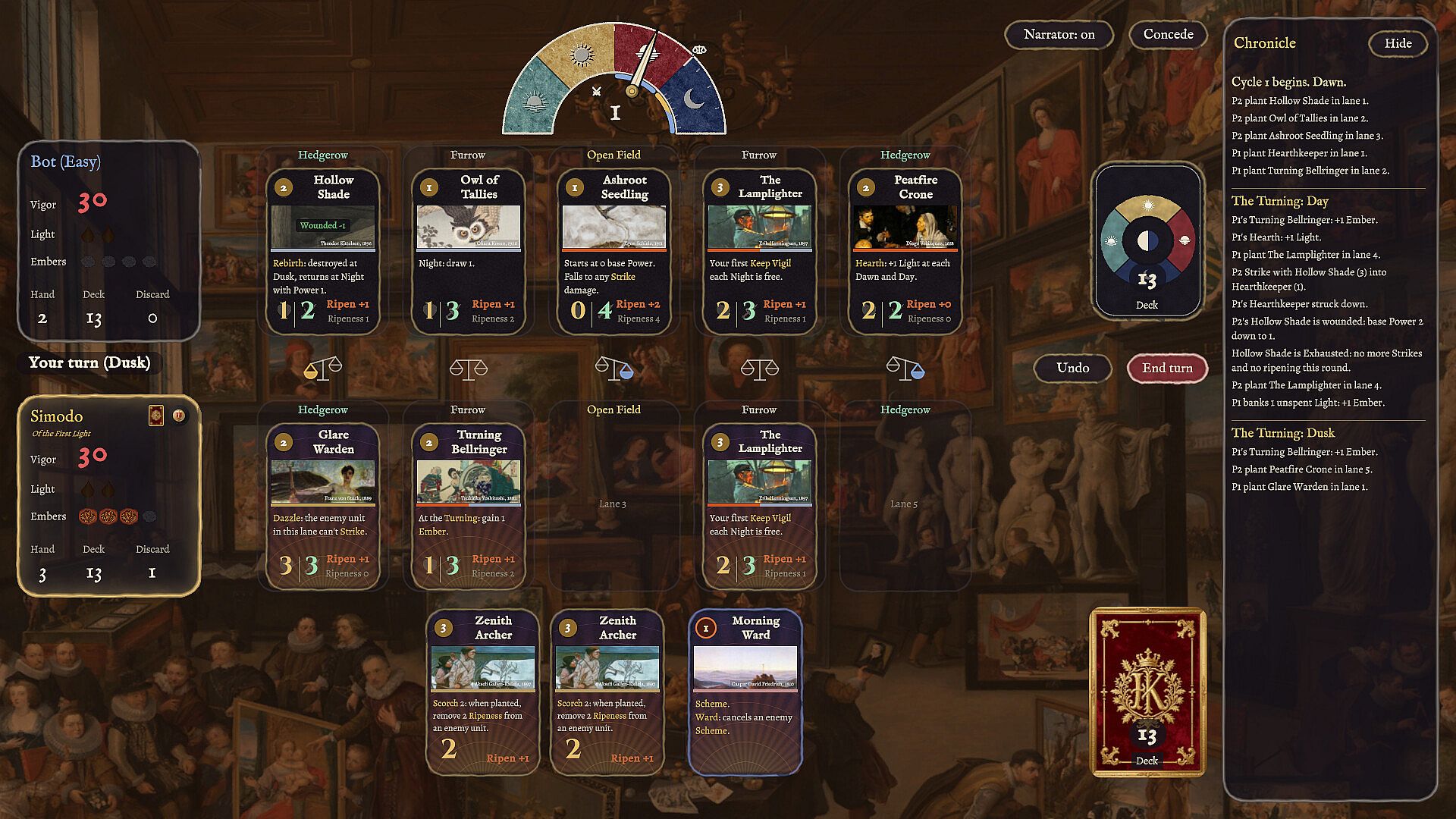
Players plant units during Dawn and watch them mature through Day, when striking becomes possible. Dusk triggers the Reckoning, forcing simultaneous lane resolutions across the board. Night shifts focus to hidden decisions where each side can protect a key unit, retrieve one from the field, or deploy a concealed Scheme that activates later. The sundial mechanic ensures every card performs differently depending on the current hour, rewarding timing and adaptation over raw power. Four basic actions handle all interactions, keeping the ruleset accessible while card text supplies the variety and complexity.
Matches follow a consistent four-phase cycle repeated over the course of play. Early planting sets up long-term growth, mid-phase strikes exploit temporary advantages, and late-phase reckonings resolve multiple lanes at once. Night planning adds a layer of information asymmetry that can swing outcomes through well-timed bluffs or traps. The design keeps every participant on equal footing from the start, with the complete basic card set available immediately.
Game Modes
Ranked matches feed a single global leaderboard for competitive progression. Casual matches provide relaxed play without ranking pressure. Private matches allow games with friends under custom settings. Local two-player support on one PC enables offline sessions between two people sharing the same device. A narrated tutorial covers the full ruleset in a single guided match, supplemented by an in-game manual for quick reference.
Core Systems and Progression
Expansions introduce additional cards beyond the free basic set. These cards become available through direct purchase as complete collections, random packs, crafting systems, or trading on the community market. No gameplay advantage comes from spending, as the core roster remains fully accessible to every player. The structure supports ongoing collection without gating essential content behind paywalls.
Matches reward attention to phase timing and lane management. Units that ripen across multiple cycles can dominate later reckonings, while schemes placed at night create opportunities for surprise reversals. The five-lane layout encourages spreading resources while watching for concentrated threats that could overwhelm a single position during the reckoning phase.
Is It Worth Playing?
The game remains in development with a planned release in December 2026 and currently offers no user reviews or public play data. Its free-to-play model grants immediate access to the full basic card roster, removing common barriers found in similar titles. Cosmetic options such as the Patron of the Gloaming pack allow supporters to customize card backs, frames, board themes, badges, and titles without affecting balance or card access. Players seeking a one-versus-one card experience built around phase timing, growth mechanics, and hidden planning may find the upcoming release worth following through its wishlist or future launch. Those who prefer established competitive ladders or local play options will see those features confirmed in the final version.