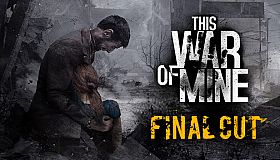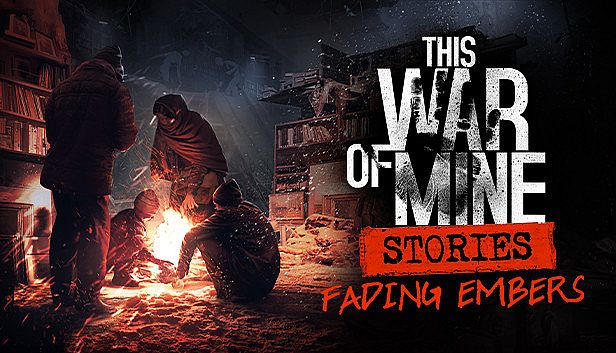



















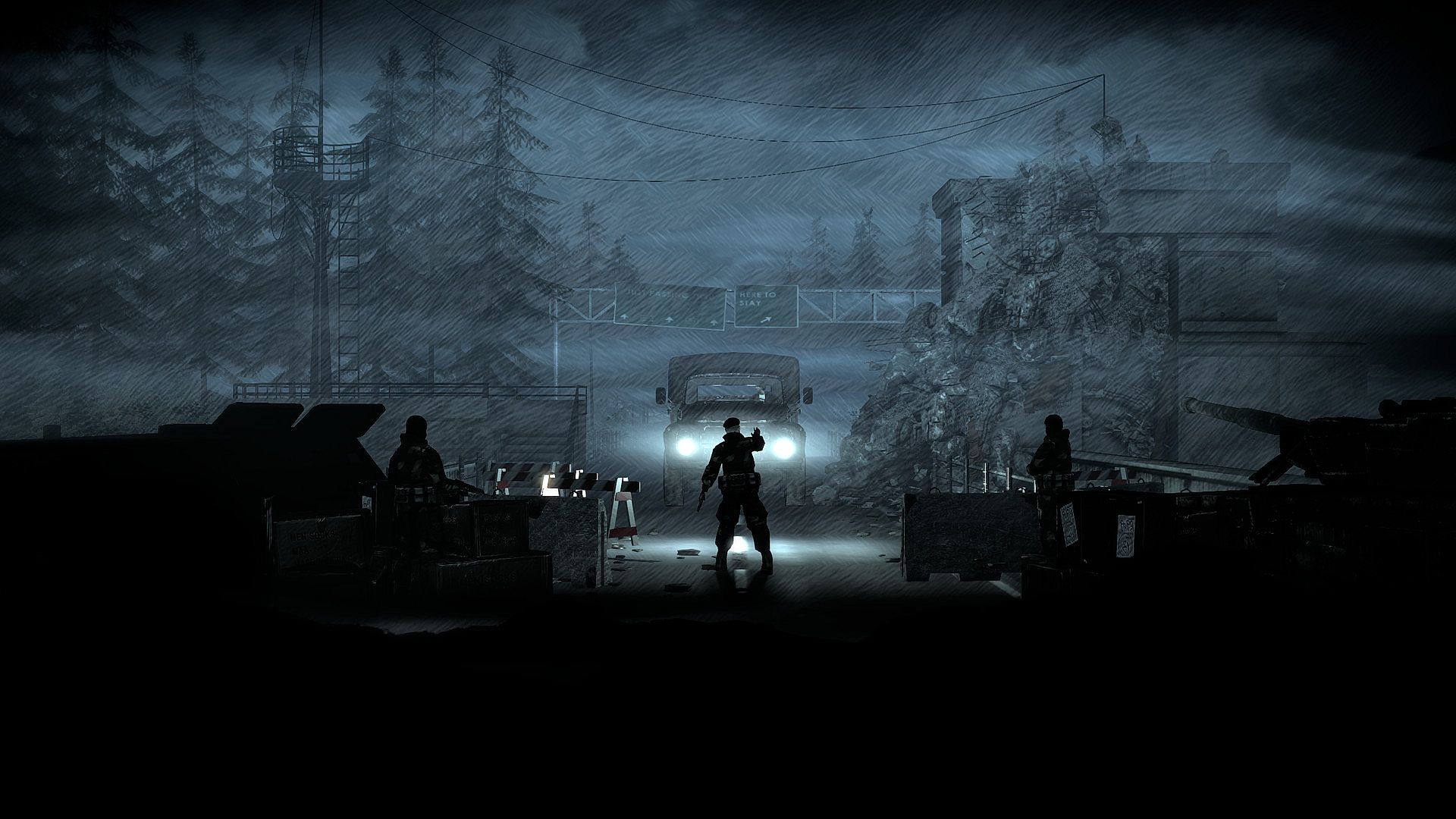
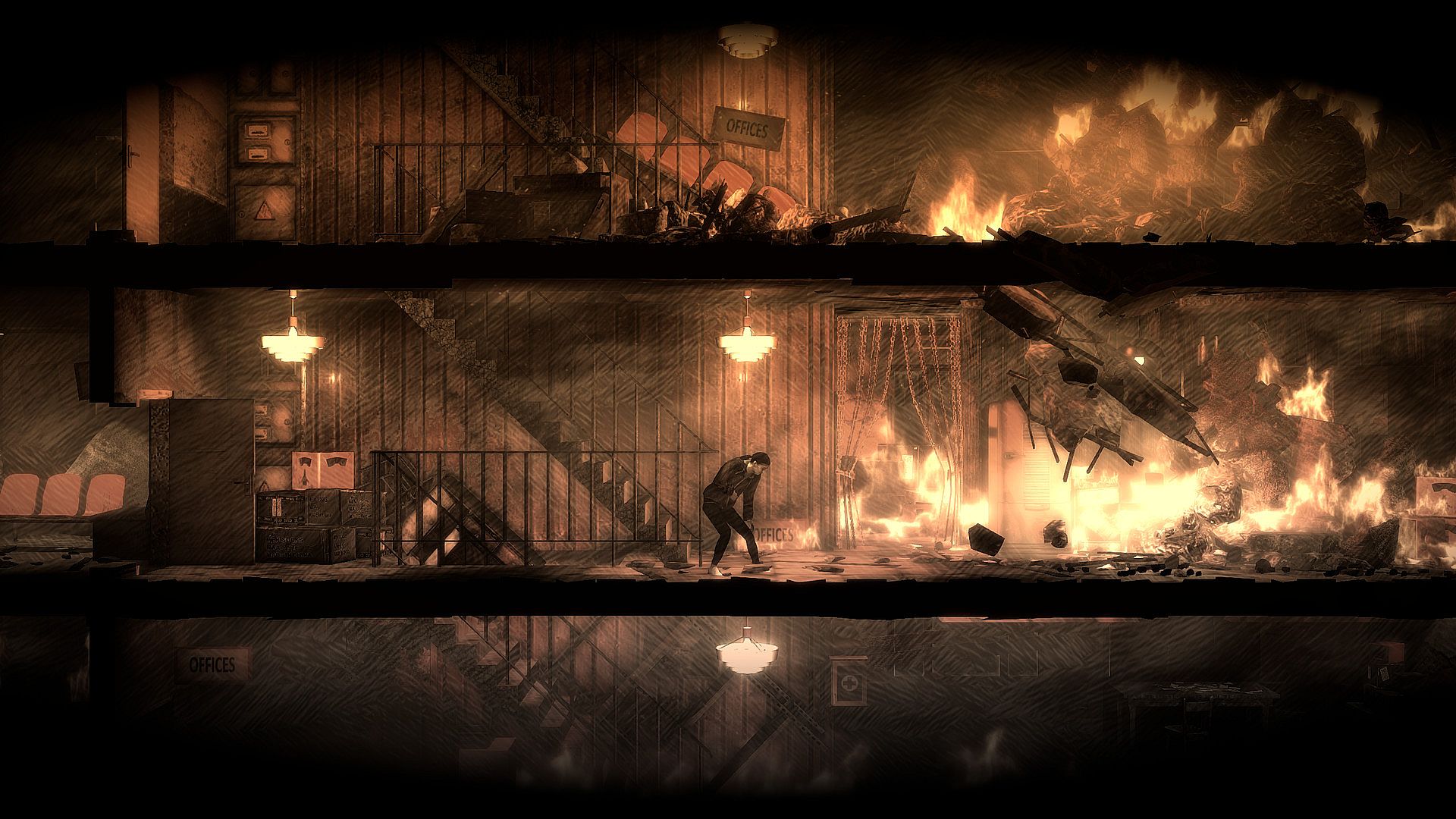
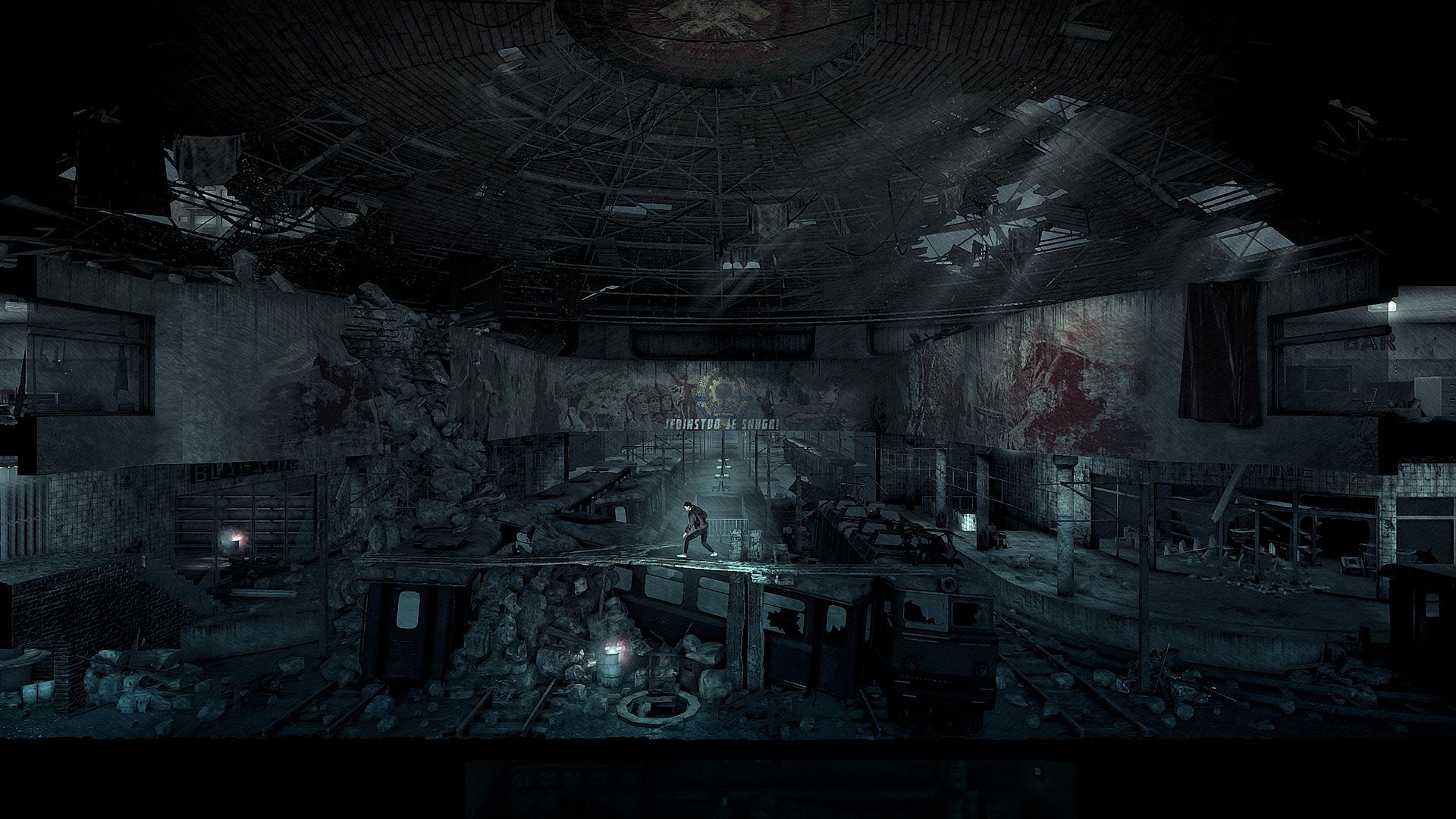
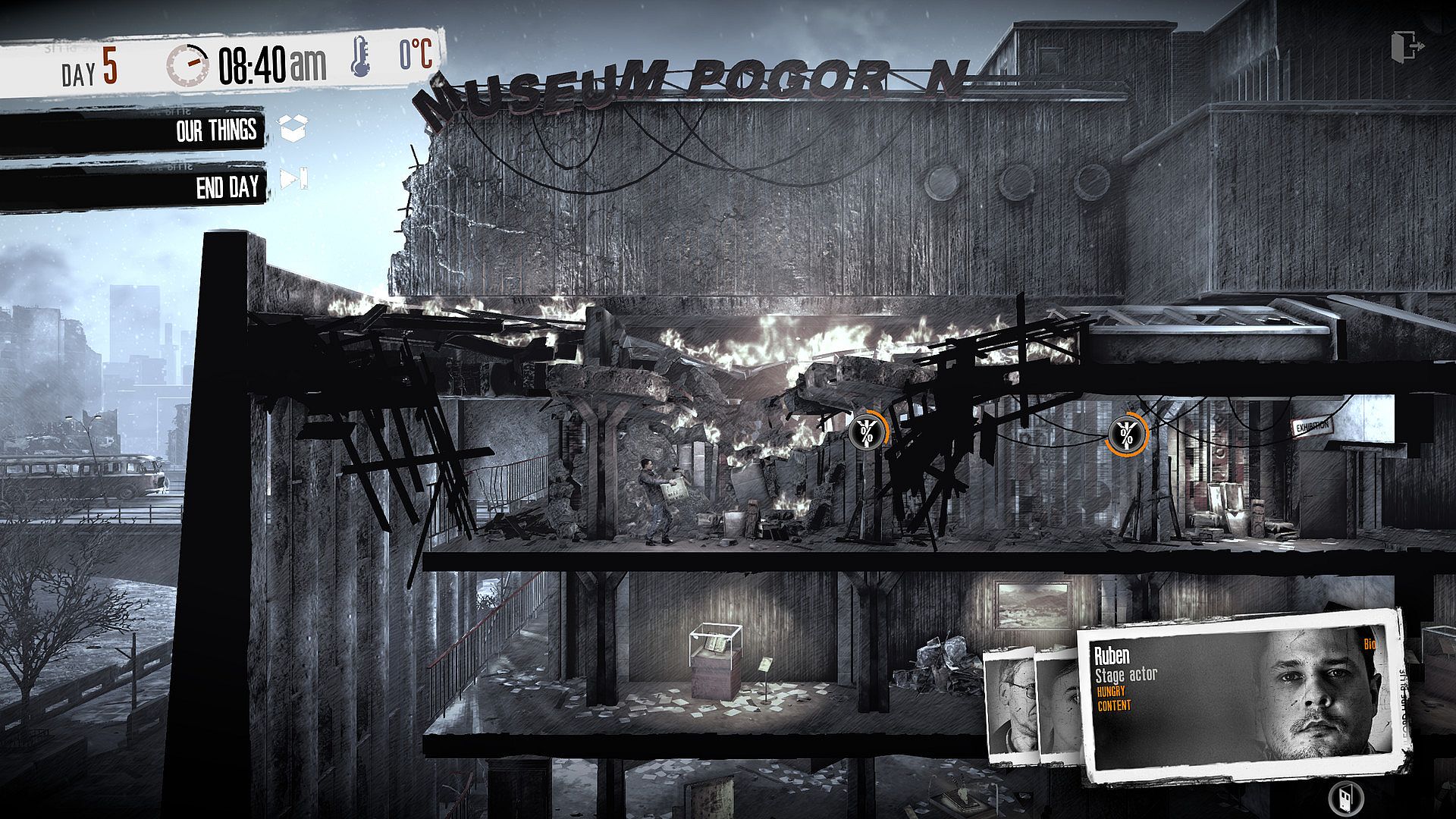
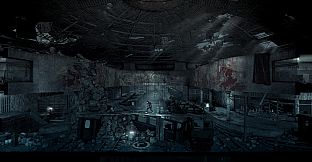
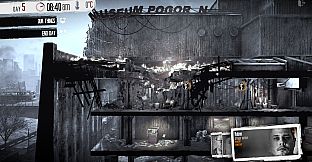
This War of Mine: Stories - Fading Embers (ep. 3) propose une expérience solo de simulation de survie dans la ville de Pogoren, ravagée par la guerre. Le joueur incarne Anja, confrontée aux choix entre la préservation du patrimoine culturel et les besoins immédiats des survivants. La gestion des ressources s'y mêle à une narration dont les embranchements dépendent des décisions prises face aux œuvres d'art et aux interactions avec les autres personnages.
Gameplay
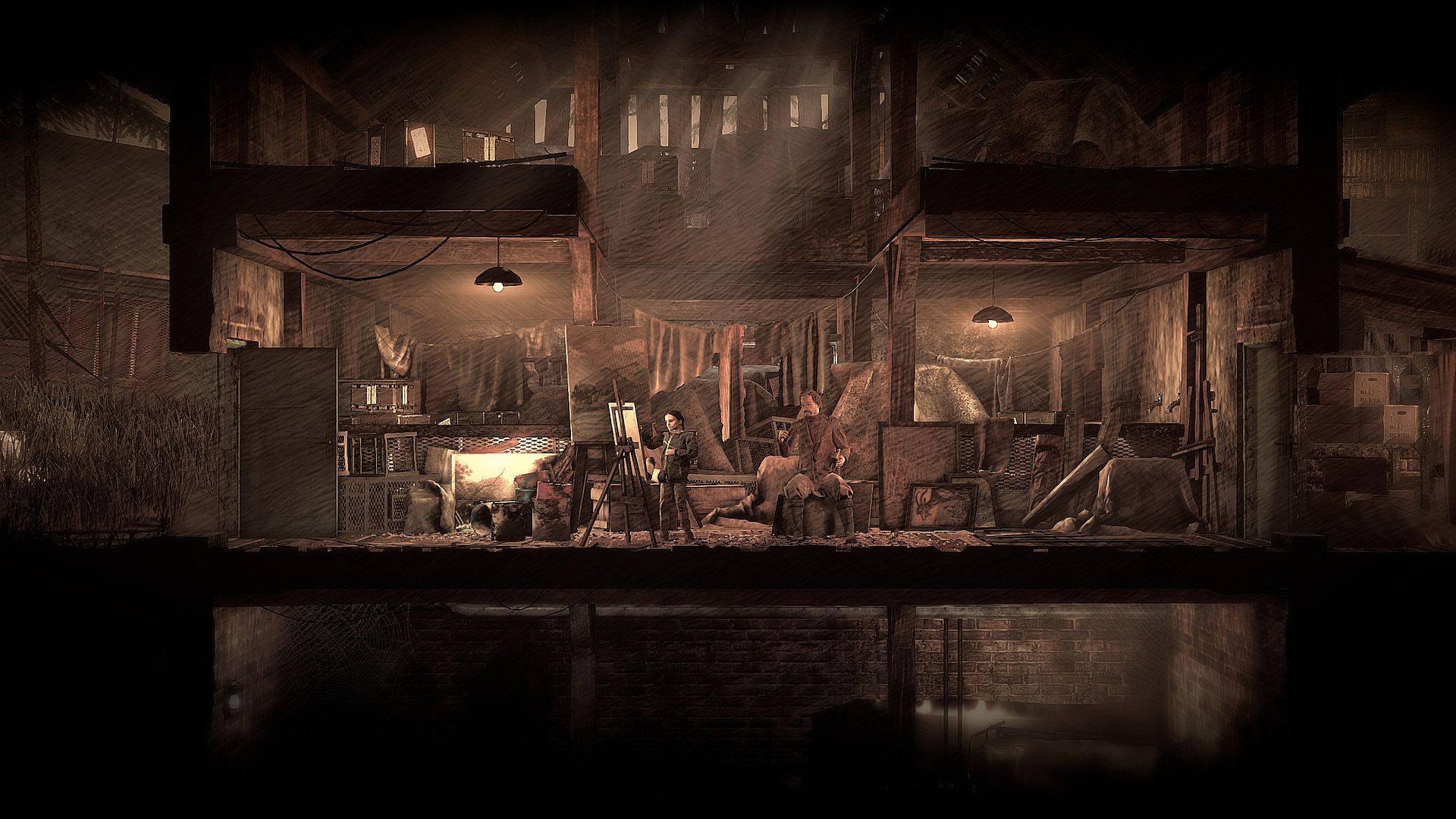
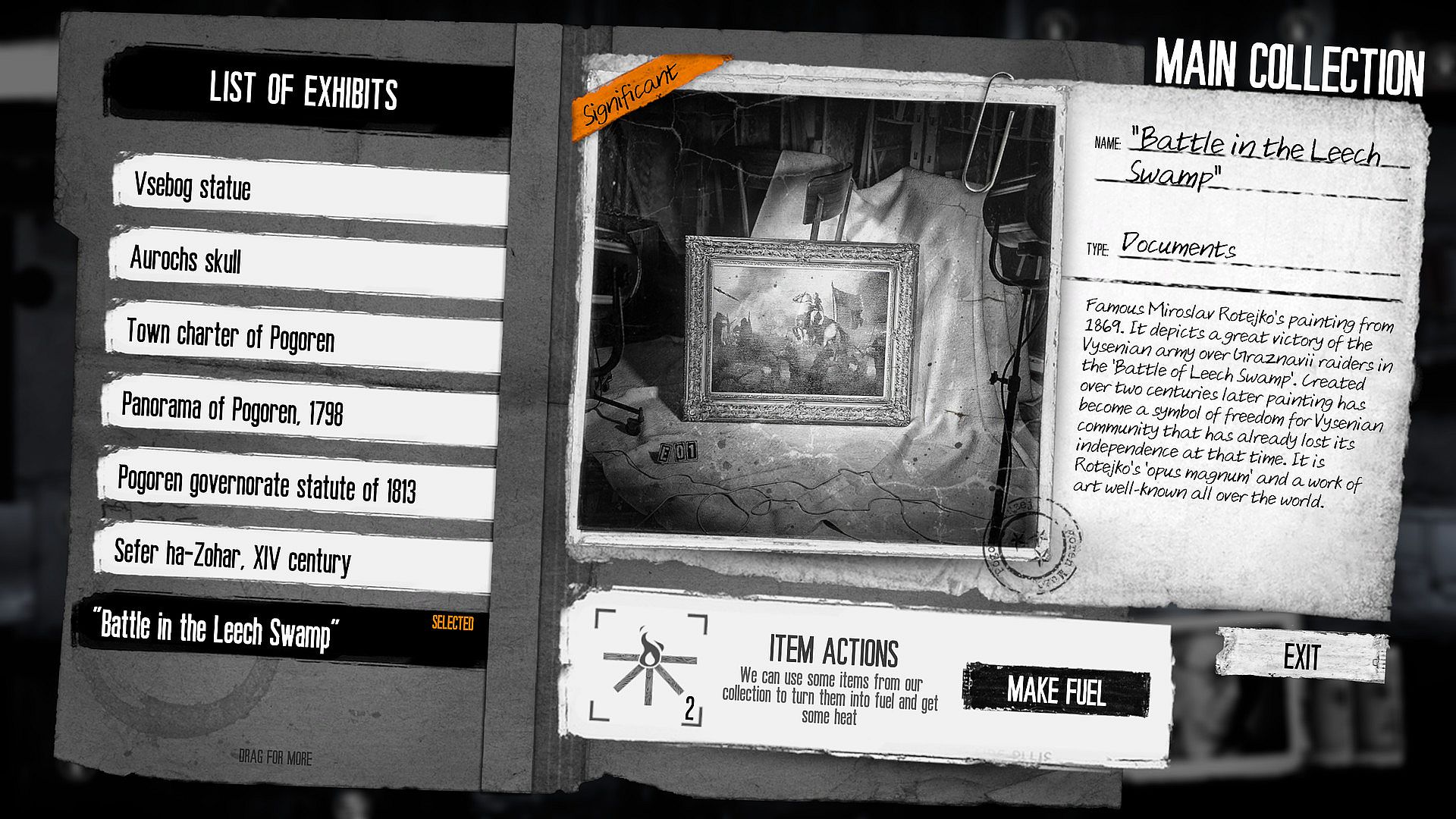
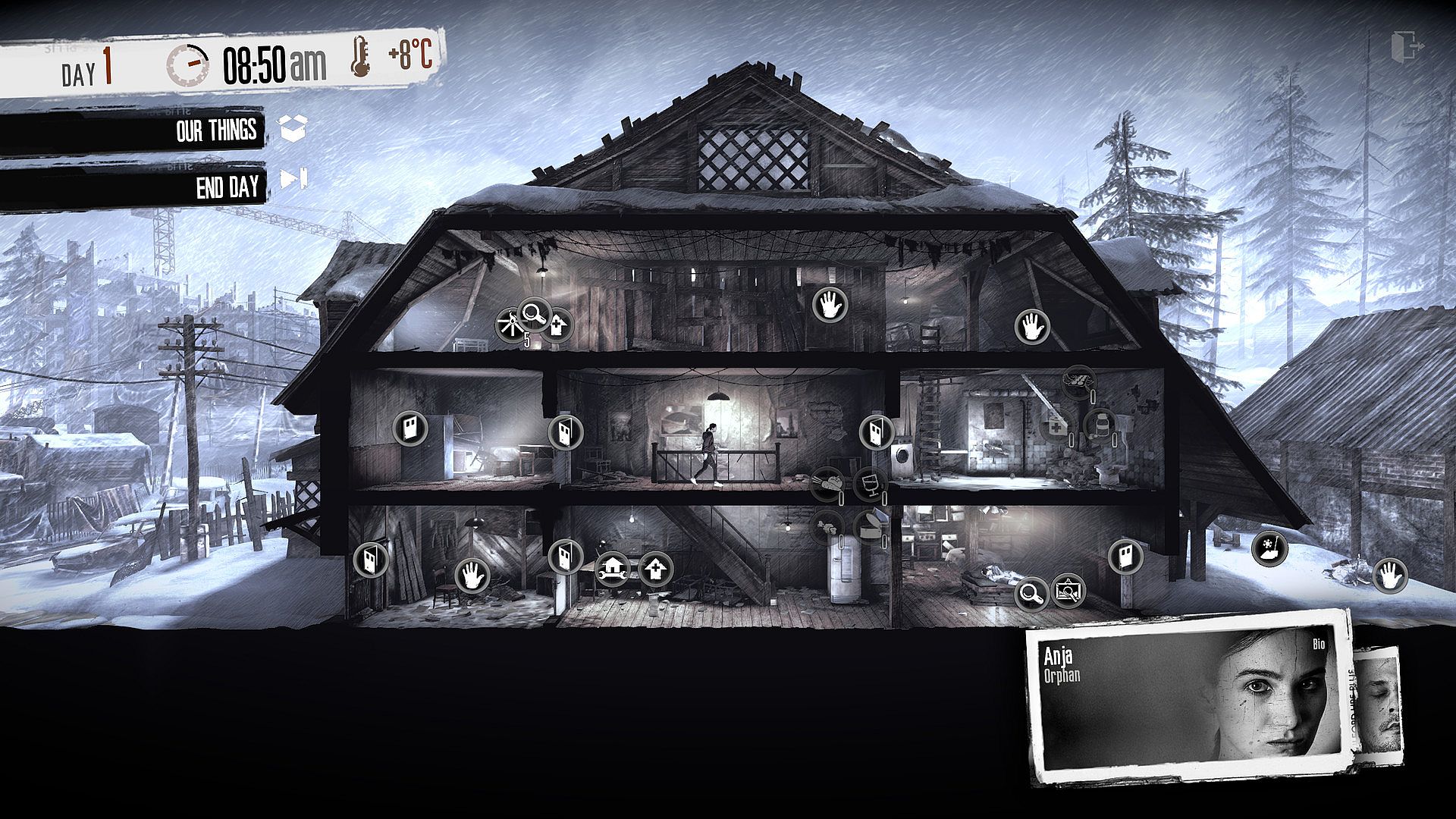
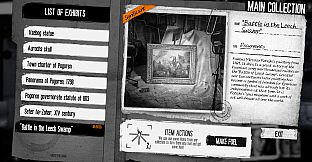
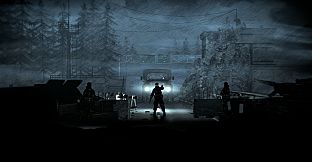
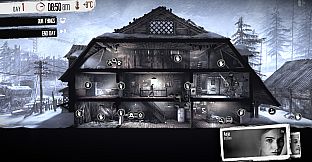
Chaque journée s'articule autour des tâches de survie habituelles : récupérer du matériel, entretenir l'abri et veiller au moral et à la santé des survivants. De nouveaux systèmes viennent enrichir cette boucle avec la collecte d'œuvres d'art, que les personnages doivent localiser et mettre en sécurité dans la ville et ses environs. Le joueur choisit alors de les conserver, de les échanger ou de les utiliser, influençant ainsi le déroulement de l'histoire et les ressources disponibles.
L'exploration s'étend à de nouveaux lieux et à deux abris supplémentaires, tandis que neuf emplacements du jeu de base bénéficient de mises à jour visuelles et structurelles. Un espace central permet de suivre l'évolution de l'histoire et des objets collectés sans interrompre le rythme des événements. Trois nouveaux survivants rejoignent l'équipe, chacun doté de traits spécifiques qui modifient la façon d'aborder les tâches et les rencontres.
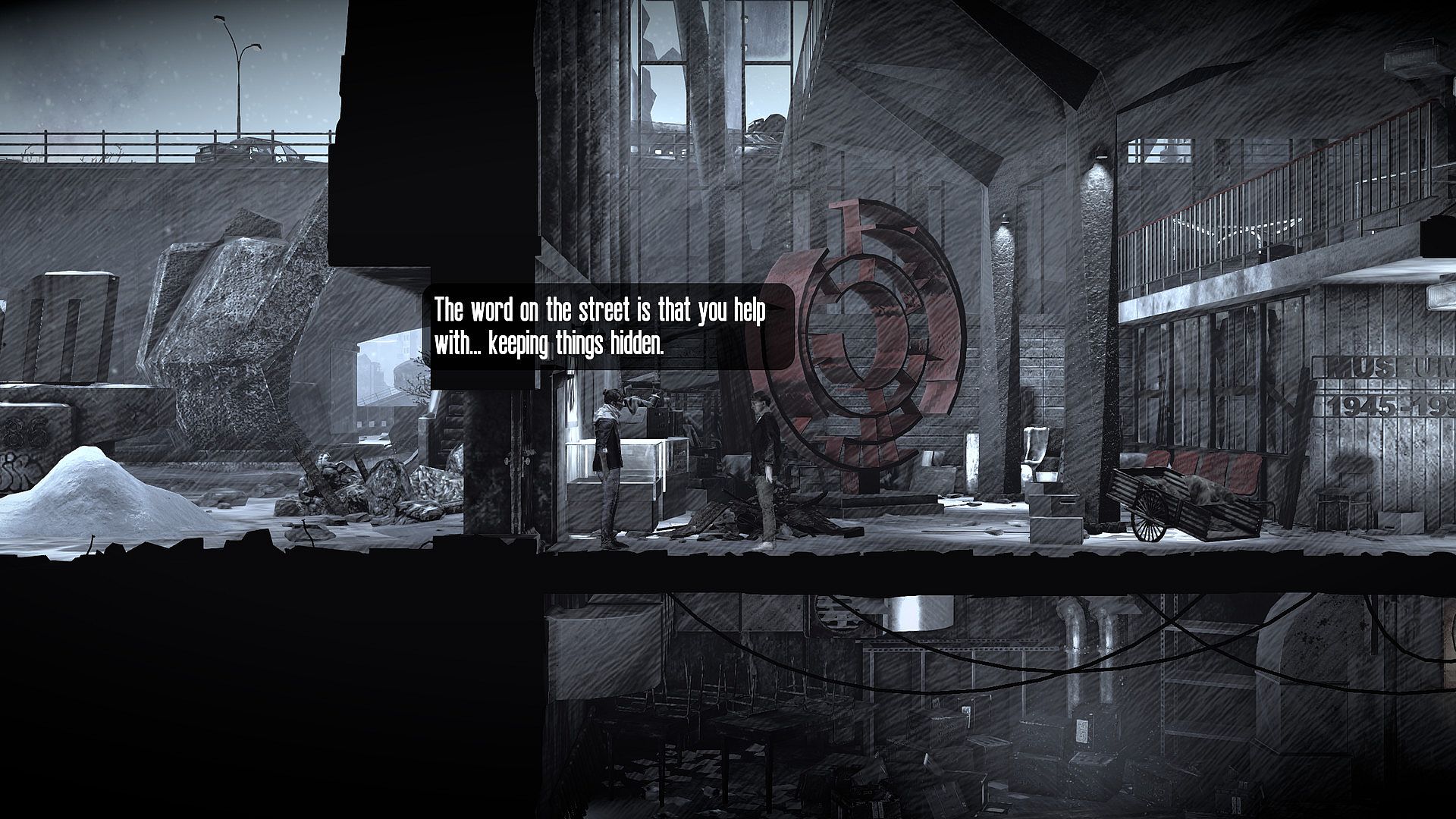
La narration non linéaire repose sur des dilemmes moraux liés au peuple vyseni et à ses traditions. Le sort des œuvres d'art devient le pivot de ces choix, modifiant les relations entre personnages et les événements ultérieurs.
Modes de jeu
Cette extension se présente comme un scénario narratif autonome centré sur Anja et son groupe. La progression suit un rythme quotidien où le joueur doit concilier exploration, entretien de l'abri et avancée de l'histoire à travers ses choix. Plusieurs fins sont possibles selon la manière dont les objets culturels sont traités et les interactions avec les habitants de Pogoren. Aucune extension ne propose de mode compétitif ou coopératif : l'expérience reste exclusivement solo et met l'accent sur la prise de décision personnelle.
Quelques mécaniques additionnelles viennent soutenir l'atmosphère, notamment de nouvelles compositions musicales qui accompagnent les moments clés.
Story and Themes
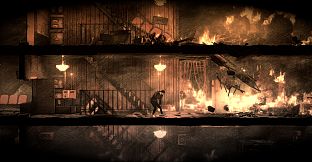
Le cœur du récit oppose la sauvegarde du patrimoine artistique à la survie physique des individus dans des conditions extrêmes. Anja porte un fardeau personnel qui influence sa perception des dilemmes rencontrés. Les rencontres avec de nouveaux personnages offrent un éclairage sur la culture vyseni, enrichissant le contexte au-delà des préoccupations purement vitales.
Chaque décision a des répercussions à court et long terme sur le groupe et les objets collectés, donnant naissance à un arc narratif distinct centré sur le conflit entre préservation et pragmatisme.
Vaut-il le coup ?
Cette extension s'adresse aux joueurs qui apprécient une narration réfléchie et une atmosphère soignée dans un cadre de survie. La gestion des œuvres d'art et les multiples issues possibles apportent une dimension supplémentaire aux mécaniques habituelles. Ceux qui recherchent une action rapide ou une grande variété de rejouabilité en dehors des branches narratives risquent de trouver le rythme posé et introspectif.
Disponible sur PC via les principales plateformes numériques, le contenu s'intègre directement au jeu de base. La réception souligne l'originalité de son approche culturelle, même si certaines branches peuvent sembler limitées par les ressources disponibles. L'extension conviendra particulièrement aux joueurs sensibles aux arbitrages moraux dans un contexte de guerre réaliste.