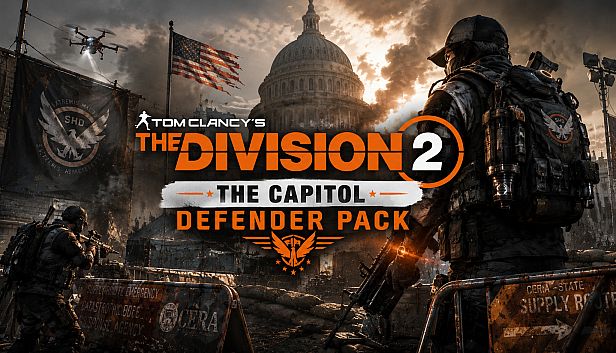


Tom Clancy's The Division 2 est un shooter tactique en monde ouvert à la troisième personne qui mêle combats en couverture et systèmes de progression RPG. Dans un Washington post-pandémie, les joueurs incarnent un agent de la Division chargé de rétablir l'ordre face aux affrontements entre factions rivales. L'expérience repose sur le butin, la personnalisation des équipements et des défis qui récompensent le positionnement et le jeu coordonné, en solo comme en escouade.
Gameplay
Les combats se déroulent dans des fusillades intenses où il faut gérer sa position, utiliser des compétences utilitaires et s'adapter en temps réel aux tactiques ennemies. Chaque arme possède des caractéristiques propres qui influencent le recul, la cadence de tir et l'efficacité selon la distance, incitant à tester différents équipements au fil des missions.
La progression s'articule autour du butin et du craft d'équipements de qualité pour façonner son agent. Les spécialisations enrichissent les options de combat avec des rôles distincts : tireur d'élite à longue portée, expert en démolition ou spécialiste de la survie. Chacune modifie l'arbre de compétences et les priorités de jeu, offrant des approches variées face aux mêmes situations.
Le monde ouvert réagit aux actions du joueur via des conditions météo changeantes et des déplacements de factions qui modifient le contrôle des districts. Cette dynamique crée un environnement persistant où l'exploration rapporte des ressources tout en exposant les agents à des menaces évolutives.
Modes de jeu
La campagne principale propose une série de missions scénarisées qui guident les joueurs dans la reconquête des lieux stratégiques de Washington. Ces missions privilégient l'exécution tactique et peuvent se jouer seul ou avec des alliés.
Le mode coopératif accueille jusqu'à quatre agents, permettant aux équipes de combiner leurs spécialisations et de partager leurs ressources face à des défis adaptés. La synergie entre les rôles devient indispensable pour mener à bien les objectifs les plus difficiles disséminés dans le monde ouvert.
Les affrontements PvP offrent un cadre compétitif où les agents s'affrontent directement, testant leurs builds et leur coordination dans des batailles structurées en dehors de la campagne. Ces modes s'intègrent à la boucle de progression en distribuant des récompenses qui alimentent l'équipement et les spécialisations.
Endgame Content
Une fois le niveau maximum atteint, les joueurs accèdent à des missions à haut risque, des événements mondiaux et des batailles PvP qui continuent de mettre à l'épreuve les builds optimisés. Des activités dynamiques apparaissent régulièrement sur la carte, obligeant les agents à réagir aux pressions des factions et aux objectifs saisonniers qui apportent de nouvelles récompenses et des couches de difficulté supplémentaires.
Les saisons proposent des mises à jour régulières qui renouvellent les défis et ajoutent du contenu sans achat supplémentaire pour les fonctionnalités principales. Cette structure maintient l'intérêt de l'endgame grâce à des événements récurrents et des ajustements d'équilibrage qui préservent la variété pour les joueurs réguliers.
Vaut-il le coup ?
Le jeu convient aux joueurs qui apprécient les shooters méthodiques à la troisième personne associant progression par le loot et éléments coopératifs ou compétitifs. Son combat tactique et sa personnalisation des builds offrent de la profondeur à ceux qui investissent du temps dans l'optimisation de leur équipement et de leurs spécialisations, tandis que le monde persistant s'adapte aussi bien aux sessions courtes qu'aux campagnes plus longues.
Le soutien saisonnier et les extensions ont prolongé la durée de vie bien au-delà de la sortie initiale, avec des mises à jour actives jusqu'en 2026. La réception critique au lancement a été globalement positive, saluant le gunplay affiné et la quantité de contenu, tandis que le modèle live-service a conservé une communauté fidèle centrée sur les activités d'endgame.
Les joueurs en quête d'un récit solo ou d'une action rapide sans personnalisation poussée risquent de trouver l'accent mis sur les tactiques de couverture et la coordination d'escouade moins adapté. Pour les amateurs de looter-shooters qui valorisent la préparation et le travail d'équipe dans un monde ouvert évolutif, l'expérience reste une option solide sur PS4 grâce à ses systèmes éprouvés et ses ajouts de contenu réguliers.