

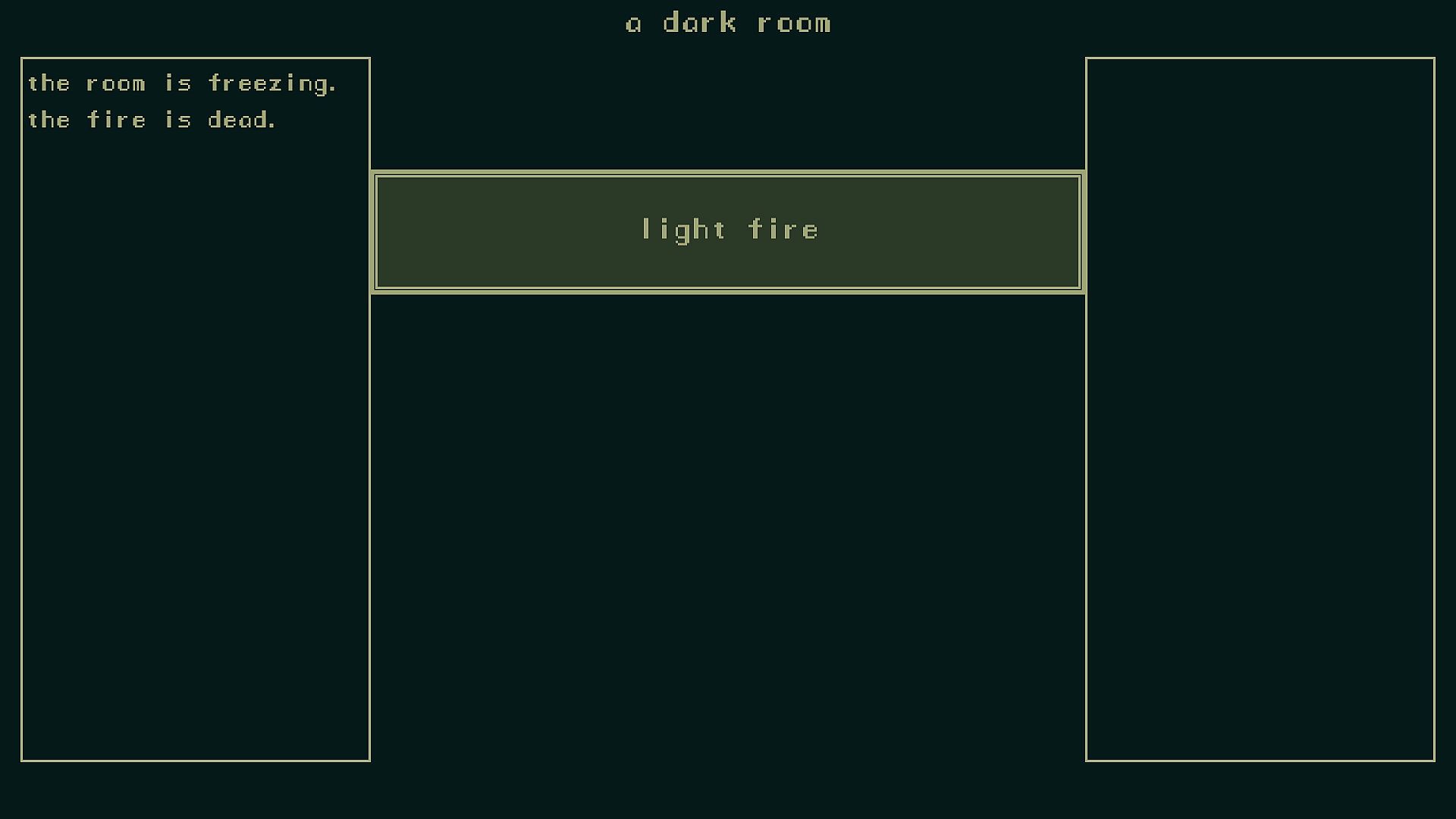
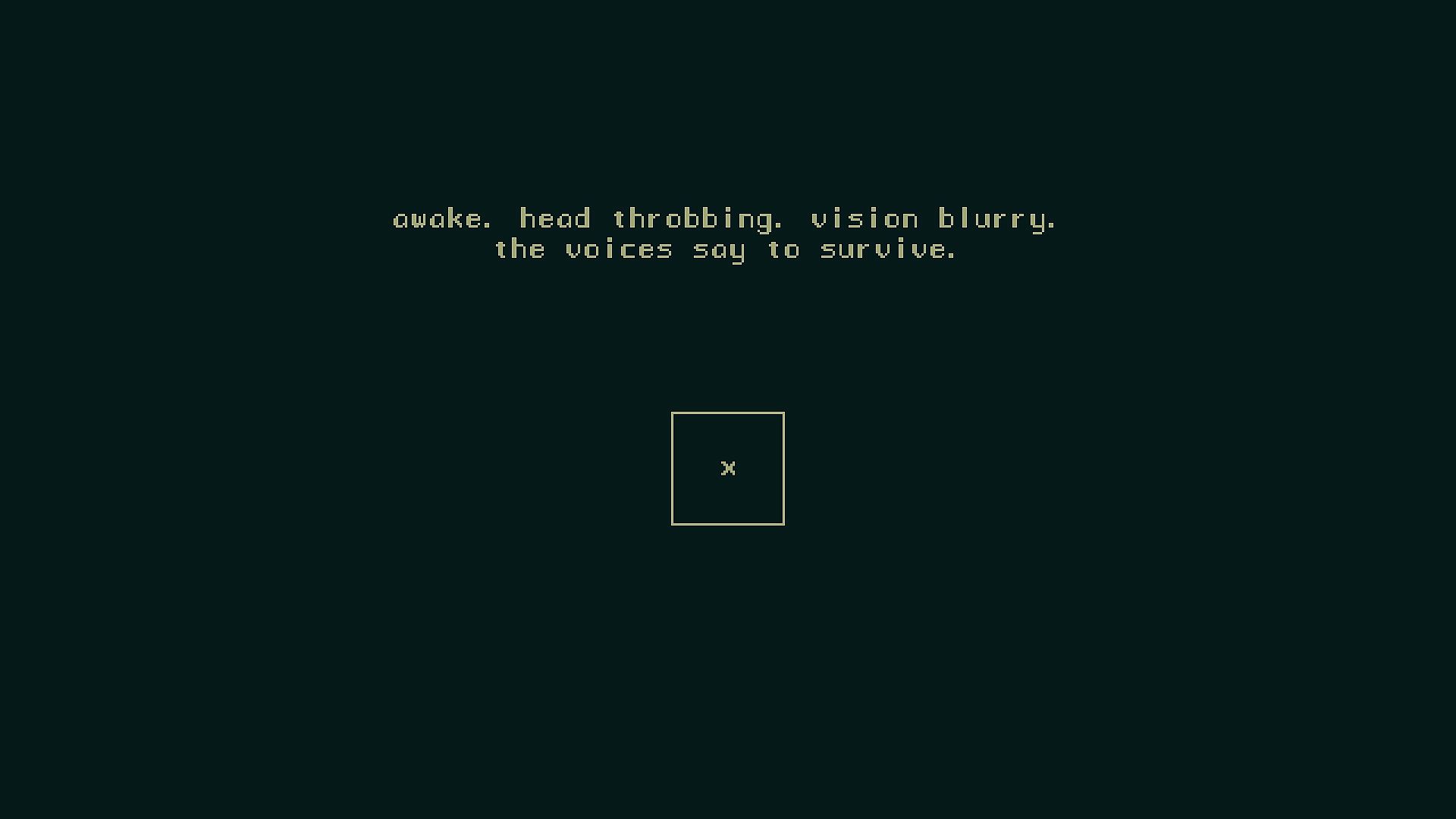
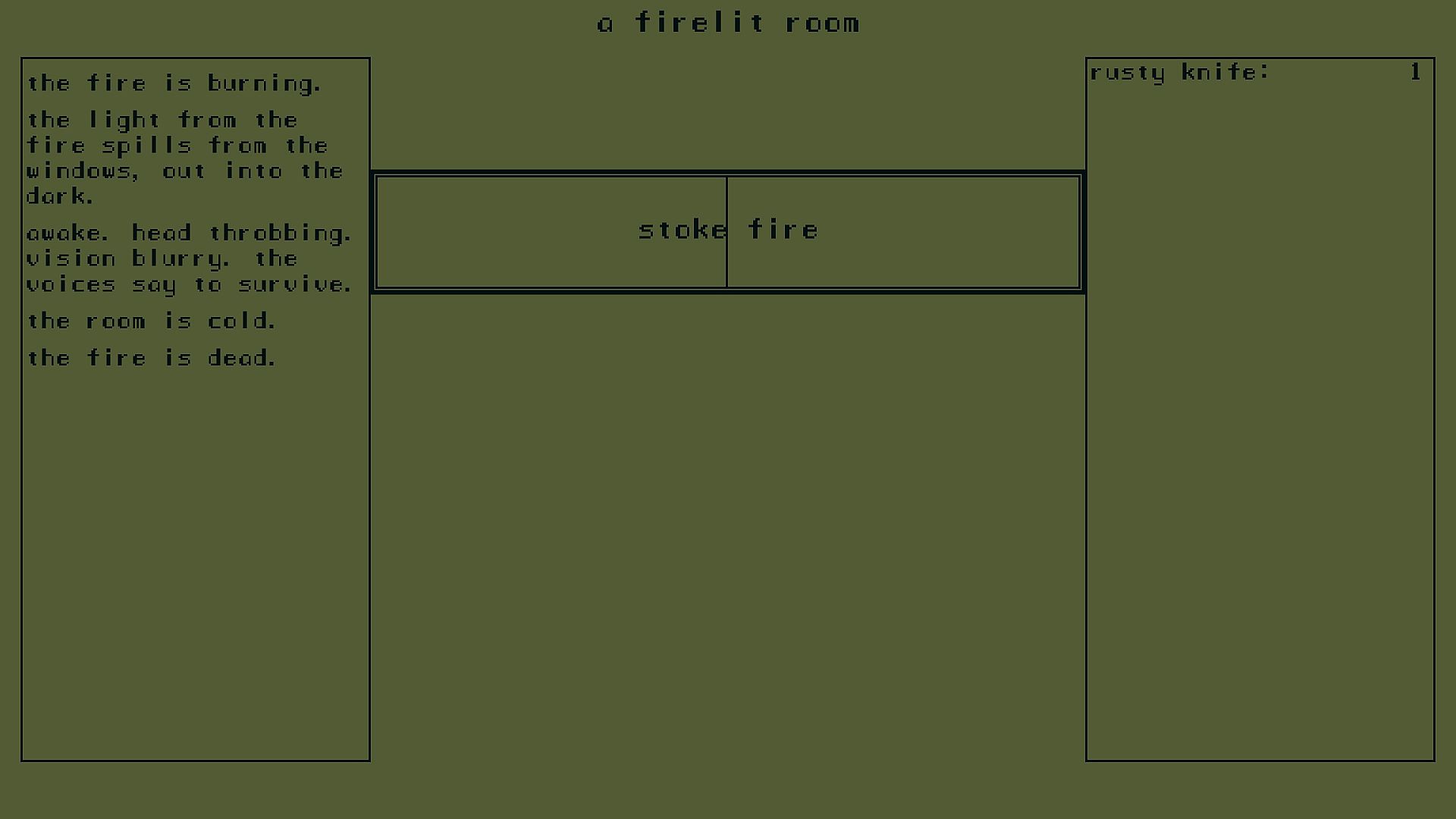
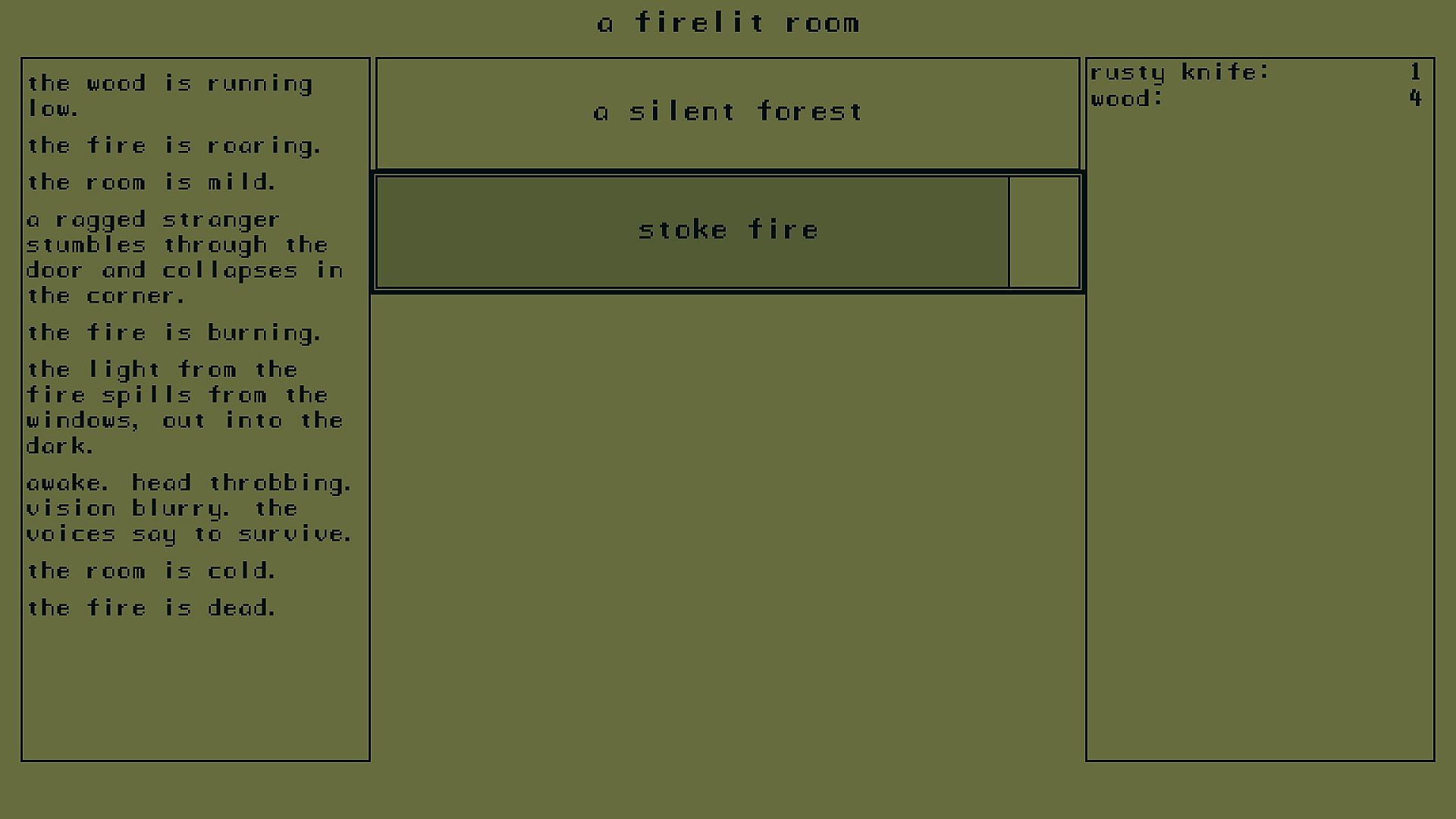
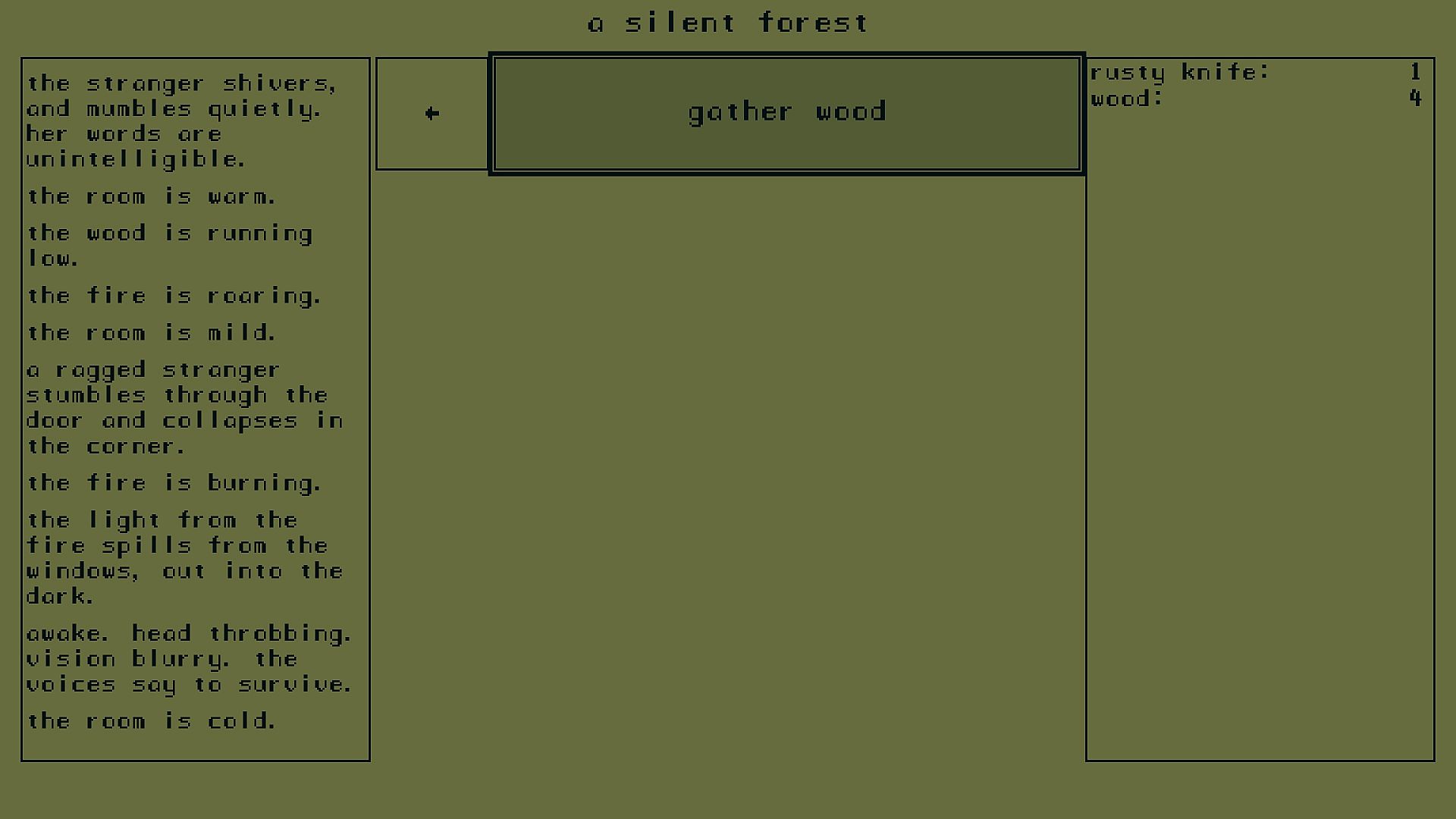
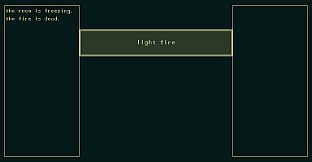
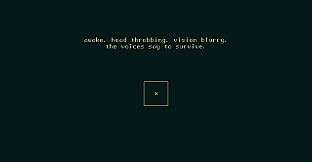
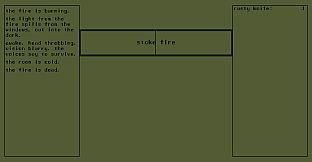
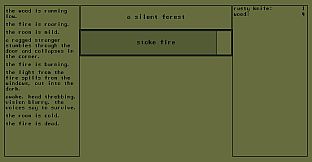
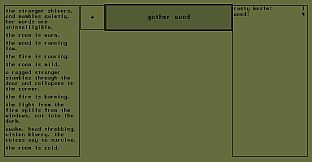
A Dark Room is a text-based RPG that places players in a minimalist survival scenario on PS5. The experience begins with awakening in a cold, dark space where the only immediate action involves managing a fire for warmth. From this starting point, the game expands through incremental resource collection and decision-making that shapes both immediate survival and longer-term progress in a sparse world.
Gameplay
The core loop revolves around resource management and incremental building. Players collect wood to maintain the fire, then use gathered materials to construct basic structures such as traps and huts. These additions attract villagers who can be assigned roles to automate production of items like fur, meat, and leather. As the settlement grows, new buildings unlock further crafting options, creating interconnected systems where one resource supports the next stage of development.
Exploration opens once sufficient supplies allow travel along a dusty path. The world map uses simple ASCII symbols to represent terrain and locations. Journeys consume food and water, requiring careful preparation of inventory before venturing out. Encounters with threats lead to text-driven combat where weapon choice and resource use determine outcomes. Successful trips yield new materials that feed back into village upgrades and tool improvements.
Progression emphasizes planning and adaptation. Short-term needs like keeping the fire lit compete with long-term goals such as expanding population and preparing for distant expeditions. Failure during exploration returns the player to the village with lost carried items, encouraging better resource allocation on subsequent attempts. The system rewards consistent attention to production rates and storage limits without overwhelming complexity.
Game Modes
A Dark Room functions as a single-player experience with no separate multiplayer or competitive options. The main progression follows a linear yet branching structure driven by player choices in building and exploration. Different approaches to village development, such as focusing on population growth versus minimal structures, alter the pace and available paths through the world.
Within the single-player framework, phases emerge naturally. Early play centers on the room and immediate surroundings for resource gathering. Mid-game shifts to active map traversal and combat encounters. Later stages involve advanced crafting and preparation for a final objective that ties together accumulated resources. These phases blend without requiring manual selection, allowing the game to evolve based on how players balance management and risk.
Story and Atmosphere
The narrative unfolds through sparse text descriptions and environmental cues rather than direct exposition. A stranger arrives early and influences building decisions, while distant locations hint at a larger world shaped by past events. Audio cues reinforce the isolated setting, using minimal sound design to suggest unseen threats and changing conditions.
Environmental storytelling builds through repeated interactions with the same systems. Each new structure or discovered site adds context without lengthy cutscenes. The approach leaves room for interpretation, with the overall arc revealing itself gradually as resources and exploration advance. This method keeps focus on player actions while providing a sense of discovery in an otherwise empty landscape.
Is It Worth Playing?
Players who enjoy deliberate, text-driven experiences with strong resource loops will find consistent engagement across several hours of play. The game suits those interested in incremental progression and light exploration rather than fast-paced action or extensive dialogue trees. Its minimalist presentation demands attention to mechanics over visual spectacle.
Reception highlights the effective use of limited elements to create tension and curiosity. The single-player structure supports multiple sessions through different building strategies, though the core story remains consistent after the first completion. Availability on PS5 provides access to the full experience with controller or touch support where applicable.
Those seeking traditional RPG combat depth or multiplayer features may find the scope narrower. For fans of classic text adventures updated with modern incremental systems, the title delivers a focused session that rewards careful management and repeated experimentation with village setups.