


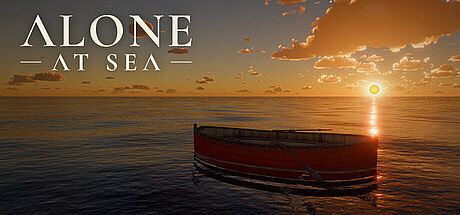


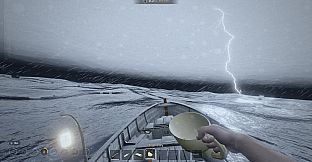
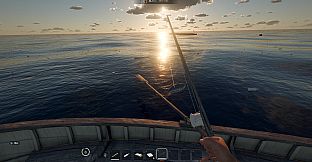
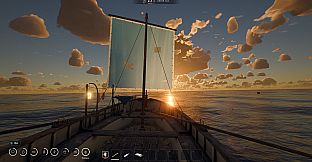
Alone at Sea is an indie simulation and adventure game set entirely within a single lifeboat adrift in the Pacific Ocean. Players take on the role of Hale, a deckhand who survives a shipwreck and must manage every aspect of survival while attempting to reach land using only natural navigation and improvised tools.
Gameplay
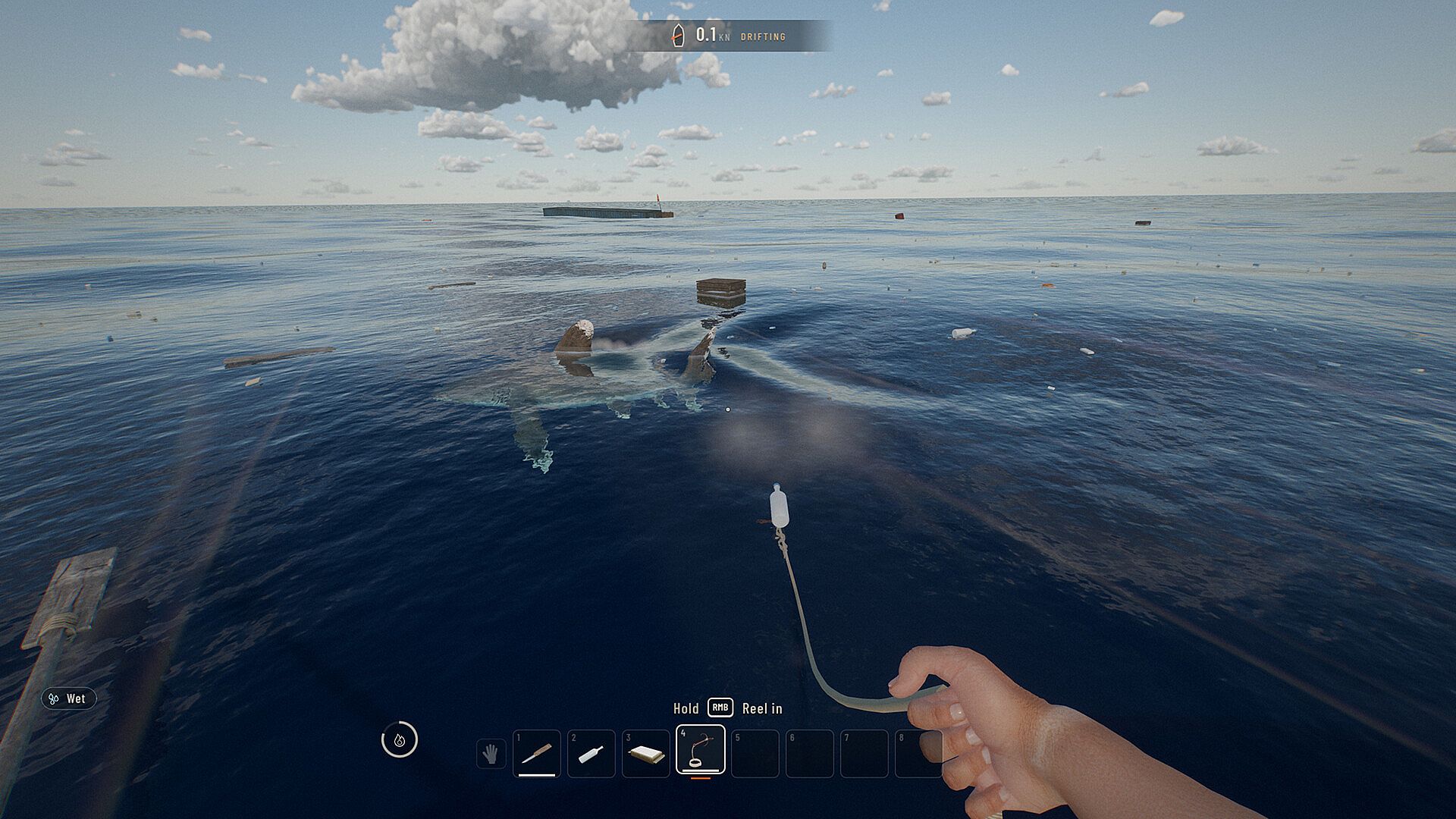
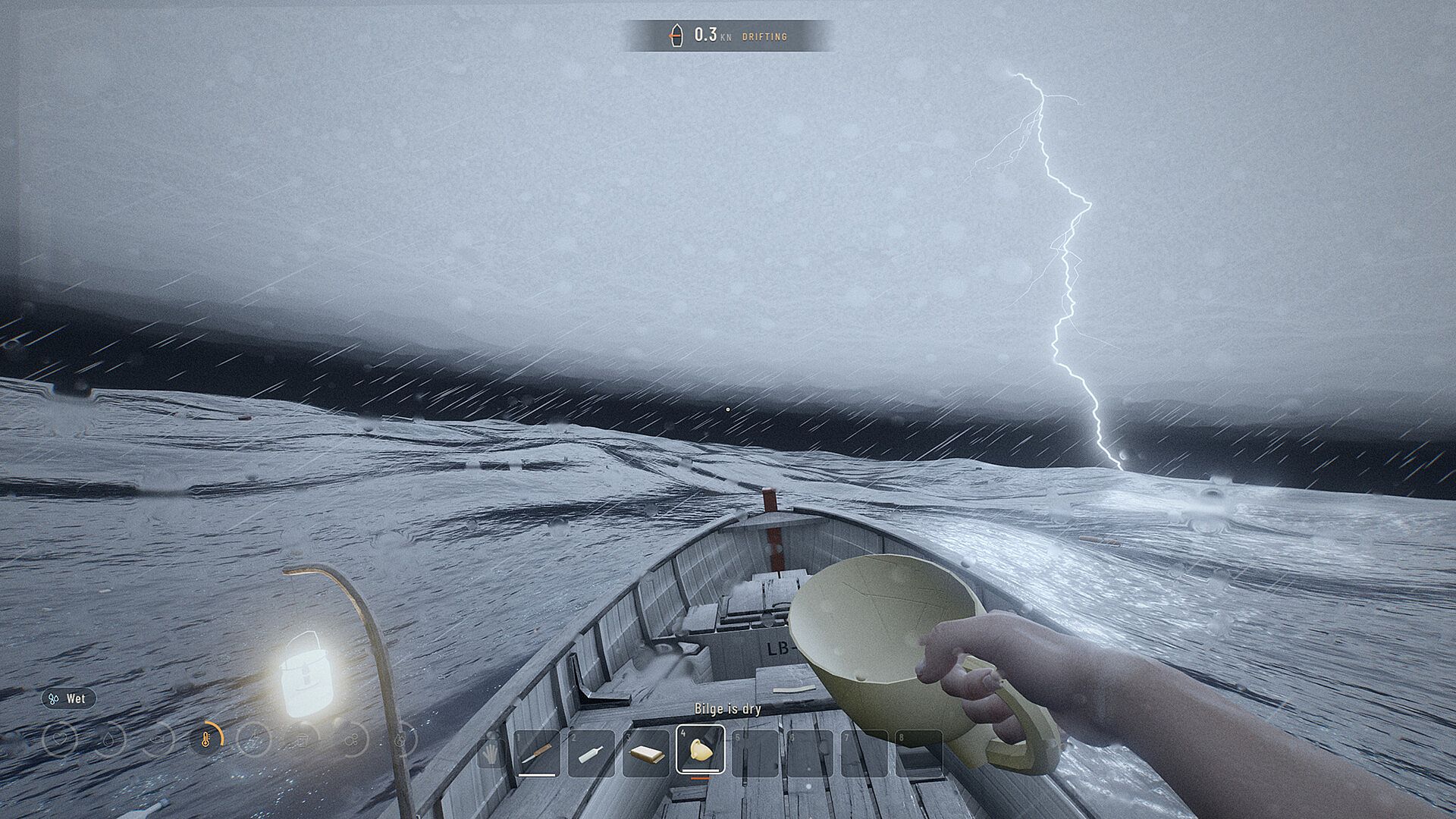
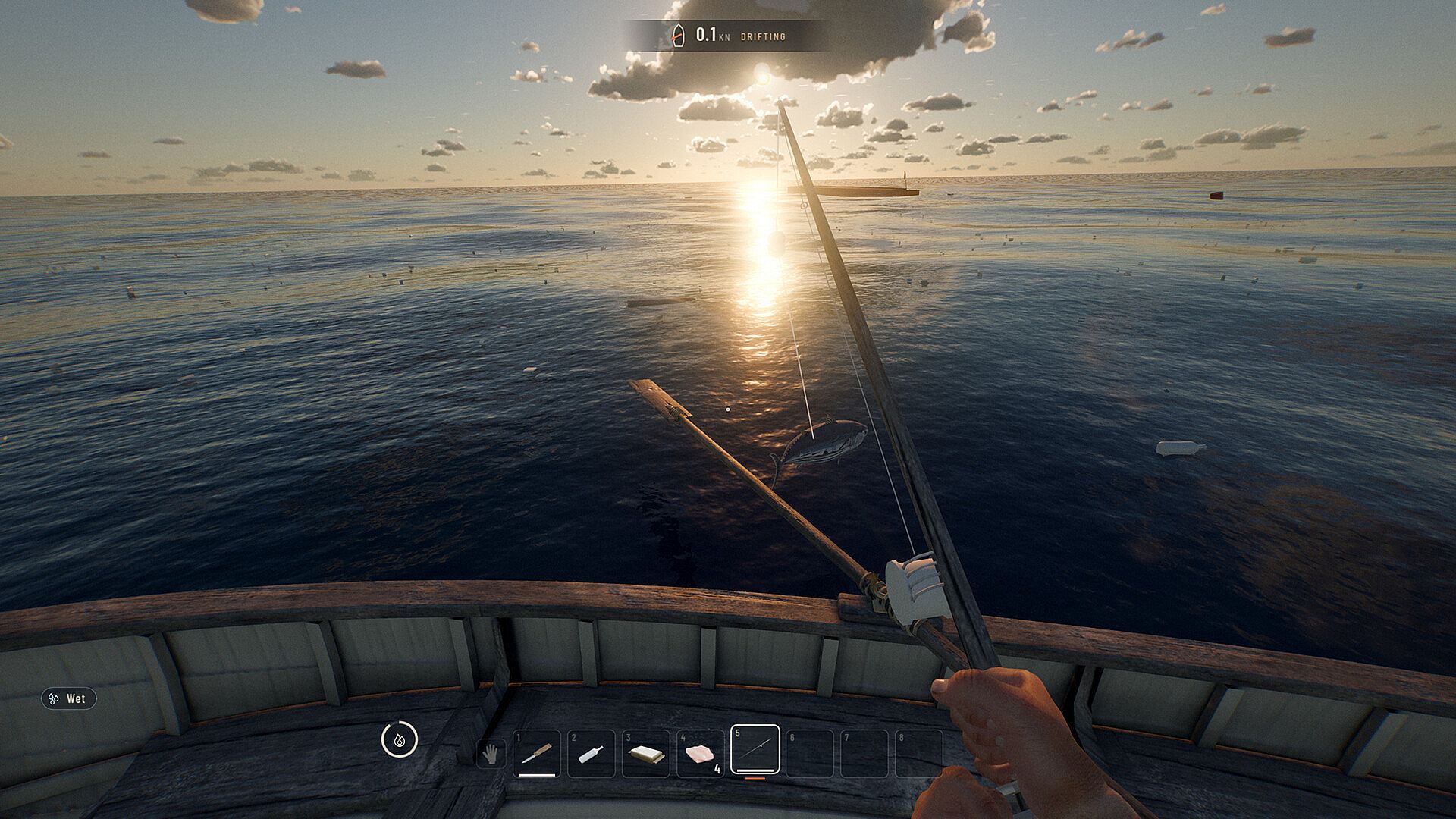
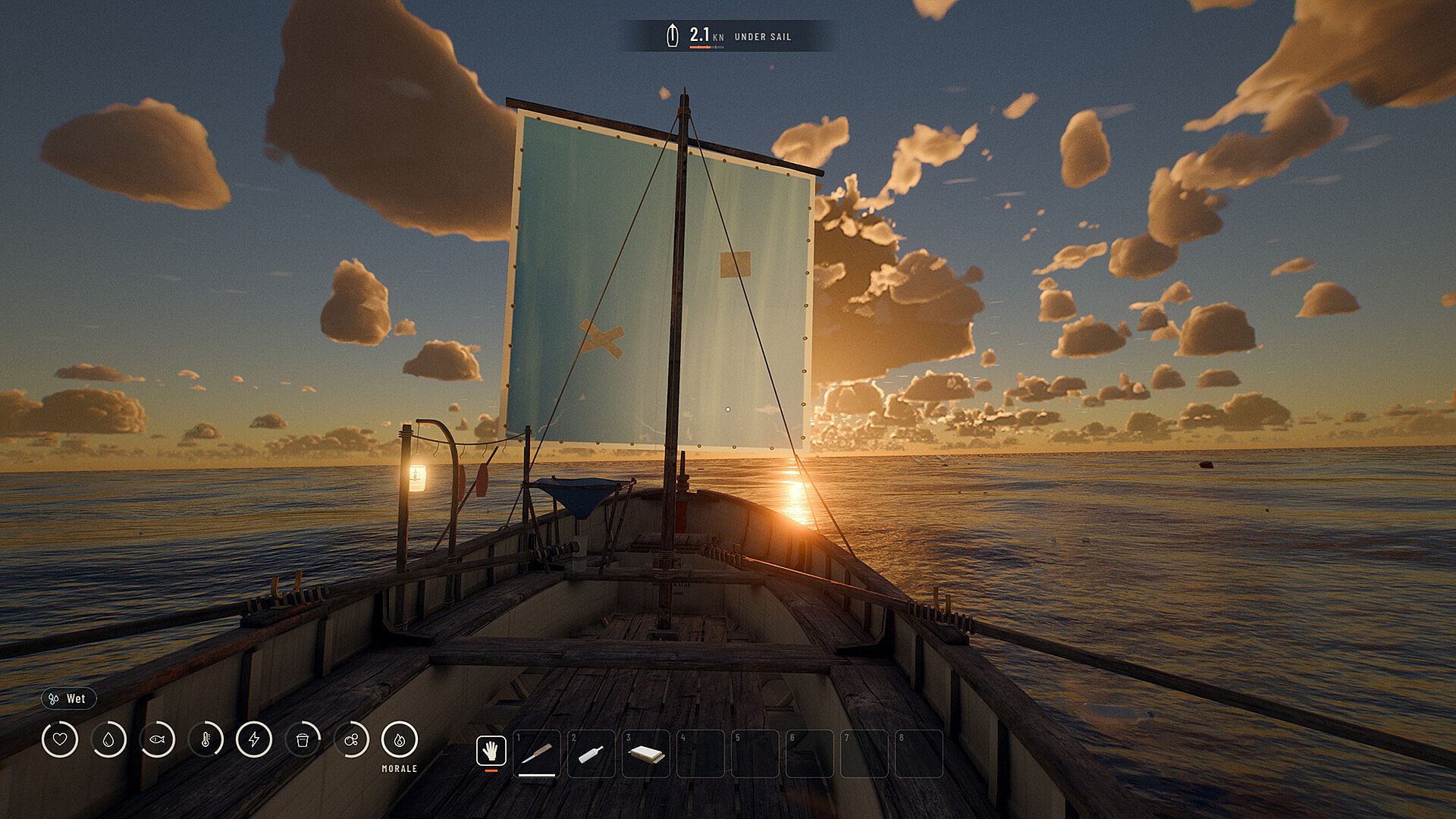
The core loop centers on maintaining the lifeboat LB-2 while contending with thirst, hunger, cold, fever, and hygiene. Each station on the 5.6 meter vessel has a fixed location, so players must decide how to allocate limited tarp, rope, and nails when outfitting the craft. Crafting draws from 45 recipes learned by examining parts directly in hand, with a field notebook recording the resulting sketches. Daily routines include fishing with rod or spear, collecting rainwater, cooking on a can stove, and managing waste to avoid illness. Sharks threaten anyone who enters the water, while storms can flood the bilge faster than it can be bailed.
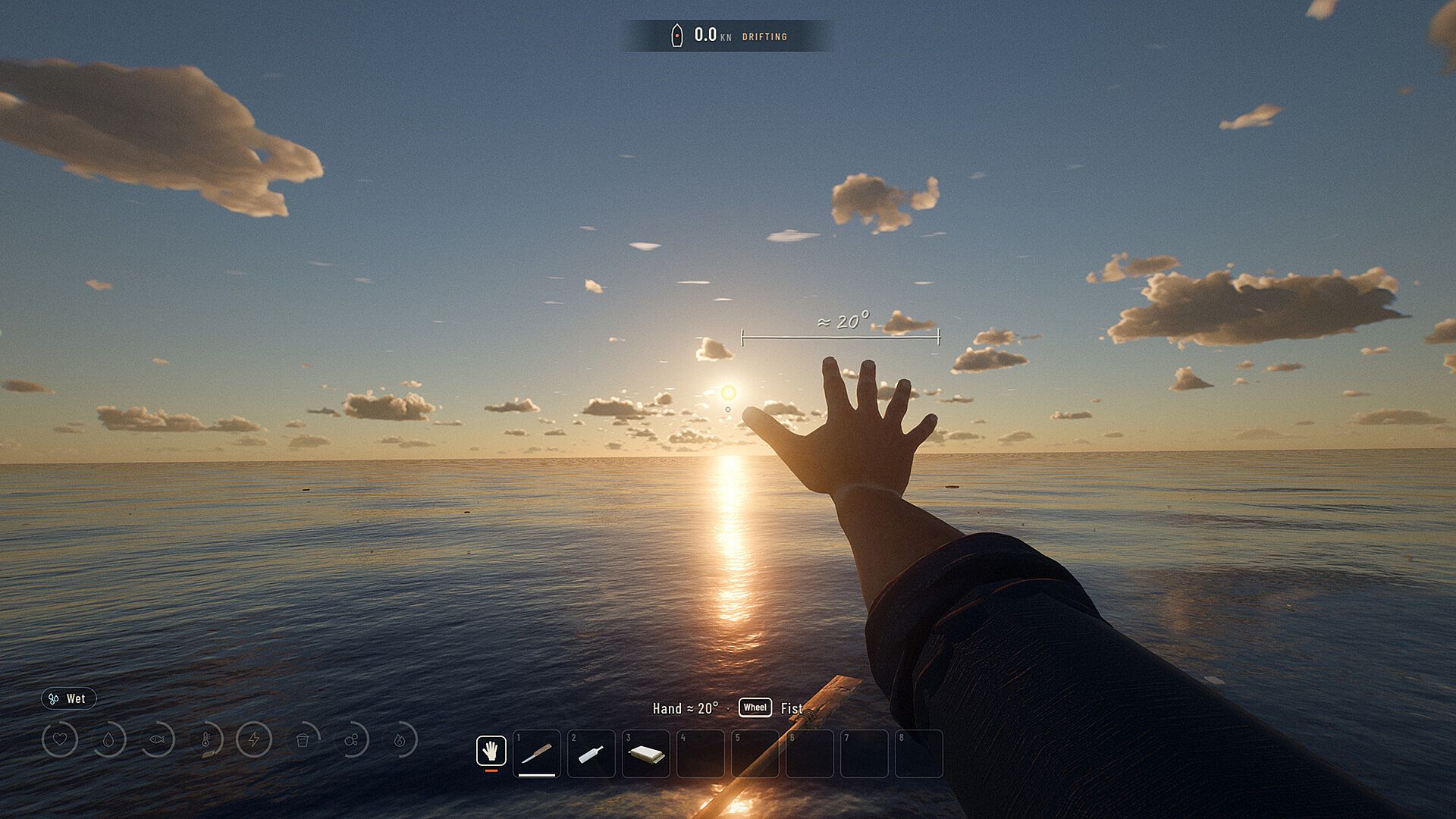
Navigation forms another major pillar. Without an initial compass or GPS, players read the height of the low sun with an outstretched hand, locate Polaris at night, construct a sextant from scrap, or magnetize a needle to float on cork. Birds at dusk indicate the direction of land, and a repaired radio or home-made instruments help plot latitude on a torn chart. The tiller can be lashed to hold course during rest periods, though accuracy remains imperfect. Salvage opportunities arise from drifting wreckage, floating containers, and occasional encounters such as a rain squall or a dead whale.
Game Modes
Two permadeath difficulties define the experience. Adrift presents the voyage as originally intended, emphasizing careful resource management and realistic navigation challenges. Lost at Sea serves as a harder variant intended for players who have already completed the first mode. In both, death ends the run permanently, with the sea claiming the character and requiring a fresh start.
Survival Systems
Body management runs continuously across multiple meters. Drinking seawater damages the kidneys, while dirty hands lead to dysentery. Players must wash in the sea, relieve themselves over the side, and keep the boat clean, using crushed charcoal when the gut turns. Morale and sickness join thirst, hunger, warmth, and hygiene as simultaneous concerns that demand attention. The single lifeboat format prevents large-scale construction, forcing every decision to fit within the vessel's limited stations for rain catchers, solar stills, mast, sail, rudder, drying line, and lantern.
Occasional events break the routine. Flares can be fired at passing planes, ghost nets may trap sea turtles that can be freed, and distant islands offer coconuts, crabs, and rock pools of rainwater. When a ship's lamp finally appears, the outcome depends on whether the vessel notices and chooses to stop.
Is It Worth Playing?
Alone at Sea suits players who enjoy deliberate, systems-driven survival without base-building sprawl or multiplayer elements. The focus on one confined space, realistic navigation, and layered physical needs creates a tense, self-contained loop that rewards observation and planning. Those who prefer fast action or expansive worlds may find the pace and isolation demanding. The two permadeath modes provide clear progression for repeat attempts, and the emphasis on hand-crafted tools and natural wayfinding gives the game a distinct identity within the survival genre. Availability on PC makes it accessible for those drawn to solitary maritime challenges.












