




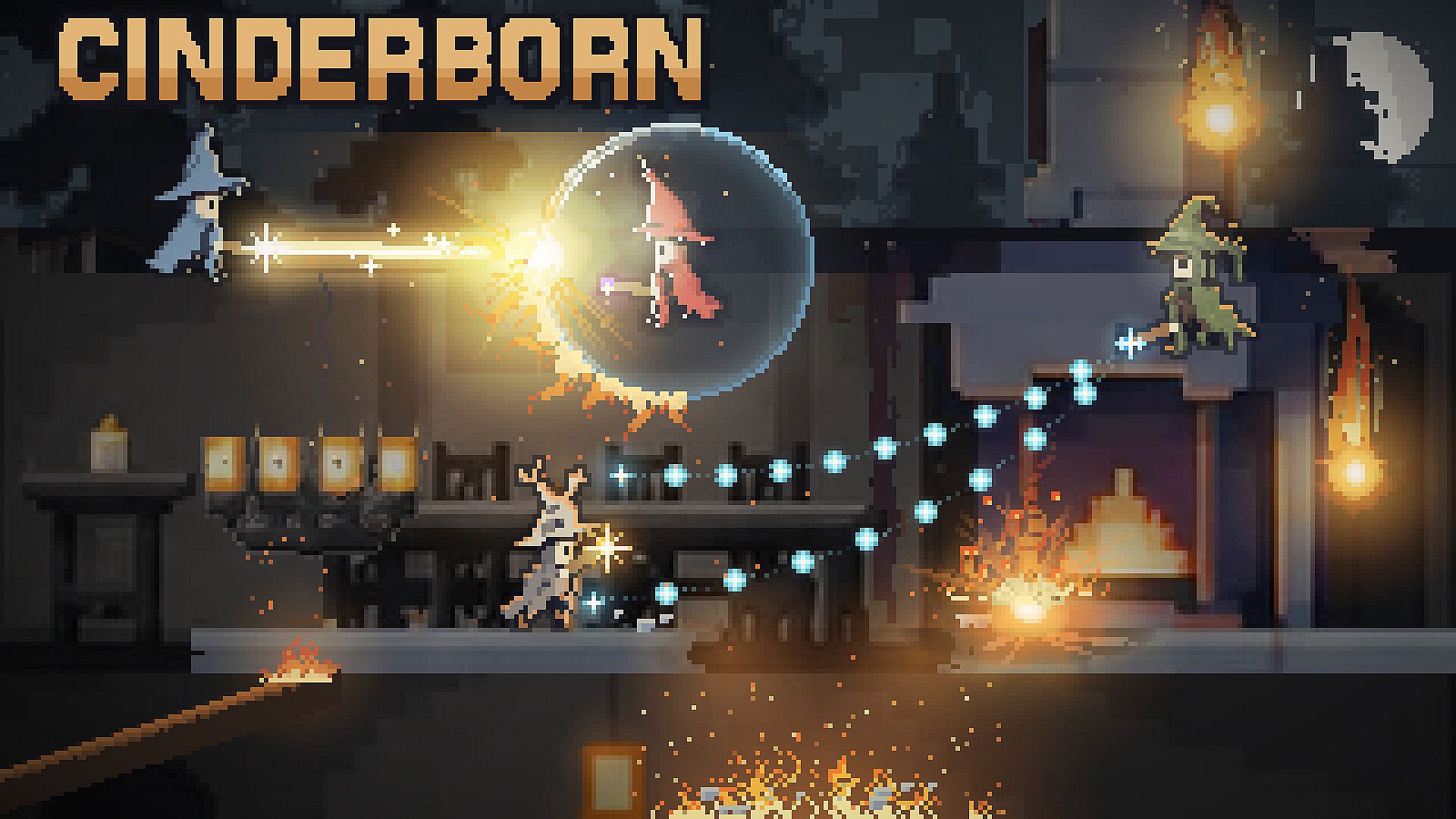
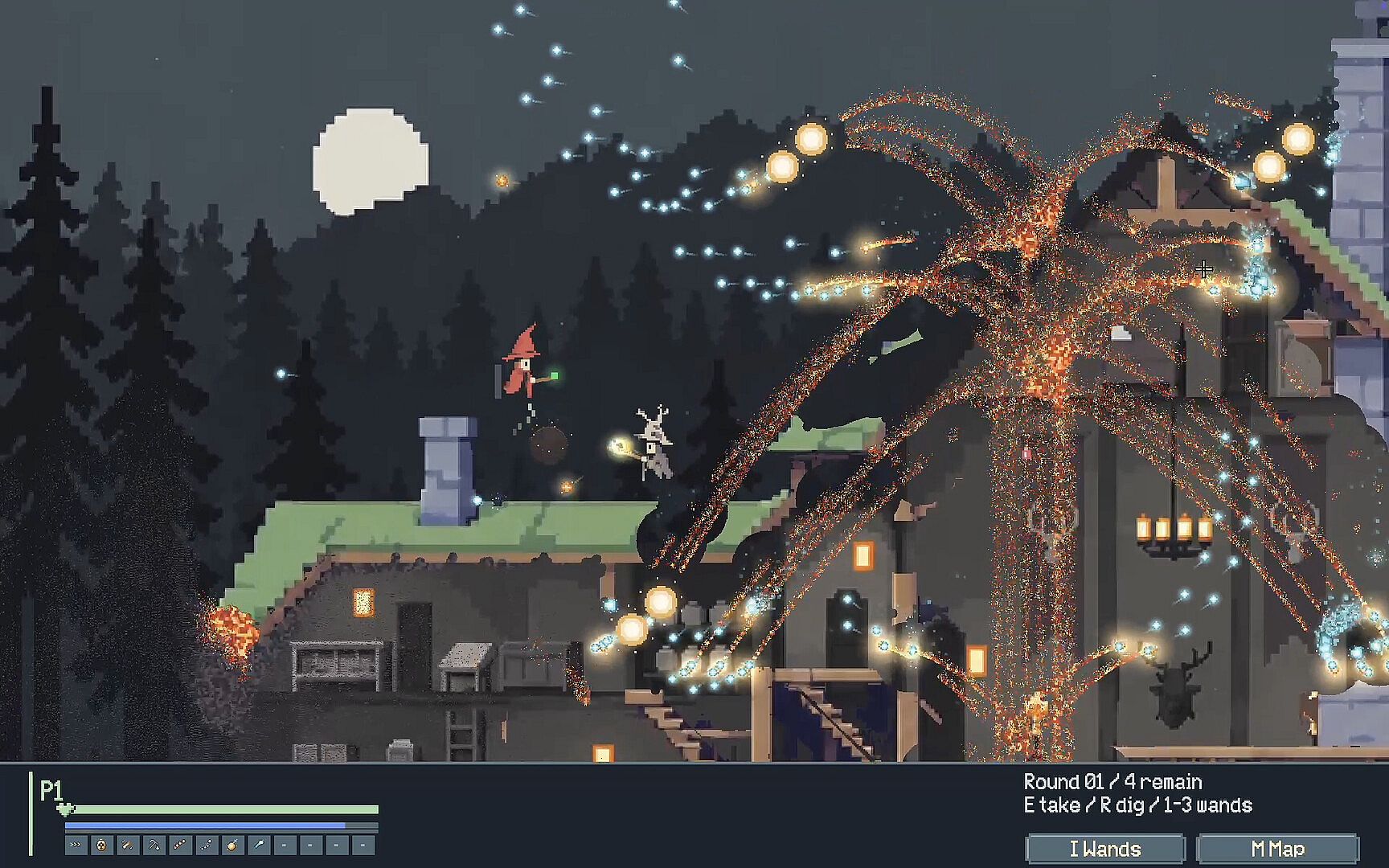
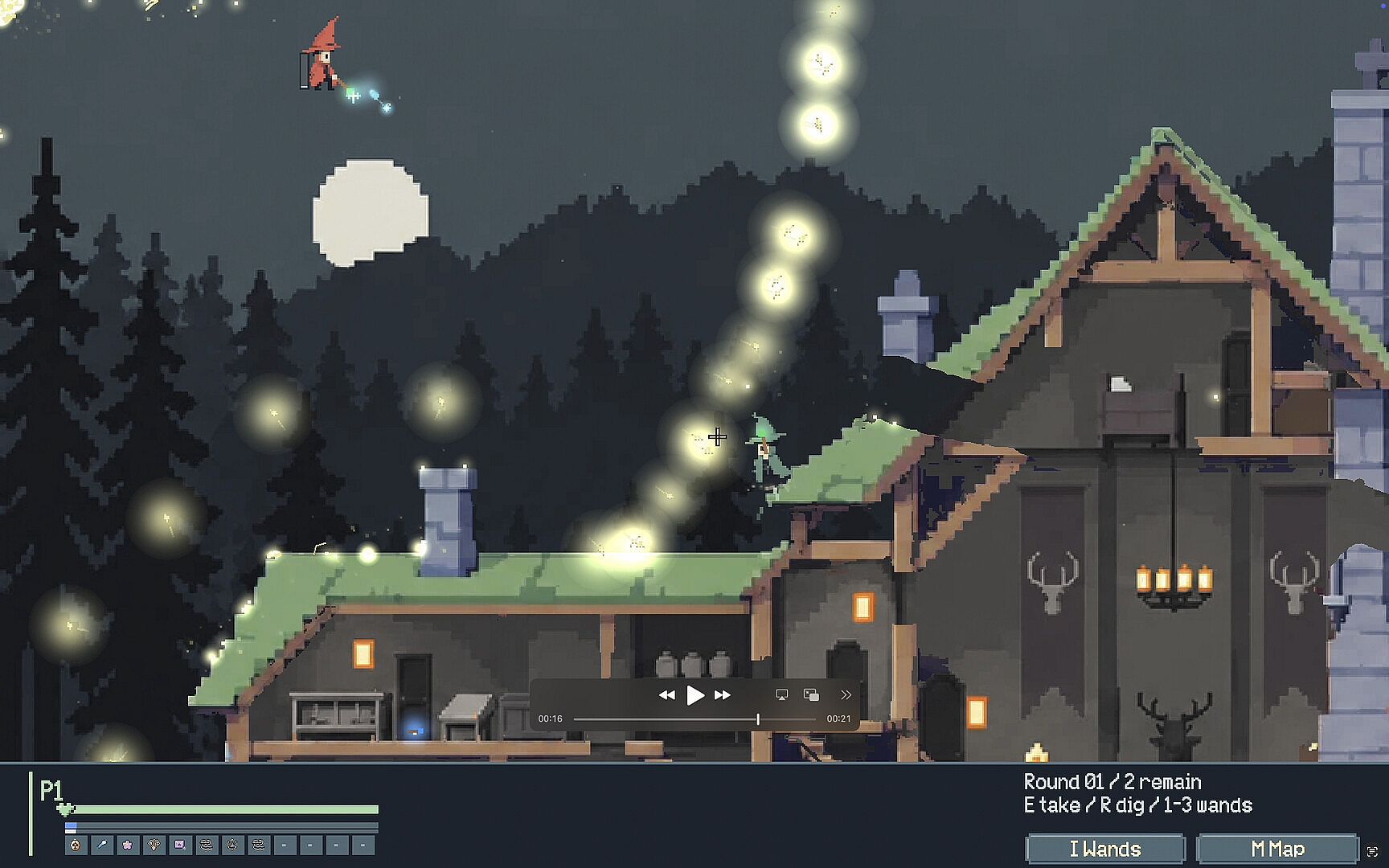
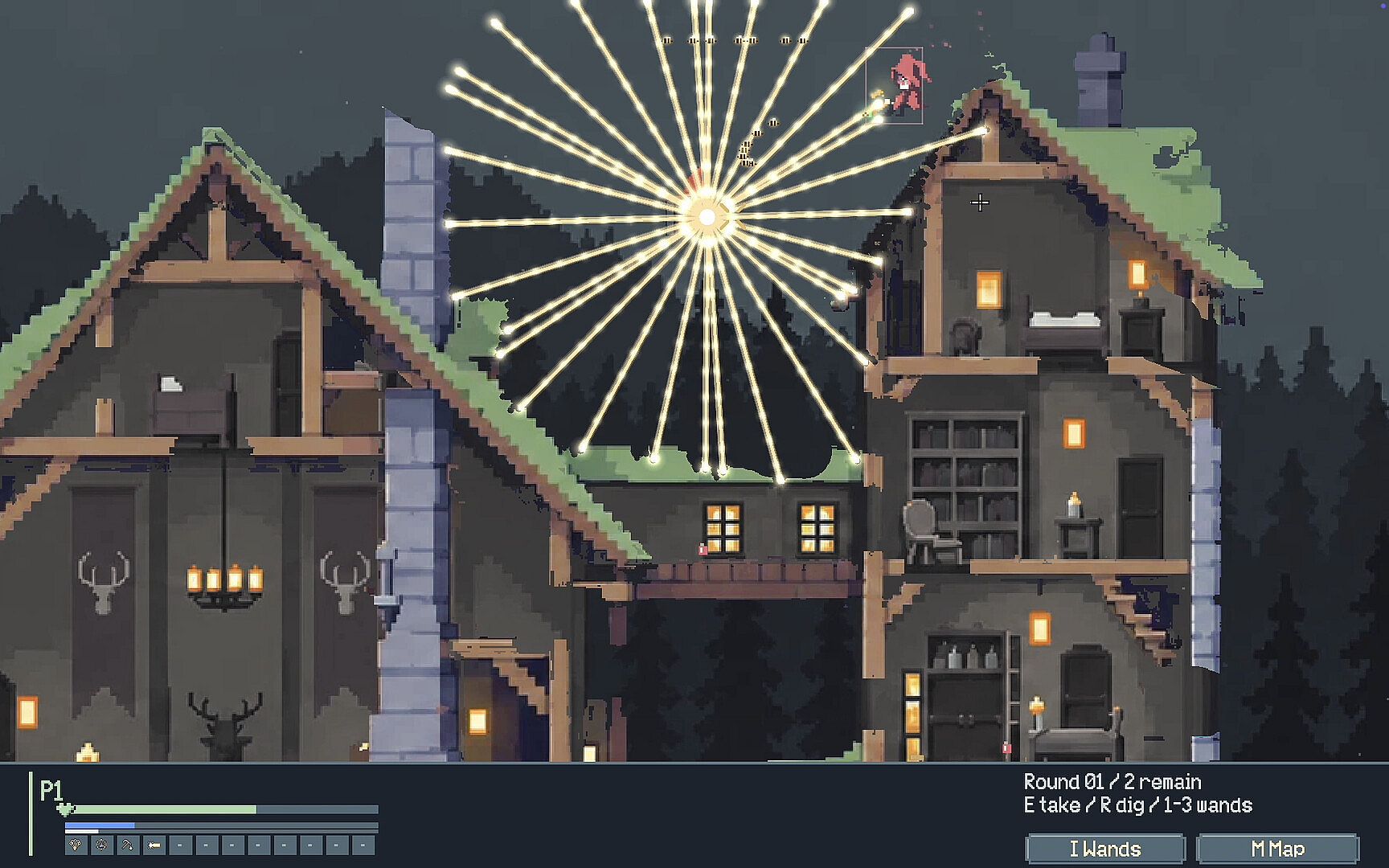
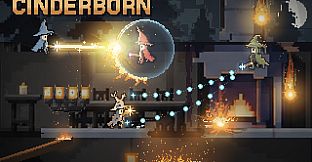
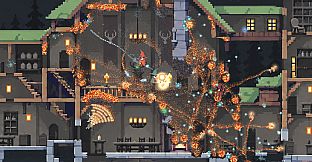
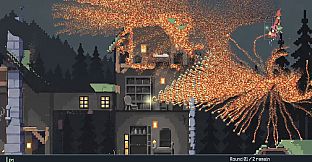
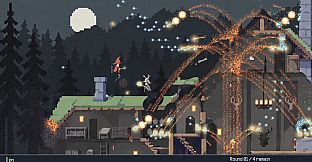
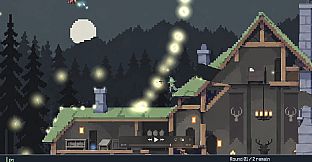
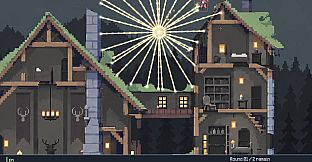
Cinderborn is an action indie casual game that places players in round-based witch brawls set inside a fully destructible world. Witches compete by assembling wands loaded with spells, then clash to eliminate rivals while the environment crumbles around them. Between rounds participants gather fresh wands and spells from the battlefield, allowing rapid shifts in loadouts before the next fight begins.
Gameplay
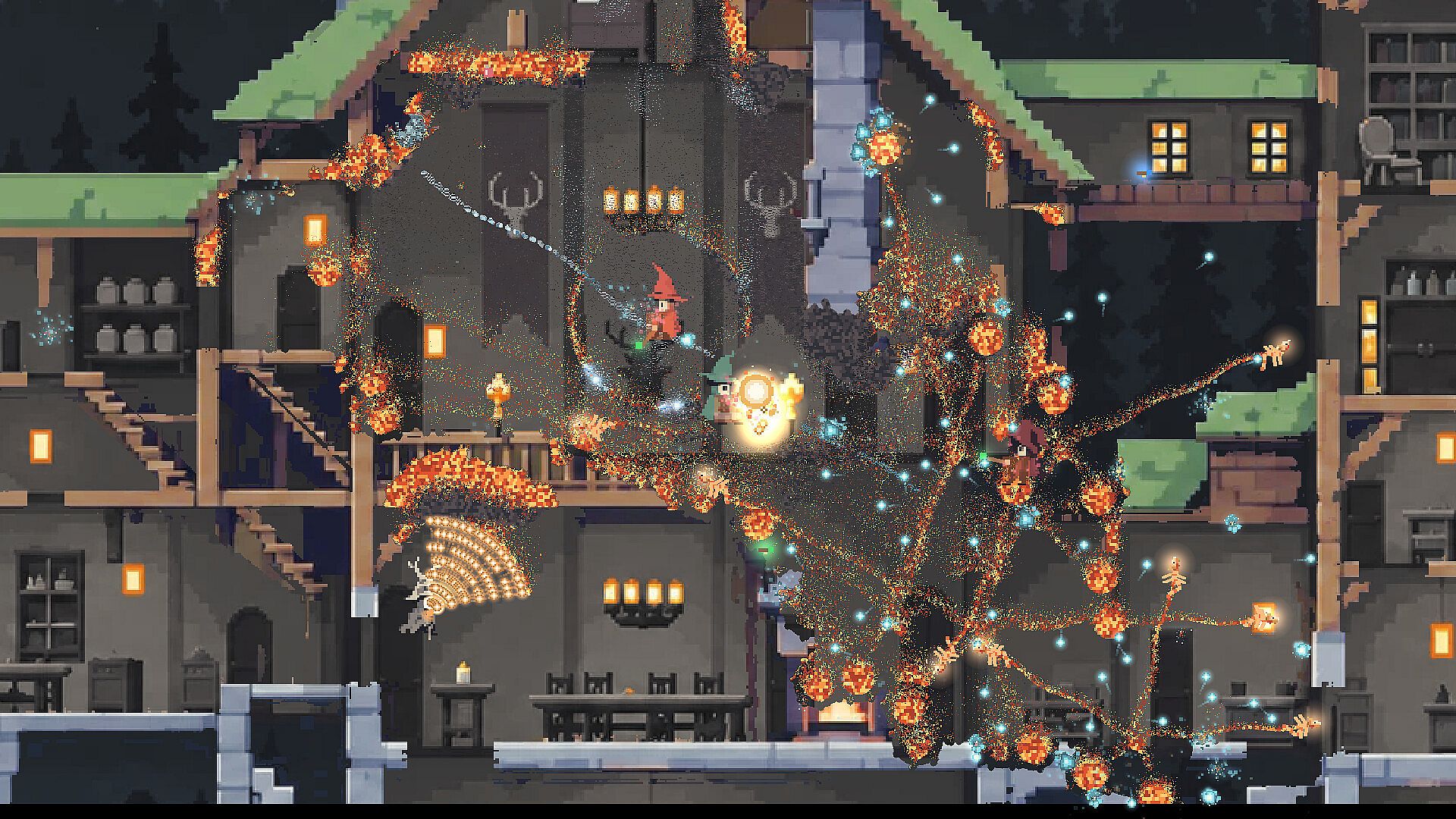
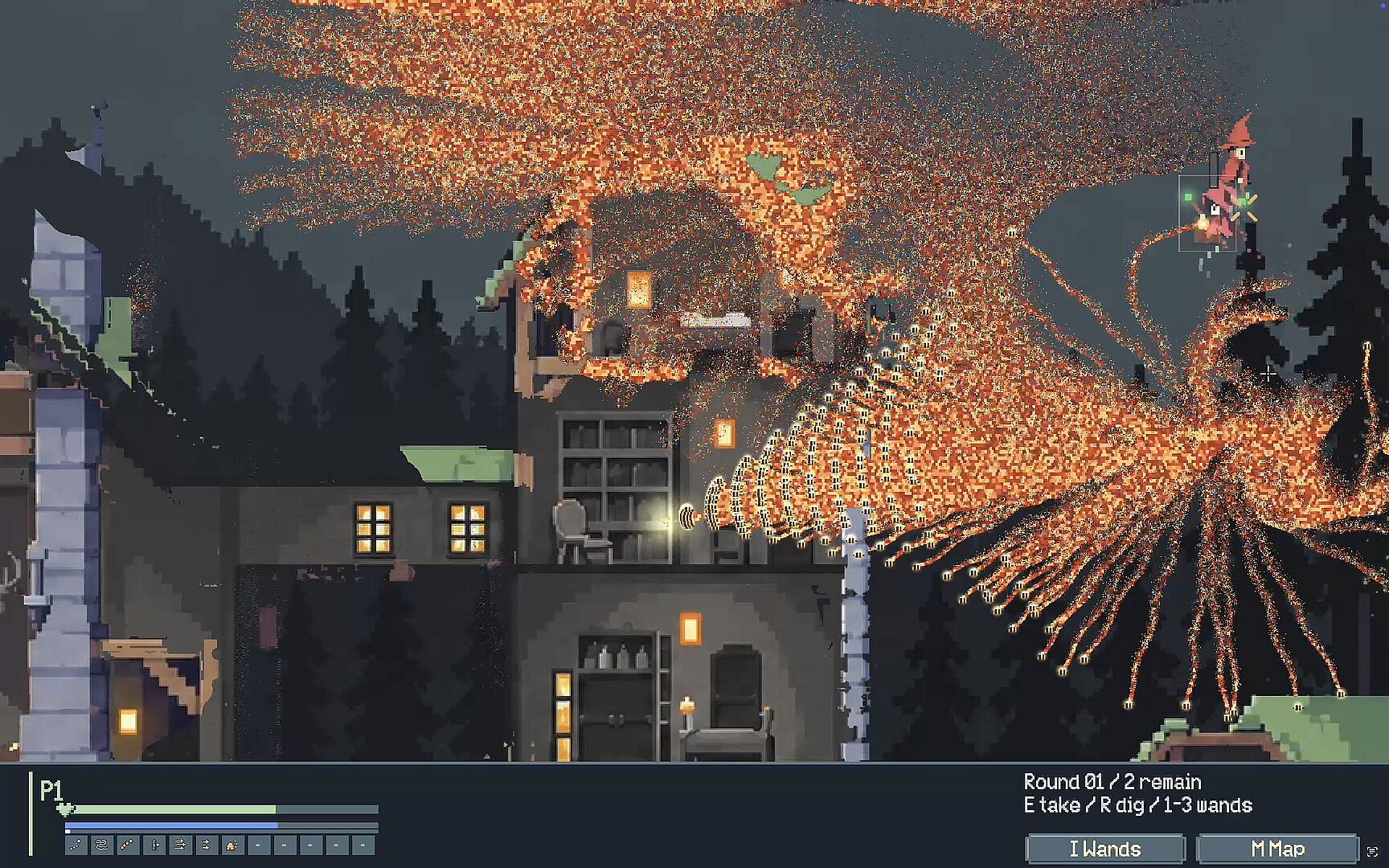
The core loop revolves around wand assembly and spell experimentation. Players start each round with a configured wand and enter arenas where every structure can be broken apart through spell effects. Combat focuses on direct confrontations among witches, with victory coming from eliminating opponents rather than completing external objectives. The destructible nature of the arenas means spells can reshape cover, open new paths, or collapse sections entirely, turning the battlefield into a changing hazard.
Collecting items mid-battle adds another layer. Dropped wands and spells appear after eliminations, giving survivors immediate options to swap or combine elements on the fly. This encourages aggressive play because staying alive long enough to pick up upgrades can turn a losing position around. The casual tone keeps sessions short and accessible while the action genre demands quick reactions and creative spell use.
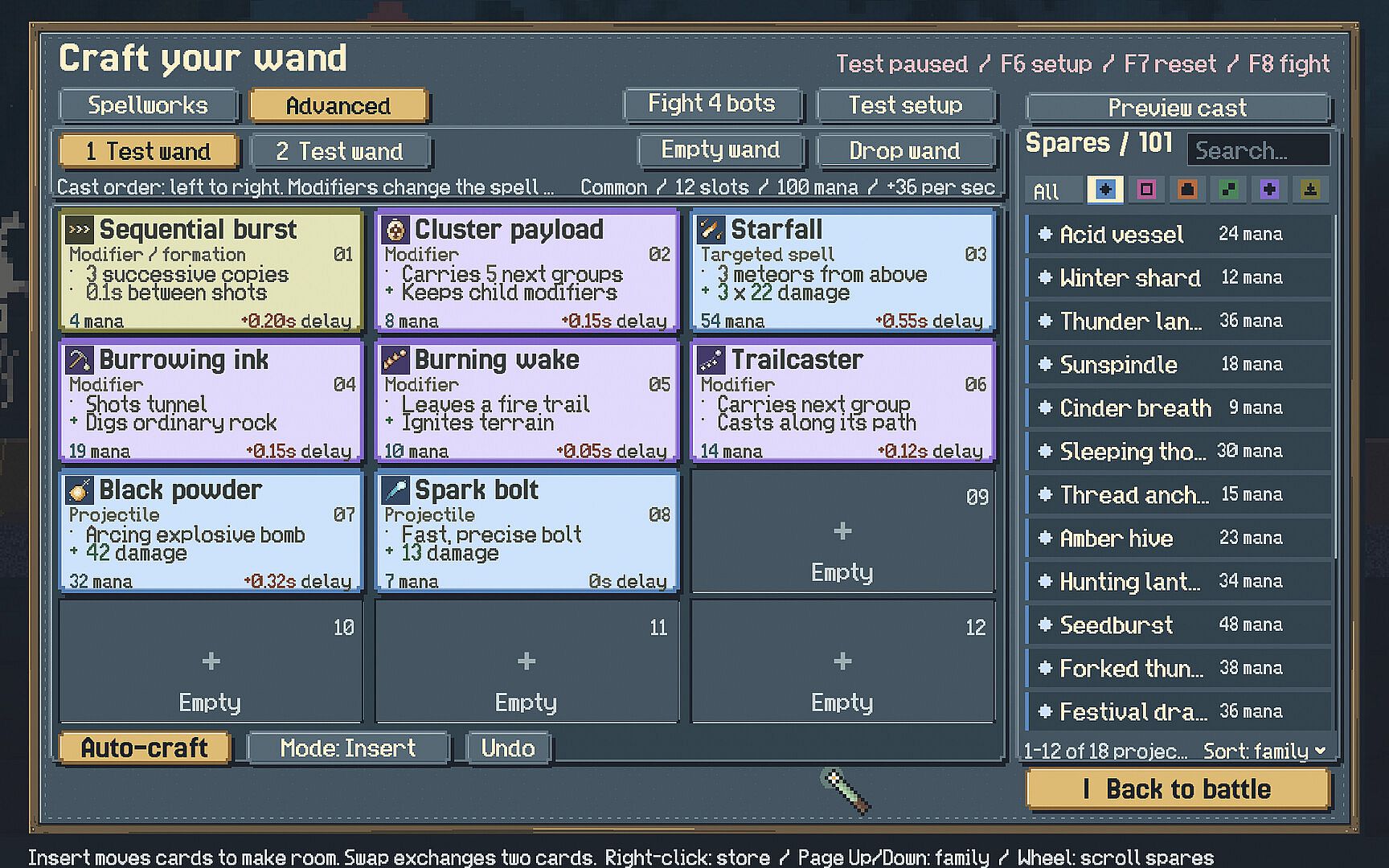
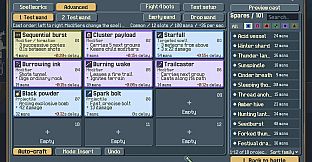
Customization happens strictly between rounds. Players rearrange spells on their wand to test fresh combinations without interrupting the flow of a match. New pairings often produce unexpected results against both enemies and the surrounding structures, rewarding experimentation over fixed builds. The indie scale keeps the focus tight on these core interactions instead of expansive single-player campaigns.
Game Modes
All activity centers on round-based brawls. Each round pits witches against one another in the same destructible arena until only one remains or the timer ends. The format repeats with fresh loadouts, letting the group cycle through different spell setups without long waits between matches. No additional named modes appear in the available information, so the experience stays centered on these repeated elimination rounds.
The structure supports small groups of friends or solo players joining public matches. Between rounds the brief customization window keeps momentum high and prevents downtime. Environmental destruction remains consistent across rounds, so players learn how certain spell combinations interact with walls, floors, and objects over multiple games.
Spell Combinations and Wand Building
Wand building forms the main creative outlet. Spells slot together in different orders, and the results can chain effects that affect both targets and the arena itself. One arrangement might clear obstacles quickly while another focuses on direct damage or area denial. Because the world reacts physically to most spells, the same combination can produce different outcomes depending on the current state of the map.
Ground loot adds variety each round. A powerful wand found after an elimination can completely change a player's approach for the remainder of that match. This system rewards awareness of the battlefield and quick decisions about when to risk grabbing an item versus continuing an attack.
Is It Worth Playing?
Cinderborn suits players who enjoy short, repeatable multiplayer sessions built around creative loadout changes and environmental interaction. The round-based format delivers quick matches that fit casual playtimes while still offering depth through spell experimentation. Those who like seeing the arena collapse under spell pressure will find consistent satisfaction in testing new combinations across successive rounds.
The game runs on PC and requires no additional purchases to access the core brawl experience. Its indie and casual positioning means it avoids complex progression systems, focusing instead on immediate fun from wand assembly and destruction. Players seeking lighthearted competition with friends or random opponents will find the mechanics straightforward yet open to personal style.
- Round-based elimination keeps sessions concise.
- Fully destructible arenas reward creative spell use.
- Between-round customization encourages trying new wand setups.












