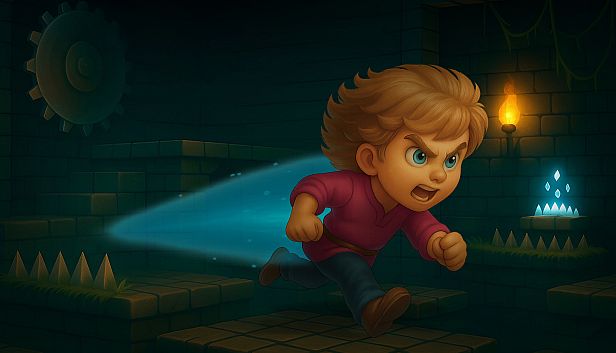


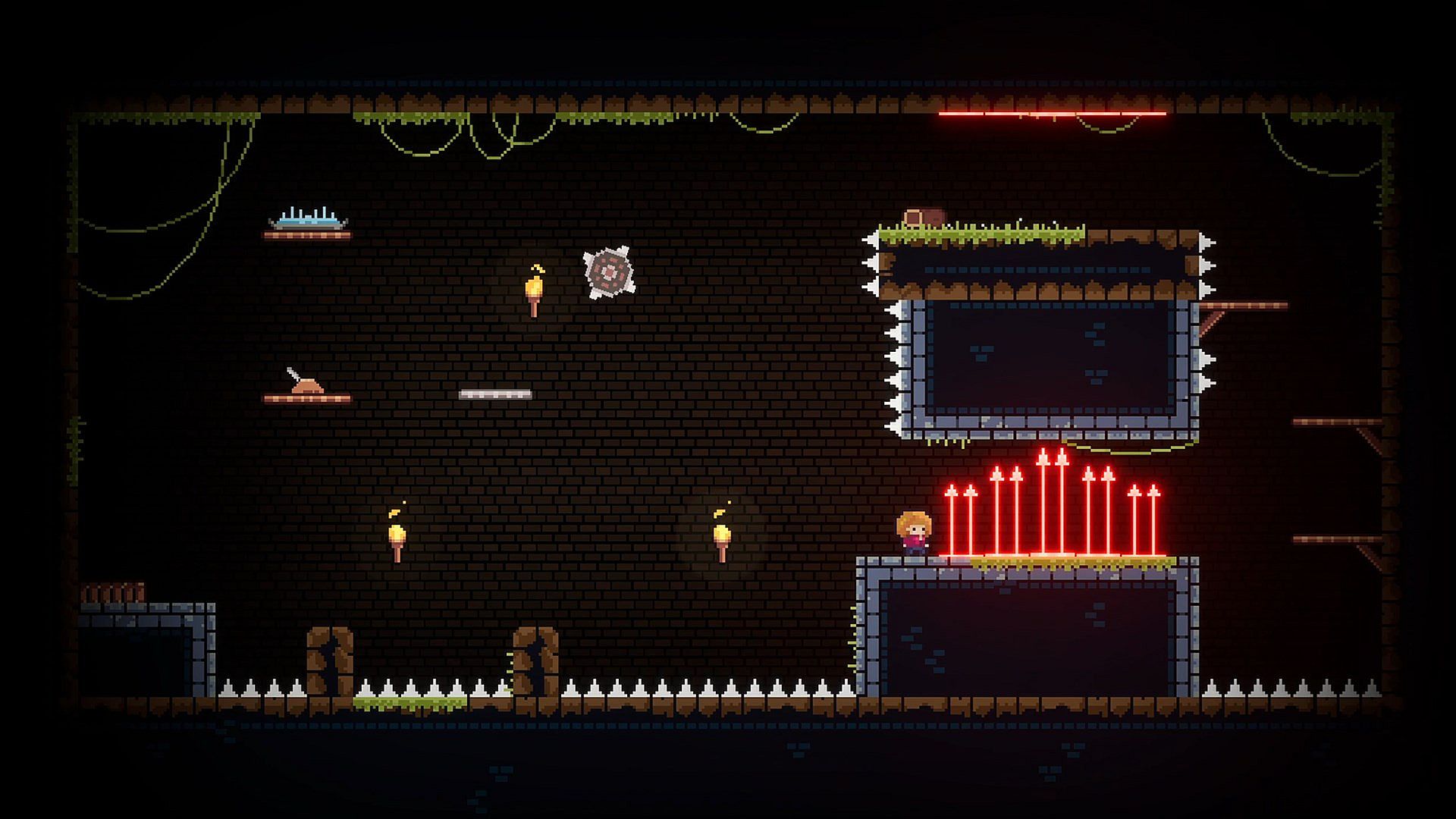
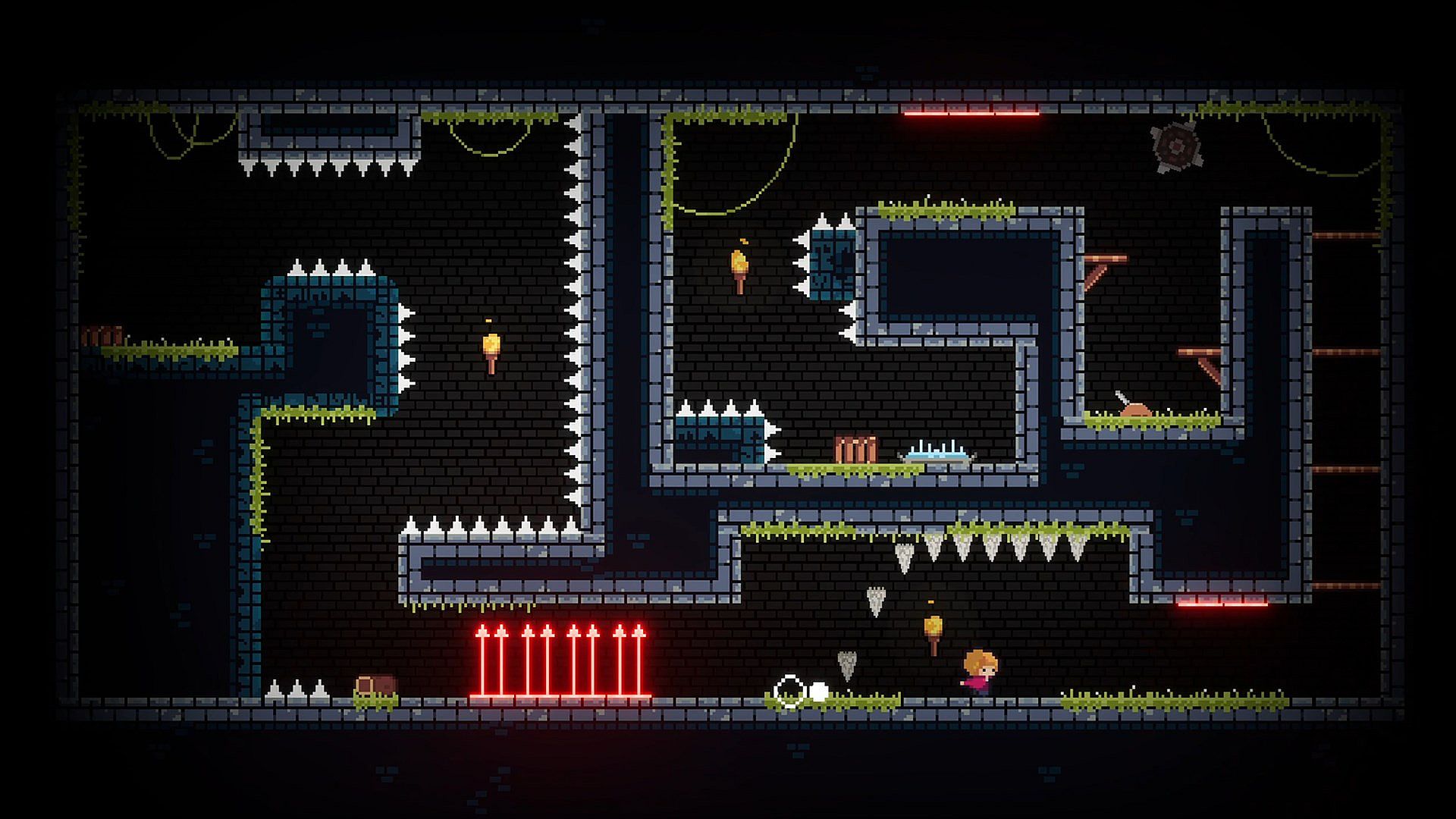
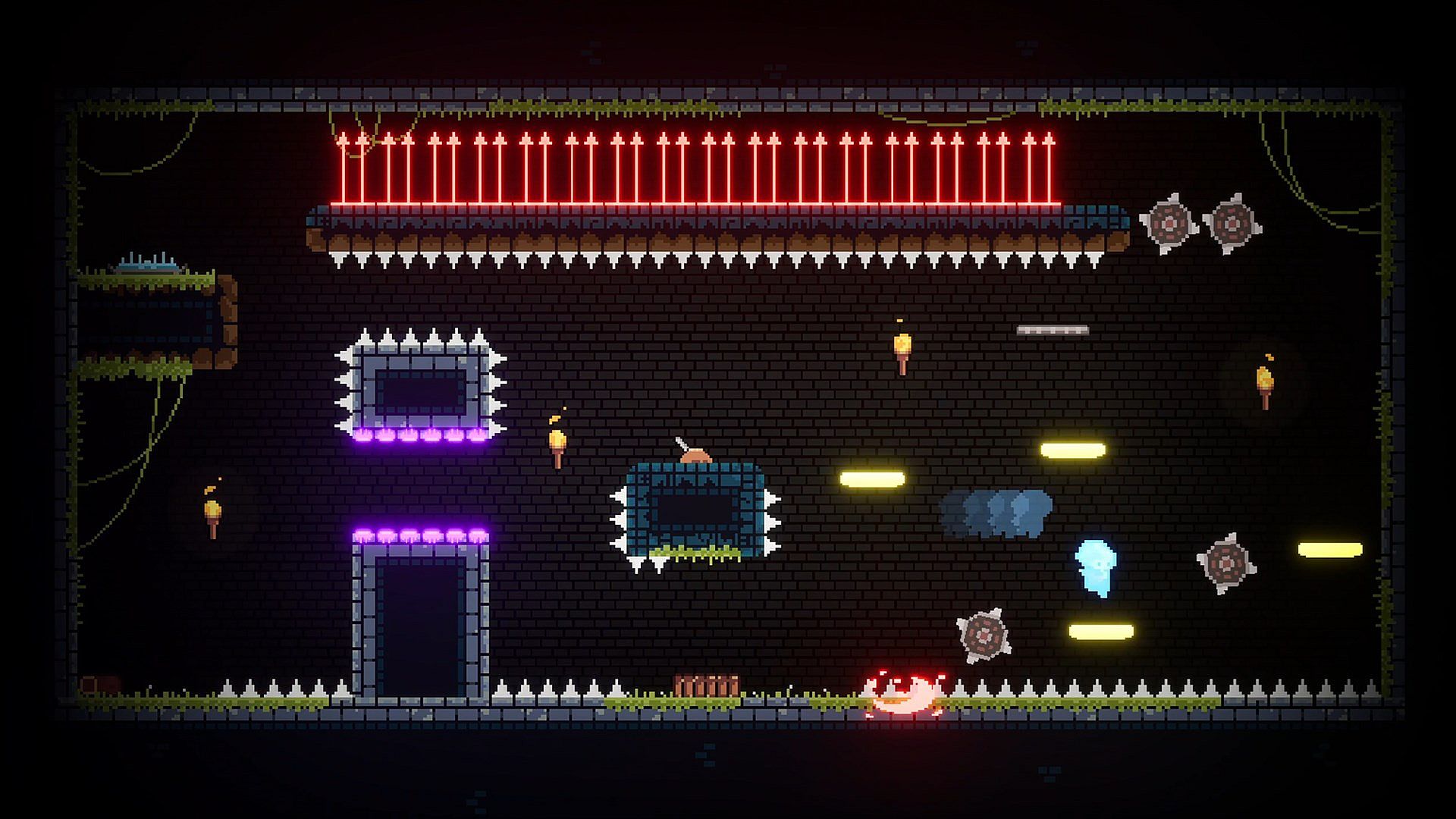
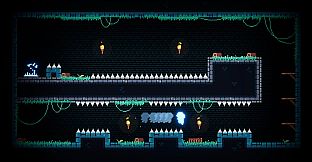
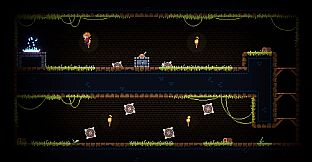
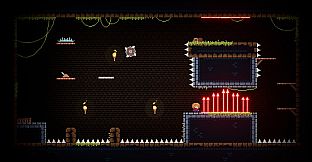
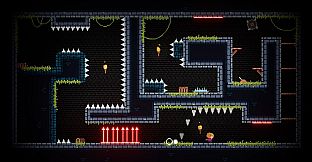
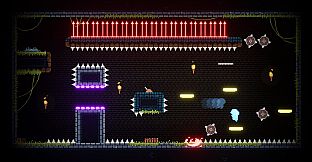
Daniel in Danger is a single-player action platformer built around precise movement and quick decision making in a series of compact, high-pressure stages. Players guide the protagonist through an ancient dungeon filled with hazards, relying on timing and spatial awareness to progress. The core loop centers on navigating traps that demand consistent accuracy rather than exploration or combat.
Gameplay
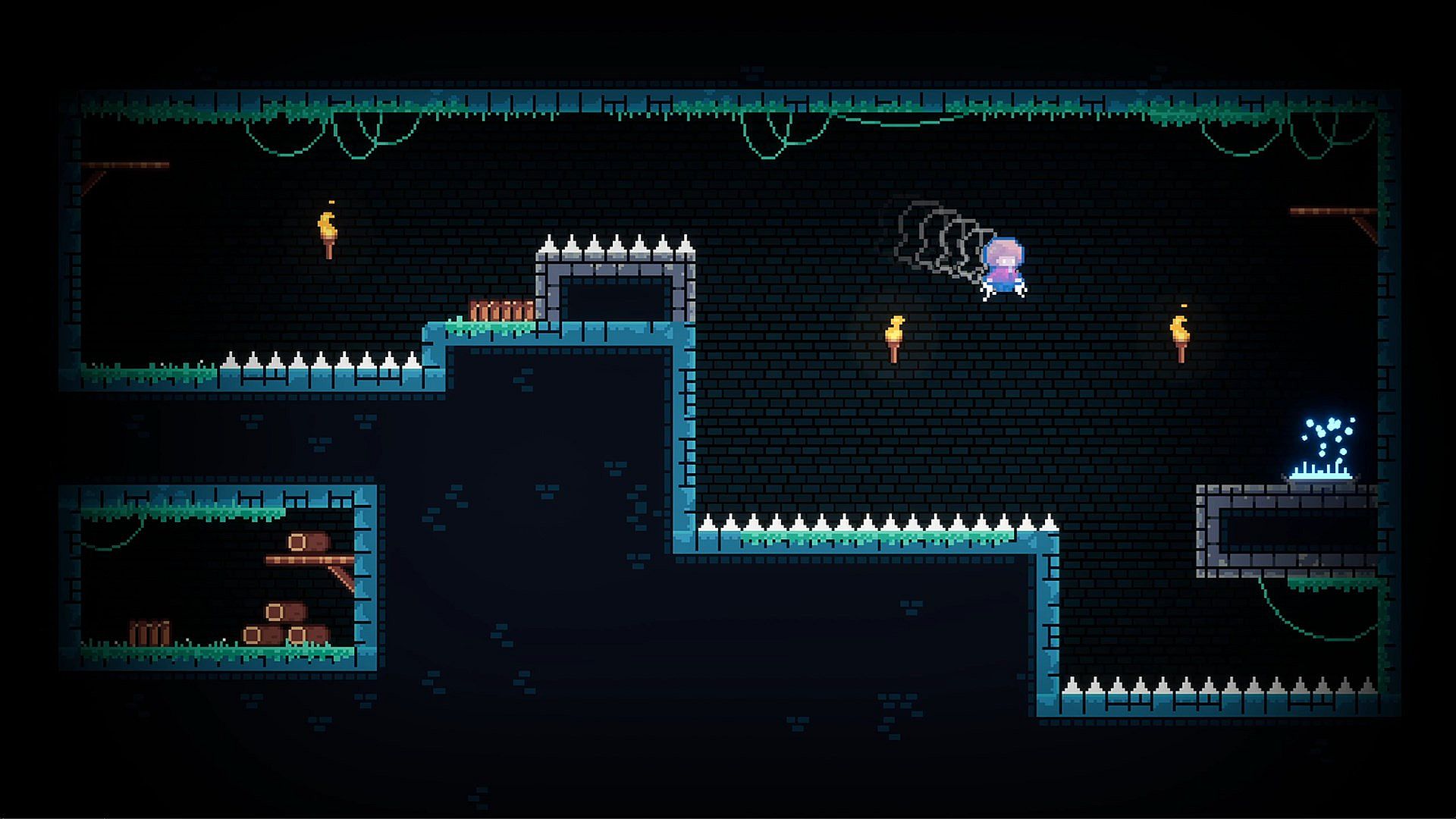
The central systems revolve around a distinctive dash ability paired with controlled descent mechanics that produce visual sparks on impact. These tools allow players to adjust trajectories mid-air and avoid instant-kill obstacles scattered throughout each stage. Levels are deliberately brief, pushing participants to chain movements fluidly while maintaining rhythm across repeated attempts.
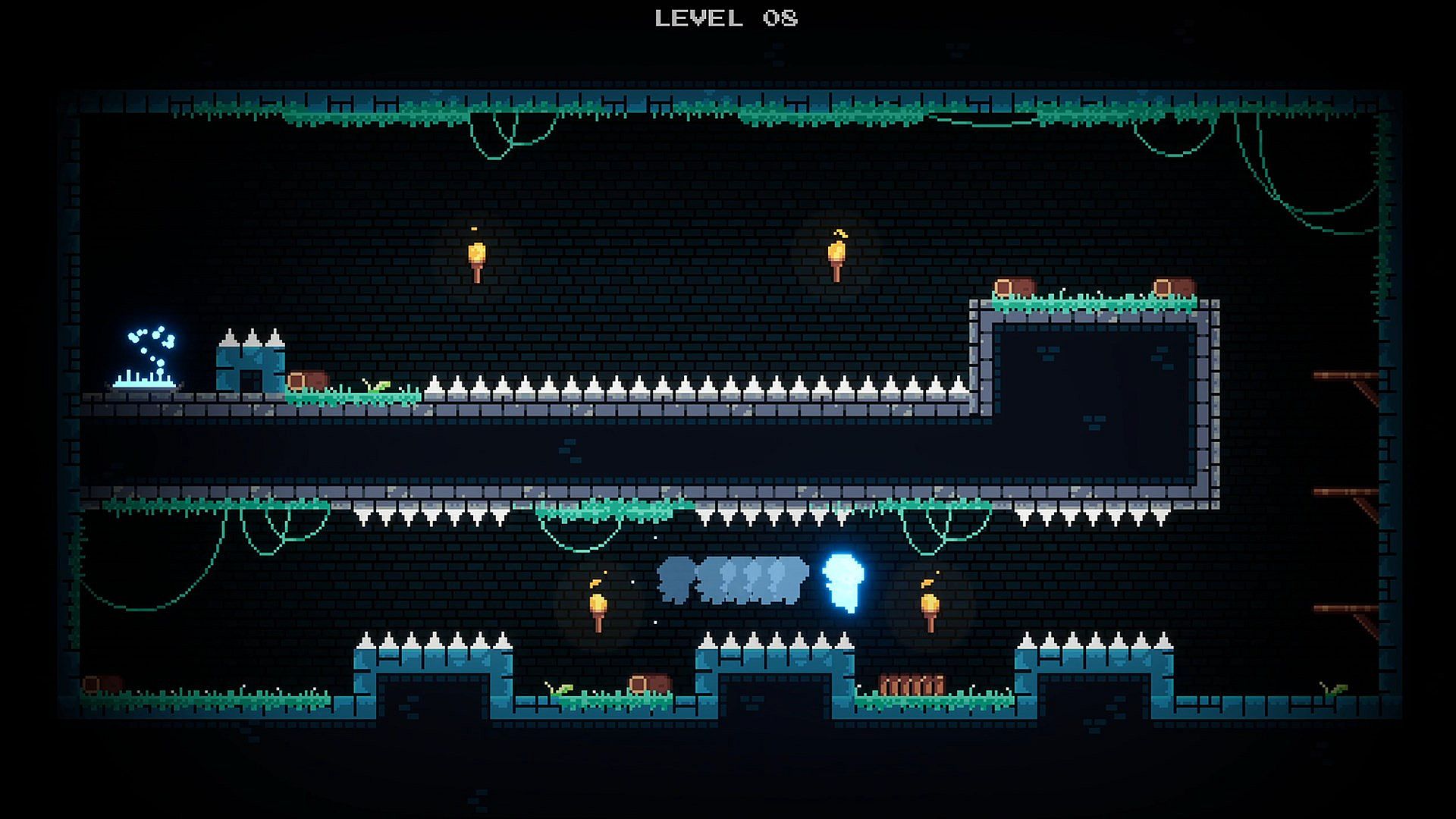
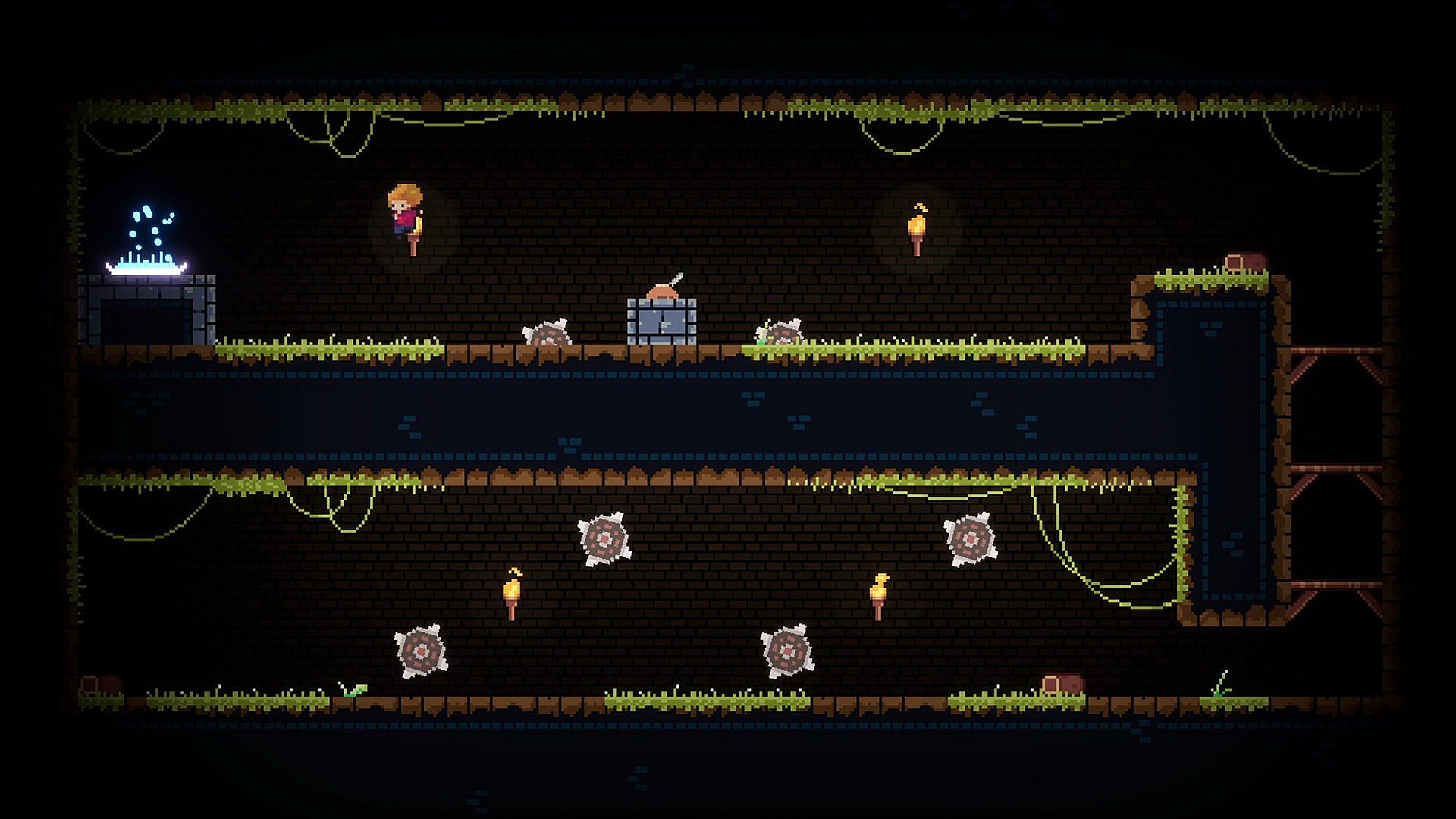
Pixel art presentation keeps the environment dark and focused, highlighting trap placements and safe landing zones without visual clutter. Movement feels responsive at 60 frames per second, rewarding players who experiment with creative paths through the same sections. Early stages introduce basic timing challenges that gradually layer additional hazards, creating a steady increase in demand for both speed and control.
Failure sends the character back to the start of the current segment, encouraging refinement of routes rather than lengthy backtracking. The emphasis stays on execution and personal improvement, with no collectibles or side objectives interrupting the main flow.
Game Modes
The experience consists entirely of single-player platforming challenges. There are no cooperative, competitive, or multiplayer options of any kind. Progression follows a linear sequence of short levels that test the same set of mechanics in new combinations.
Each stage functions as an independent trial, allowing players to attempt sections repeatedly without affecting overall progress. This structure supports focused practice sessions where the goal is consistent completion rather than long campaigns or branching narratives.
Visuals, Audio, and Presentation
Dark pixel art defines the aesthetic, using limited color palettes to emphasize danger zones and movement paths. The style avoids unnecessary detail, keeping attention on the immediate platforming demands. An engaging soundtrack accompanies the action, providing rhythmic cues that align with the timing required for successful dashes and landings.
Technical performance remains stable across supported hardware, with cloud save support and achievement tracking integrated for tracking personal milestones. The package runs on Windows systems as well as Xbox consoles, maintaining the same core experience regardless of input device.
Is It Worth Playing?
Daniel in Danger suits players who enjoy precision platformers that reward mastery of a small set of mechanics over extended periods. Its short level design makes it accessible for quick sessions while still offering meaningful challenge as difficulty scales. Those who prefer games with clear failure states and immediate restarts will find the loop satisfying.
The title has received updates since launch, including Title Update 2, indicating ongoing support for the core content. Achievement lists encourage completionist runs, and the overall package remains compact enough to finish in a few focused hours. Fans of pixel art platformers centered on dash timing and trap avoidance will likely appreciate the focused execution here.
- Single-player only with no multiplayer components
- Emphasis on dash mechanics and controlled falling
- Short, repeatable levels in a dark pixel art setting
- Stable performance with achievement support