




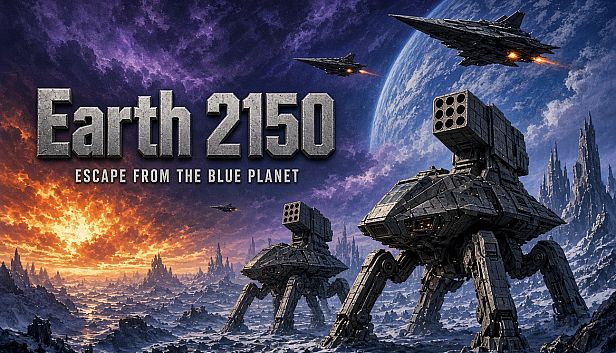






Earth 2150 Escape from the Blue Planet is a real-time strategy game released for PC in 2000. Players command one of three distinct factions in a campaign focused on resource collection and survival as the planet faces destruction.
Gameplay
The core loop centers on base construction, resource harvesting, unit production, and combat across varied missions. Resources appear as crystals scattered on the map, and players must secure mining operations while defending against opposing forces. Units gain experience over time and can be customized by selecting different chassis, weapons, and equipment before deployment. This system encourages experimentation with combinations suited to specific threats or terrain.
Three factions offer contrasting approaches. The United Civilized States relies on robotic mechs and automated systems for durable, high-firepower forces. The Eurasian Dynasty fields more conventional armored vehicles and aircraft with emphasis on mobility and volume of fire. The Lunar Corporation brings advanced technology suited to long-range and specialized roles. Each side features unique units and structures that shape tactical decisions.
Campaign missions often include secondary objectives such as defending key positions or responding to scripted events. A global time limit adds pressure, as players must accumulate sufficient credits to construct evacuation vessels before conditions worsen. Experienced units can transfer between missions when kept at the primary base, rewarding careful management and preservation of veteran forces.
Game Modes
The single-player campaign presents a sequence of missions with some flexibility in order and branching outcomes based on success or failure. Goals range from eliminating all enemy units to protecting assets or amassing resources under time constraints.
Skirmish mode allows standalone battles against computer opponents on custom maps, with full access to research trees and unit options. Multiplayer supports up to eight participants in competitive matches focused on base building and direct confrontation.
Environmental factors such as day-night cycles and weather influence visibility and unit performance across all modes, requiring adjustments to positioning and timing.
Factions and Mechanics
Faction differences extend beyond aesthetics into core systems. United Civilized States units tend toward slower but resilient designs with strong individual firepower. Eurasian Dynasty forces emphasize quantity and speed in ground and air engagements. Lunar Corporation options favor precision and technological edges in longer engagements.
Unit customization applies across factions and allows players to tailor vehicles for roles like anti-air defense or heavy assault. Research unlocks improved weapons and equipment, though availability varies by mission or mode. The absence of infantry shifts focus entirely to vehicles, ships, and aircraft operating on three-dimensional terrain.
Is It Worth Playing?
The game appeals to players who enjoy detailed real-time strategy with emphasis on unit management and long-term planning. Its campaign structure rewards efficient resource use and unit preservation rather than constant expansion. Multiplayer and skirmish options extend replay value for those seeking competitive matches.
Contemporary reception highlighted the title's technical achievements in 3D presentation and the challenge level suited to experienced strategy fans. The mechanics of carrying units forward and customizing designs remain distinctive elements that set it apart from simpler contemporaries. Availability on modern systems through re-releases supports continued play for those interested in classic RTS design.


