


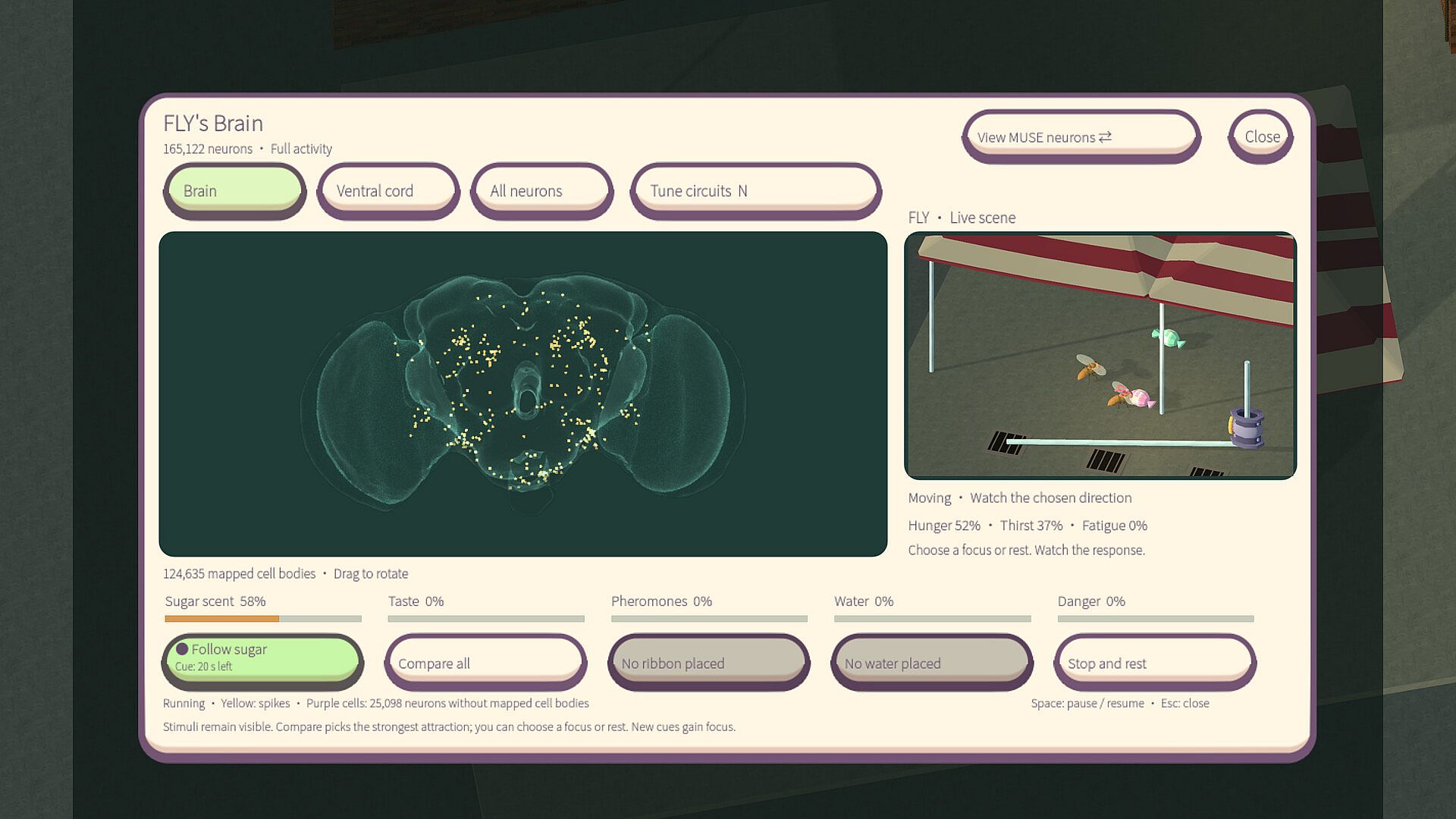
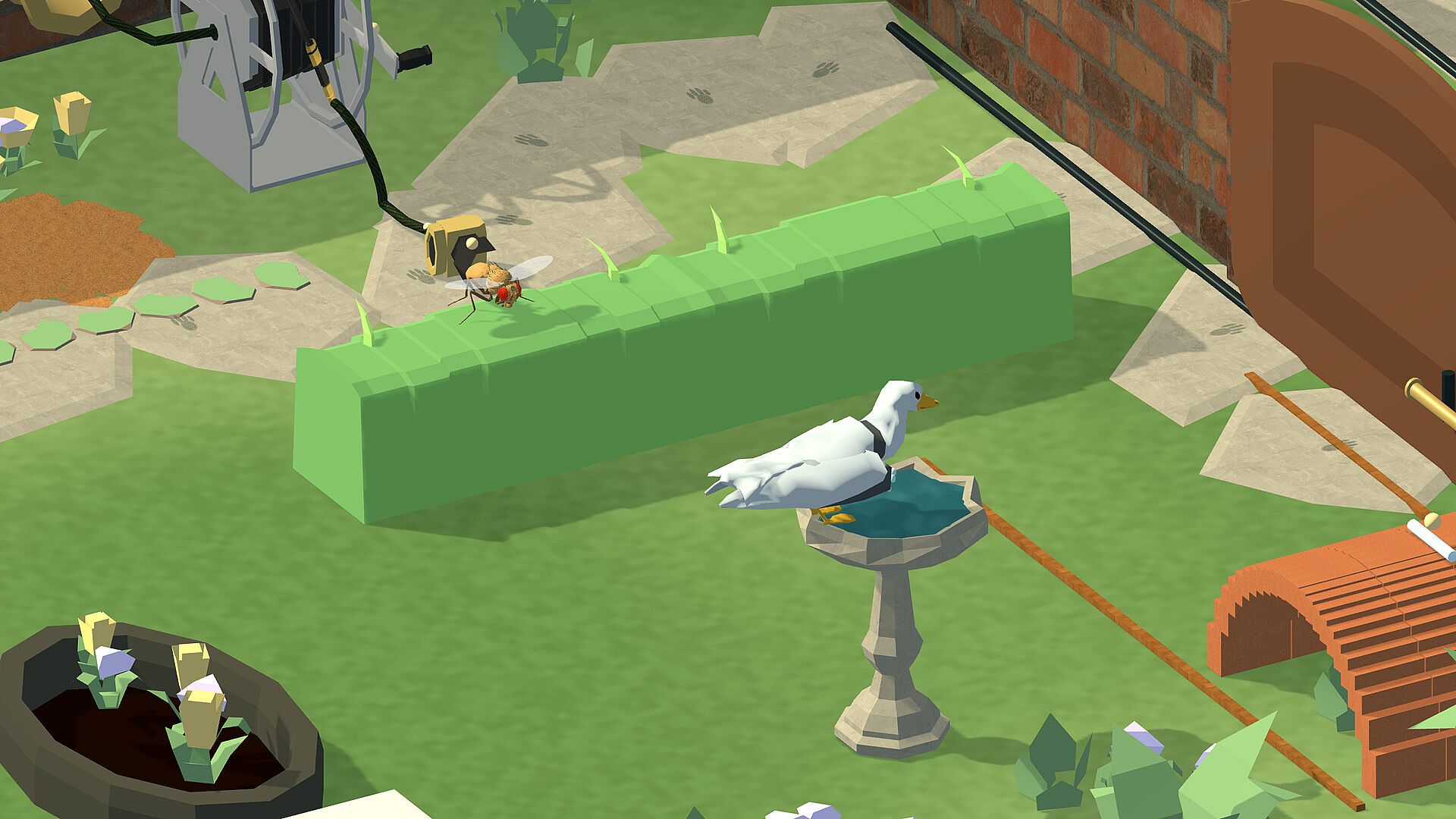
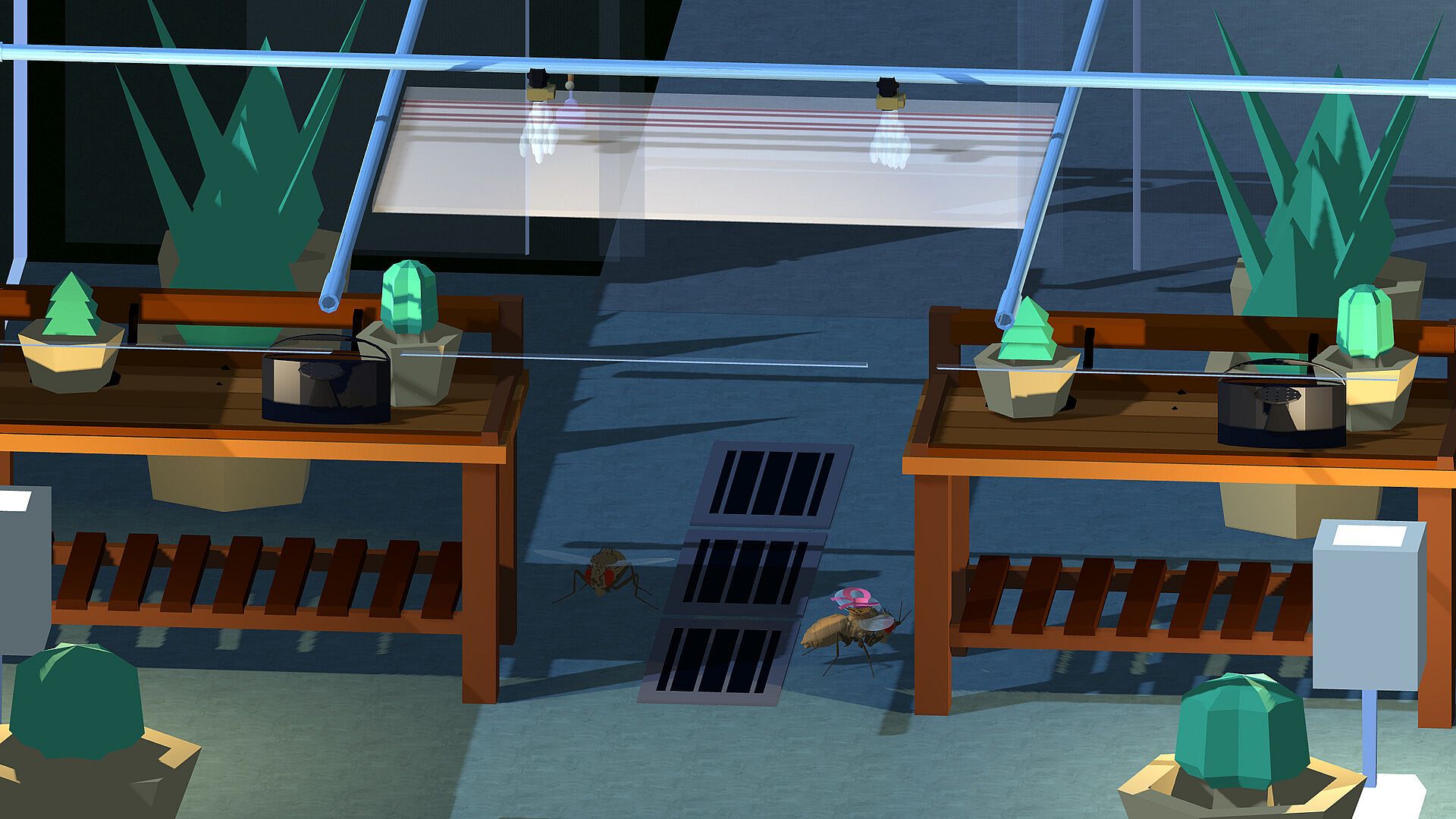
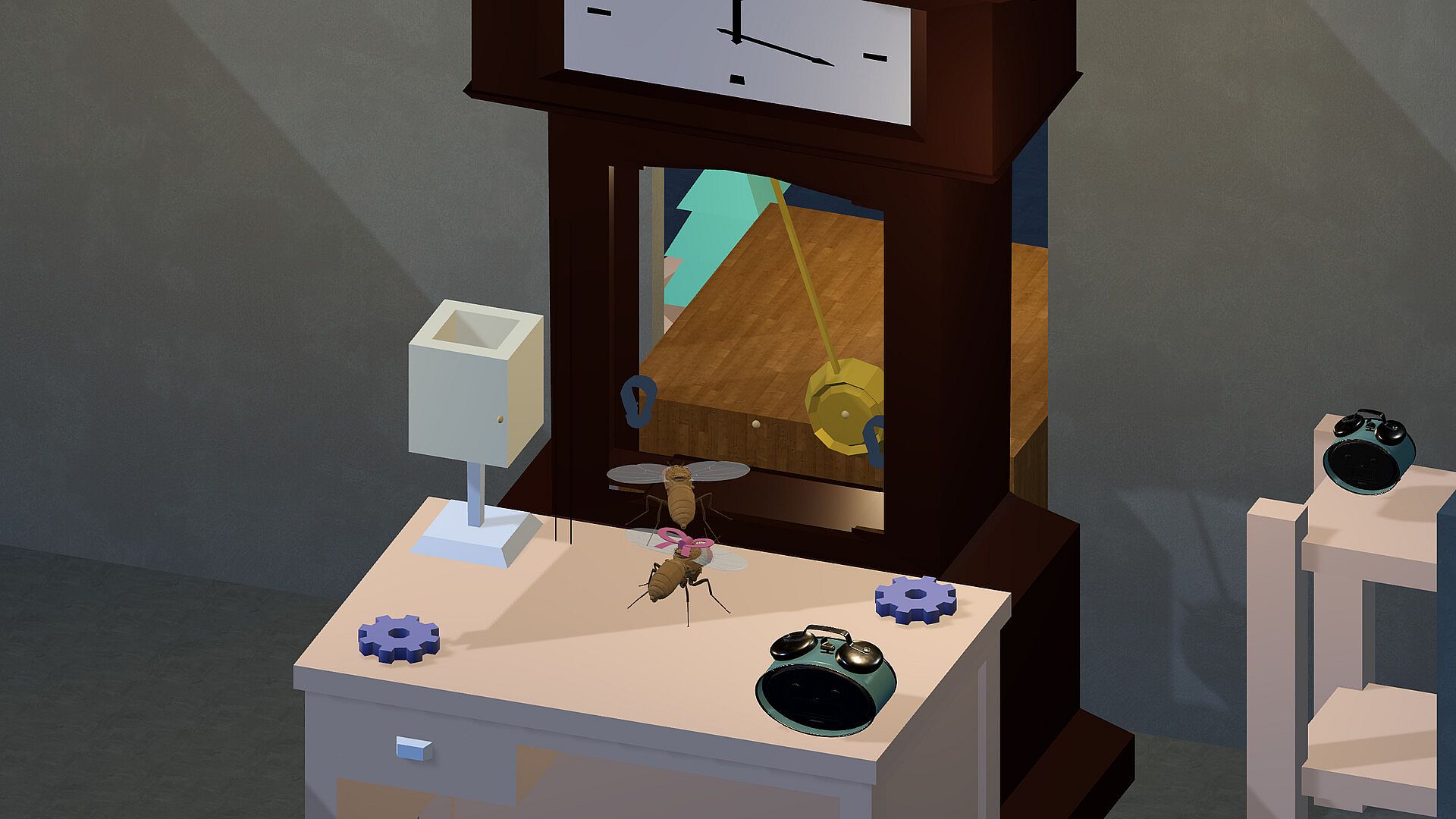

FlyMuse 2 is a single-player strategy, simulation, and adventure game set on PC that places players in control of a semi-conscious electronic fruit fly whose behavior stems from a real fruit fly brain model. Approximately 165,000 neurons and over 25 million neural connections drive its autonomous actions without any pre-written scripts. The experience combines observation of internal brain processes with external puzzle solving and guidance in scaled-up everyday environments.
Gameplay
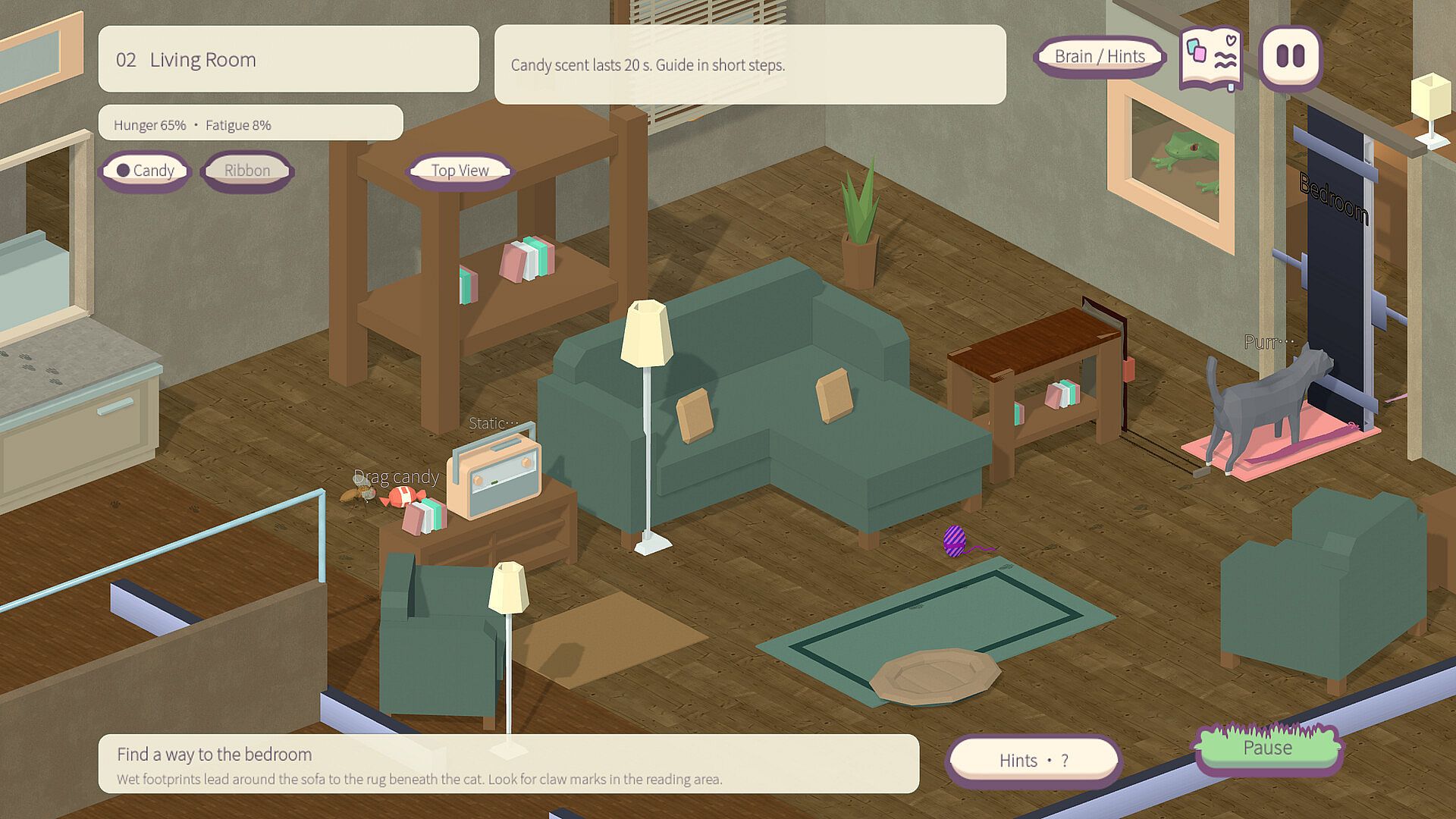
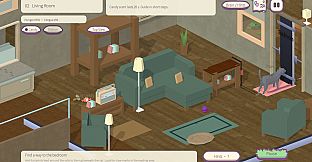
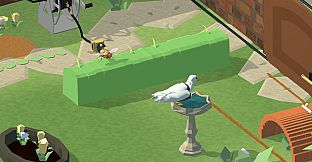
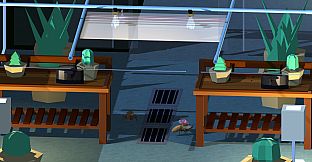
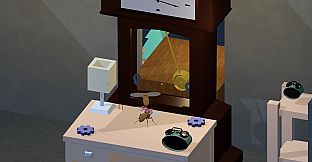
The core loop centers on monitoring and influencing the fly's neural activity while navigating physical obstacles. Players open a brain activity panel to track how stimuli and bodily needs alter neural patterns in real time. Adjustments to circuits produce visible shifts in movement and decision making. External actions include relocating objects, redirecting water flows, and positioning items such as candy, ribbons, or water droplets to guide the fly toward goals. Hunger, thirst, and fatigue levels require ongoing attention to keep the creature responsive. Environments scale ordinary spaces into challenging terrain where sinks form deep drops and furniture creates shelter or barriers. Air currents affect flight paths, and clues scattered through kitchens, living rooms, streets, and underground areas advance an underlying narrative about an interrupted date and the traces left behind.
Game Modes
FlyMuse 2 operates entirely as a single-player experience. No separate competitive or cooperative modes exist. Progression unfolds through sequential environmental challenges that integrate neural tuning with physical manipulation. Players experiment with different circuit configurations and stimulus placements to observe behavioral outcomes, then apply successful approaches to open new paths. The absence of scripted sequences means each session reflects the fly's current semi-conscious state and the player's interventions.
Exploration and Interaction Systems
Exploration occurs simultaneously in the visible world and within the fly's neural structure. Everyday items gain new utility when viewed at insect scale, turning a plank into a bridge or a leaf into cover. Stimulus placement encourages the fly to walk, fly, or land at specific points while the player monitors energy states. Once a mechanism clears an obstacle, continued guidance ensures the fly actually traverses the newly opened route. The system rewards careful observation of how external changes affect internal neural responses and vice versa.
Is It Worth Playing?
FlyMuse 2 targets players who enjoy detailed simulation combined with light puzzle solving and narrative discovery. Its unique foundation in a mapped fruit fly connectome offers a distinct approach to artificial life mechanics that differs from traditional scripted companions. The game remains in development with a planned release in November 2026 and currently carries no user reviews. Those drawn to systems that let them tune neural circuits, reshape small-scale environments, and follow an autonomous creature through scaled everyday settings will find the described features align closely with that interest. Availability will be on PC through standard digital storefronts once released.