







Huanhai: A Career in Ink is an indie roguelike simulation RPG set in a fictional ancient Chinese dynasty. Players take on the role of a scholar-official starting at the lowest county level and navigating a system where advancement depends on performance metrics, connections, and careful management of resources over multiple years.
Gameplay
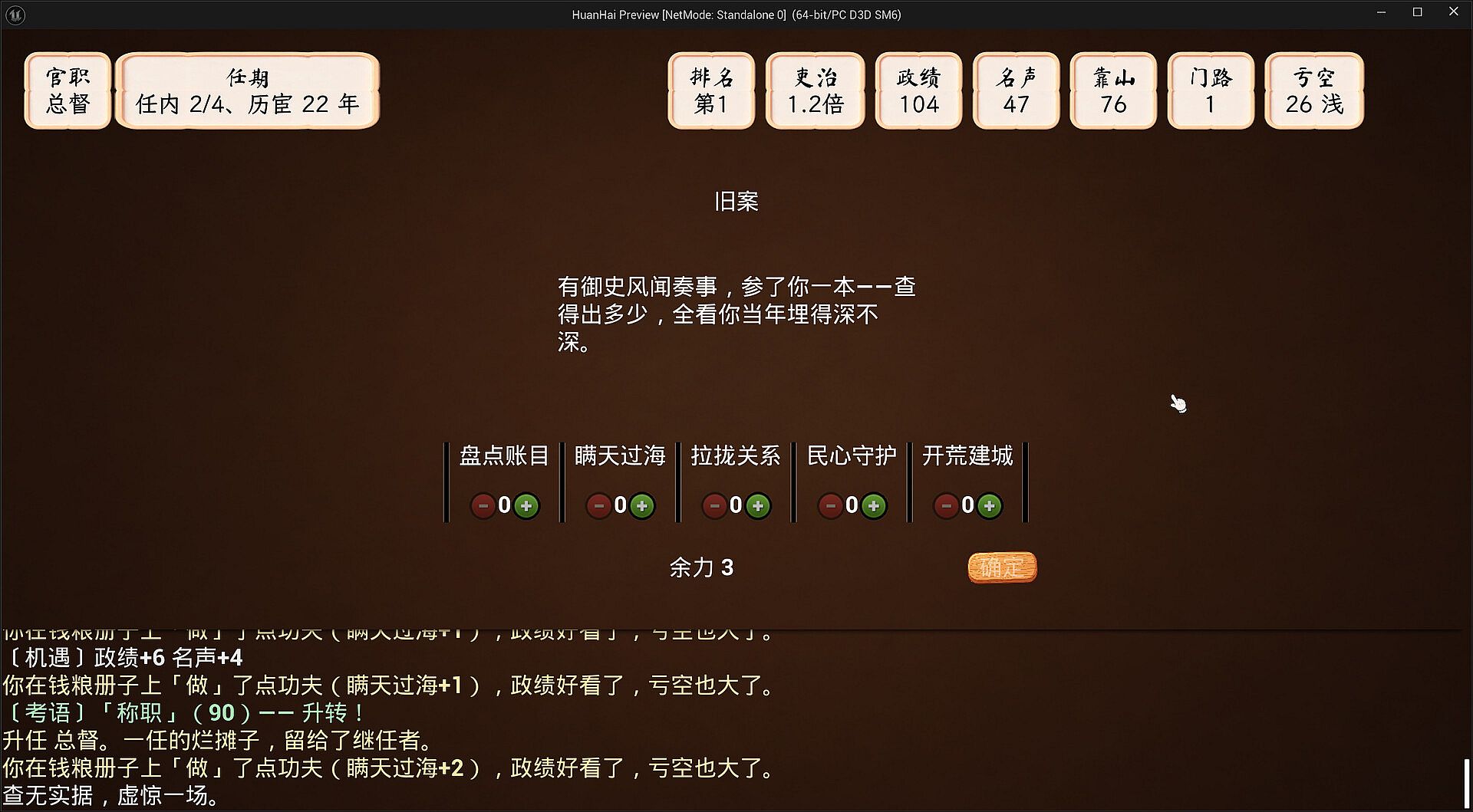
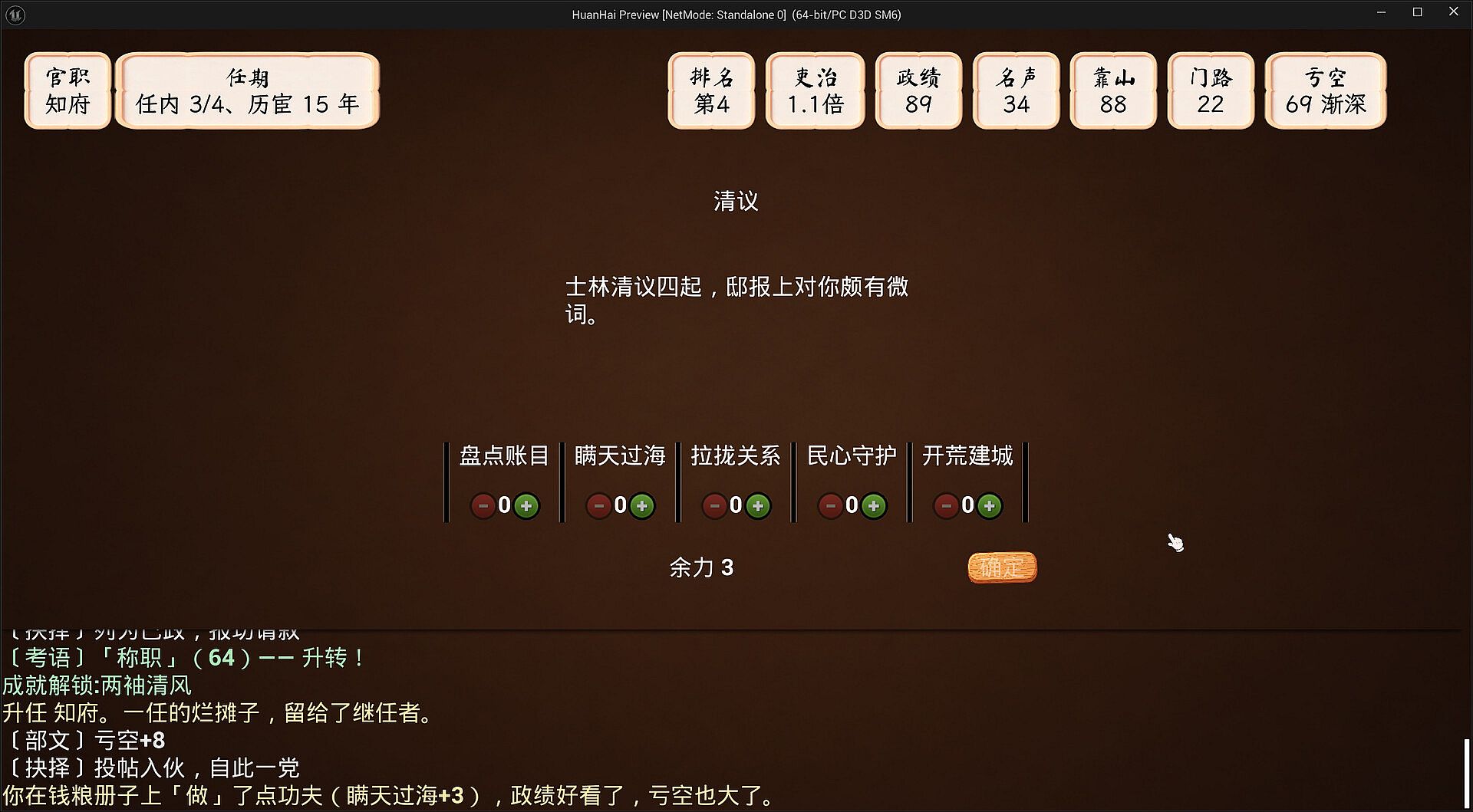
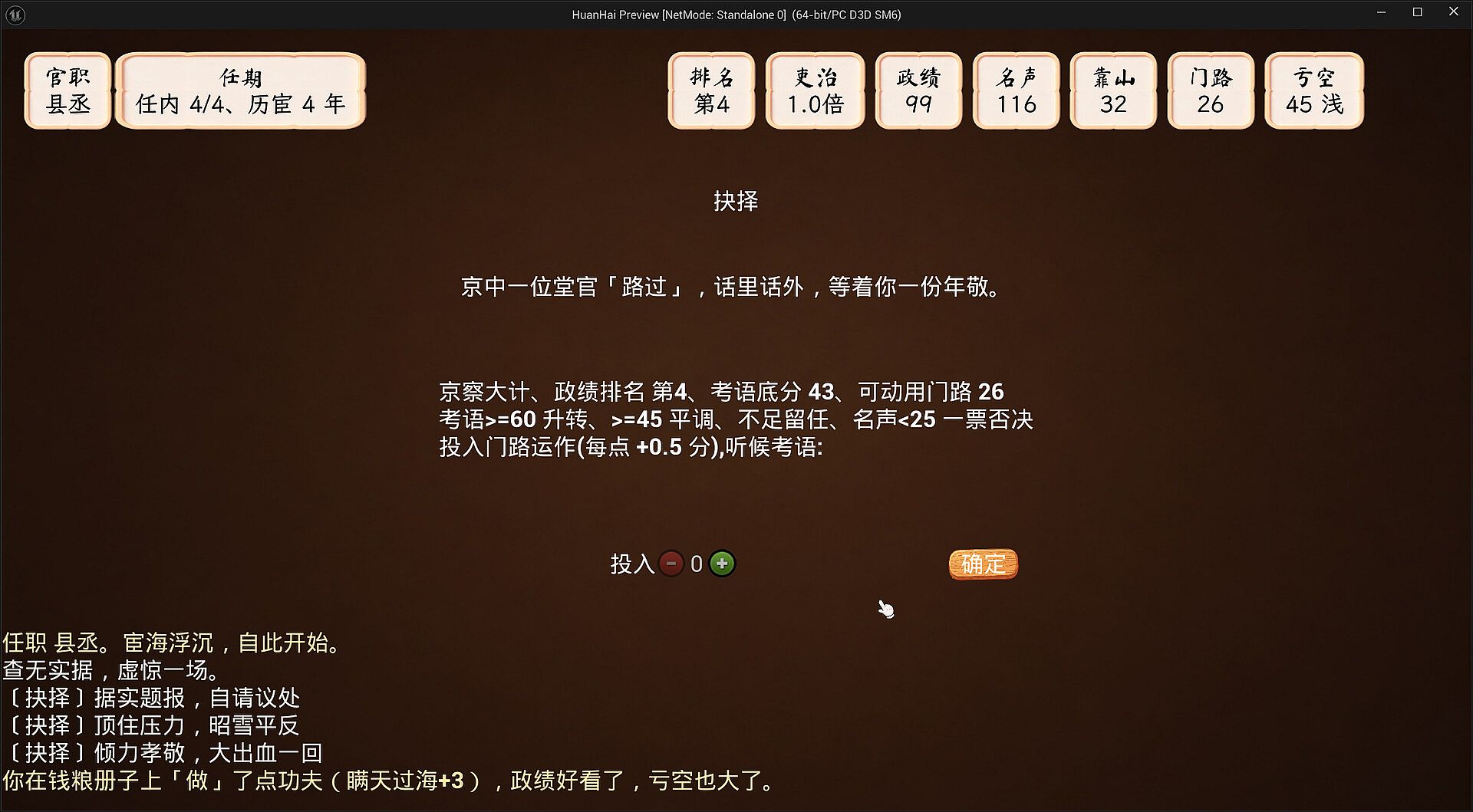
The core loop revolves around yearly allocation of limited energy points across five main actions: land reclamation and city building, protecting public sentiment, building relationships, concealing irregularities, and auditing accounts. These choices directly influence five key attributes that track progress and risk. Performance determines promotion rankings, while reputation must stay above a threshold to avoid elimination from office. Connections provide operational leverage, and accumulated shortfalls represent hidden liabilities that can surface during inspections.
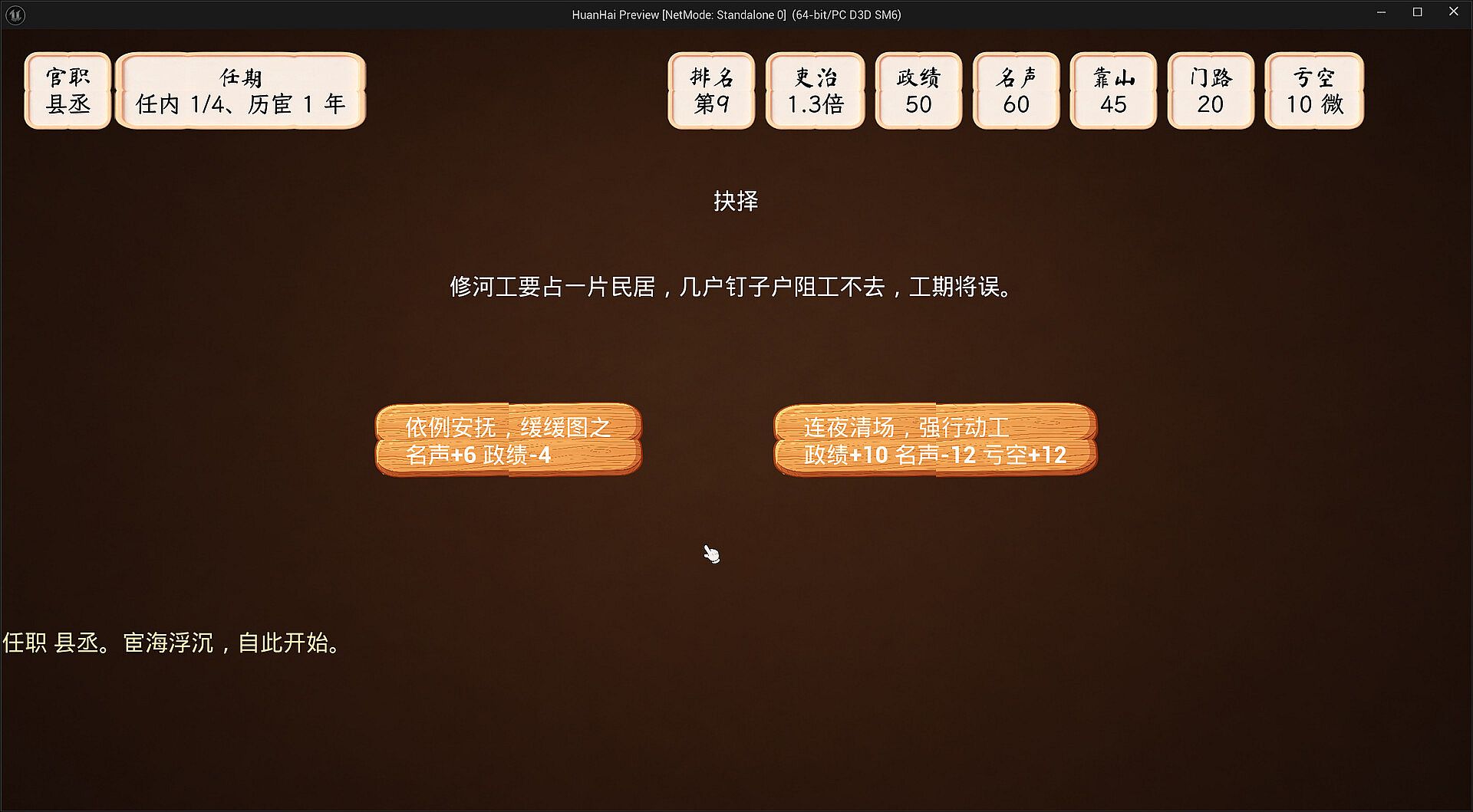
Random events force decisions between truthful reporting and more favorable presentations, such as underreporting mine issues or handling complaints from disaster victims. Every four years, a major evaluation determines advancement based on connections, networks, and standing. Deeper shortfalls increase the chance of past actions being exposed. The game presents these pressures through the rules of the bureaucracy itself rather than explicit moral prompts, creating gradual shifts in approach over the course of a run.
Narrative delivery uses concise official-style reports that vary with each playthrough due to the numerical systems. An in-game dictionary explains specialized terms related to official procedures and relationships. Character progression includes visual stages reflecting the toll of the career. All elements support single-player runs on PC with no multiplayer components.
Game Modes
The game operates as a single-player roguelike experience centered on repeated career simulations. Each run begins at the entry-level position and continues year by year until one of five possible conclusions is reached, after which a new attempt starts with fresh variables. There are no separate named modes or multiplayer options; the structure emphasizes procedural variation through the energy allocation, event choices, and attribute tracking within the core career progression.
Players manage a private ledger alongside official records, with mechanics for concealing or addressing discrepancies that affect later audits. Clerk recruitment and oversight add layers to daily operations, while district conditions influence external pressures. The system supports full playthroughs from starting rank up to high positions or early exits, with outcomes determined by the balance of performance, networks, and hidden risks.
Key Mechanics and Systems
Five endings reflect different career resolutions, ranging from severe repercussions to honorable retirement or complete avoidance of consequences. Promotion paths involve two routes tied to the evaluation system, and the private records interact with censor reviews that reference specific years. The design keeps all decisions grounded in practical trade-offs within the bureaucratic framework, with no direct option for outright malice outside the incentives of the rules.
Procedural elements ensure each run differs through event triggers and the cumulative effects of prior choices. The built-in reference tool allows quick lookup of terminology without interrupting flow. Visual and narrative elements adapt to the state of the character and the district over the simulated decades.
Current State and Development
The title is scheduled for Early Access release on November 10, 2026. The planned build includes the complete core systems for energy management, attribute tracking, events, evaluations, and endings. Additional content such as expanded documents, deeper clerk interactions, and refined balance will follow based on player input during the Early Access period, which is expected to last six to twelve months.
Minimum system requirements support Windows 10 or later with modest hardware, making it accessible on a wide range of PCs. The experience remains fully contained within single-player sessions focused on the described simulation loop.
Is It Worth Playing?
Huanhai: A Career in Ink targets players interested in strategy roguelikes and simulation games that emphasize resource management and long-term consequences within a constrained system. The mechanics create tension through repeated small decisions rather than dramatic choices, suiting those who enjoy analyzing trade-offs across multiple attempts.
With no user reviews available prior to release, the appeal rests on the verified structure of yearly turns, attribute balancing, and five distinct endings. Fans of procedural career simulations or games where rules drive player behavior will find the described systems align closely with that style. Those seeking action-oriented or multiplayer experiences should look elsewhere, as the title stays strictly within its single-player roguelike framework.