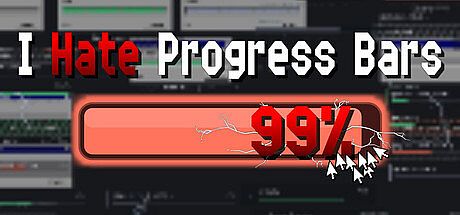


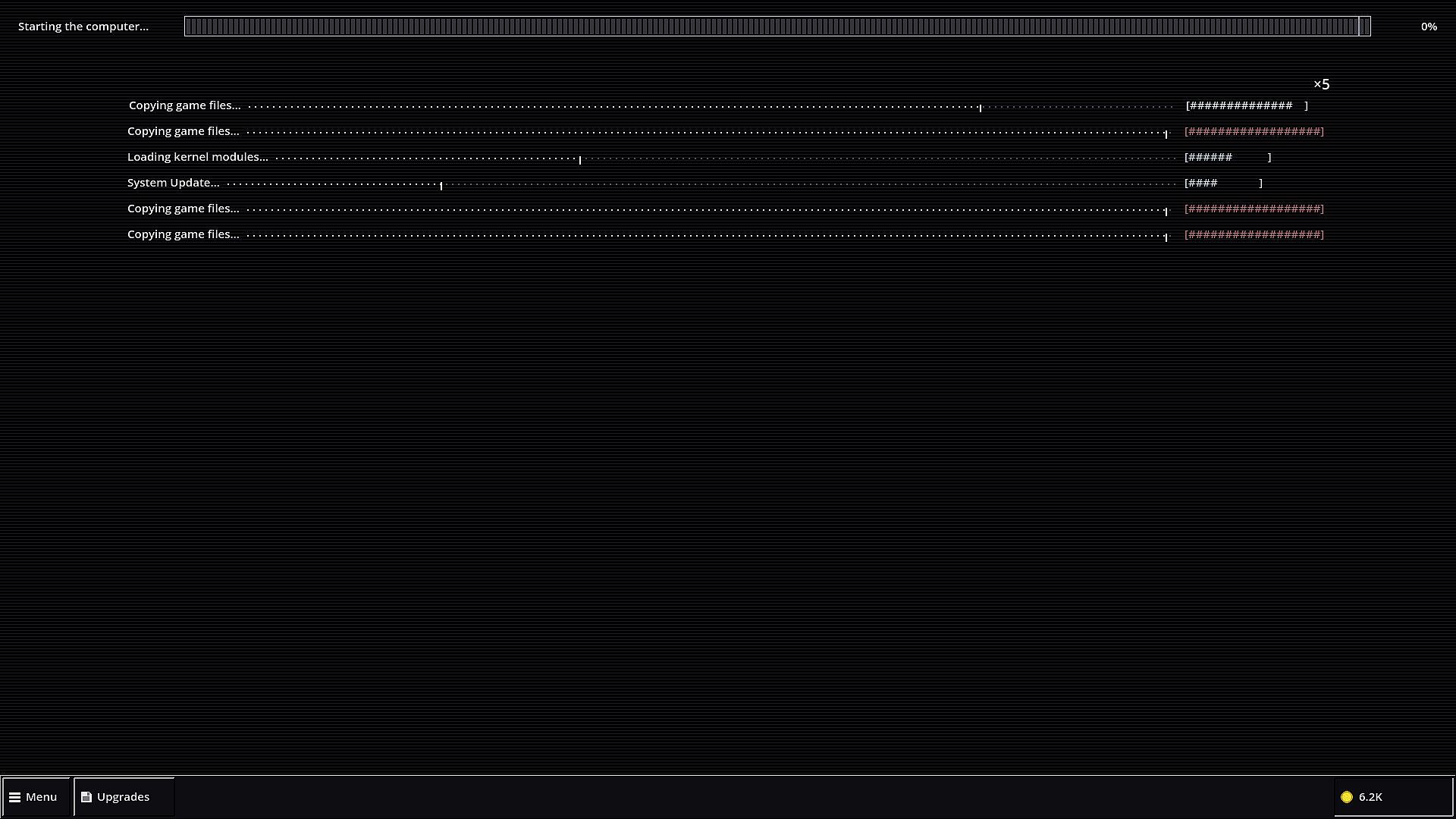
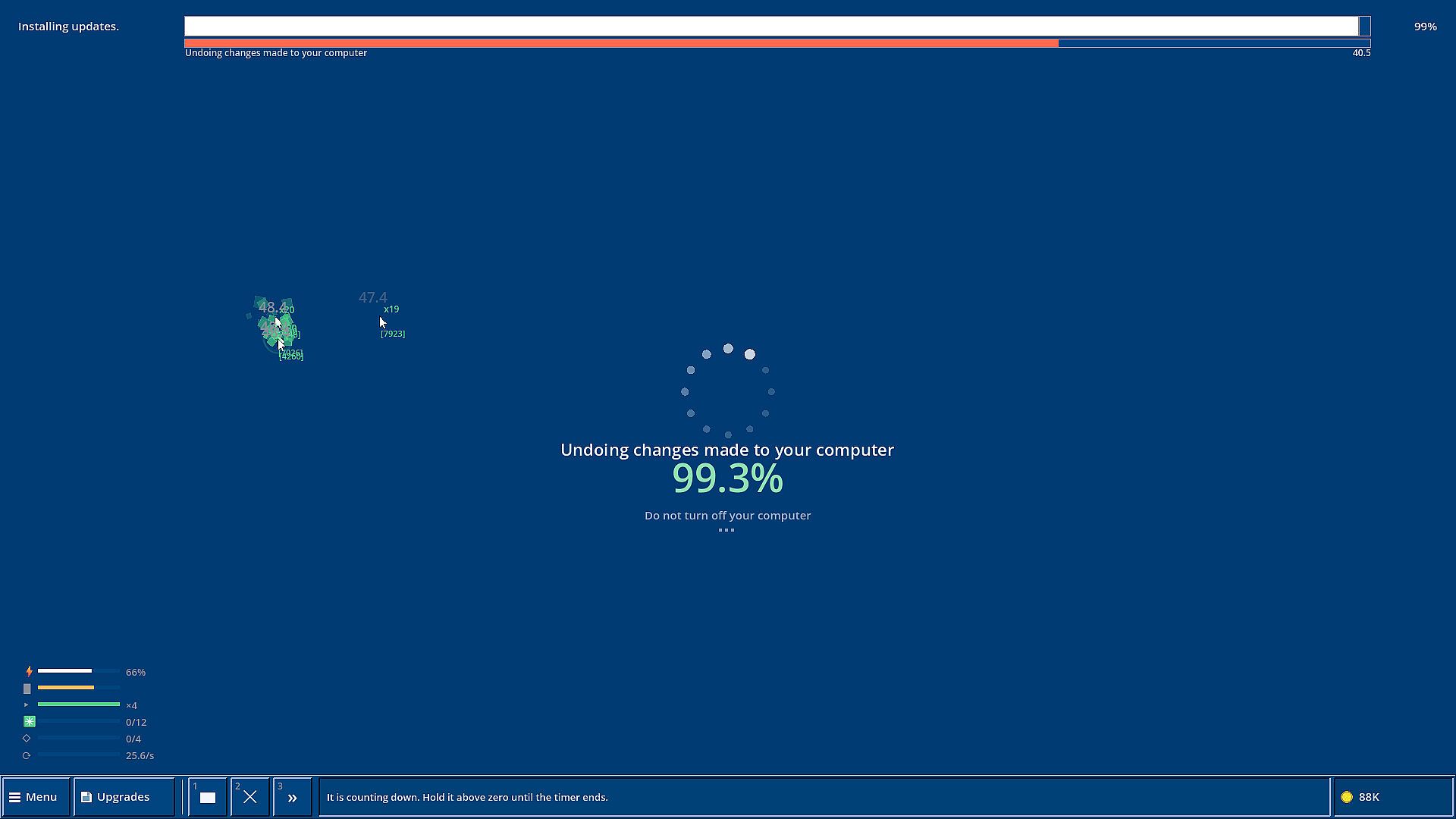
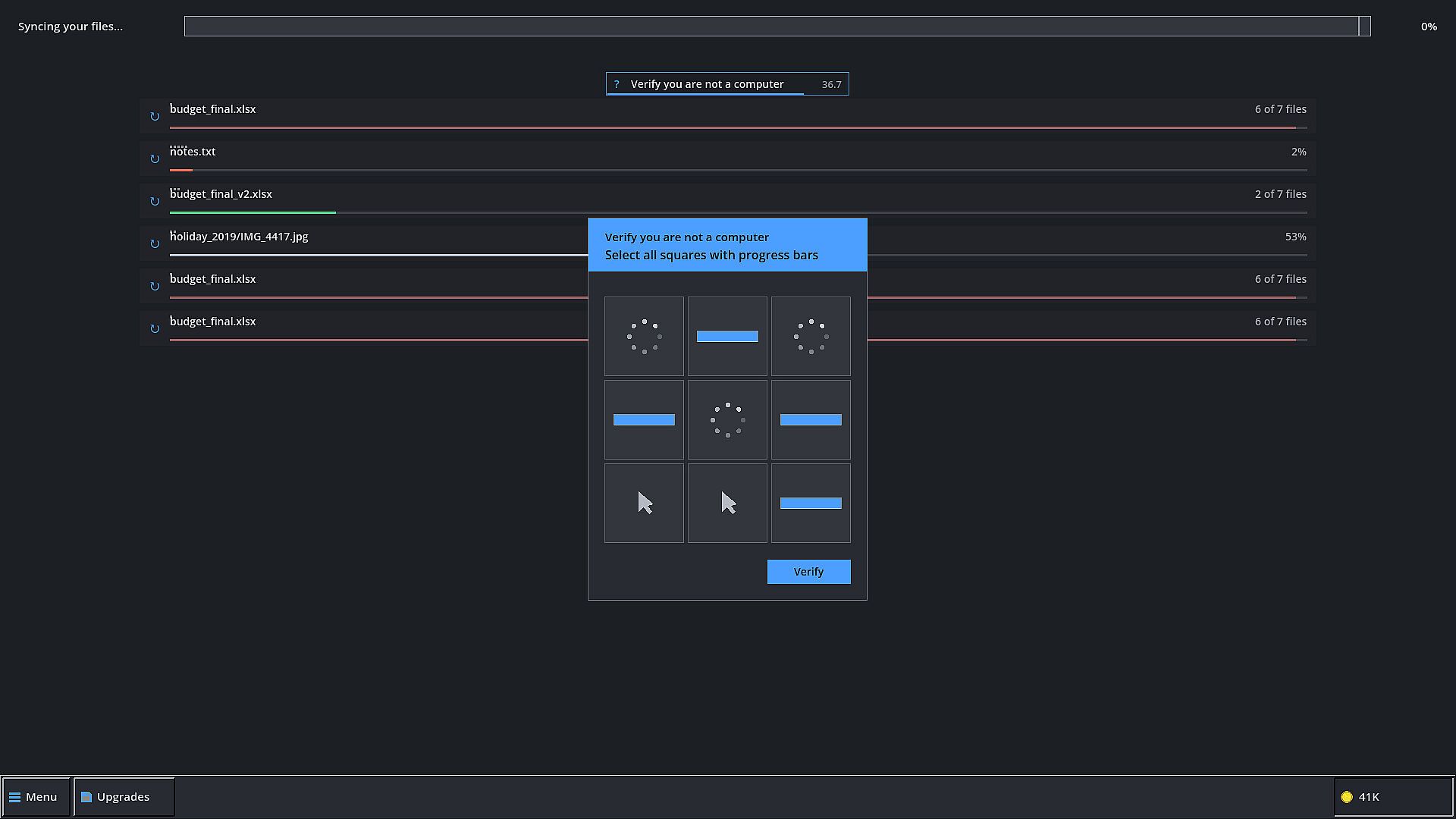
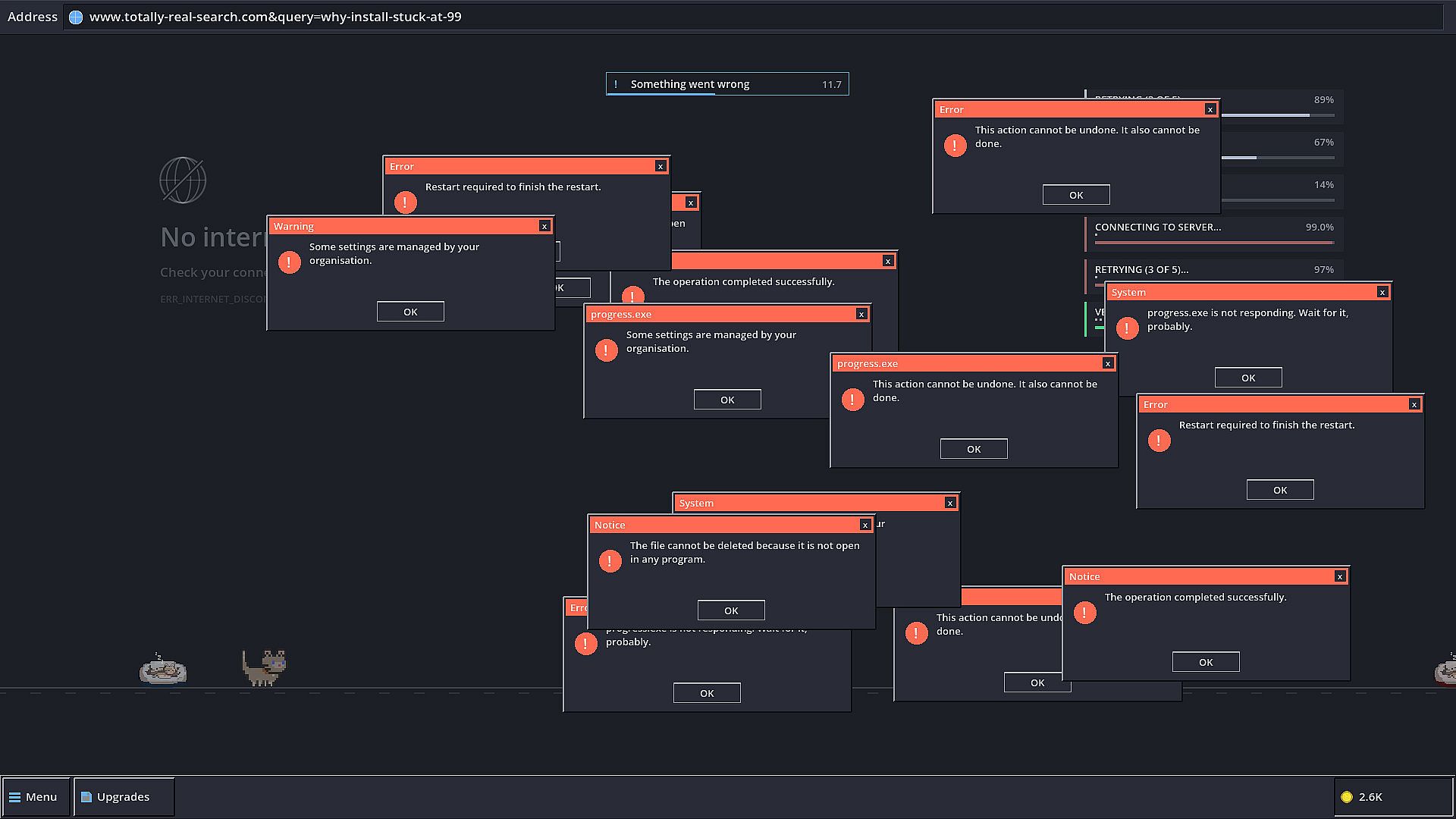
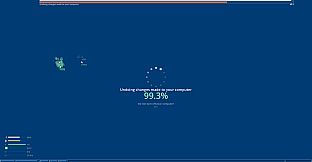
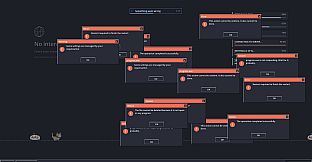
I hate progress bars is a casual simulation incremental clicker game built around the frustration of stalled downloads and installations on PC. Players step into the role of someone who has just purchased a new title only to watch the progress bar crawl forward before freezing at 99 percent, forcing manual intervention to reach completion. The core loop revolves around clicking directly on these bars to push them ahead while dealing with repeated stalls that require extra effort to overcome.
Gameplay
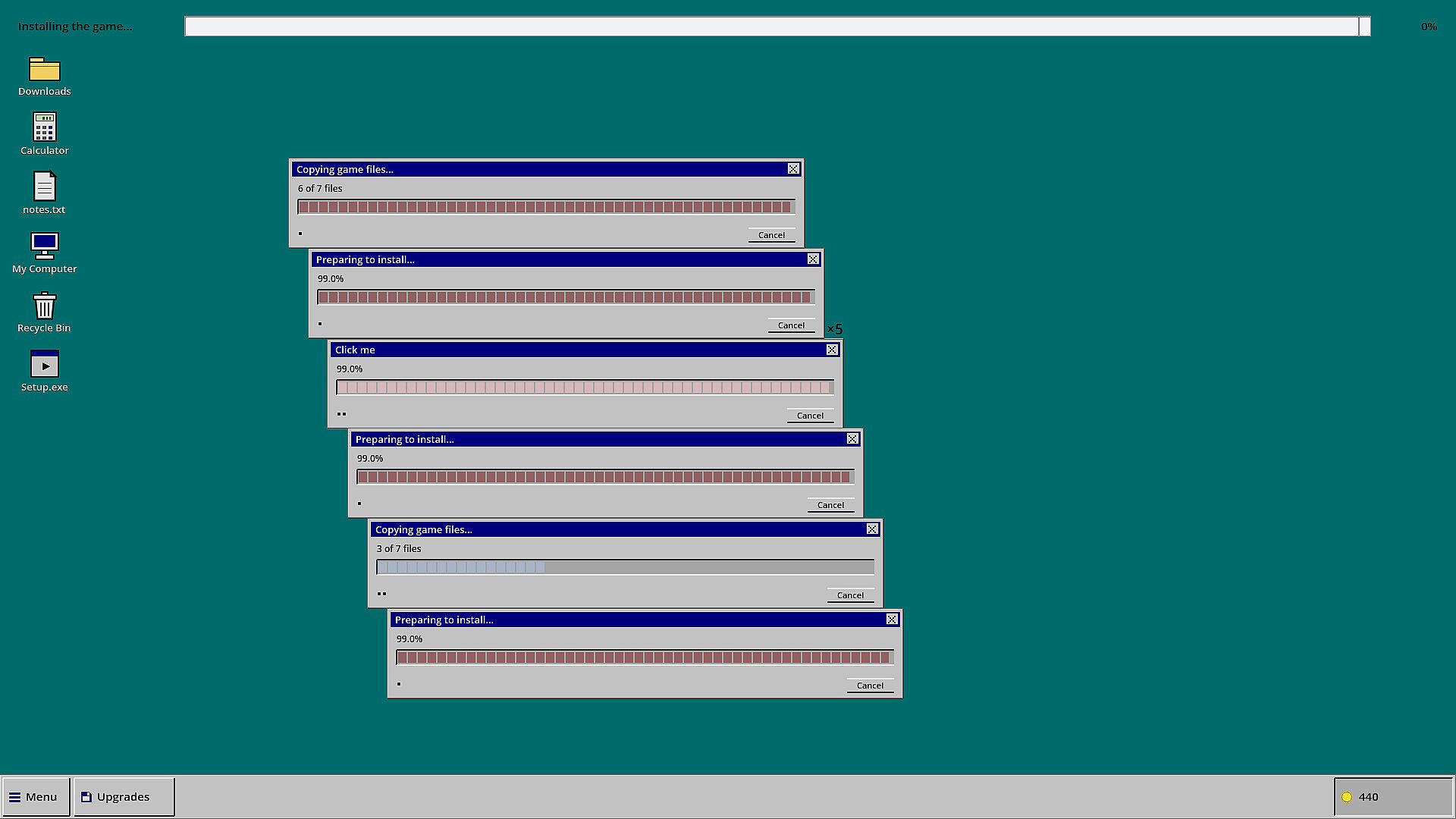
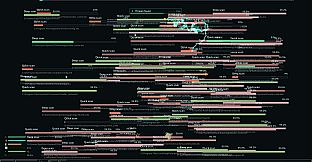
The central activity involves interacting with progress bars that represent various software processes. Each bar advances when clicked but consistently halts near the end, demanding repeated inputs to force the final segment. This mechanic captures the real-world annoyance of waiting through downloads, updates, and installs by turning it into active participation rather than passive observation. Over time, the screen fills with multiple bars operating simultaneously, shifting the focus from individual clicks to managing several stalled processes at once.
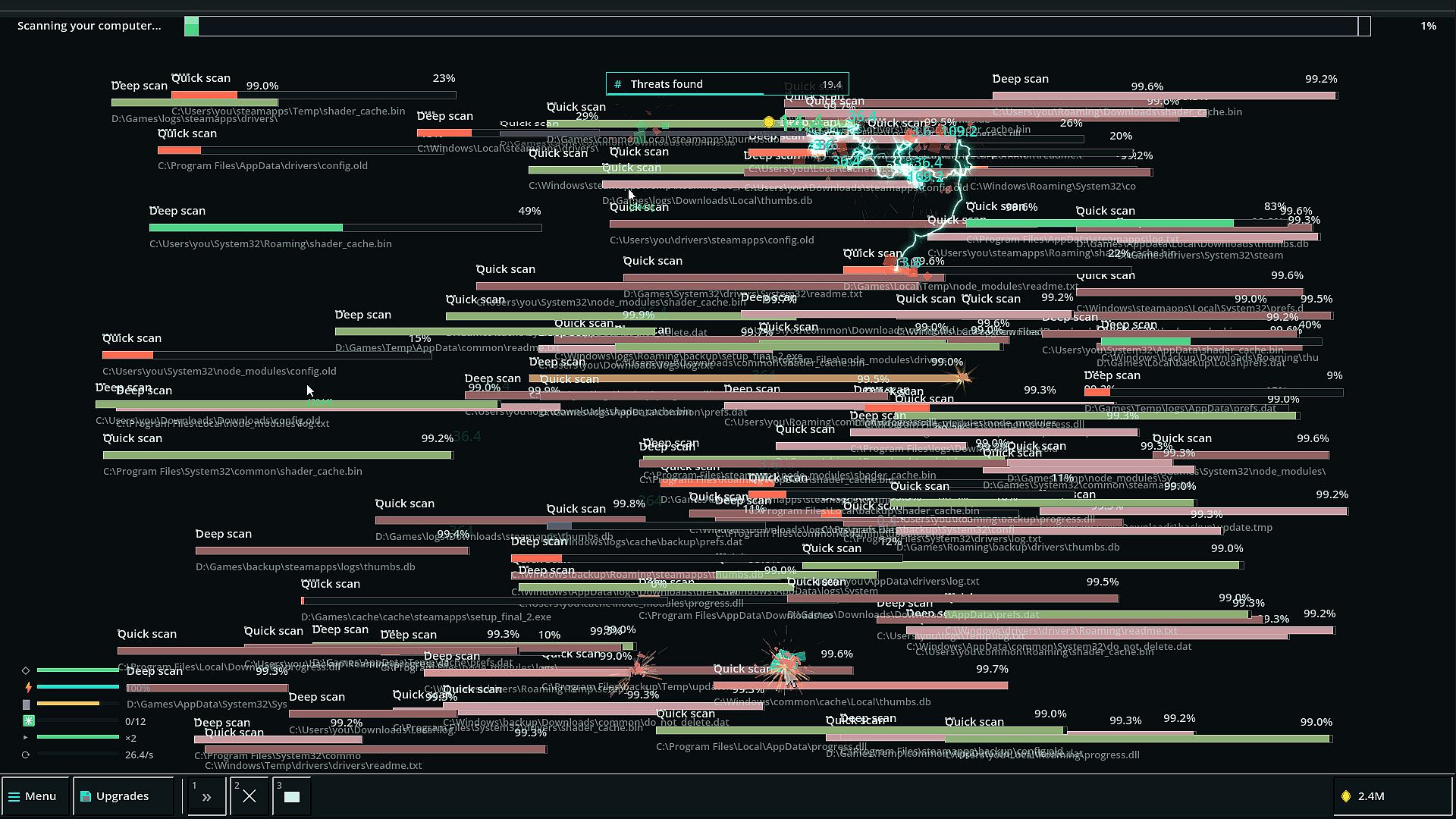
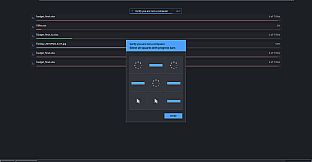
Chapters introduce variety through distinct visual styles and mechanical twists tied to specific software scenarios. One chapter might center on an installer with its own set of bars and obstacles, while another shifts to a boot screen or system scan that alters how bars behave or what stands in the way of reaching 100 percent. These changes keep the incremental progression fresh without relying on external elements.
Game Modes
The experience unfolds across multiple chapters, each functioning as a self-contained segment with unique aesthetics, bar interactions, and a concluding boss encounter. These chapters draw from everyday software frustrations such as installers, boot sequences, synchronization routines, and security scans. Progression moves sequentially through the chapters, building toward larger-scale automation where individual clicks give way to broader system-level assistance.
No separate competitive or cooperative modes exist beyond the single-player structure. The chapter format serves as the primary way to experience the game's escalating complexity, with each one presenting fresh challenges in bar management and visual presentation.
Progression and Automation
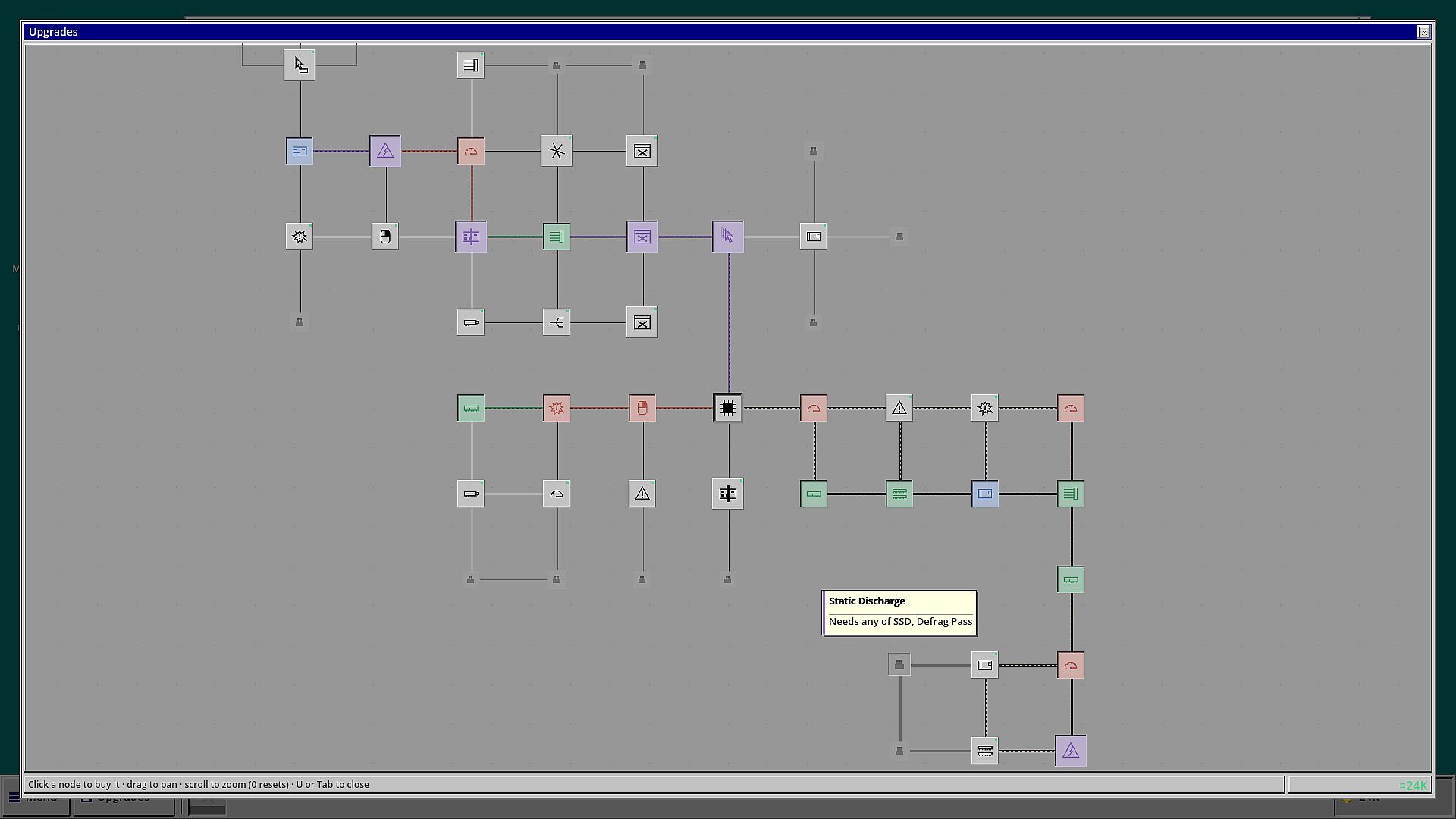
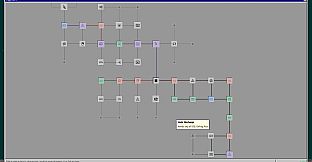
Skills unlock through a dedicated tree that gradually reduces reliance on manual clicking. Early options focus on stronger individual clicks, while later upgrades introduce self-filling bars, sweeping beams across the screen, and automatic cursors that handle tasks independently. This system transforms the early stages of constant input into later phases where the player observes automated systems handling the workload.
The skill tree encourages strategic choices about which upgrades to prioritize, balancing immediate bar-clearing power with long-term automation. By the later chapters, the setup allows the player to step back as the unlocked tools manage multiple bars and obstacles without constant direction.
Is It Worth Playing?
This incremental clicker targets players who enjoy simulation-style progression loops centered on automation and incremental gains. The premise directly addresses common irritations with software waiting times through its chapter-based structure and skill unlocks. Since the game remains unreleased with no player reviews available, any assessment rests on how well the described mechanics align with preferences for casual, single-player experiences on PC.
Those drawn to short sessions of clicking and upgrading will find the core loop straightforward, while the shift toward automation provides a clear sense of advancement across the chapters. The absence of multiplayer elements keeps the focus entirely on personal progression through the themed segments.