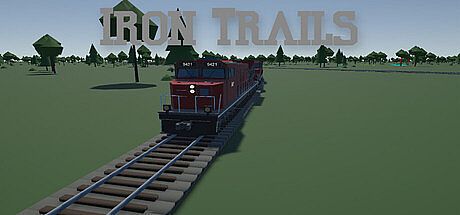


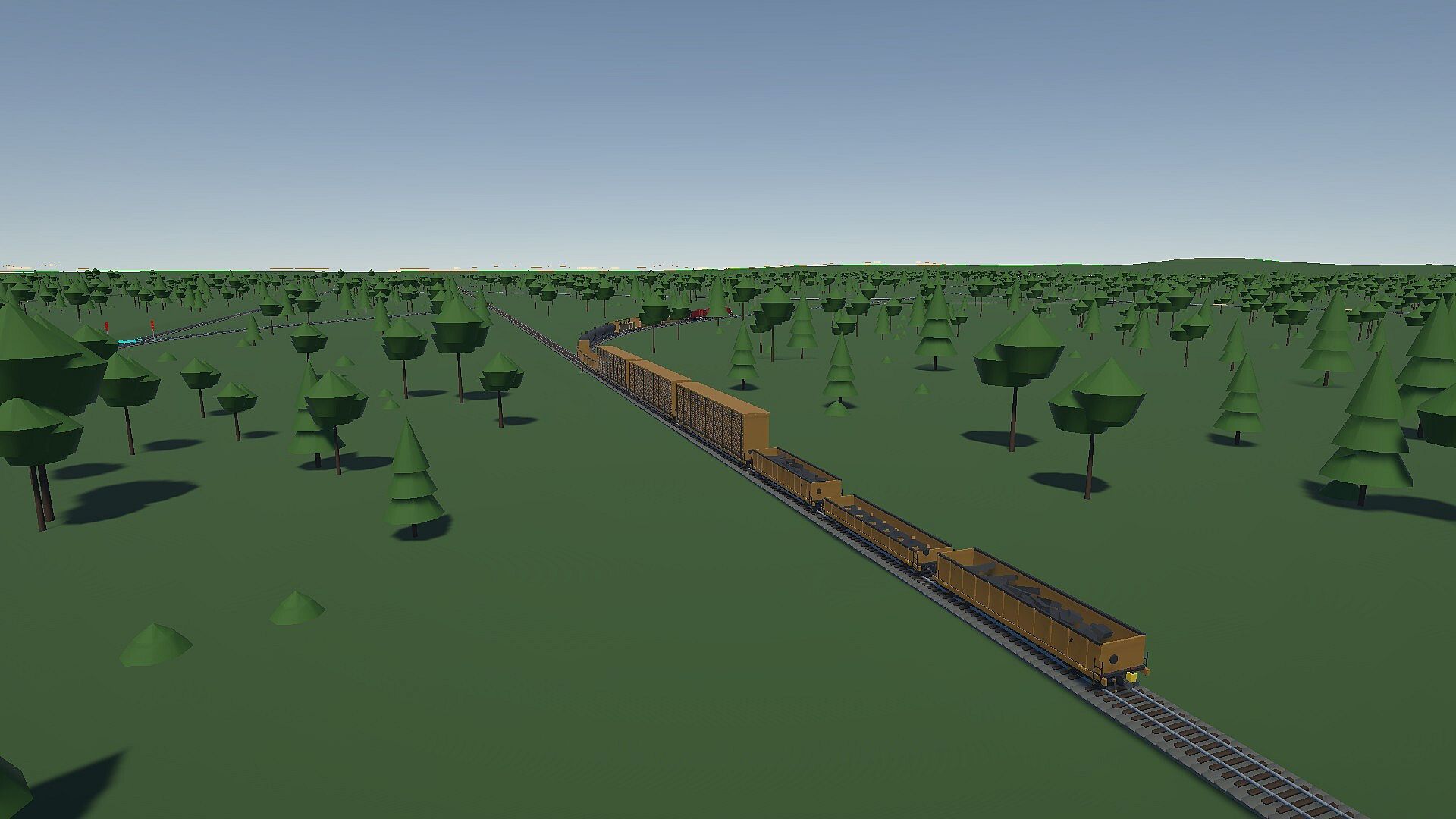
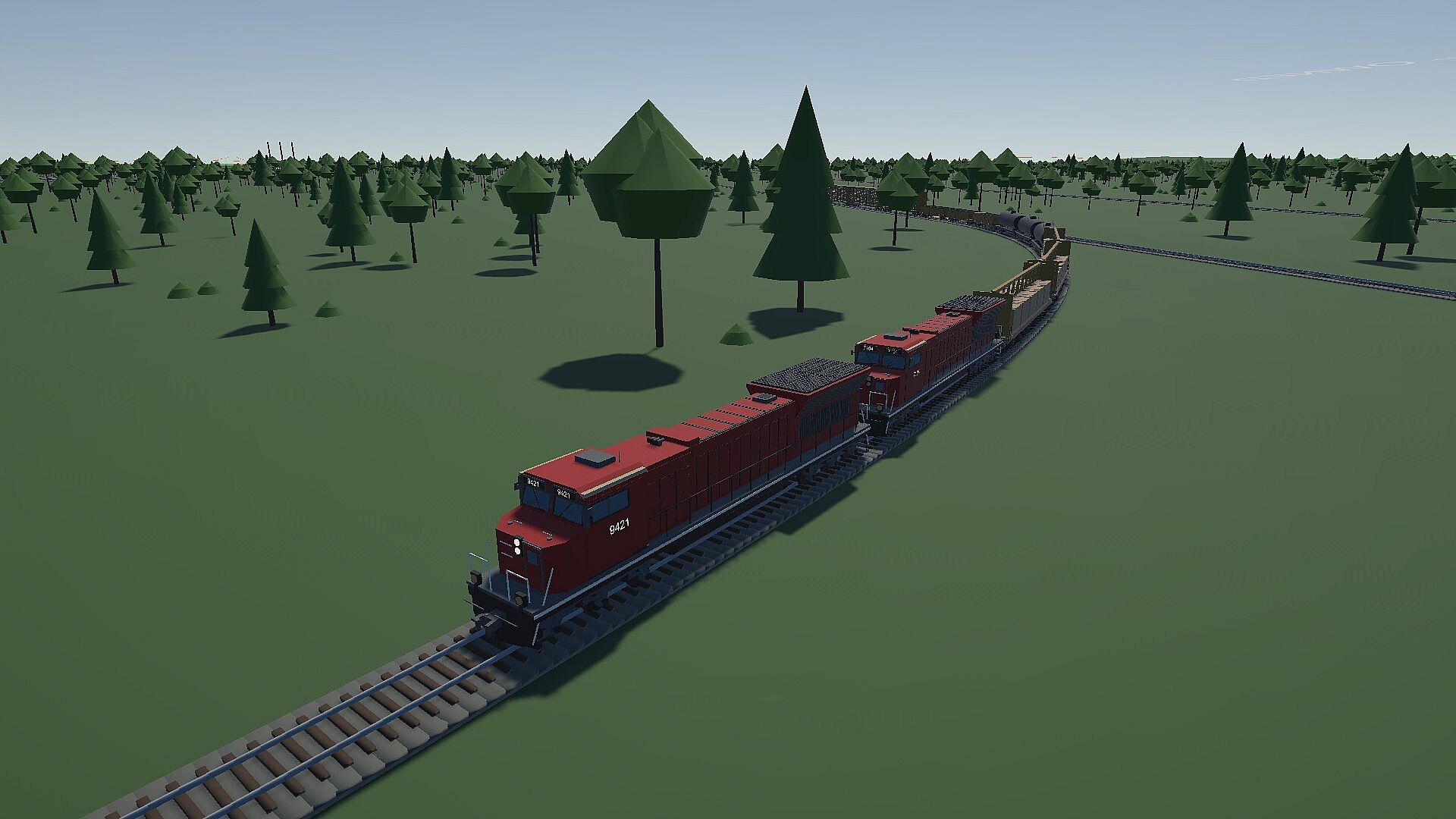
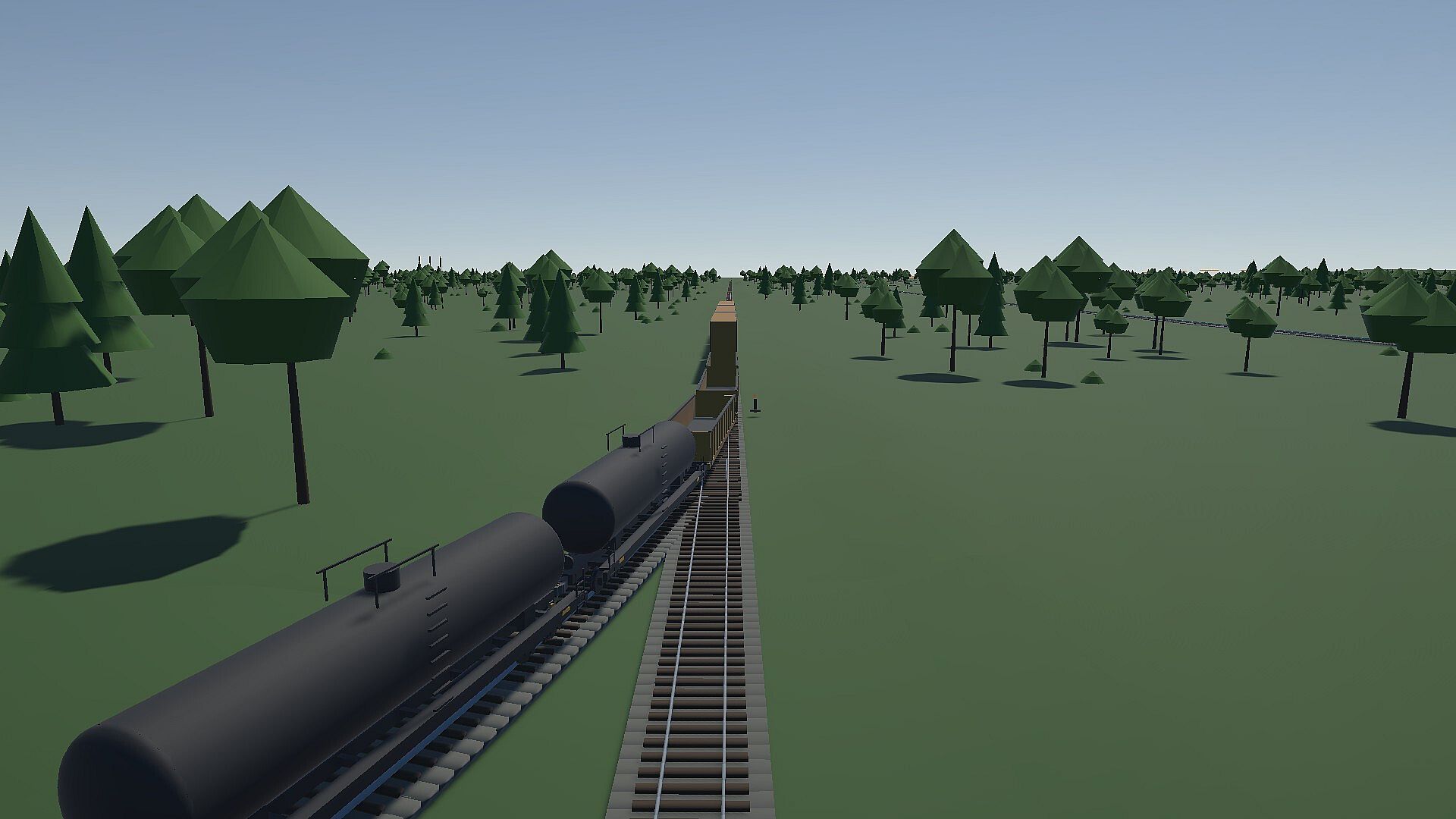
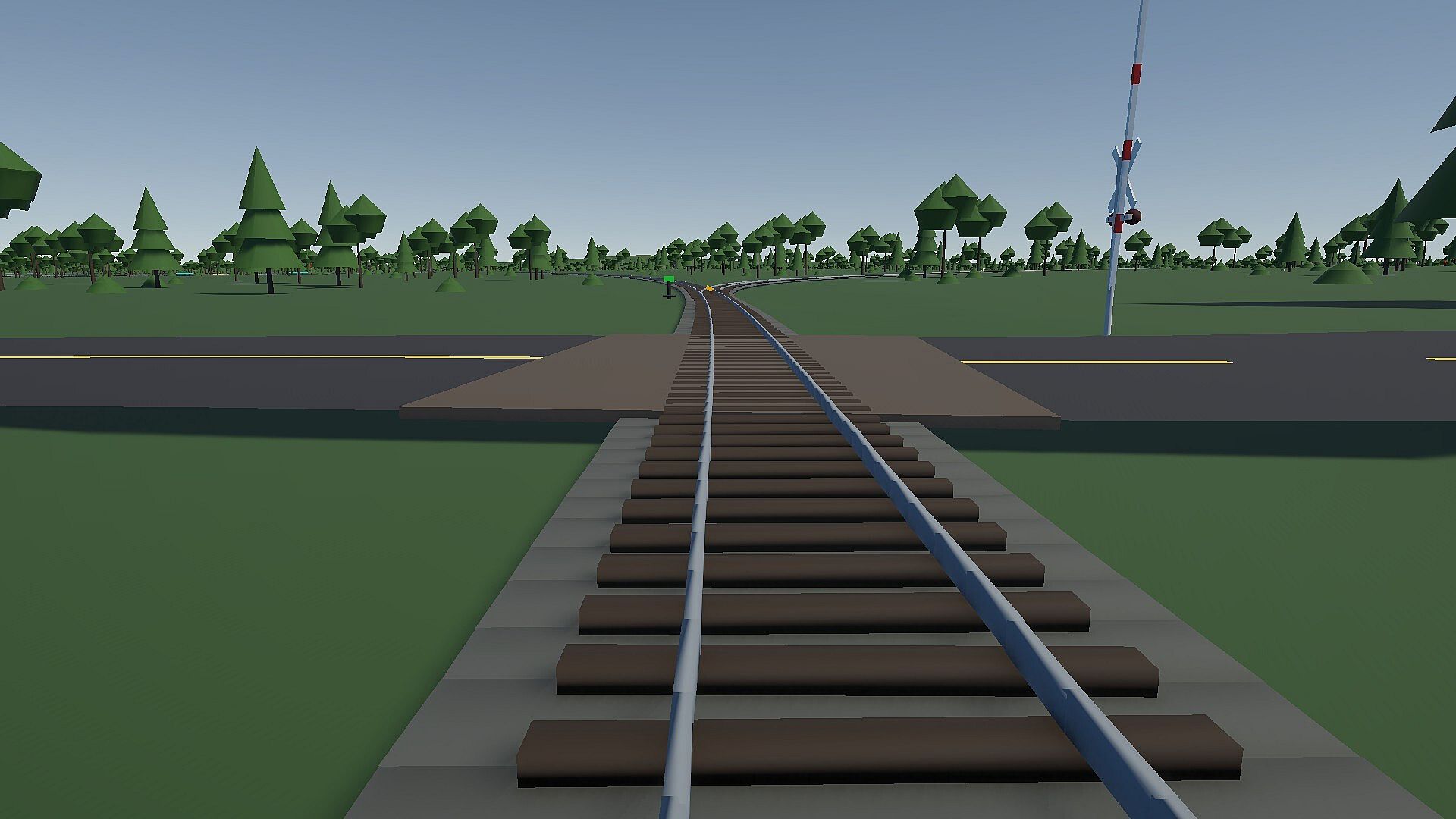
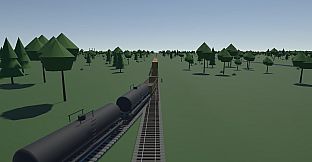
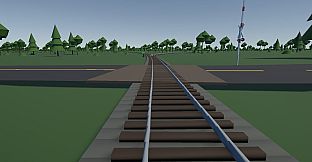
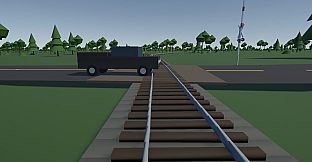
Iron Trails is a railway simulation game for PC that puts players in charge of constructing and operating a complete railroad system from the ground up. Set in an empty valley with basic terrain and a handful of industries, the experience centers on realistic track laying, signaling, dispatching, and train handling without any timers or scoring systems to rush decisions.
Gameplay
The core loop begins with surveying and grading terrain to lay track that follows natural contours. A strict 3 percent ruling grade limit applies, forcing careful planning around hills and hollows. Curves receive precise radius measurements that directly influence maximum safe speeds, and a layout check highlights potential slowdown points before trains run. Terrain tools allow raising, lowering, flattening, and smoothing the ground while contour lines provide visual feedback during edits.
Turnouts include detailed specifications such as frog number, switch points, lead radius, and clearance points, ensuring each one behaves according to its real-world counterpart. Once track is in place, signaling follows prototype practices with controlled home signals at turnouts and automatic intermediate signals between blocks. Diamonds and crossovers receive dedicated protection. Routes are requested and released through a CTC control board that displays every turnout and signal, allowing dispatch without constant camera movement.
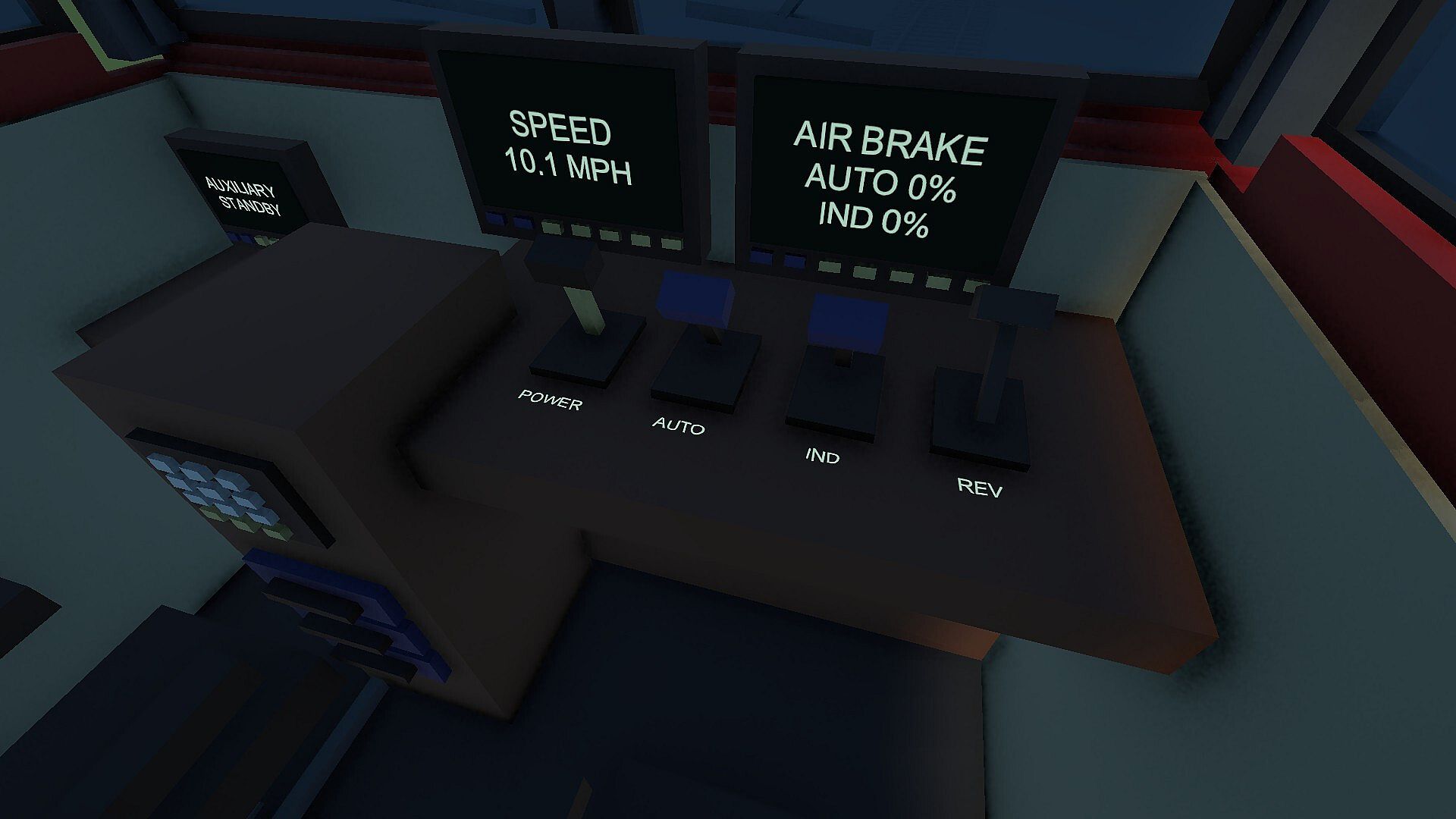
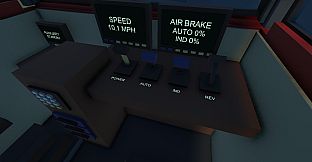
Train operation incorporates physical realism through air brake systems where reductions propagate along the brake pipe, making longer trains slower to stop. Coupler slack creates noticeable run-in and run-out effects, and improper starts on heavy loads stress the drawgear. Tonnage, grades, and tractive effort determine what a locomotive can haul, with support for multiple units and distributed power on demanding routes. Speed supervision can generate PTC-style braking curves or be disabled for manual control.
Industries such as grain elevators, lumber mills, factories, coal mines, and power plants load and unload appropriate cars. Each car carries a waybill that feeds into switch lists showing billed destinations, shipper shortages, and earnings. Interchanges supply requested cars and remove delivered ones, including through intermodal traffic. AI yard crews handle switching tasks when directed, planning moves around hand-throw points and switchbacks while stopping short of signaled routes until the player clears them.
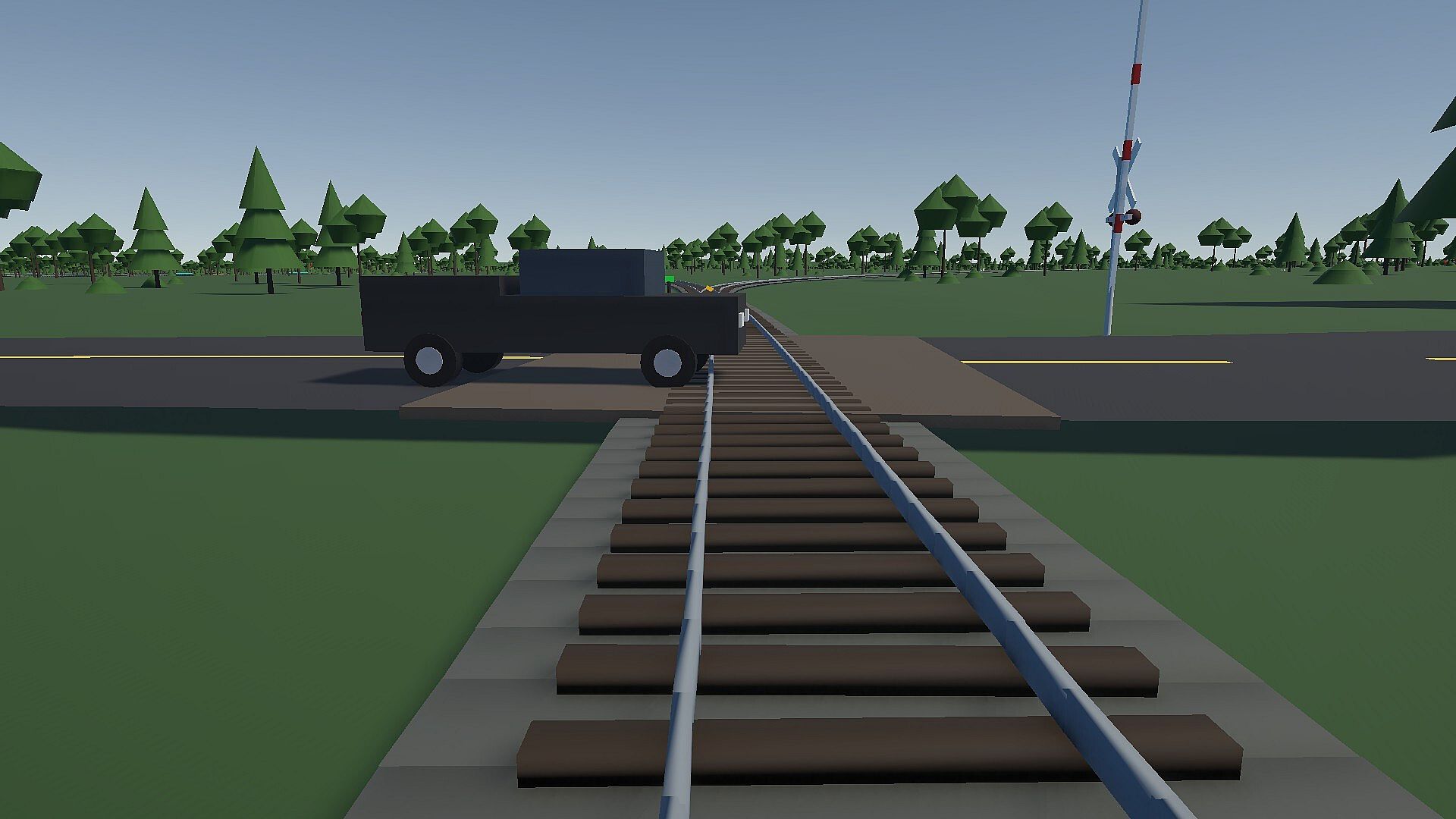
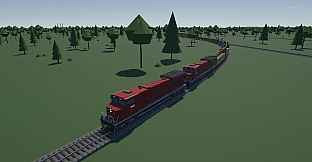
The surrounding valley develops with growing towns, roads carrying civilian vehicles that yield at crossings equipped with planks, crossbucks, lights, and gates. Day-night cycles affect lighting, with headlights and ditch lights casting shadows on the ballast and an end-of-train device visible at the rear.
Game Modes
Iron Trails offers a single continuous play experience focused on building and operating without separate named modes or campaigns. Players can construct branch lines across varied terrain or concentrate on detailed yard switching sessions that last as long as desired. Multiple trains operate simultaneously on the same railway, each assigned its own AI crew, while the player switches between cabs or manages the overall dispatch board. Progress saves include track layout, active trains, waybills, and earnings, allowing sessions to resume exactly where they left off. The absence of timers or scores encourages experimentation with different railway designs and operating styles at any pace.
Track Construction and Signaling Systems
Track placement emphasizes fidelity to real engineering constraints. Survey lines respect the existing ground, and fills or cuts are created with brushes that respond to contour visualization. Turnout geometry is pre-calculated so a No. 14 turnout performs accordingly in curves and clearances. Signaling integrates block protection with route lining from the central board, where aspects change progressively as trains occupy sections. Intermediate signals display restrictive indications such as Restricting on staggered heads when appropriate, requiring reduced speed rather than an absolute stop.
Train Physics and Industry Operations
Locomotives respond to actual physics inputs including weight distribution, grade resistance, and brake pipe timing. Heavy trains demand careful throttle and brake management to avoid coupler damage or stalls. Industries generate ongoing traffic through waybills that track specific car movements and payments. Interchanges maintain a flow of inbound and outbound cars, supporting through movements that cross the entire map. AI crews execute player-directed switching sequences while respecting signaled territory boundaries.
Is It Worth Playing?
Iron Trails targets players who value detailed railway simulation mechanics over arcade-style action or abstract management. Its combination of terrain-aware track building, prototype-accurate signaling, realistic brake and coupler behavior, and AI-assisted operations creates a focused sandbox for designing and running a working railroad. With release still to be announced and no completed reviews available, the game currently appeals most to enthusiasts of authentic railroading who enjoy methodical planning and hands-on control. Those seeking quick sessions or competitive elements may find the deliberate pace less suitable, while fans of in-depth train operation and dispatch will find the systems align closely with prototype practices. The ability to save and resume complex railways supports long-term projects without pressure to finish within set limits.