


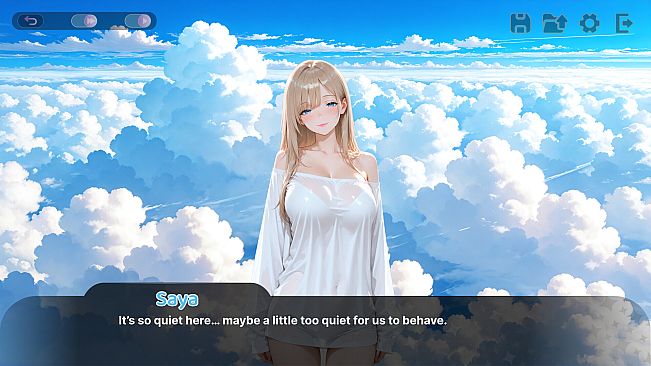

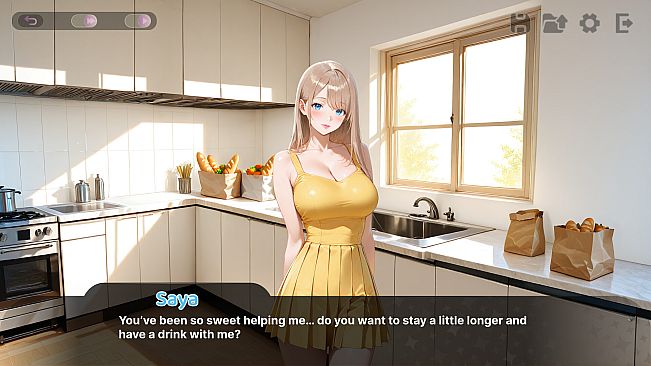







Lucid Desire is a casual simulation game on PC that combines everyday apartment life with fully interactive dream sequences. Players follow an ordinary resident who develops an interest in Saya, the woman living across the hall, through repeated encounters in shared spaces like elevators and laundry rooms. These meetings gradually shift into controlled lucid dreams where the player directs events without real-world limits.
Gameplay
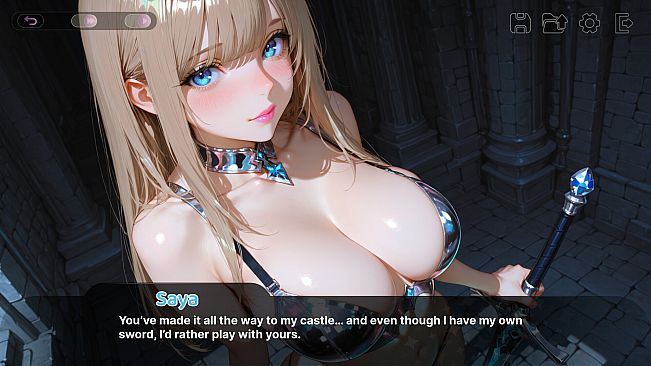
The core loop begins in a realistic apartment building setting. Routine activities such as picking up packages or casual conversations build familiarity with Saya before the story transitions into dreams. Once inside a dream, the player gains complete awareness and control, allowing any location or scenario to serve as the backdrop for interactions. Fully animated looping scenes play from start to finish, with independent volume controls for music, sound effects, and voices. During certain intimate sequences, tempo sliders let the player adjust speed in real time to match desired pacing. Text can advance automatically or be skipped entirely for quicker navigation through completed sections.
Progression involves selecting which character arc to pursue as the narrative unfolds. Each choice influences the direction of events and unlocks new scenes. A gallery system automatically populates with images from completed chapters, providing easy revisits. Flashback options allow players to return to prior decisions and explore alternate paths without restarting the entire story. Smooth navigation tools keep the focus on story flow rather than menu management.
Game Modes
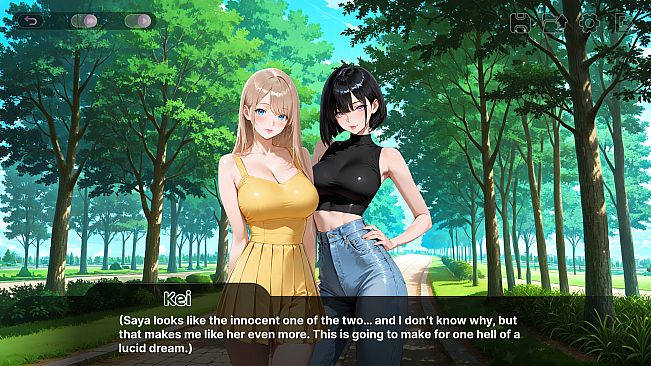
The game structures its content around distinct character arcs that each follow their own complete story path. Players choose which girl to focus on at key points, shifting between Saya's shy and curious personality in waking hours and her more adaptable presence in dreams. Saki enters as an additional option through natural story progression, bringing her confident and outgoing traits into the dream environments. These arcs run independently yet share the same overarching apartment-building framework, encouraging multiple playthroughs to experience different outcomes.
Story advancement relies on decision points that branch the narrative. Completed arcs feed into a gallery for review, while flashback mechanics support experimentation with earlier choices. The format emphasizes single-player progression without competitive or multiplayer elements, keeping the experience centered on personal exploration of the provided scenarios.
Characters and Story Structure
Saya appears as a shy yet movie-loving resident who maintains proper boundaries during daily encounters. In dreams, her behavior adapts fully to player direction, ranging from gentle to assertive depending on the chosen actions. Saki joins later as her friend, introducing a bolder dynamic that fits the rule-free dream setting. Both characters receive dedicated story arcs that resolve their individual threads while expanding available scenes.
The narrative stays grounded in the initial apartment-block premise before expanding through dream logic. Over one hundred animated scenes support the progression, with no censorship applied to the visuals. Players can toggle an optional censorship setting if desired, though the default presents uncensored content throughout.
Is It Worth Playing?
Lucid Desire suits players seeking a focused adult visual novel experience with simulation elements and high animation counts. The combination of realistic daily interactions and unrestricted dream control creates a clear gameplay distinction between waking and dreaming phases. Features such as tempo adjustment, gallery access, and flashback support make repeated playthroughs straightforward for those interested in exploring all arcs and scenes.
Support for ongoing improvements means new content arrives at no extra cost after purchase. The game targets adults who enjoy character-driven stories with explicit dream-based fantasy elements and full player agency over scene pacing. Those preferring linear stories or non-adult content will find the structure less appealing, while fans of branching visual novels with animation emphasis will encounter substantial replay value through the arc system and decision flexibility.