


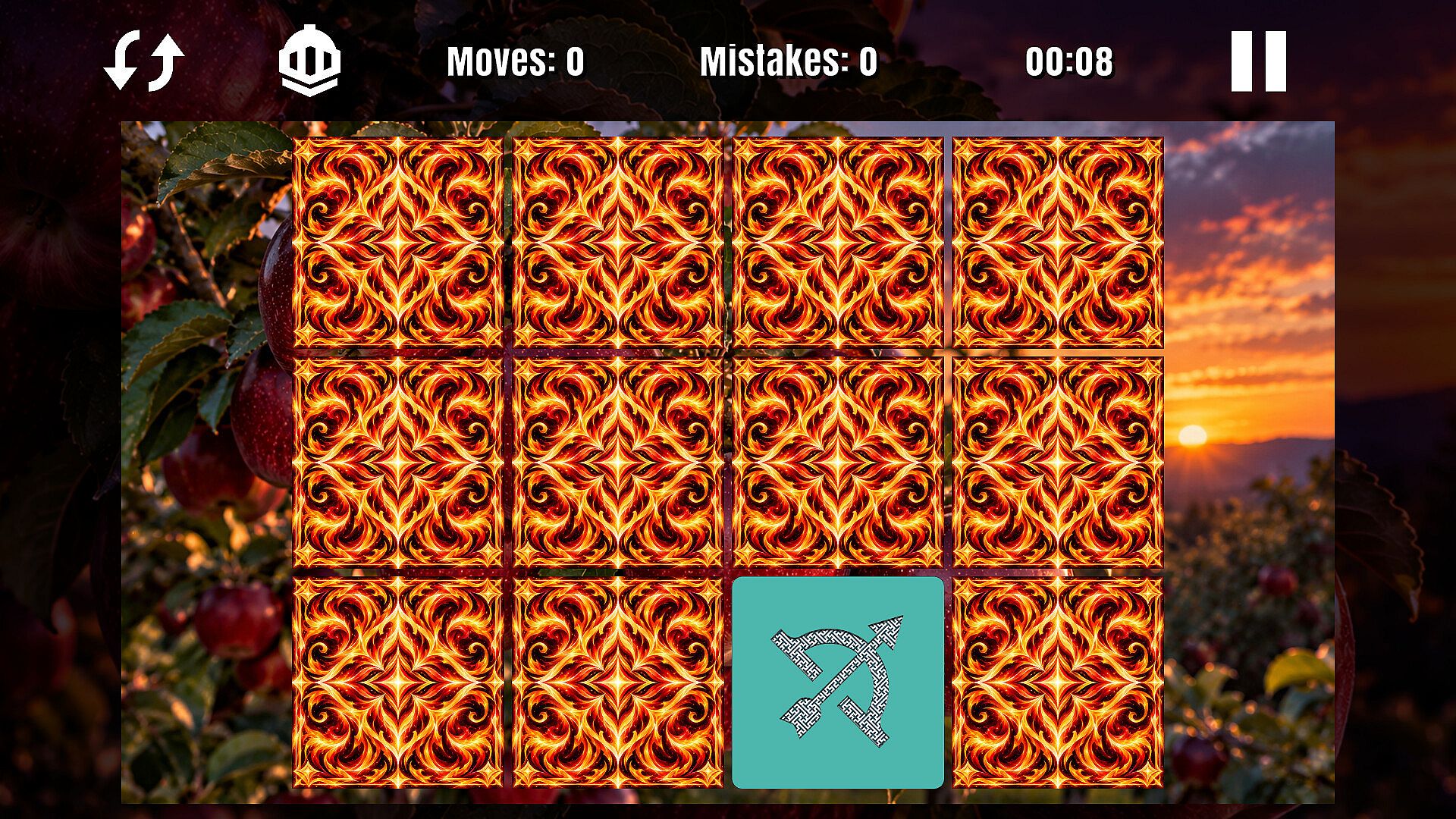
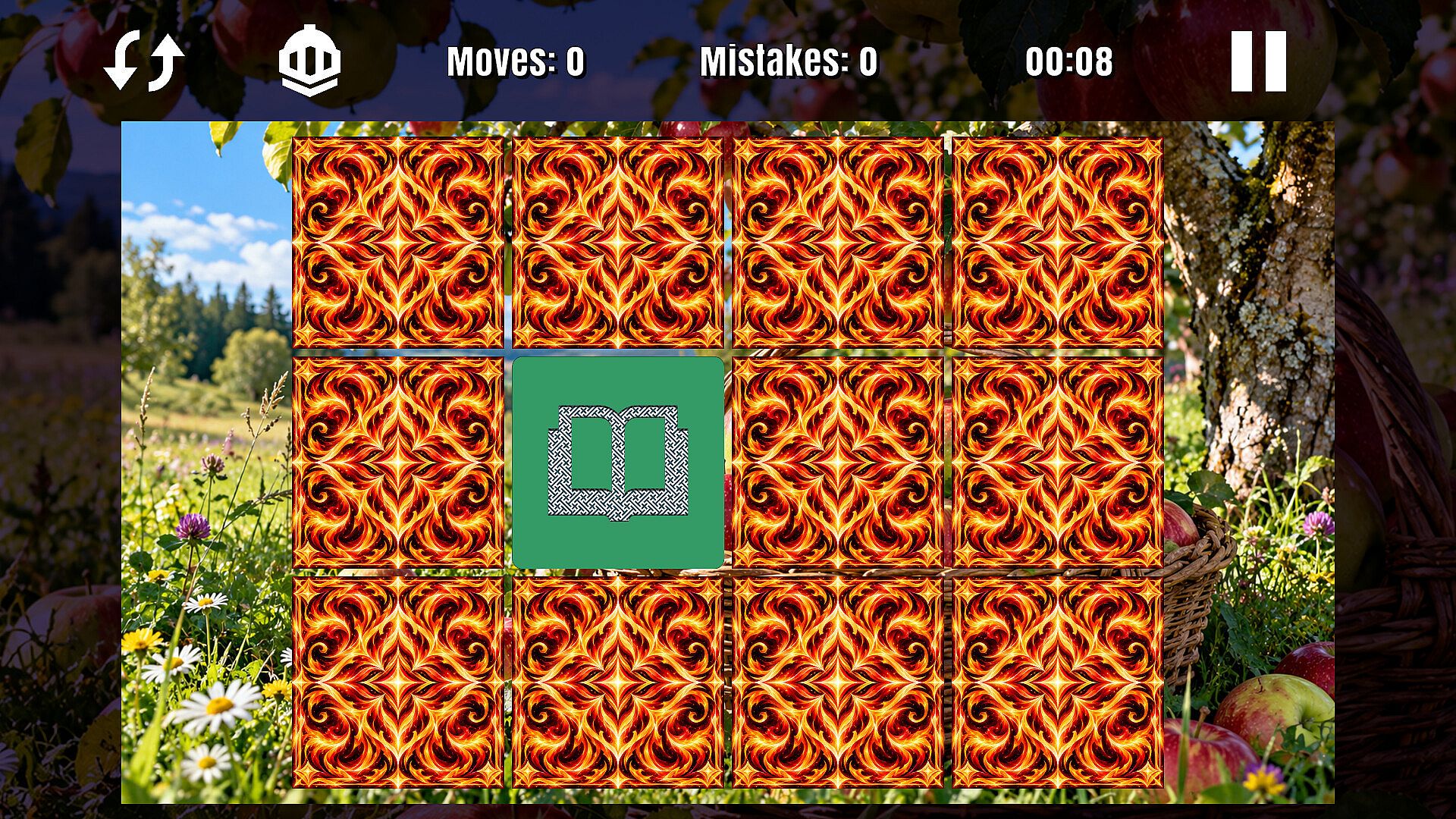
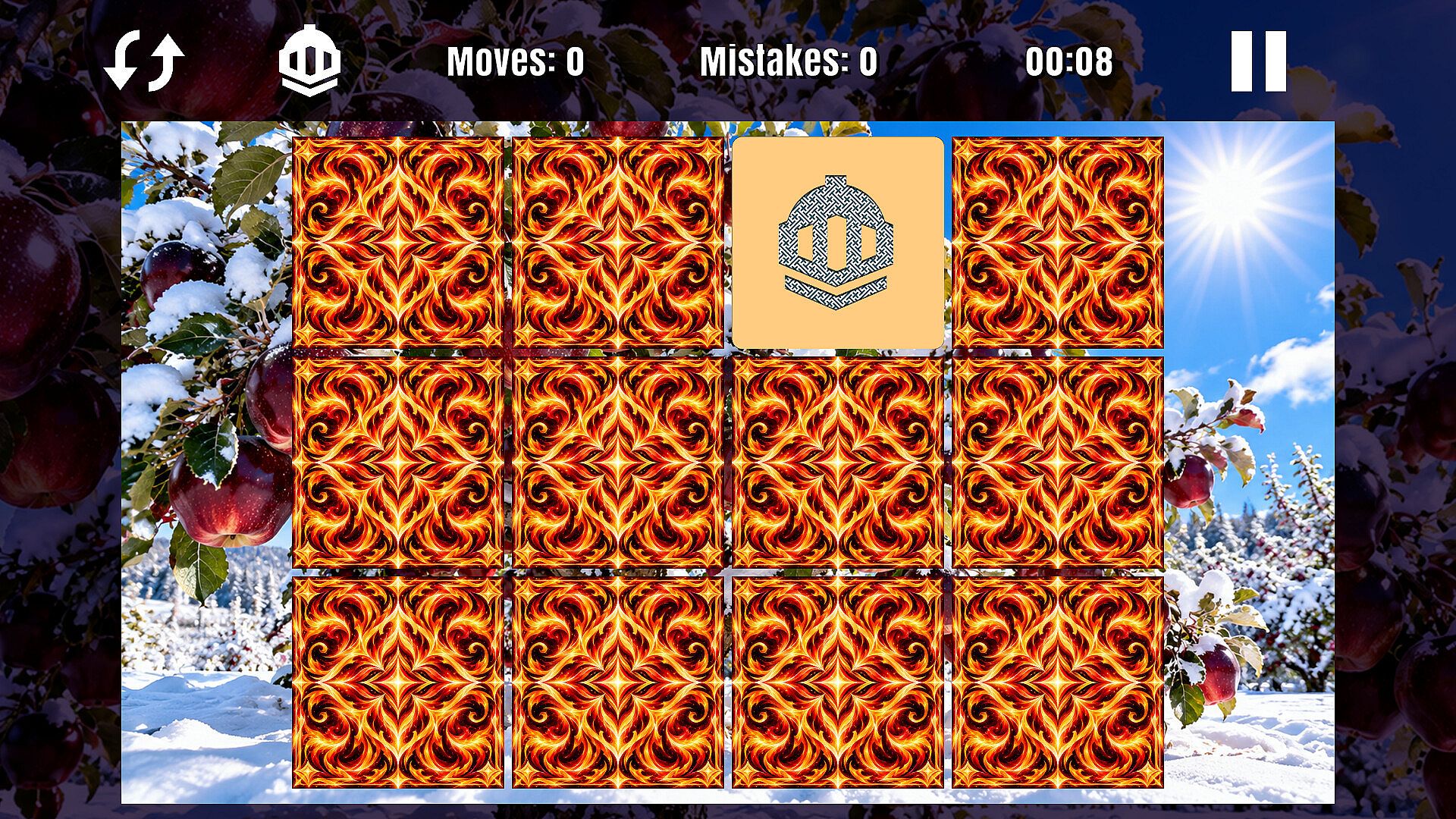
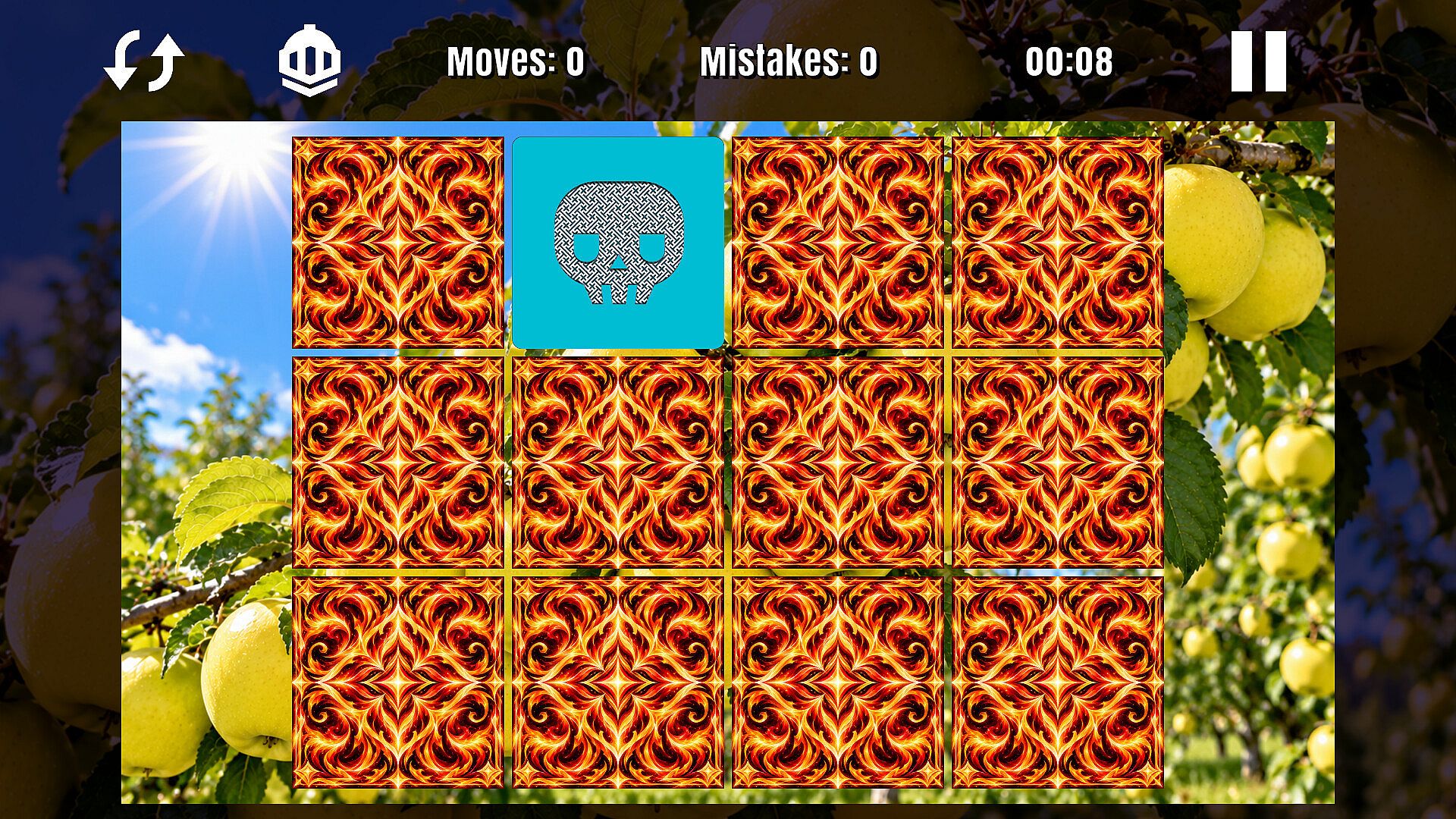
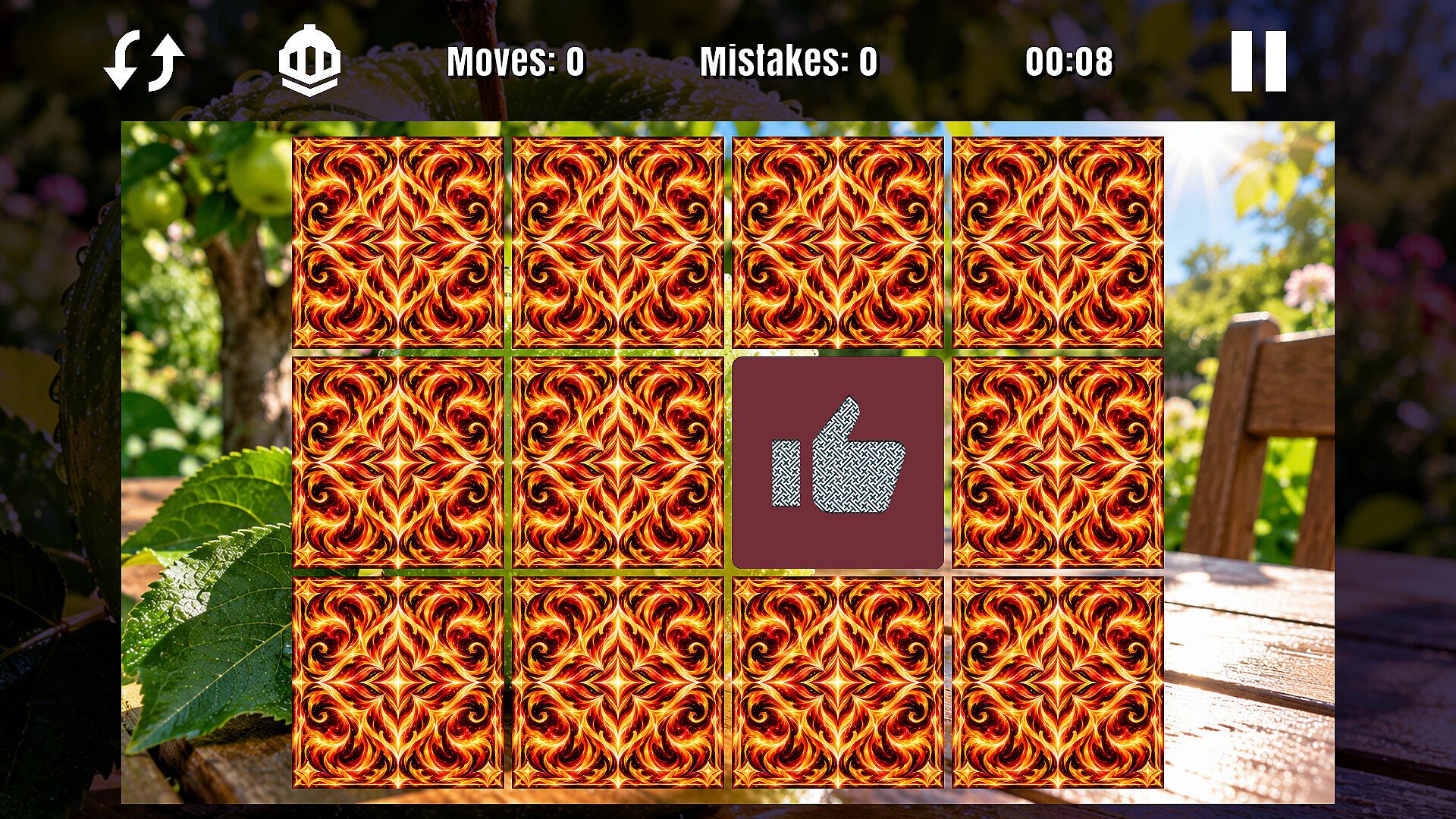

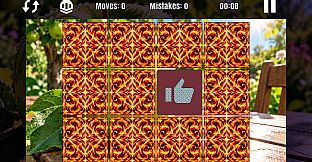
Memory Games Apple is a casual indie memory matching game for PC that challenges players to pair identical apple illustrations across progressively larger grids. The title centers on vibrant depictions of different apple varieties in red, green, yellow, and multicolored designs arranged in visually appealing layouts. Players flip cards two at a time, relying on recall to locate matches while the grid size expands with each completed stage.
Gameplay
The core loop involves turning over cards to reveal apple images, then selecting a second card in hopes of finding its match. Successful pairs disappear from the board, clearing space and advancing progress toward the next level. When a mismatch occurs, both cards flip back face down, requiring the player to retain their positions in memory for future attempts. The number of cards on the board grows steadily, introducing more pairs and demanding greater concentration over longer sequences.
Controls remain straightforward, limited to mouse clicks or simple selections that suit both quick sessions and extended play. Each new arrangement randomizes positions, preventing rote memorization and encouraging active visual tracking. The design emphasizes steady skill building through repeated exposure to larger sets without abrupt jumps in complexity.
Game Modes
Memory Games Apple operates as a single-player experience focused on sequential level completion. Progression follows a linear path where each stage presents an expanded card grid compared to the previous one. No separate competitive or timed variants appear in the available details, keeping the emphasis on personal improvement through consistent matching practice.
Players advance by clearing all pairs on a given board before moving forward. The structure supports repeated play on earlier levels for additional practice, though the primary flow remains the campaign-style increase in board size and pair count.
Visual Design and Accessibility
Colorful illustrations of various apple types form the central visual element, rendered in bright, distinct palettes that aid quick identification. Arrangements vary across levels to maintain interest while staying within the fruit theme. The presentation avoids clutter, allowing clear visibility of each card even as grids enlarge.
Simple interface elements and intuitive selection mechanics make the game approachable for a wide audience. The gradual scaling of difficulty supports sustained engagement without requiring prior experience with memory titles.
Benefits for Players
Regular play encourages development of visual memory through repeated position recall. Attention and concentration receive consistent exercise as boards grow, while logical thinking supports efficient pairing strategies. The experience balances relaxation with challenge, creating sessions that feel rewarding rather than stressful.
The title suits both younger players building foundational skills and adults seeking light mental exercise. Its focus on a single, cohesive theme keeps the activity focused and easy to return to over time.
Is It Worth Playing?
Memory Games Apple delivers a straightforward memory matching experience centered on apple-themed cards and incremental difficulty. Those who enjoy classic pair-matching mechanics will find a polished, themed variation that scales naturally with player progress. The game targets individuals looking for accessible brain training without complex systems or competitive pressure.
Its relaxing pace and broad appeal to children and adults position it well for casual play sessions. Players interested in visual recall and concentration exercises can expect steady engagement through the level structure. Since the title remains in a pre-release state with no established player feedback yet available, its value rests on the described core features and suitability for short, focused play.