




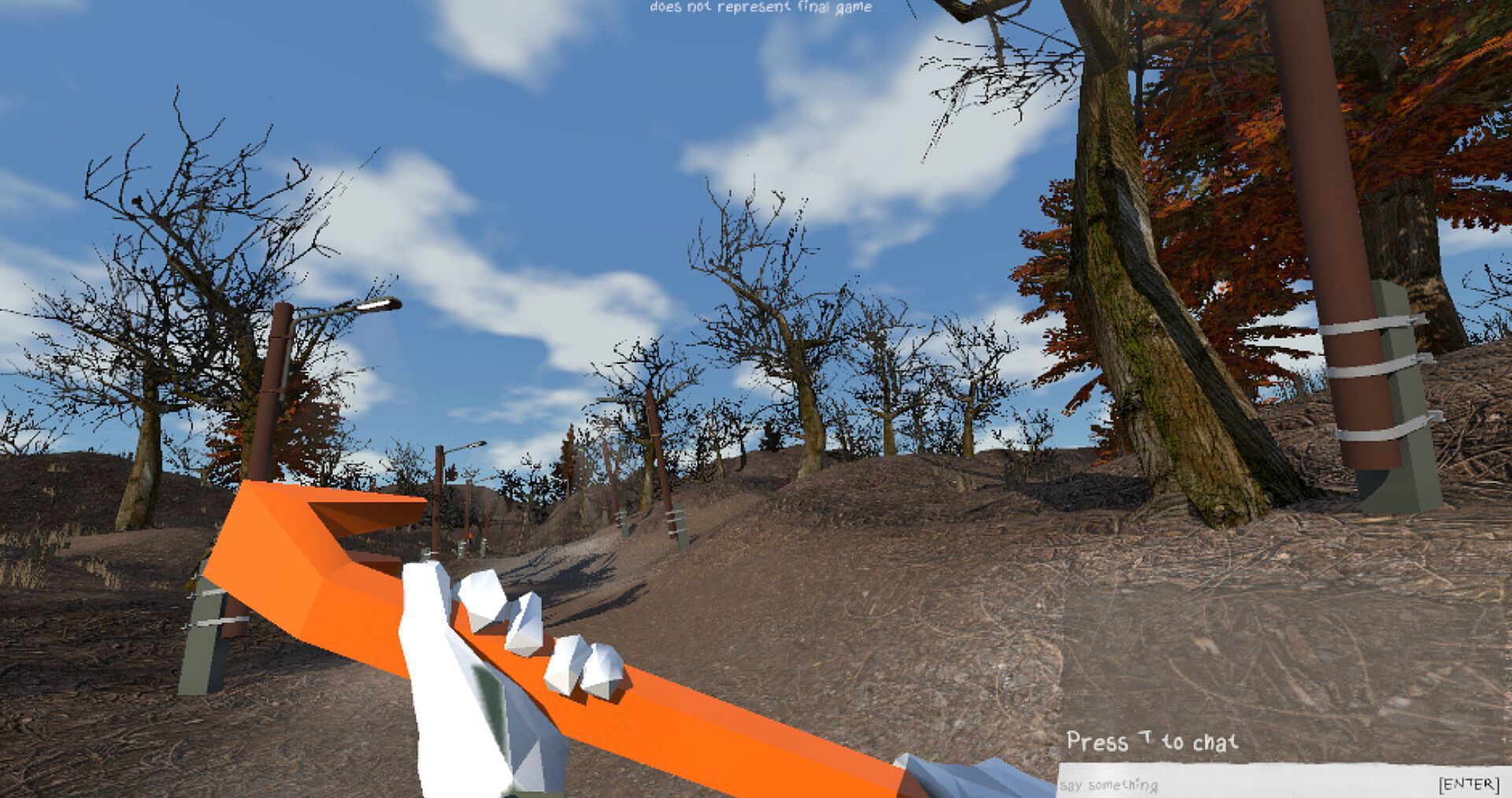
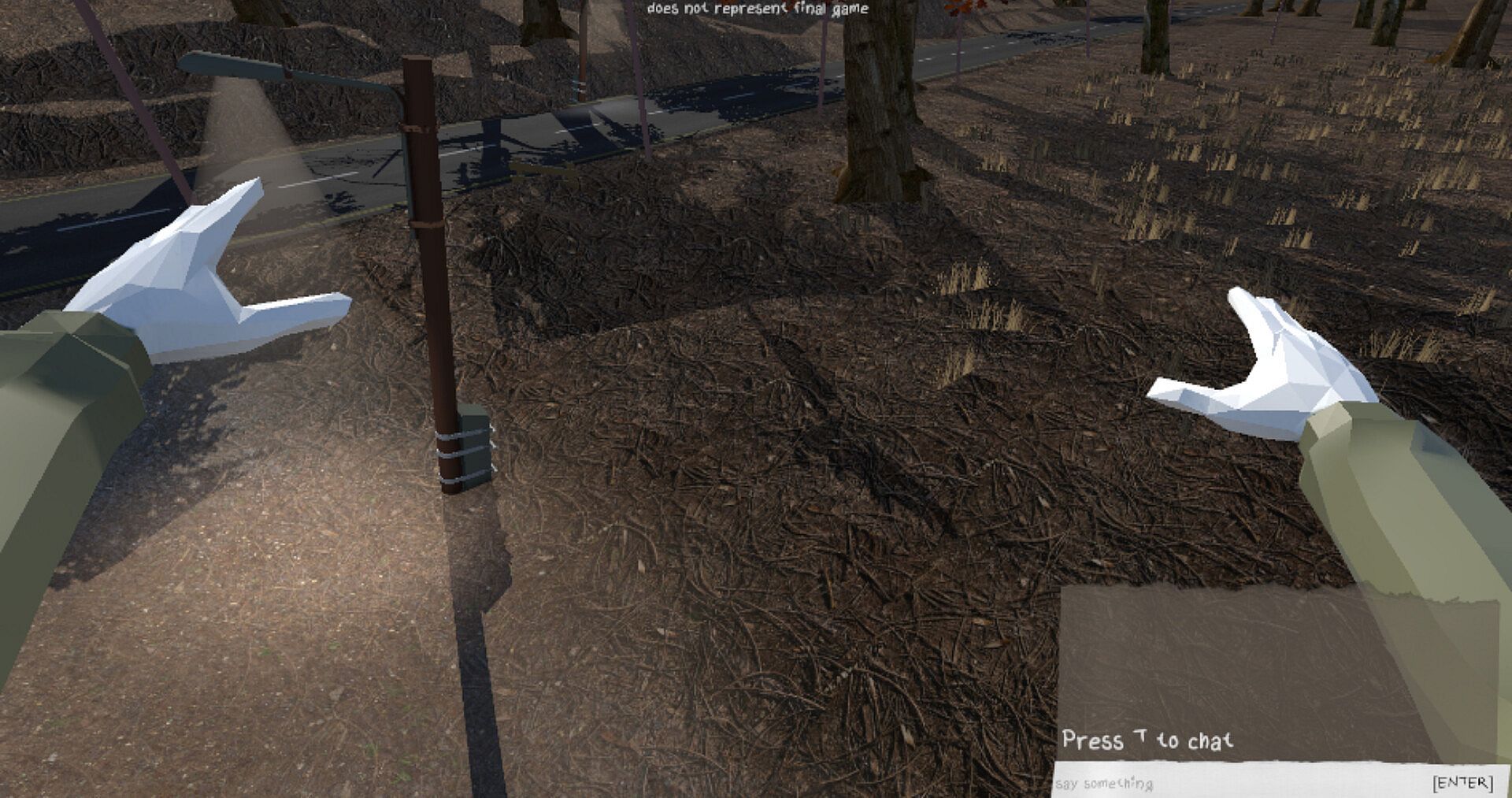
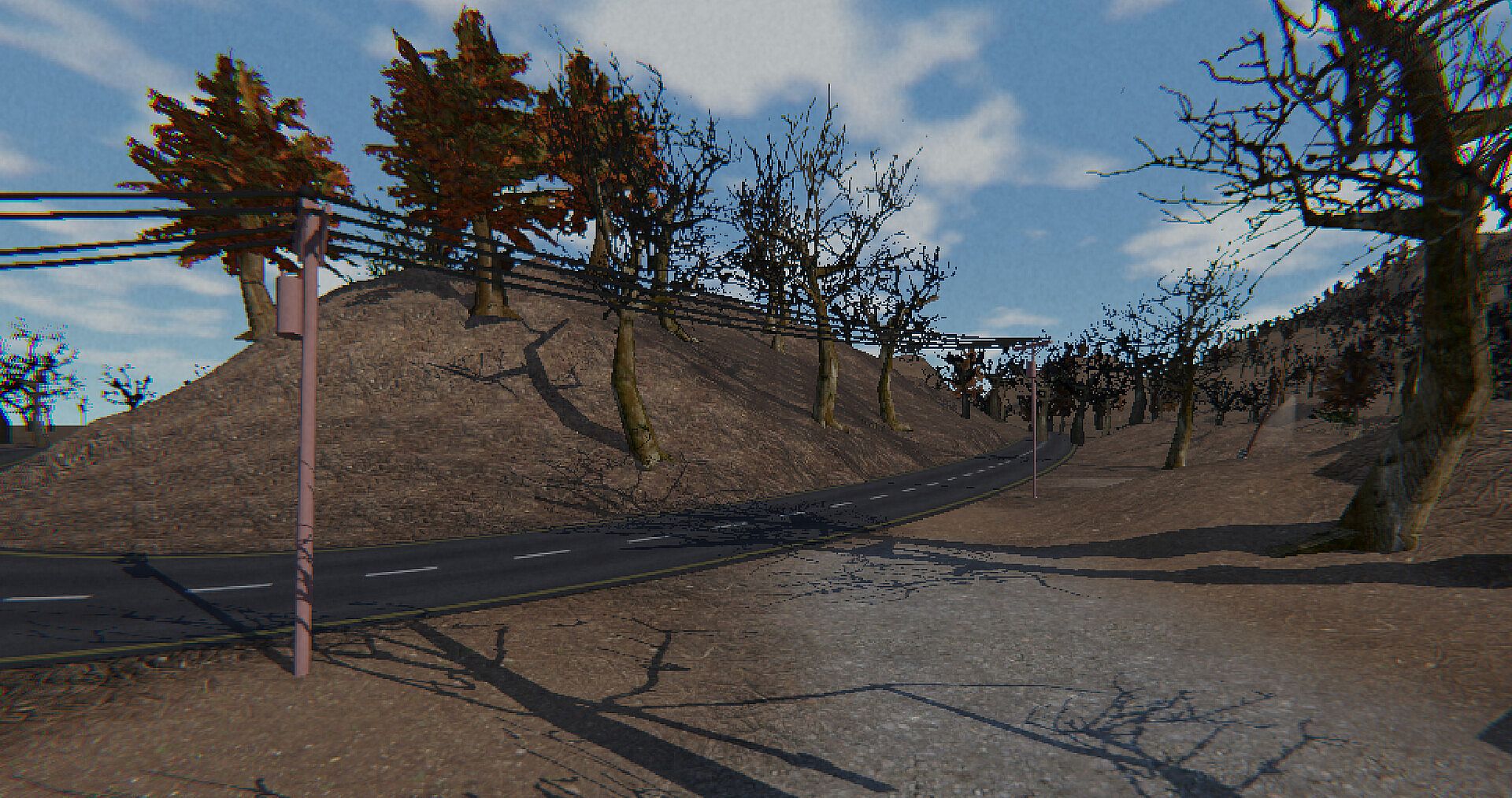
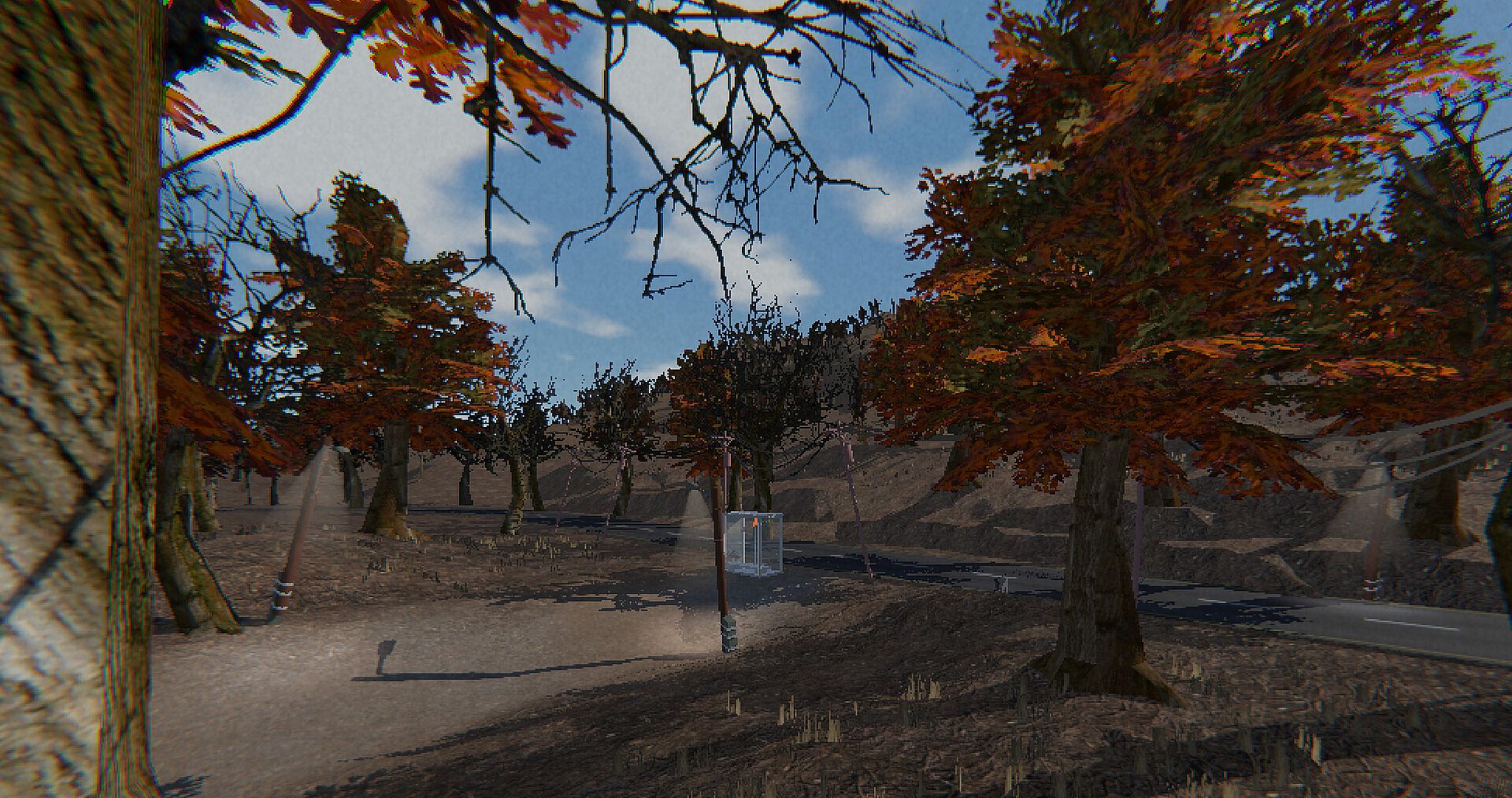
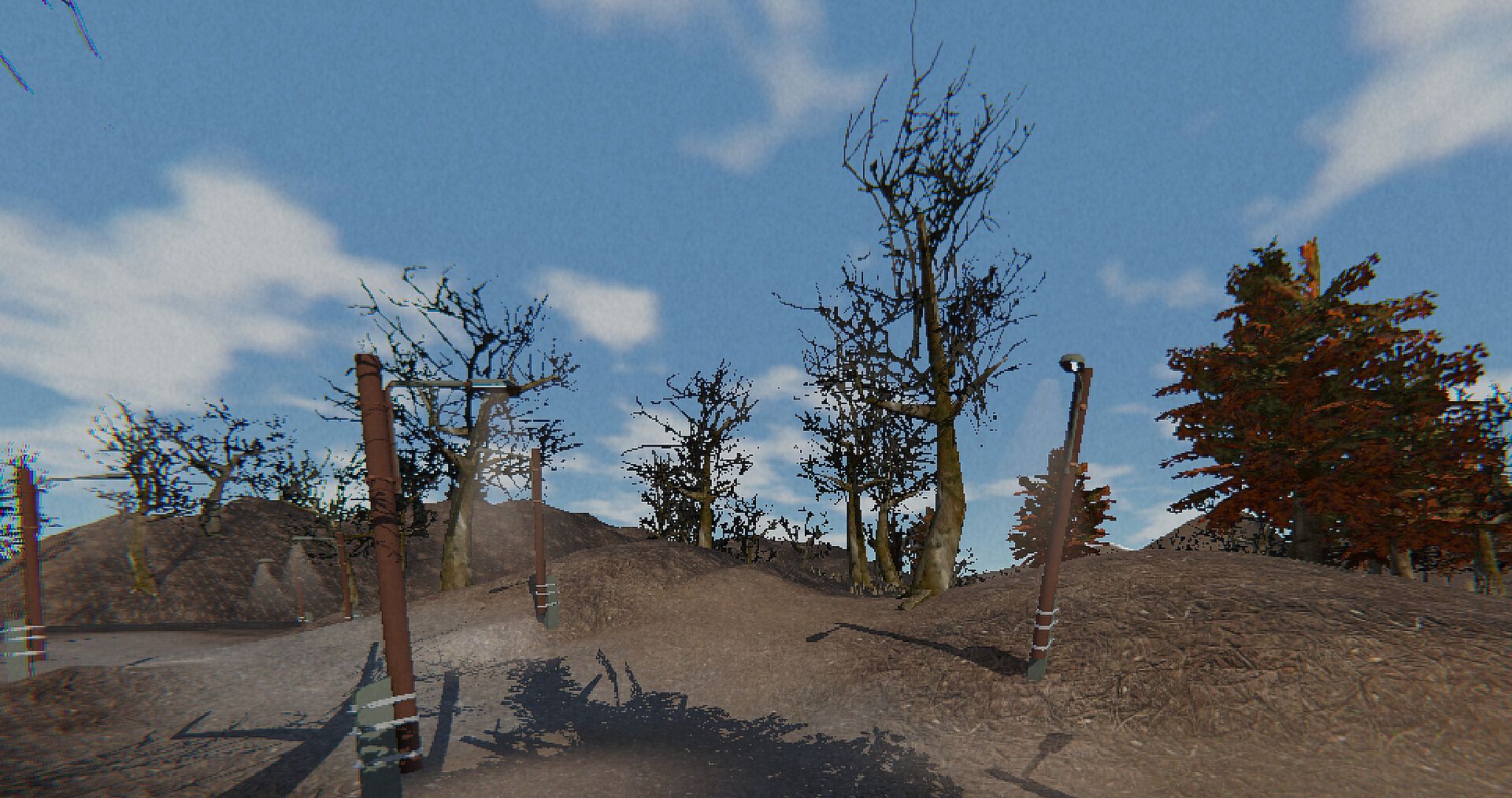
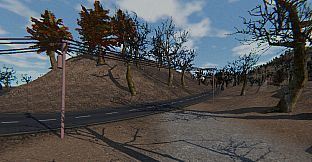
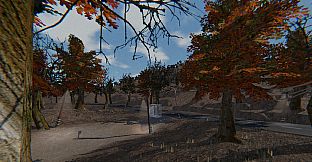
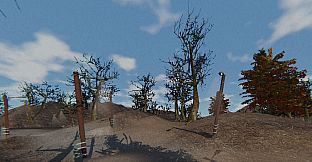
OTG is a multiplayer sandbox action game set in an isolated early 2000s Vermont town. Up to thirty players share a persistent world where nearly every object behaves according to realistic physics. Players arrive with a house, limited starting funds, and complete freedom to shape their own experience amid neighbors who all have reasons to stay hidden.
Gameplay
The core loop centers on living inside a shared environment that reacts to every action. Day and night cycles pass, storms arrive and fade, and weather directly influences movement and sound. Rain masks footsteps while thunder can cover the noise of forced entry. Players maintain their own house by building rooms, moving furniture, and creating storage. They can barricade doors, install locks and keys, set up electrical systems, or add cameras. Any object in the world can be picked up, carried, used, sold, or destroyed, and changes persist across sessions.
Security relies entirely on physical measures. Giving another player a key or access to a room is a deliberate choice that cannot be undone by game rules. If someone breaks in, confrontation happens in person with whatever tools are at hand. Proximity voice chat and physical radios allow communication that carries across distances and can be overheard. The town layout shifts between servers, so roads, houses, and abandoned buildings form new connections each time, yet the overall place feels coherent enough for players to develop lasting memories of specific locations.
Economy emerges from player decisions rather than fixed prices. Discovering the true value of scavenged items drives trade and conflict. One evening might involve quiet repairs at home; the next could turn into an extended stakeout or a rushed escape when someone notices an intruder. All interactions remain grounded in the physical rules of the world.
Game Modes
OTG contains no traditional structured modes or scripted objectives. Every session operates as an open sandbox where stories arise from player choices and the reactions of others. Some participants focus on home improvement and quiet living. Others pursue theft, observation, or larger schemes that involve multiple houses and changing weather conditions. The absence of imposed goals means the same server can host simultaneous activities that range from solitary crafting to coordinated break-ins, all governed by the same physical systems and persistent world state.
Exploration and Social Dynamics
The town rewards careful observation. Abandoned buildings and hidden spots offer resources, yet their locations and contents vary with each server reset. Players learn the rhythms of the place through repeated visits rather than map markers. Trust becomes a tangible resource because access to property must be granted explicitly. A single misplaced key or overlooked camera can shift the balance of power between neighbors. Proximity voice and radios add another layer, letting conversations travel or be intercepted depending on positioning and conditions.
Because the world keeps running without pauses for missions, small decisions accumulate. A storm that hides movement one night might expose tracks the next morning. Electrical outages created by one player can affect entire blocks, creating opportunities or risks for everyone nearby. These interconnected systems turn routine activities into potential turning points.
Is It Worth Playing?
OTG suits players who prefer emergent gameplay over guided progression. Those who enjoy building personal spaces, experimenting with physical systems, and navigating unpredictable social situations will find consistent depth in the house customization, object interactions, and weather effects. The 30-player limit keeps the world intimate enough for reputations to form while still allowing for surprises. Because the experience depends on other participants, results vary with the current server population and play styles present. Individuals drawn to sandbox freedom and physical consequence will likely appreciate the consistent rules and lack of artificial structure, while those seeking competitive ladders or story campaigns may find the open-ended nature less directed.












