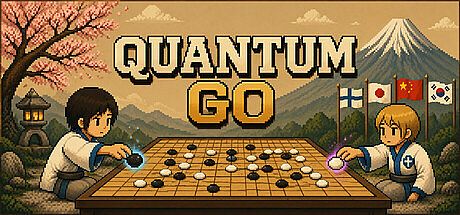



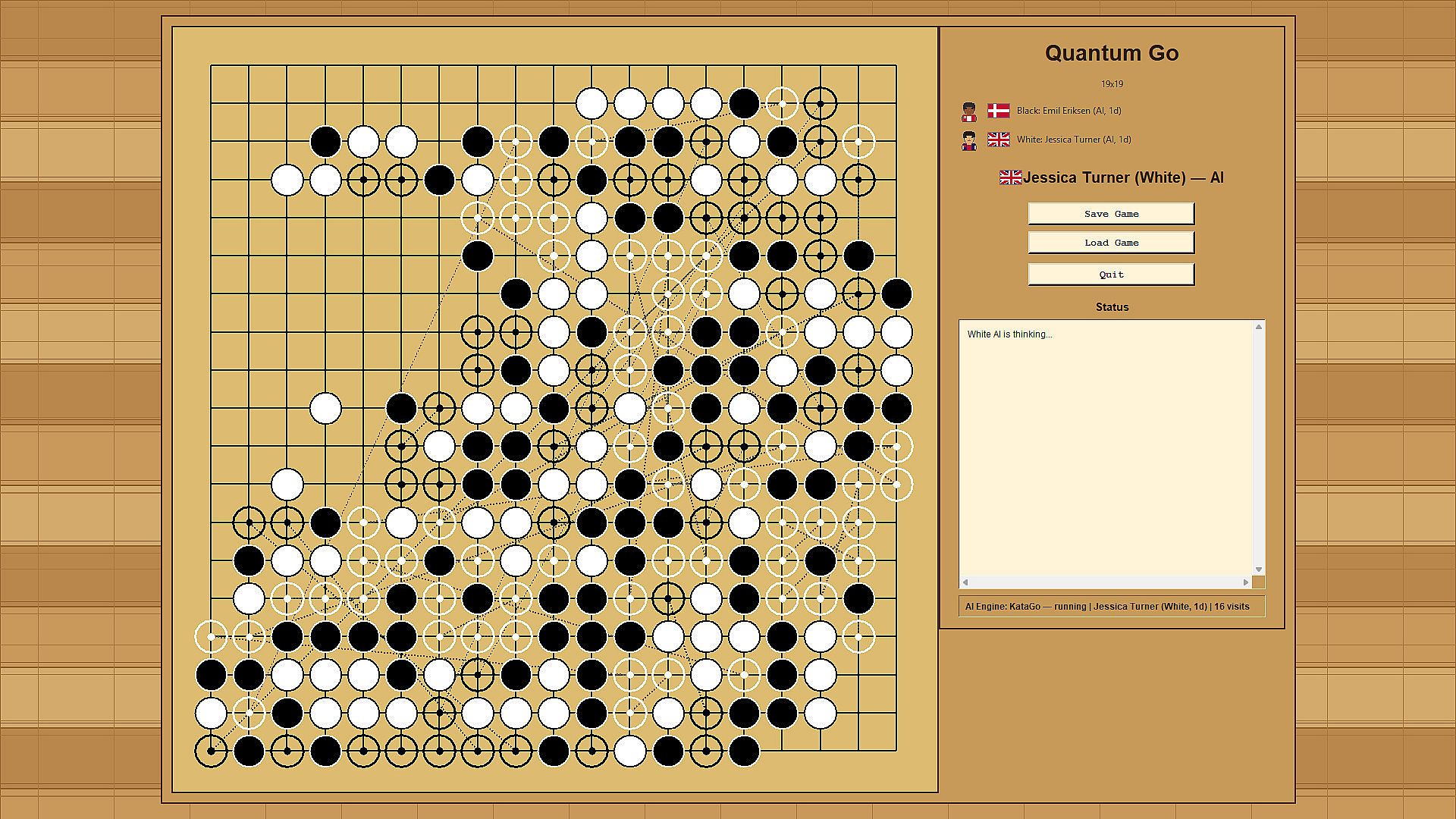
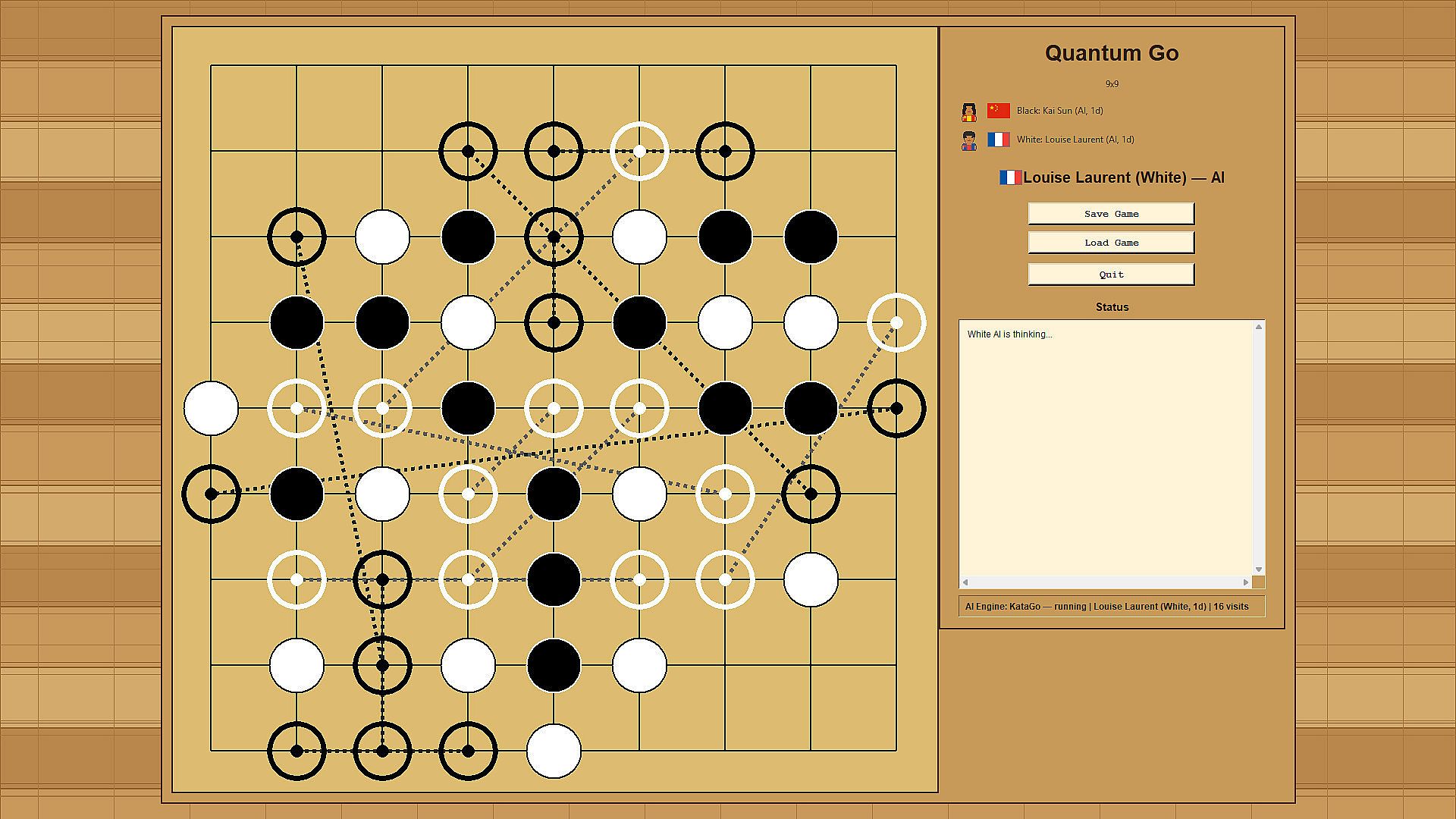
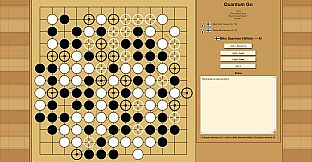
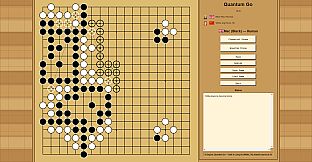
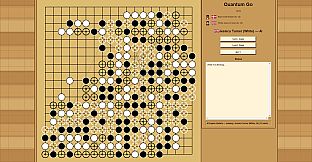
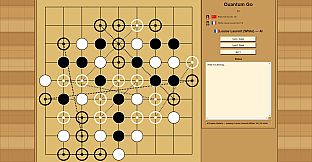
Quantum Go is a strategy game for PC that blends the classic rules of Go with concepts from quantum mechanics. Players place stones to build territory and surround opponents on boards of varying sizes, but quantum moves introduce uncertainty through superposition, where a stone can occupy multiple positions until a measurement collapses it into a single location.
Gameplay
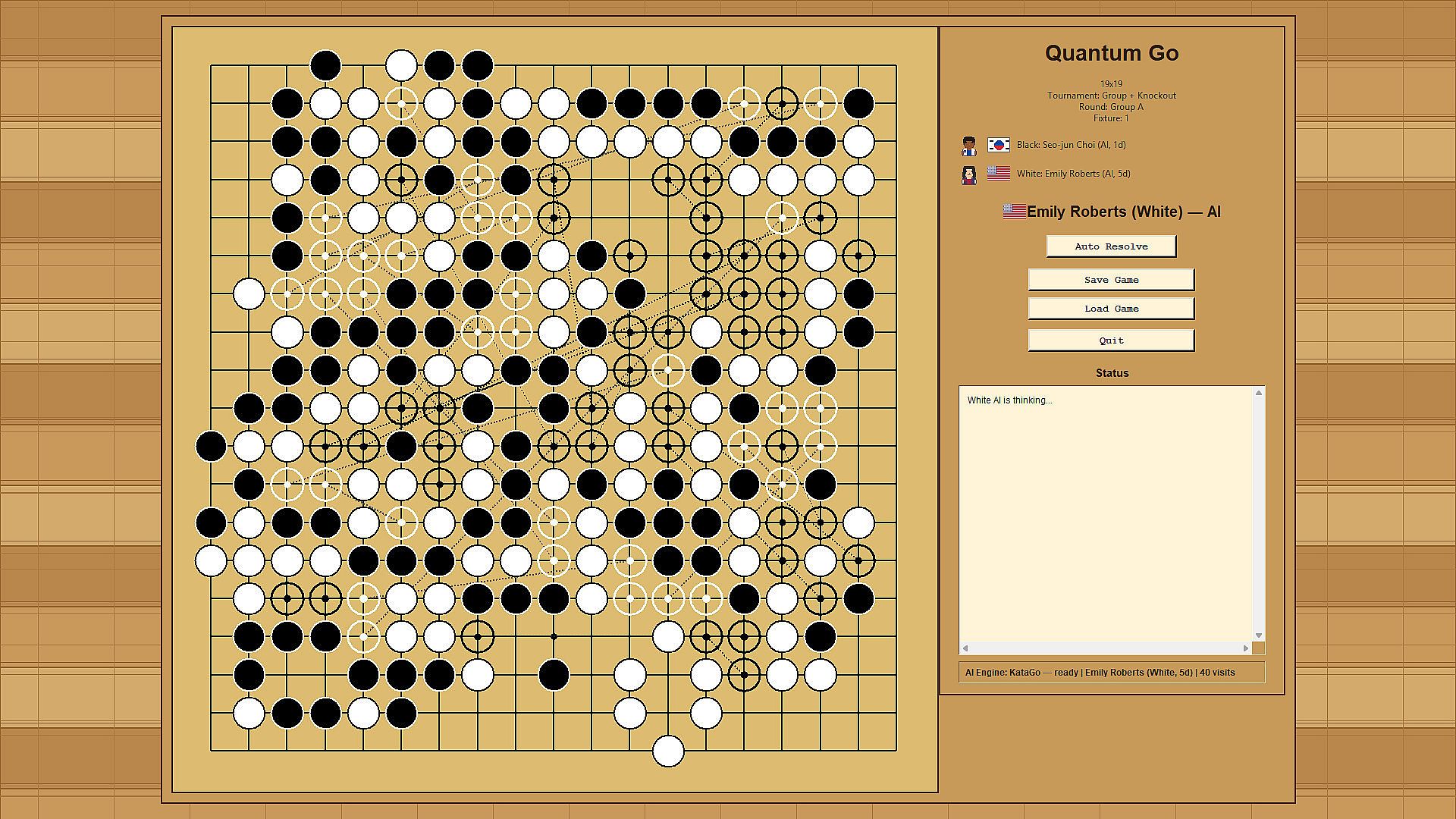
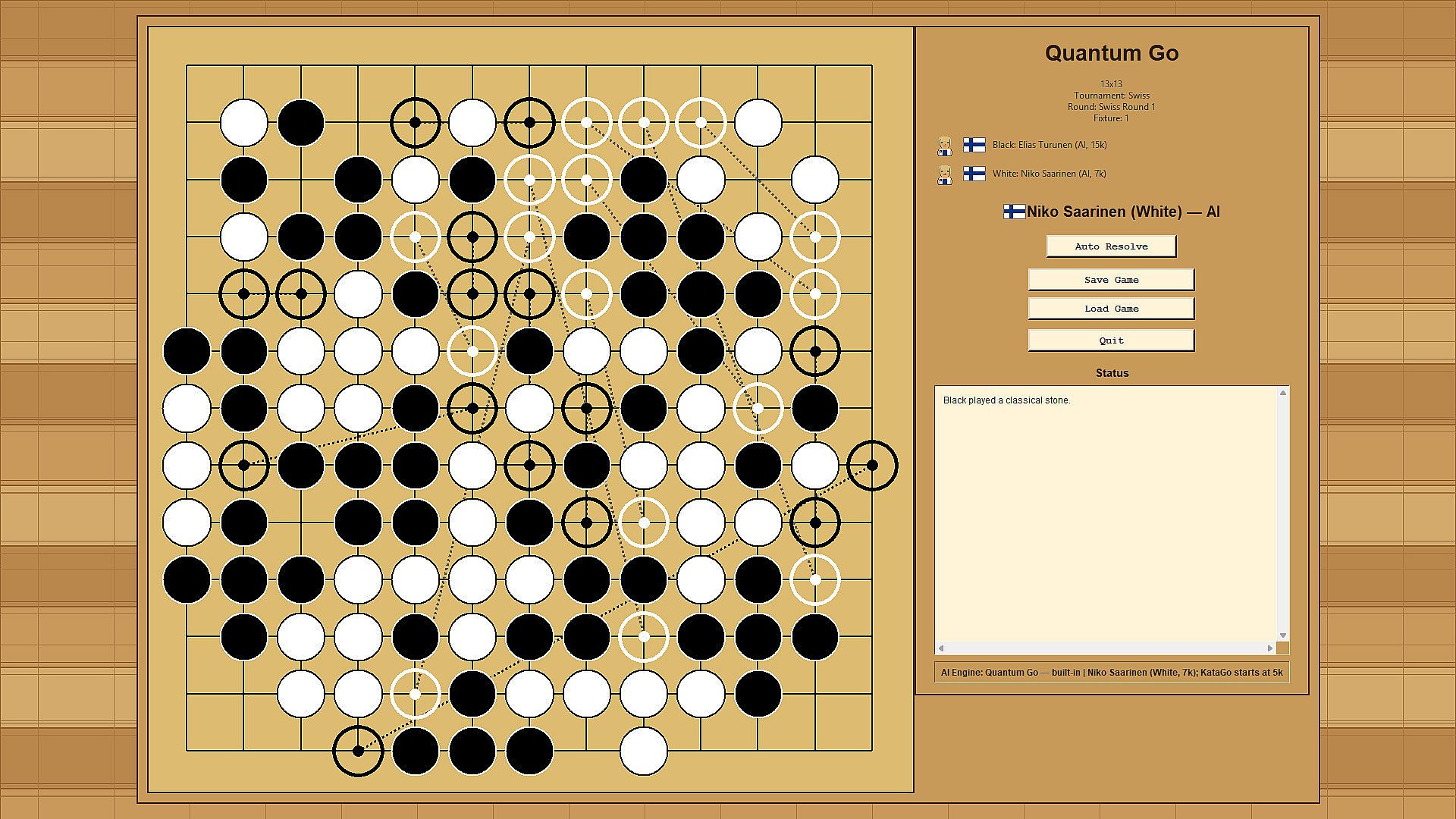
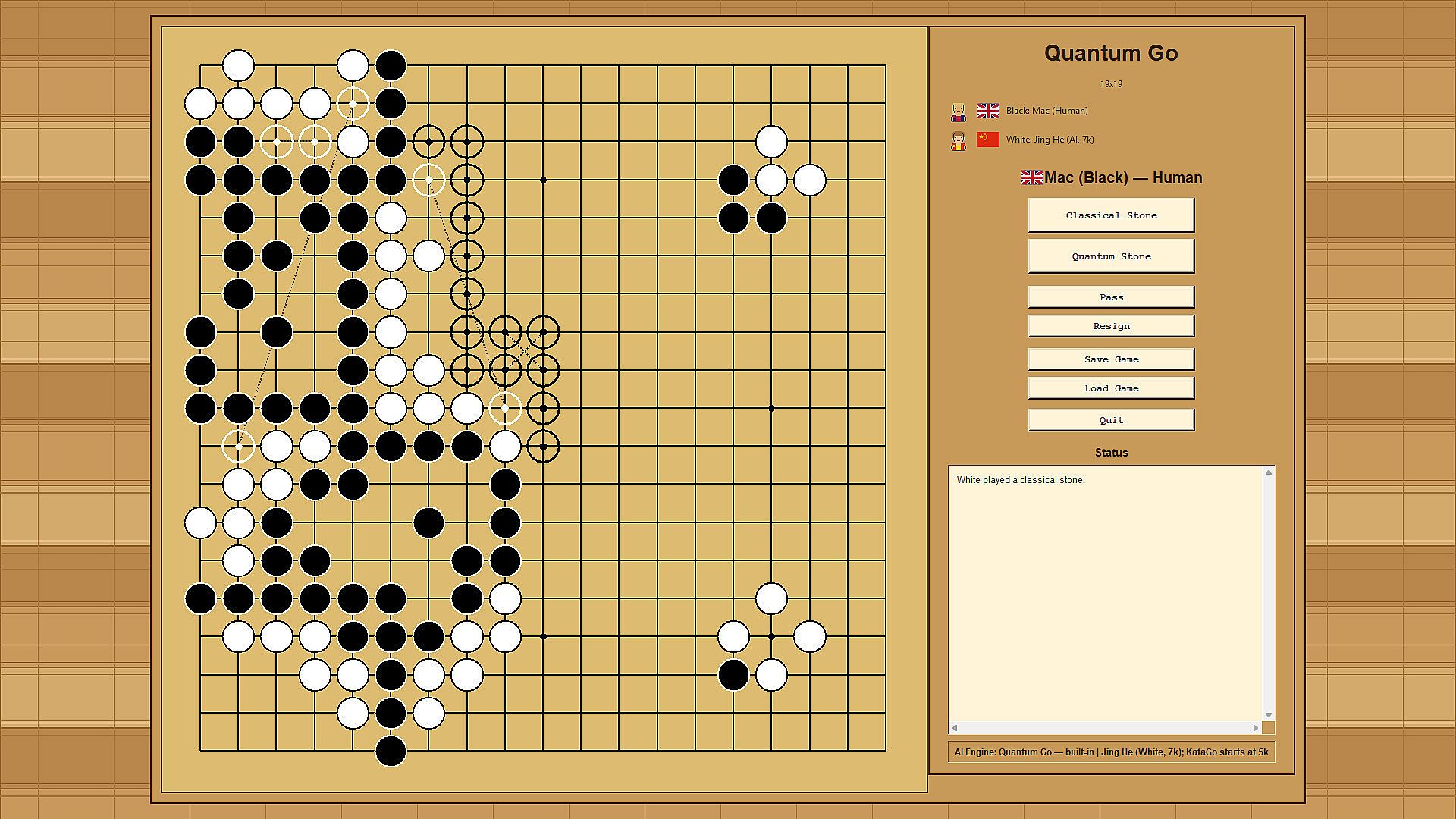
The core loop follows traditional Go principles of capturing groups and securing areas while adding quantum elements that alter board development. Classical moves function as in standard Go, but quantum placements allow stones to exist in multiple potential spots. Measurements later resolve these possibilities, which can shift control of regions or create new threats. This forces ongoing adaptation as settled positions become uncertain. Players decide when to introduce quantum moves to disrupt opponents or when to stick with classical play for stability. The system simulates these mechanics through quantum circuit processing for superposition and collapse effects.
Game Modes
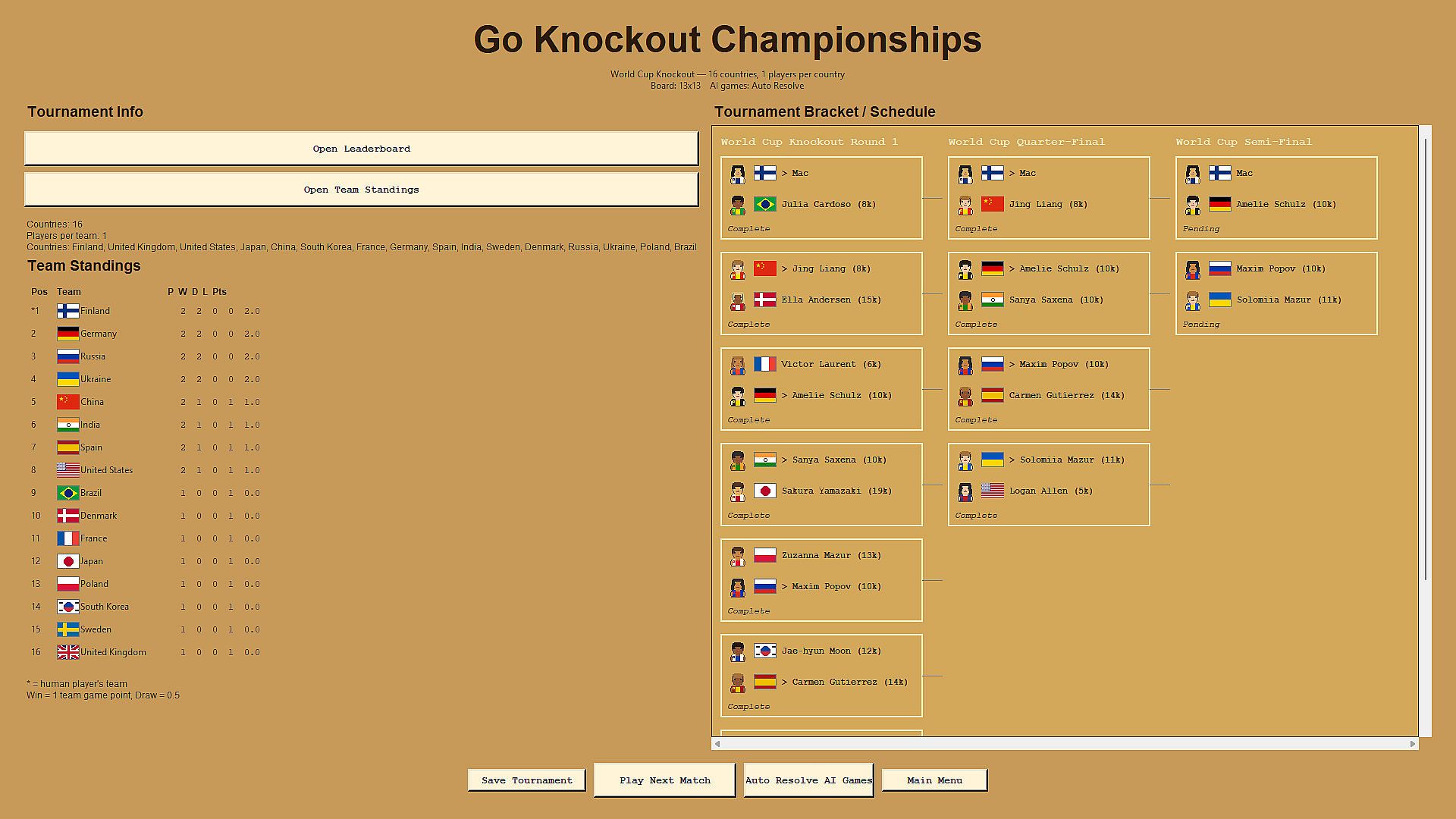
Matches take place on 9x9, 13x13, or 19x19 boards with configurable rules. Singleplayer options include matches against computer opponents of different strengths that evaluate territory, group safety, and captures. Observers can watch AI versus AI games. Post-match review tools allow step-by-step playback to examine how positions evolved. Local multiplayer supports head-to-head play, and additional options exist for online integration. Experimental settings can expand superposition possibilities or link measurements to nearby moves, creating varied rule sets for different experiences.
Is It Worth Playing?
Quantum Go appeals to fans of abstract strategy games who want to explore how uncertainty mechanics change familiar tactics. The combination of Go fundamentals with quantum-inspired features provides a fresh layer of decision-making around risk and adaptation. Those seeking purely classical Go can disable quantum elements entirely. Without widespread player data or update history available, suitability depends on interest in experimental variants of established board games rather than polished mainstream releases.