

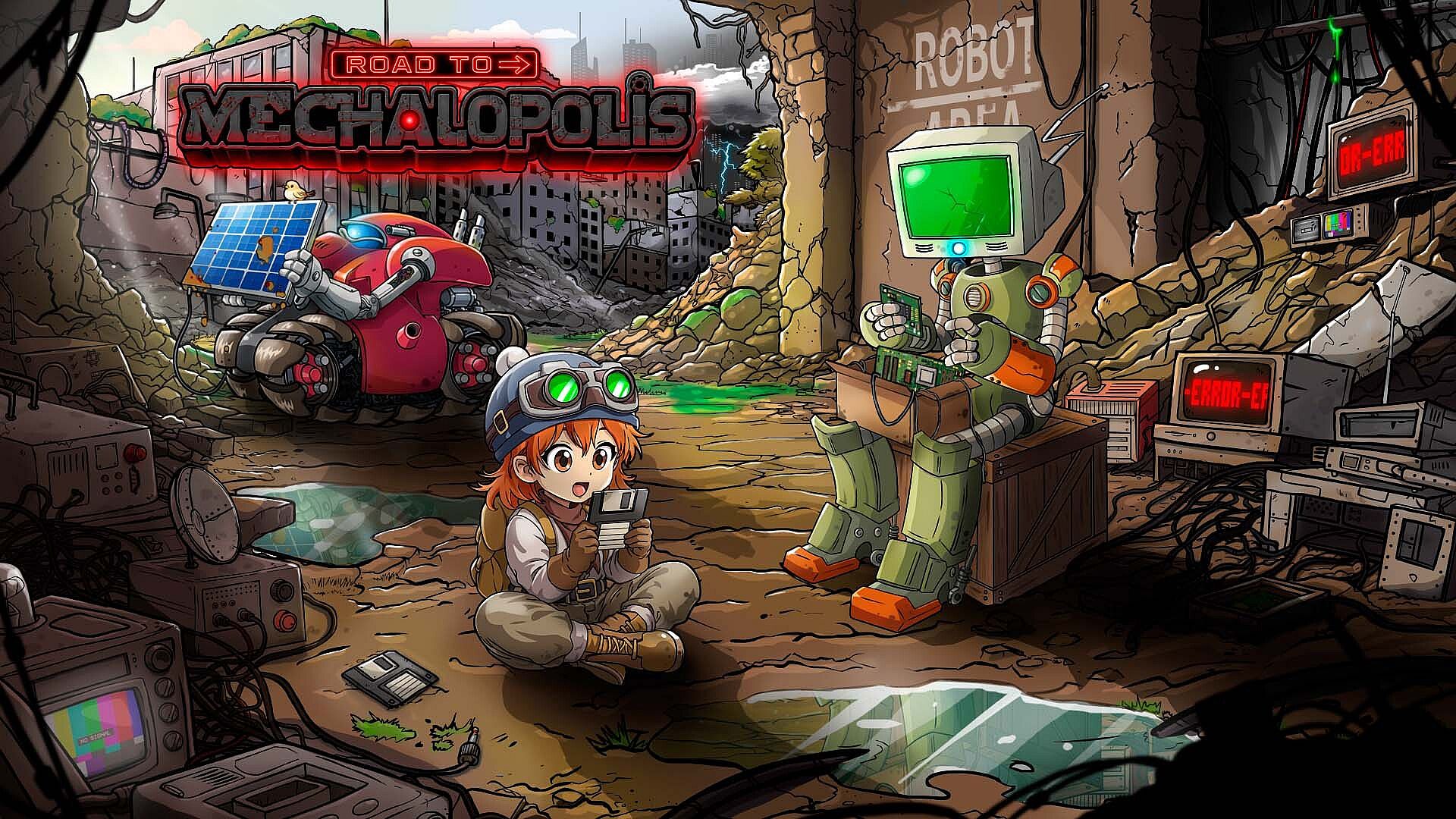
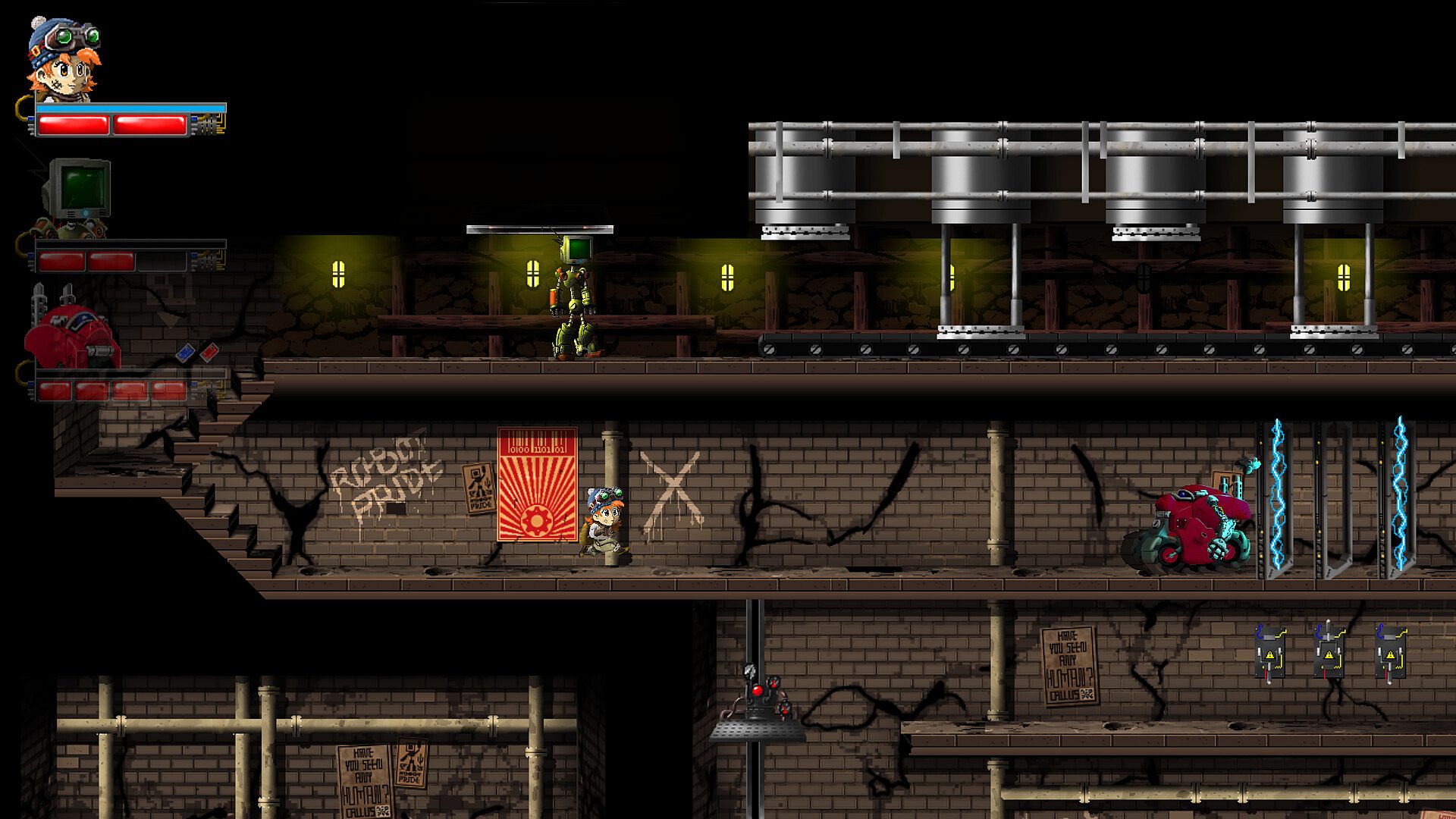
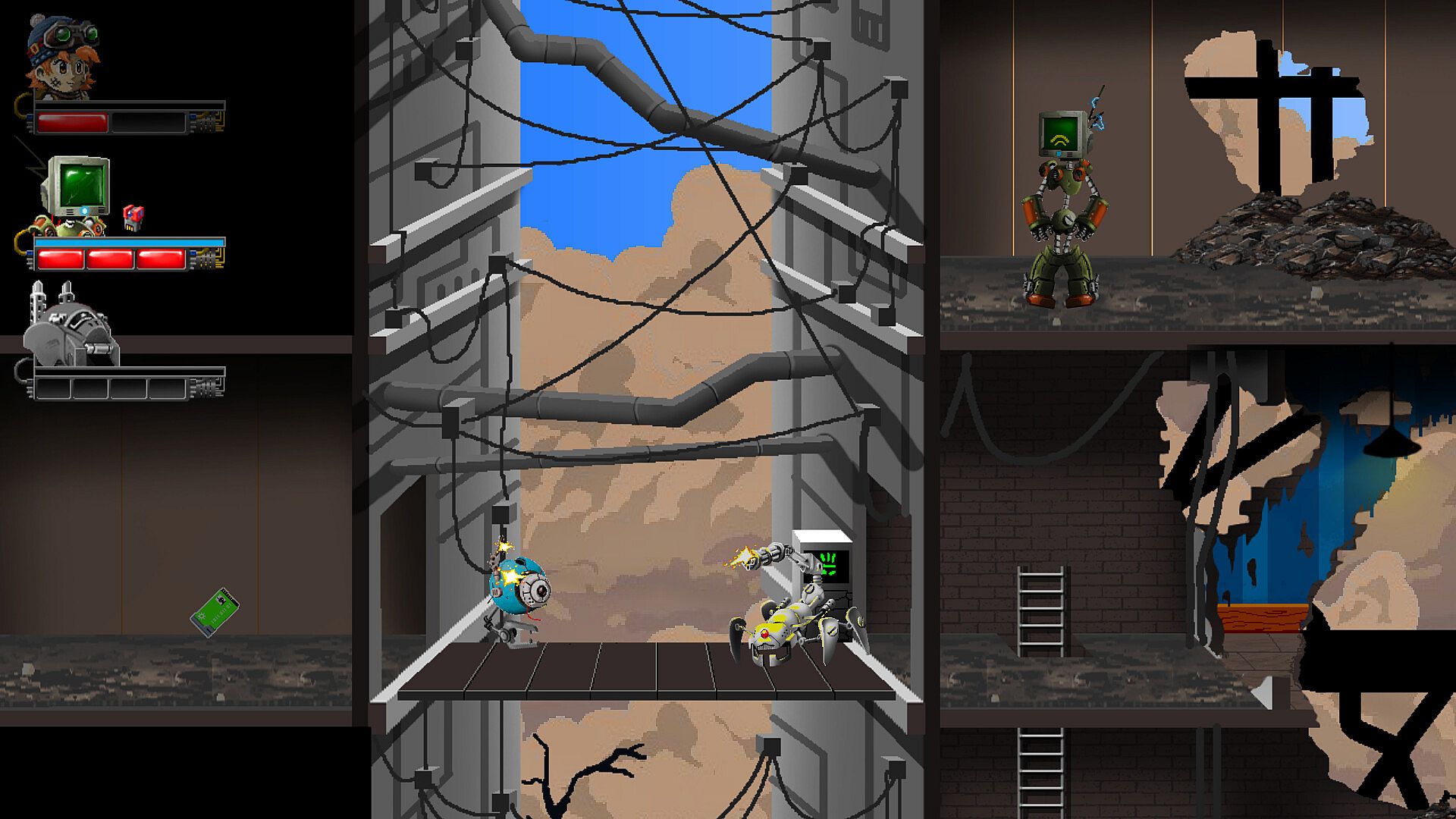
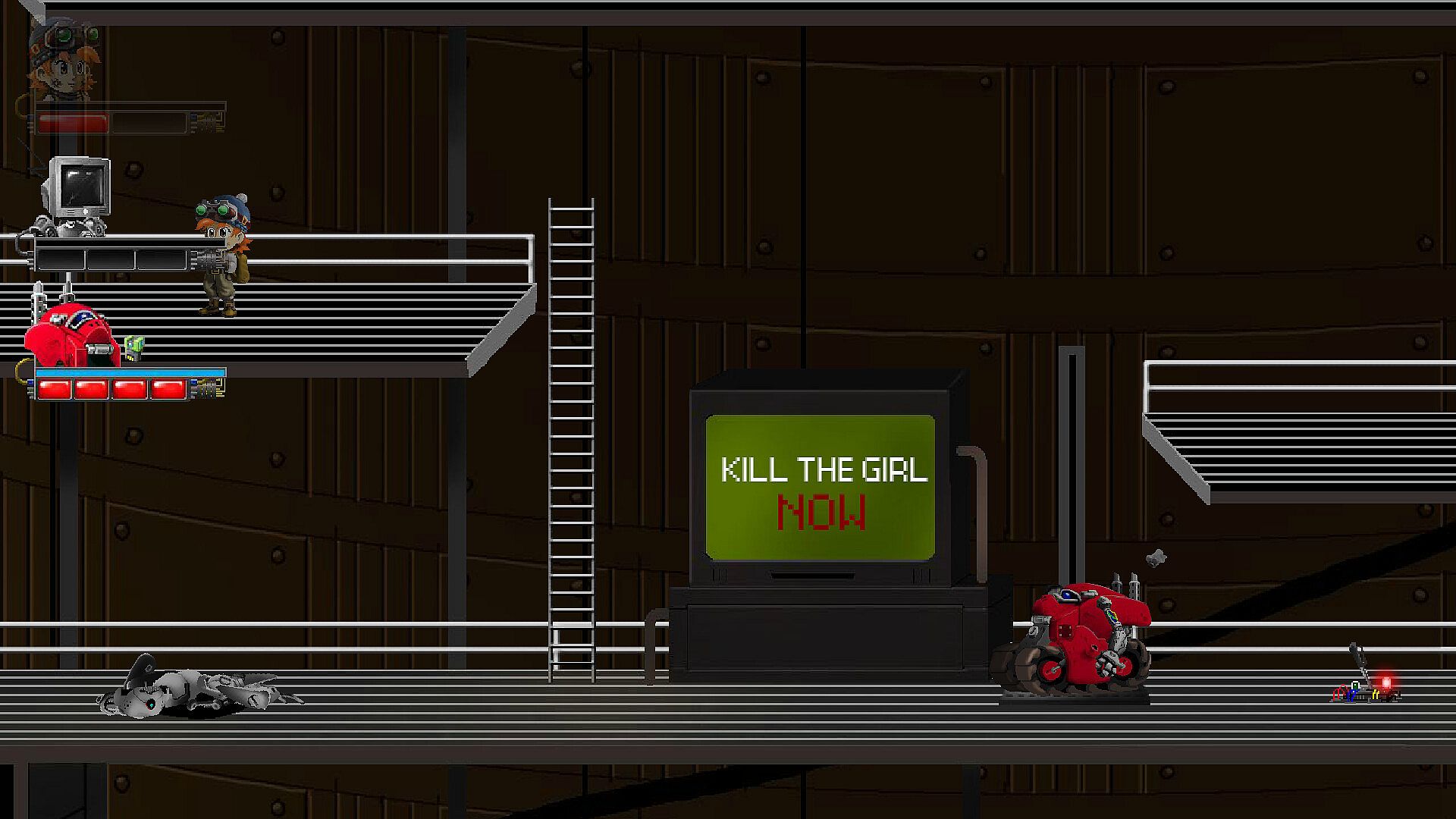
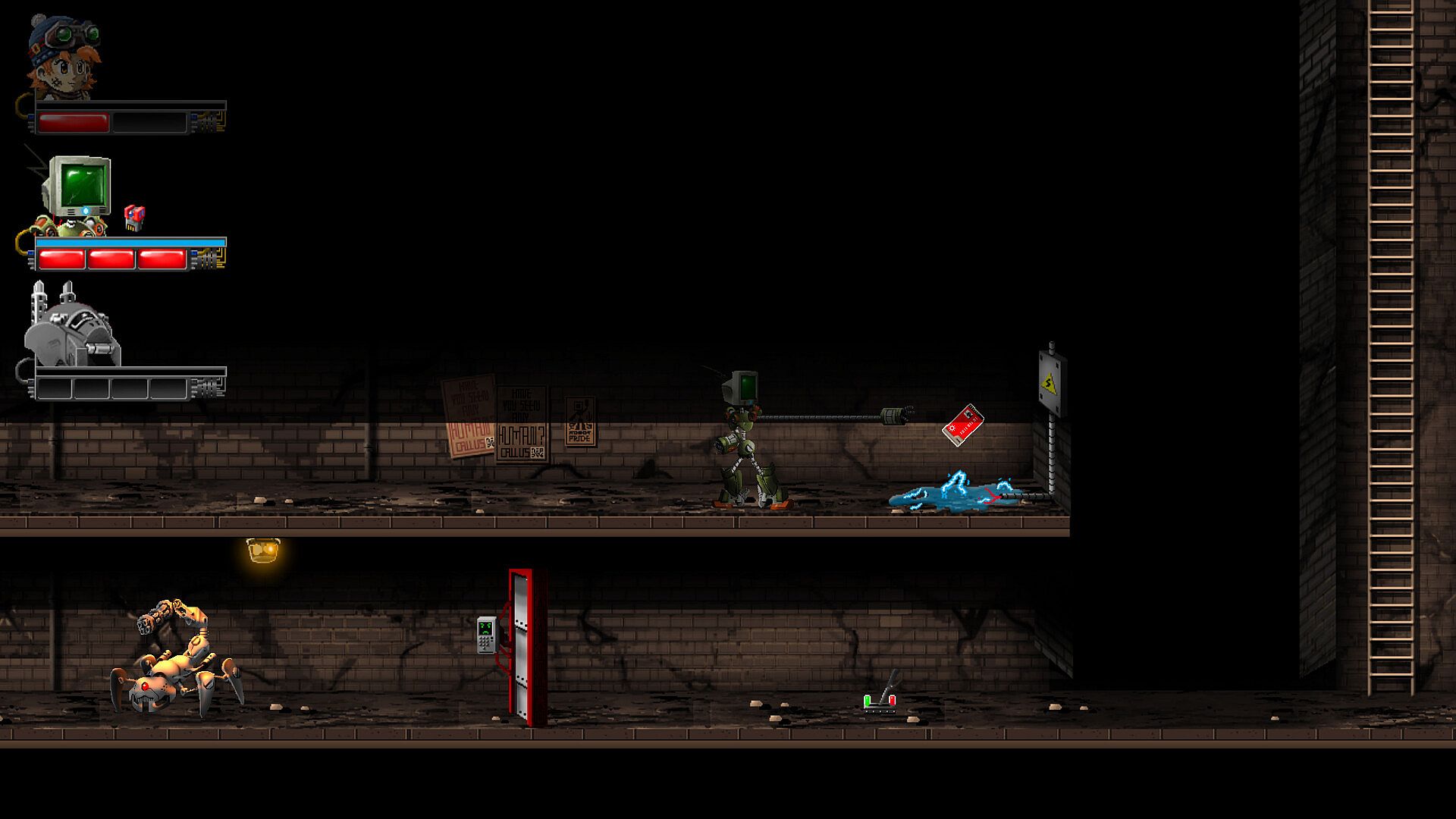
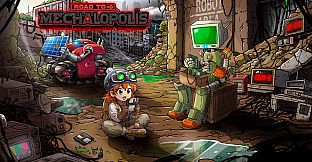
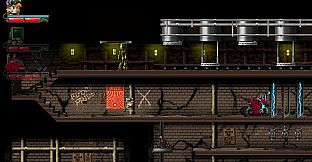
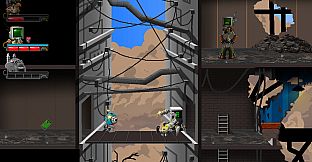
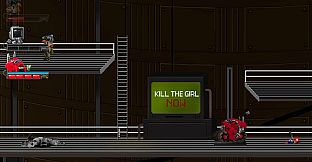
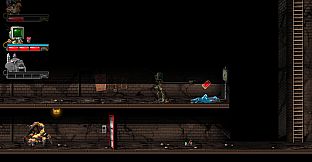
Road to Mechalopolis est un jeu d'action et d'aventure indépendant sur PC qui vous met aux commandes d'une petite équipe traversant un désert dominé par les machines. Le titre suit Dot, une jeune humaine, et ses deux compagnons robots défectueux en route vers la cité mécanique Mechalopolis 01. Le gameplay repose sur le passage fluide entre trois personnages dotés d'outils distincts, permettant d'explorer de vastes niveaux interconnectés remplis d'obstacles et de passages secrets.
Gameplay
L'expérience mêle exploration, résolution d'énigmes et survie à travers six zones différentes. Chaque niveau propose plusieurs itinéraires et zones cachées qui récompensent la curiosité. Les joueurs ramassent des circuits et une monnaie de récupération pour les dépenser dans une ville sûre peuplée d'autres robots défectueux à lumière bleue. Ces améliorations renforcent les capacités et les statistiques de l'équipe. Si l'un des robots est détruit, il laisse tomber une boîte noire qu'il faut transporter jusqu'à la sortie du niveau pour le reconstruire au chapitre suivant. Dot est la seule humaine et la seule à savoir nager. Ses lunettes révèlent des éléments invisibles et son cri détourne les menaces proches. I-ZAK communique par émoticônes, tend ses bras pour atteindre des endroits éloignés et utilise une antenne pour contrôler temporairement les machines ennemies. J-COB, unité lourde, projette un bouclier protecteur pour toute l'équipe, le transforme en plateforme et effectue une charge pour briser des murs ou assommer des adversaires. Les trois personnages doivent coopérer, car aucun ne possède toutes les compétences nécessaires. La partie s'arrête si Dot disparaît.
Game Modes
Road to Mechalopolis propose une campagne solo continue. La progression se fait zone par zone, sans mode compétitif ni coopératif. La structure mise sur l'enchaînement des niveaux tout en laissant la possibilité de revenir en arrière et d'explorer chaque grande zone. Les améliorations achetées dans la ville des robots défectueux persistent et facilitent les tentatives répétées sur les passages difficiles.
Story and Characters
L'histoire suit Dot, onze ans, dans sa traversée déterminée du désert. Des machines à lumière rouge patrouillent et traquent toute présence humaine, tandis que l'IA centrale A-RAM supervise Mechalopolis 01. Dot rencontre I-ZAK et J-COB, deux robots à lumière bleue qui n'attaquent pas les humains. La barrière de langue complique la communication, mais le trio forme une unité fonctionnelle. Chaque personnage apporte des capacités irremplaçables qui influencent à la fois les déplacements et la résolution des problèmes. Le récit reste centré sur ce voyage, sans intrigues secondaires ni quêtes annexes mentionnées.
Soundtrack and Atmosphere
La bande-son de Road to Mechalopolis puise dans le répertoire classique de Bach, Mozart et Beethoven, réarrangé en chiptune. Ce contraste entre origines orchestrales et réinterprétation électronique crée une atmosphère sonore unique qui accompagne le décor désertique. Les machines à lumière rouge s'opposent aux alliés à lumière bleue, soulignant la fracture du monde que l'équipe doit traverser.
Is It Worth Playing?
Road to Mechalopolis s'adresse aux joueurs qui apprécient les aventures à permutation de personnages où l'usage coordonné des capacités est essentiel. L'accent mis sur l'exploration, la recherche de secrets et la gestion prudente des ressources dans de grands niveaux impose un rythme posé. Les amateurs de titres indépendants combinant puzzle et plateforme autour d'un trio compact trouveront une boucle de jeu fidèle à cette description. Disponible uniquement sur PC pour l'instant, le jeu reste en développement sans date de sortie ni détails sur le support post-lancement. Les fans d'aventures d'équipe inspirées des classiques apprécieront la portée concentrée et l'alliance entre musique classique et esthétique rétro.