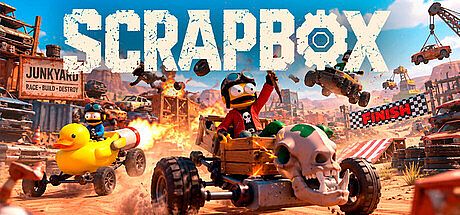


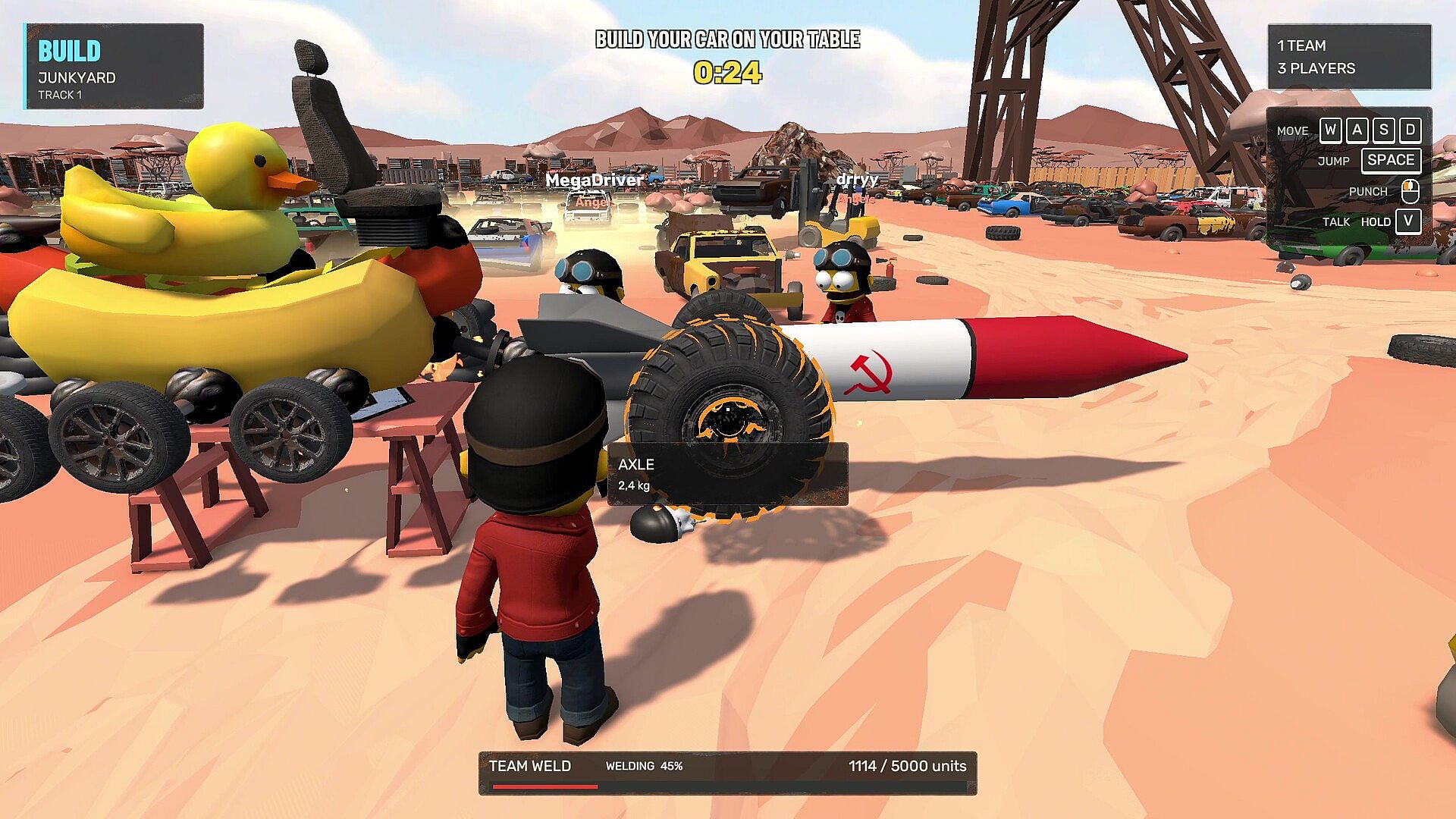
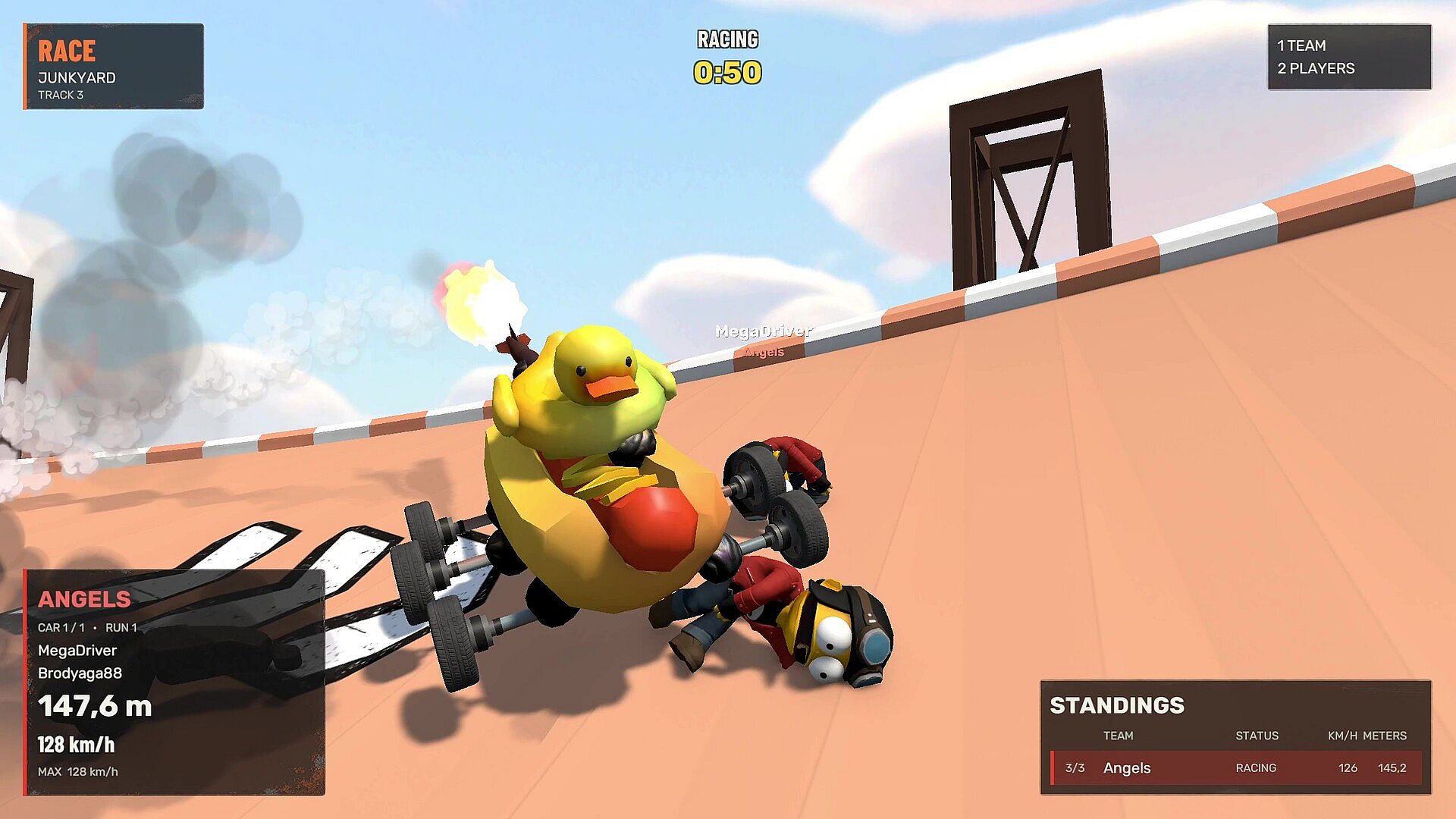
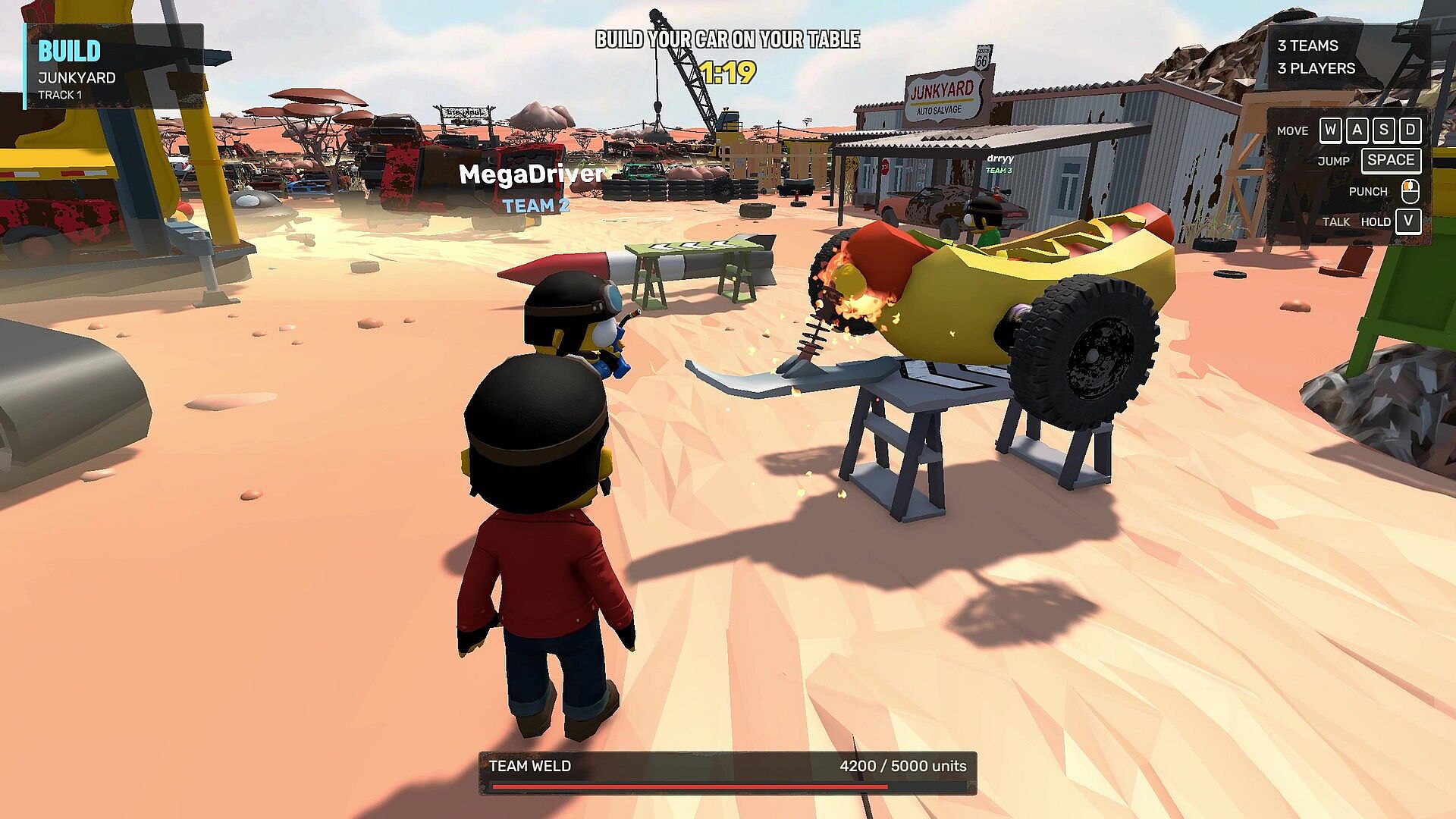
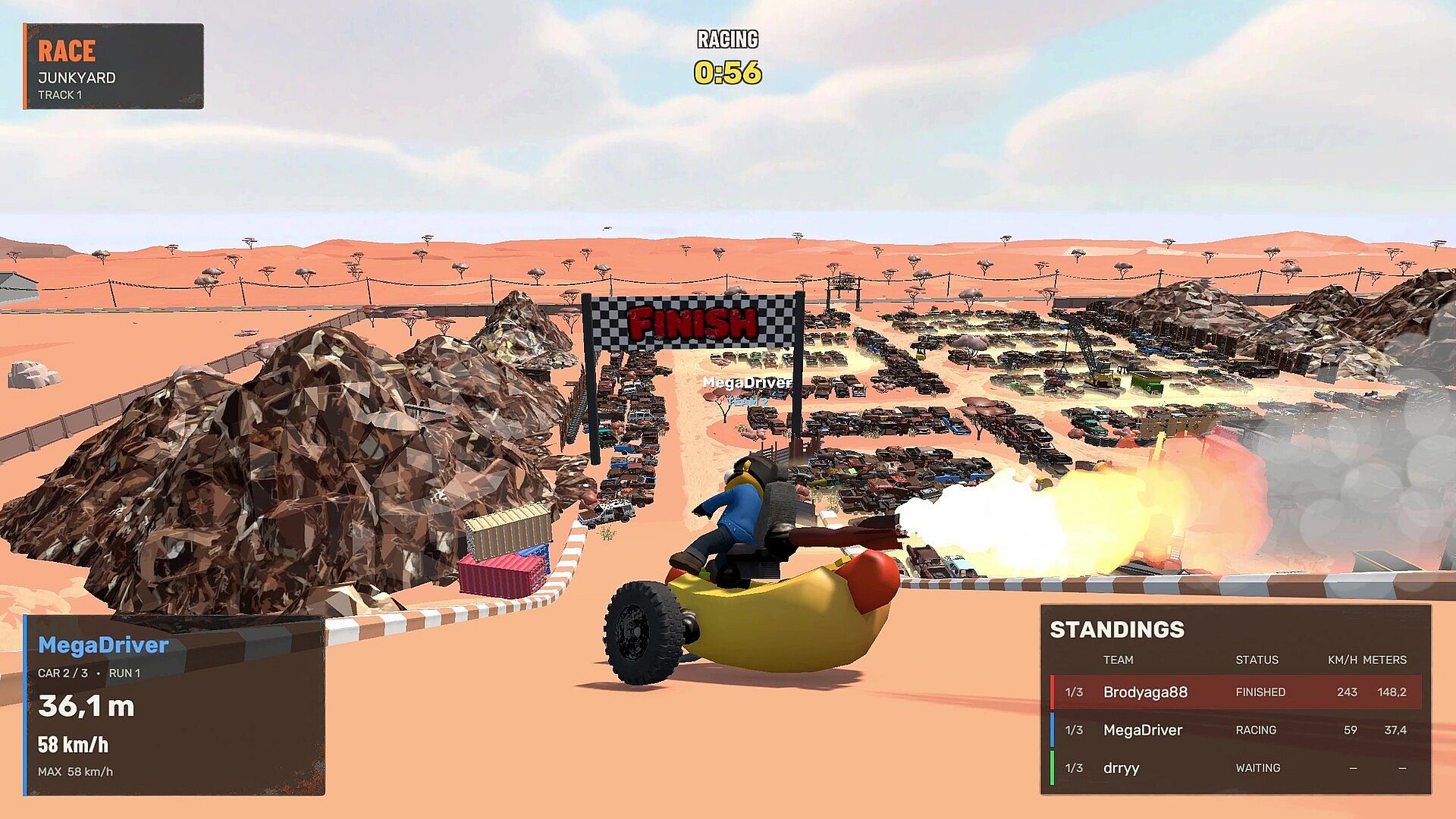
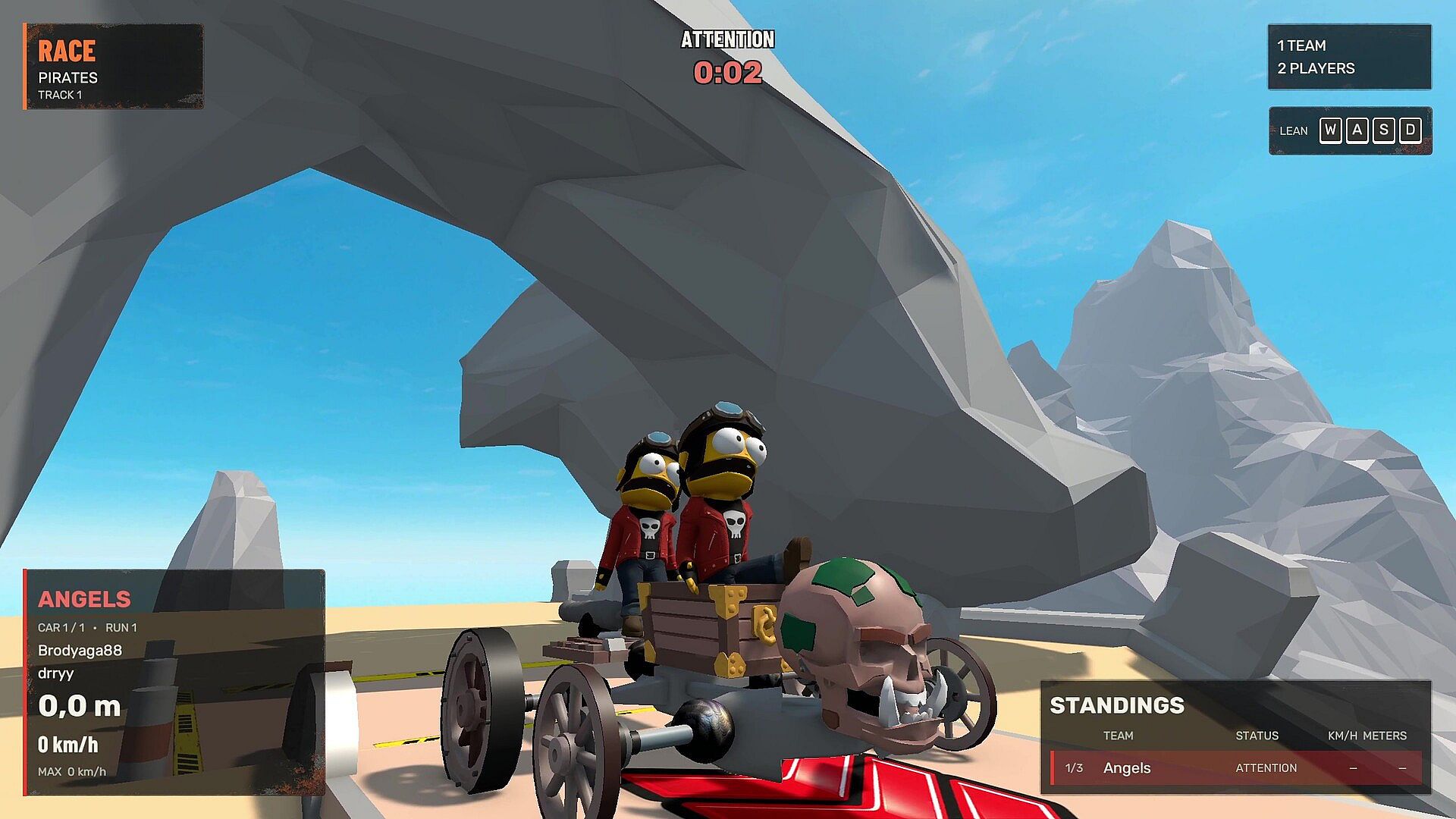
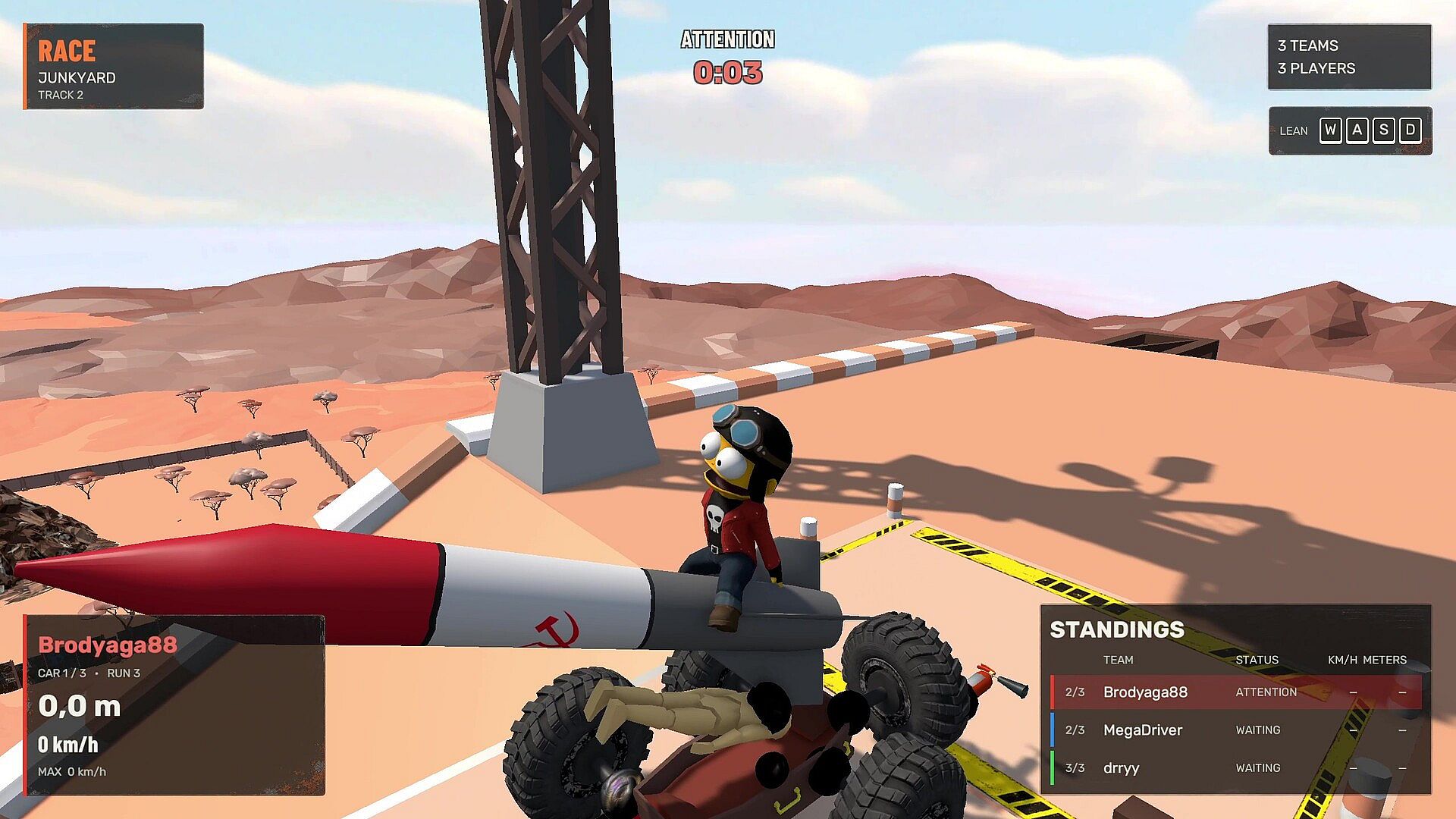
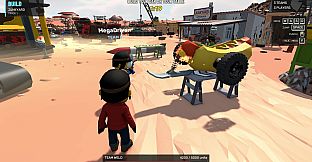
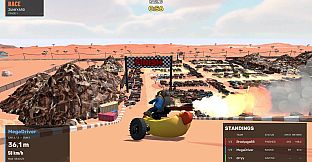
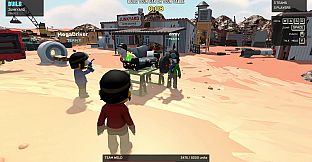
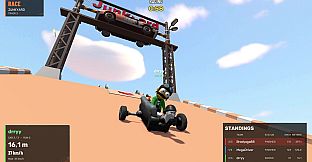
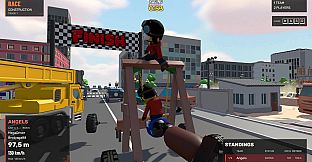

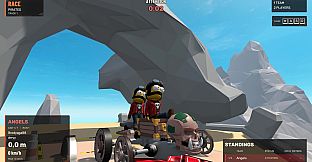
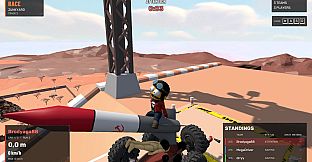
SCRAPBOX is a physics-based sandbox game focused on vehicle construction and racing challenges. Players gather scrap parts to assemble custom machines and test them against demanding tracks on PC. The core experience centers on creative building without preset vehicles, emphasizing trial and error in a multiplayer-friendly environment that supports solo play as well.
Gameplay
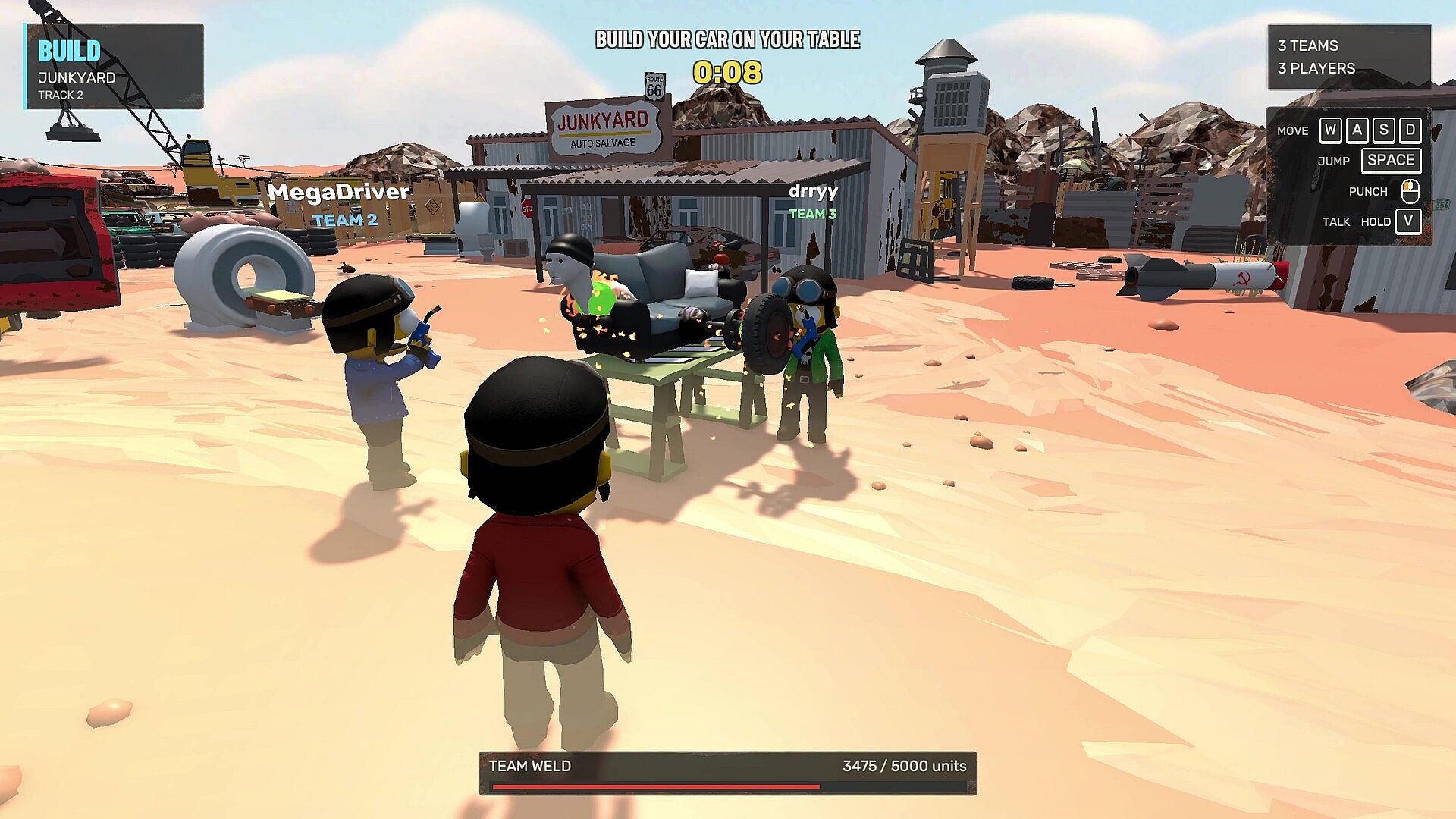
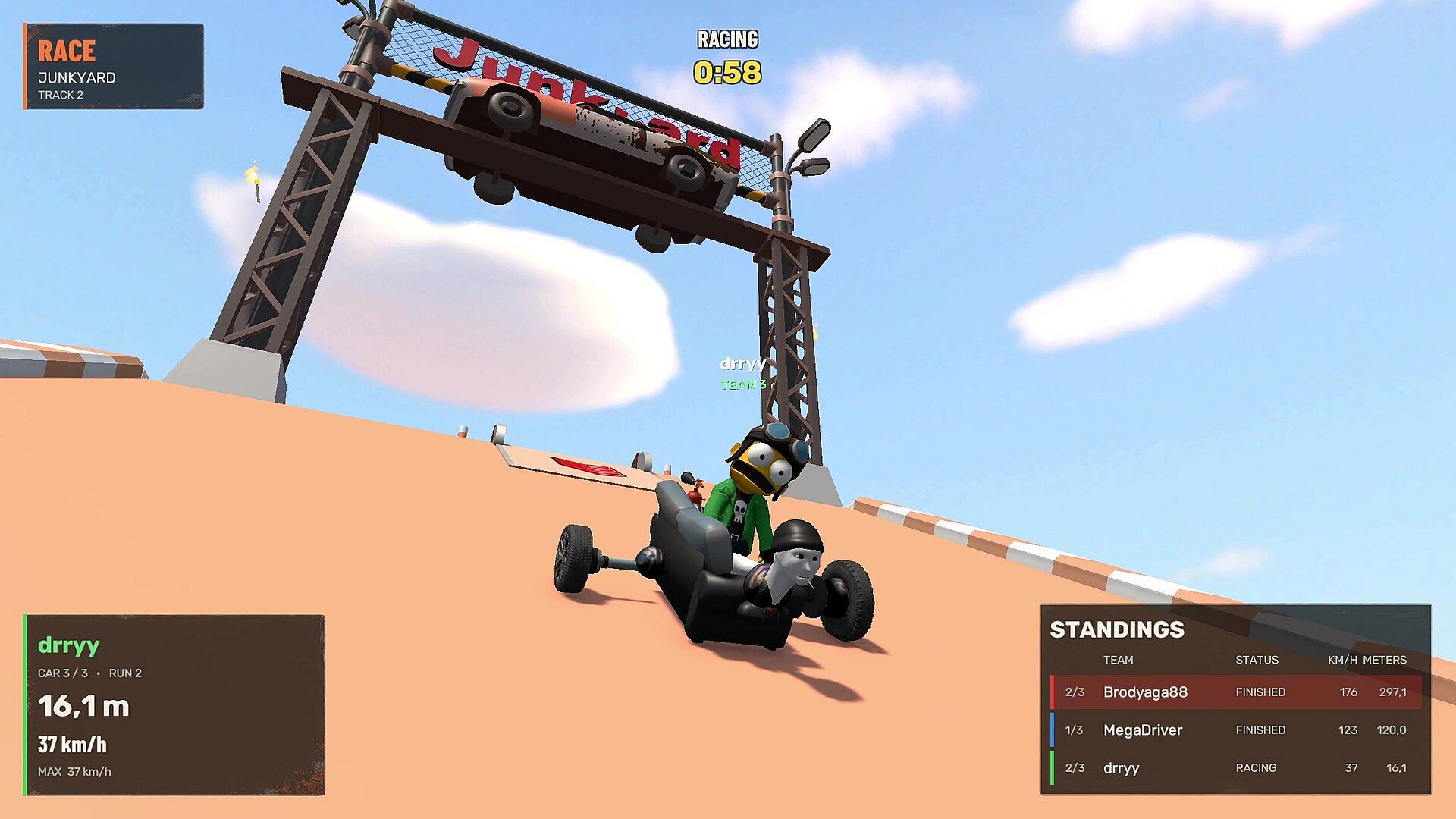
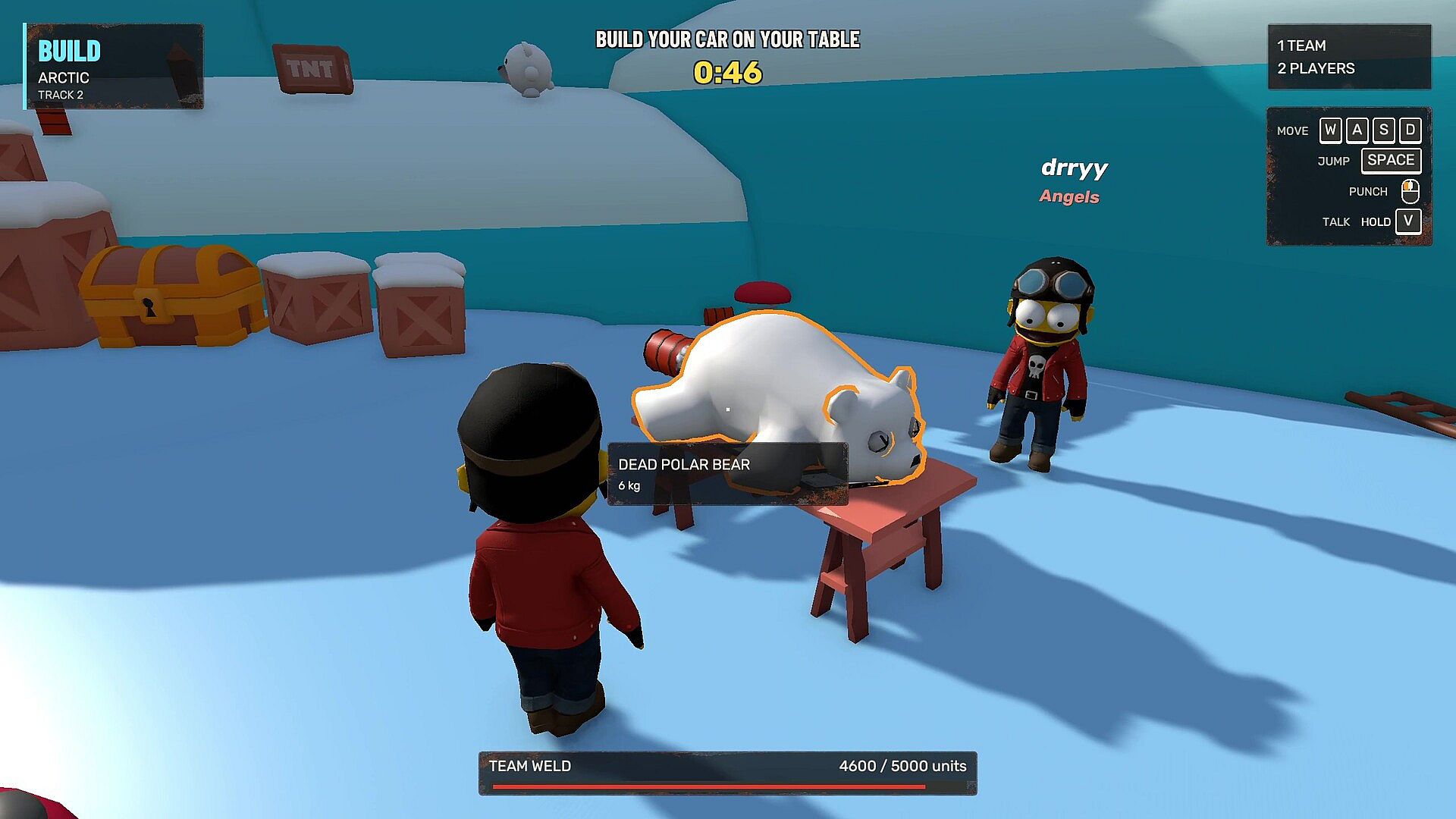
Building begins with collecting available components such as wheels, axles, frames, seats, and boosters scattered across each map. These pieces must be welded into a functional structure capable of movement and stability. Physics governs every aspect of the vehicle, including weight distribution, wheel placement, suspension behavior, and joint strength. A poorly balanced creation may tip over on uneven terrain, while an overly rigid one could break apart under stress. Players drive their finished machines along tracks designed with specific obstacles and surfaces. When a vehicle fails, the wreckage provides lessons for the next attempt, encouraging iterative improvements to construction techniques and part selection.
The emphasis remains on practical engineering rather than aesthetics alone. Simple setups sometimes outperform complex ones because they handle the physics simulation more reliably. Each map introduces fresh terrain and layout demands, requiring adjustments to the vehicle design for better performance on slopes, jumps, or tight turns.
Game Modes
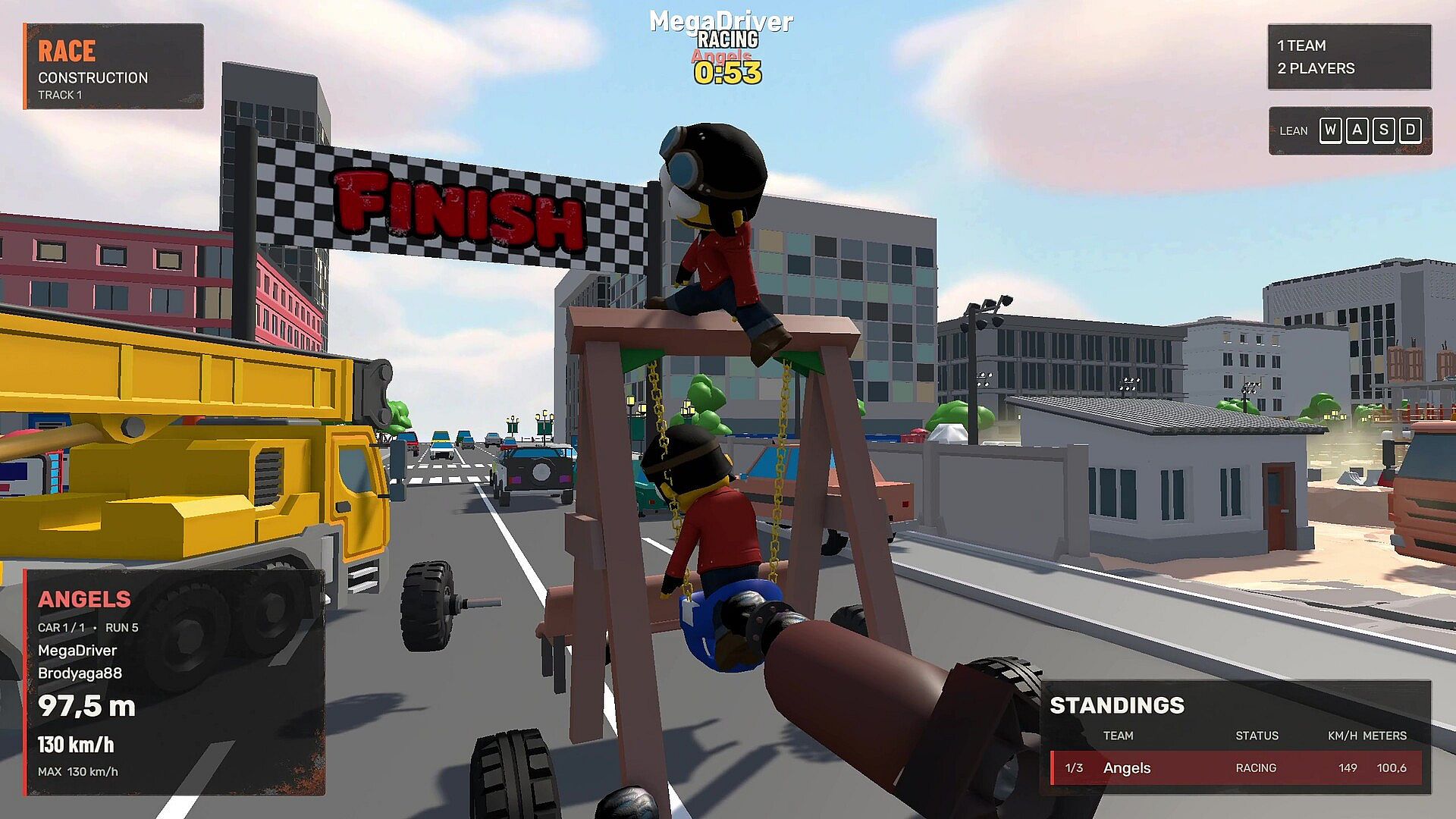
SCRAPBOX supports multiple ways to engage with its building and driving systems. Solo play allows individuals to progress through maps at their own pace, focusing entirely on personal vehicle experiments. Co-op sessions enable friends to collaborate on a single machine or support one another across shared challenges. Competitive online matches feature free-for-all formats where every participant builds and races independently. Team-based options divide players into as many as four groups, with one to four people per team. In team play, participants can combine efforts on one shared vehicle or compete to demonstrate superior individual designs against rival groups.
These options accommodate different group sizes and preferences without requiring additional setup beyond selecting the desired mode at the start of a session.
Vehicle Construction and Physics
Every vehicle relies on real-time physics calculations that respond to how parts connect and distribute mass. Weld quality directly influences durability during high-speed runs or collisions with track elements. Players experiment with booster placement for acceleration, axle positioning for turning radius, and frame reinforcements for impact resistance. The absence of prebuilt options forces creative solutions using whatever scrap appears on a given map. Successful designs often balance speed with control, though unexpected combinations like minimalistic frames can occasionally excel due to lower weight and fewer failure points.
Track variety ensures that no single vehicle configuration works universally. Adjustments become necessary when facing new surfaces or elevation changes, reinforcing the loop of build, test, and refine.
Is It Worth Playing?
SCRAPBOX appeals to players who enjoy hands-on creation combined with competitive or cooperative driving. The physics-driven building system rewards experimentation and persistence, particularly for those interested in sandbox mechanics within racing and action genres. With a planned release on November 3, 2026, the game offers solo, co-op, and team-based multiplayer options that scale to different playstyles. Individuals seeking creative freedom in vehicle assembly alongside track challenges will find the described systems engaging. Those preferring structured progression or extensive post-launch content updates should monitor development progress after launch, as current information centers on the core building and racing loop. The title suits casual sessions or longer group play depending on chosen modes.