

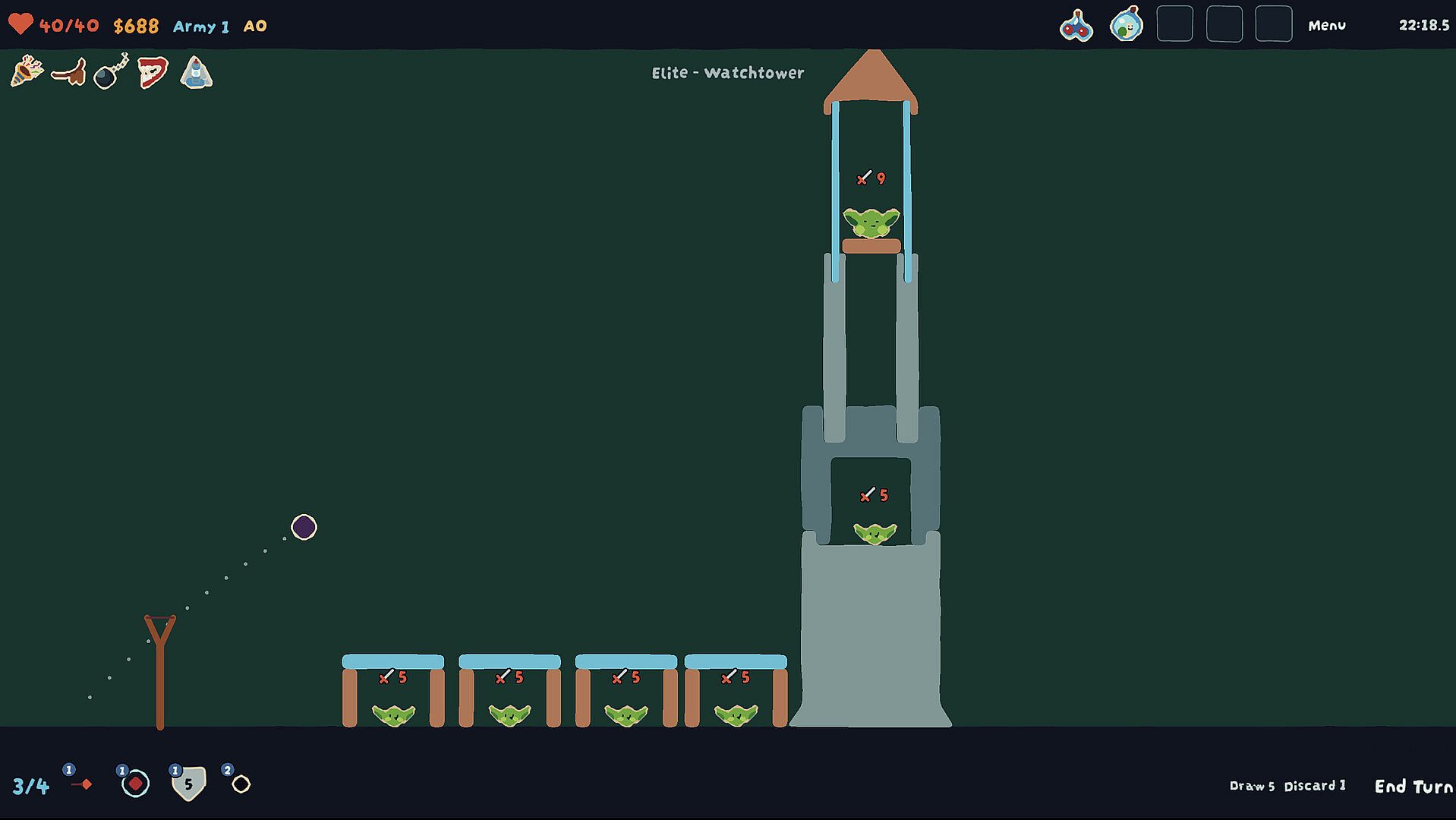
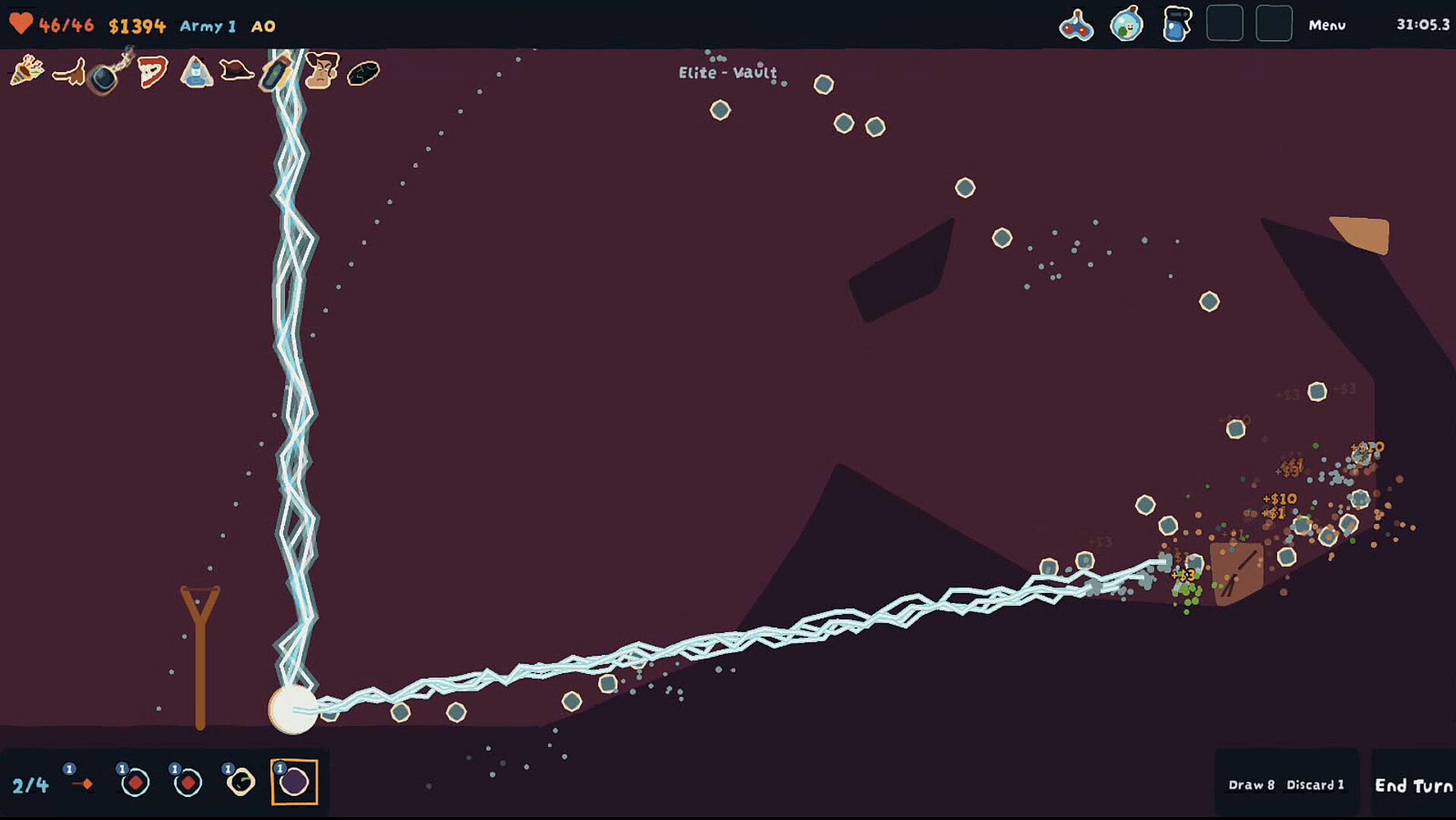
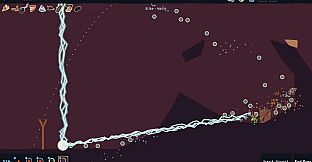
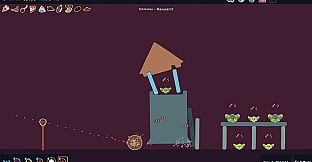
Seej - Angry Balls Roguelike is a deckbuilding roguelike game for PC that blends precise projectile strategy with army management and castle conquest. Players command balls across multiple forces in a campaign to topple enemy strongholds, drawing from the slingshot physics of classic physics puzzlers while layering in card-based upgrades and persistent run progression.
Gameplay
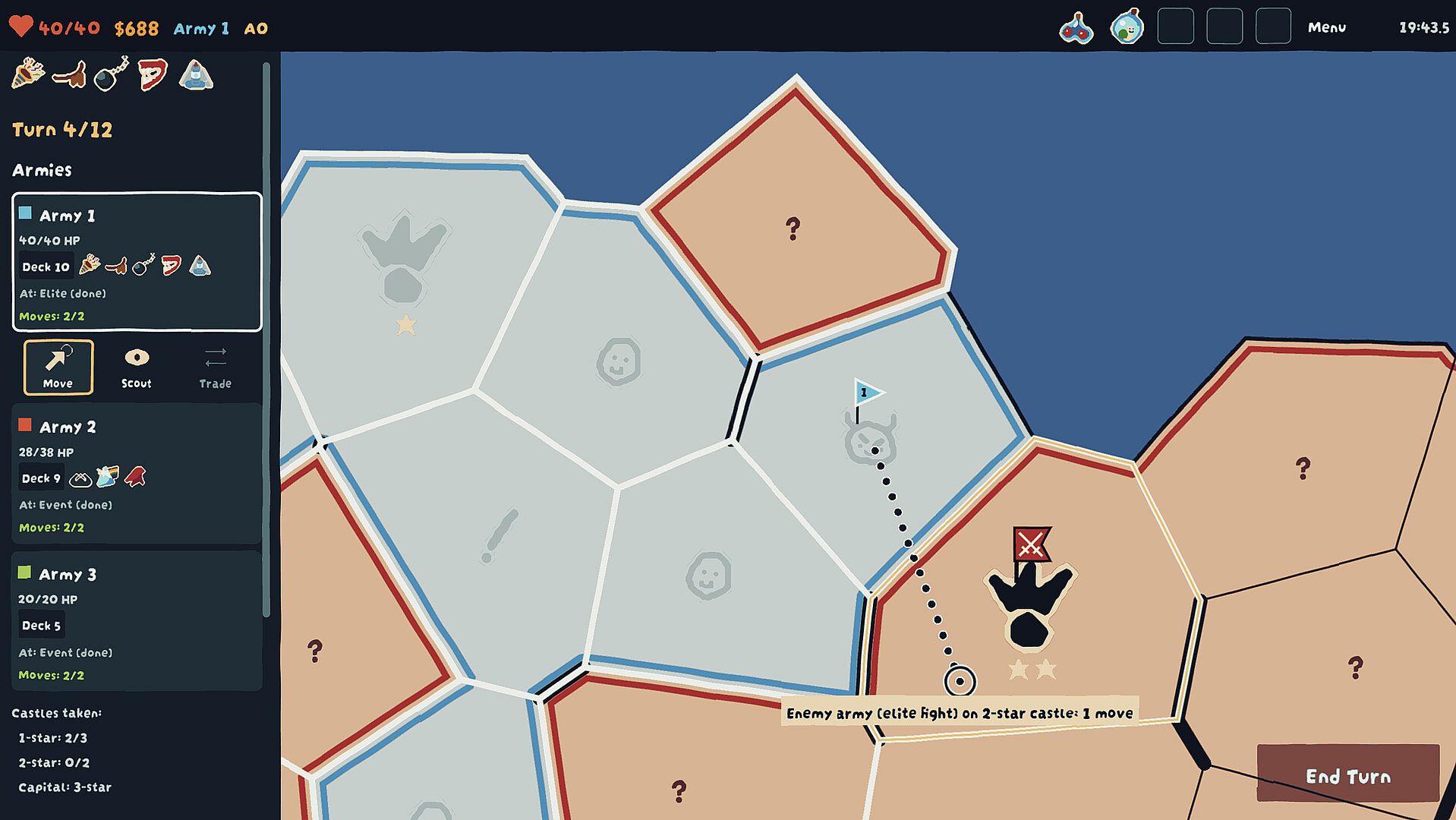
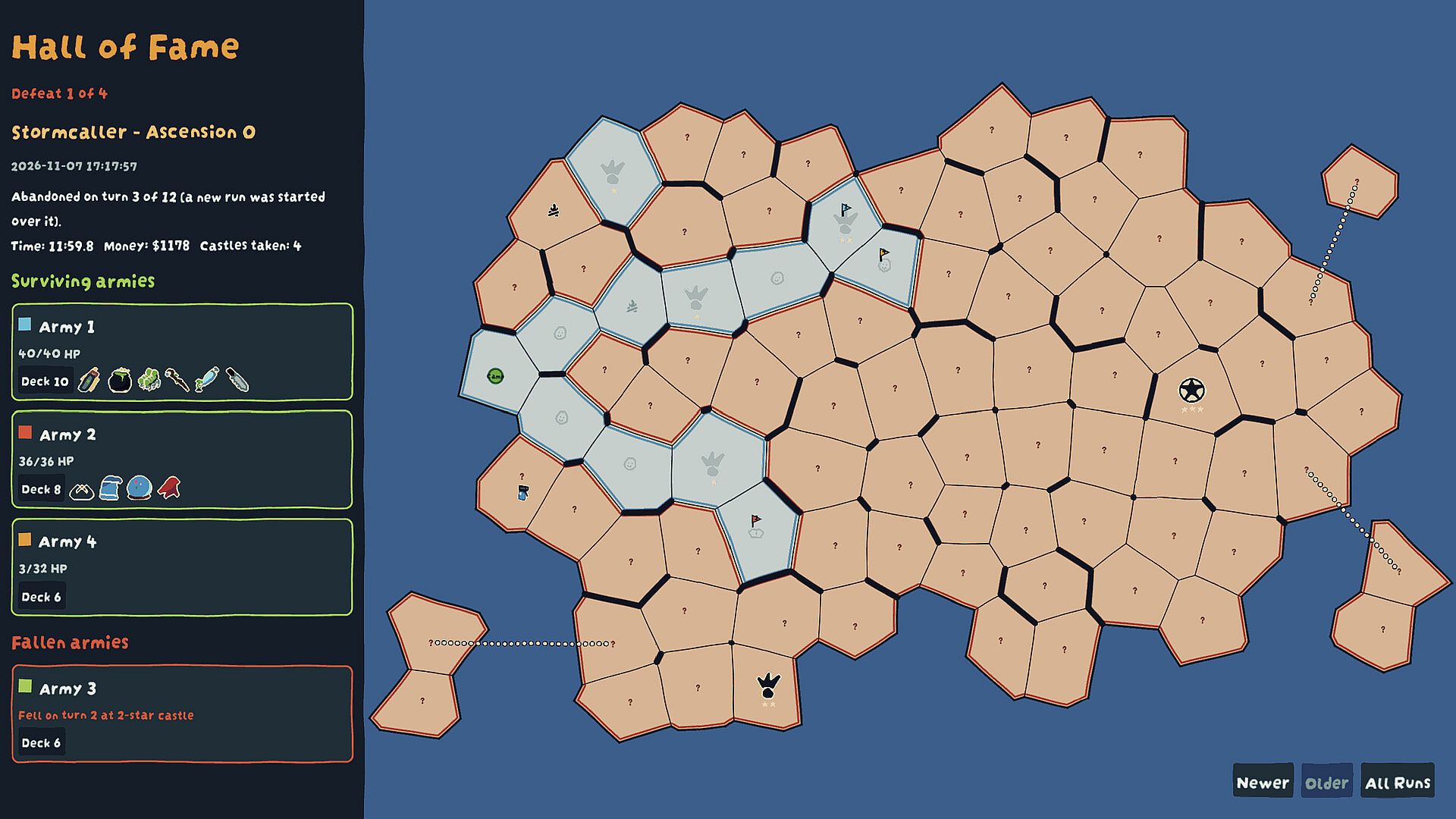
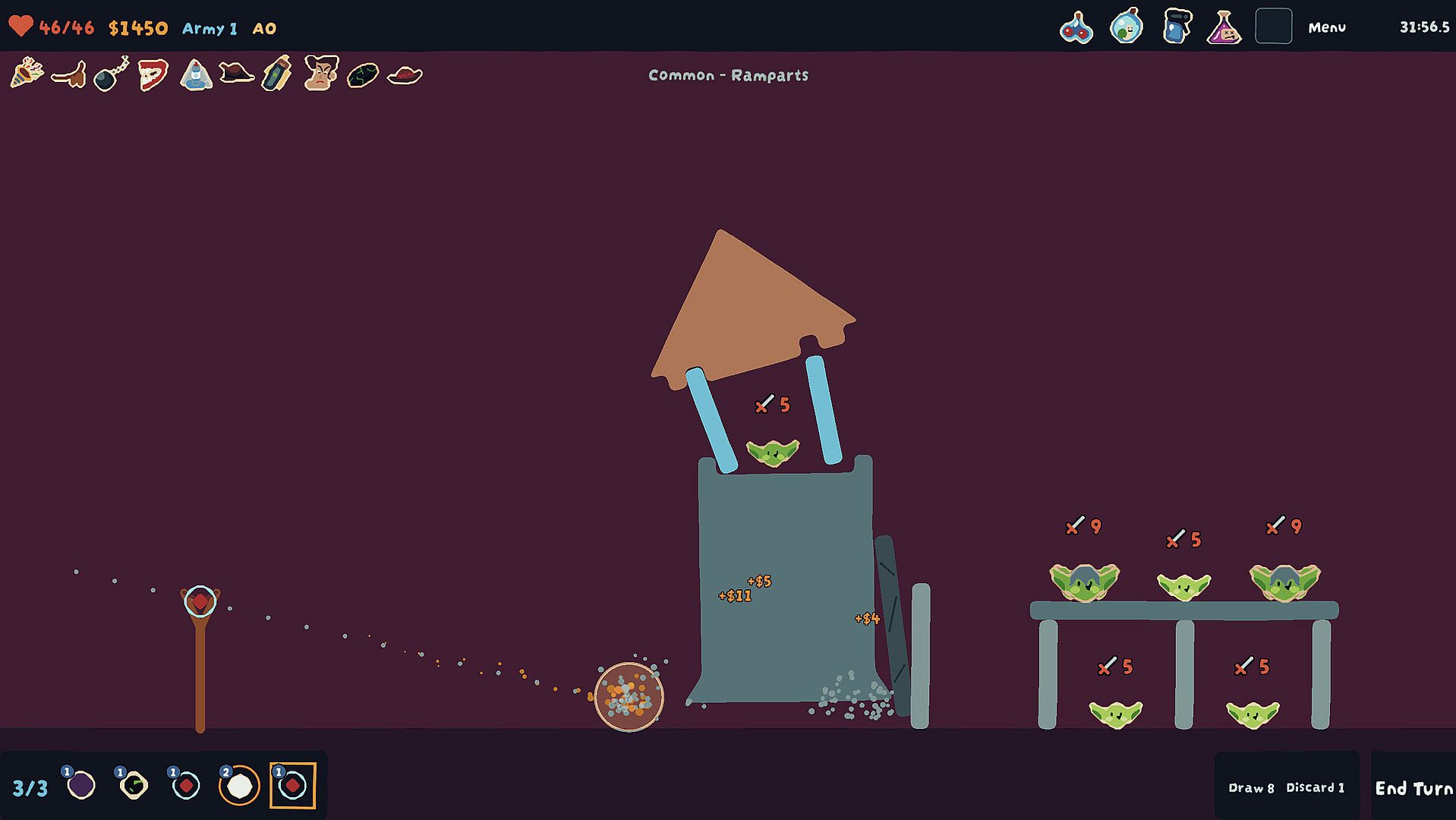
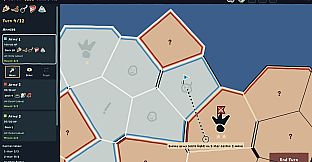
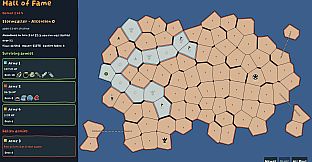
The core loop centers on deploying balls from up to three separate armies, each equipped with its own collection of projectiles and relics. These armies operate independently during encounters yet share the overarching goal of advancing toward the enemy capital. Every launch matters because resources and positioning carry forward across the map, allowing power to accumulate through successful sieges and relic acquisitions. Players navigate a grid-based campaign where each step strengthens the forces, but the clock runs tight with only ten turns available before the final confrontation. Opposing forces respond dynamically by sending their own units forward, imposing economic penalties through tariffs, and disrupting supply lines by extinguishing campfires that support recovery and preparation.
Success demands careful allocation of shots across the three armies rather than overcommitting to a single strong force. Encounters reward efficient ball placement and relic synergy, while the shared map means choices in one army directly influence options for the others. The system rewards experimentation with different ball types and equipment combinations, ensuring that positioning, timing, and resource denial play equal roles in overcoming fortified positions.
Game Modes
Runs unfold as roguelike campaigns across a map filled with castles and obstacles. Players can pursue a direct path to the capital or detour to every intermediate stronghold for additional rewards and challenges. Ascension levels scale the difficulty across ten tiers, introducing stricter enemy behaviors and resource constraints while preserving the same fundamental structure of army management and limited turns. Each run resets the deck and army compositions, forcing adaptation to newly drawn balls, relics, and equipment. The win streak tracker records consecutive victories, providing a persistent metric that encourages repeated attempts even after setbacks.
No two campaigns play identically due to the procedural arrangement of encounters and the expanding pool of available items. The format supports both quick exploratory runs and longer strategic sessions focused on optimizing army balance before the ten-turn deadline.
Progression and Depth
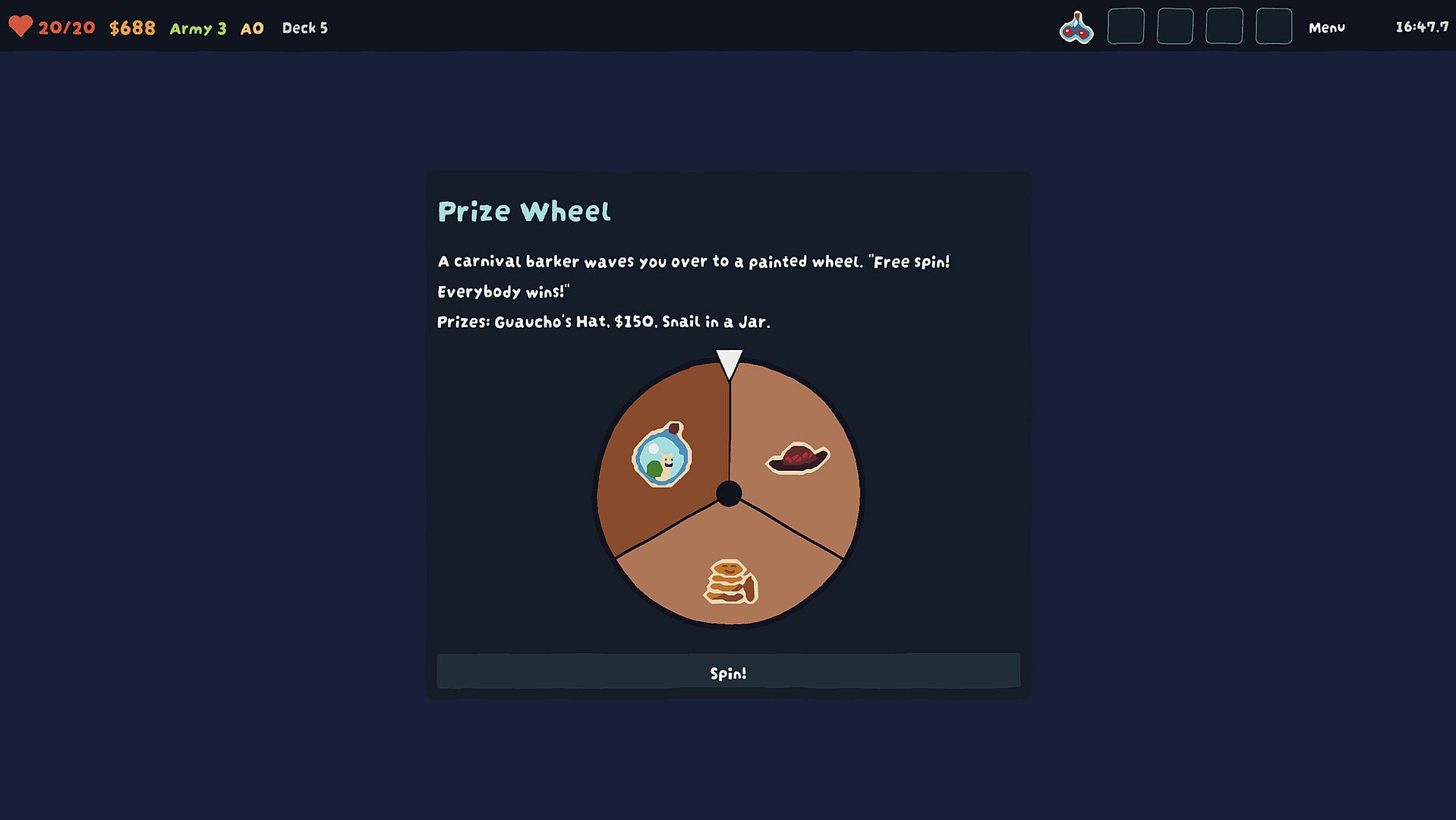
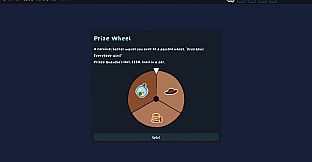
Power growth occurs through map advancement and relic collection, with each conquered position unlocking stronger options for the next stage. Dozens of distinct balls, relics, and pieces of equipment create varied builds that emphasize different launch angles, chain reactions, or defensive countermeasures. The three-army structure adds another layer because players must maintain viable forces in all groups to extract maximum value from the full map. Ascension tiers further extend longevity by altering enemy aggression and resource availability without changing the fundamental rules.
The design keeps the entry point accessible through straightforward aiming and deployment while revealing layers of optimization in army synergy and turn economy. Equipment choices and relic effects compound across runs, rewarding players who track which combinations perform best against specific enemy setups.
Is It Worth Playing?
Seej suits players who enjoy roguelike deckbuilders that emphasize resource management and multi-unit coordination over pure luck. The ten ascension levels deliver meaningful progression and replayability through escalating challenges, while the variety of balls, relics, and equipment ensures fresh strategies emerge across attempts. Win streak tracking adds motivation to persist through difficult runs. Those drawn to strategic action games with physics-based combat and campaign-style map navigation will find the systems rewarding, particularly if they appreciate titles that reward careful planning across multiple forces rather than single-unit focus. The combination of limited turns and dynamic enemy interference creates tension that rewards precise execution and adaptive deck building.