


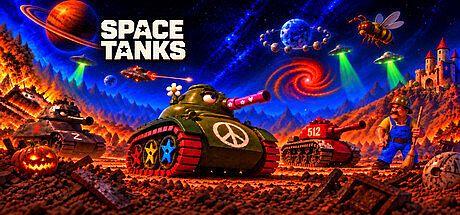



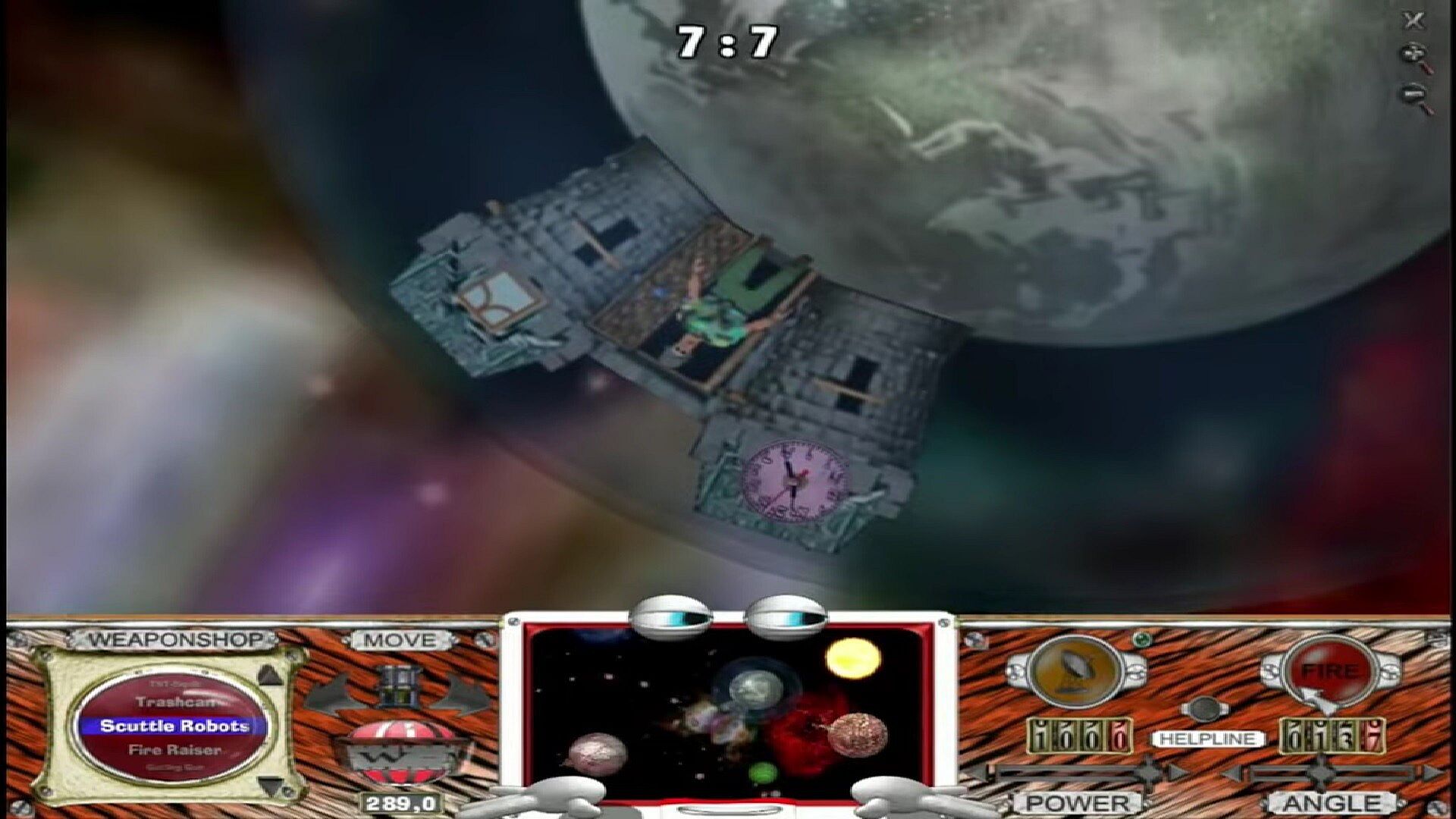
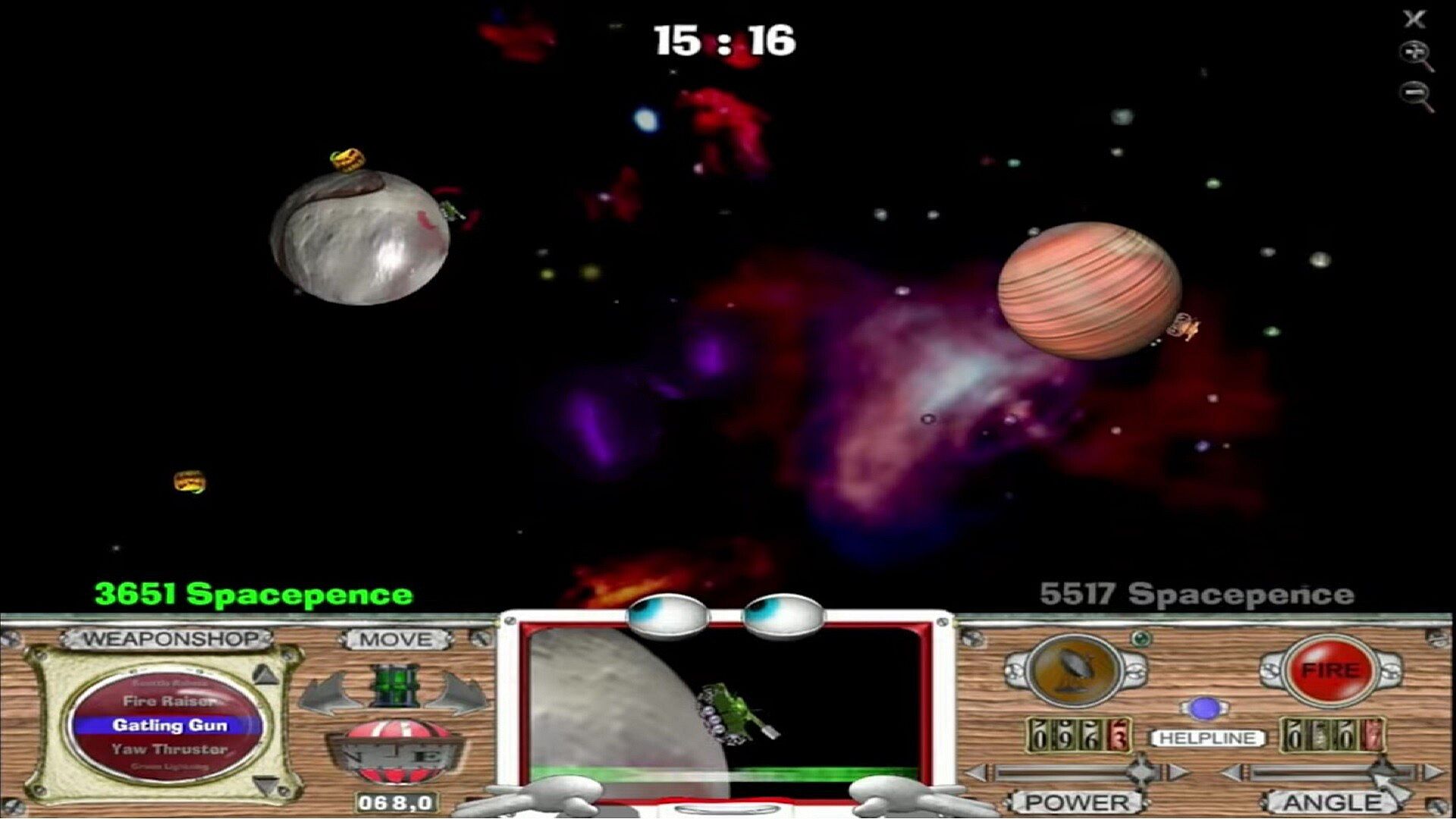
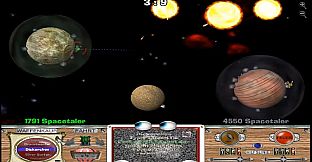
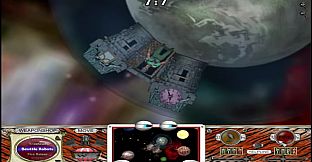
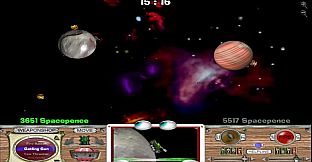
Space Tanks is a turn-based artillery strategy game for PC that places players in command of tanks on tiny planets, moons, and other celestial bodies. Gravity, timing, and precise aiming determine every outcome in this skill-focused experience from YawThrust Software Labs. The title emphasizes deterministic physics rather than random chance, with weapons that respond differently based on type, launch conditions, and environmental factors like black holes or antigravity fields.
Gameplay
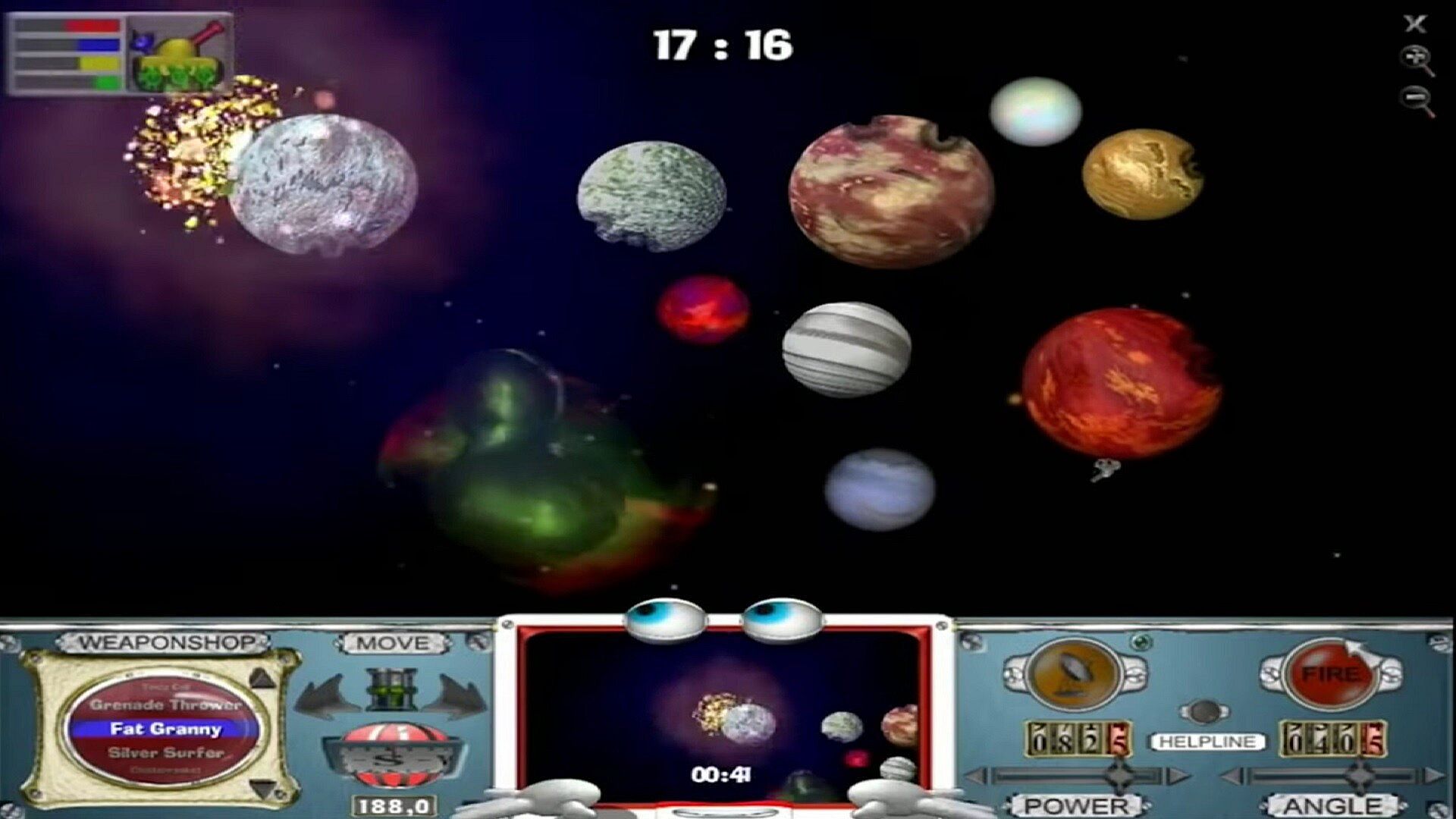
Every shot in Space Tanks requires careful judgment of angle, power, and weapon choice. Projectiles follow predictable paths when conditions stay the same, allowing players to learn and repeat successful trajectories across rounds. Three weapon classes provide distinct behaviors: blue projectiles travel in standard arcs, orange homing missiles adjust course, and yellow rockets use fuel for powered flight. Some weapons support remote detonation, though this feature depends on an intact tank antenna.
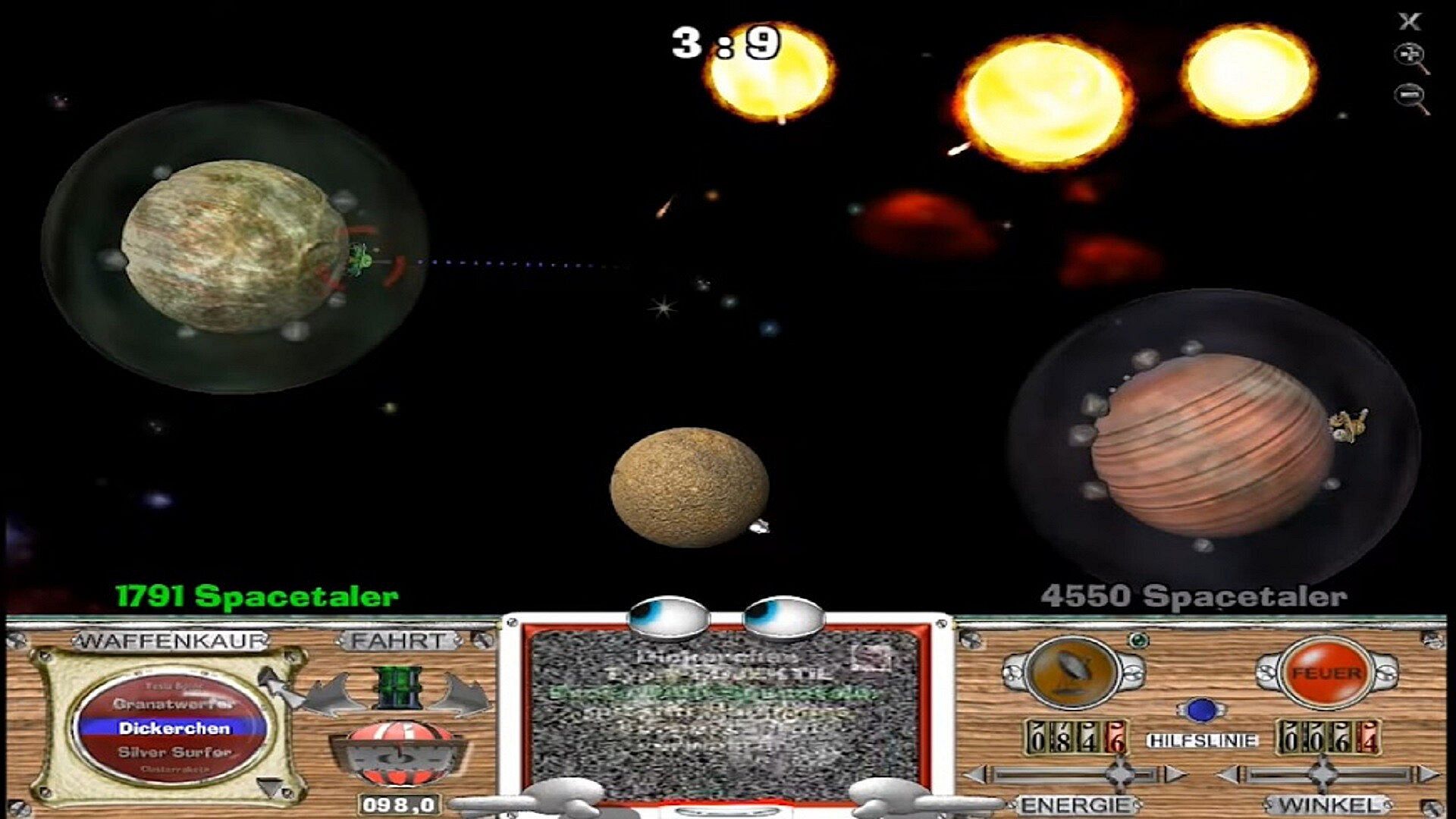
Planetary environments add layers of strategy. Moons and moving objects alter gravitational pulls mid-flight, while unstable planets can explode under heavy bombardment. Independent elements such as asteroids, debris, and Space Pumpkins continue moving and interacting even outside a player's turn or visible screen area. These ongoing simulations can lead to unexpected collisions or late-arriving hazards that change the course of a match.
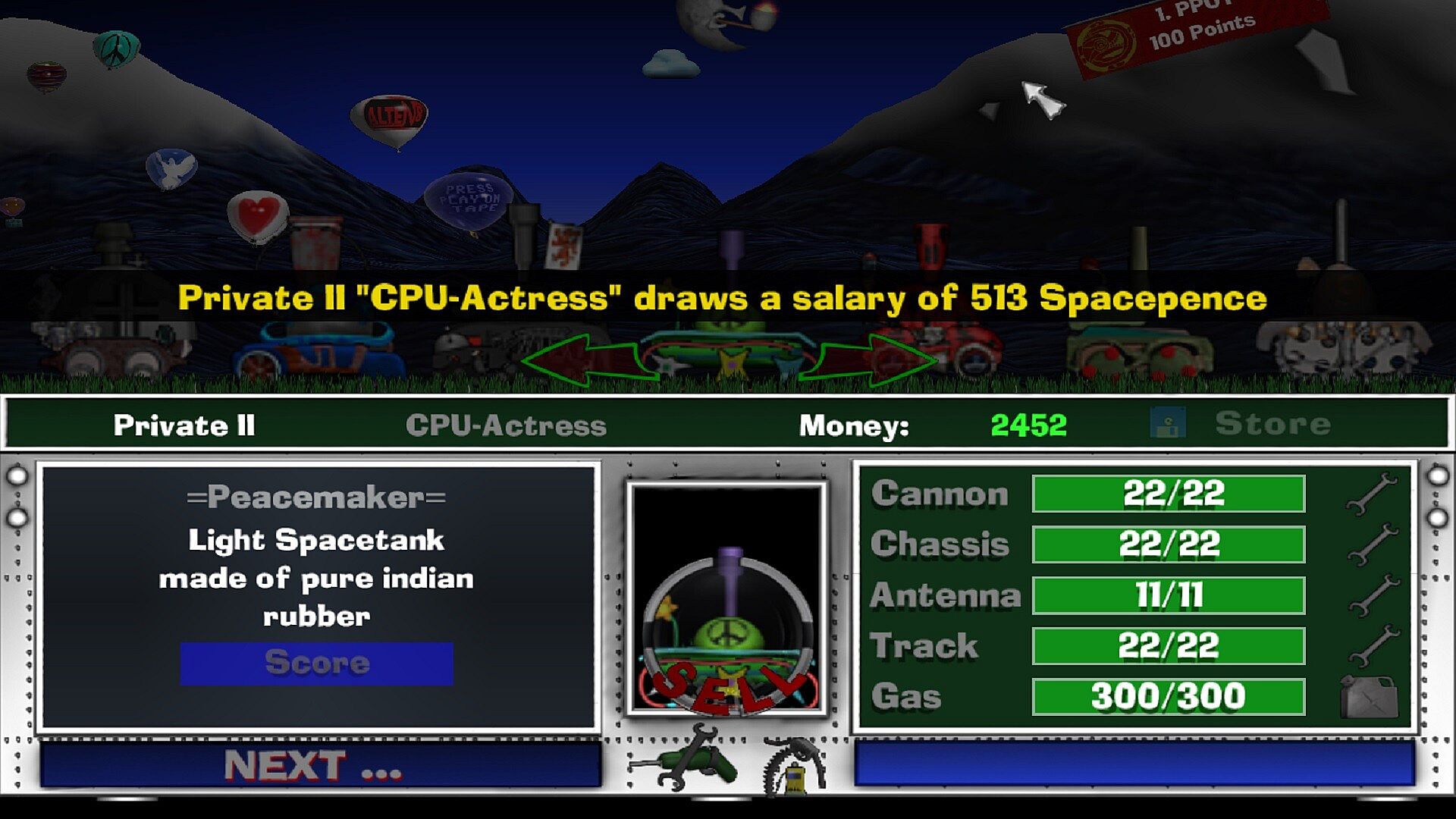
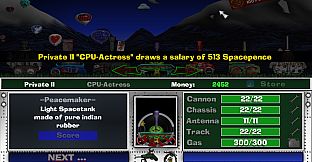
Players manage a budget for new tanks, repairs, and ammunition through a shop and inventory system. Wins provide funds for upgrades, but careless spending limits options in later rounds. The mouse cursor handles weapon selection, aiming, and inspection of nearby objects, revealing details like mass or stability. An aiming guide assists newcomers yet reduces final score, and the game tracks both positive actions like hole-in-one shots and mistakes for overall ranking.
Game Modes
Space Tanks supports single-player campaigns against an AI opponent on randomly generated maps. The AI behaves in a human-like manner and can be provoked or influenced by opponent actions. Multiplayer takes the form of hotseat sessions for two players sharing one PC, where each takes turns while the simulation runs continuously in the background.
Adjustable parameters allow customization of battlefield size, weapon timeouts, flight times, and other mechanics. These options suit players seeking longer or more complex sessions, including settings that extend weapon flight for dramatic effect.
Key Mechanics and Strategy
Long-term decisions matter as much as individual shots. Saving resources early expands tactical choices after roughly ten rounds, when complex interactions involving palm trees from coconut weapons, spreading fires, mines, and chain reactions become common. Higher difficulty introduces additional elements such as Space Wasps, aliens, and more intricate gravitational scenarios without simply increasing enemy strength.
The simulation never pauses for turns. Tank parts, debris, or even an opponent's lost antenna can return later and affect the battlefield. This continuous world creates tense moments where a seemingly secure position unravels in seconds.
Is It Worth Playing?
Space Tanks appeals to players who enjoy deliberate, physics-driven artillery games and appreciate learning systems through observation and repetition. Its mix of skill-based shooting, ongoing environmental interactions, and budget management creates depth that rewards repeated play. The title suits those comfortable with hotseat multiplayer or solo campaigns against a responsive AI.
Reception has varied since its original release, with some outlets praising the long-term variety and others noting the initial learning curve. Modern availability preserves the original experience, including the referee element and strict no-rewind rules that reinforce the "a shot is a shot" philosophy. Players seeking chaotic yet learnable gravity physics and strategic resource use will find the most value here.













