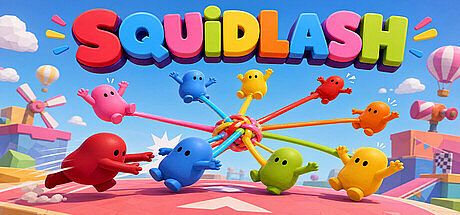


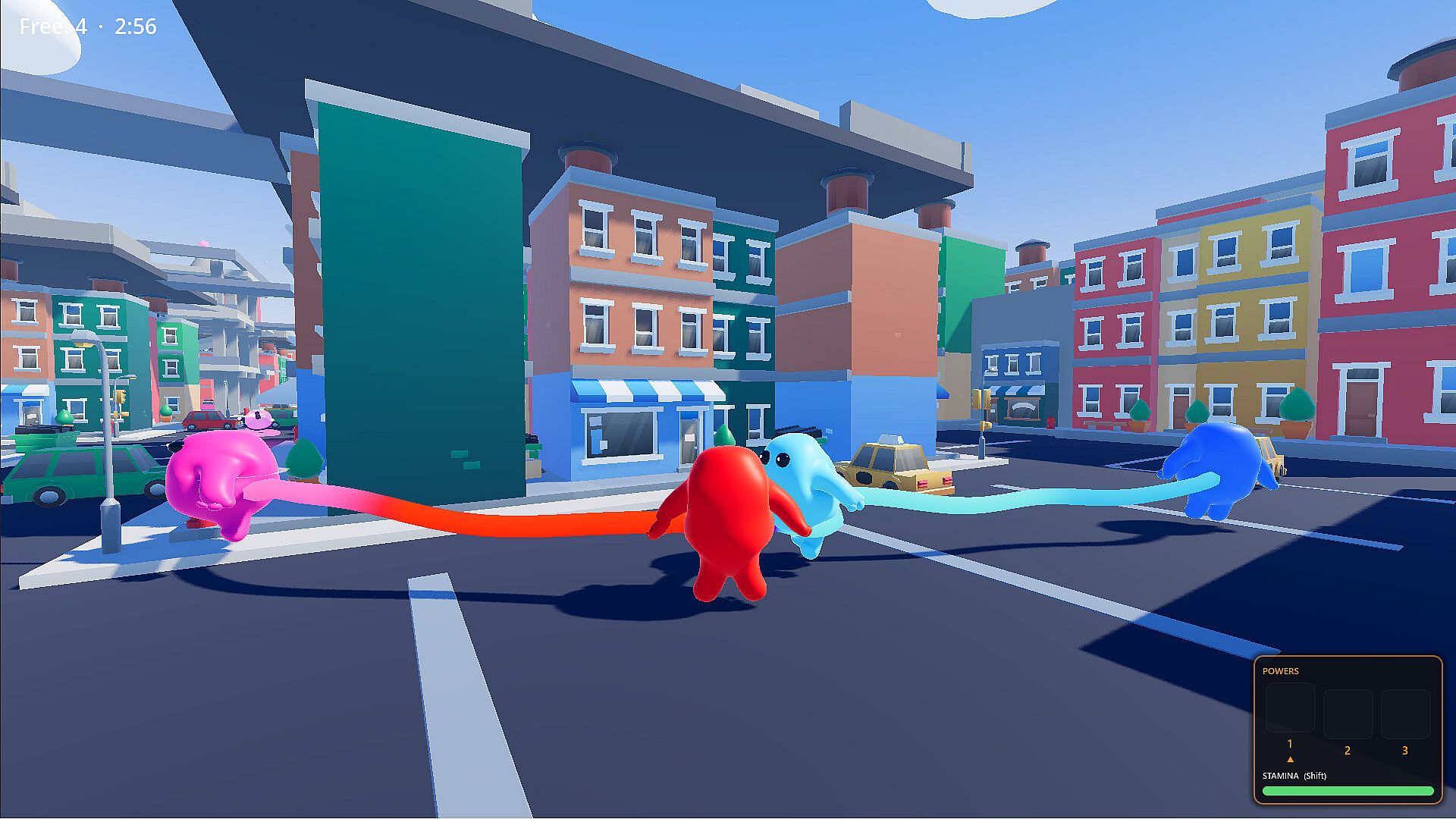
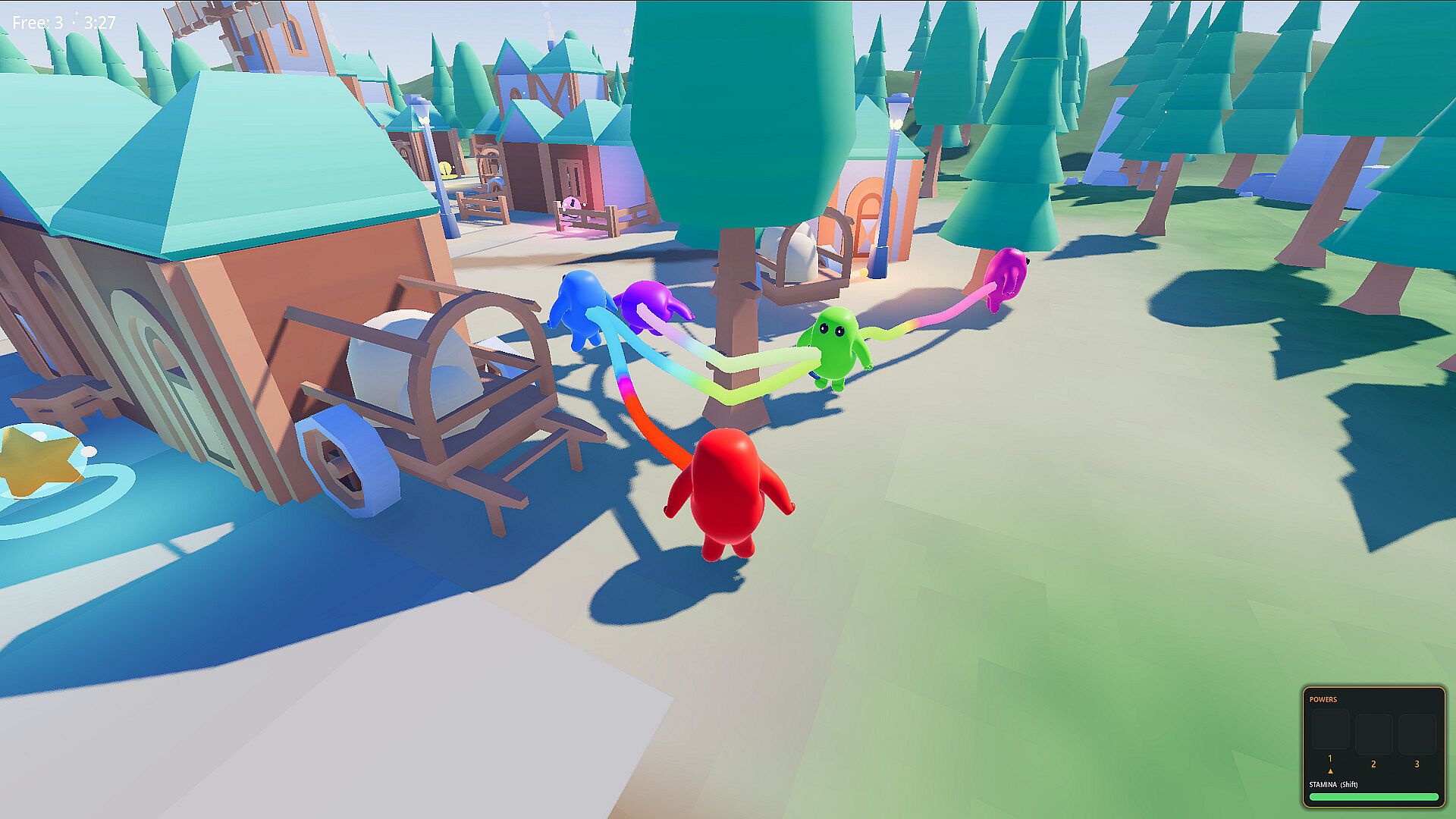
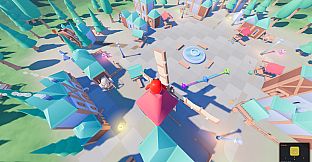
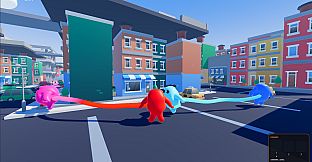
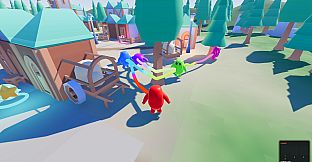
Squidlash est un jeu d'action multijoueur à physique délirante, aux genres indie et casual, disponible sur PC. Un joueur incarne le loup et touche les autres pour les relier avec des élastiques extensibles qui les transforment à leur tour en chasseurs. Chaque nouvelle prise agrandit l'enchevêtrement jusqu'à former une masse unique, mi-poulpe mi-tentacule, qui se déplace en vrille sur la carte. Le dernier joueur encore libre remporte la manche.
Gameplay
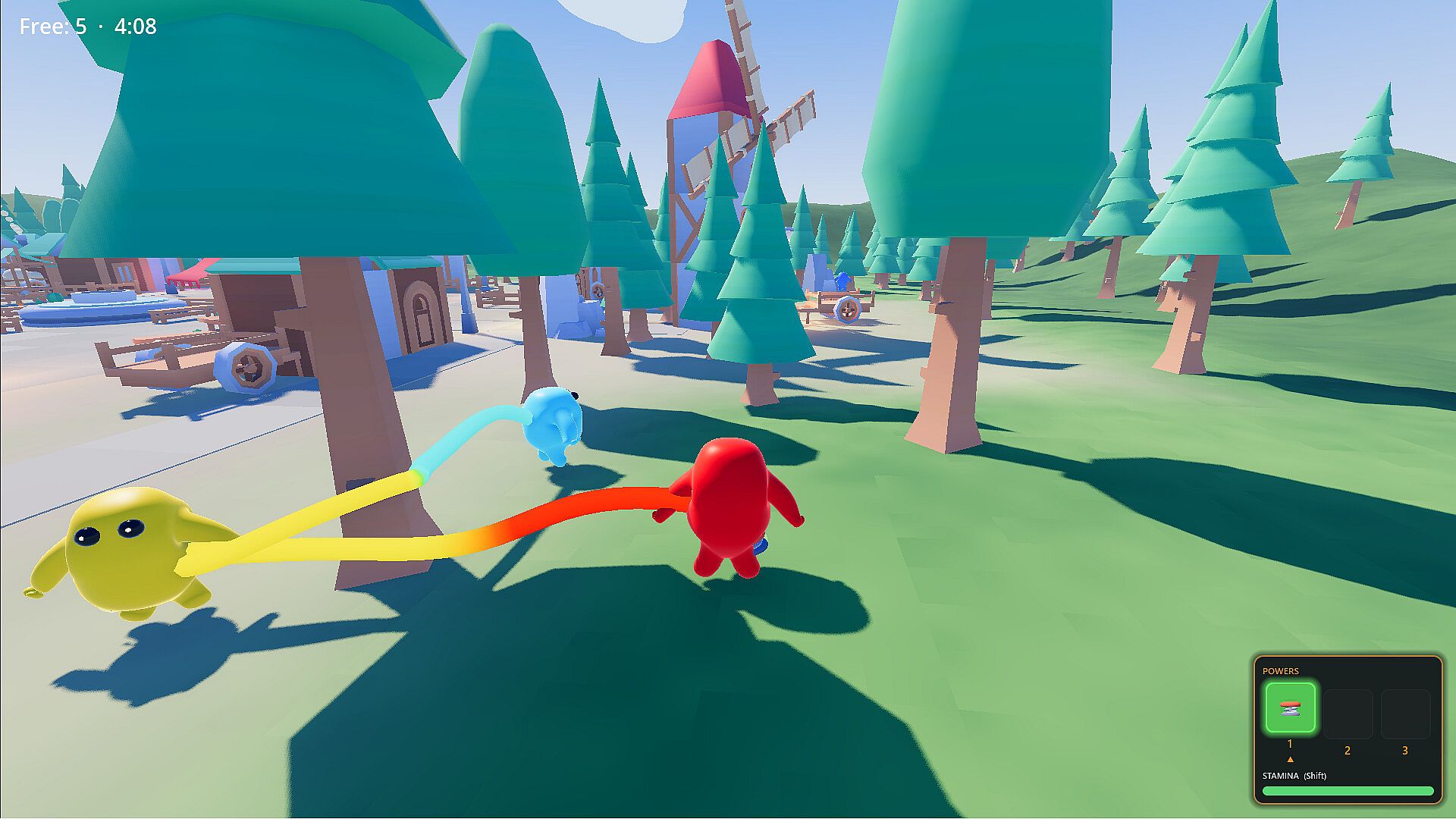
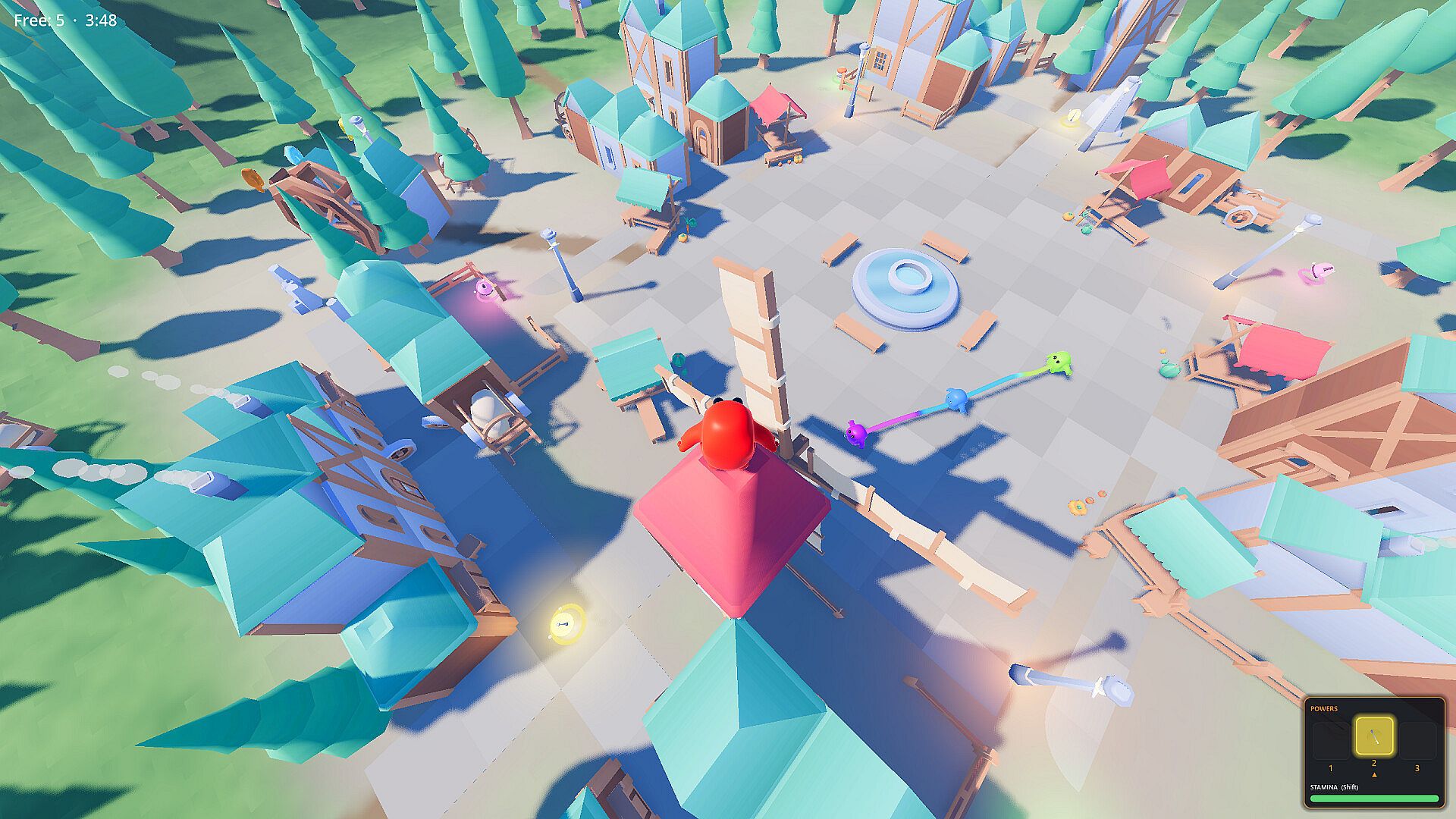
Le cœur du jeu repose sur le système de liens élastiques qui relient les joueurs après chaque contact. L'élastique se tend et se détend entre le loup et ses cibles, obligeant tout le monde à partager un mouvement chaotique où le contrôle change sans cesse. Les joueurs peuvent enrouler le lien autour de piliers ou d'objets pour créer de la tension, puis s'élancer en sauts catapultés à travers les arènes. Plonger à travers un élastique tendu permet d'échapper à une capture, tandis qu'un coup de fouet bien placé peut précipiter un adversaire dans le vide et transformer la poursuite en véritable bras de fer physique.
Aucune course ne se ressemble, car la physique réagit à chaque mouvement et collision. L'élastique reste l'outil central du jeu, récompensant l'usage créatif de l'environnement et les réflexes rapides. Les arènes alternent espaces dégagés et obstacles pensés pour les catapultages, les esquives et les atterrissages imprévus qui renforcent le caractère imprévisible du jeu.
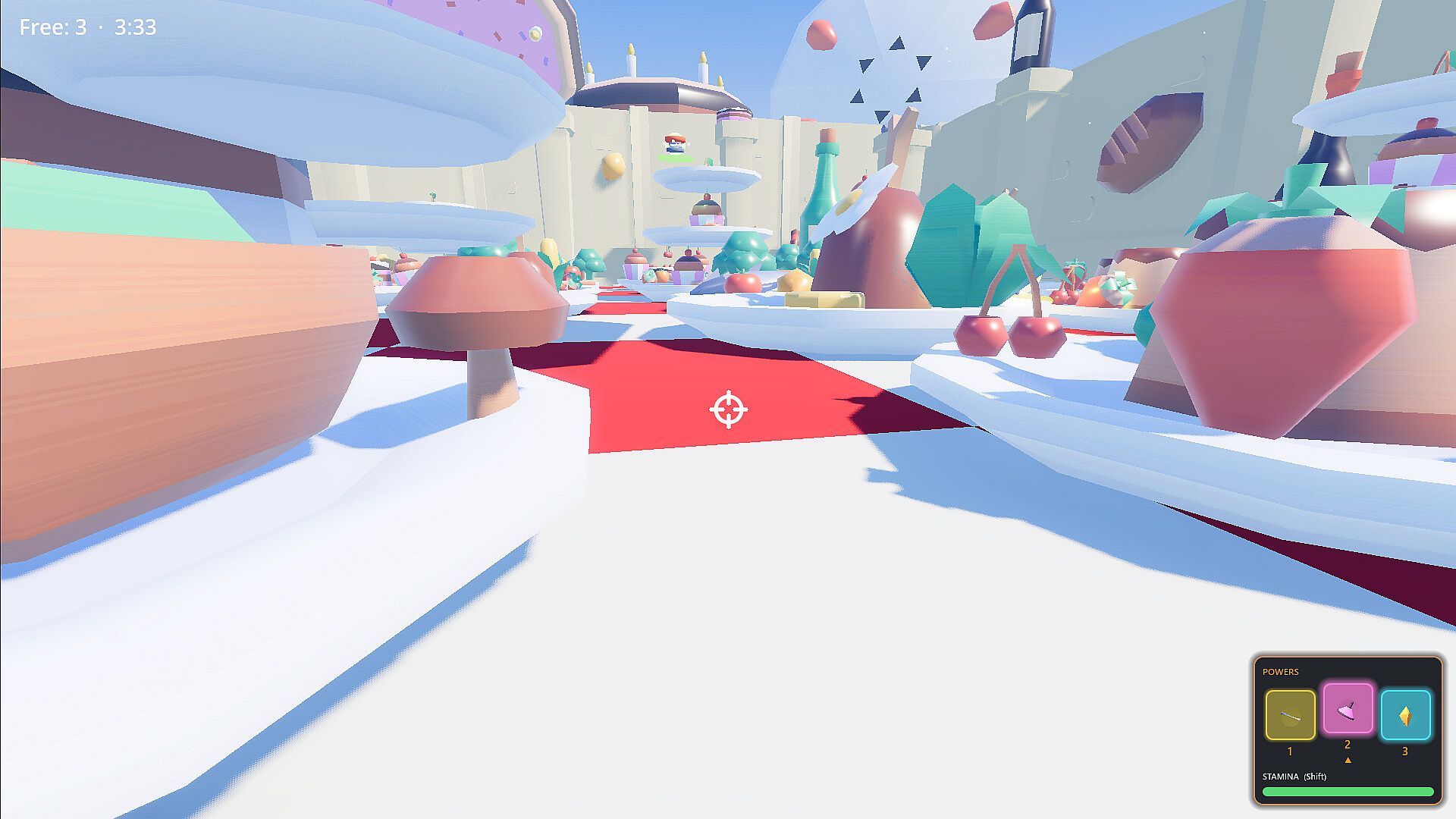
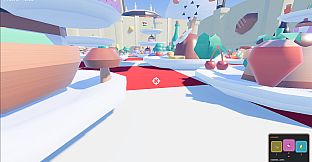
Des power-ups apparaissent en cours de partie : boost de vitesse pour les échappées, méga-saut pour gagner en hauteur et en distance, radar mural qui révèle les joueurs proches, et grappin pour plus de mobilité. Ces objets s'intègrent directement aux mécaniques de l'élastique sans alourdir les règles.
Game Modes
L'expérience principale se concentre sur des manches de tag où un joueur commence en loup et les autres tentent de rester libres. Chaque capture agrandit le groupe relié jusqu'à ce qu'il ne reste plus qu'un seul joueur hors de l'enchevêtrement. Les manches sont courtes et redémarrent instantanément, maintenant un rythme soutenu sans temps mort.
Les joueurs peuvent remplir des lobbies avec des amis en ligne ou rejoindre des parties solo contre des bots pour un accès immédiat. L'option bots garantit des parties sans attente et permet de jouer seul à tout moment. Le format convient aussi bien aux sessions express qu'aux parties prolongées, grâce aux redémarrages automatiques.
Physics and Mechanics
Tout repose sur le système d'élastique unique qui génère tension, propulsion et connexions. Enrouler le lien emmagasine de l'énergie pour des catapultages puissants, tandis que les plongeons en l'air et les coups de fouet exploitent l'étirement pour des avantages tactiques. La formation grandissante du « calamar » modifie les schémas de déplacement au fur et à mesure que de nouveaux joueurs rejoignent la chaîne, transformant les poursuites individuelles en efforts collectifs où personne ne garde le contrôle total.
Les arènes sont conçues pour favoriser ces interactions, avec des agencements qui encouragent l'usage créatif des liens et les changements de direction soudains. Le style visuel reste clair et lumineux pour mettre l'action en valeur, tandis que la physique gère l'essentiel sans ajouter de complexité superflue.
Is It Worth Playing?
Squidlash s'adresse aux joueurs qui apprécient les sessions courtes de tag multijoueur, avec une physique marquante et un chaos bon enfant. Les redémarrages instantanés et le support des bots éliminent les freins habituels, permettant de lancer une partie en un instant ou de prolonger la session sans friction. Les amis peuvent rejoindre des lobbies en ligne pour des moments de rire partagés, tandis que les joueurs solo affrontent des bots performants qui conservent la même tension de base.
Derrière des règles simples se cache une profondeur dans la façon dont l'élastique interagit avec le mouvement et l'environnement, récompensant la pratique sans exiger de longue courbe d'apprentissage. Ceux qui aiment les jeux d'action casual construits autour d'une mécanique forte trouveront un divertissement constant dans les résultats imprévisibles de chaque poursuite. Le jeu reste accessible pour des parties rapides tout en offrant ces moments mémorables typiques des dérapages physiques en groupe.