

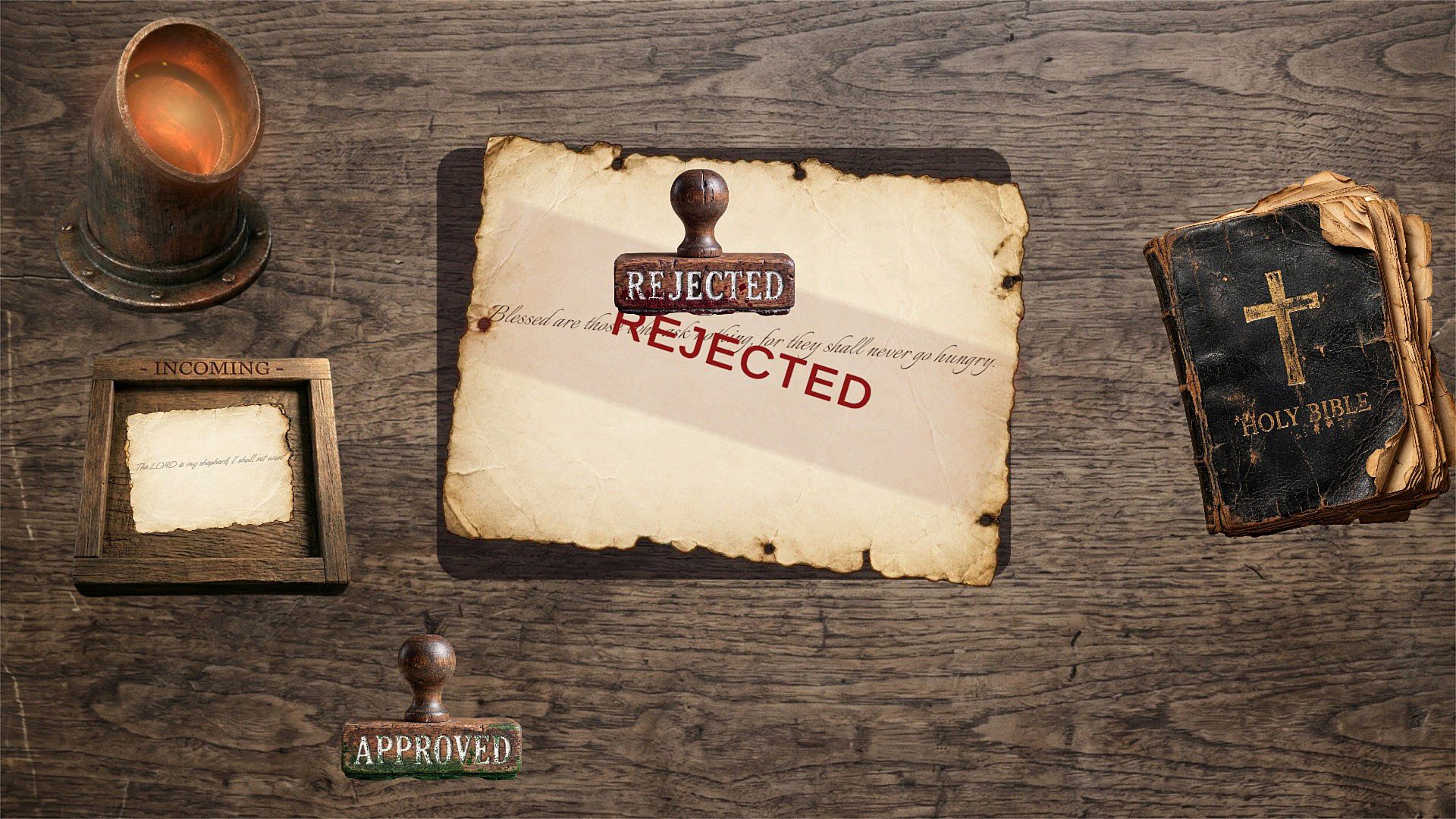
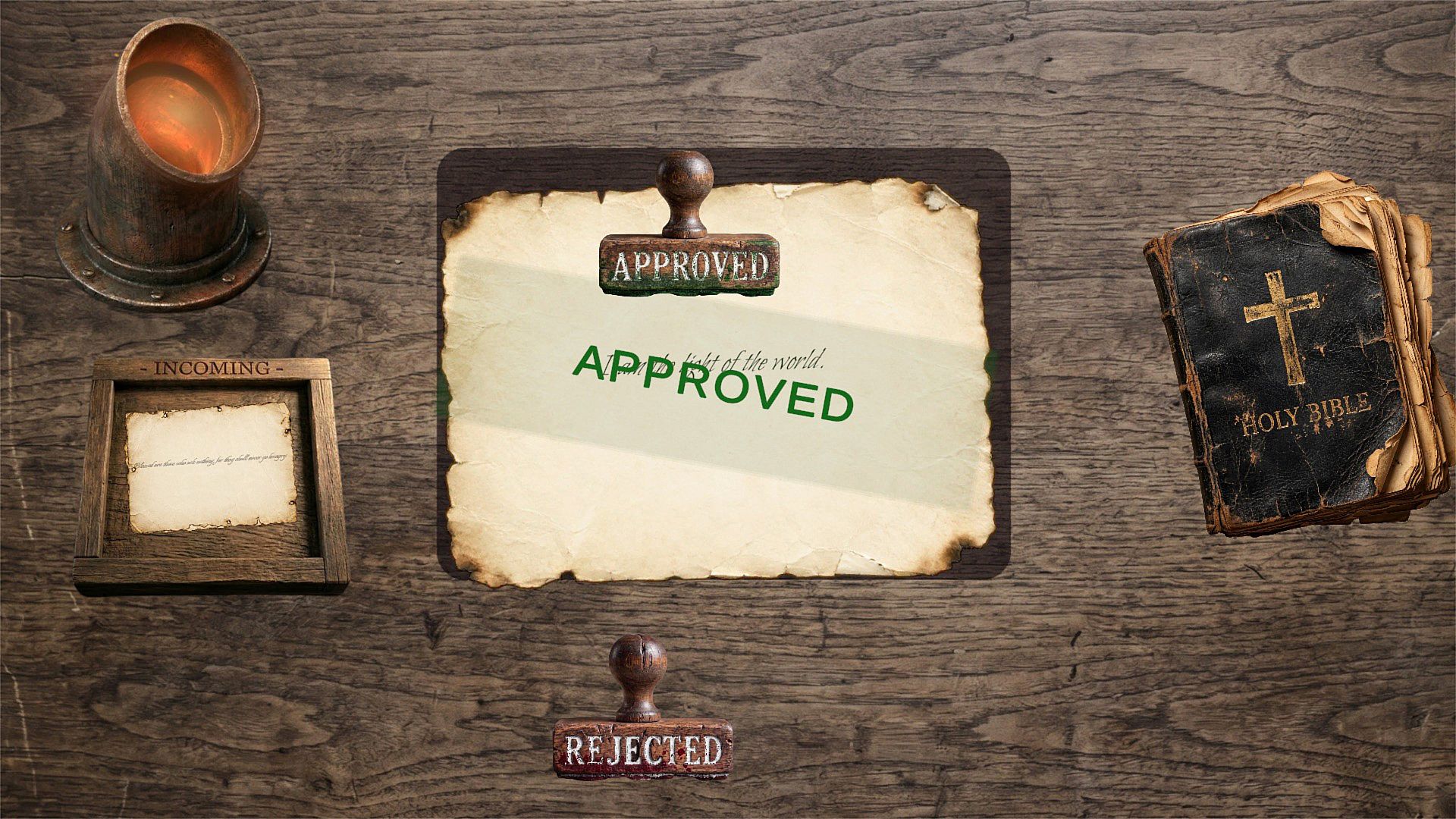
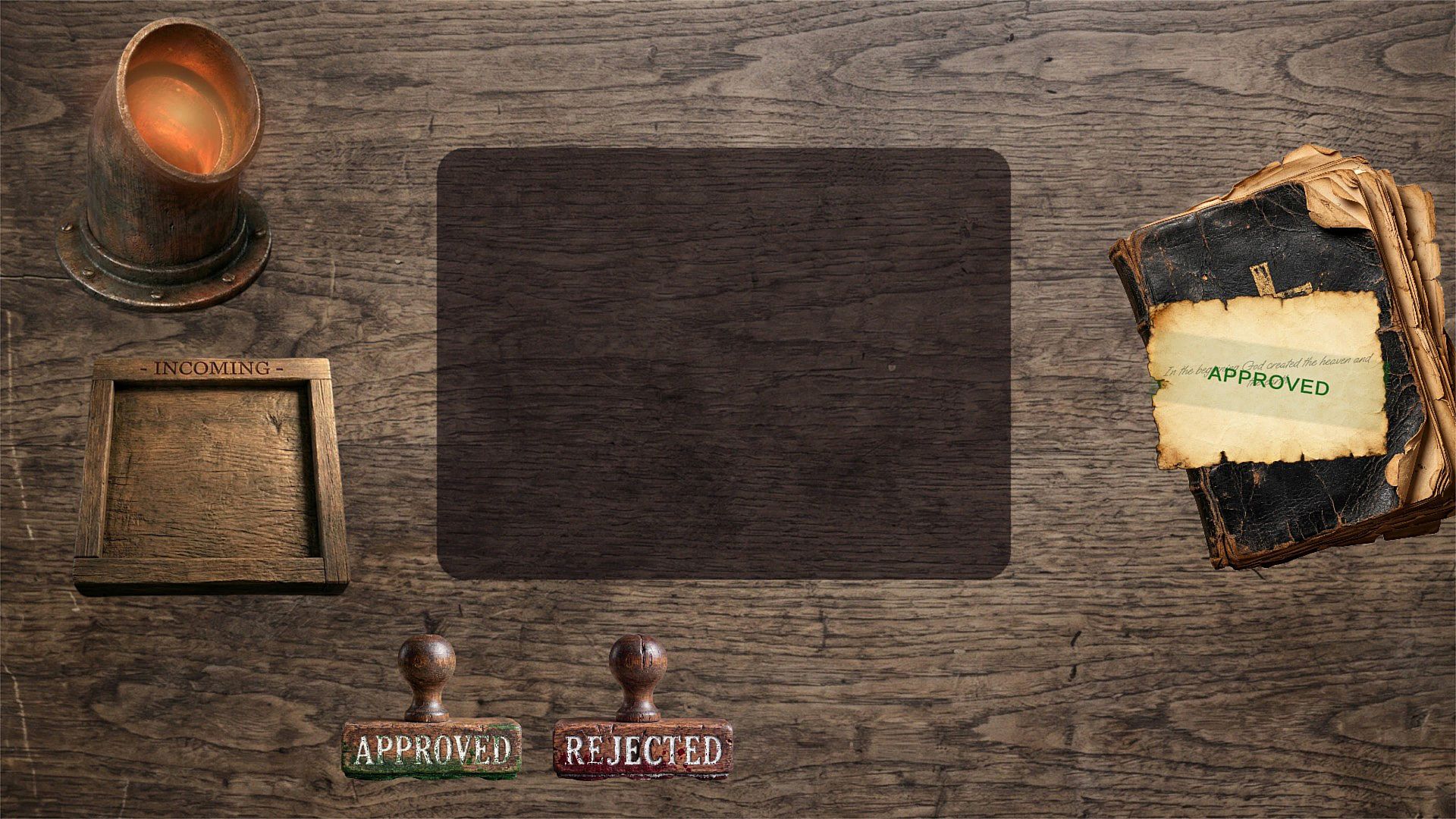
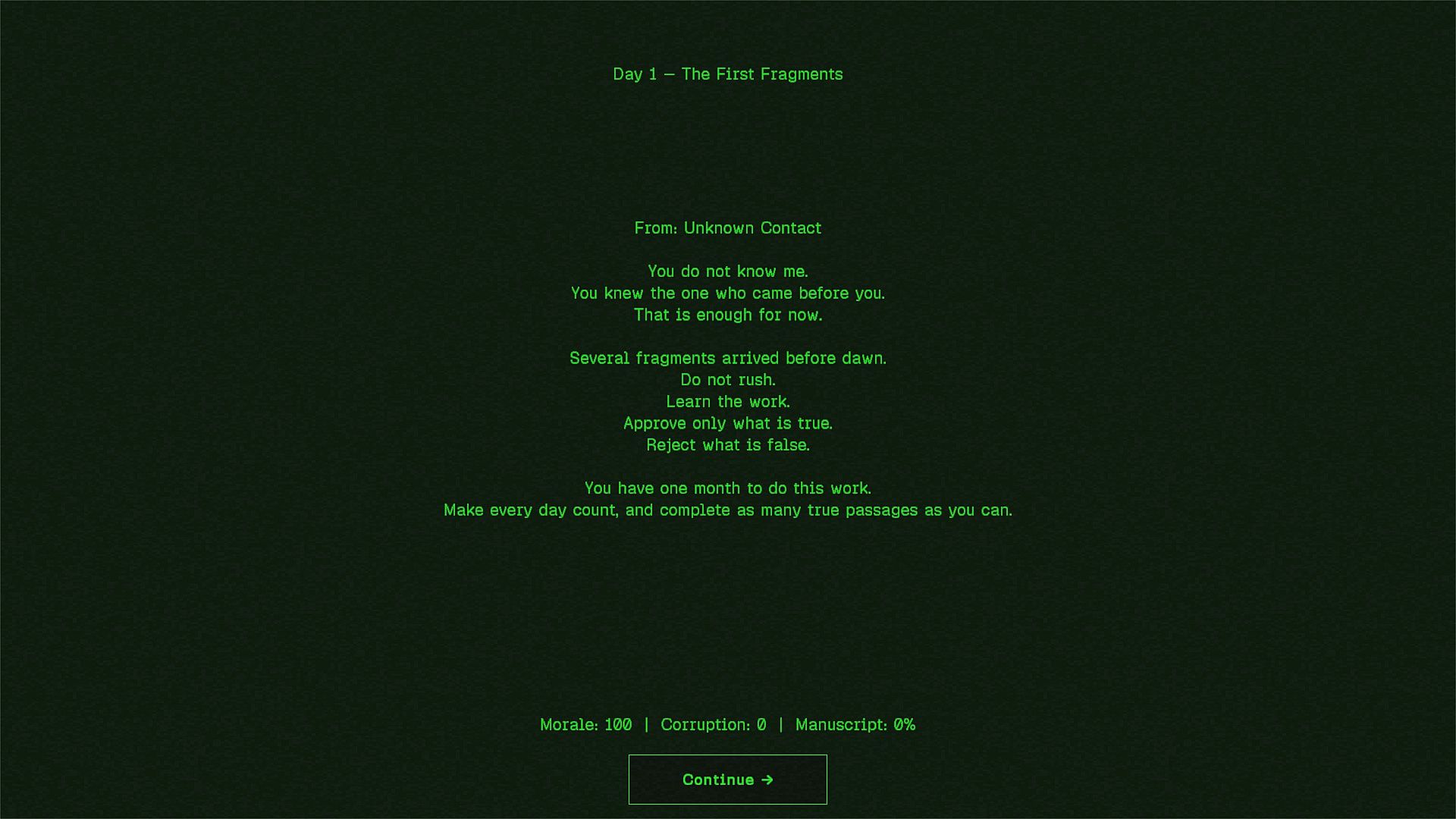
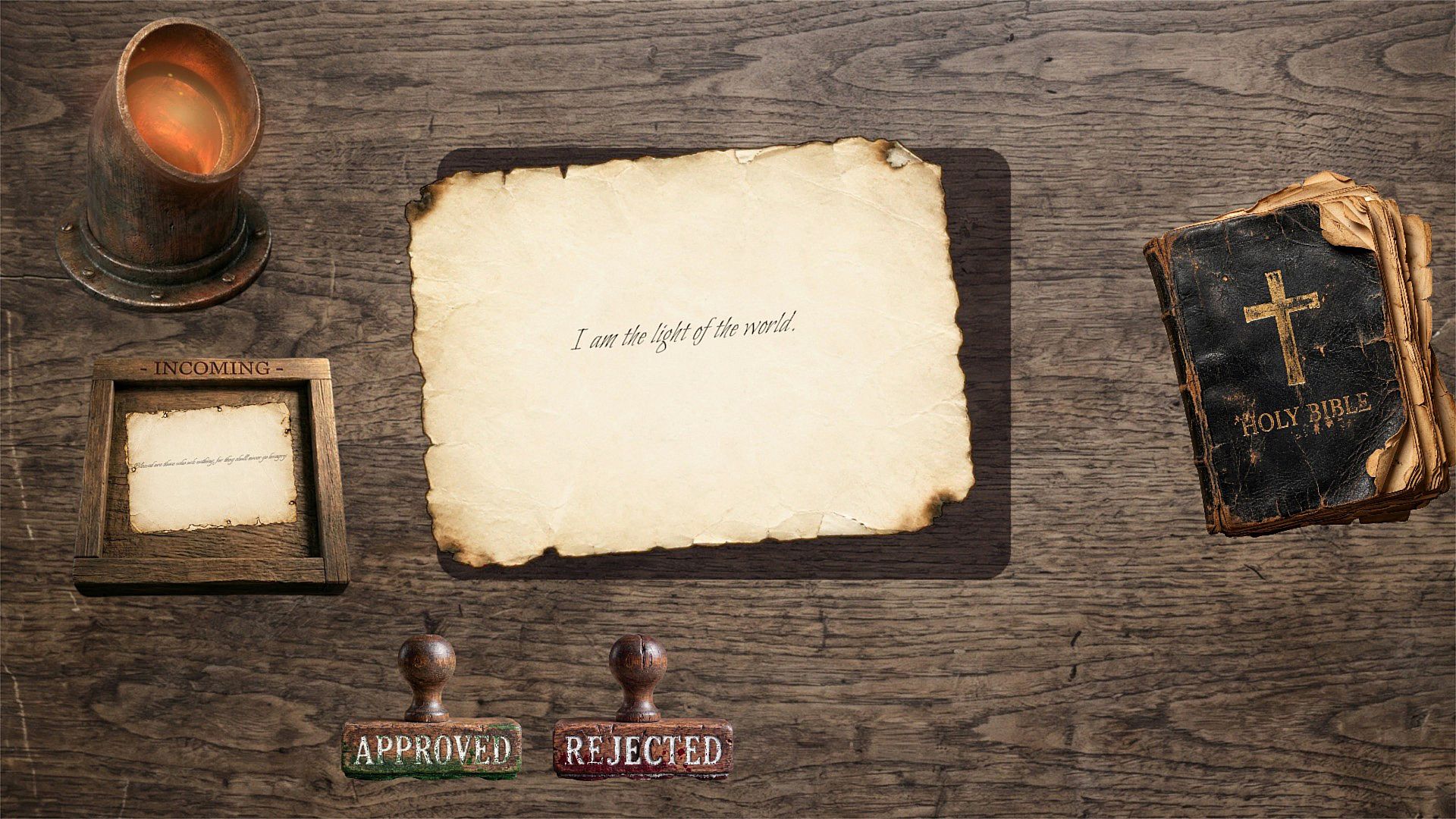
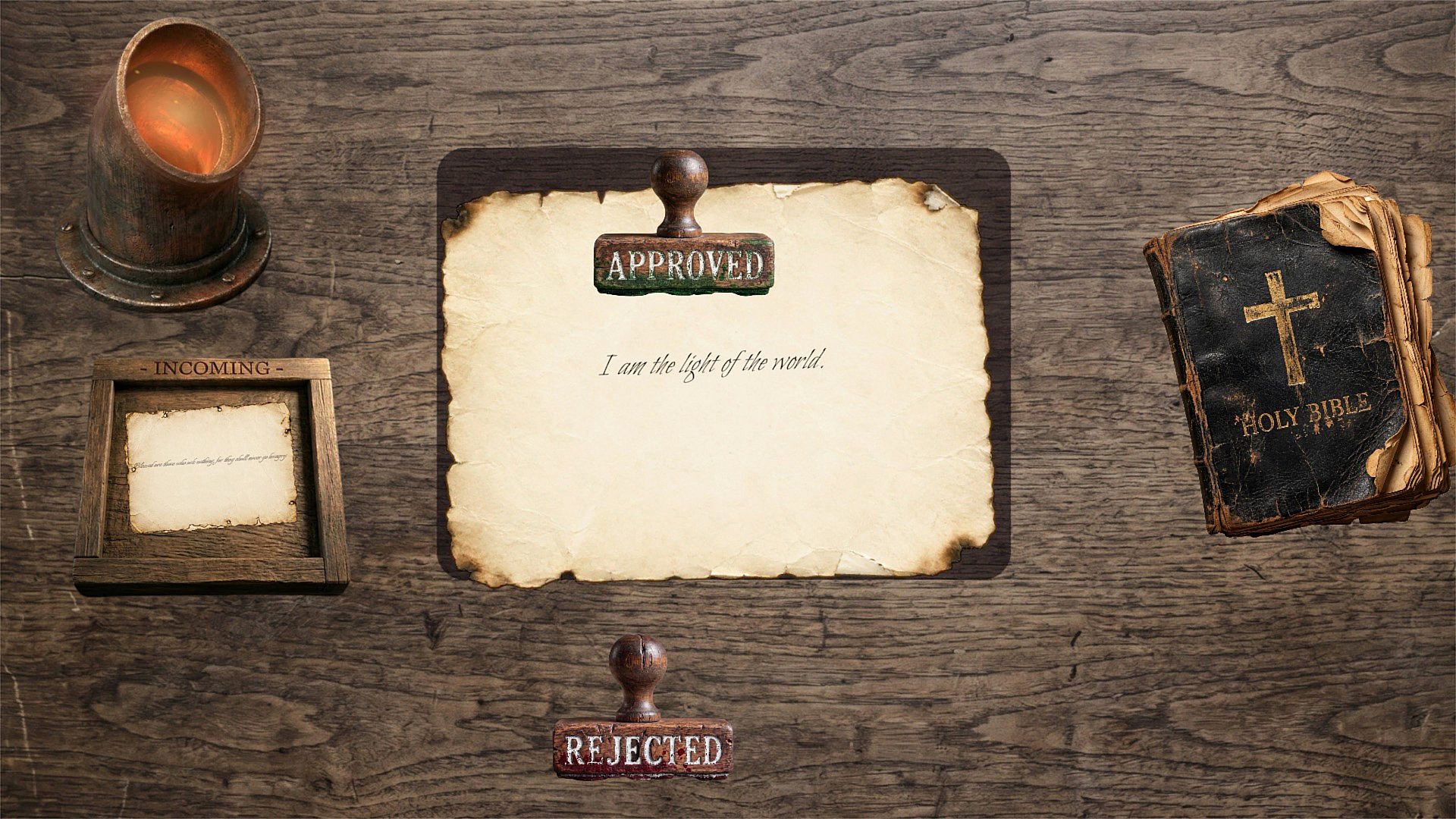
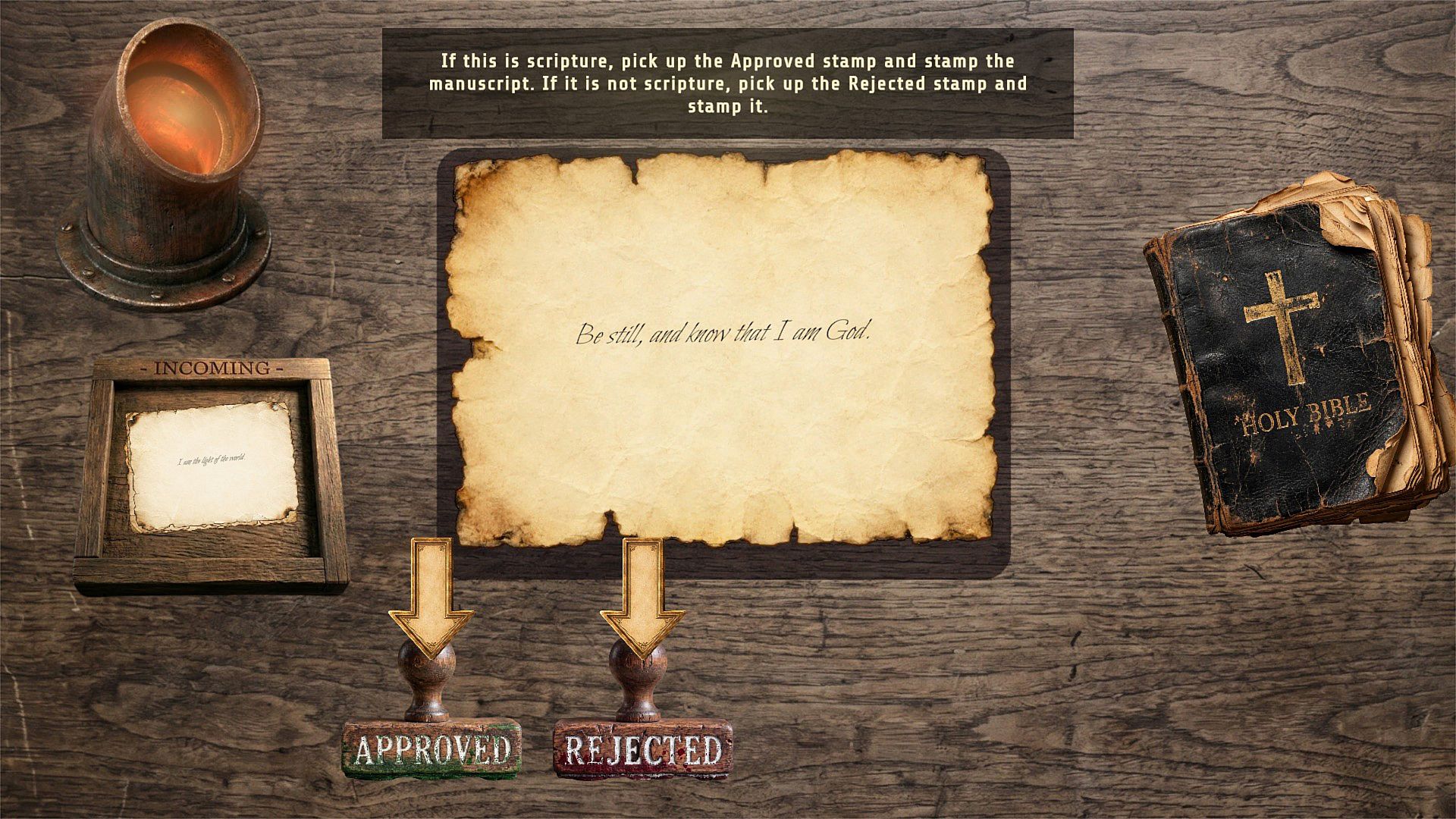

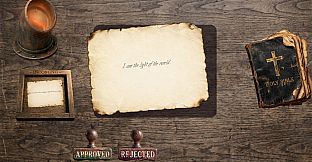
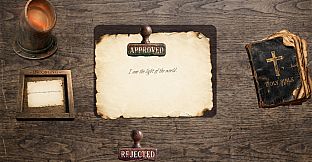
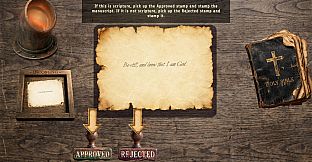
The Canon Keeper is a single-player narrative-driven simulation game that places players in the role of a secret inspector working for an underground resistance. Set in a dystopian future where authorities have banned the Bible and replaced it with manipulated versions, the experience centers on careful examination of Scripture fragments to determine what is authentic and what has been altered or invented outright.
Gameplay
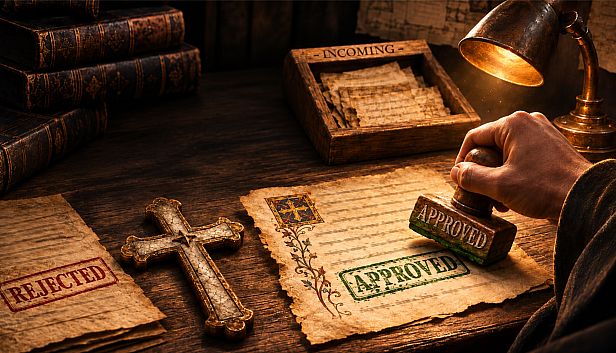
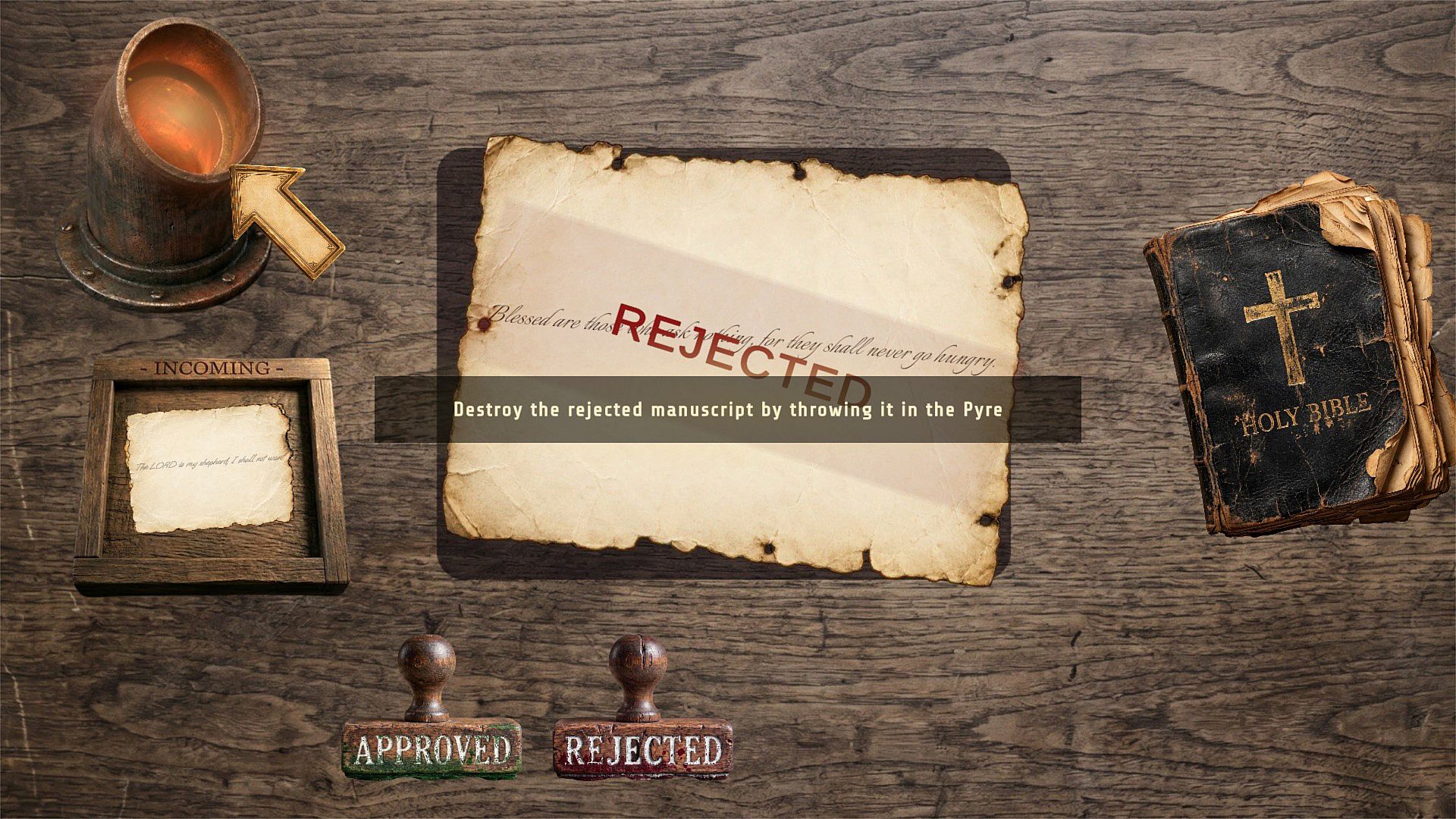
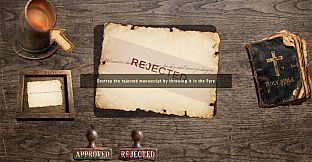
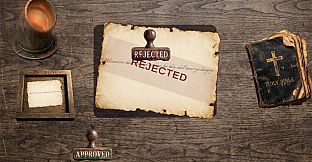
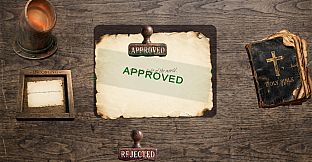
Each in-game day brings a set of Scripture fragments to the player's desk for review. Authentic passages must be identified and preserved for the resistance's efforts to rebuild the Bible. Fabricated texts require rejection, while those with subtle single-word changes that twist meaning demand special attention to avoid approving deceptive content. Players compare verses against surviving references and use available desk tools to spot inconsistencies in wording, context, or doctrine.
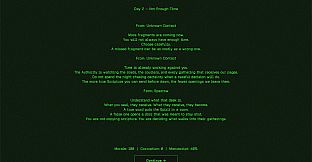
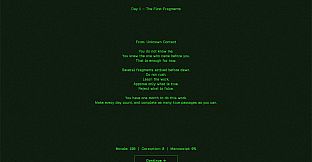
Decisions carry direct consequences for the story and the resistance movement. Approving a corrupted passage can undermine underground churches or strengthen opposing forces, while correct identifications help sustain the effort to restore accurate Scripture. Tension builds through increasing daily pressure and more complex alterations as the campaign progresses across multiple days. A prayer mechanic allows players to slow time during high-stress moments to maintain focus on detailed inspection work.
The core loop emphasizes deduction, careful reading, and moral discernment rather than action or combat. First-person perspective keeps attention fixed on the documents and tools at hand, creating a deliberate pace suited to thoughtful analysis of each fragment.
Game Modes
The Canon Keeper offers a single-player story experience built around its daily inspection cycle. There are no separate multiplayer or competitive modes. The entire game unfolds as one continuous narrative campaign divided into sequential days, with each day presenting new fragments and escalating challenges that tie directly into the unfolding resistance story.
Progression follows a linear structure where choices accumulate effects on morale, story branches, and overall outcomes. Players advance by completing daily tasks and reaching key milestones, such as finishing specific days or maintaining performance under pressure. This focused single-player format keeps the emphasis on personal discernment and narrative consequences without branching into additional game types.
Story and Setting
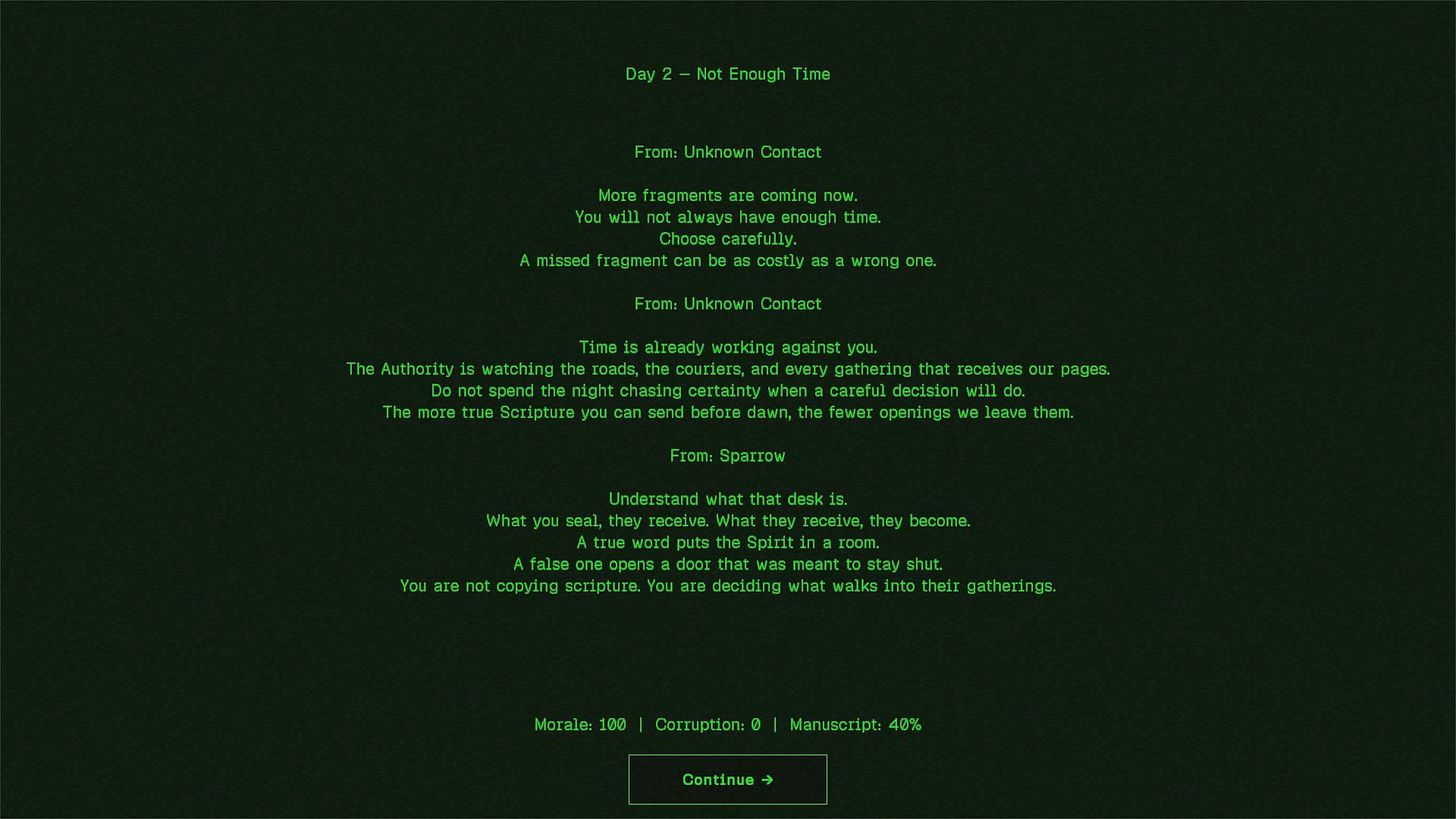
The narrative unfolds in a controlled dystopian world where government forces have destroyed most original Bibles and introduced altered texts to shape public belief. Players operate in secrecy alongside resistance members who rely on accurate Scripture to support underground communities facing increasing threats. Each approved or rejected fragment influences how the rebuilt Bible takes shape and how the resistance fares against external pressures.
Faith, mystery, and the weight of individual choices form the emotional core. The story explores themes of truth preservation amid deliberate deception, with player decisions determining the strength of surviving churches and the broader resistance effort. Subtle alterations in passages highlight how small changes can shift entire meanings, adding layers of tension to every inspection.
Is It Worth Playing?
The Canon Keeper suits players who enjoy deliberate, inspection-based gameplay similar to document verification simulators combined with meaningful narrative choices. Its focus on biblical discernment and resistance themes appeals to those interested in story-rich single-player experiences centered on faith and moral decision-making rather than fast-paced action.
Recent quality-of-life updates have improved readability with larger fonts and added controller support, making the text-heavy inspection work more accessible. The game remains in active development following its recent Steam launch, with the PlayStation versions scheduled shortly after. No aggregate review scores are available yet due to the recent release, but early player feedback has shaped adjustments like reduced daily fragment counts for better pacing.
Those seeking a thoughtful, single-player theological thriller with clear consequences for each judgment will find a distinctive experience here. It rewards careful attention to detail and reflection on the impact of preserving or discarding each passage in a high-stakes environment. Players less drawn to reading-intensive mechanics or faith-centered narratives may prefer titles with broader action elements.