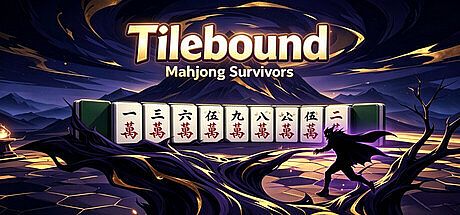



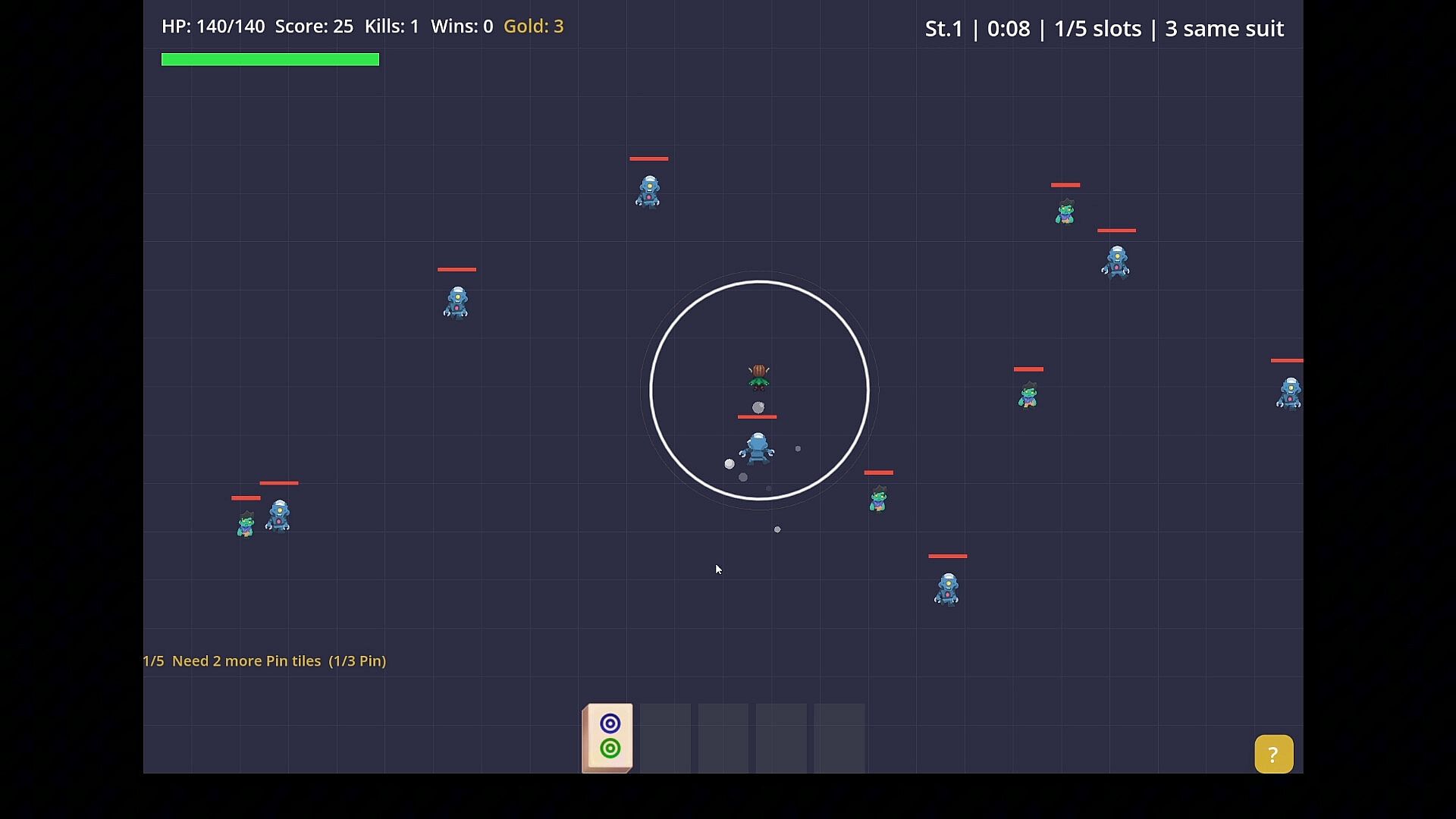
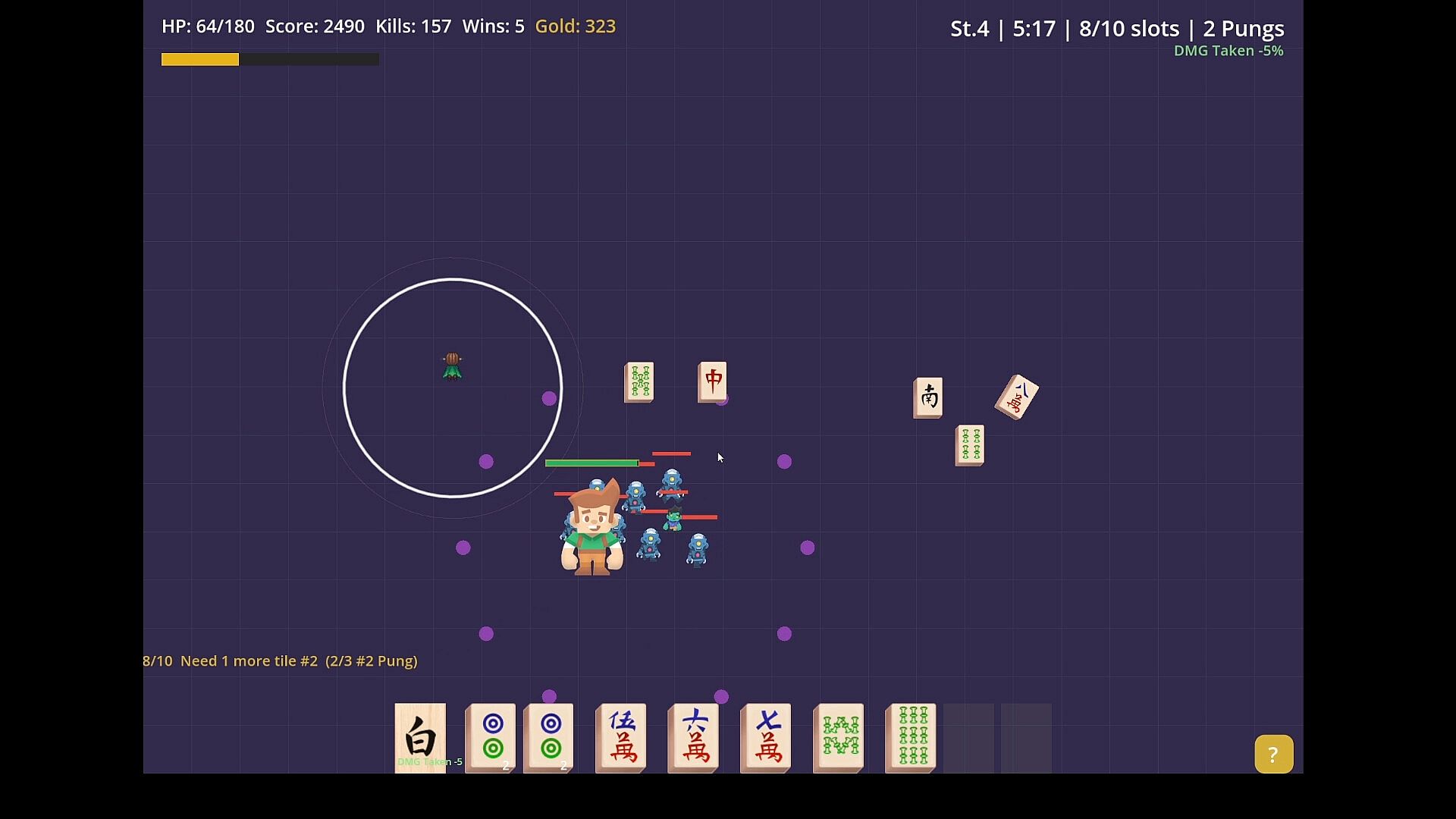
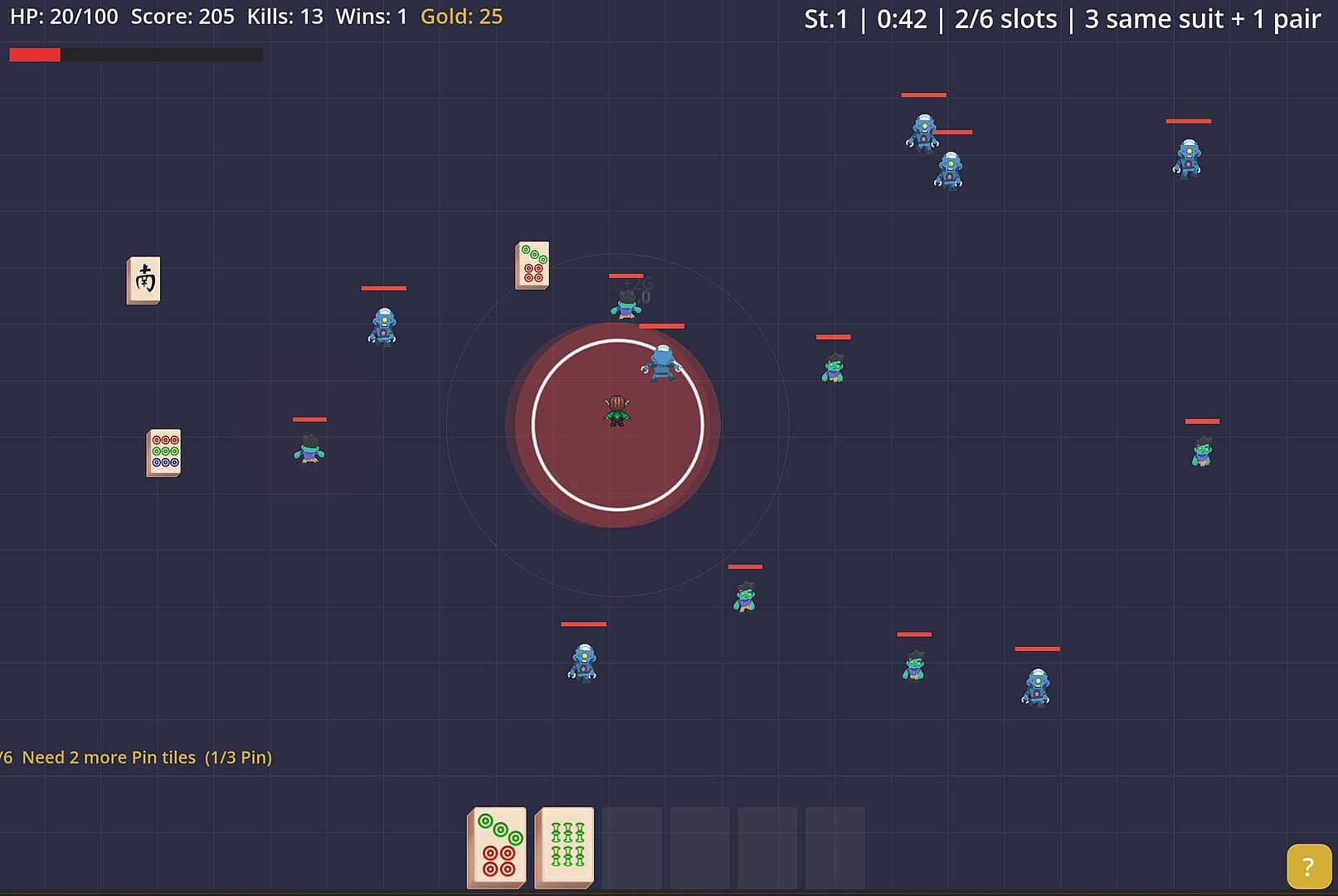
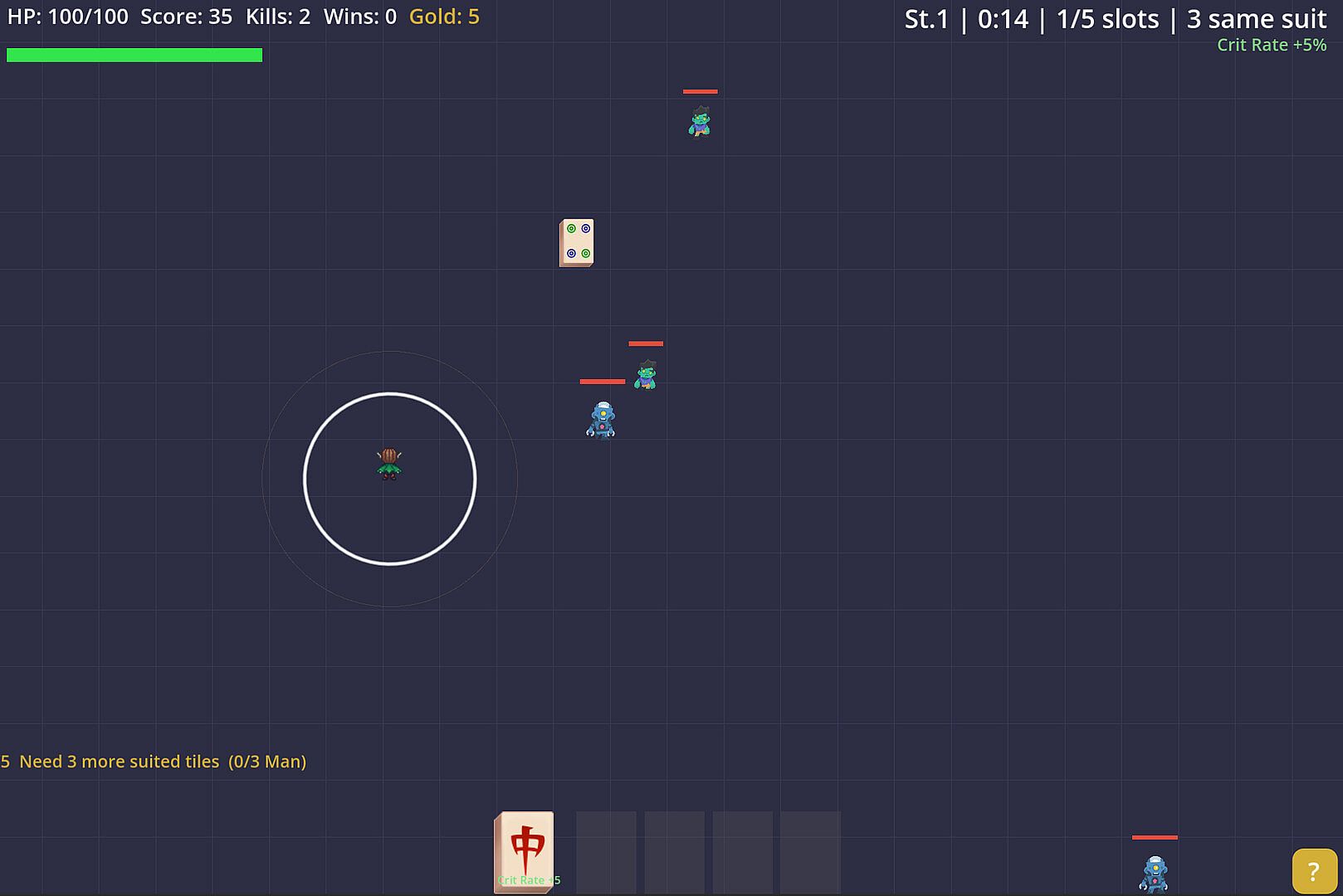
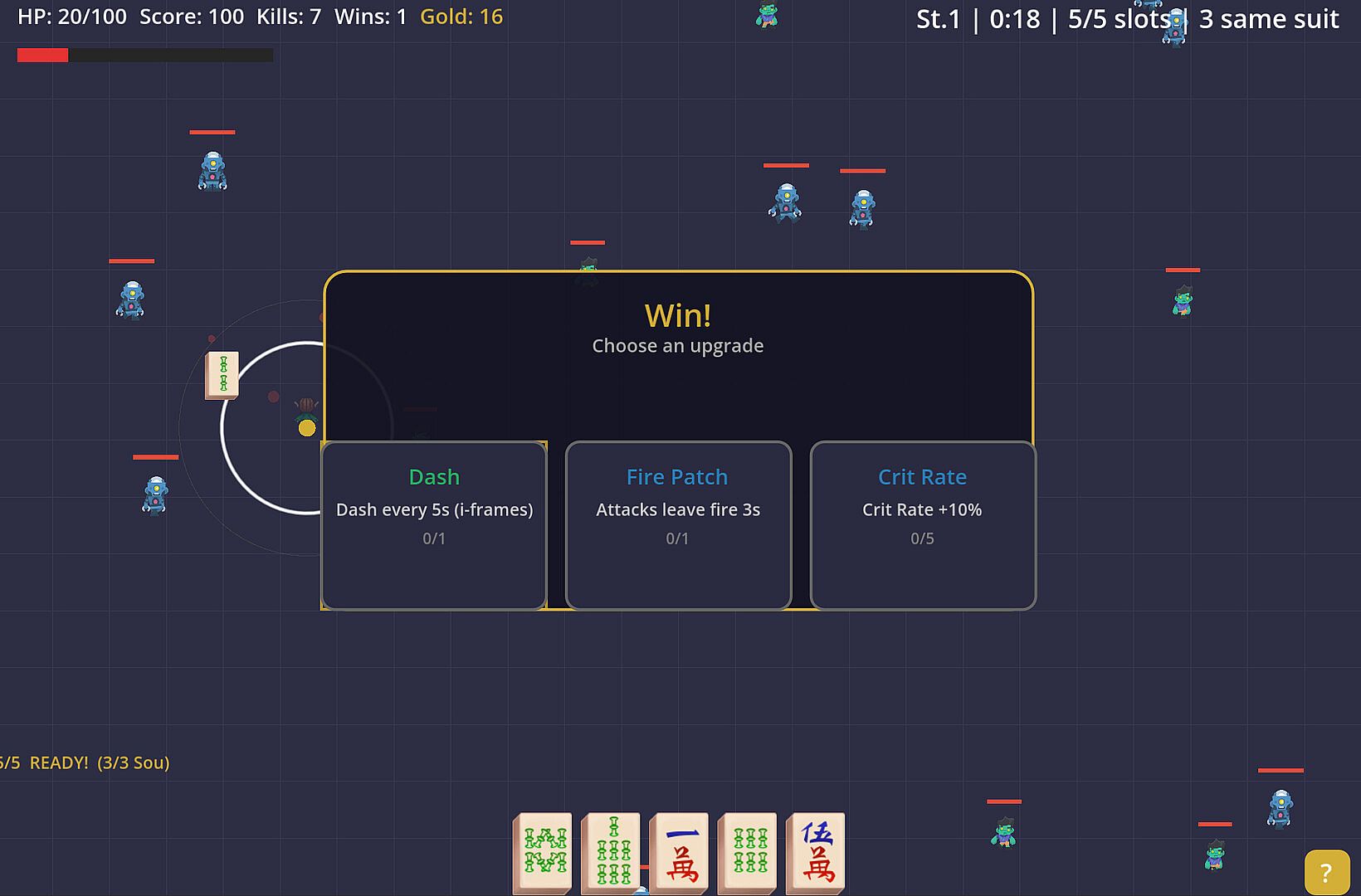




Tilebound: Mahjong Survivors est un jeu d'action et de stratégie casual qui associe le rythme effréné d'un auto-battler à la collecte de tuiles de mahjong et à la construction de mains. Le joueur traverse des arènes, élimine automatiquement des vagues d'ennemis, récupère les tuiles qu'ils laissent tomber et forme des combinaisons pour déclencher des effets puissants. L'objectif principal consiste à survivre quinze minutes dans un défi structuré où le positionnement, le choix des tuiles et les améliorations déterminent la durée de la partie face à une pression croissante.
Gameplay
Le jeu débute avec des commandes de déplacement simples permettant d'esquiver et de se positionner au milieu des nuées d'ennemis. Les attaques se déclenchent automatiquement, éliminant les adversaires et libérant des tuiles numérotées ou d'honneur conformes aux jeux de mahjong traditionnels. La collecte de ces tuiles permet de former des combinaisons reconnues telles que Pung, Kong ou Flush. Chaque main complétée active des améliorations qui modifient les schémas d'attaque, la vitesse de déplacement ou les capacités défensives.
Trente améliorations distinctes apparaissent au fil d'une partie, offrant la possibilité d'adapter sa stratégie en fonction des tuiles obtenues. Six types d'ennemis, chacun doté de vitesses, portées et comportements différents, obligent à ajuster constamment son positionnement pour éviter les dégâts tout en continuant à ramasser des ressources. Trois boss jalonnent la progression et exigent une attention particulière à la fois sur la survie et sur la constitution de la main pour contrer leurs patterns spécifiques.
La gestion des tuiles ajoute une dimension stratégique rare dans les auto-battlers classiques. Au lieu de dépendre uniquement de pics de puissance aléatoires, la réussite repose sur la capacité à identifier les occasions de compléter des mains en accord avec les améliorations en cours. Cela crée des moments où un déplacement volontaire vers certaines tuiles peut inverser le cours d'une vague.
Game Modes
Le défi principal se présente sous la forme d'un gauntlet de dix niveaux conçu pour le solo. Chaque niveau augmente la densité et la complexité des ennemis, jusqu'à exiger une survie complète de quinze minutes. La progression introduit de nouvelles combinaisons des six types d'ennemis et conduit aux trois affrontements de boss à des moments clés.
Dans ce cadre, l'accent reste mis sur une seule partie continue plutôt que sur des modes séparés ou du multijoueur. Les joueurs affinent leurs stratégies au fil des tentatives, testant différentes voies d'amélioration et priorités de tuiles pour progresser plus loin dans le gauntlet. Ce format encourage la maîtrise à la fois du rythme des attaques automatiques et de la construction de mains de mahjong dans une expérience unifiée.
Key Mechanics and Progression
La collecte de tuiles constitue le cœur de la profondeur stratégique. Les tuiles numérotées contribuent aux séquences ou aux séries, tandis que les tuiles d'honneur apportent des bonus de score ou des effets supplémentaires lorsqu'elles sont combinées correctement. Former une main valide en plein combat procure des avantages immédiats qui se cumulent avec les trente améliorations disponibles, créant une croissance de puissance progressive au fil de la partie.
La variété des ennemis garantit qu'aucune stratégie unique ne domine tous les niveaux. Les adversaires rapides exigent une précision de mouvement, tandis que les types à distance ou groupés récompensent les améliorations capables d'éliminer efficacement les groupes. Les boss intègrent ces éléments à plus grande échelle, obligeant souvent à équilibrer la complétion de mains et les manœuvres d'évitement pour tenir la durée totale.
Le choix des améliorations intervient à intervalles réguliers et présente des options qui interagissent avec l'inventaire de tuiles actuel. Ce système récompense l'observation à la fois du champ de bataille et de la main en cours de formation, transformant chaque tentative de quinze minutes en une série de petites décisions qui déterminent la survie ou l'échec.
Is It Worth Playing?
Tilebound: Mahjong Survivors s'adresse aux joueurs qui apprécient les auto-battlers dans la veine de Vampire Survivors mais recherchent une couche supplémentaire de stratégie délibérée grâce aux règles du mahjong. La fusion du combat automatique et de la construction de mains crée un rythme particulier qui valorise à la fois les réflexes rapides et la reconnaissance de patterns.
Le gauntlet de dix niveaux et l'objectif fixe de quinze minutes de survie offrent un but clair et reproductible sans complexité excessive. Avec six types d'ennemis, trois boss et trente améliorations disponibles, chaque partie propose une variation significative selon les tuiles obtenues et les choix d'améliorations. Les connaisseurs de mahjong apprécieront l'authenticité des combinaisons requises, tandis que les novices pourront se concentrer sur la boucle de survie principale.
En tant que nouvelle sortie sur PC, le jeu se distingue par son mélange unique de genres. Les joueurs en quête de sessions courtes et intenses alliant accessibilité casual et profondeur stratégique trouveront les mécaniques captivantes. Les tentatives répétées pour terminer le gauntlet mettent en lumière l'interaction entre le mouvement, les attaques automatiques et l'assemblage des tuiles, en faisant un choix solide pour les amateurs d'auto-battlers à la recherche d'une nouvelle approche.