


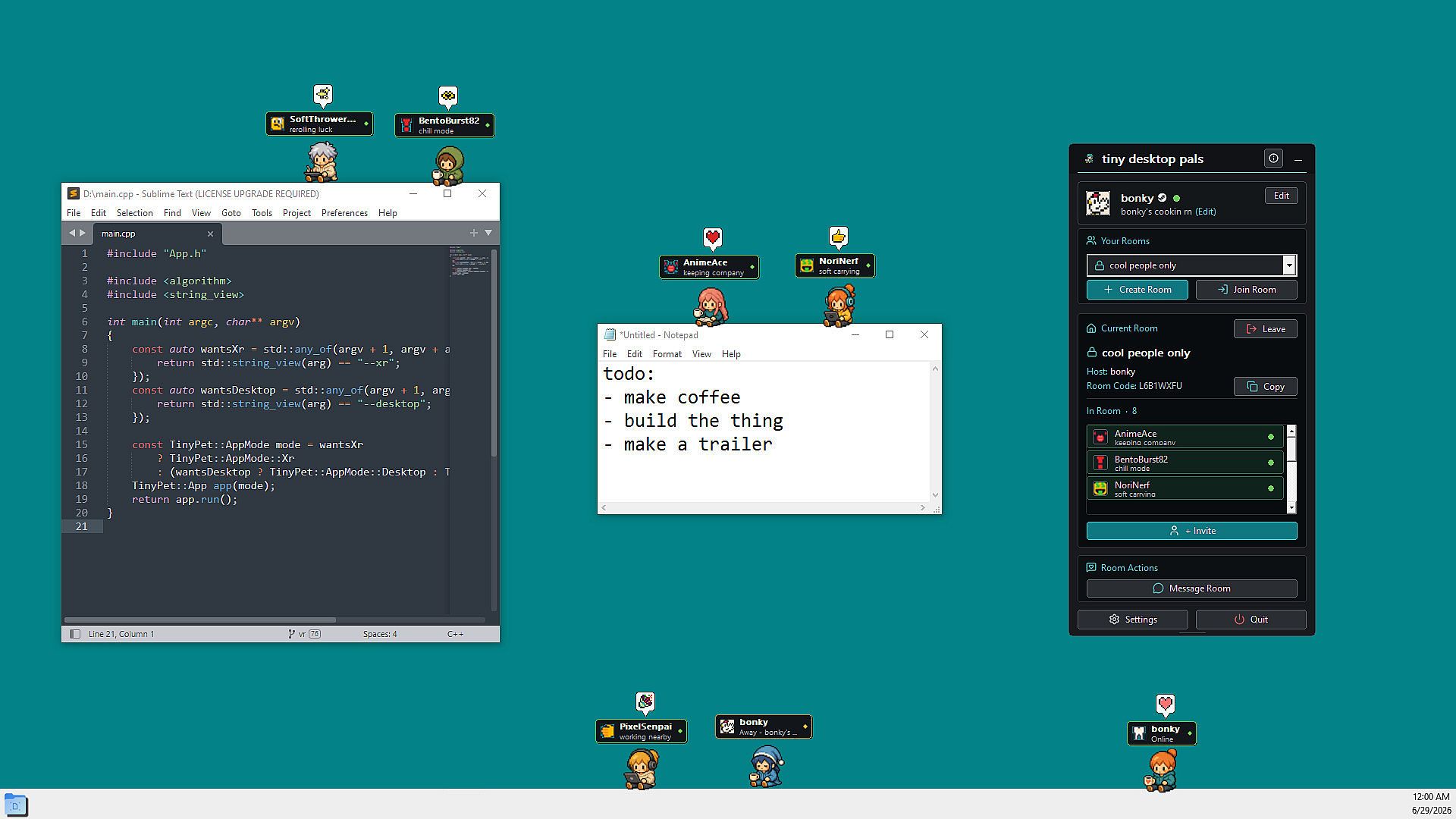
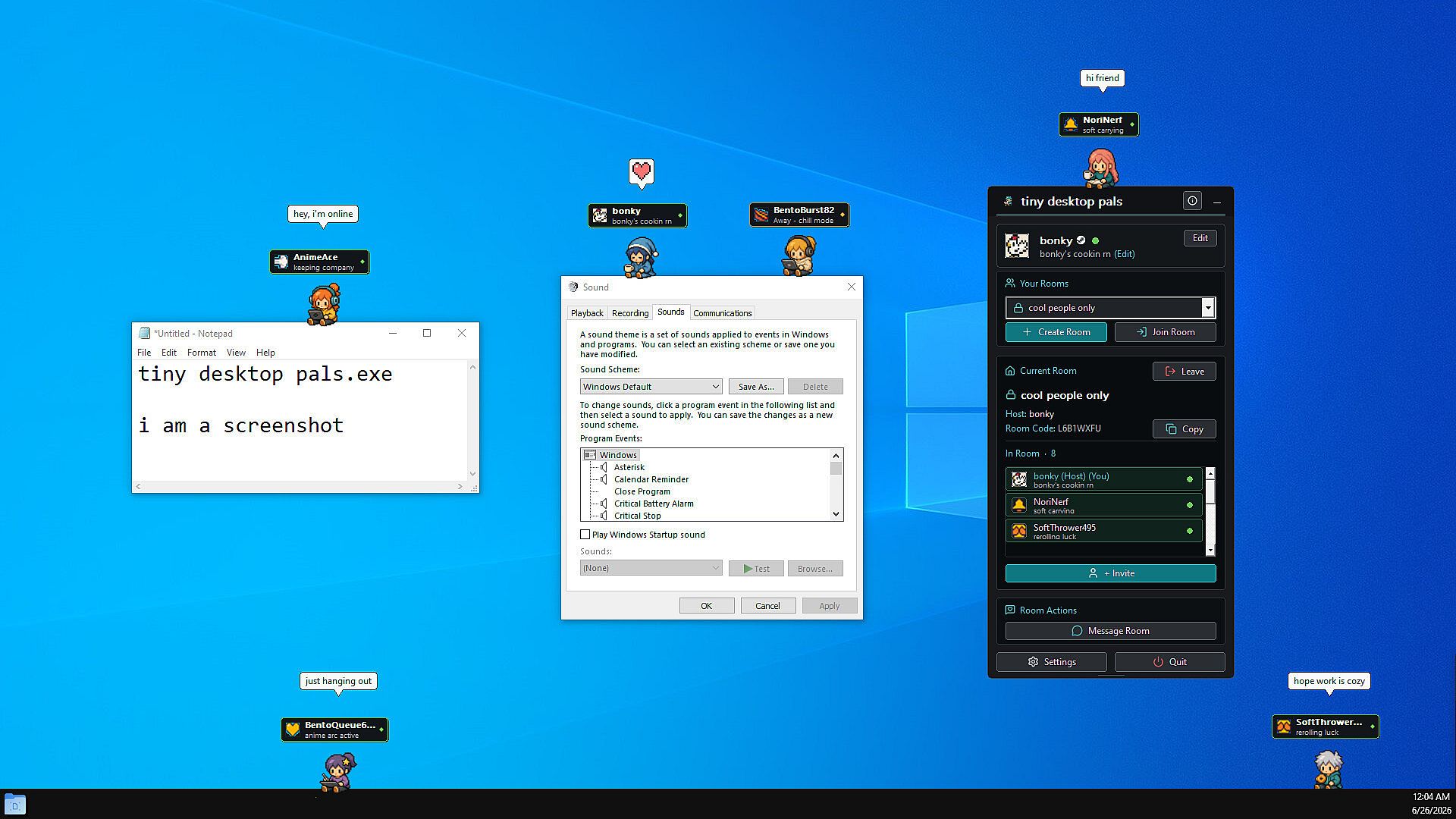
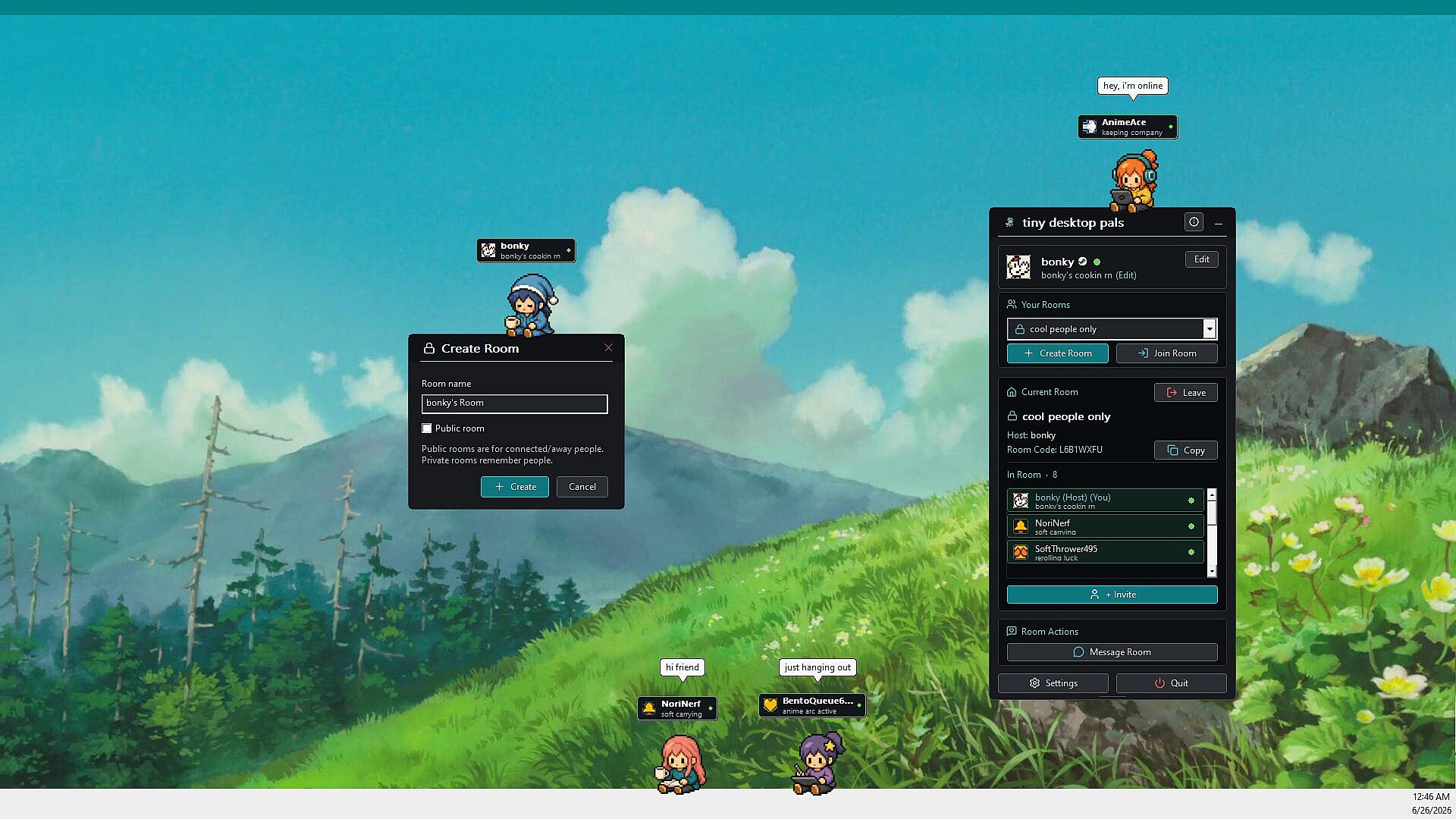
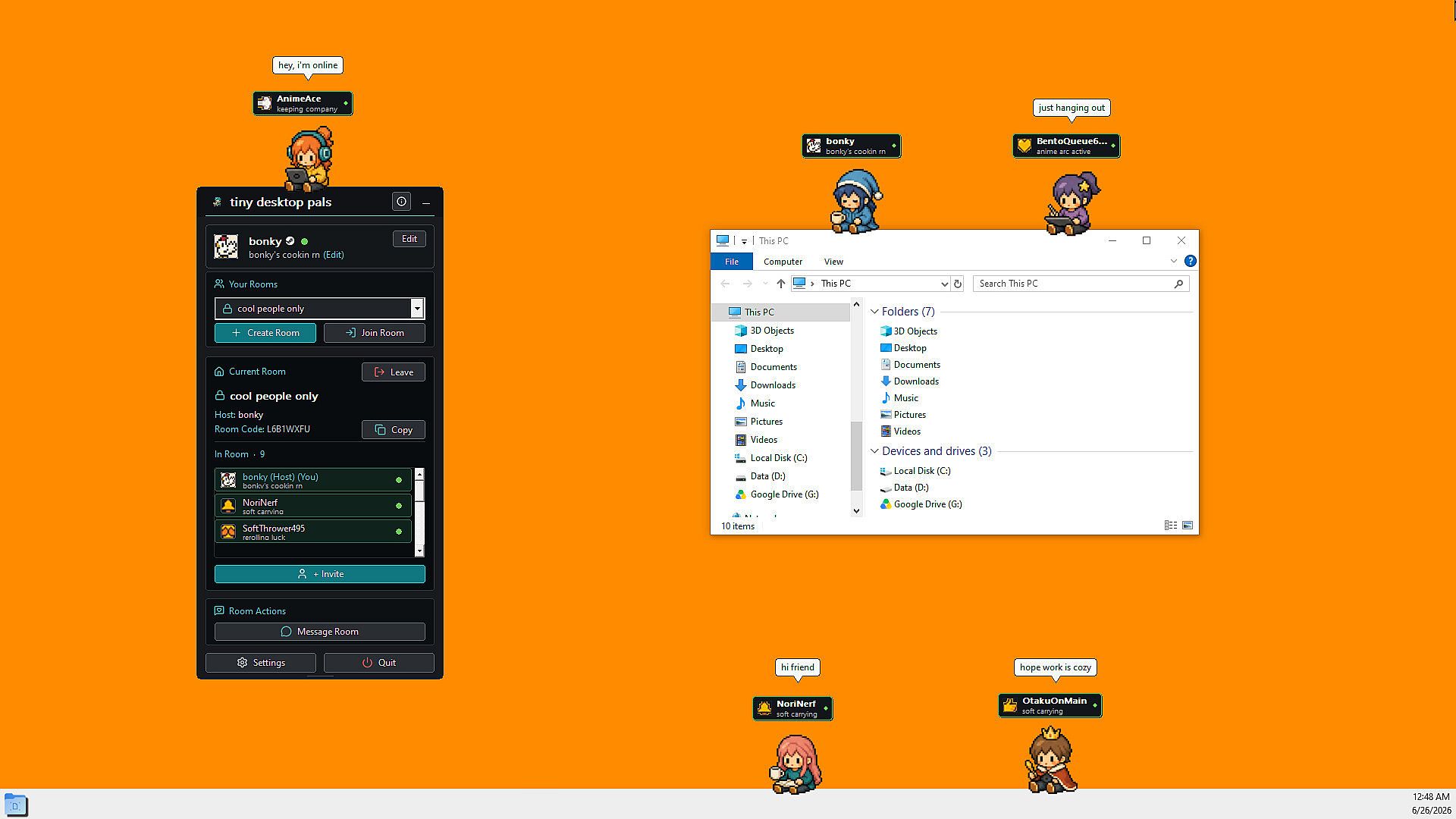
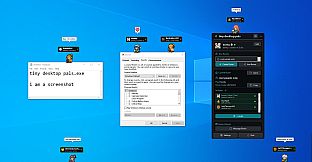
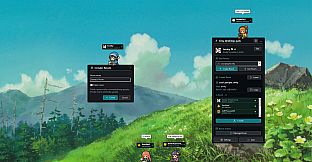
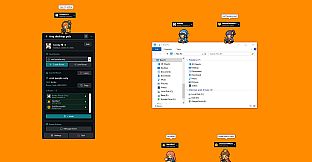
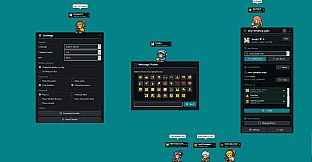
Tiny Desktop Pals est un jeu casual free-to-play massivement multijoueur qui superpose une couche sociale légère directement sur le bureau Windows. Les joueurs créent des salons privés et apparaissent sous forme de petits personnages pixel qui s'installent à côté des fenêtres, documents et autres applications ouvertes. Le système permet une présence discrète auprès de ses amis Steam sans interaction constante ni événements organisés.
Gameplay
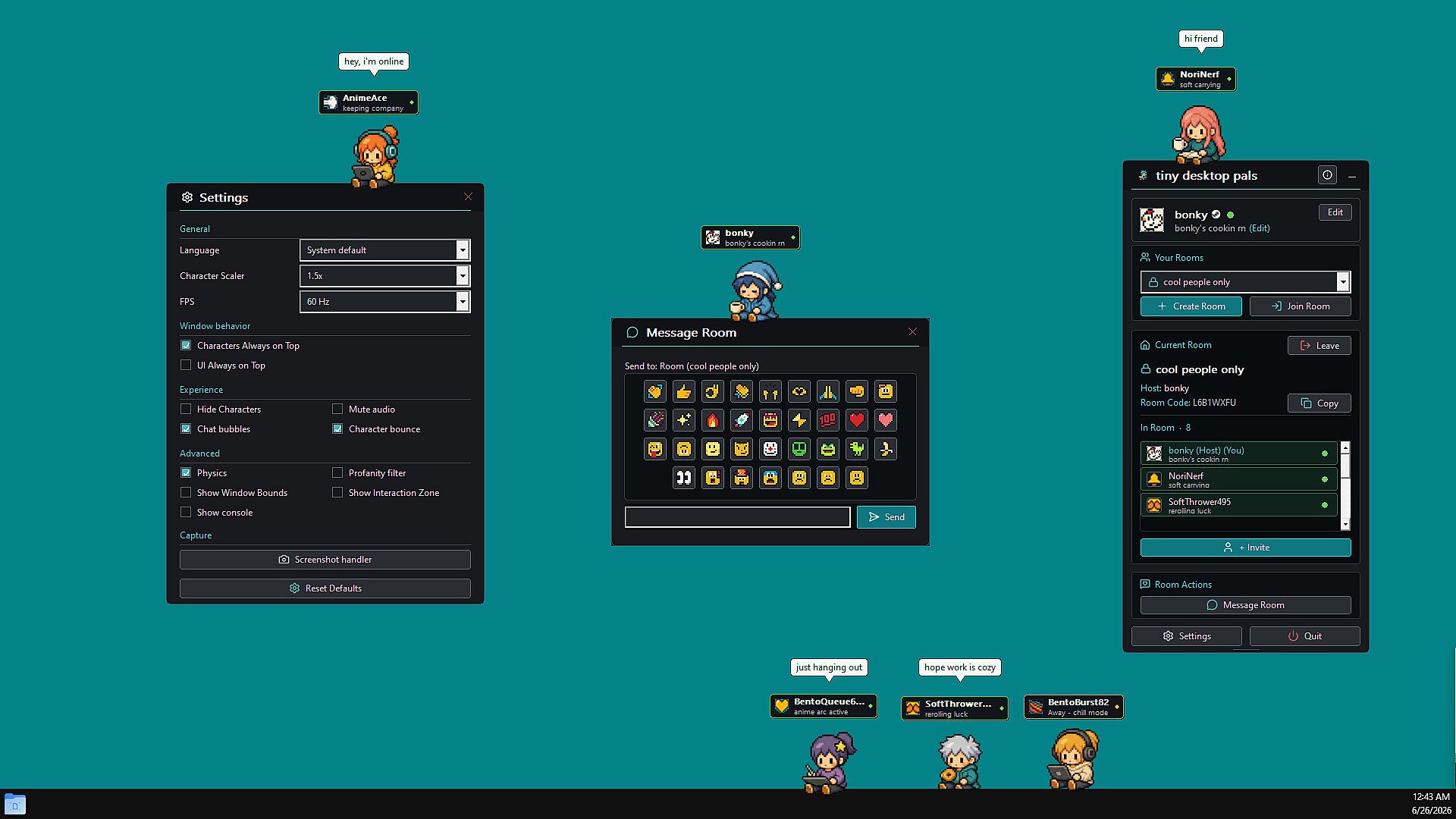
L'expérience repose sur une connexion simple : votre compagnon miniature s'installe dans un coin de l'écran pendant que vous continuez vos tâches. Les amis en ligne rejoignent automatiquement le même salon s'ils y sont invités, avec des animations d'inactivité, de petites réactions et des indicateurs de frappe qui signalent leur activité sans perturber le flux de travail. Les déplacements restent limités afin que les personnages ne masquent jamais les zones importantes de l'écran. Le chat, optionnel, s'effectue via de légères bulles de texte, permettant une conversation uniquement quand on le souhaite. L'ensemble privilégie une approche visuelle et non intrusive, idéale pour de longues sessions de travail, d'études ou de navigation.
Les personnages réagissent aux actions de leurs amis par des emotes et des mouvements simples qui donnent un peu de vie au bureau. Les données échangées se limitent à la présence et aux messages choisis, afin de préserver l'attention sur l'espace partagé plutôt que sur des flux ou notifications externes. Cette mécanique crée une présence d'ambiance qui ne s'active que lorsque des amis sont réellement connectés.
Game Modes
L'activité principale consiste à créer des salons privés où les amis Steam invités se retrouvent en tant que compagnons de bureau. Ces salons fonctionnent comme des espaces persistants qui restent ouverts tant que les participants sont connectés. Il n'existe ni système de score compétitif ni rounds basés sur des objectifs. L'expérience se concentre sur une présence simultanée et silencieuse, avec la possibilité de discuter ou simplement d'observer les autres vaquer à leurs occupations. Le mode solo est également pris en charge : le salon affiche alors un bureau minimalement peuplé, même sans conversation active.
Les mécaniques restent identiques d'une session à l'autre. Les interactions de type boop, les emotes et les comportements d'inactivité se déclenchent automatiquement selon le statut des amis, tandis que les bulles de frappe apparaissent lors des échanges textuels. Cette structure maintient l'accent sur une compagnie d'ambiance plutôt que sur des boucles de jeu dirigées ou des systèmes de progression.
Who the Game Appeals To
Les utilisateurs qui apprécient une dimension sociale en arrière-plan pendant le travail ou les études y trouvent une solution pratique. Le style pixel art et les animations contenues s'intègrent naturellement à l'environnement de bureau sans réclamer d'attention. Ceux qui possèdent déjà une liste d'amis Steam peuvent immédiatement retrouver leurs contacts sous forme miniature. En revanche, les joueurs en quête de sessions multijoueurs structurées ou d'événements communautaires à grande échelle risquent de trouver le concept trop restreint, l'accent étant mis sur de petits groupes privés et une interaction facultative.
L'empreinte technique légère permet aux compagnons de fonctionner en parallèle d'autres applications sans impact sur les performances. Les contrôles de confidentialité limitent le traitement des données aux identifiants de compte, noms d'affichage, avatars et messages choisis, ce qui convient aux utilisateurs soucieux de minimiser les partages externes pendant leurs sessions sur ordinateur personnel.
Is It Worth Playing?
Tiny Desktop Pals remplit précisément la promesse de présence en ligne discrète annoncée par son concept. Les joueurs qui recherchent une compagnie subtile pendant des tâches indépendantes disposent d'un outil fonctionnel qui s'intègre directement à leur compte Steam existant. L'absence de pression et de fonctionnalités obligatoires le rend adapté à ceux qui souhaitent avoir des amis à proximité sans devoir converser. Le support actuel se concentre sur les systèmes de salons et de compagnons décrits, sans contenu additionnel nommé confirmé pour le moment.
L'accueil se concentre sur son attrait de niche pour un usage cosy et discret du bureau. Les personnes déjà habituées aux expériences de type animal virtuel ou overlay reconnaîtront l'atmosphère visée. Ceux qui cherchent des mécaniques plus profondes, des serveurs publics ou des mises à jour fréquentes devraient prendre en compte la portée limitée avant d'installer le jeu. Le modèle free-to-play supprime toute barrière financière, permettant de tester directement si cette présence amicale d'ambiance correspond à ses habitudes.