




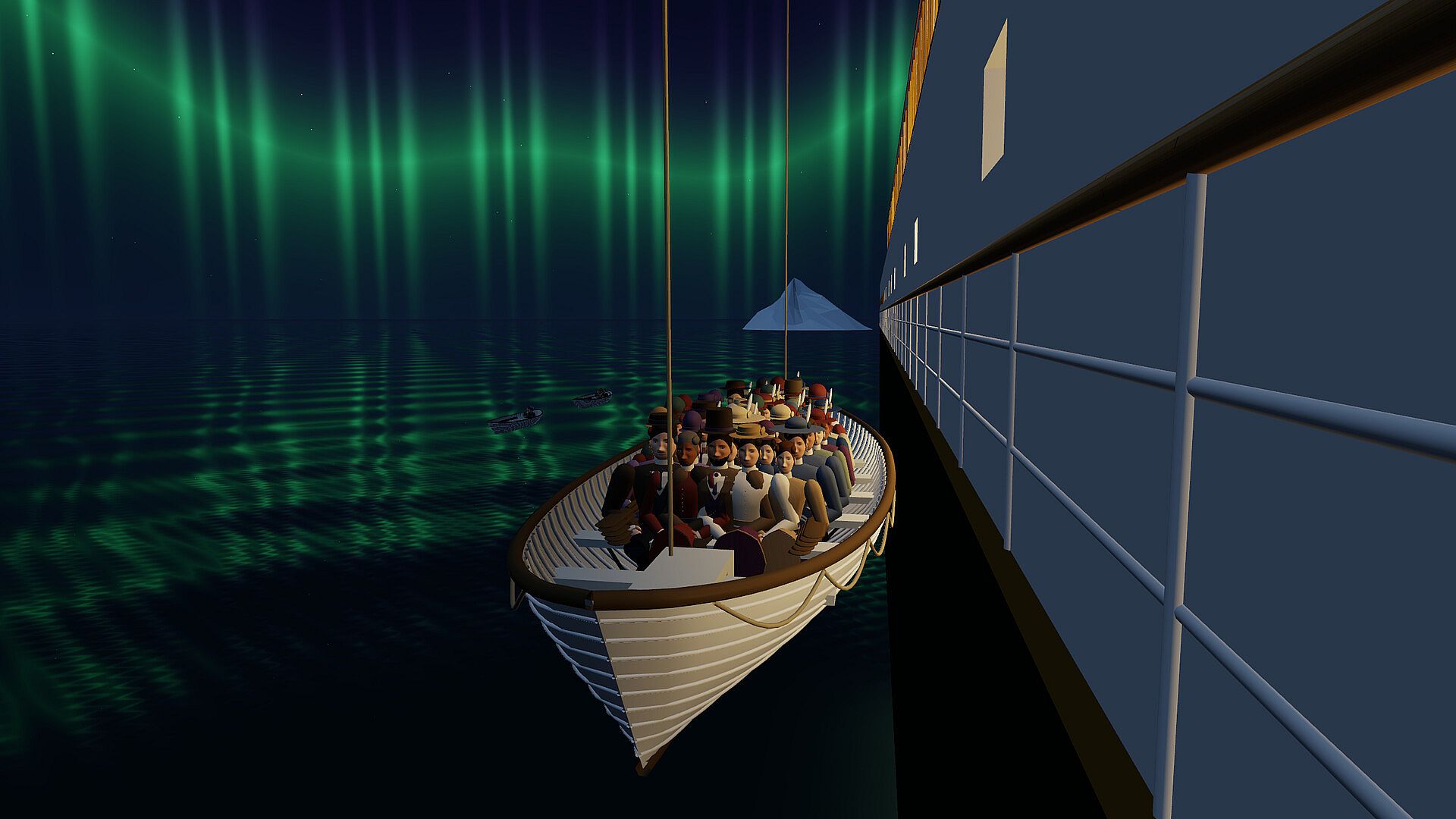
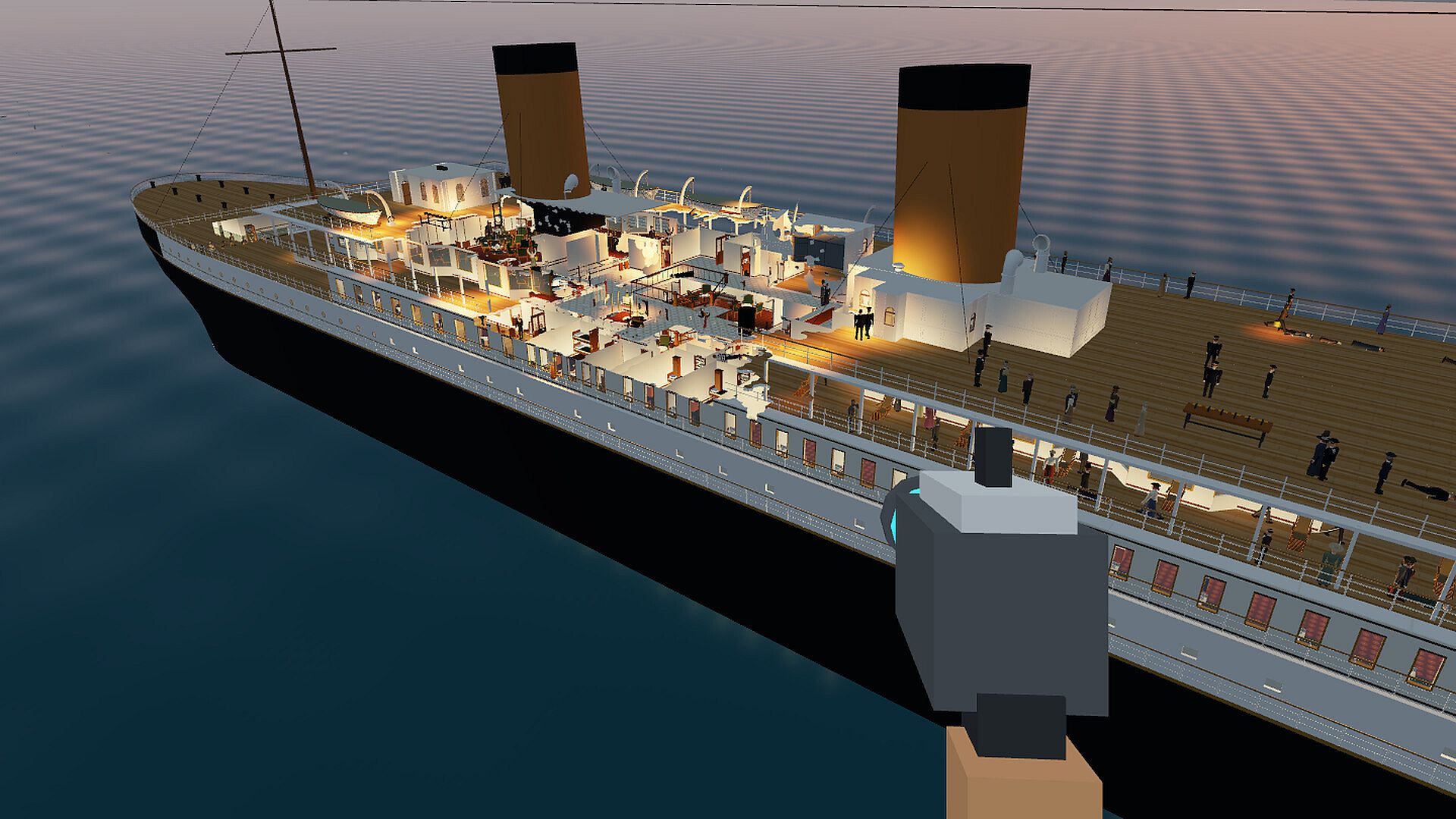
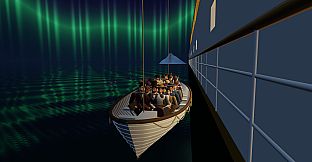
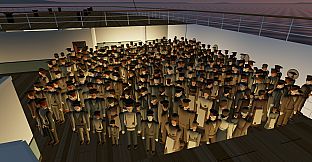
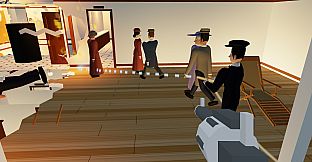
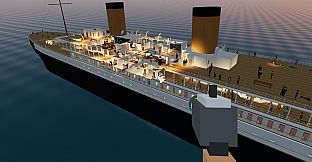
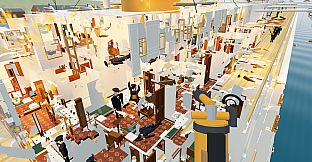
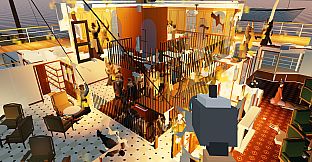
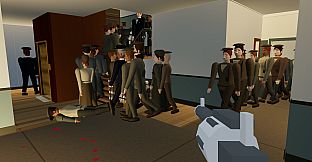
Titanic: Death and Destruction is a first-person survival and destruction sandbox game set aboard the famous ocean liner. Players take control of a character who boards in Southampton and sails into the Atlantic, navigating passenger areas, crew quarters, and machinery spaces while managing personal needs amid emerging chaos from fire, flooding, and violence.
Gameplay
The core loop centers on exploration and survival within a detailed recreation of the ship. Movement involves walking between decks, opening doors, and interacting with the environment to locate resources. Survival requires attention to hunger, thirst, temperature, hygiene, and overall health, with players seeking out meals, water sources, and rest areas. Choices made during these activities can attract notice from crew members or ship police, adding tension to routine actions.
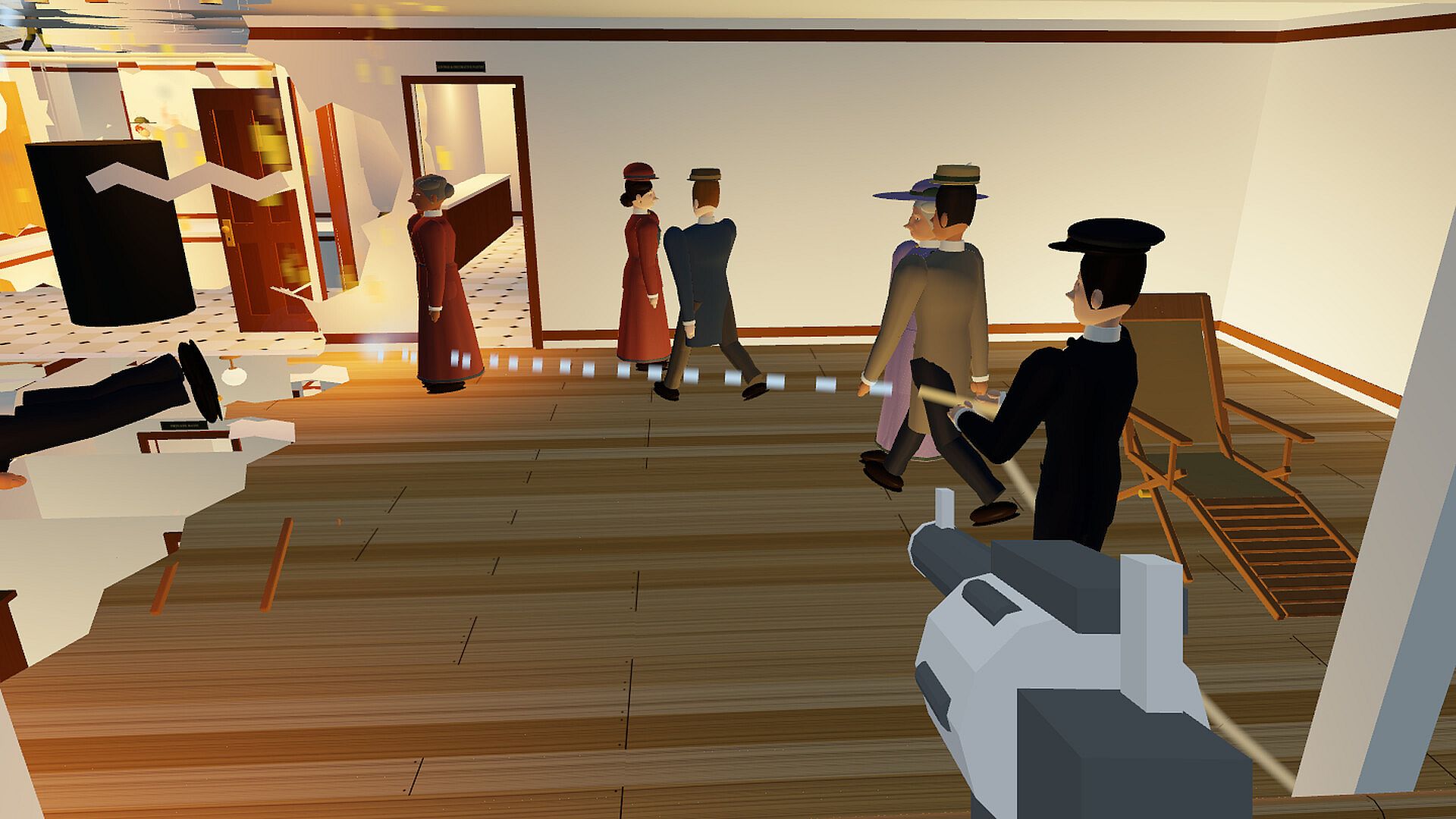
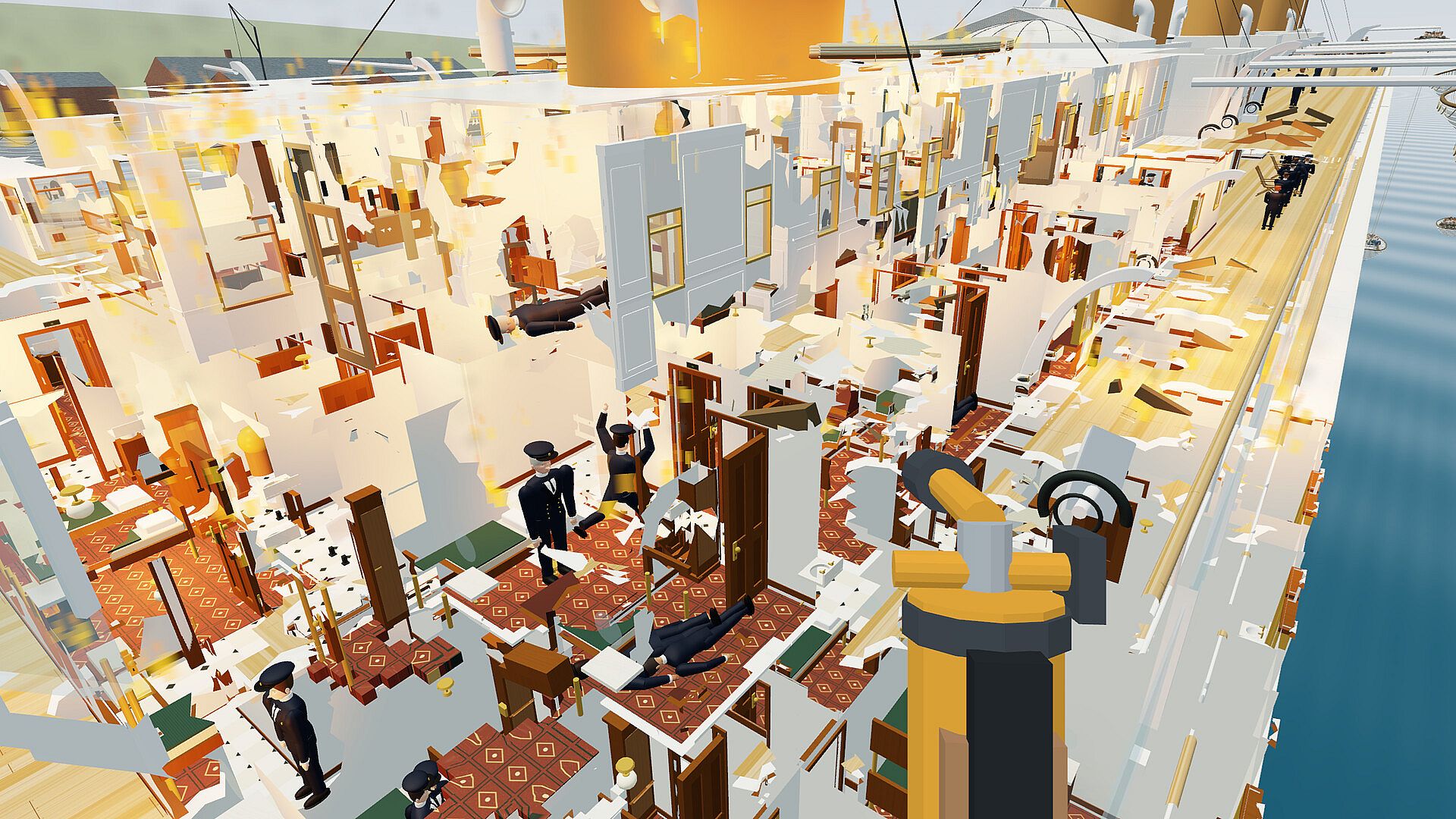
Destruction forms a major pillar of play. Tools and weapons allow players to damage structures, ignite fires, or breach hull sections. These actions trigger flooding that alters accessible spaces and creates new hazards. Passengers respond dynamically to threats, while rising water and structural damage introduce escalating risks that force adaptive decisions during any session.
Game Modes
Story Mode follows the voyage in a structured sequence, guiding players through events as conditions on the ship deteriorate. This approach emphasizes narrative progression alongside survival and destruction elements.
The development sandbox offers an open environment for unrestricted experimentation. Players can test the ship's systems, push limits of damage, and observe responses without following a set path. Both modes support single-player sessions designed for mouse and keyboard controls on PC.
Exploration and Interaction
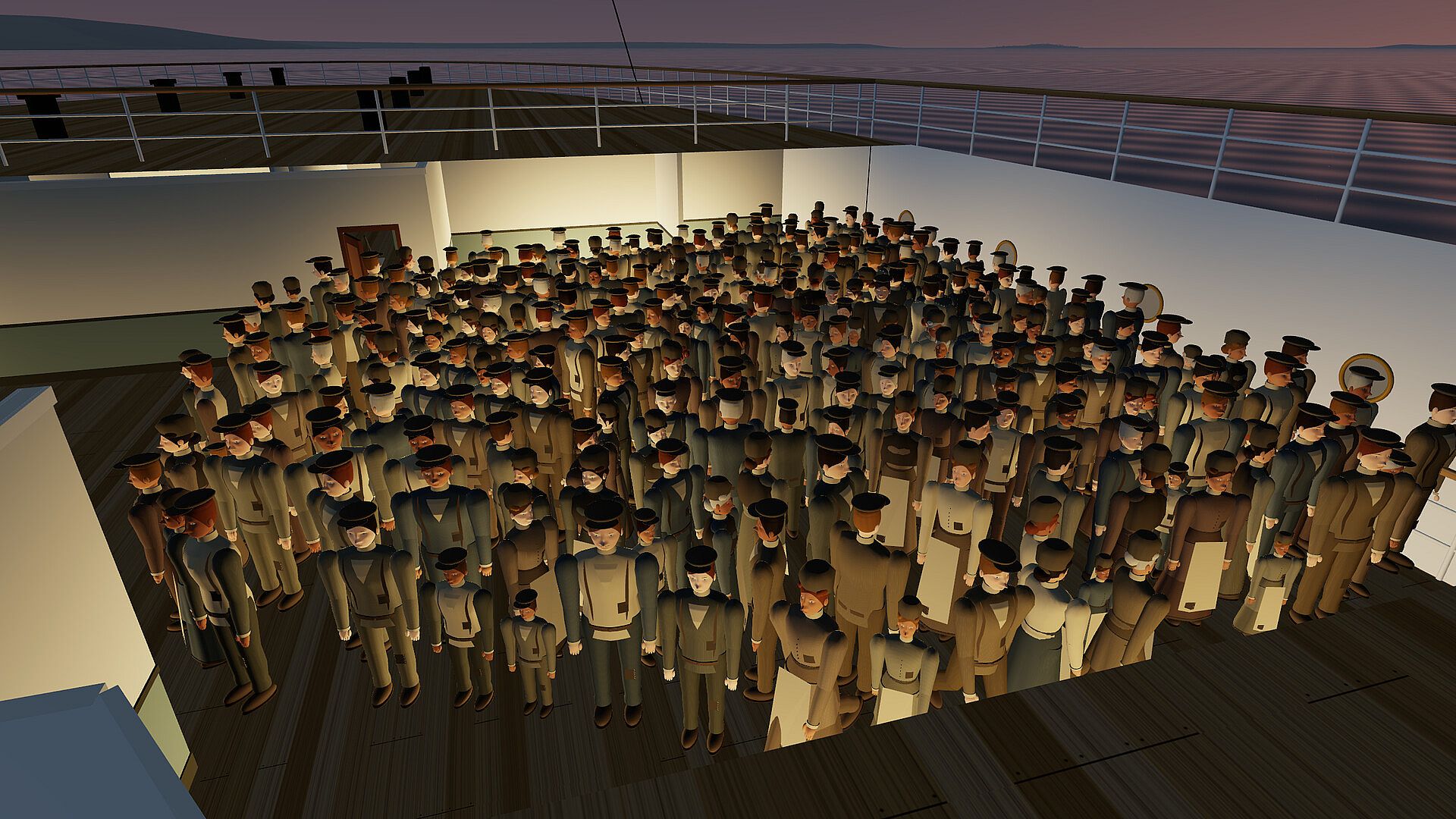
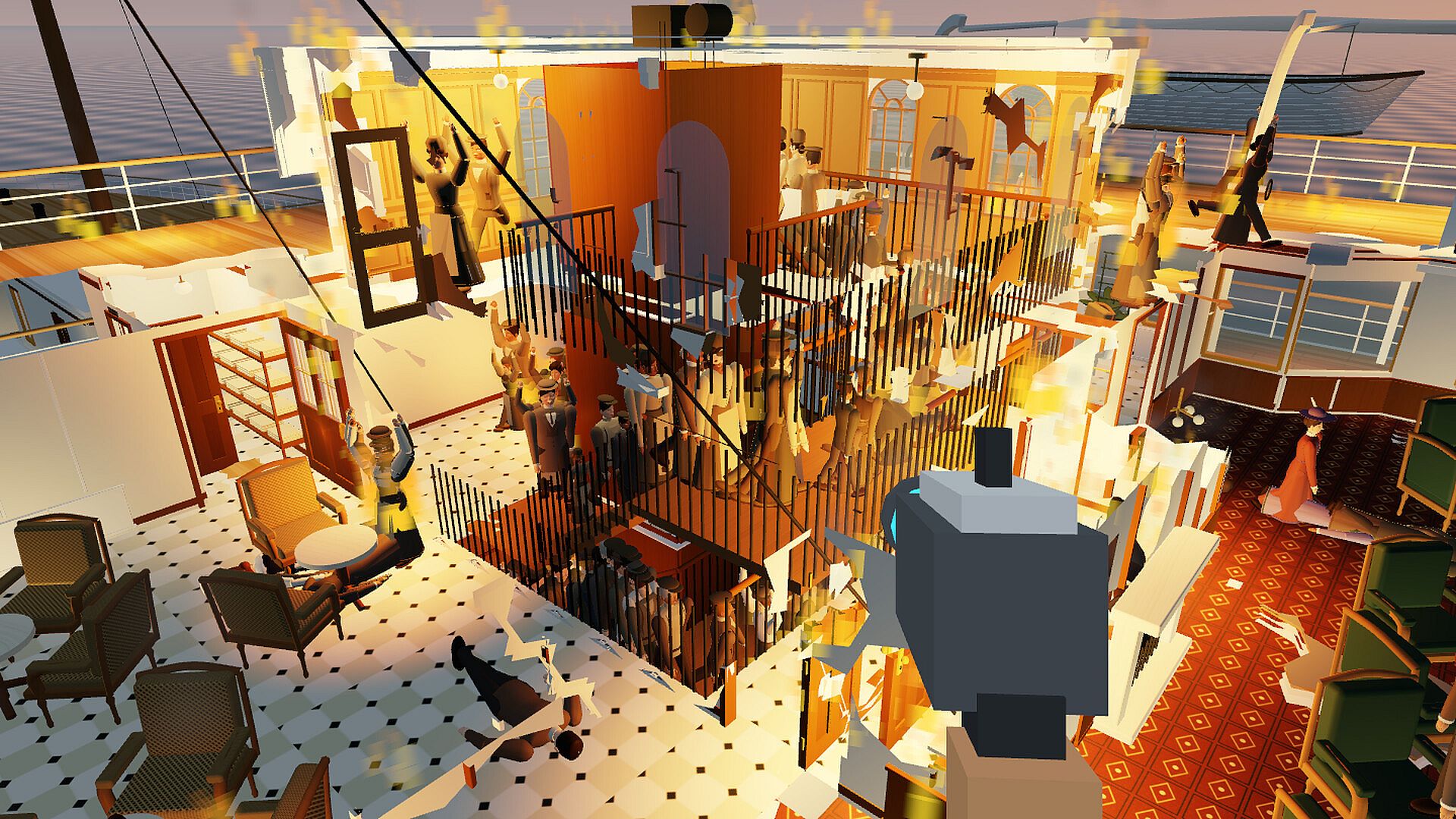
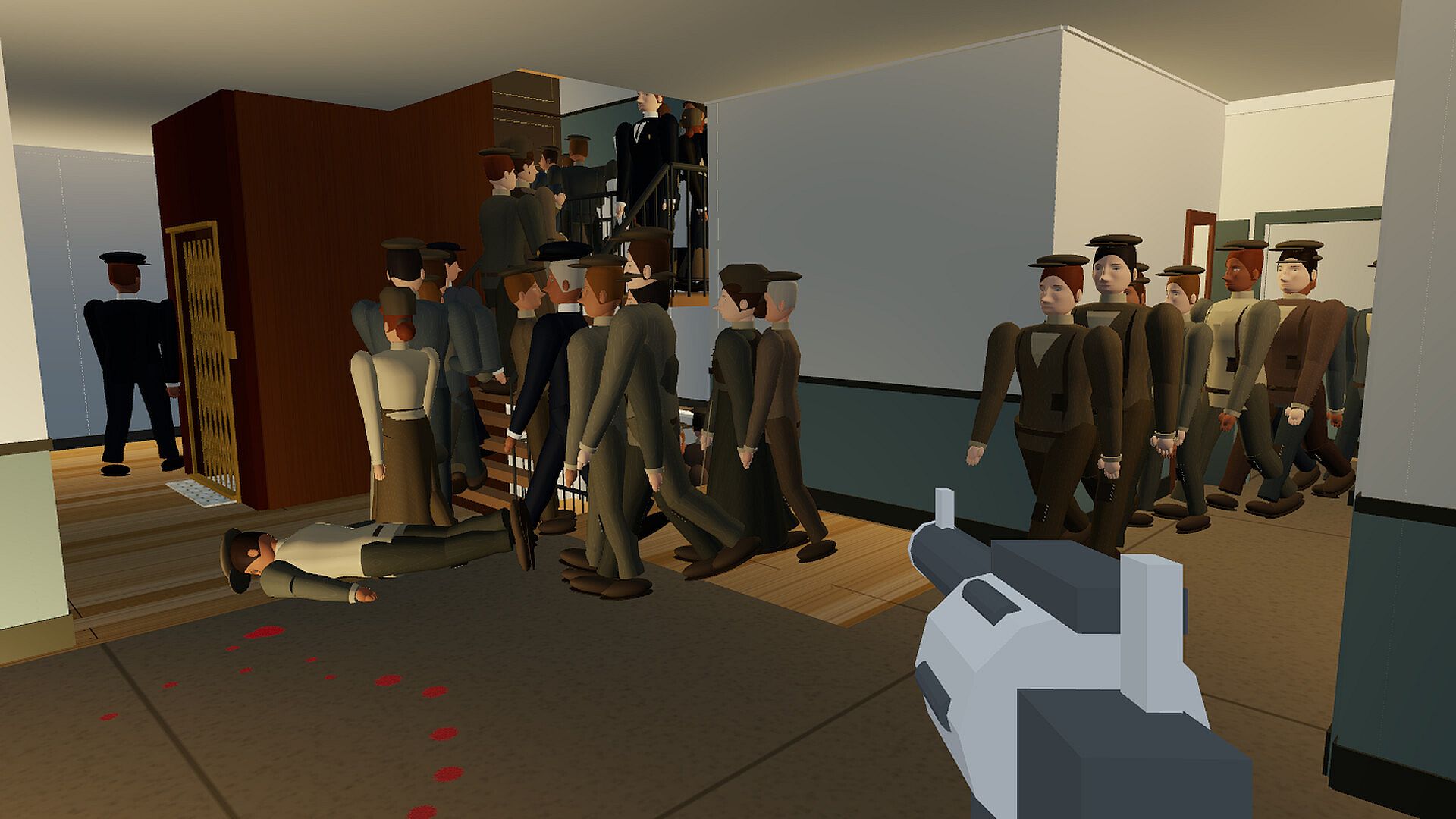
Life aboard unfolds through encounters with passengers and crew who maintain daily routines. These interactions occur across multiple levels of the vessel, from luxurious passenger spaces to functional machinery rooms. The setting blends historical details with fictional characters and events, creating opportunities to observe or influence ongoing activities before disruption sets in.
Environmental changes from player actions reshape navigation routes and create emergent threats. Flooding can block paths or introduce new dangers, while fires spread and affect visibility or safety. This system encourages repeated visits to familiar areas to discover altered conditions.
Is It Worth Playing?
The game targets players interested in survival mechanics combined with sandbox destruction in a confined historical setting. Its single-player focus and emphasis on personal resource management alongside environmental manipulation suit those who enjoy methodical exploration and consequence-driven gameplay. As an unreleased title with no available reviews or player data, suitability depends on interest in the described systems of survival, interaction, and ship-based destruction. The combination of routine ship life with escalating crises provides a distinct experience for fans of indie simulation and adventure titles on PC.












