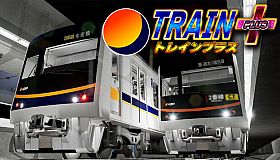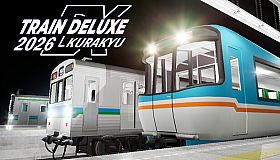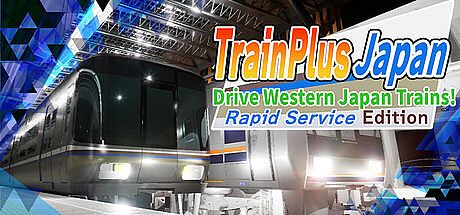



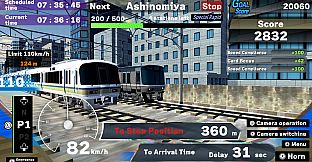
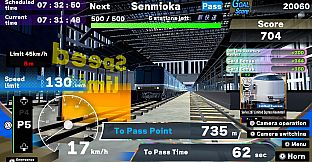
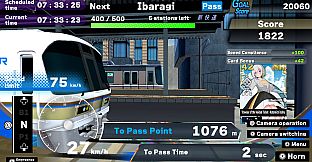
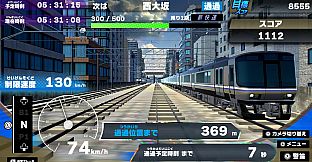
Train Plus Japan Drive Western Japan Trains! Rapid Service Edition est un simulateur ferroviaire solo qui allie conduite précise et construction de deck de cartes. Le joueur prend le contrôle de trains JR-West authentiques sur des lignes fictives inspirées de la région du Kansai, en se concentrant sur la gestion réaliste plutôt que sur la vitesse ou le combat. Le titre mêle simulation et stratégie légère grâce à un système de score et des decks personnalisables, pour ceux qui apprécient la conduite ferroviaire authentique et les mécaniques de deck-building.
Gameplay
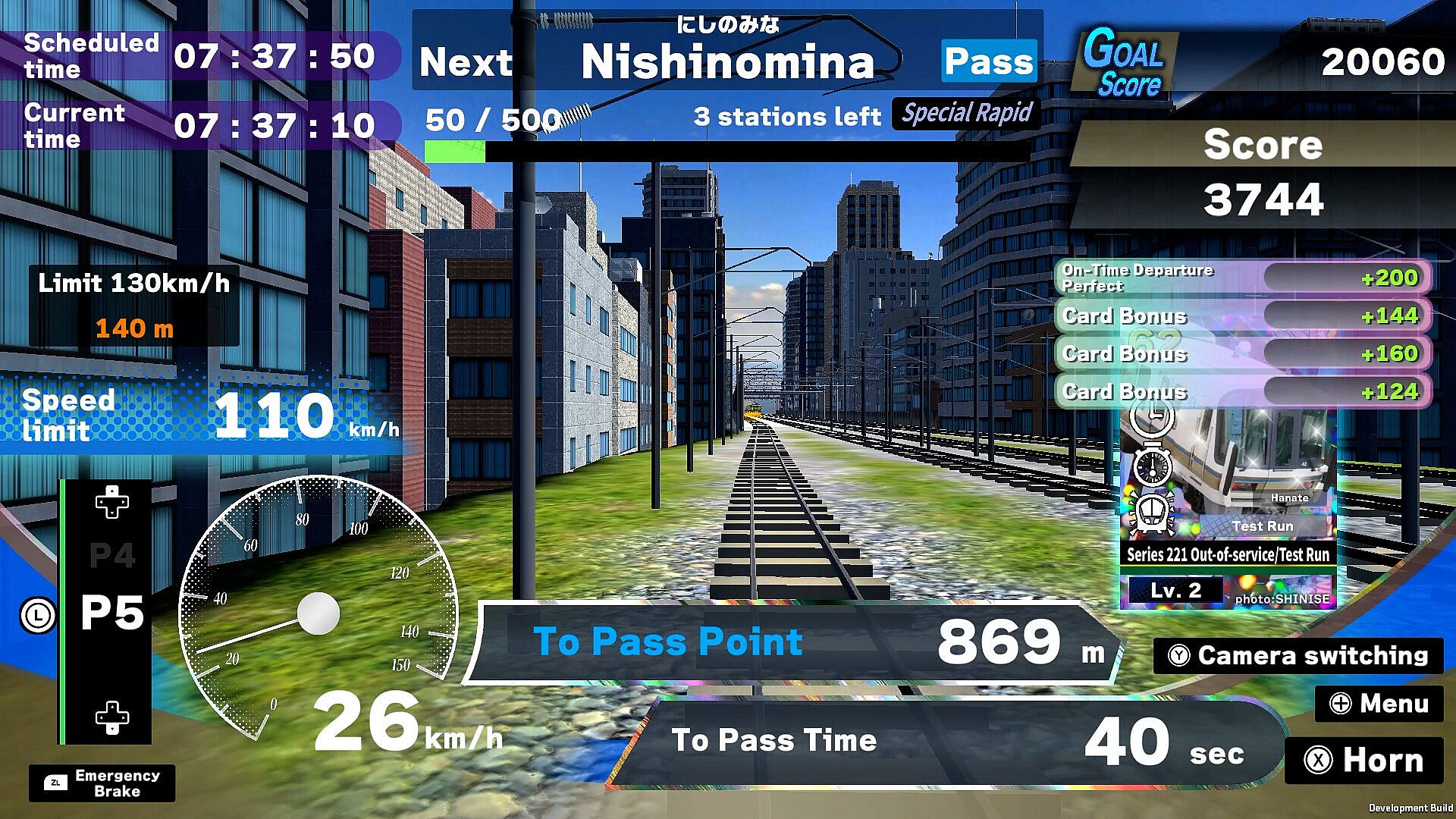
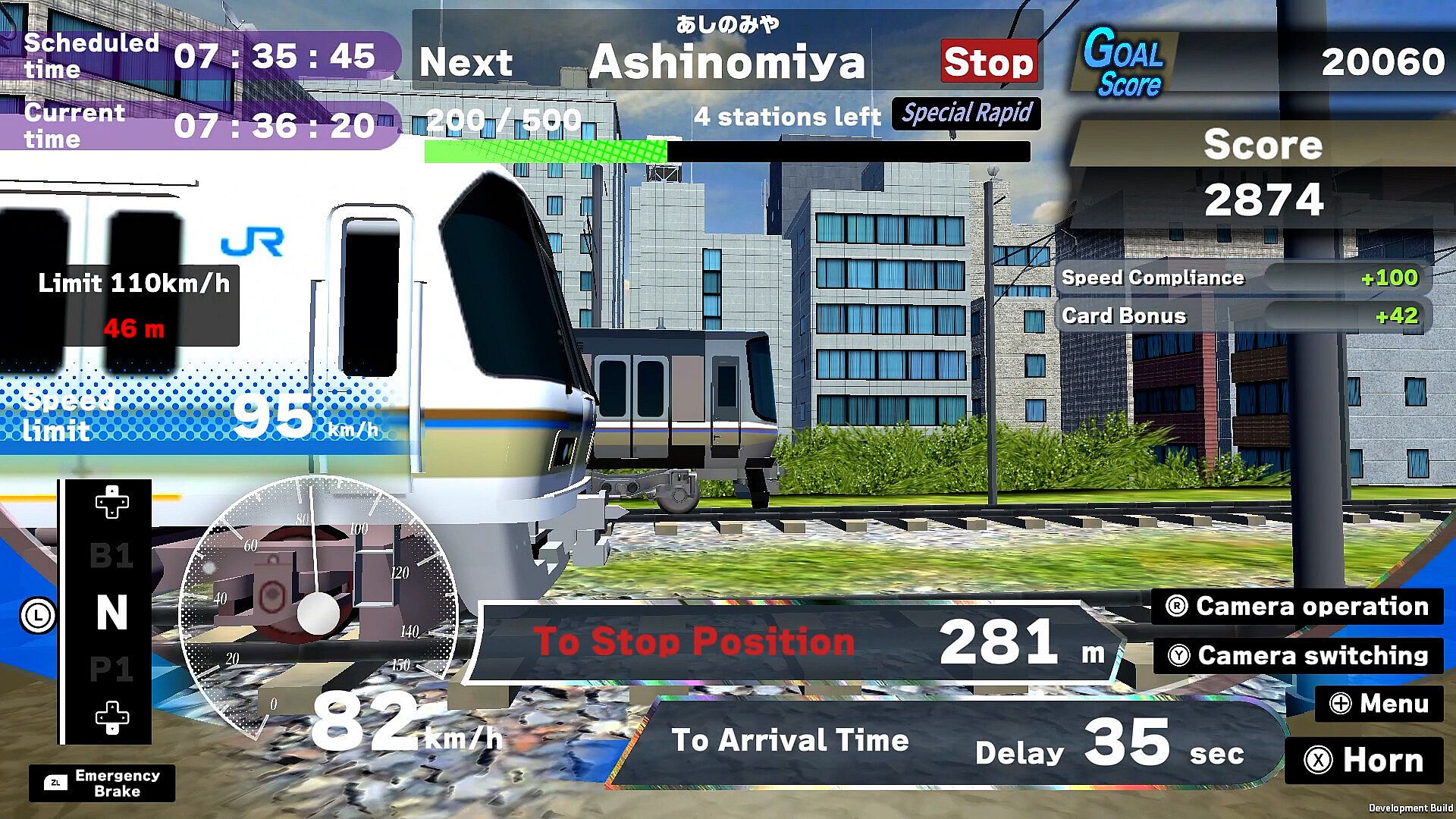
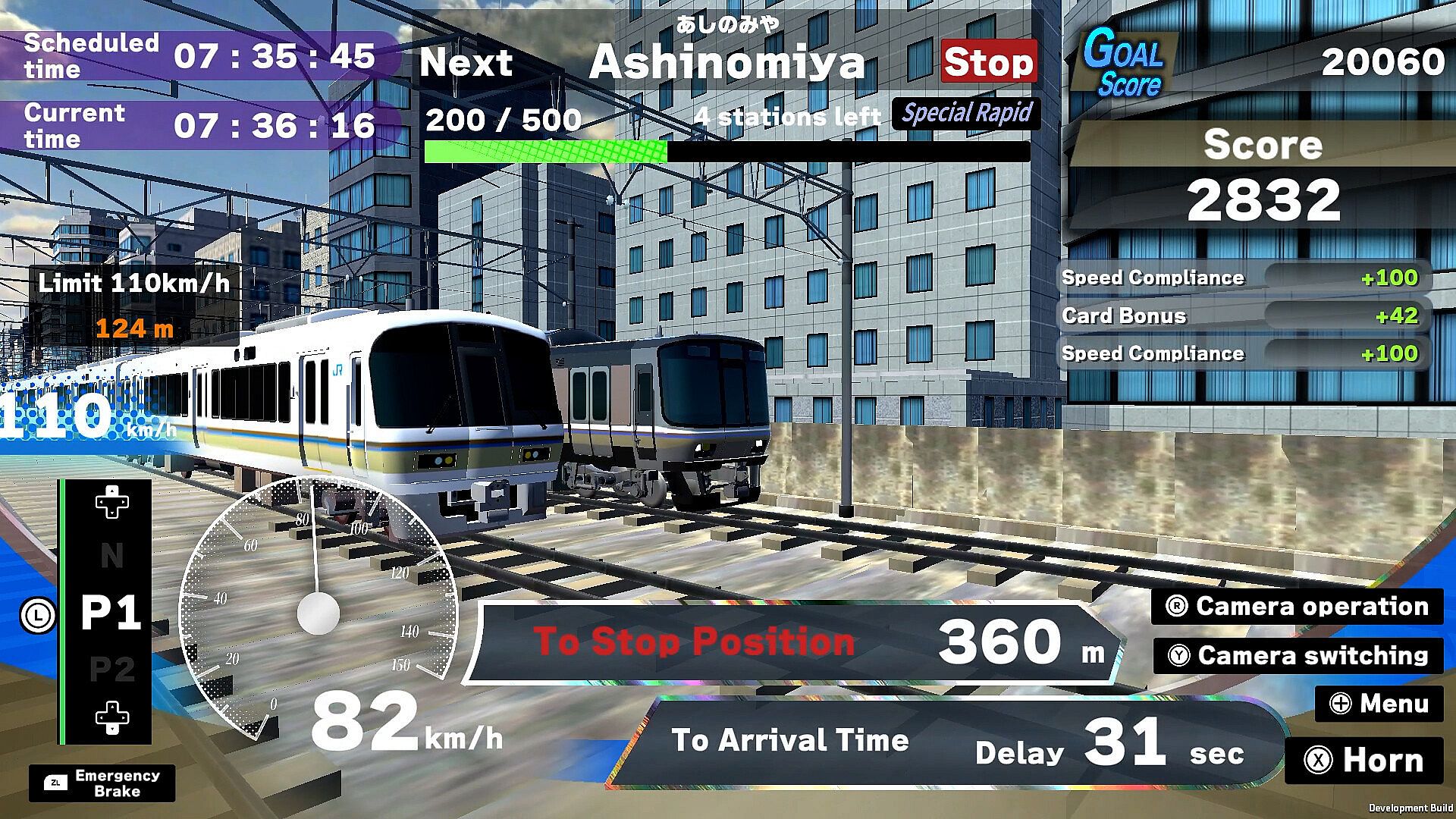
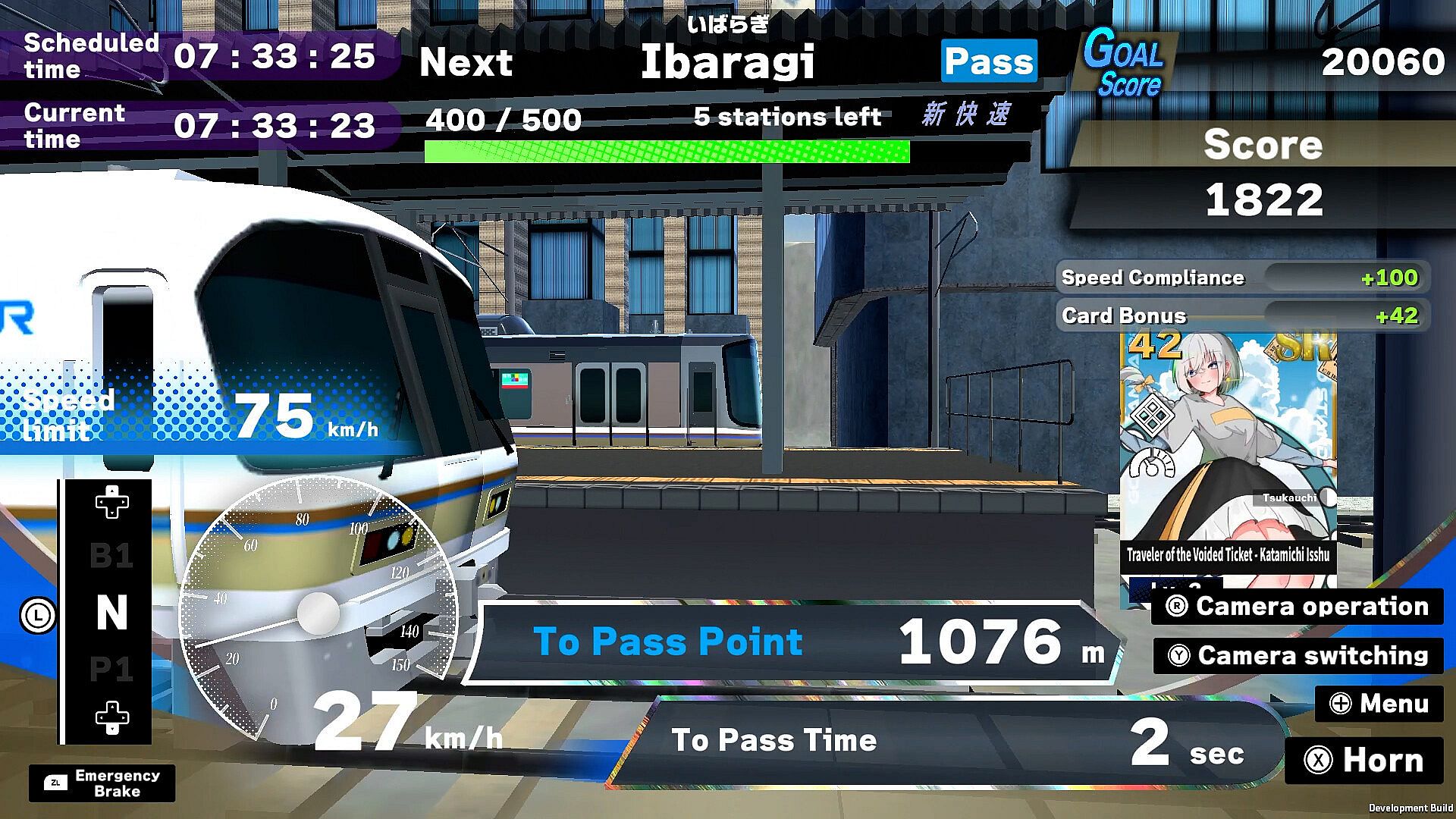
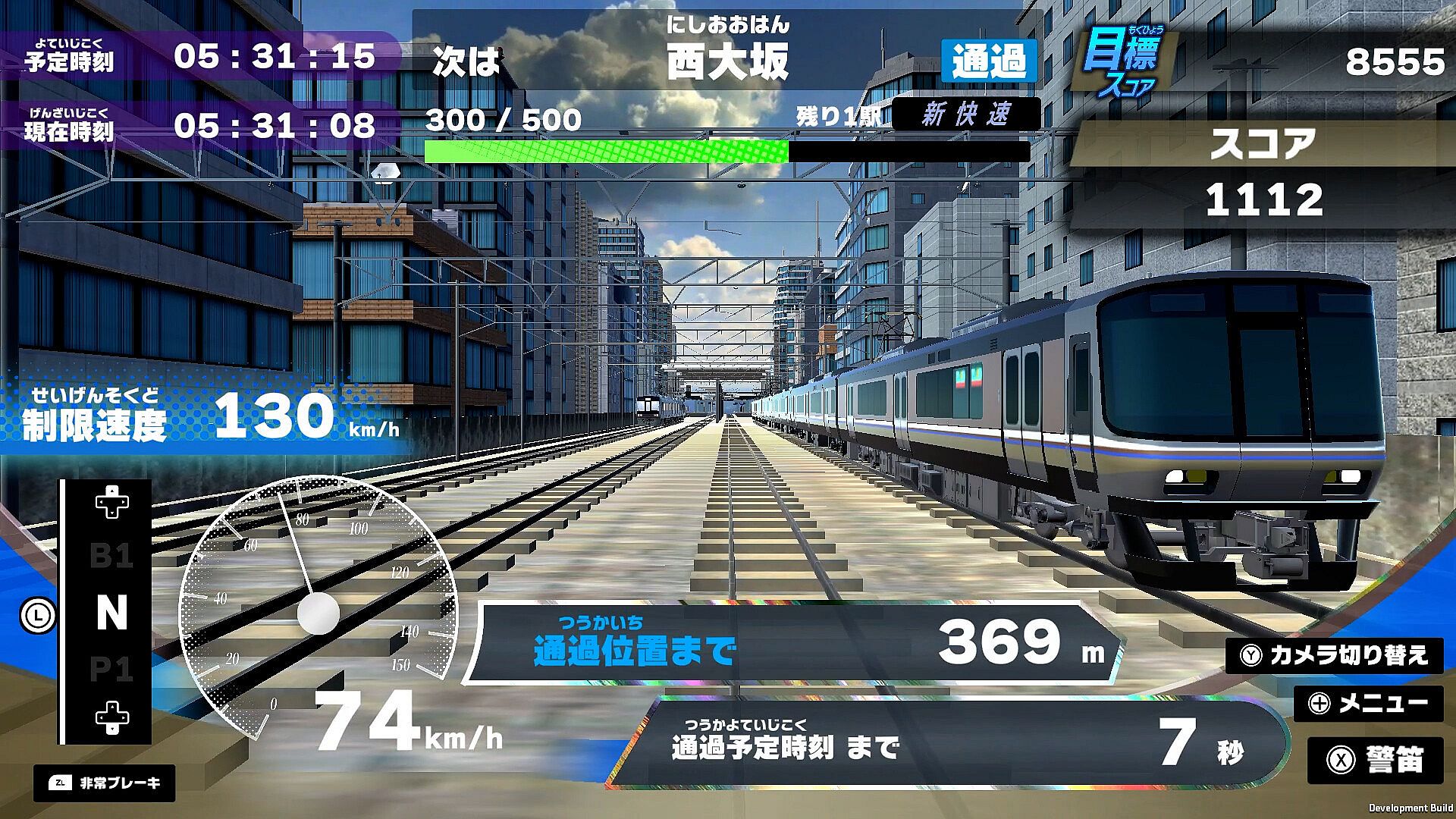
Le cœur du jeu repose sur la conduite des séries 221, 223, 207 et 321, avec la série 227 disponible en option d'essai. Le joueur gère l'accélération, le freinage et le respect des horaires, tout en respectant les limitations de vitesse et en s'arrêtant précisément aux repères des quais. La précision dans ces domaines détermine le score de conduite, qui s'améliore au fil des tentatives. Chaque tronçon des trois lignes est accessible dans les deux sens, permettant des sessions pouvant dépasser quarante minutes.
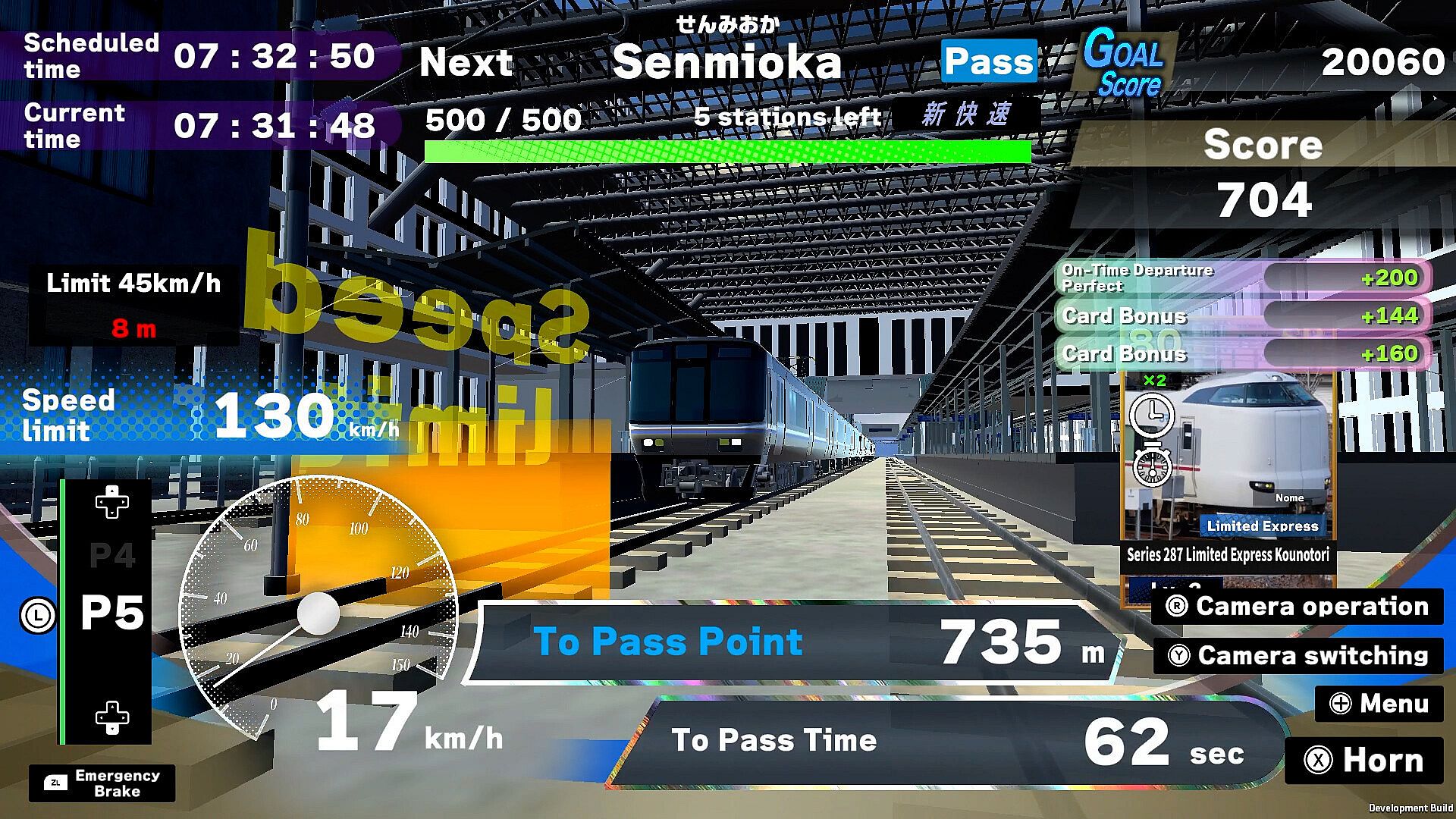
Avant chaque départ, le joueur compose un deck à partir de quatorze cartes de séries, incluant des options de trains limités comme les séries 287, 283, 289, 281, 271, 683, 225, 115 et 485. Les cartes de même type activent des bonus de chimie qui doublent les valeurs, tandis que la collecte de cartes liées à des gares spécifiques ajoute d'autres multiplicateurs. Des améliorations et un système de gacha intégré permettent d'enrichir la collection sans aucun achat. Un bon deck compense les petites erreurs de conduite, tandis qu'une conduite experte tire le meilleur parti des cartes basiques, offrant deux voies complémentaires pour progresser.
Le titre fonctionne sans matériel dédié grâce à son optimisation d'origine portable, et reste fluide sur des ordinateurs standards. Les commandes reproduisent la physique réaliste des trains, notamment sur les sections à quatre voies où le dépassement des services plus lents renforce l'impression de vitesse sur les trajets directs.
Game Modes
Toutes les parties se déroulent en mode scénario sur les lignes Ohan East, Ohan West et Keishin. Ces itinéraires incluent des services rapides spéciaux qui sautent des arrêts pour des trajets continus à grande vitesse, ainsi que des services directs rapides et des omnibus entièrement pilotables. Chaque section est accessible dans les deux sens, augmentant la longueur totale des voies et incitant à multiplier les passages pour affiner le timing et le score.
Chaque scénario intègre directement le système de deck, avec des conditions liées aux départs à l'heure, au respect des horaires, aux limitations de vitesse et à la précision des arrêts. Aucun mode compétitif ou multijoueur n'est proposé ; l'expérience se concentre sur la progression solo à travers des itinéraires de plus en plus exigeants et l'optimisation des decks. Explorer l'intégralité du contenu demande un temps de jeu conséquent, avec plus de quarante heures nécessaires pour parcourir tous les tronçons en profondeur.
Key Features and Mechanics
Approuvé par la West Japan Railway Company, le simulateur met l'accent sur le comportement authentique des trains JR-West et les détails des lignes régionales. Le système de score de conduite fournit un retour immédiat sur la performance, transformant chaque essai en opportunité de progression mesurable. La construction de deck apporte une dimension stratégique, récompensant l'expérimentation des combinaisons et des améliorations obtenues uniquement en jeu.
Des exigences matérielles légères distinguent ce titre des simulations plus gourmandes, le rendant accessible pour des sessions courtes ou longues sur des ordinateurs non spécialisés. Le streaming et la création de vidéos sont autorisés sans restriction, favorisant le partage communautaire des parcours réussis et des stratégies de deck.
Is It Worth Playing?
Ce jeu s'adresse aux passionnés de trains, aux amateurs de la région du Kansai et aux joueurs qui apprécient de combiner une simulation précise avec une stratégie de deck-building. L'absence de contenu payant et l'accent mis sur la compétence et la planification offrent une expérience autonome qui récompense la pratique régulière. Avec sa sortie prochaine et son orientation solo, ceux qui recherchent une conduite ferroviaire réaliste associée à des éléments stratégiques légers trouveront des mécaniques en accord avec la description. La couverture étendue des voies et le retour du score offrent une progression claire sans dépendre de mises à jour ou de saisons au lancement.