




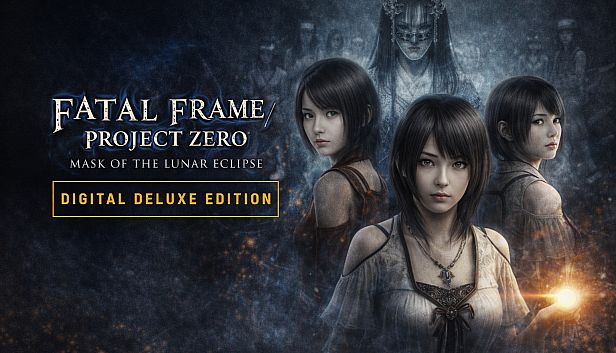




FATAL FRAME / PROJECT ZERO: Mask of the Lunar Eclipse est un jeu d'horreur survival dans lequel le joueur explore des lieux hantés sur une île japonaise isolée et affronte des esprits hostiles à l'aide du Camera Obscura.
Gameplay
Le jeu se déroule en vue à la troisième personne dans des bâtiments sombres et des espaces extérieurs riches en détails et en objets cachés. Le joueur passe en vue subjective pour photographier les spectres agressifs. La puissance des clichés dépend de la distance, de l'angle et du type de pellicule utilisé. Un indicateur signale les moments de vulnérabilité, permettant des attaques plus puissantes qui déséquilibrent les ennemis et rapportent davantage de points. Ces points servent à acheter des améliorations et des consommables aux lanternes de sauvegarde disséminées dans les environnements.
Quatre personnages sont jouables tout au long de l'aventure, chacun avec une approche légèrement différente. La plupart comptent sur le Camera Obscura pour se défendre, tandis qu'un personnage privilégie la lampe torche pour repousser les menaces et éclairer les environs. Les esquives demandent un bon timing ou des améliorations adaptées, et la gestion de la vie devient cruciale lors des longues confrontations. L'exploration récompense les recherches minutieuses qui font avancer l'enquête et débloquent de nouvelles ressources.
Modes de jeu
L'expérience principale se présente sous la forme d'une histoire linéaire en solo, divisée en chapitres qui alternent entre les quatre protagonistes. La progression repose sur la résolution d'énigmes, la collecte d'objets clés et la survie aux attaques de spectres, tout en découvrant l'histoire de l'île. Une option New Game+ s'active après la première fin, permettant de conserver les points et les objets accumulés pour de nouvelles améliorations et des costumes alternatifs.
Un mode Snap permet de poser librement personnages et fantômes pour réaliser des photos personnalisées hors de l'aventure principale. Ce mode offre une liberté créative sans contrainte de combat.
Atmosphere and Progression
La progression repose sur des retours aux mêmes lieux sous différents points de vue, révélant de nouveaux chemins et détails à chaque passage. La lampe torche d'un des protagonistes modifie la visibilité et les options d'évitement par rapport au gameplay centré sur l'appareil photo. Les améliorations achetées avec les points photo augmentent la puissance des clichés, la capacité de pellicule et la vitesse de déplacement, facilitant progressivement l'exploration des zones avancées.
Les points de sauvegarde servent également de hubs d'amélioration, incitant à une dépense réfléchie plutôt qu'à une accumulation excessive. L'ensemble du jeu met l'accent sur la gestion des ressources et l'exploration répétée plutôt que sur l'action rapide.
Vaut-il le coup ?
La réception souligne une atmosphère pesante et un mystère central captivant qui se dévoile à travers les chapitres de chaque personnage. Les joueurs appréciant un rythme posé et un système de combat basé sur la photographie trouvent les mécaniques intéressantes une fois les commandes maîtrisées. Certains notent toutefois une certaine lourdeur dans les déplacements et la caméra qui peut rompre le rythme lors des séquences intenses.
Le remaster propose des améliorations visuelles et de nouvelles fonctionnalités comme le mode Snap, qui renforcent la rejouabilité pour ceux qui terminent l'histoire plusieurs fois. Il convient aux amateurs d'horreur survival classique qui privilégient l'ambiance et l'enquête plutôt que la rapidité ou les affrontements massifs. Ceux qui préfèrent des déplacements plus fluides et moins de retours en arrière pourront se tourner vers d'autres titres, tandis que l'ensemble offre des frissons constants et une narration satisfaisante pour le public visé.


