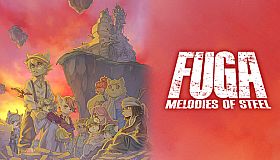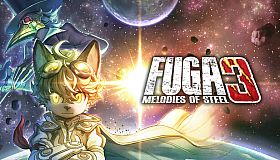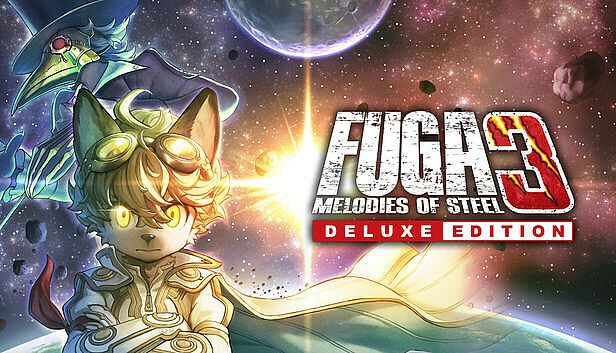










Fuga: Melodies of Steel 3 is a tactical RPG that blends turn-based strategy combat with simulation-style management and narrative choices. Players guide a group of anthropomorphic animal children who operate the massive Omega Taranis tank through a war-torn world, balancing intense battles against enemy forces with periods of crew bonding and vehicle upgrades.
Gameplay
The core loop alternates between overland traversal on branching maps and detailed intermission segments aboard the tank. During exploration, players select routes that present varying levels of difficulty and rewards, leading into encounters where the tank engages ground and aerial threats. Combat unfolds in turn-based fashion from a side view, with three active gunners assigned to distinct weapon types: machine guns for multi-target control, grenade launchers for status effects, and cannons for focused power. Each gunner pairs with a support character whose passive bonuses influence the setup, and players can swap between roles mid-battle to adapt to threats.
Enemy weaknesses tied to specific weapon classes form a central tactical layer. Striking these vulnerabilities in sequence builds a combo meter that increases subsequent damage output, reaching a maximum bonus of 200 percent. Breaking the chain resets the meter, encouraging careful planning around timing and character swaps. Assist attacks from unlocked support characters add another dimension, delivering targeted effects such as armor removal, healing, or buffs without consuming a full turn once their gauge fills. The Soul Cannon remains available as a high-risk option that delivers overwhelming damage at the cost of sacrificing a crew member.
Intermissions expand the simulation elements through relationship building, resource gathering, and tank customization. Crew members participate in activities like cooking, resting, and virtual mining that yield materials for upgrades. The Omega Terminal serves as a skill tree hub where collected resources unlock new Taranis abilities, including preemptive strikes and combo enhancements. These systems tie directly into combat effectiveness and story outcomes, as stronger bonds influence available assists and narrative branches.
Game Modes
The experience centers on a single-player campaign divided into twelve chapters. Each chapter features a main path with optional forks that players navigate based on risk tolerance and desired rewards, promoting multiple playthroughs to uncover all routes and collectibles. Eight distinct endings are accessible depending on cumulative choices, with additional secret events tied to specific decisions and character interactions.
Fast Mode provides an optional toggle that streamlines regular encounters by allowing the tank to bypass or instantly resolve non-story battles while still granting experience and items. Boss fights remain fully playable in this setting, preserving key challenges. The mode suits players who prioritize narrative pacing over repeated combat, though it reduces opportunities to practice combo timing and assist management.
Replay value stems from the branching structure and the Akasha Panel, which permits revisiting pivotal story moments to alter prior choices and explore alternate outcomes without starting a fresh campaign. No separate multiplayer or competitive modes exist; the focus stays on solo progression through the campaign and its variants.
Story and Progression
The narrative follows the children as they confront escalating threats tied to the Berman Empire and larger mysteries surrounding the Taranis. Choices during key events shape crew relationships, unlock new assist characters, and steer the plot toward different conclusions. Transmission events allow interaction with support figures to strengthen their contributions in battle.
Progression integrates combat performance with intermission management. Materials gathered from battles and side activities feed into tank upgrades and crew development, while narrative decisions expand the pool of available assists and story branches. The campaign builds toward a conclusive arc that resolves threads from prior entries in the series while standing independently.
Is It Worth Playing?
Critics and players have responded positively to the refined combat systems and emotional storytelling, describing it as the strongest entry in the trilogy with polished mechanics and meaningful upgrades to the established formula. The combination of weakness chaining, assist attacks, and tank customization adds strategic depth without overhauling the turn-based foundation. Multiple endings and route variations encourage replay for those invested in the characters and world.
The game suits players who enjoy tactical RPGs that emphasize crew management alongside battles, particularly those drawn to stories centered on difficult choices and personal growth. Fast Mode broadens accessibility for story-focused runs. With strong overall reception and continued post-launch support through patches and additional content, it delivers a complete single-player experience on PC that rewards careful planning and repeated engagement with its systems.