




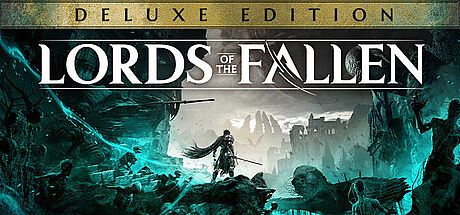























Lords of the Fallen is a dark fantasy action RPG set in a medieval world where players take on the role of a Lampbearer tasked with confronting an ancient evil. The game emphasizes exploration across interconnected areas, deliberate combat encounters, and a central duality between two overlapping planes of existence.
Gameplay
The core loop revolves around traversing the world of Mournstead while managing resources and adapting to environmental challenges. Combat focuses on timing blocks to generate wither damage on enemies, which players can then recover by landing follow-up strikes before the effect fades. Dodging remains a viable alternative for positioning and avoiding heavy attacks. A distinctive tool called the lamp allows interaction with the parallel Umbral realm, enabling players to pull enemy souls outward for direct damage or to manipulate their positions, such as dragging foes off ledges. This system integrates into both combat and navigation, revealing hidden paths or altering enemy behavior when the realms overlap.
Progression involves upgrading weapons through rune sockets that adjust scaling and properties, alongside character attributes that influence stamina, health, and damage output. Exploration rewards careful observation, as shifting between the living Axiom realm and the dead Umbral realm often uncovers new routes or secrets without requiring backtracking through the same linear paths. The lamp also serves as a bridge for accessing areas otherwise blocked in one realm alone.
Game Modes
The primary experience is single-player campaign progression through the main story and side content. Optional online features include seamless cooperative play limited to two participants total, where a host can summon a partner to share the world and loot. Invasions introduce player-versus-player encounters that can occur during solo sessions or while in co-op, with invaders entering via specific rituals to challenge the host. A password matching system helps control who joins sessions, and items exist to temporarily reduce invasion frequency at a resource cost. Cross-platform support connects players across PC and consoles for these online elements.
World and Progression
The setting blends gothic architecture with decaying landscapes, encouraging players to revisit locations after gaining new abilities or realm-shifting tools. Boss encounters vary in size and aggression, often requiring adaptation to both standard attacks and Umbral-specific threats that appear when the realms align. Resource management ties into the dual-realm mechanic, as certain enemies or obstacles only become vulnerable or visible under specific conditions. Character builds allow flexibility through different starting classes and weapon types, though success depends on learning enemy patterns and timing rather than overwhelming power spikes.
Is It Worth Playing?
Players who enjoy methodical, high-stakes combat in action RPGs will find the realm-switching system adds a layer of strategy to both fights and traversal that sets the experience apart from standard entries in the genre. The co-op and invasion options provide social variety without shifting the focus away from individual progression. Current online features remain active years after release, supporting continued play with others. Those seeking fast-paced action or heavily story-driven narratives may find the deliberate pace less engaging, while fans of challenging exploration and build experimentation often return for multiple playthroughs to uncover different realm interactions and routes. Availability on PC makes it accessible for those with compatible hardware and an interest in dark fantasy settings with layered mechanics.


