




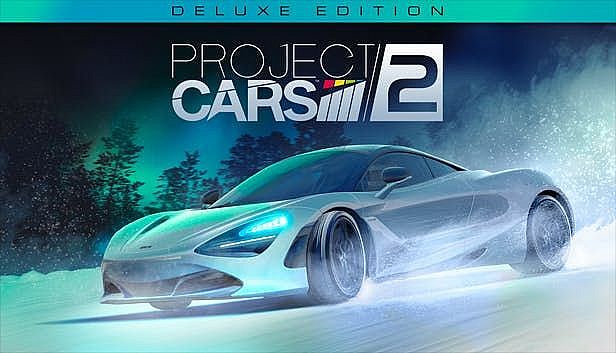









Project CARS 2 est un simulateur de course développé pour PC, axé sur un comportement réaliste des véhicules et une large palette d'expériences en sport automobile. Les joueurs affrontent une physique détaillée sur des dizaines de modèles et de circuits, en privilégiant la précision de pilotage plutôt que l'action arcade.
Gameplay
Le cœur du jeu repose sur la gestion du setup, de l'usure des pneus et de la stratégie carburant au fil de courses soumises à des conditions évolutives. LiveTrack 3.0 modifie l'état de la piste tour après tour en fonction de la température, de la météo dynamique et de la dégradation de la surface, ce qui influe directement sur l'adhérence et oblige à ajuster en permanence trajectoires et équilibre du véhicule.
La simulation des voitures s'appuie sur un moteur physique maison qui reproduit avec fidélité suspensions, aérodynamique et transmission de puissance. Plus de 170 véhicules sont disponibles, couvrant GT, voitures de tourisme, prototypes, monoplaces et machines de rallycross. Environ 60 circuits, chacun décliné en plusieurs tracés, incluent des variantes sur terre, glace et ovales.
Le jeu prend en charge les volants pour une précision maximale, tout en offrant un mapping optimisé pour les manettes. Les épreuves multi-classes placent sur la même piste des voitures de performances très différentes, obligeant à surveiller le trafic et à adapter sa stratégie selon la catégorie.
Modes de jeu
Le mode Carrière propose une progression par paliers et championnats. On débute dans les catégories d'entrée puis on gravit les échelons en remplissant des objectifs, ce qui déverrouille l'accès à des divisions supérieures et à des disciplines variées. Le système laisse une grande liberté de parcours plutôt qu'un chemin imposé.
Les événements personnalisés permettent de configurer chaque course : longueur, conditions météo, niveau de dégâts et force de l'IA. Ces sessions fonctionnent aussi bien en solo qu'en multijoueur local ou en ligne.
En ligne, le matchmaking classé s'appuie sur un système de licence qui encourage un pilotage propre. Des championnats structurés avec classements coexistent avec des lobbies personnalisés, publics ou privés, dont les règles sont entièrement configurables.
Fonctionnalités complémentaires
Les outils de réglages offrent un contrôle fin de la géométrie des suspensions, des rapports de boîte et de l'aérodynamique pour s'adapter à chaque circuit. Dans les courses d'endurance plus longues, la gestion des arrêts au stand, changements de pneus et réparations devient déterminante.
Les cycles jour-nuit et l'éclairage variable compliquent encore la planification, surtout lors d'épreuves qui s'étendent sur plusieurs heures de temps simulé. L'IA suit des trajectoires cohérentes mais peut se montrer agressive en combat rapproché, obligeant à adopter une conduite défensive.
Est-ce que ça vaut le coup ?
Project CARS 2 représente un excellent choix pour les amateurs de simulation qui recherchent de la profondeur de pilotage et une grande variété de contenu plutôt que des éléments narratifs ou des mises à jour régulières. Les serveurs en ligne restent actifs plusieurs années après la sortie, permettant de poursuivre les sessions multijoueur en championnats ou en événements personnalisés.
La critique met en avant le modèle physique et les effets météo comme points forts, récompensant l'entraînement et l'expérimentation des réglages. La progression en carrière séduit ceux qui apprécient d'évoluer à travers différentes catégories de sport automobile, même si elle demande de la patience face à sa structure et aux comportements de l'IA.
Les joueurs en quête d'une prise en main rapide peuvent trouver la courbe d'apprentissage exigeante sans expérience préalable en simulation. En revanche, ceux qui maîtrisent le volant et les réglages fins apprécient souvent la richesse du parc automobile et des circuits, ce qui favorise un engagement durable. Le titre s'adresse avant tout aux simracers confirmés qui souhaitent progresser plutôt qu'aux joueurs occasionnels.


