




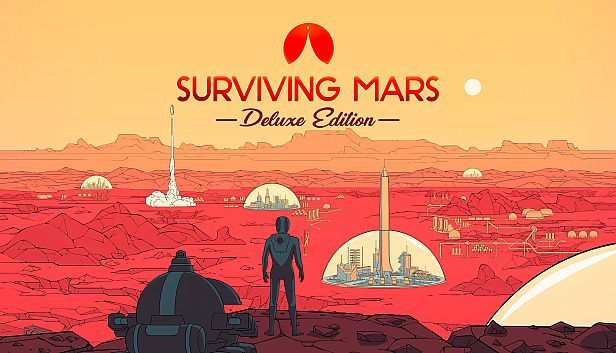









Surviving Mars Digital Deluxe Edition vous confie la fondation d'une colonie humaine permanente sur Mars, en combinant gestion fine des ressources et planification d'infrastructures sur PC.
Gameplay
Le cycle principal repose sur l'atterrissage des premiers approvisionnements et engins de chantier, puis sur l'extension progressive des zones habitables. Au départ, le choix d'un sponsor détermine le niveau de financement et de soutien technologique. Chaque site de colonisation présente une composition du sol, un accès à l'eau et une exposition aux aléas martiens (tempêtes de poussière, impacts de météorites) qui lui sont propres. Les dômes constituent les unités de vie de base ; ils exigent un réseau d'alimentation en électricité, en oxygène et en eau, alimenté par raffineries, réservoirs et canalisations. Les drones assurent la majorité des travaux de construction et de maintenance, tandis que les rovers explorent les environs à la recherche de métaux rares et d'anomalies. La recherche s'effectue via un arbre aux multiples embranchements qui débloque bâtiments avancés, rendements agricoles améliorés et protections contre le climat hostile. Les colons arrivent par petits groupes à chaque fusée et possèdent des traits individuels influençant productivité, consommation alimentaire et stabilité mentale. Le maintien du moral repose sur l'installation d'équipements de loisirs, la variété des affectations et un suivi médical permettant d'éviter les effondrements ou les départs.
Modes de jeu
La variété provient essentiellement du choix du sponsor et de la personnalisation de la carte plutôt que de modes distincts. Les sponsors vont des coalitions internationales bien dotées, qui facilitent les premières pénuries, aux options plus contraignantes qui exigent une planification rigoureuse dès le premier sol. Les caractéristiques de la carte modifient les conditions initiales en changeant la rareté des ressources ou la fréquence des catastrophes. Des curseurs de difficulté permettent d'ajuster la consommation, la vitesse de recherche et la sévérité des événements. Ces paramètres génèrent des expériences durables différentes sans nécessiter de lancements séparés ni de sessions multijoueurs.
Colony Expansion Systems
Une fois les besoins vitaux assurés, l'attention se porte sur la pérennité grâce à des installations spécialisées. Fermes et dômes hydroponiques produisent la nourriture, tandis que les usines transforment les matières premières en composants pour de nouvelles structures. Les systèmes de gestion des déchets et de filtration de l'air évitent la dégradation progressive des conditions de vie sous les dômes. Les rovers d'exploration découvrent des avancées scientifiques qui accélèrent la recherche ou révèlent des gisements cachés. L'interaction entre ces systèmes récompense une planification rigoureuse des chantiers et un suivi constant des chaînes d'approvisionnement. Des événements environnementaux viennent régulièrement mettre à l'épreuve la résilience de la colonie, obligeant à des réparations rapides ou à des évacuations temporaires.
Vaut-il le coup ?
Le jeu s'adresse principalement aux amateurs de simulations de gestion complexes, centrées sur la planification et l'adaptation plutôt que sur l'action. La profondeur du système, qui exige d'équilibrer plusieurs types de ressources et les besoins des colons, offre des sessions riches pouvant durer des dizaines d'heures. Une courbe d'apprentissage marquée se fait sentir lors des premières parties, le temps de comprendre l'interconnexion des systèmes et les contraintes de départ. Les mises à jour récentes ont amélioré l'interface et ajouté du contenu, rendant le titre plus accessible aux nouveaux venus tout en conservant son niveau de défi pour les vétérans. Les joueurs habitués aux jeux de colonisation y trouveront un fort potentiel de rejouabilité grâce aux différentes combinaisons de sponsors et de cartes. Dans l'ensemble, Surviving Mars Digital Deluxe Edition propose une expérience solo centrée sur la prise de décisions réfléchies sur de longues campagnes.


