




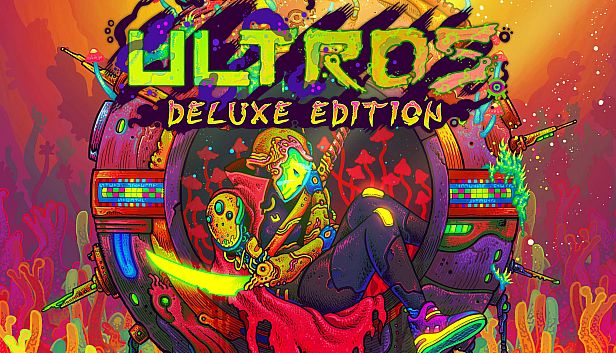

















Ultros stands as a distinctive metroidvania experience built around exploration within a living, organic environment called the Sarcophagus. Players awaken as a space traveler trapped inside this cosmic vessel that houses an ancient demonic entity. The game blends precise platforming, close-range combat against bizarre lifeforms, and careful management of plant life across interconnected chambers. Progression relies on a time-loop structure that resets the player at pivotal story points while preserving knowledge and abilities gained from prior attempts. This setup encourages repeated visits to the same areas with new tools and insights to uncover hidden paths and resolve the central mystery.
Gameplay
The core loop centers on navigating a maze-like map filled with organic architecture and hostile entities. Movement involves standard metroidvania abilities such as dashing and jumping that expand through a branching skill tree unlocked across multiple cycles. Combat demands timing and positioning in tight spaces where each strike with the blade must connect accurately against fast-moving cosmic creatures. Players experiment with different approaches to encounters as new upgrades alter attack patterns and mobility options.
Gardening forms a parallel system that rewards patience and planning. Tending to vegetation scattered throughout the Sarcophagus yields resources and alters the environment in subtle ways that open new routes or provide defensive advantages. This activity contrasts the urgency of fights by offering periods of deliberate interaction with the world. Puzzle elements often tie into both combat outcomes and plant cultivation, requiring players to observe how changes in one cycle affect the next.
The skill tree branches based on choices made during exploration and combat, allowing customization of playstyle without forcing a single path. Each reset returns the character to an early point but carries forward permanent upgrades and map knowledge. This creates a sense of accumulating mastery over the environment rather than simple repetition.
Game Modes
Ultros operates entirely as a single-player title with no separate multiplayer components or competitive formats. The primary structure revolves around its loop-based campaign that unfolds across successive playthroughs. Each cycle advances the narrative while granting opportunities to access previously locked sections of the Sarcophagus and pursue alternate resolutions.
Progression encourages multiple completions to experience different endings and fully map the world. The loop mechanic serves as the central framework rather than optional modes, integrating story revelations with mechanical growth. Players return to key locations armed with expanded abilities to solve previously impassable obstacles or confront stronger versions of earlier threats.
Exploration remains consistent across cycles yet gains depth through accumulated upgrades. No distinct difficulty settings or separate challenge modes appear in the design, keeping focus on the integrated loop and skill progression system.
Exploration and Progression
The Sarcophagus presents a dense, non-linear layout where backtracking becomes essential after acquiring new capabilities. Hidden chambers and optional objectives reward thorough investigation, often linking back to the gardening and combat systems. The time-loop element transforms standard metroidvania discovery into a layered process where early areas reveal new layers of detail on subsequent visits.
Ability unlocks follow a deliberate pace tied to story milestones and environmental interactions. Players decide how to allocate points in the skill tree to suit preferred combat or traversal styles. This freedom supports varied approaches to the same challenges without altering the fundamental single-player campaign structure.
Is It Worth Playing?
Ultros appeals to players who enjoy metroidvanias that incorporate experimental mechanics like time loops and environmental cultivation alongside traditional exploration and combat. Its single-player focus delivers a self-contained narrative experience with multiple endings that reward completion of additional cycles. The blend of intense close-quarters fights and calmer gardening sequences creates a distinctive rhythm uncommon in the genre.
Those seeking straightforward action or large-scale multiplayer may find the deliberate pacing and niche themes less engaging. The game maintains active availability on PC with no indication of ongoing seasonal content or major post-launch updates beyond its initial release. Individuals drawn to psychedelic visuals, precise platforming, and systems that evolve through repetition will likely find the loop structure satisfying and the overall package distinctive within the metroidvania space.


