


Rivals of the Crown est un jeu de stratégie qui mêle draft de cartes, construction de cité et manœuvres politiques sur PC. Les joueurs s'affrontent pour bâtir les quartiers les plus prestigieux tout en gérant des alliances fluctuantes et des conflits directs autour des ressources et du contrôle du plateau. Chaque manche repose sur un cycle central : choix de rôles, gestion de l'or et des cartes, puis agrandissement stratégique de sa propre cité, dans un système qui récompense le timing et les opportunités.
Gameplay
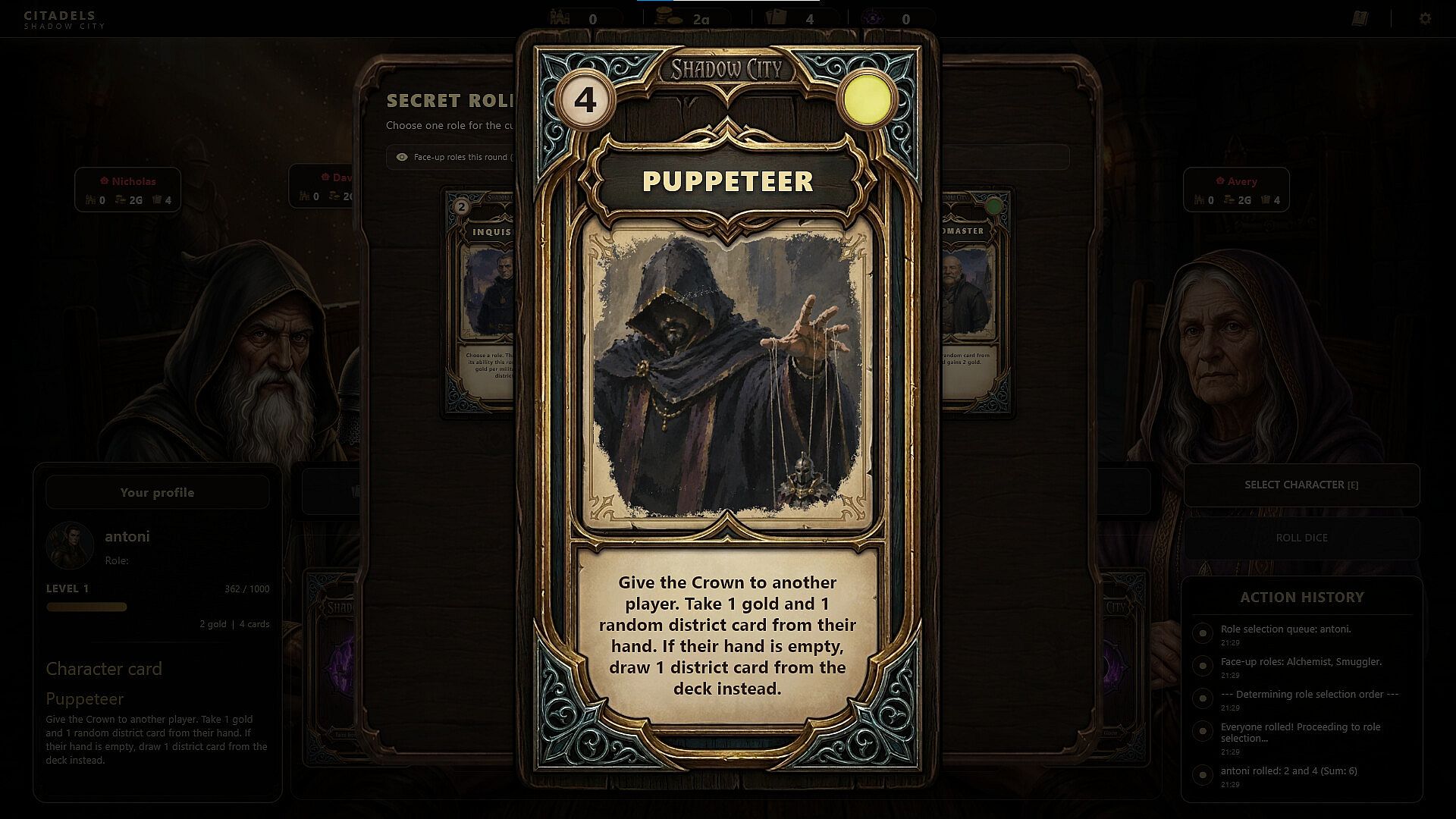
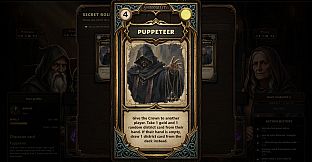
La tension principale provient de deux nouveaux rôles qui renforcent la perturbation et l'acquisition. Le Marionnettiste remplace le Chancelier : il transmet le jeton Couronne à un autre joueur, récupère un or et pioche une carte quartier au hasard dans sa main. Si la cible n'a plus de cartes, il pioche dans la pioche pour maintenir le rythme. Cette capacité met immédiatement la pression sur les options adverses et peut modifier le déroulement de la manche sans combat direct.
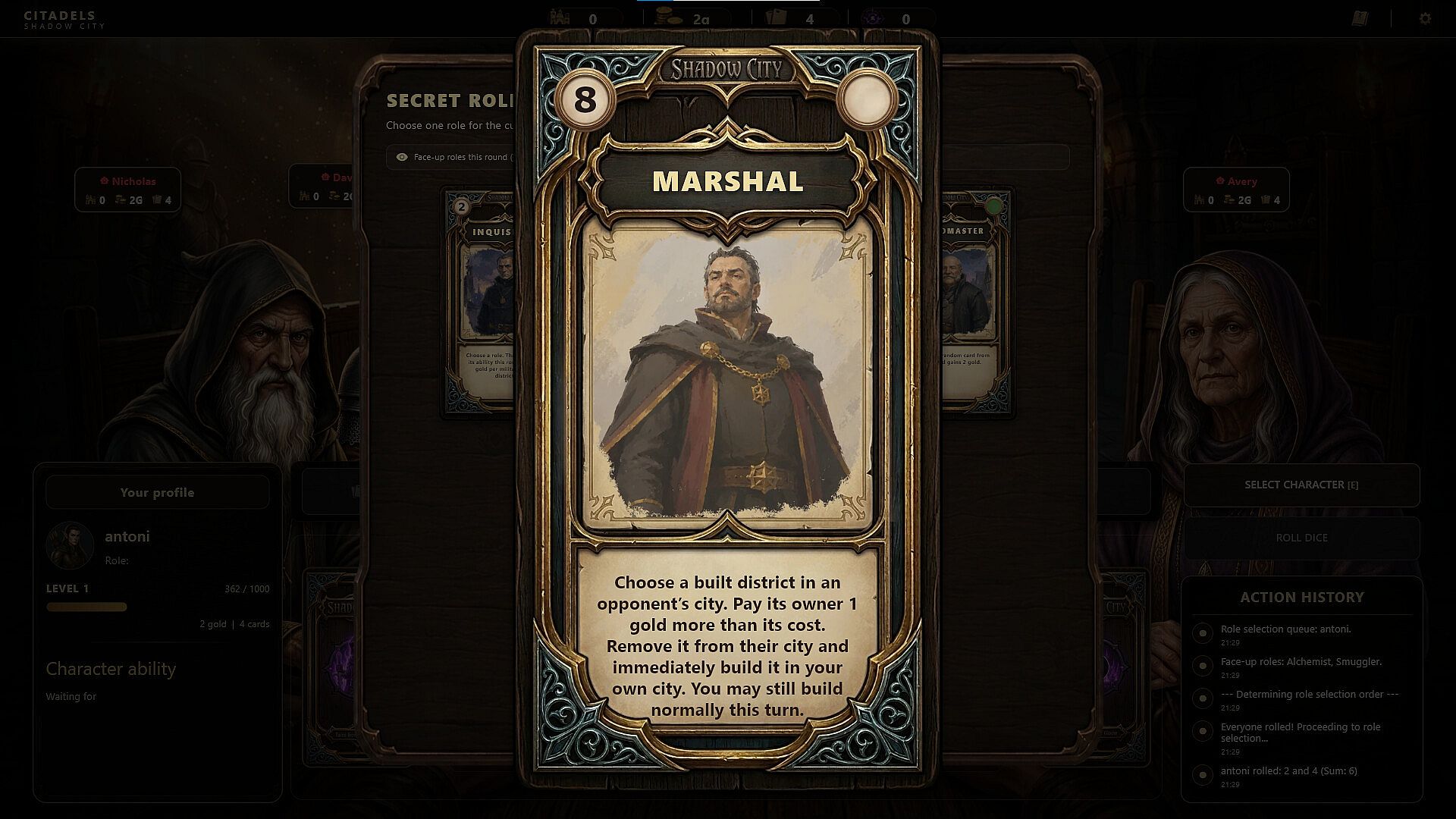
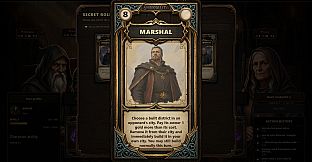
Le Maréchal prend la place du Diplomate et propose une option plus agressive. En payant un or supplémentaire au coût affiché d'un quartier, il s'empare d'un bâtiment terminé chez un adversaire et l'ajoute directement à sa cité. Le transfert est instantané et n'empêche pas le Maréchal de construire normalement ce tour, combinant vol et croissance. Ces deux rôles récompensent l'observation attentive des mains et des plateaux adverses, tout en ajoutant des phases de bluff et de contre-jeu lors de la sélection des rôles.
Le développement de la cité reste la voie principale vers la victoire, les joueurs devant équilibrer revenus en or, synergies de quartiers et position défensive. Les nouvelles capacités s'intègrent aux tours existants en modifiant le passage de la Couronne et le transfert de bâtiments, transformant des manches ordinaires en occasions de retournements soudains. Les parties alternent généralement entre choix de rôles, collecte de revenus et exécution de constructions ou d'actions spéciales, la manipulation incitant à anticiper et exploiter le timing des autres joueurs.
Game Modes
Les parties se jouent seul contre l'IA ou en ligne contre d'autres joueurs. Le mode solo permet de s'entraîner avec les nouveaux rôles et les interactions de quartiers dans un cadre contrôlé, tandis que le mode multijoueur propose des affrontements en temps réel ou tour par tour sur plusieurs plateformes. La compatibilité multiplateforme élargit le vivier d'adversaires, et le jeu en réseau local offre une option supplémentaire pour les sessions de groupe sans serveur externe.
Le système s'adapte à différentes tailles de groupe grâce à des règles de draft et de construction flexibles. La victoire repose sur le score individuel des cités en fin de partie, les mécaniques de manipulation créant des situations où une action peut avoir des répercussions sur l'ensemble des joueurs. Aucune saison ni classement compétitif n'est prévu dans la version actuelle, l'accent restant mis sur les affrontements stratégiques.
Key Mechanics
L'or sert de monnaie universelle pour la construction et les capacités spéciales, obligeant les joueurs à arbitrer constamment entre économiser pour les quartiers ou dépenser pour des actions de perturbation comme la capture du Maréchal. Les cartes quartier possèdent un coût et des bonus qui se cumulent lorsqu'elles sont alignées, et le vol du Marionnettiste peut briser des synergies clés ou forcer des ajustements. Le jeton Couronne confère un avantage temporaire qui tourne entre les joueurs, ajoutant une dimension stratégique au-delà de la simple efficacité de construction.
Chaque tour se déroule en trois phases : sélection des rôles, collecte des revenus puis résolution des actions. Les nouveaux personnages introduisent une asymétrie sans bouleverser le rythme de base. La conquête territoriale du Maréchal encourage l'expansion agressive, tandis que la perturbation de main du Marionnettiste sanctionne l'accumulation excessive ou les schémas prévisibles. Ces éléments récompensent l'adaptabilité plutôt que les plans rigides, car les adversaires peuvent modifier l'état du plateau en cours de manche.
Is It Worth Playing?
Les joueurs qui apprécient les jeux de cartes stratégiques mêlant négociation, vol et construction de cité trouveront dans cette extension une variété intéressante grâce à ses outils de manipulation ciblés. Les deux nouveaux rôles s'intègrent naturellement au système existant et créent de nouvelles décisions autour du moment de les choisir ou de s'en protéger. Disponible sur PC, le jeu propose un mode solo pour découvrir les mécaniques et un mode multijoueur pour les sessions compétitives, avec une compatibilité multiplateforme.
Prévue pour le 16 août 2026, cette extension ne dispose encore d'aucun avis ni historique de mises à jour. Les amateurs du genre peuvent se faire une idée à partir des mécaniques décrites, notamment s'ils privilégient l'interaction directe plutôt que la construction passive. L'accent mis sur la récupération du progrès adverse convient particulièrement aux joueurs qui recherchent des parties interactives plutôt qu'une optimisation solitaire.