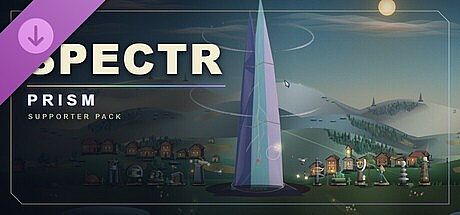


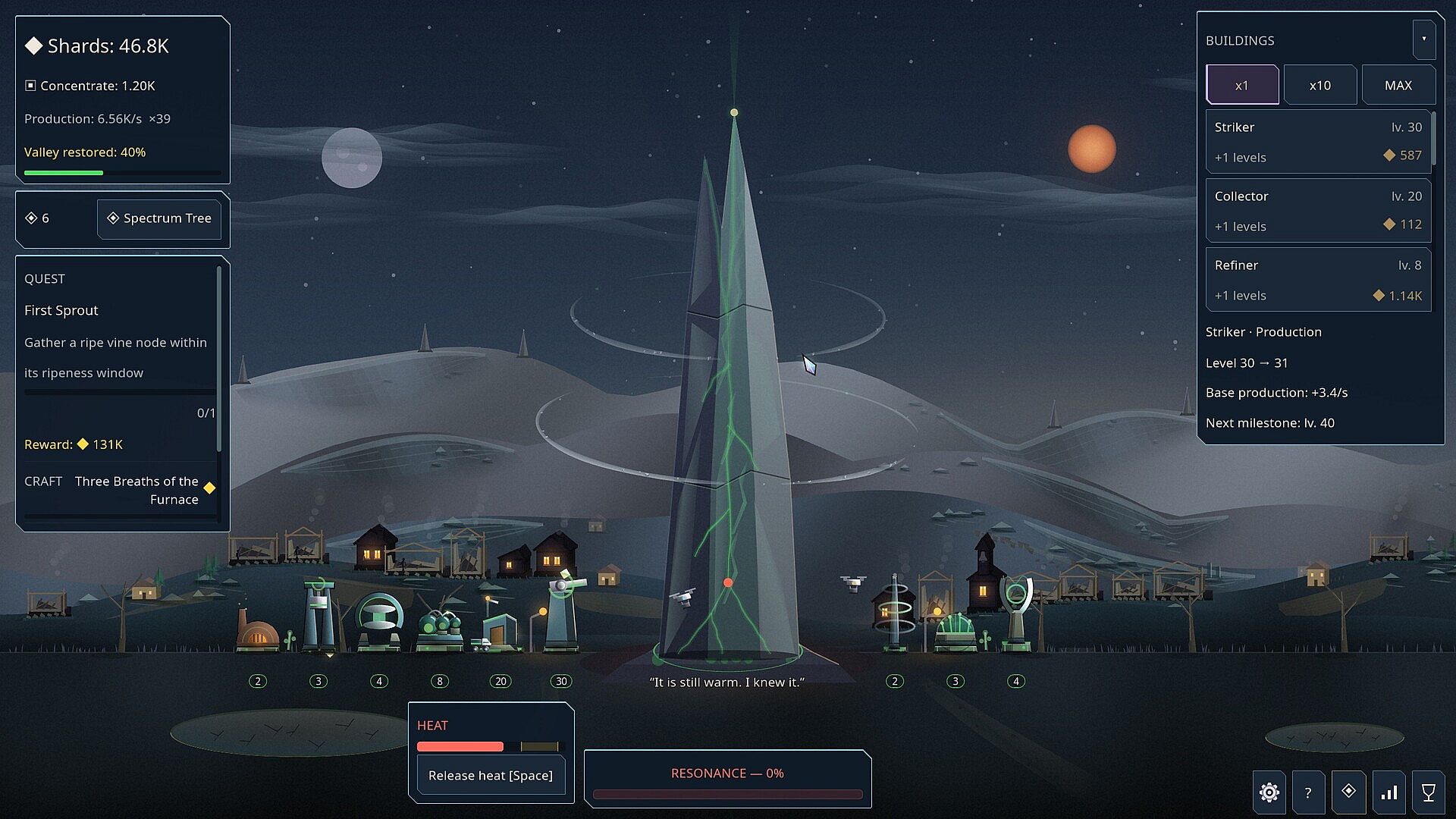
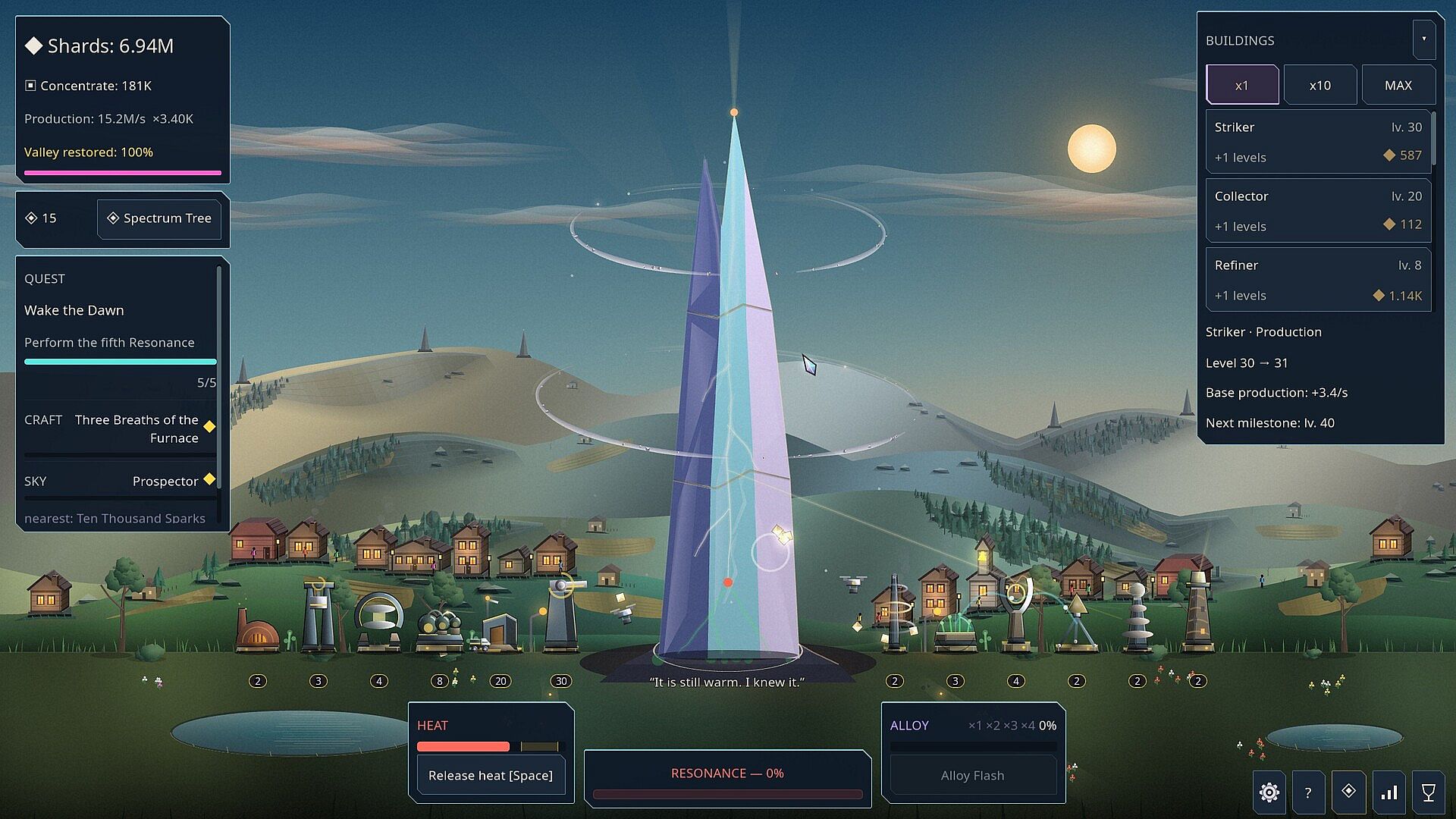
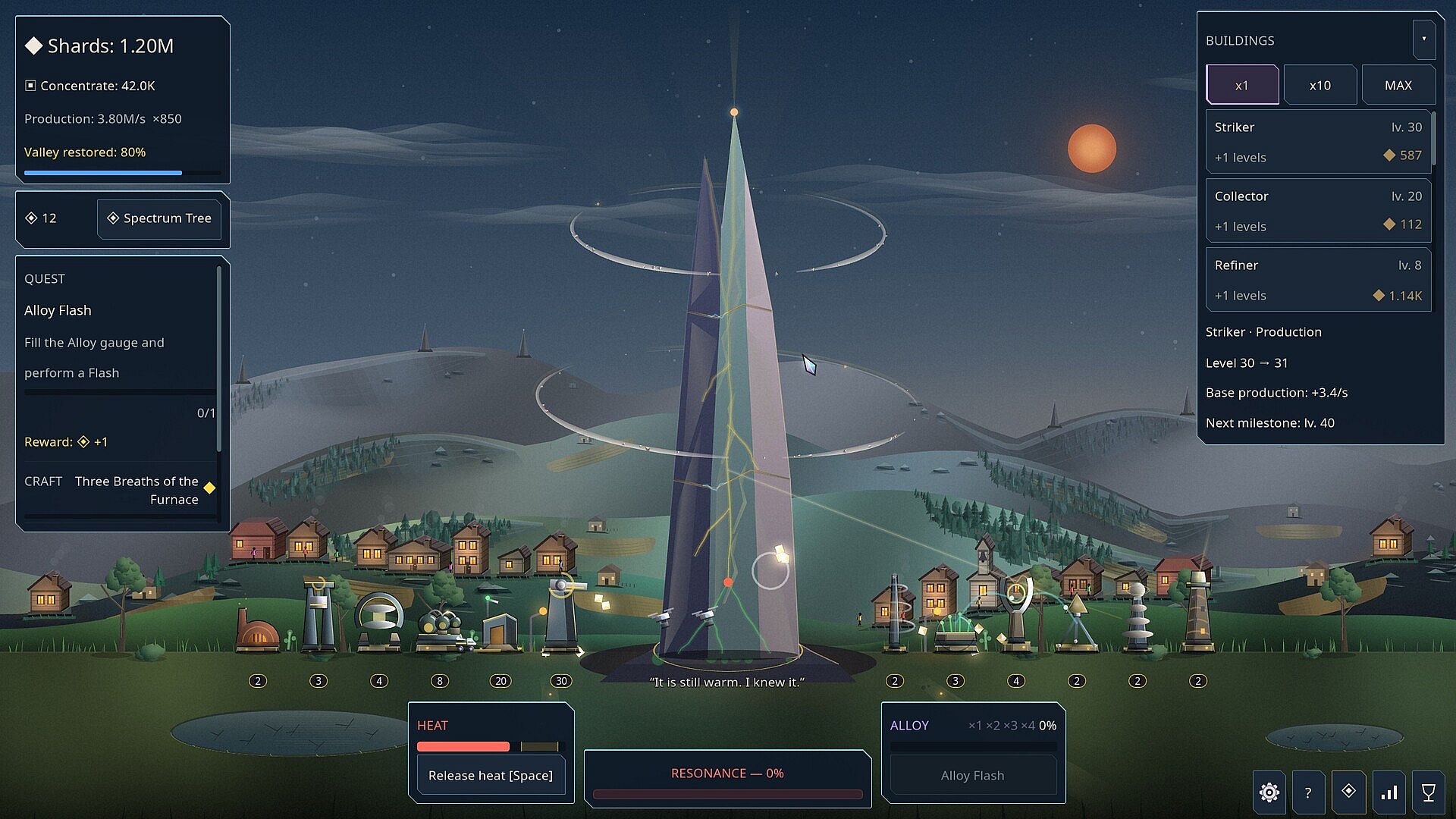
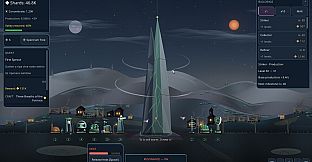
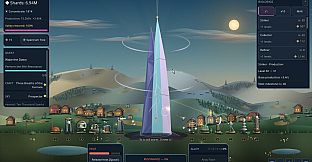
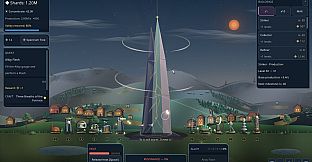
SPECTR: Rekindle the World is an indie casual incremental game built around a simple clicker loop that expands into automated production and visual renewal of a quiet valley. Players begin with basic clicks on a central crystal core, collecting shards that fuel the construction of machines and networks. Over time these systems generate resources passively, gradually restoring color and life to the surrounding landscape as output scales.
Gameplay
The core loop centers on gathering shards through direct clicks and then directing that output toward machines that handle production automatically. Early stages focus on manual effort to awaken the core and establish the first connections. As networks expand, players balance resource allocation to unlock further automation layers while the valley shifts from muted tones to vibrant hues tied directly to progress.
Permanent upgrades carry across cycles, allowing steady refinement of efficiency and new mechanical options. Exploration elements include interactions with valley residents and collection of journal entries that reveal background details about the keeper and the world's history. All systems remain tied to the incremental foundation, with visual feedback reinforcing the sense of growth without altering core numbers or progression rules.
Game Modes
Progression revolves around Resonance cycles that reset the active production phase while preserving upgrades and introducing fresh mechanics. Each cycle encourages experimentation with combinations of machines and resource flows to reach higher levels of automation. The structure supports repeated playthroughs focused on optimization rather than separate competitive or cooperative formats.
Singleplayer emphasis keeps attention on personal advancement and discovery within the valley setting. No additional named modes appear in the design, keeping the experience centered on the incremental rhythm of building, cycling, and observing environmental change.
The Valley and Its Inhabitants
The setting begins as a faded grey landscape centered on a silent crystal core. Shards collected through play gradually infuse color, with the environment responding visibly to production milestones. Residents provide brief encounters that add context through dialogue or tasks, while journal fragments build a narrative thread about the keeper who once maintained the valley.
These elements integrate lightly into the main loop, offering moments of discovery without interrupting the flow of resource management and automation. The visual transformation serves as the primary reward, linking mechanical success to the world's renewal.
Is It Worth Playing?
SPECTR: Rekindle the World targets players who enjoy incremental and clicker experiences where steady growth and automation deliver satisfaction. The Resonance system adds replay value through retained upgrades and new mechanics on each cycle, appealing to those who like refining strategies over multiple runs. Visual progression provides consistent feedback that ties directly to player actions.
As an upcoming title from a solo developer, it remains in the wishlist stage with no release date confirmed. Fans of the genre can follow development for updates on launch timing. The experience suits casual sessions focused on watching systems compound and the valley brighten, without reliance on external competition or complex controls.