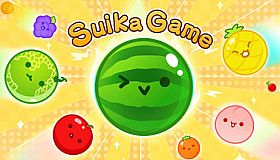



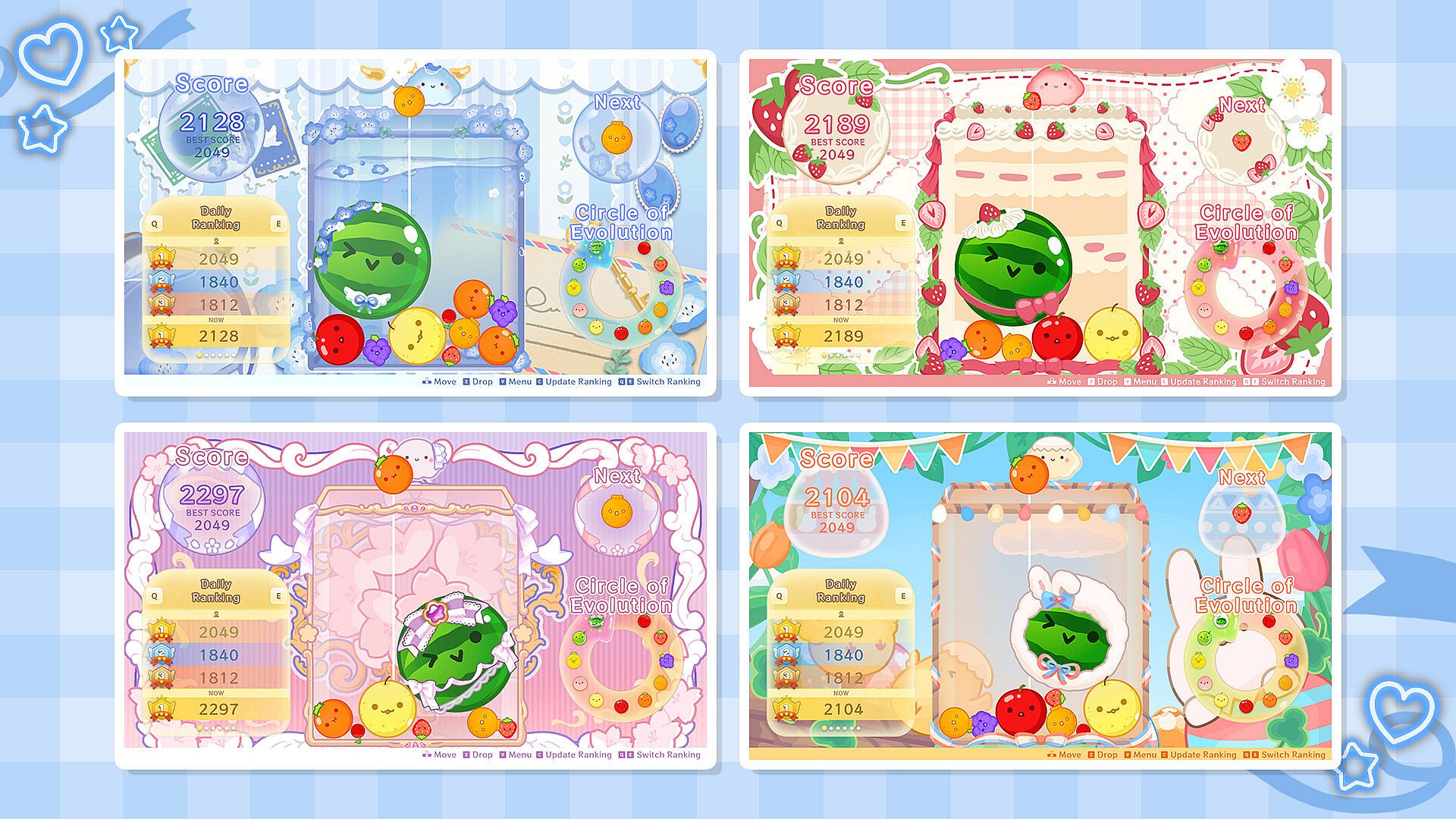
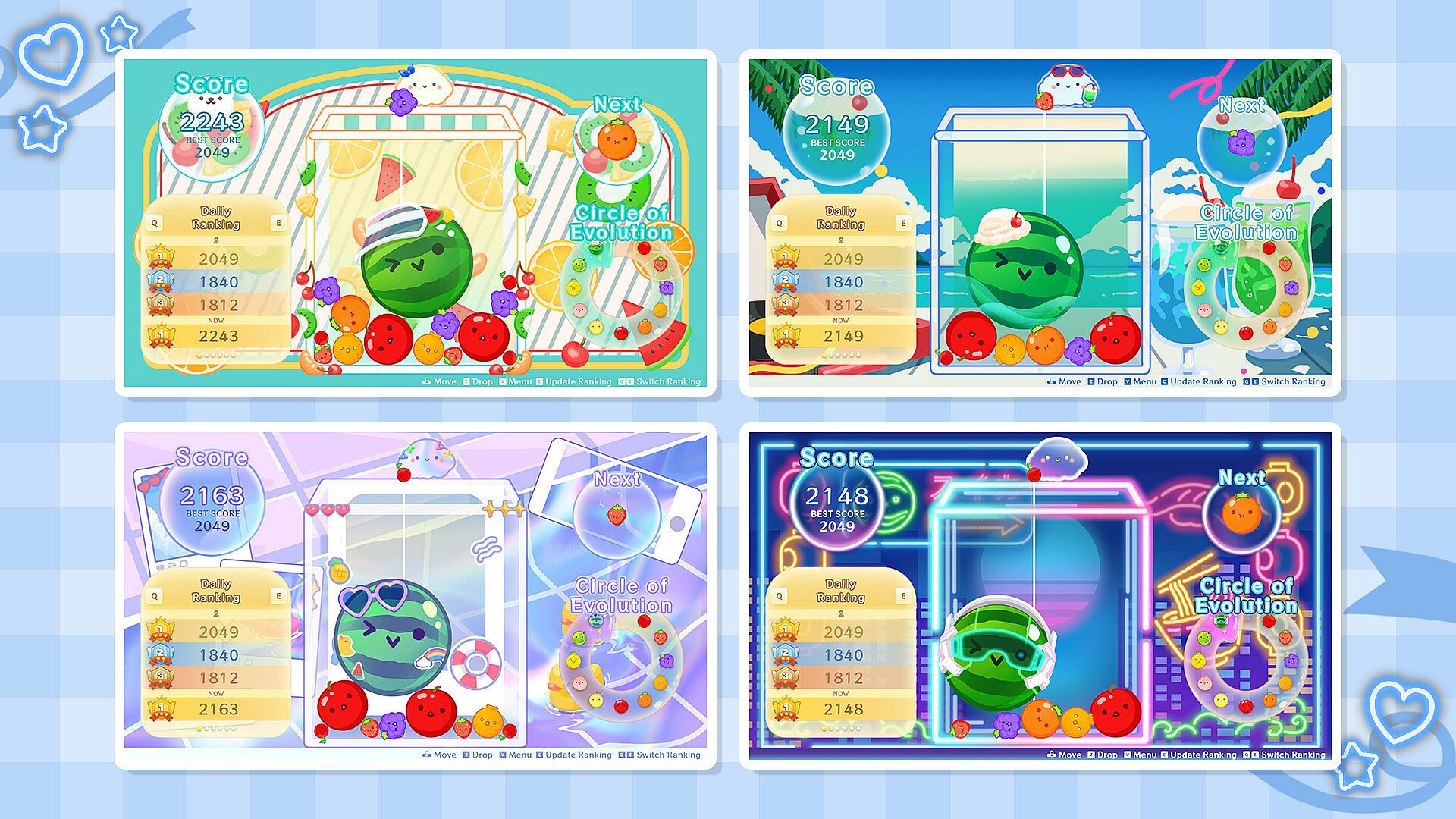
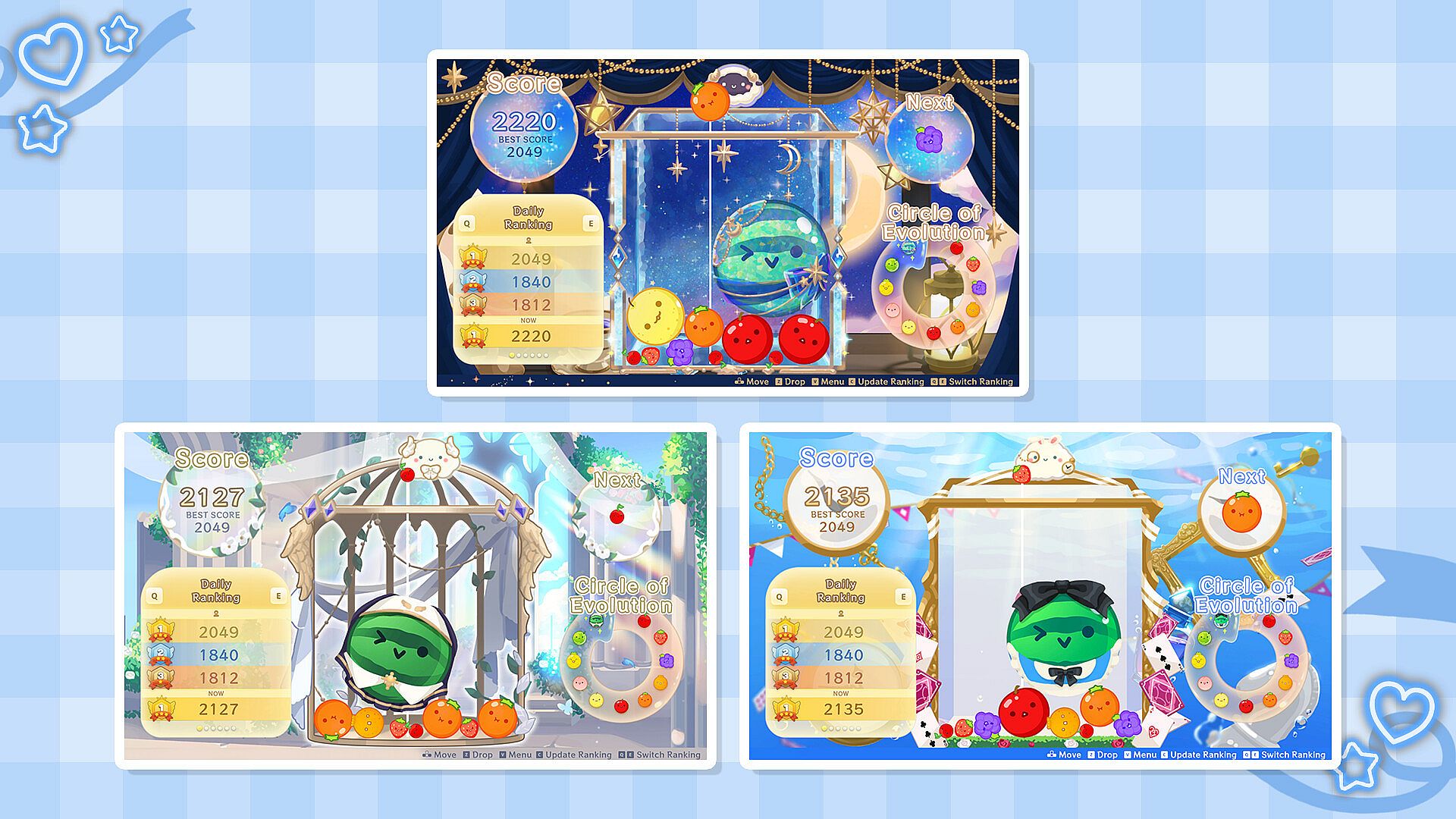
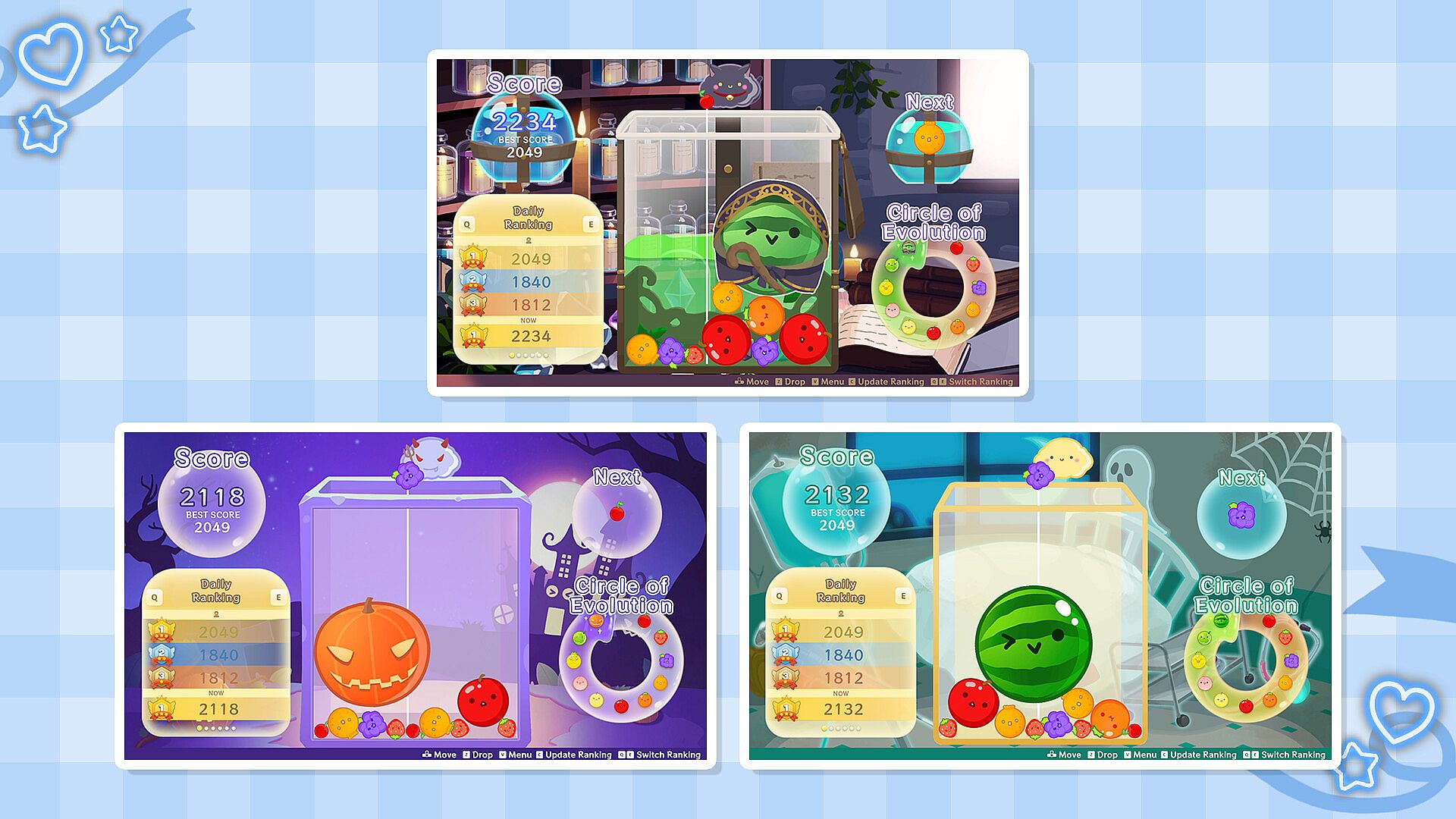



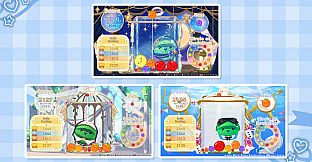
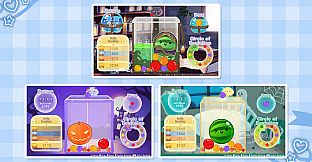



Suika Game is a casual puzzle title on PC built around a straightforward yet engaging fruit merging system. Players control a small cloud to drop successive pieces into a rectangular container, guiding them with precise positioning before release. The objective centers on combining identical fruits to create larger ones while keeping the stack below a marked upper boundary. This setup creates a steady rhythm of observation, placement, and reaction as pieces interact through realistic physics.
Gameplay
The core loop revolves around an eleven-stage evolution chain that begins with cherries and progresses through strawberries, grapes, dekopons, persimmons, apples, pears, peaches, pineapples, melons, and finally watermelons. Each successful merge removes the paired fruits and replaces them with the next size up, awarding points that scale with the size of the resulting piece. Fruits behave according to weight and momentum once released, rolling or bouncing off one another inside the container. Strategic drops often involve nudging existing pieces into better alignments or using smaller fruits to fill gaps without creating unstable stacks. Sessions can end abruptly if any fruit pushes above the line, prompting an immediate restart that keeps the focus on short, repeatable attempts rather than long campaigns.
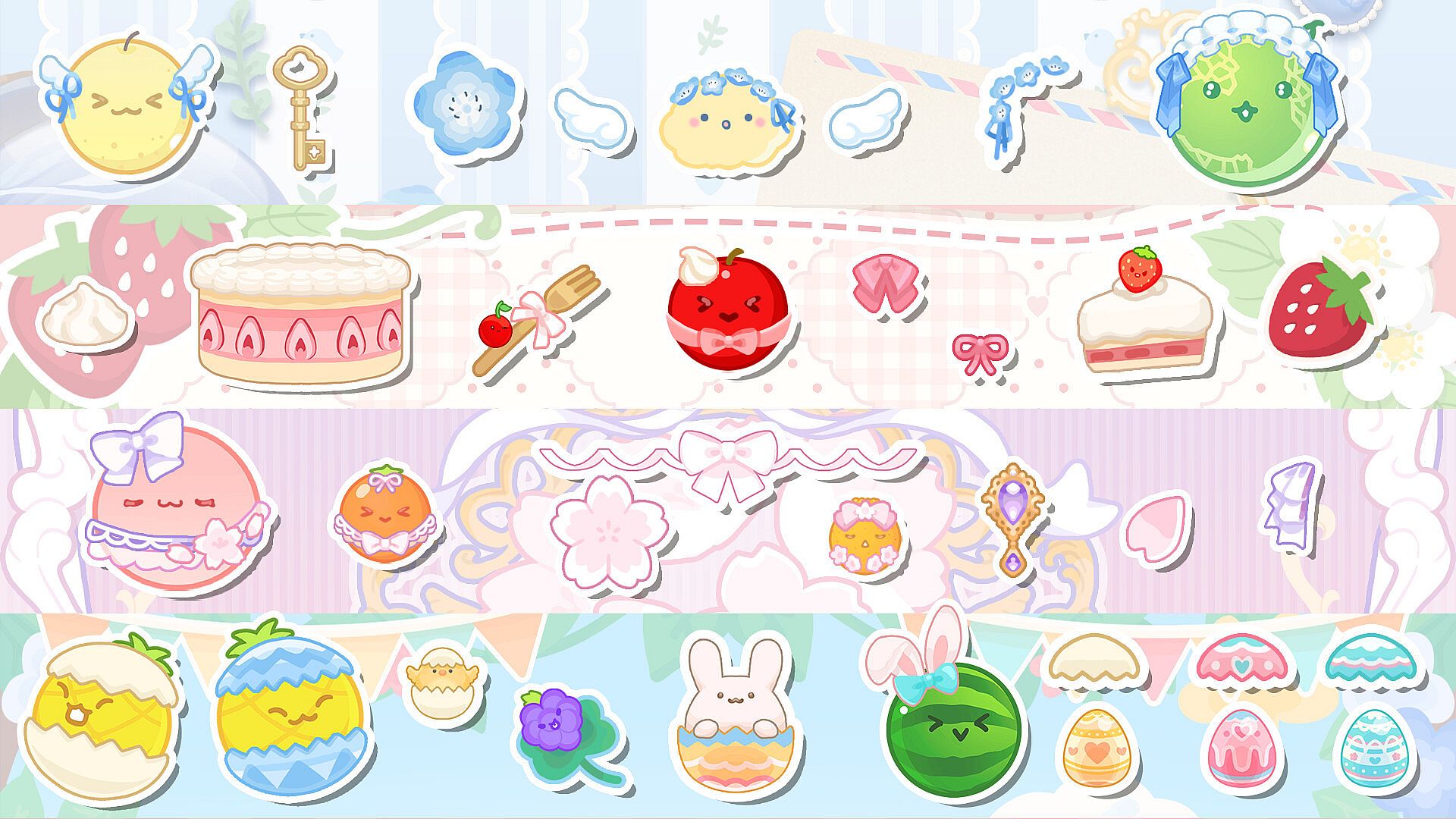
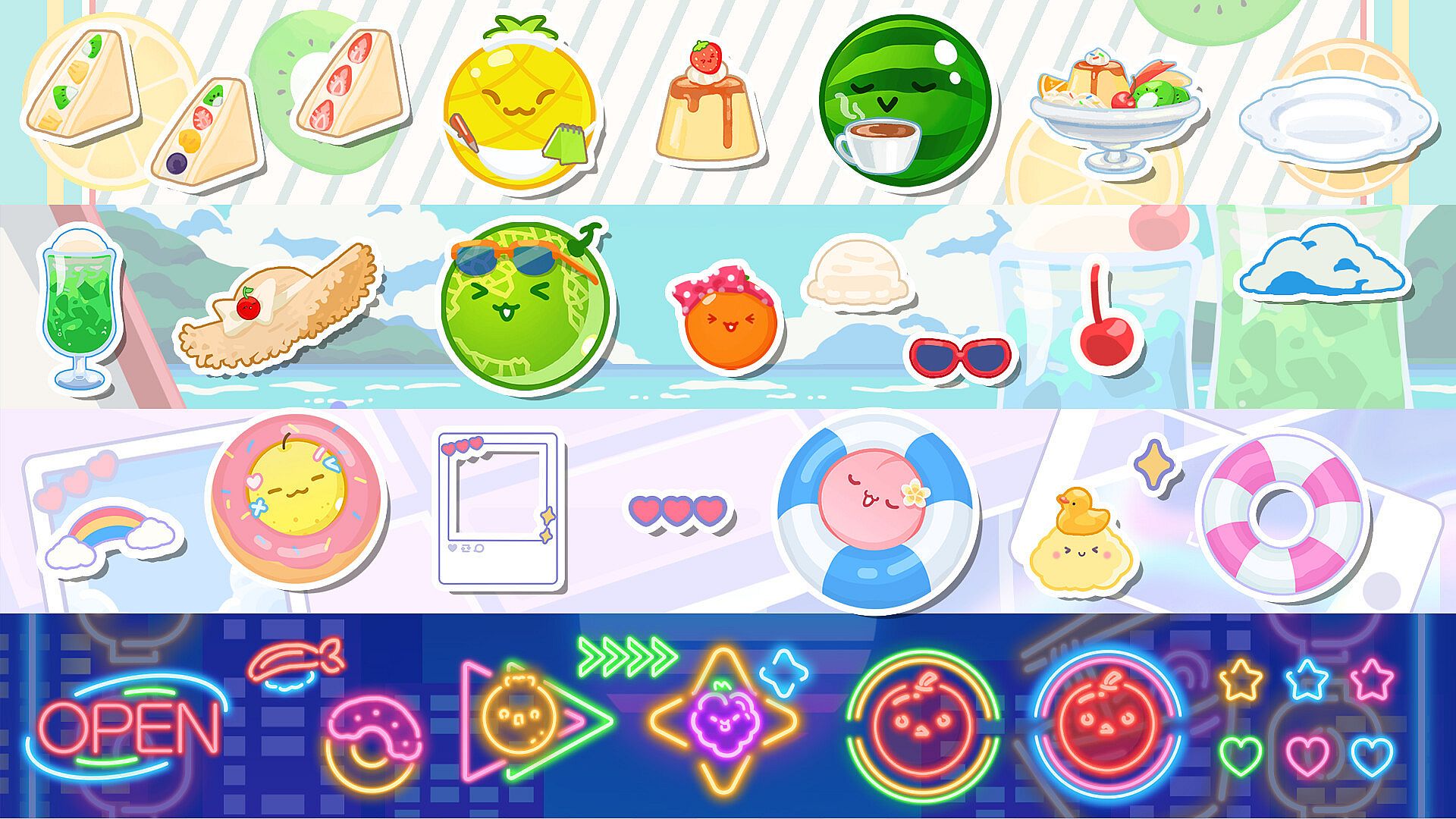
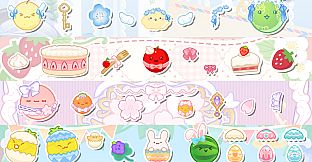
Positioning matters at every stage because the container has fixed dimensions and no time pressure in the standard experience. Players learn to anchor heavier fruits against the corners for stability and to build descending stair-like arrangements that encourage chain reactions. The absence of power-ups or external progression systems keeps attention squarely on spatial awareness and the physical simulation. Background elements and fruit appearances can be altered through available options, allowing visual variety without changing the underlying rules.
Game Modes
The primary experience remains the classic single-player mode where the goal is simply to achieve the highest score possible before overflow occurs. Additional variations appear in some versions of the game, including timed challenges and competitive formats against another player or an AI opponent. These alternatives adjust the pace or introduce direct interference between sides, but the foundational mechanics of dropping and merging stay consistent across them. On PC the emphasis stays on the solitary puzzle session, with the core container and fruit chain serving as the constant framework.
Visual Style and Accessibility
The presentation uses bright, simple fruit models set against changeable backdrops that range from everyday scenes to more stylized environments. Controls are minimal, relying on horizontal movement and a single drop command, which makes the game approachable for newcomers while still rewarding practiced timing and foresight. The physics engine introduces enough unpredictability through collisions and rolling to prevent rote solutions, yet the rules remain easy to grasp within the first few drops. Sessions typically last anywhere from a couple of minutes to longer focused runs, suiting players who want a relaxing break or a quick high-score chase.
Is It Worth Playing?
Suika Game appeals most to those who enjoy pure puzzle mechanics without layers of progression or narrative. Its strength lies in the immediate feedback loop of merges and the satisfying weight of larger fruits settling into place. Reception highlights the game as consistently enjoyable for repeated short sessions, with many noting how the simple premise sustains interest through score improvement and personal bests. The PC version delivers the core experience at a modest price point, and the availability of visual customizations adds replay value for players who appreciate variety in presentation. Anyone drawn to physics-based puzzles or fruit-merging concepts will find a polished, focused package that delivers exactly what it promises without unnecessary additions. Those seeking deeper multiplayer systems or extensive content updates may find the offering more limited, but the central gameplay remains reliably engaging for its intended audience.