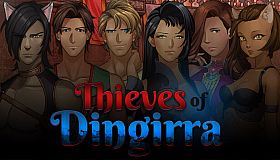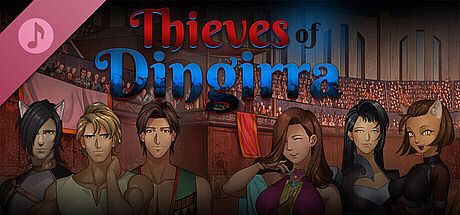







Thieves of Dingirra is a story-driven fantasy simulation and strategy game that combines guild management, turn-based combat, and visual novel storytelling. Players assume the role of a master thief tasked with building a criminal organization from the ground up in the desert city of Dingirra. The experience centers on expanding influence through careful resource allocation and strategic decisions while navigating personal relationships and city conquest.
Gameplay
The core loop revolves around guild establishment and growth. Starting with limited funds and a small group of recruits, players assign members to various criminal jobs that generate income and expand territory. Resource management plays a central role, as income must cover upgrades to buildings and businesses while maintaining operational stability. Character creation allows selection of male or female protagonists who can be human or elf, influencing available romance options and narrative paths.
Combat occurs during story missions that feature roguelike elements with branching choices. These encounters use turn-based tactics where party members level up and equip items, though the design emphasizes fixed boss encounters over repetitive grinding. An optional automatic battle system helps streamline fights for those who prefer focusing on management and story. Relationship systems track attitudes and interactions with companions, leading to multiple endings based on choices made throughout the campaign.
Personal quests for key characters add depth, revealing backstories and altering alliances. The city map serves as the hub for selecting targets, with progress measured by district control and influence over local factions.
Game Modes
Thieves of Dingirra operates entirely in single-player format. The primary experience blends management simulation with narrative progression, where players balance guild operations against mission objectives. A visual novel mode provides an alternative approach that simplifies certain mechanics, such as guaranteeing mission success rates regardless of team composition, to emphasize story and dialogue choices.
Missions themselves function as self-contained tactical scenarios with unique victory conditions and enemy setups. No separate multiplayer or competitive modes exist, keeping the focus on solo progression through the main campaign and companion storylines.
Key Mechanics and Features
Guild expansion involves hiring randomized NPCs to handle specialized tasks, from theft operations to support roles. District conquest requires systematic takeover of quarters initially dominated by established powers, with opportunities to form temporary alliances before pursuing full dominance. Six romance options provide branching personal arcs that integrate with the larger conquest narrative, each with distinct compatibility based on protagonist gender.
Turn-based combat draws from established party-based RPG systems, incorporating skills for damage, support, and social manipulation during fights. Item management limits carried resources per mission, adding strategic layers to preparation. Updates since release have refined difficulty options, fixed progression issues, and improved compatibility with the Ren'Py engine.
Is It Worth Playing?
Player reception has been very positive based on available reviews, with praise directed at the integration of management systems and narrative depth. The game receives ongoing support through patches that address bugs and balance elements, including adjustments to final encounters and quest handling. Availability on PC includes features such as achievements and cloud saves for convenient progress tracking.
This title suits players who enjoy deliberate pacing in guild-building simulations paired with tactical combat and character-driven stories. Those seeking fast-paced action or extensive multiplayer content may find the single-player focus less appealing. The included soundtrack offers additional value for fans interested in the audio accompaniment to the setting and characters.