



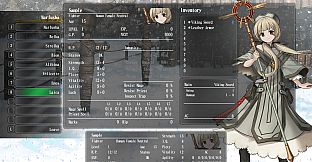
Wizardry: The Five Ordeals is an indie RPG that revives the classic first-person dungeon crawling formula from its 2006 Japanese origins in a modern Unity remaster for PC. Players build and manage a party of up to six adventurers, navigate grid-based labyrinths, and engage in turn-based combat against monsters in a series of independent scenarios. The experience emphasizes careful preparation, resource management, and the risks of permanent setbacks in a fantasy setting where every decision in the dungeon carries weight.
Gameplay
The core loop centers on assembling a balanced party at the training grounds or tavern, equipping them with weapons, armor, and spells, then venturing into the labyrinth from a first-person perspective. Movement follows a strict grid system, requiring players to map paths mentally or through notes while watching for traps, hidden doors, and encounters. Combat unfolds in rounds where the entire party selects actions in advance, resolved according to initiative and statistics, blending simplicity with high stakes. Each scenario operates under its own ruleset for items, monsters, and magic, preventing carryover of most progress between them while allowing limited transfer of basic character statistics like name, race, class, and gender in later updates.
Progression involves returning to town to rest, heal, identify items, and level up after successful runs or recoveries. The system draws from tabletop RPG influences, with classes such as fighters, mages, priests, and more specialized options like samurai or lords that influence combat roles and spell access. Front-row positions favor melee attackers, while back rows suit ranged or magic users. Exploration reveals story elements through messages and events, though the focus remains on mechanical depth rather than narrative delivery. Quality-of-life features in the remaster include widescreen support, an updated interface, and gamepad compatibility alongside the original hardcore elements.
Game Modes
Content is structured around distinct scenarios, each functioning as a self-contained adventure with unique labyrinth layouts, item pools, monster data, and occasional rule variations. The five core official scenarios provide dozens of hours of gameplay each, covering tales such as Traveler's Property, Children of the King Selene, The Devoid of Apotheosis, The Pickled Man of Galvan, and The Wheels of Flame, plus an additional default scenario titled The Price of Deception. These episodes run independently, so players select one to begin a fresh party and campaign without interference from prior progress.
Beyond the official lineup, the game supports user-created scenarios downloaded through an in-game browser or created via the dedicated scenario editor tool. This editor allows customization of stories, facility names, dungeon structures, messages, monsters, and items within the base rules framework, enabling community additions that expand the experience indefinitely. Scenario selection happens from the main menu, separating official and user content for easy access. All play remains strictly singleplayer with no multiplayer components.
Character Customization
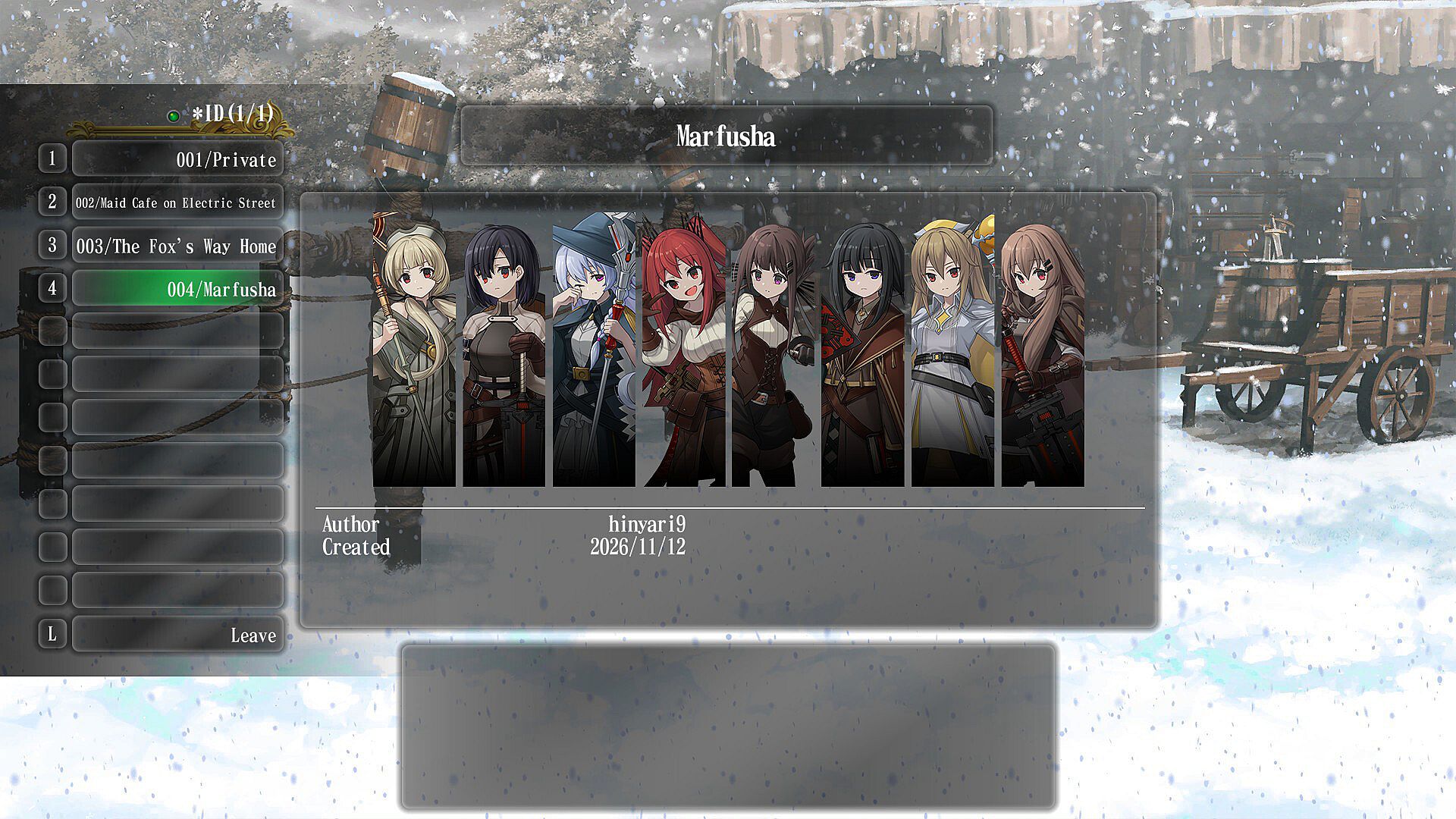
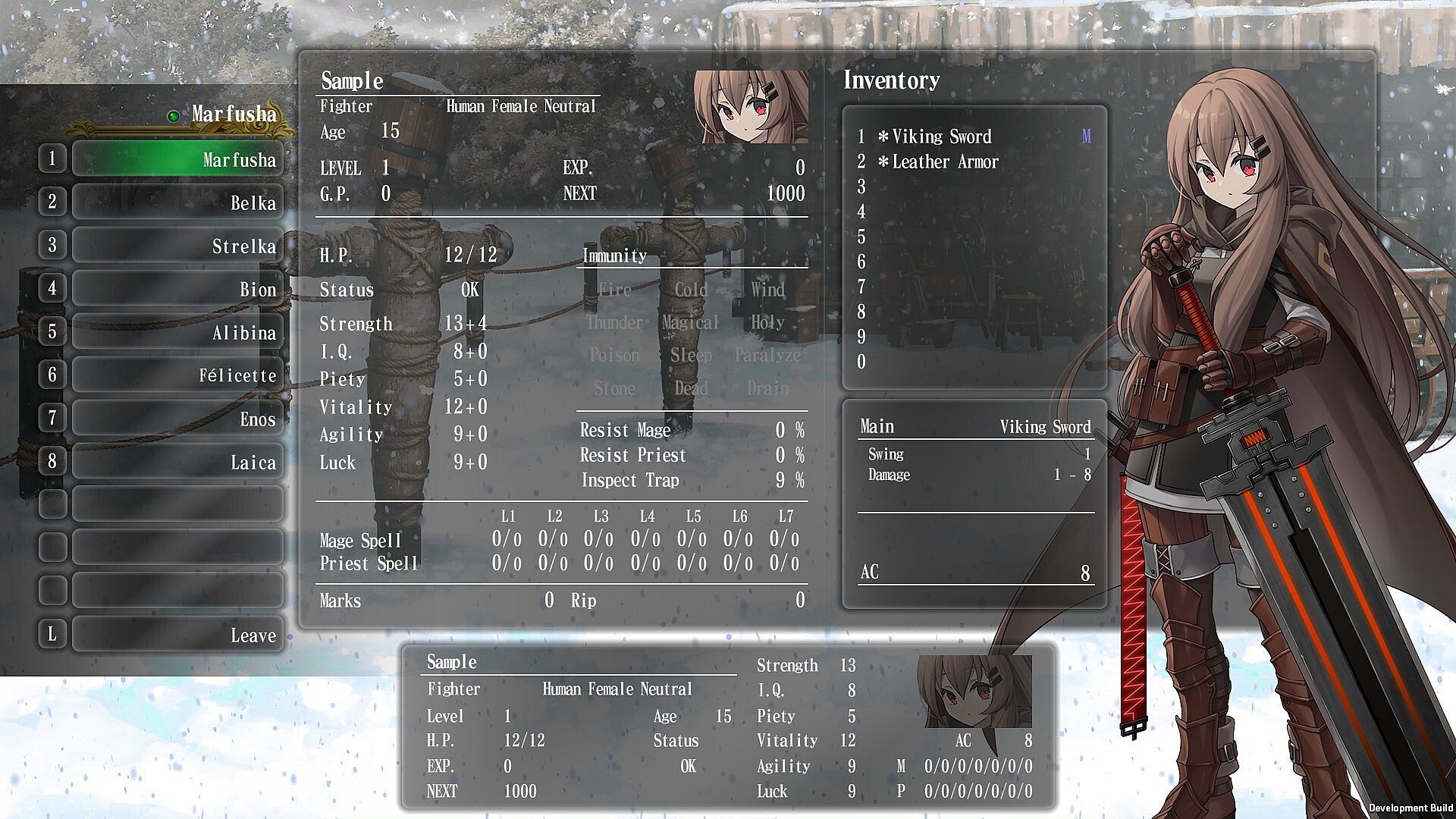
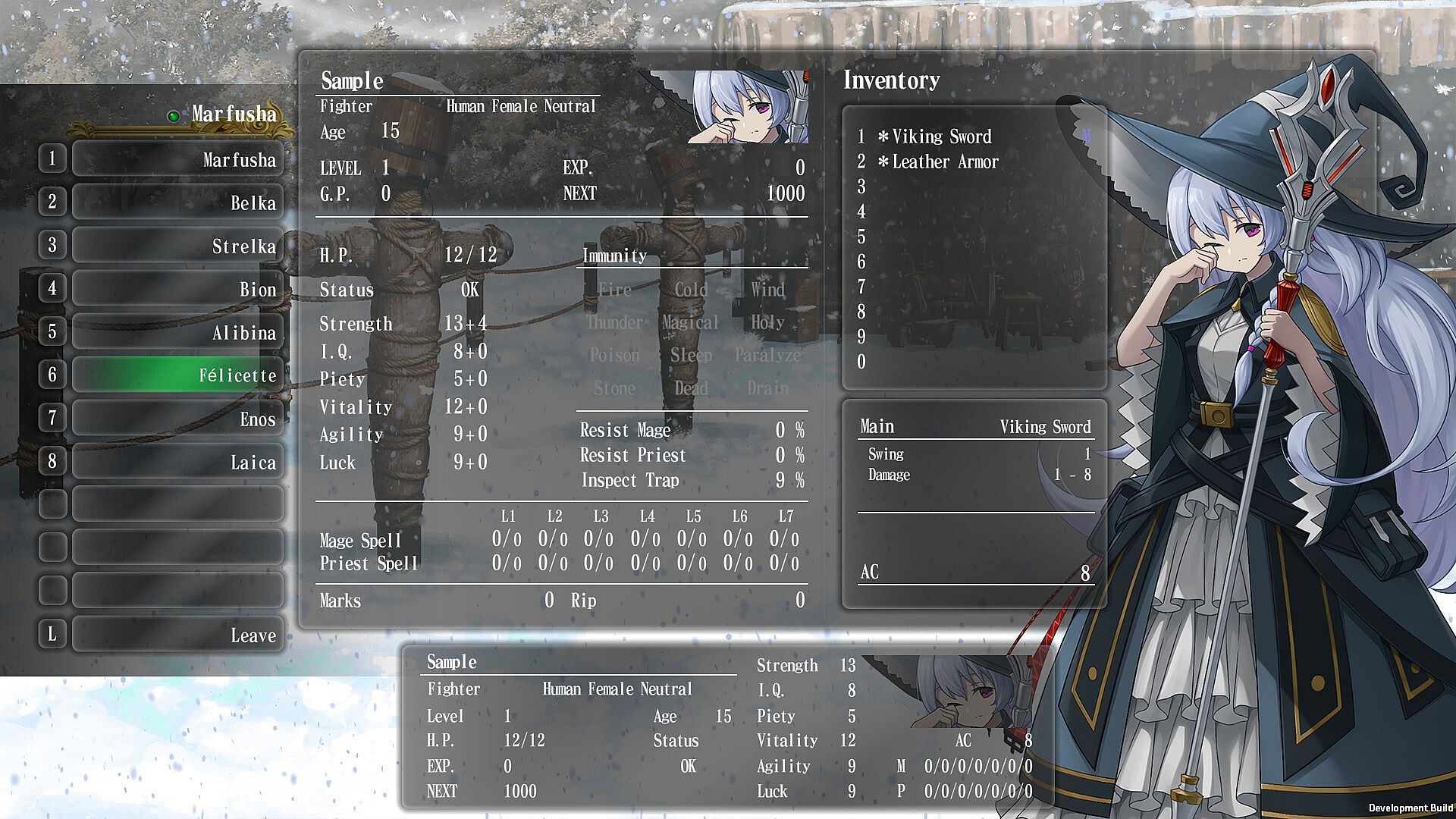
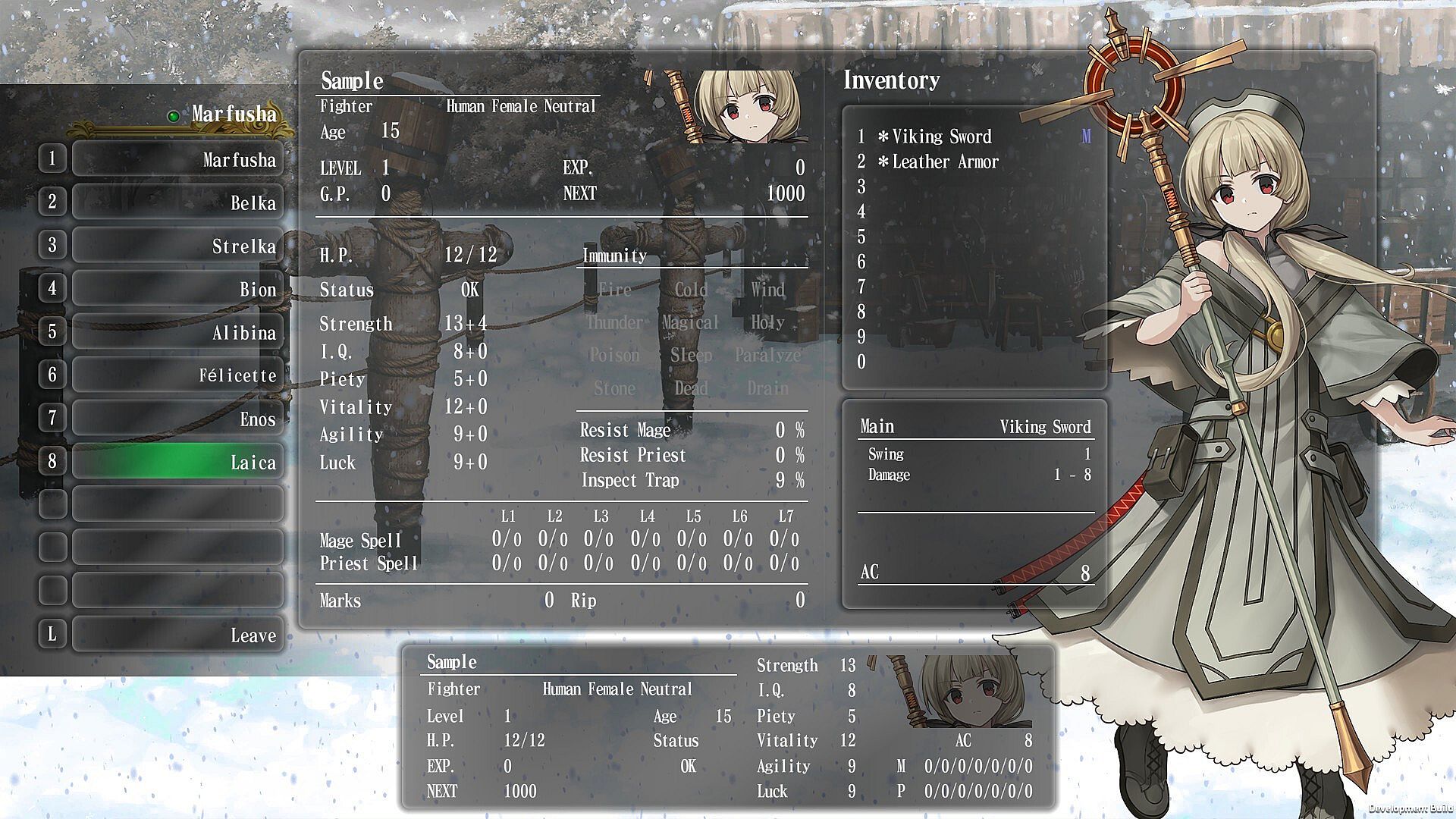
Character creation draws from traditional RPG options for race, occupation, gender, personality, and appearance. Portraits serve as a key visual element, and the game includes support for custom uploads to personalize the party. A specific collaboration adds eight portraits inspired by the shooting game Marfusha: Sentinel Girls, featuring new fantasy-style equipment designs created for this addition. These become available in-game through the Edge of Town menu by navigating to the Training Ground, selecting Inspect, then Change Mark, and accessing the DLC section. This feature enhances role-playing without altering core mechanics or balance.
Is It Worth Playing?
Reception on PC stands at very positive based on hundreds of user reviews, with players highlighting the faithful recreation of old-school Wizardry mechanics, the variety of official and community scenarios, and the depth of party-building and dungeon navigation. The title suits those who appreciate punishing, mechanics-driven RPGs where preparation and adaptation determine success amid risks of character loss and limited saves. Current support includes ongoing access to user scenarios and the editor, keeping the content fresh years after the 2023 full release. It delivers strong value for fans of grid-based dungeon crawlers seeking lengthy, replayable challenges across multiple self-contained campaigns, though newcomers to the genre may find the steep learning curve and lack of hand-holding demanding. Those drawn to classic fantasy RPG systems with modern accessibility tweaks will find substantial content here.