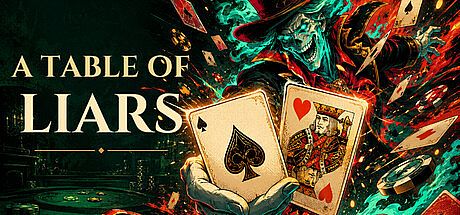





A Table of Liars is a single-player poker roguelike strategy game for PC that centers on building poker hands while managing risk against computer-controlled dealers.
Gameplay
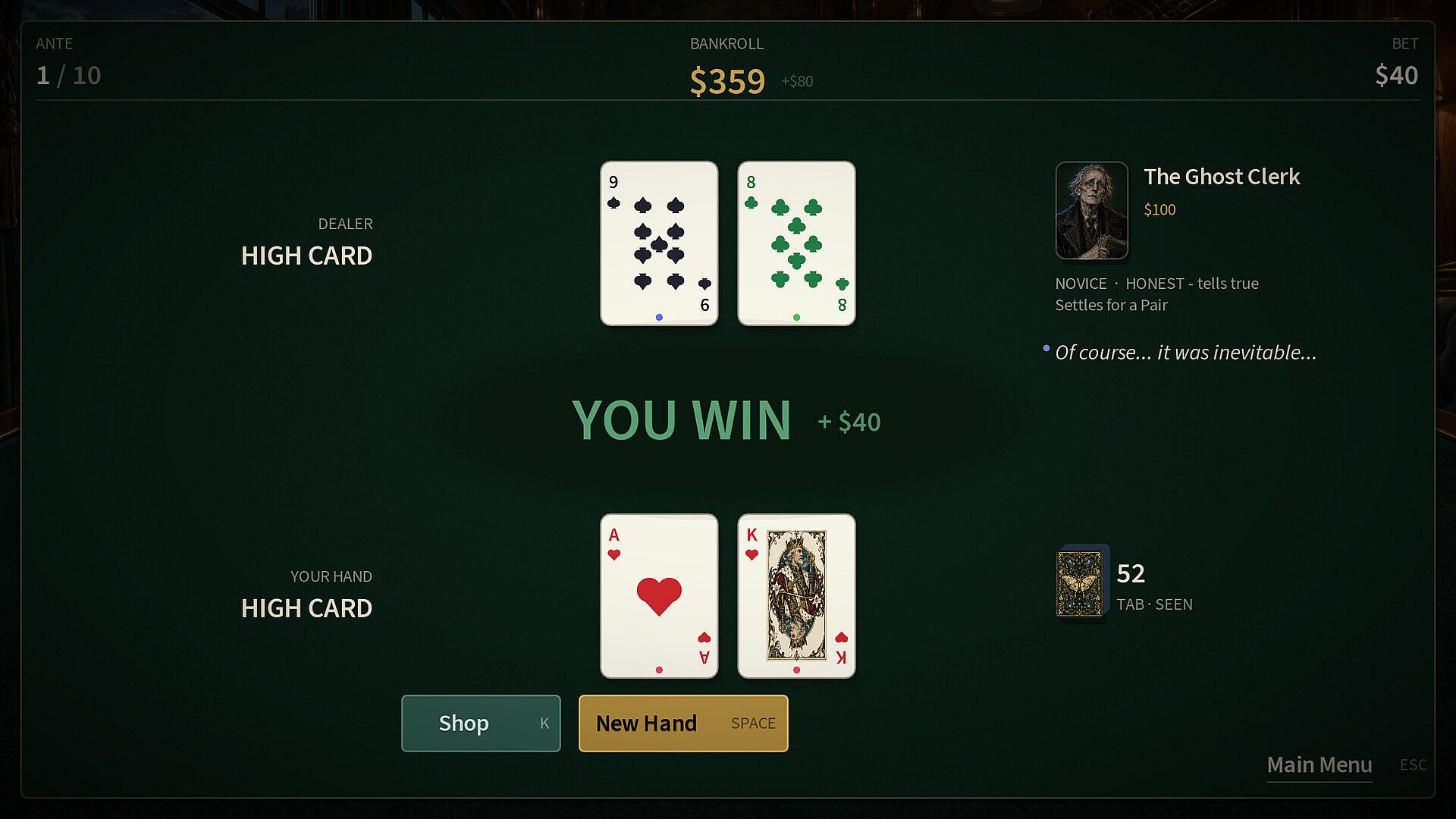
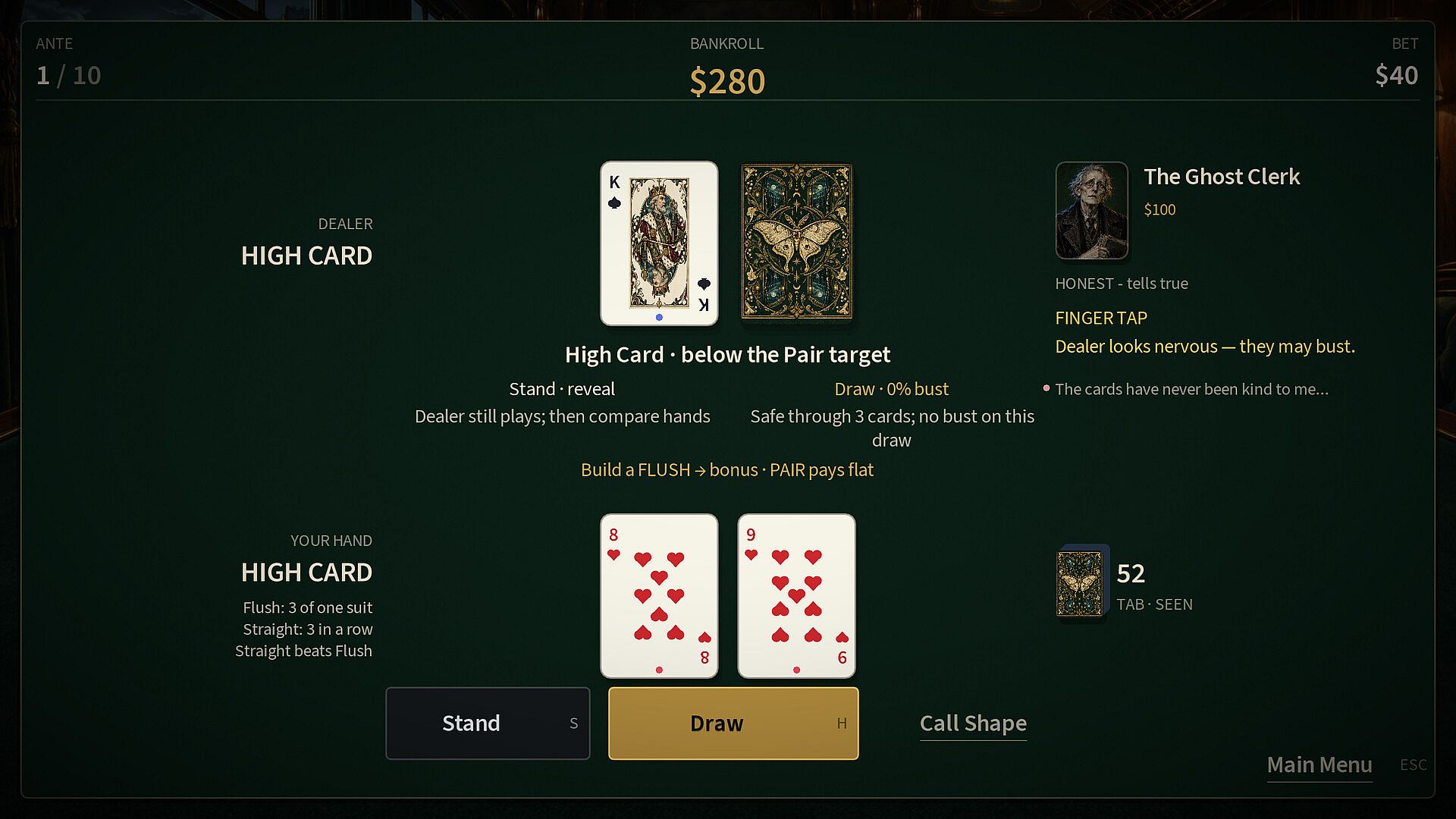
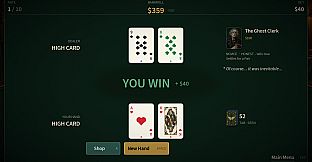
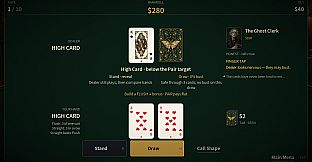
Players construct a poker hand card by card in a turn-based format. The first three cards can be selected freely to establish a base pattern. Subsequent draws require the new card to strengthen the existing poker pattern, or the run ends in a bust. At any point a player may stand with the current hand or commit to a specific pattern they believe they can complete. The interface displays the current hand, potential improvements from another draw, and the associated risk level. Dealer rules and Joker powers can alter these conditions during a run.
Each encounter involves reading the dealer seated across the table. A roster of 100 dealers draws inspiration from Russian literature, with visible cues such as hesitation, confidence, or deception providing additional information. Not every dealer behaves consistently or reveals accurate tells, so observation serves as one factor among several in decision making.
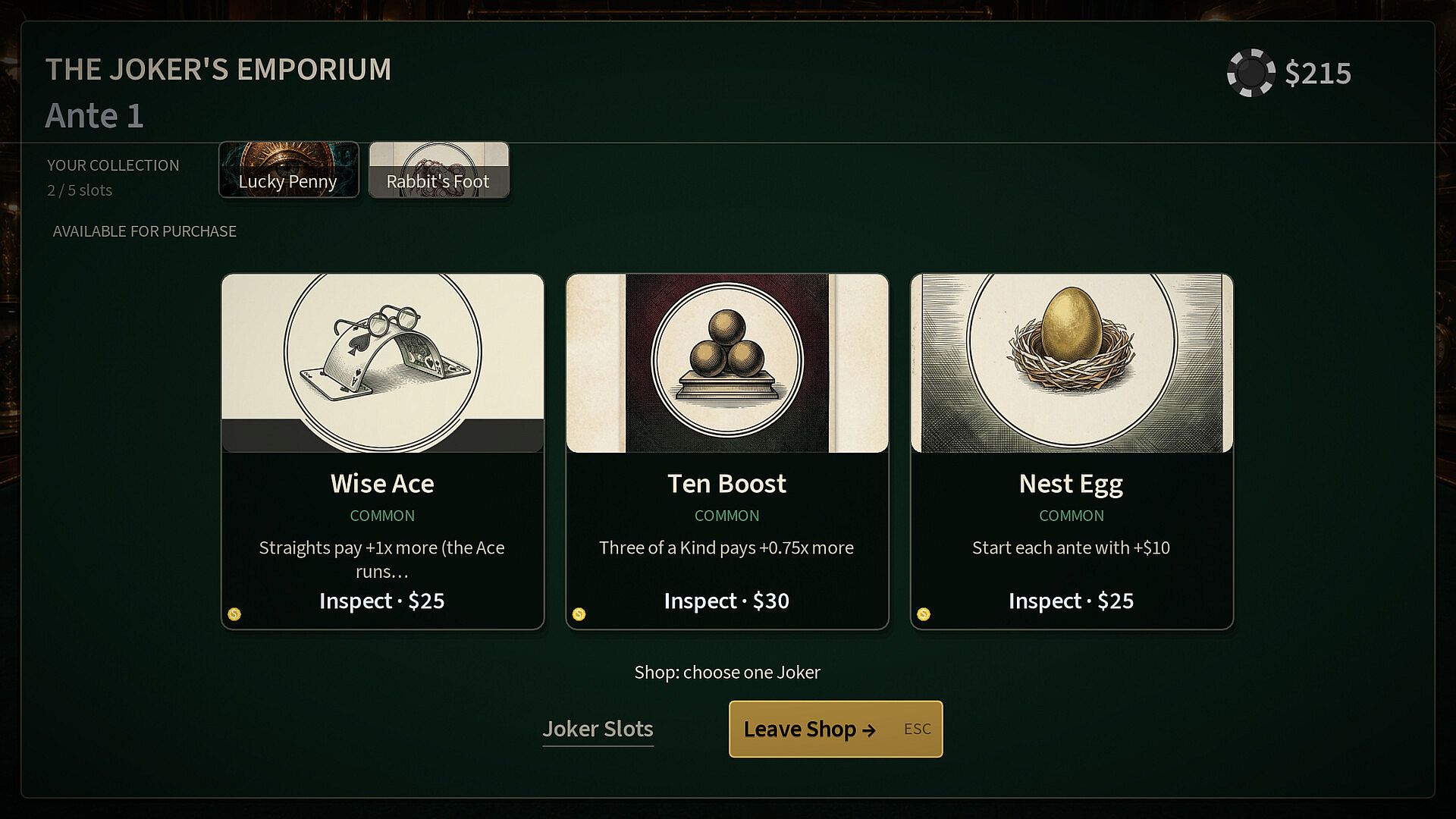
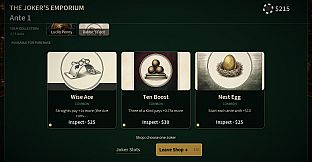
Between encounters, winnings fund purchases in the Joker shop. More than 50 active Jokers offer effects that reveal information, modify draws, protect against risky plays, or reward particular hand-building approaches. Selection of Jokers shapes strategy for upcoming opponents.
Game Modes
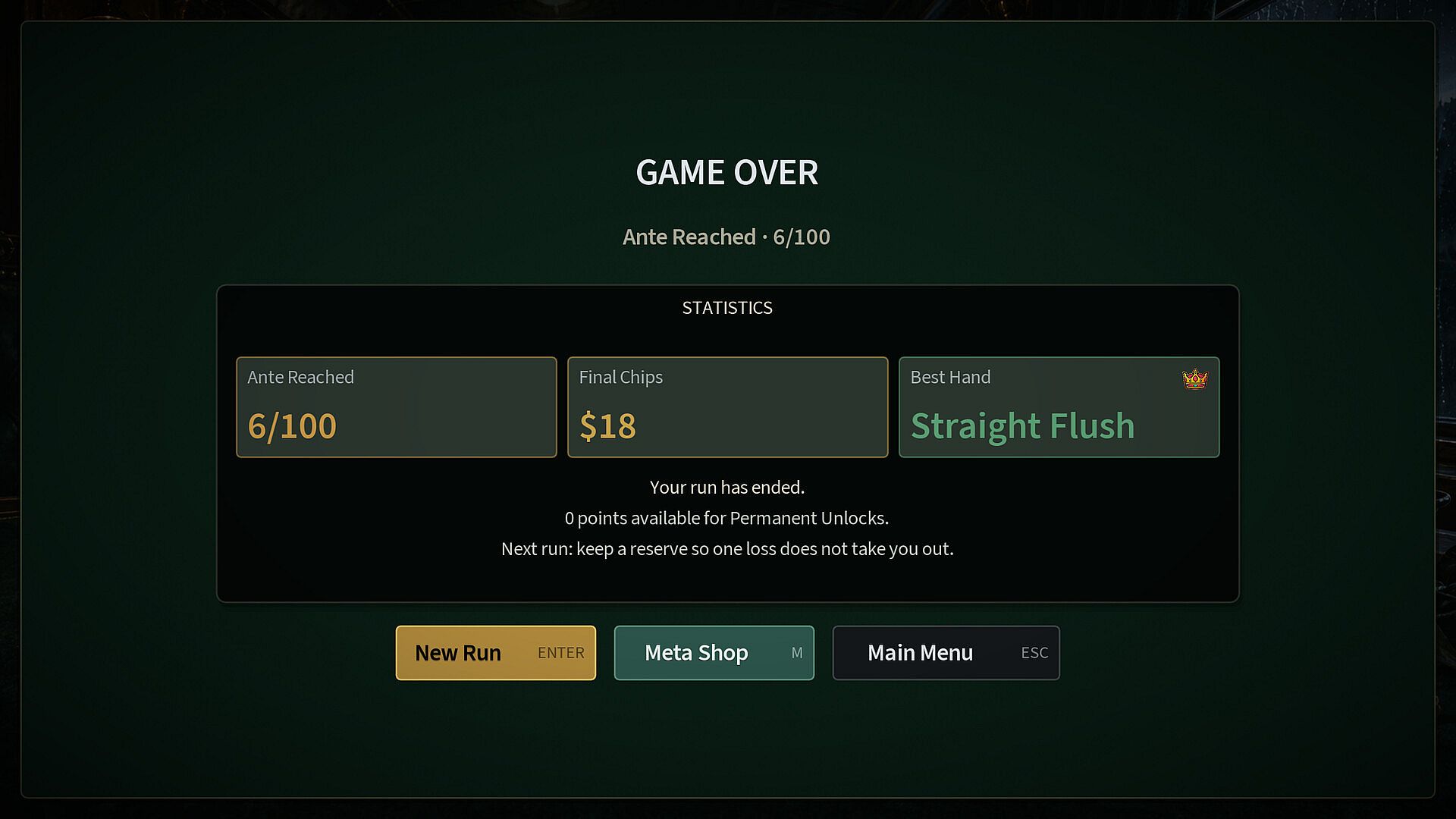
The core experience consists of single-player runs that progress through escalating dealer encounters. A dealer ladder structures these encounters, increasing difficulty as players advance. The Joker shop integrates into every run as a persistent progression element. Challenge modes provide additional structured play sessions that test specific combinations of rules, Jokers, and dealer behaviors.
Controls use mouse and keyboard. The game supports English and Russian language interfaces. All opponents remain computer-controlled, and the card-table stakes stay entirely fictional with no real-money wagering or prizes of real-world value.
Key Mechanics
Poker patterns form the foundation of scoring and risk assessment. The decision loop revolves around whether to draw for improvement, stand with the current hand, or call a specific pattern in advance. Joker powers introduce variability by changing draw outcomes or providing defensive options. Dealer tells add a layer of reading opponents, though their reliability varies across the roster.
Progression ties directly to winnings spent on Jokers and advancement along the dealer ladder. Each run emphasizes careful management of hand strength against the cumulative risk of continued draws.
Is It Worth Playing?
A Table of Liars suits players who enjoy single-player strategy games that combine poker hand construction with roguelike risk management and opponent observation. The turn-based structure and focus on deliberate choices make it accessible for those who prefer thoughtful pacing over real-time action. Availability on PC with mouse and keyboard controls supports straightforward sessions. The absence of real-money elements keeps the experience contained to its fictional card table. Those drawn to indie strategy titles with roguelike progression and a defined roster of encounters will find the core loop aligns with that preference.