

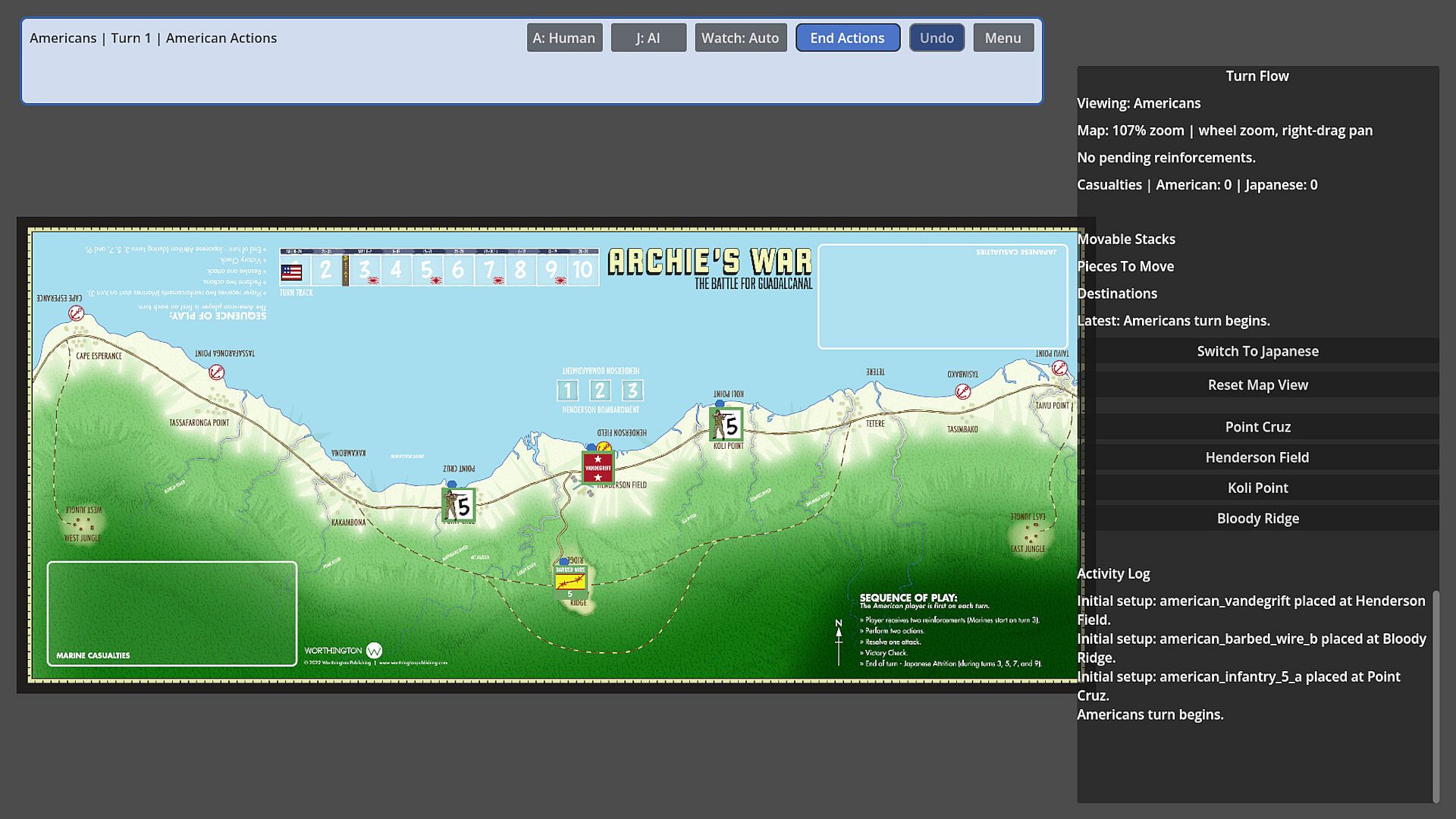
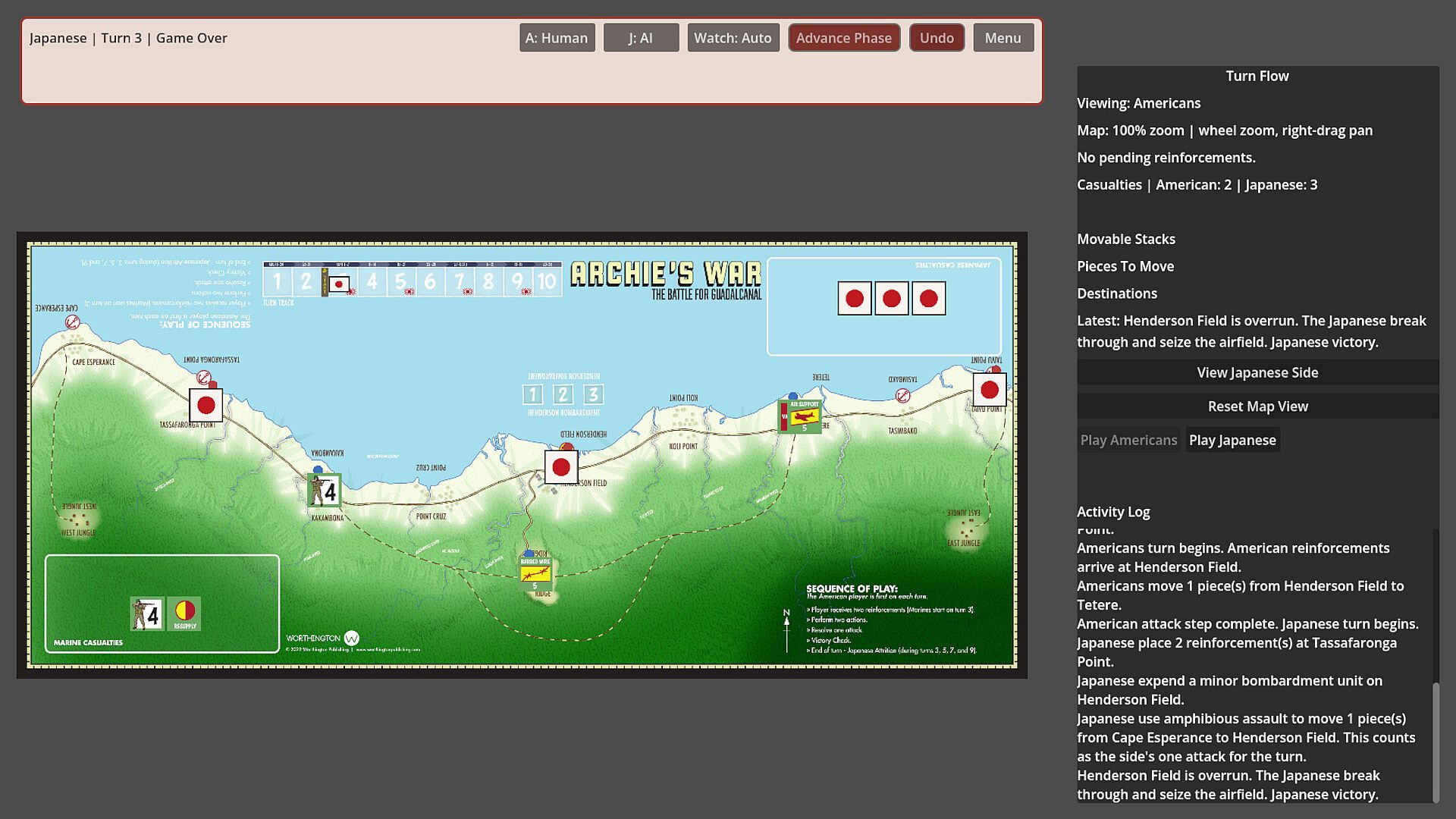
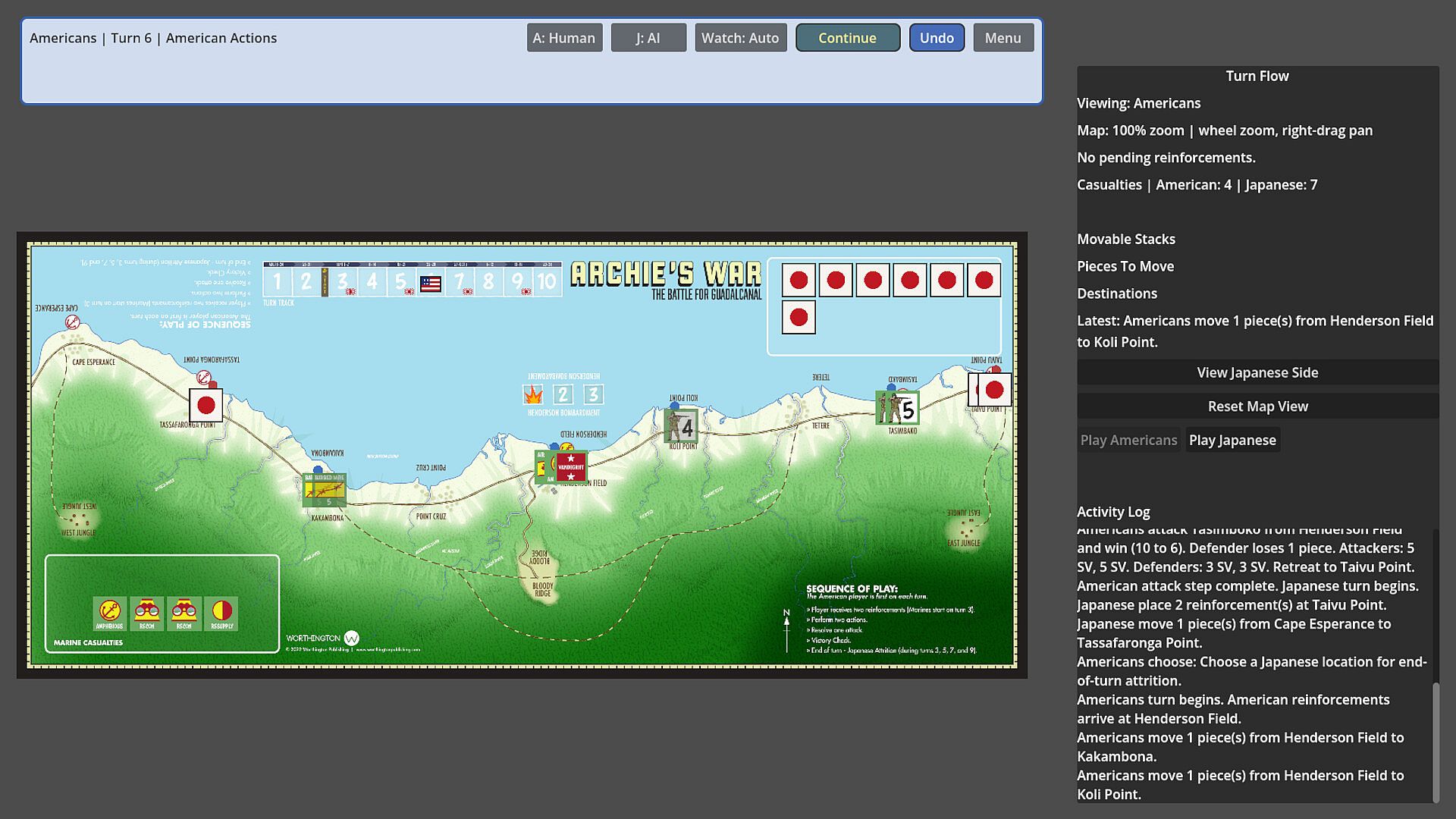
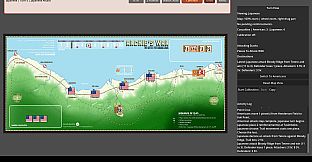
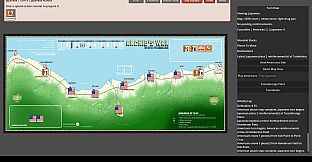
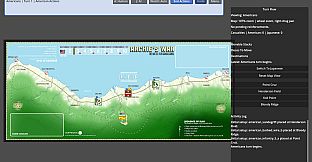
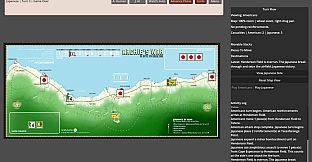
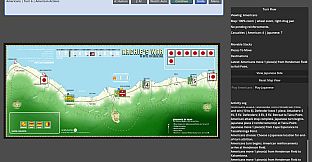
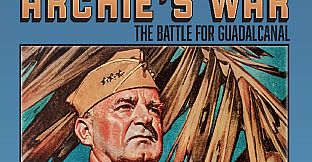
Archie's War is a strategy simulation game that places players in command of American or Japanese forces during the 1942 struggle for Guadalcanal. The digital adaptation recreates the compact wargame experience of the original board game from Worthington Publishing, focusing on the fight to control or defend Henderson Field. Players face limited intelligence about enemy positions and strengths, along with the need to balance attacks, reinforcements, and defensive positions in sessions that last roughly 20 minutes.
Gameplay
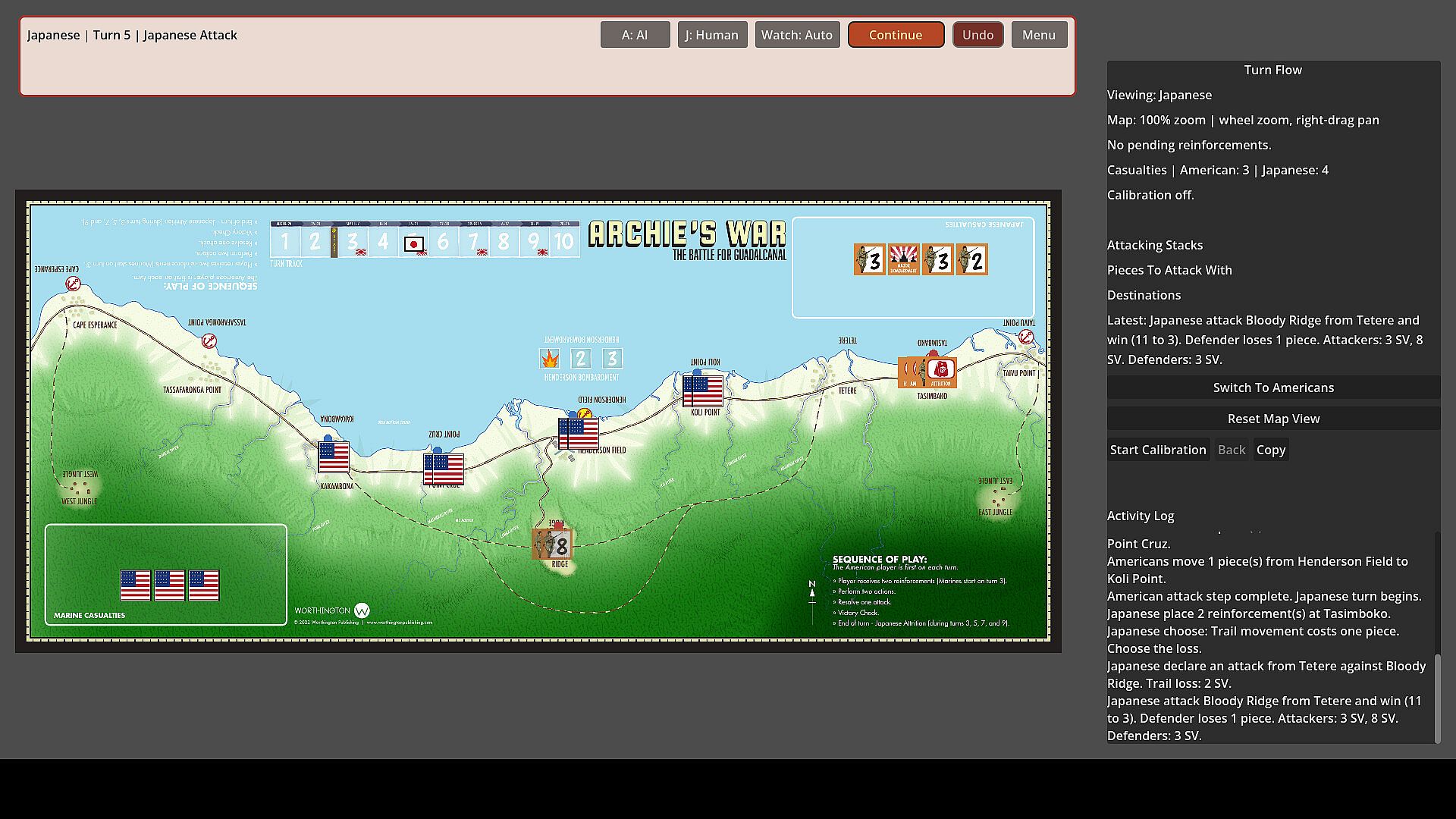
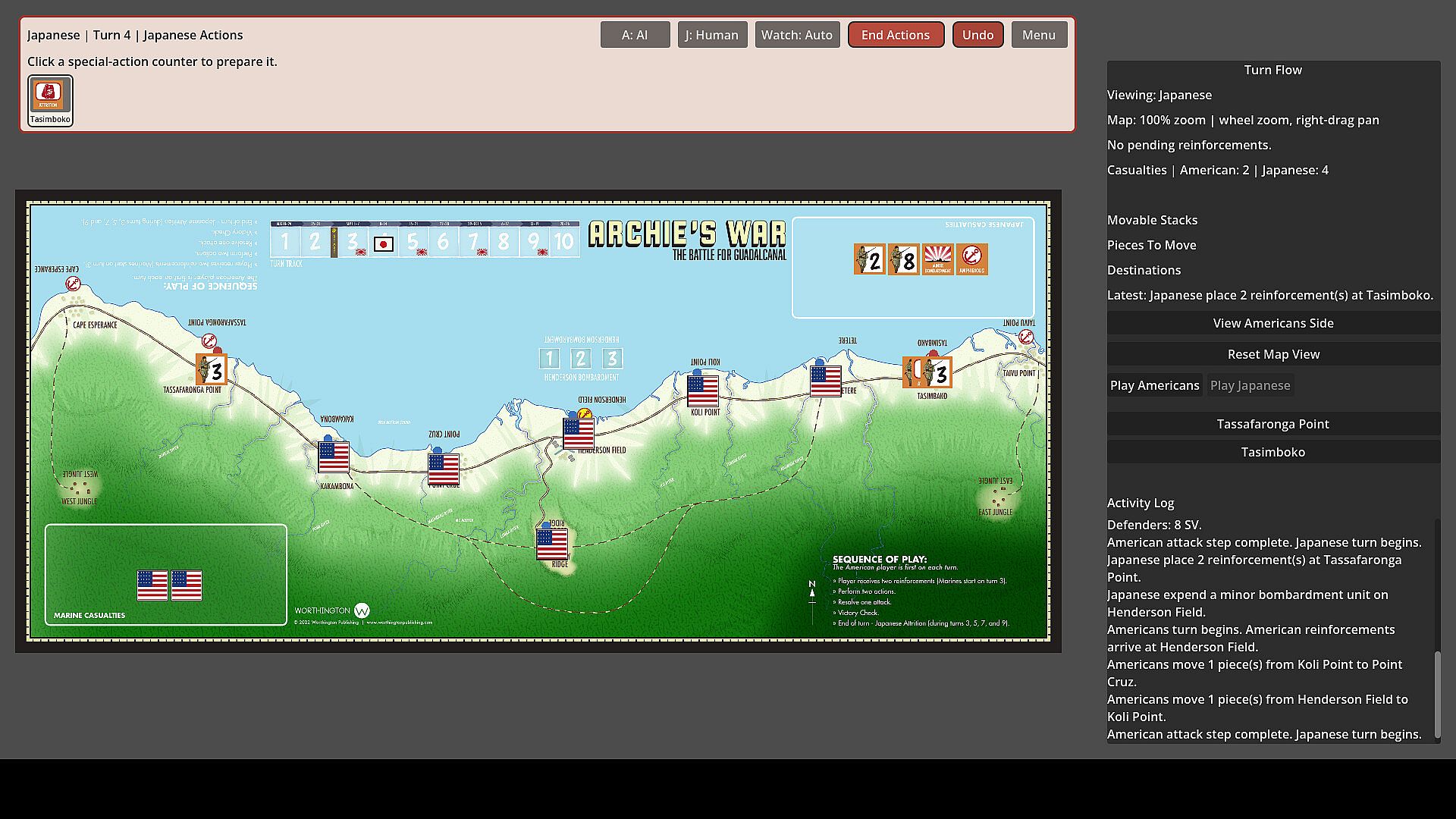
The core loop revolves around committing forces to key locations around Henderson Field while managing uncertain enemy movements and reinforcements that arrive over time. Each turn requires decisions about where to concentrate troops, when to launch an assault, and when to consolidate defenses. Combat resolution depends entirely on the number and type of units committed rather than random rolls, creating a system where careful planning and force allocation determine outcomes.
Limited intelligence forms a central mechanic, as players often operate without full knowledge of opposing unit strengths or exact locations. This forces ongoing reassessment of threats and opportunities as the situation evolves. Reinforcements and shifting enemy deployments keep the battlefield dynamic, preventing static strategies from dominating repeated plays. The built-in computer opponent handles all opposing actions, setup, and bookkeeping, allowing focus on command choices.
An undo option supports experimentation or correction of missteps without restarting the entire session. The experience stays faithful to the board game design, translating physical components and rules into a streamlined digital format that emphasizes tactical decisions over lengthy simulations.
Game Modes
Players select either the American side defending Henderson Field or the Japanese side attempting to capture it. The single-player format relies on the computer to control the opposing forces, providing a complete match in one sitting. No additional named modes appear in the available details, though the choice of faction creates distinct strategic challenges and objectives for each playthrough.
The American perspective centers on holding key positions and improving the airfield's condition against bombardment and infiltration. The Japanese side focuses on building sufficient strength through gradual arrivals while navigating attrition and maneuvering through difficult terrain. Both sides contend with the same core constraints of incomplete information and diceless resolution, leading to varied decision trees depending on the chosen faction.
Key Mechanics and Features
Diceless combat stands out as a defining element, shifting emphasis from chance to the quality and quantity of forces brought to bear in any engagement. This approach rewards precise allocation of limited resources across multiple fronts. The changing battle state, driven by ongoing reinforcements and enemy repositioning, ensures that early advantages can erode without constant adaptation.
Fast overall pacing supports repeated sessions for testing different approaches or refining tactics. The digital implementation removes physical setup time and automates resolution steps, making the historical scenario accessible for quick strategy sessions on PC. Features such as the undo function further support learning the system through trial and adjustment.
Is It Worth Playing?
Archie's War suits players who enjoy compact historical wargames centered on decision-making under uncertainty. The emphasis on force commitment, limited intelligence, and faction-specific objectives delivers focused gameplay that fits short play windows while still presenting meaningful strategic depth. The built-in opponent ensures solo accessibility without requiring a second human player.
Reception for the underlying board game highlights its quick resolution and replay value through varied approaches to the same scenario. The digital version preserves these qualities while adding conveniences like automated handling of enemy actions and the ability to reverse moves. It appeals particularly to those interested in World War II Pacific theater strategy or fans of diceless, information-asymmetric designs.
Overall, the game provides a solid option for strategy simulation enthusiasts seeking a self-contained experience that captures the tension of the Guadalcanal campaign without extended time commitments. Those who value tactical choices over dice-driven outcomes will find the mechanics rewarding across multiple plays.