






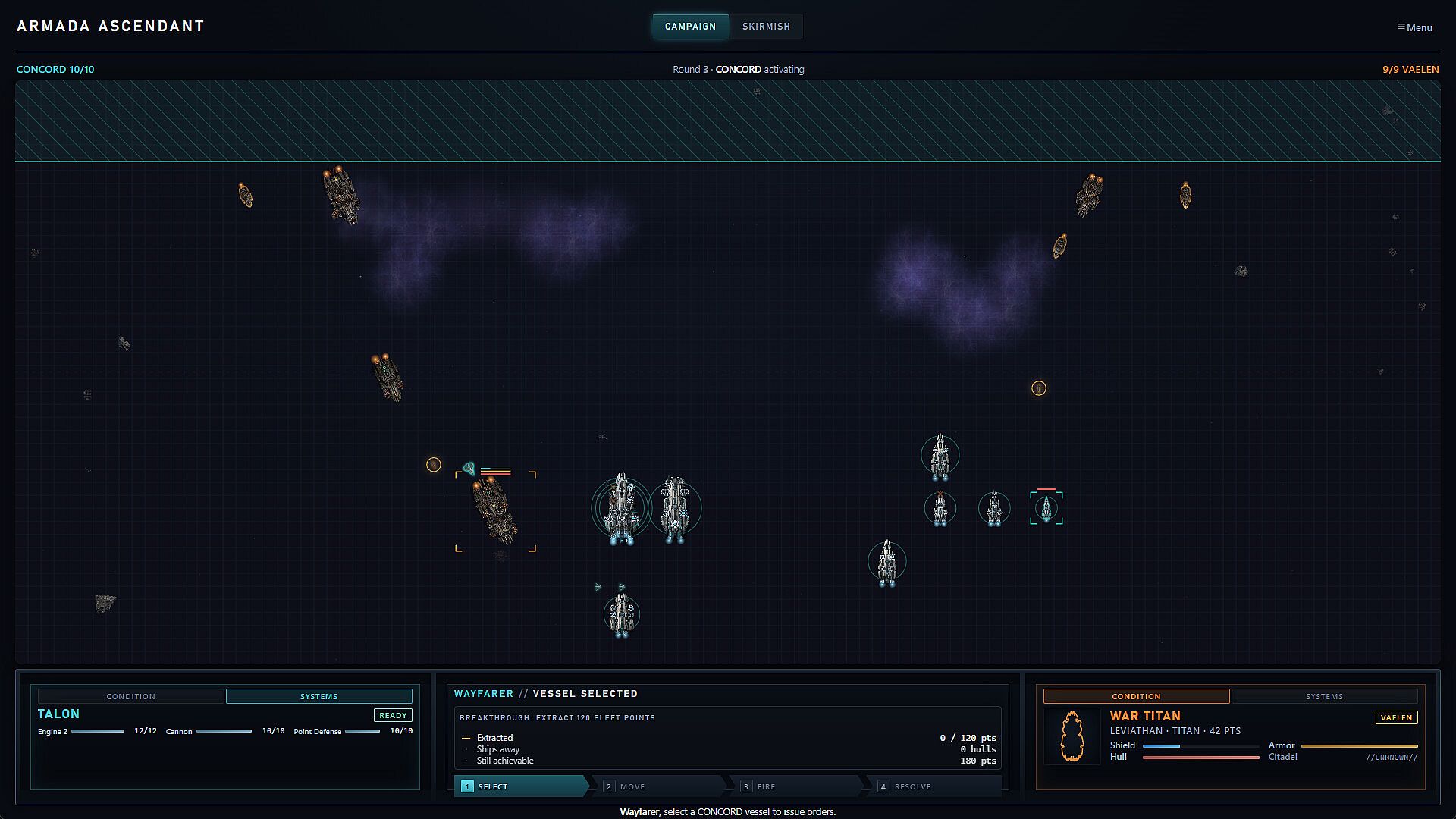
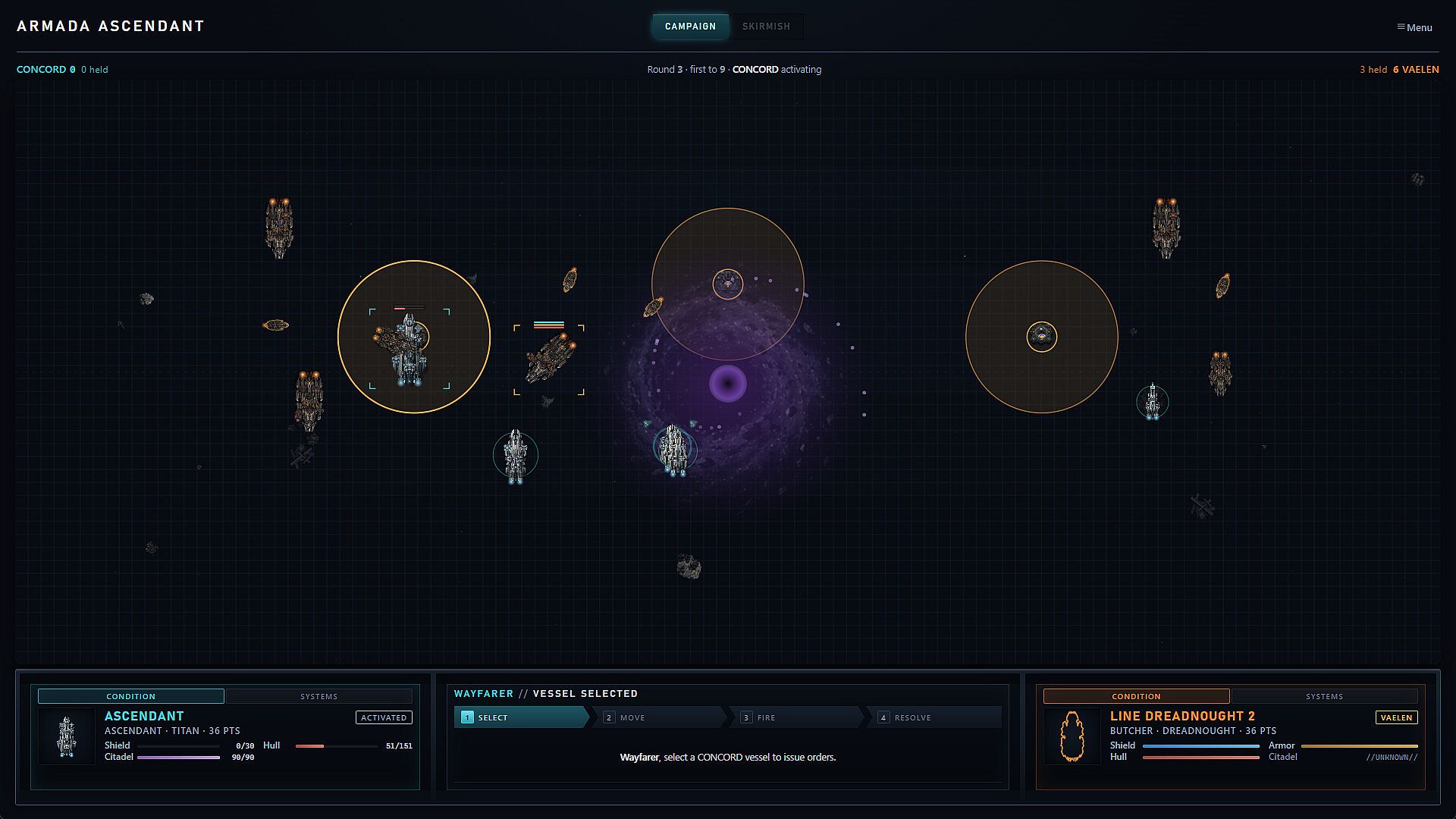
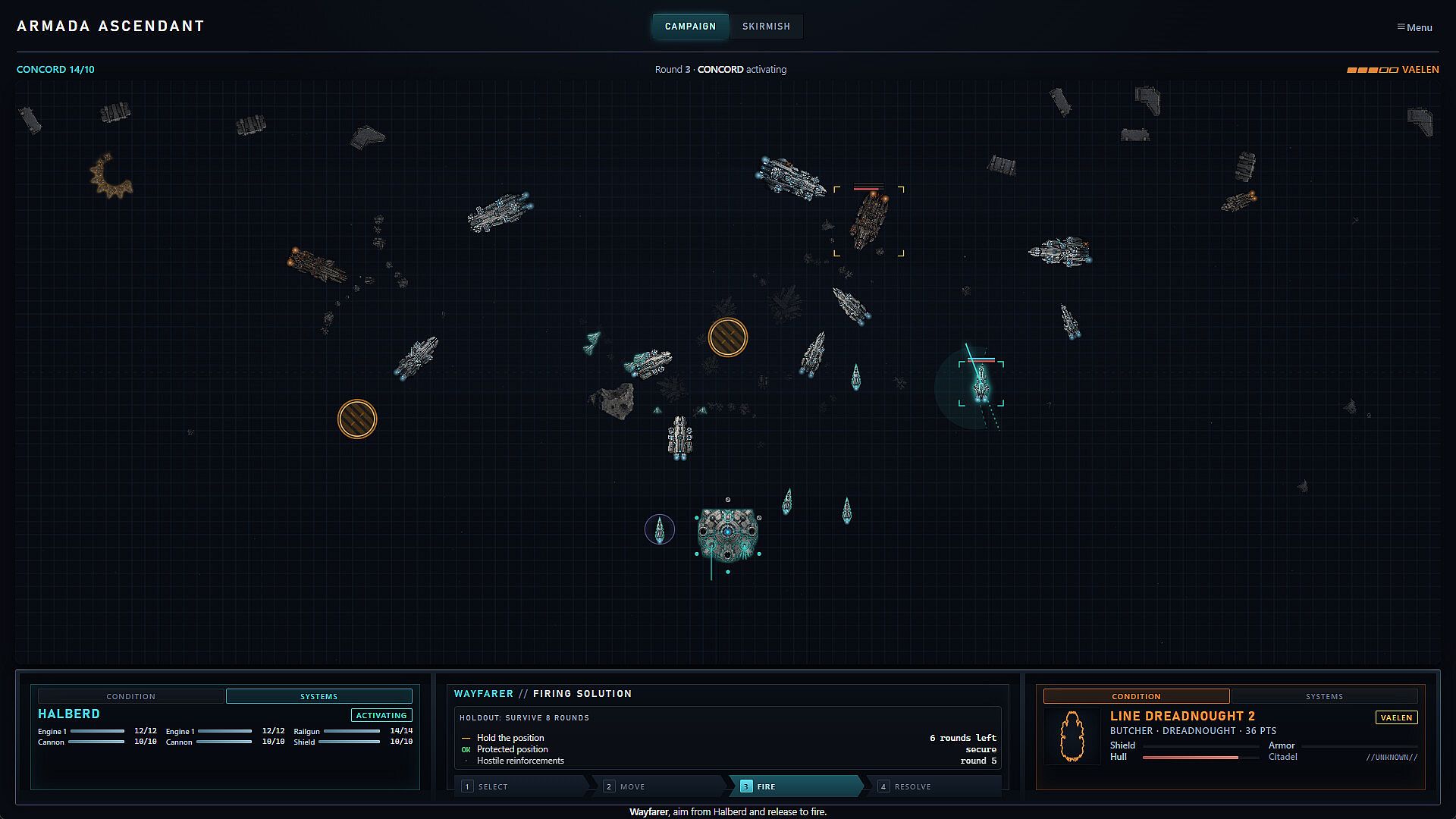
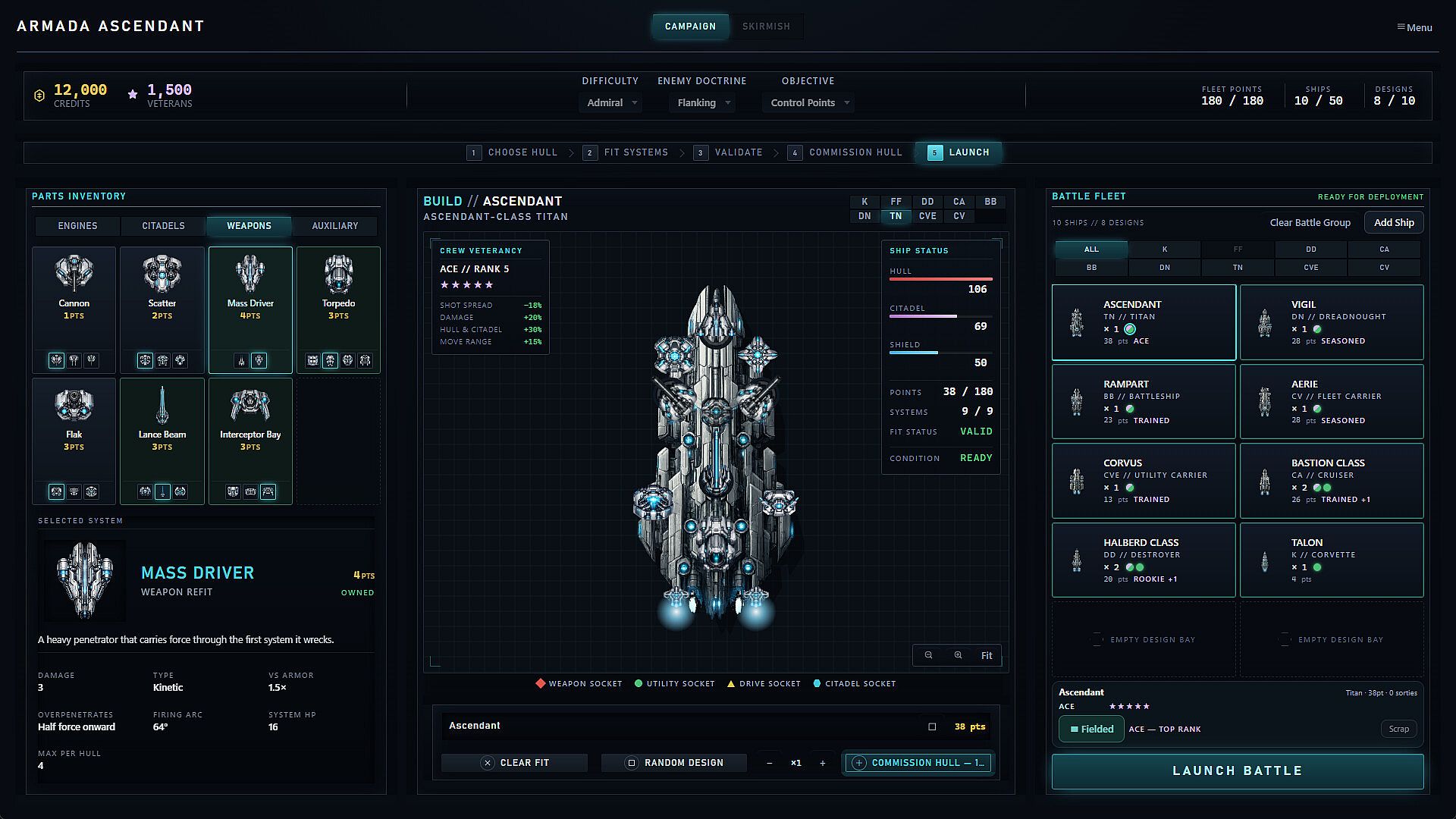
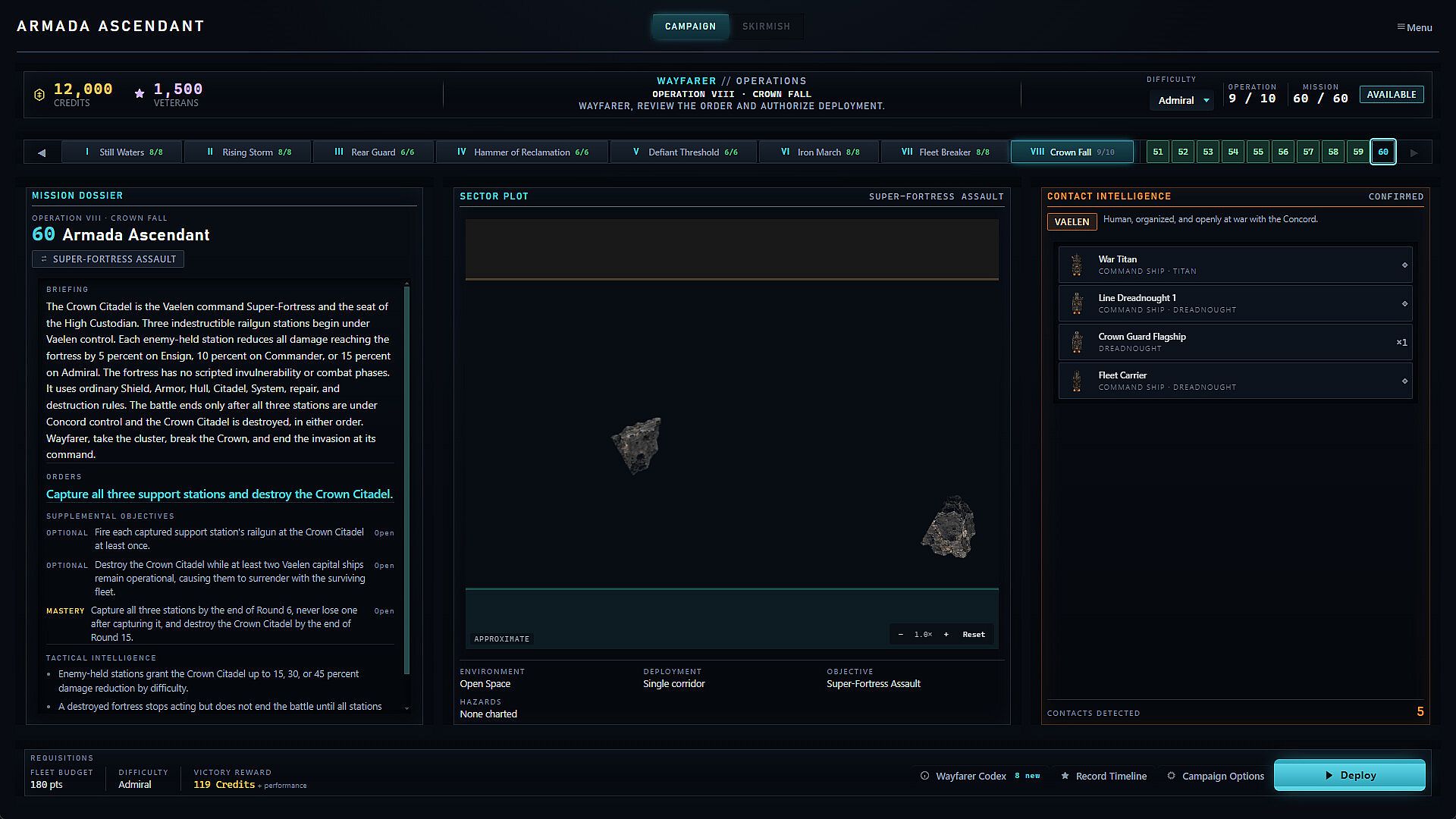
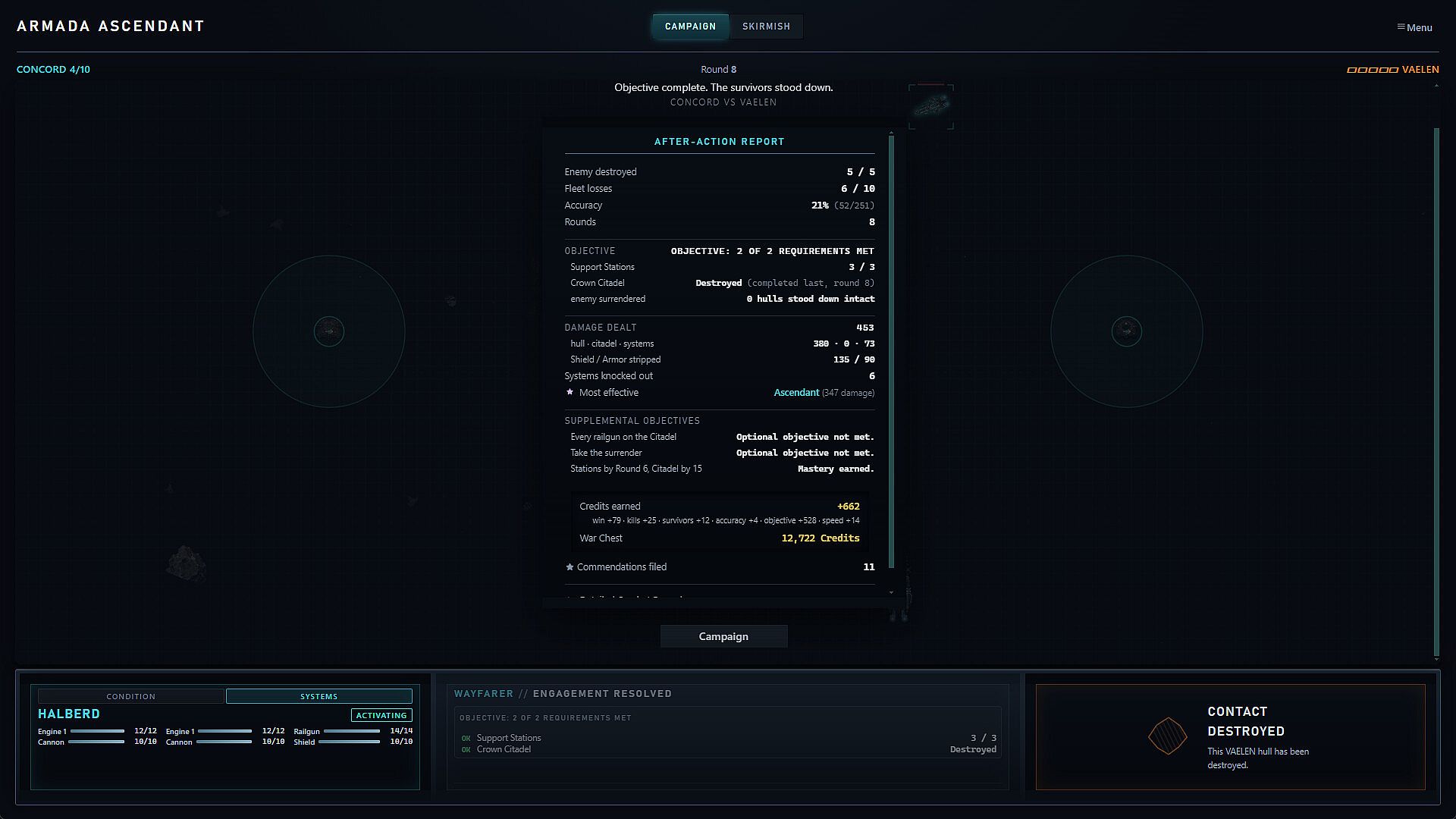
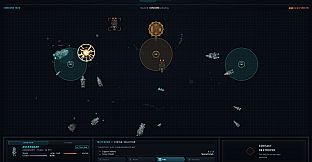
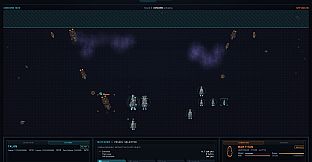
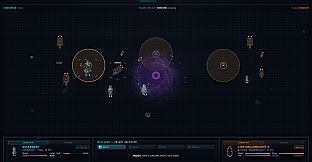
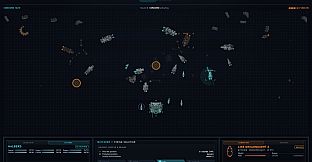
Armada Ascendant is a top-down fleet-tactics strategy game focused on direct physical gunnery and custom ship design. Players build fleets from the ground up, command them through a persistent campaign, and engage in battles where positioning, activation order, and targeted damage determine the outcome. The title emphasizes deliberate aiming mechanics over automated fire, with rounds traveling straight before drifting, which rewards precise close-range shots and calculated long-range risks.
Gameplay
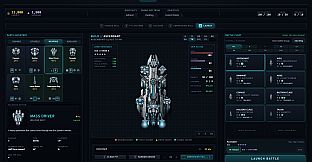
Core gameplay centers on fleet construction and tactical execution. Every ship begins with a chosen hull that features real sockets for mounting engines, weapons, a Citadel, and support systems. Limited internal space forces trade-offs between offense, defense, mobility, and utility. Once fitted, the design translates directly into combat, where broadside guns fire from their mounted positions, engines can be disabled to cripple movement, and damage to specific hull sections affects the systems they support.
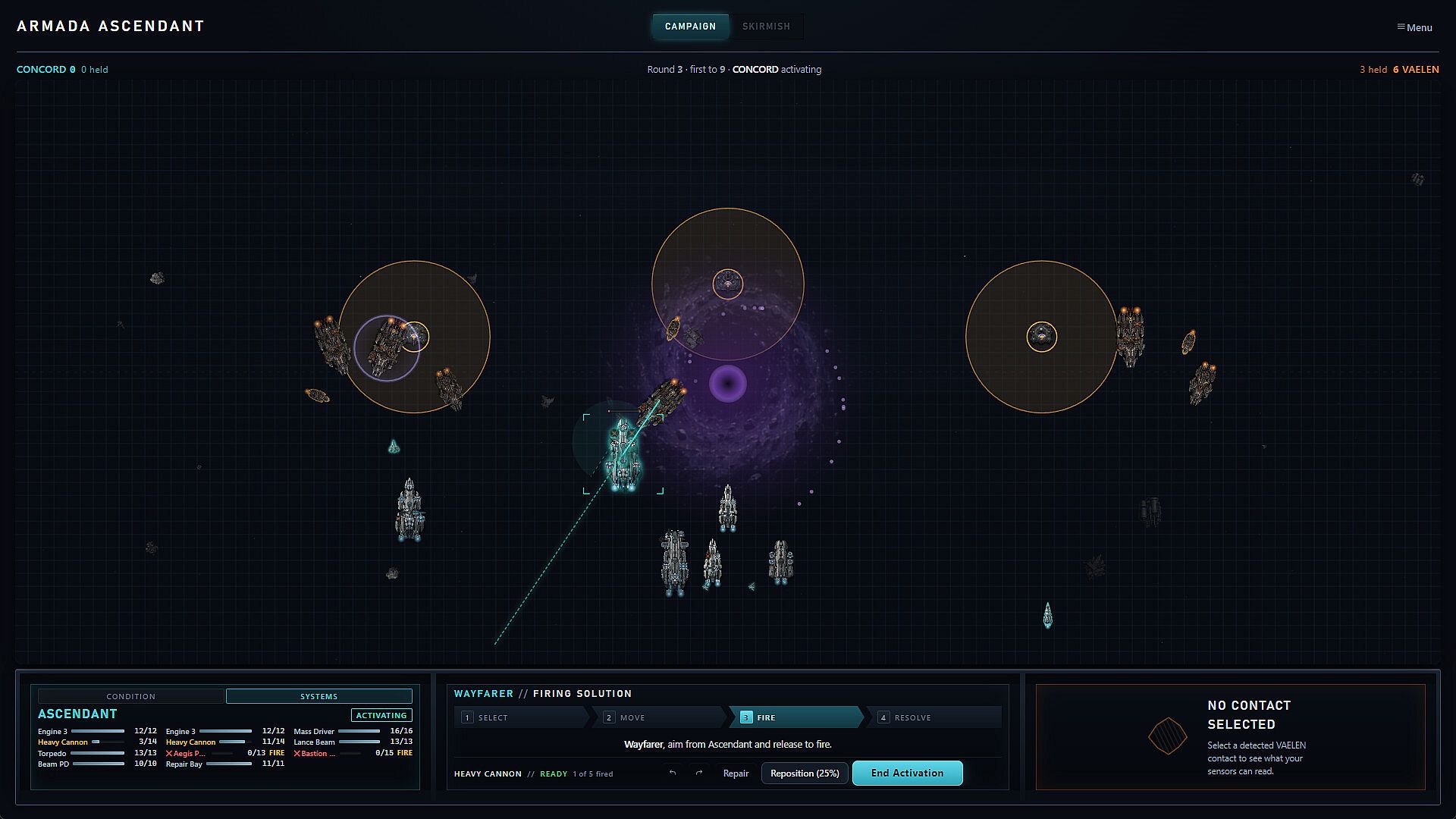
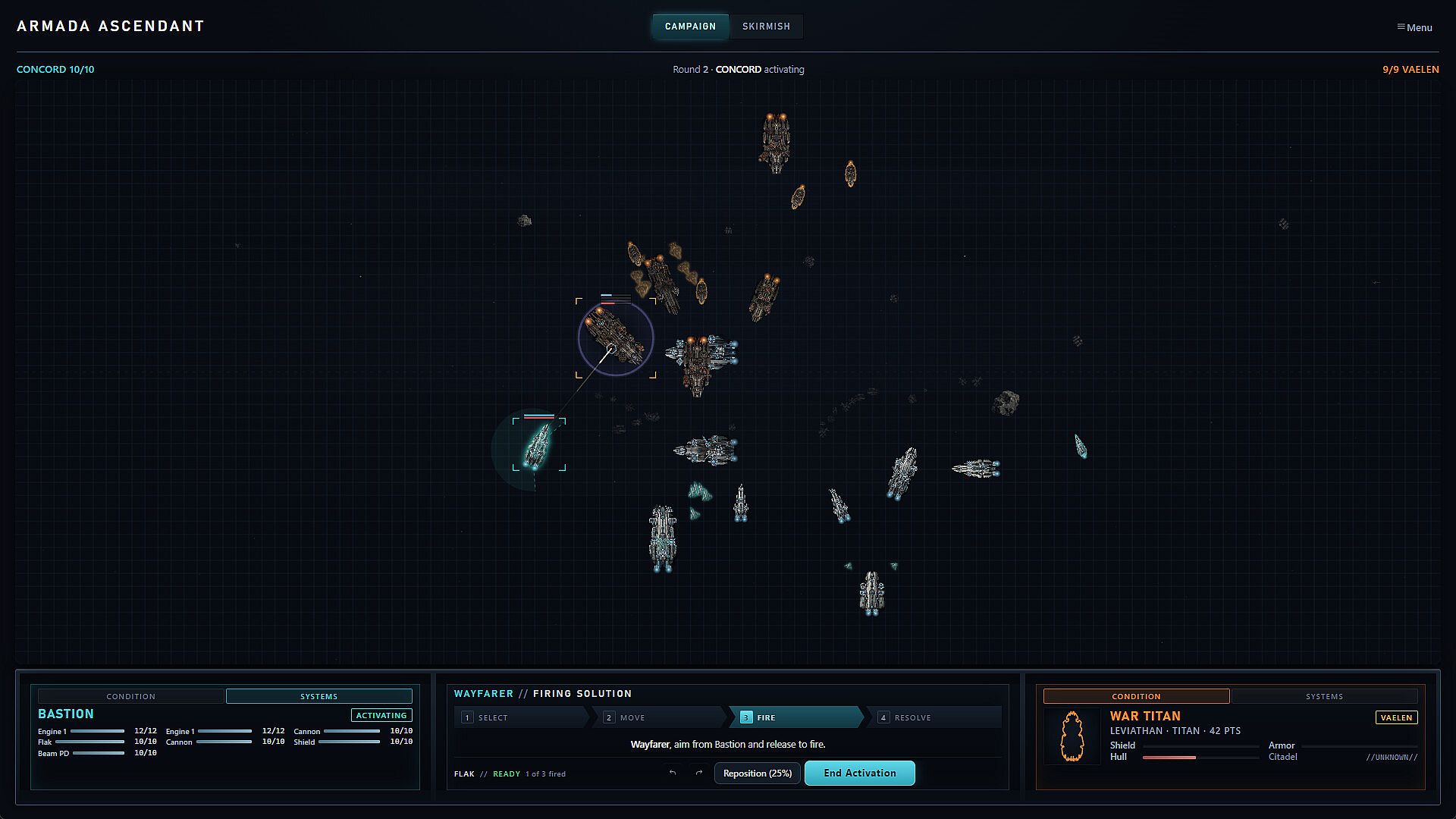
Damage layers add depth to engagements. Shields absorb initial hits but require a full activation to recharge. Armor reduces incoming damage until depleted. Hull and Citadel breaches can destroy a vessel outright. Individual weapons, engines, and auxiliary systems carry their own health pools, and destroying one inflicts additional hull damage. Repair ships restore functionality but cannot undo every setback. Battles proceed through alternating activations rather than simultaneous fleet moves, allowing players to screen damaged capitals, protect key assets, or invest turns in repairs.
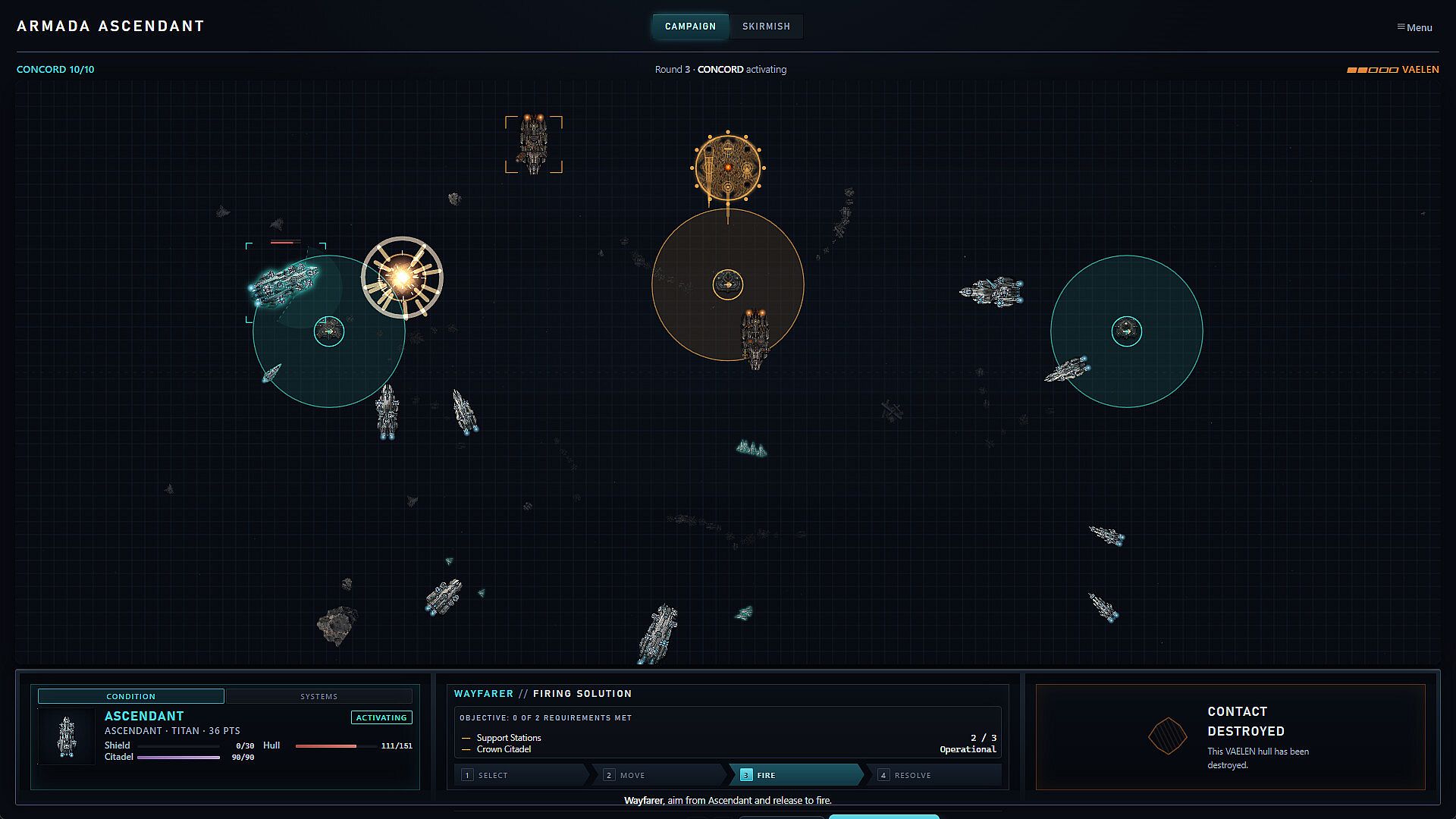
Environmental factors further shape tactics. Asteroids, wreckage fields, nebulae, gravity wells, mines, fortified bases, and armed control stations alter firing lanes and create chokepoints. Players must adapt formations and priorities to these changing battlefields while managing a campaign fleet that carries unrepaired damage forward.
Game Modes
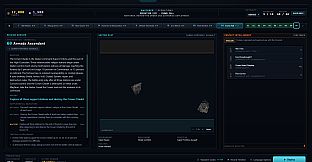
The single-player campaign spans 60 missions across eight operations. Each operation concludes with a capstone battle. Players earn Credits to commission new hulls, promote veteran crews, and unlock additional ship classes and systems. Early losses remain recoverable, but once the counteroffensive phase begins, destroyed ships stay destroyed. Fleet scale grows from a handful of light vessels into a full armada, with operational costs rising accordingly.
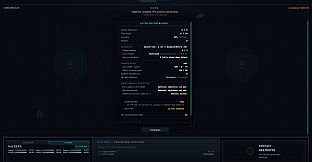
Skirmish mode supports configurable battles against the computer or a second player in local hotseat. Objectives include Deathmatch, Control Points, Base Assault, Holdout, and Breakthrough. The campaign features 64 optional objectives and 28 mastery conditions. A Refit Program offers alternate system facings, while the Wayfarer Codex expands with play. Five fleet scales accommodate battles of up to 50 ships per side.
Available ship options cover seven line-ship classes from Corvette through Titan plus two carrier classes. Four visual hull lines represent the Concord and its adversaries, with two unlockable. Systems range across kinetic, scatter, rail, missile, flak, energy, mine, EMP, drone, interceptor, repair, shield, cloak, ECM, and point-defense types. Layered defenses include projected Over-shields alongside standard Shields, Armor, Hull, Citadel, and System damage.
Campaign Progression and Fleet Management
Persistent fleet progression forms the backbone of long-term play. Credits fund new commissions while veteran crews receive promotions that improve performance. Unrepaired damage carries between missions, forcing strategic decisions about risk versus reward. The campaign tracks multiple save slots with Steam Cloud sync and offers three difficulty settings along with configurable enemy doctrines.
Accessibility and customization options cover audio, display, keybindings, and additional settings to suit varied play styles. The overall structure rewards careful resource allocation and adaptation as the fleet expands and threats intensify.
Is It Worth Playing?
Armada Ascendant suits players who enjoy methodical strategy titles centered on ship customization, precise aiming, and campaign consequences. The socket-based construction system and direct gunnery mechanics deliver hands-on control uncommon in fleet games. Those drawn to persistent progression with meaningful losses will find the shift from recoverable early setbacks to permanent later casualties particularly engaging.
Early Access currently provides the full 60-mission campaign, skirmish options against AI or local opponents, multiple ship classes, and extensive system variety. Three difficulty levels and configurable options broaden accessibility. Players seeking deep tactical decision-making over fast-paced action will likely appreciate the emphasis on activation order, targeted damage, and environmental interaction. The title remains in active development, with its listed features forming a complete foundation for strategy enthusiasts.











