










Blind Gavel is a multiplayer strategy game set in a Victorian theater where players take on roles in a deceptive auction. Participants bid on items whose true values are known only to a select few, while the auctioneer may read accurate descriptions or fabricate details from a hidden letter. The experience emphasizes deduction, bluffing, and social interaction among four to eight players on PC.
Gameplay
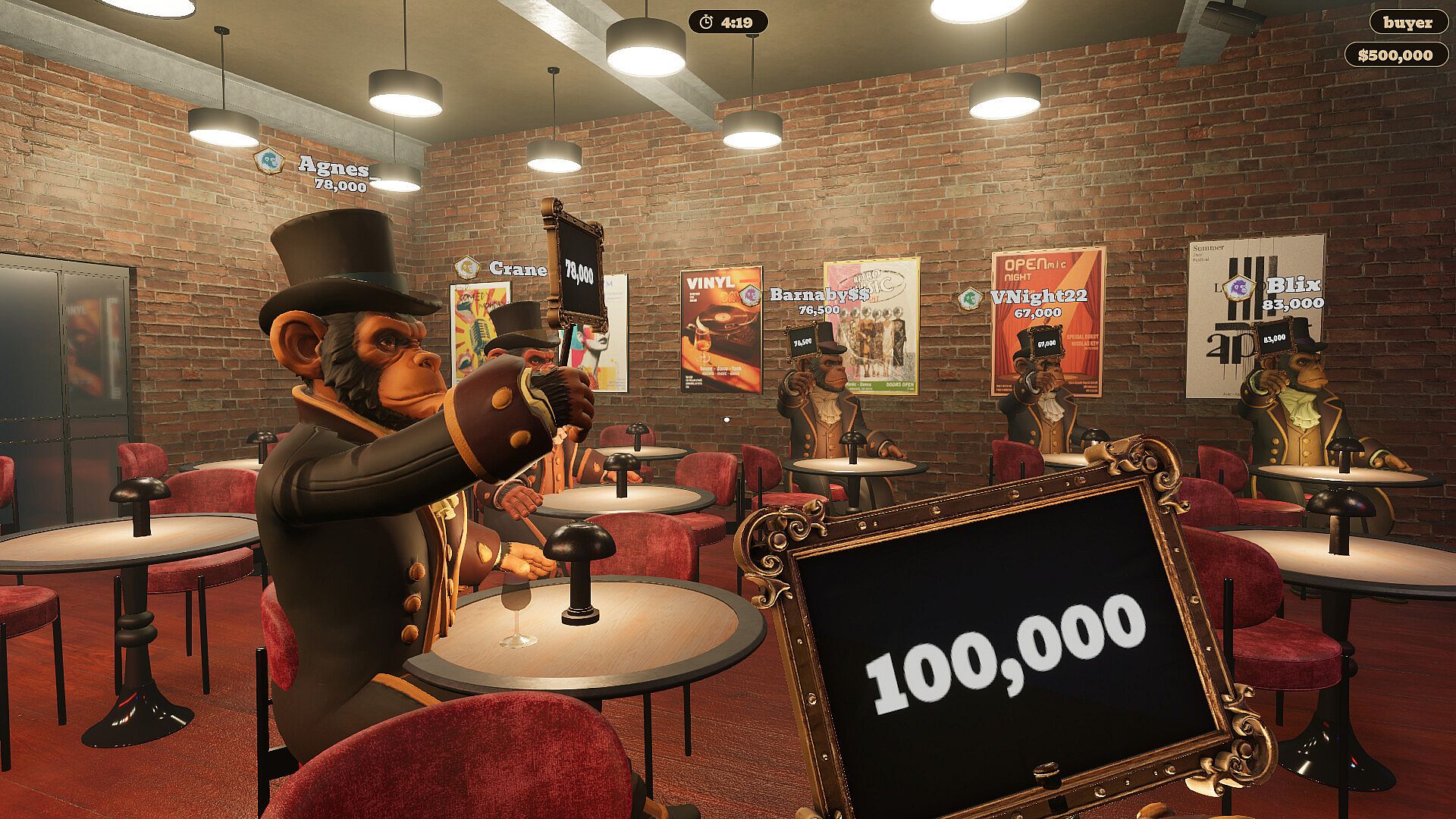
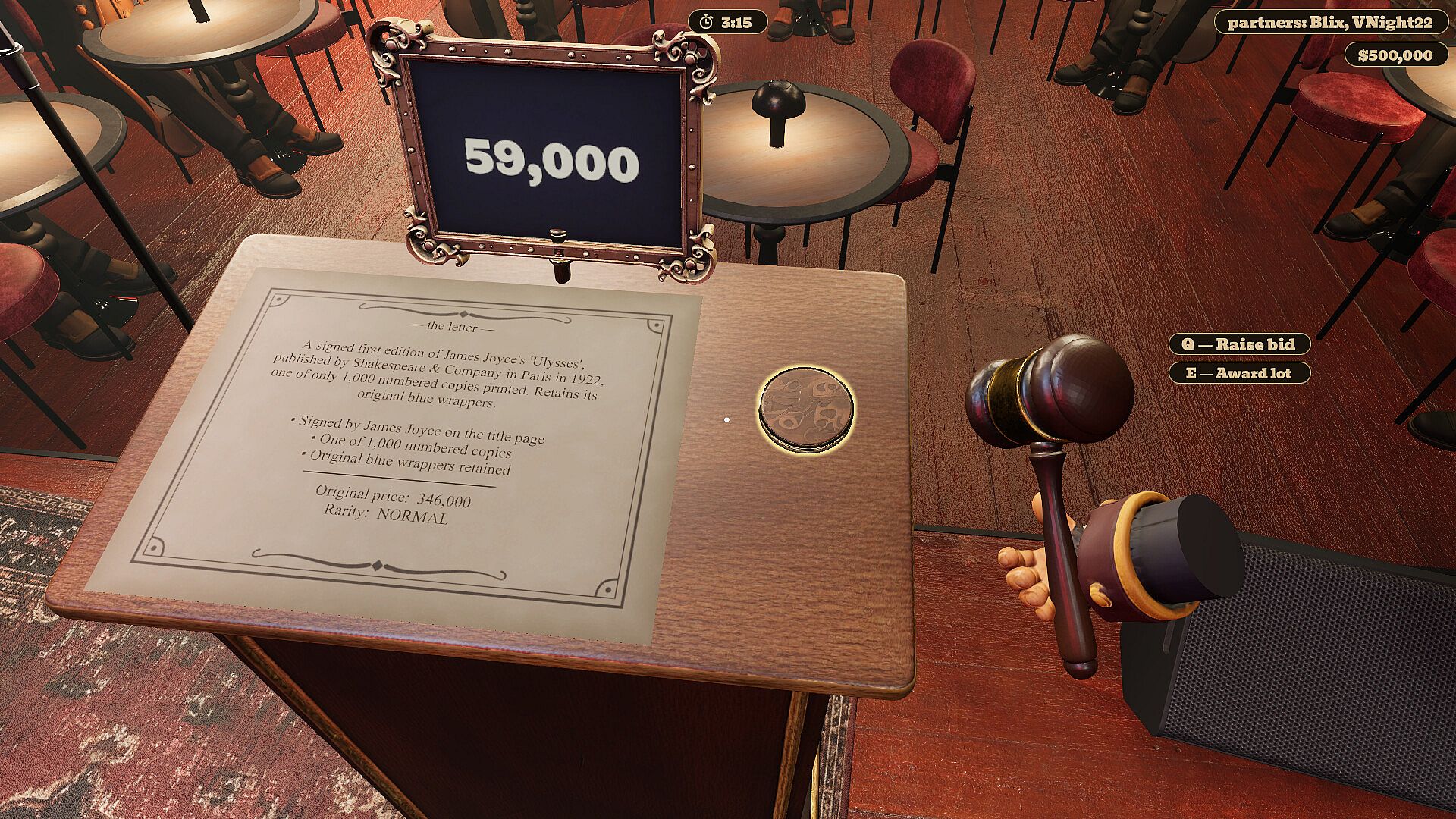
The core loop revolves around an auction where one player holds the gavel and knows the actual worth of each item pulled from a black box. Other players bid based on a letter read aloud, which may or may not match reality. Partners in the room recognize the true values and bid strategically to manipulate outcomes without revealing their knowledge. Buyers examine items up close by interacting with a glass case to spot inconsistencies like poor stitching or mismatched details that contradict the auctioneer's words.
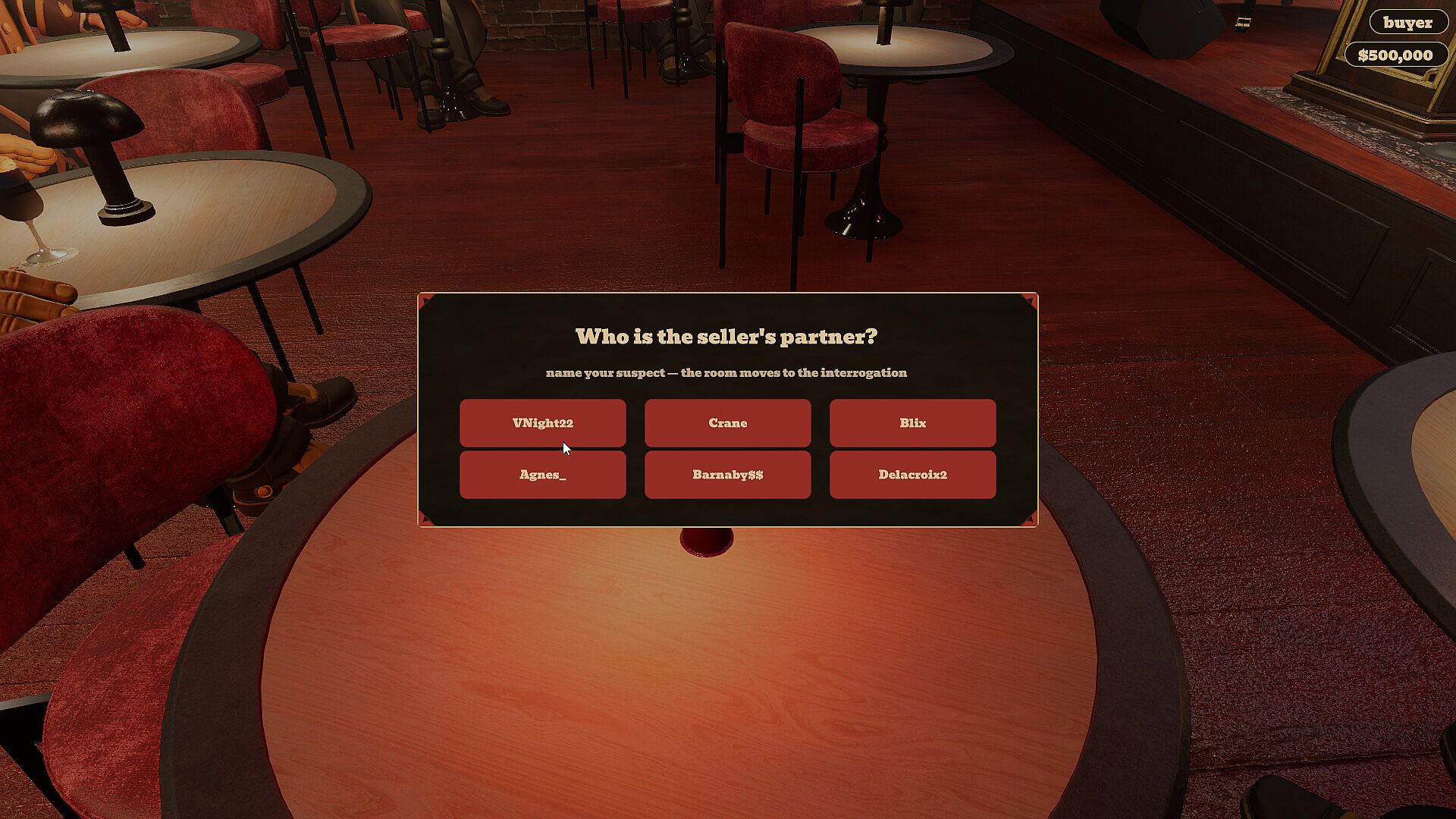
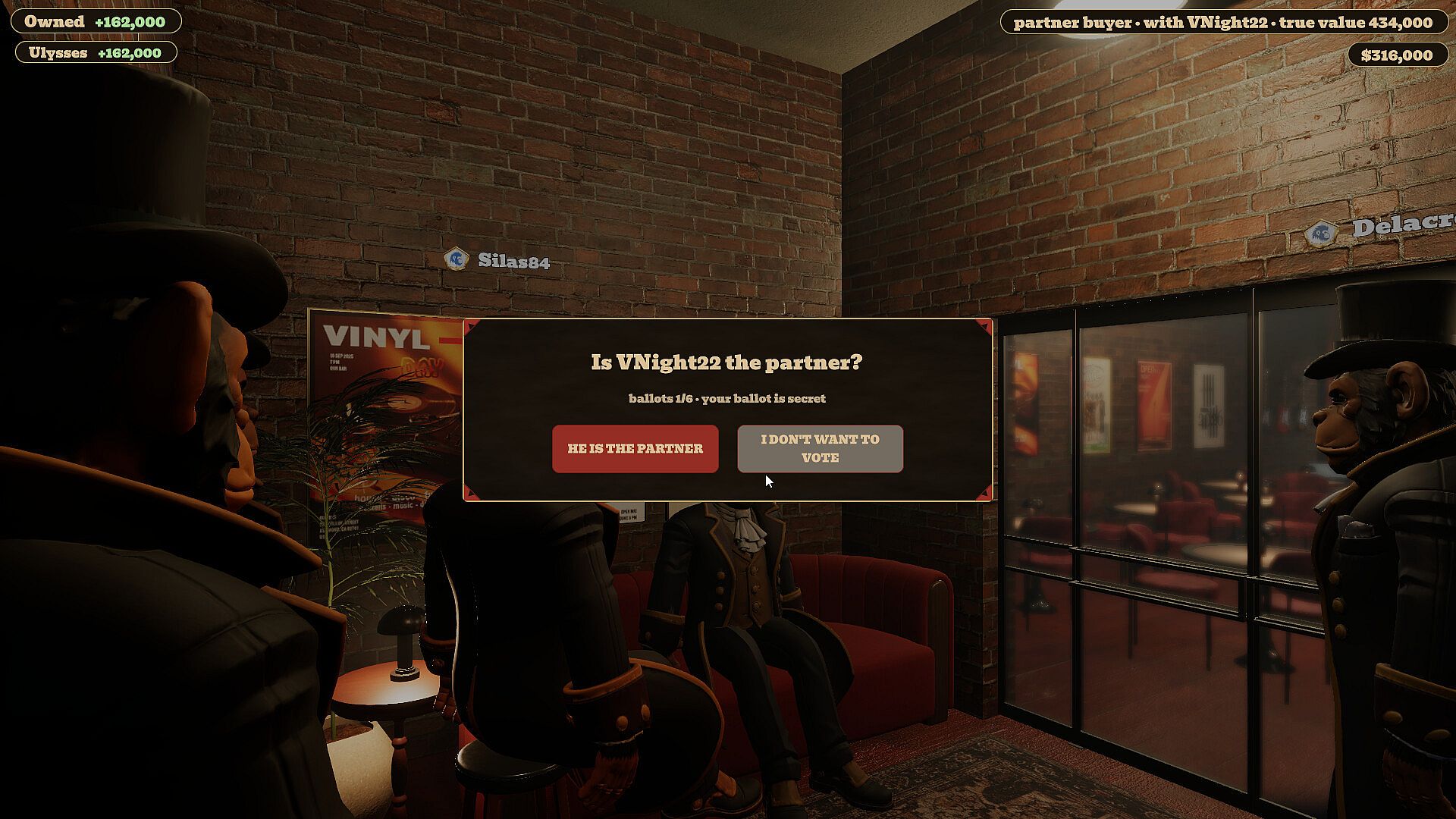
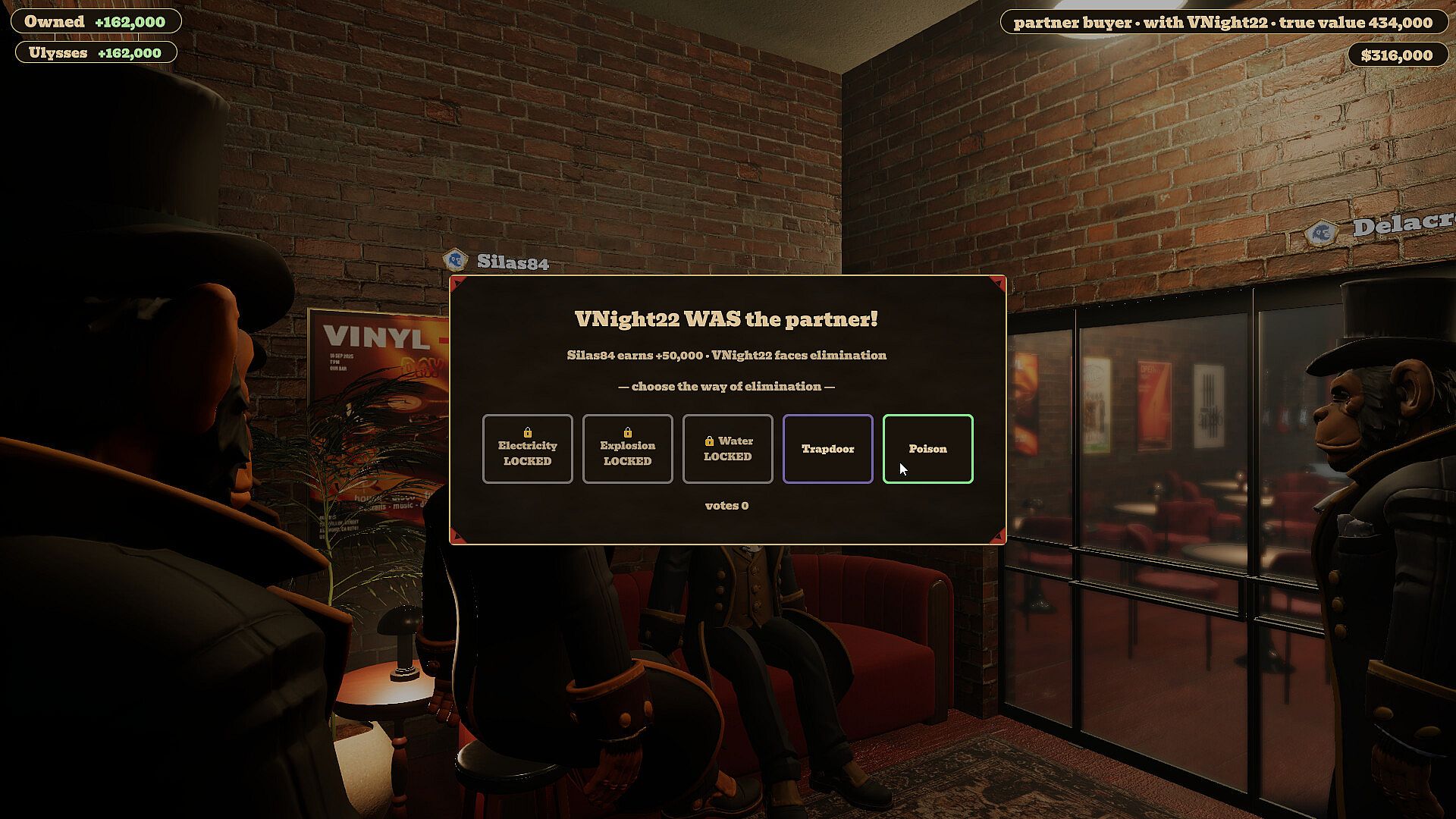
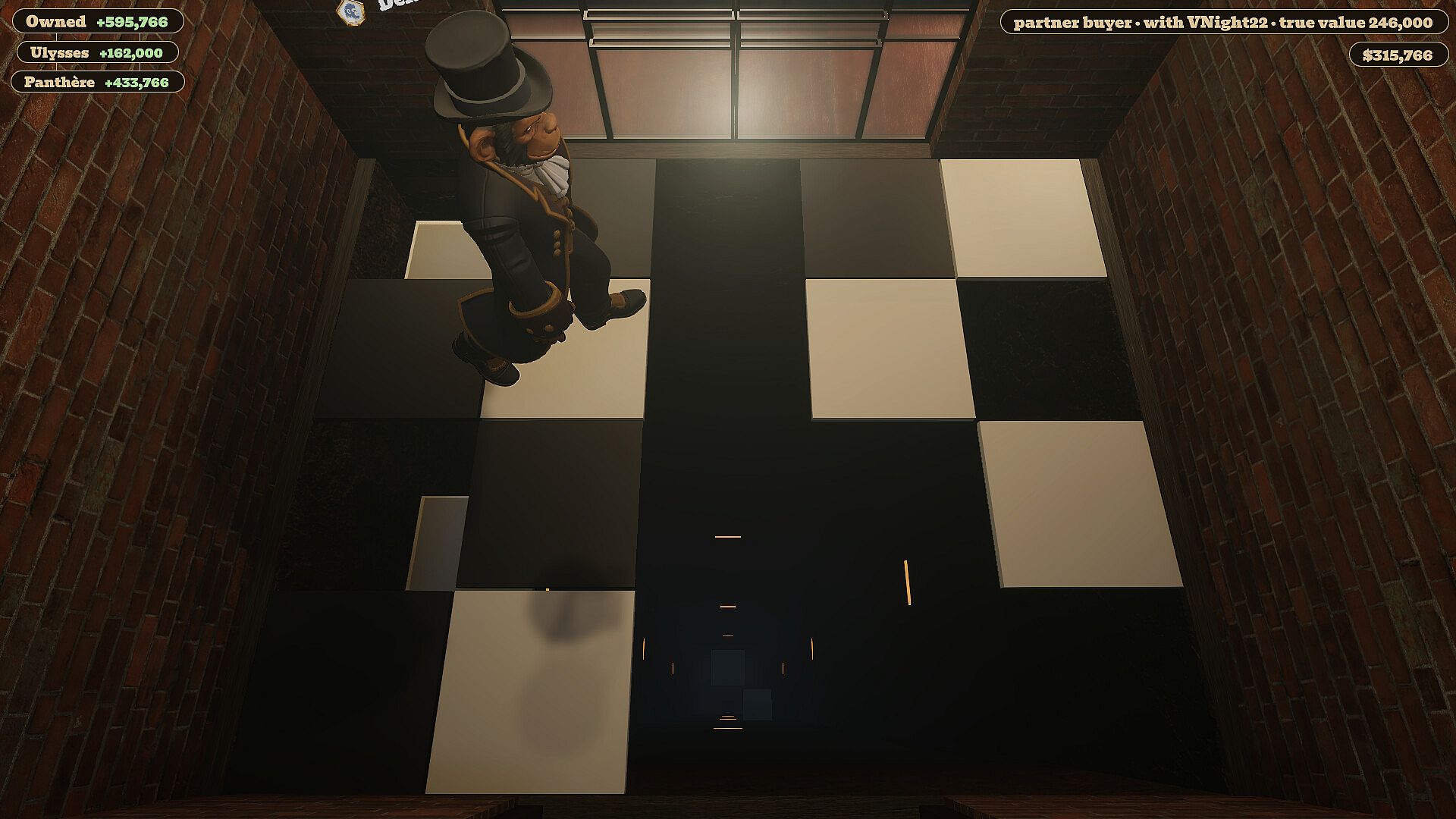
Bids appear publicly on paddles, and all players start with equal budgets. The auctioneer decides the winner, not necessarily the highest bidder, allowing sales to partners at low prices or forcing expensive purchases on skeptics. Accusations of partnership send the group to a voting phase where buyers decide the truth, and the loser enters an elimination minigame chosen by the room. Eliminated players continue observing the proceedings. Profit comes from acquiring genuine items cheaply, while overpaying for forgeries depletes resources permanently. The side with the most remaining money at the end claims victory once all roles are revealed.
Game Modes
Blind Gavel structures play around a single continuous session rather than separate named modes. The auction phase forms the main activity, incorporating examination of items, public bidding, and the auctioneer's control over sales. A separate voting and accusation system handles suspicion and elimination, leading into minigames that determine fates. The setup supports online or LAN matches with in-game voice chat to facilitate the arguments and negotiations central to success. Empty seats fill with bots that participate in bidding, accusations, and minigames to maintain full tables.
Key Mechanics
Physical first-person interactions place emphasis on watching the auctioneer handle items directly. Players click the protective glass for close inspection and use paddles to display bids visibly to everyone. The elimination process involves the entire room voting on both the outcome of accusations and the specific minigame used to resolve them. Partners operate with hidden knowledge while blending into normal bidding behavior. Budget management proves critical because spent funds cannot be recovered or reused across lots. At the conclusion, all participants learn the true roles and results.
Is It Worth Playing?
Blind Gavel suits groups seeking a social strategy experience built on deception and live discussion rather than fast reflexes or solo progression. Its focus on voice chat and table talk makes it ideal for parties or regular multiplayer sessions where reading opponents matters more than individual skill. The inclusion of bots allows smaller groups to fill out lobbies without waiting. With no confirmed updates or additional content beyond the core auction and elimination systems, the game delivers a self-contained session that rewards repeated play through shifting alliances and improved deduction. Those who enjoy casual strategy titles with strong interpersonal elements will find the mechanics engaging, while players preferring solo campaigns or large-scale action may prefer other options. Availability remains limited to PC through standard digital distribution.