


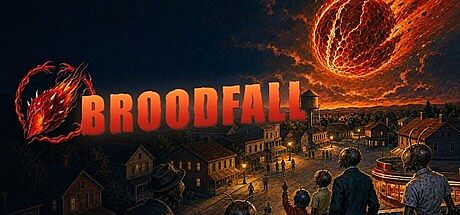



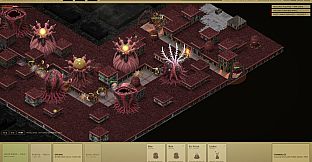
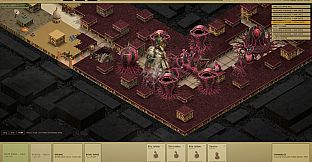
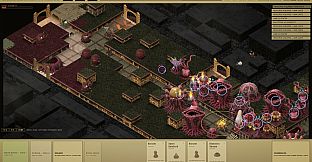
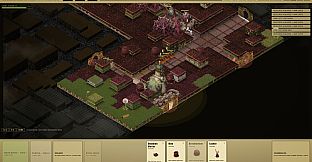

Broodfall is a tower defense roguelite that blends strategic placement with narrative choices in a single player experience on PC. Players take on the role of an exterminator deployed by a far future Christian extremist human empire, tasked with consuming districts of an intelligent insect city through creeping biomass and defensive limbs.
Gameplay
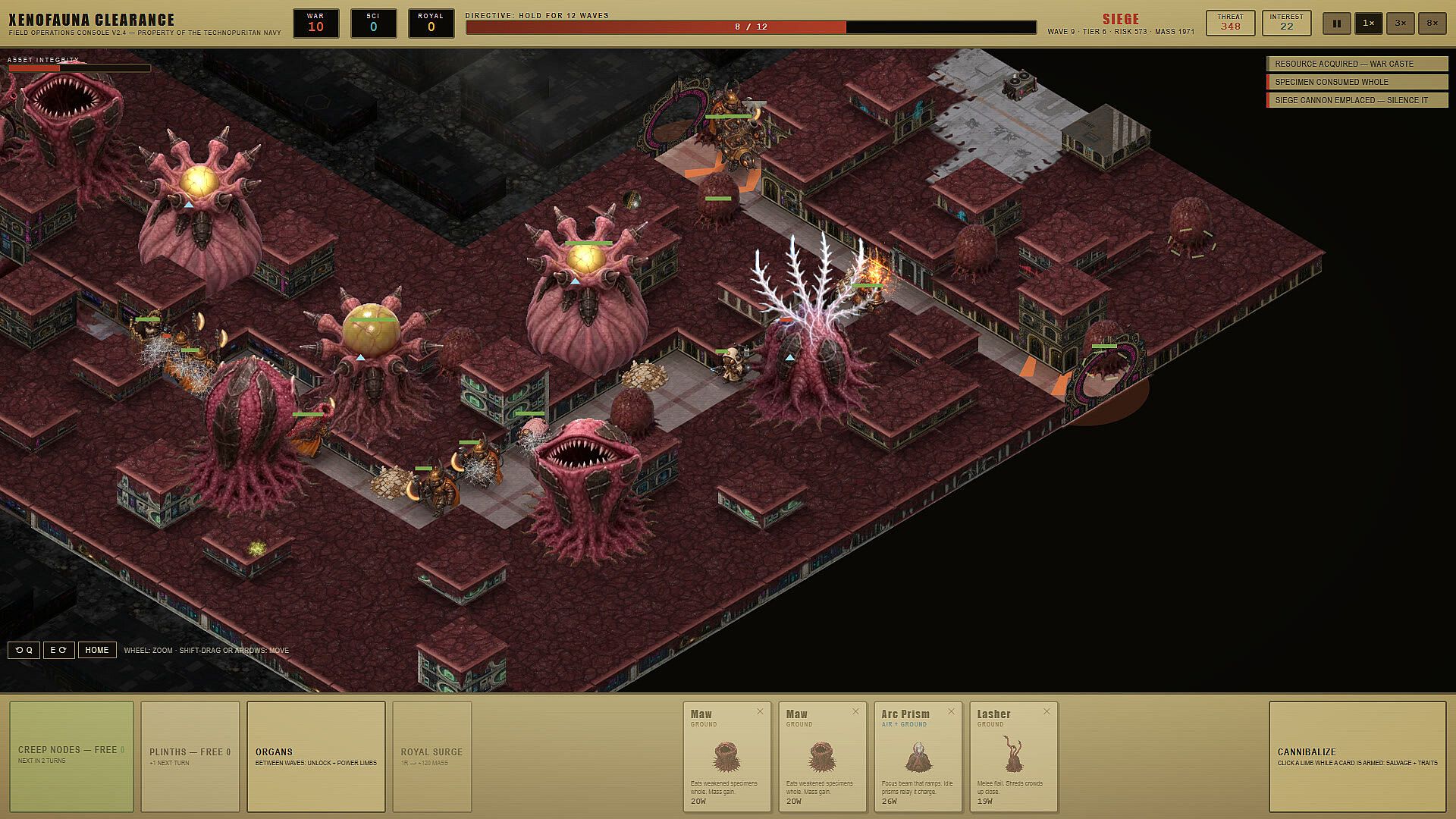
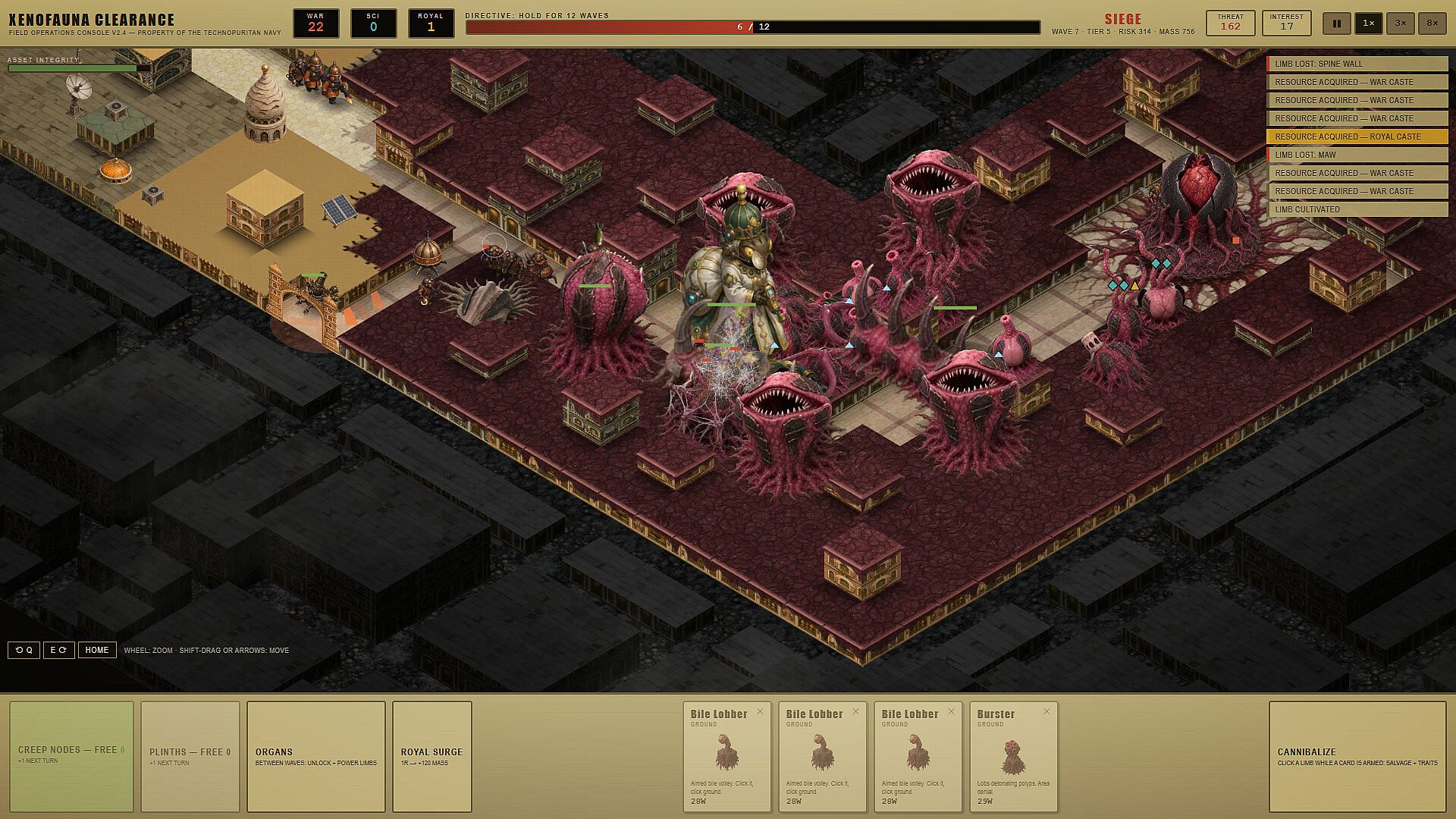
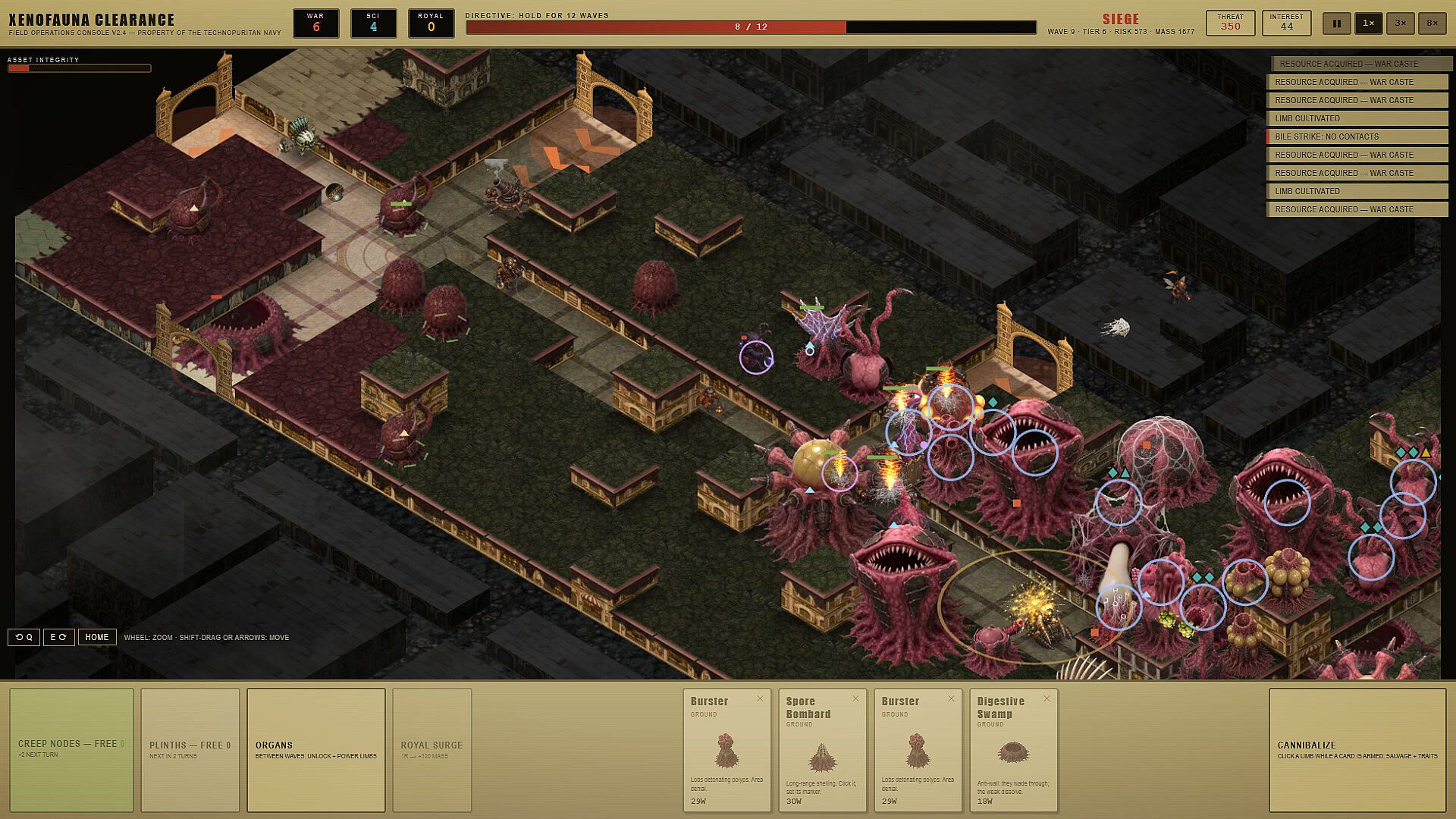
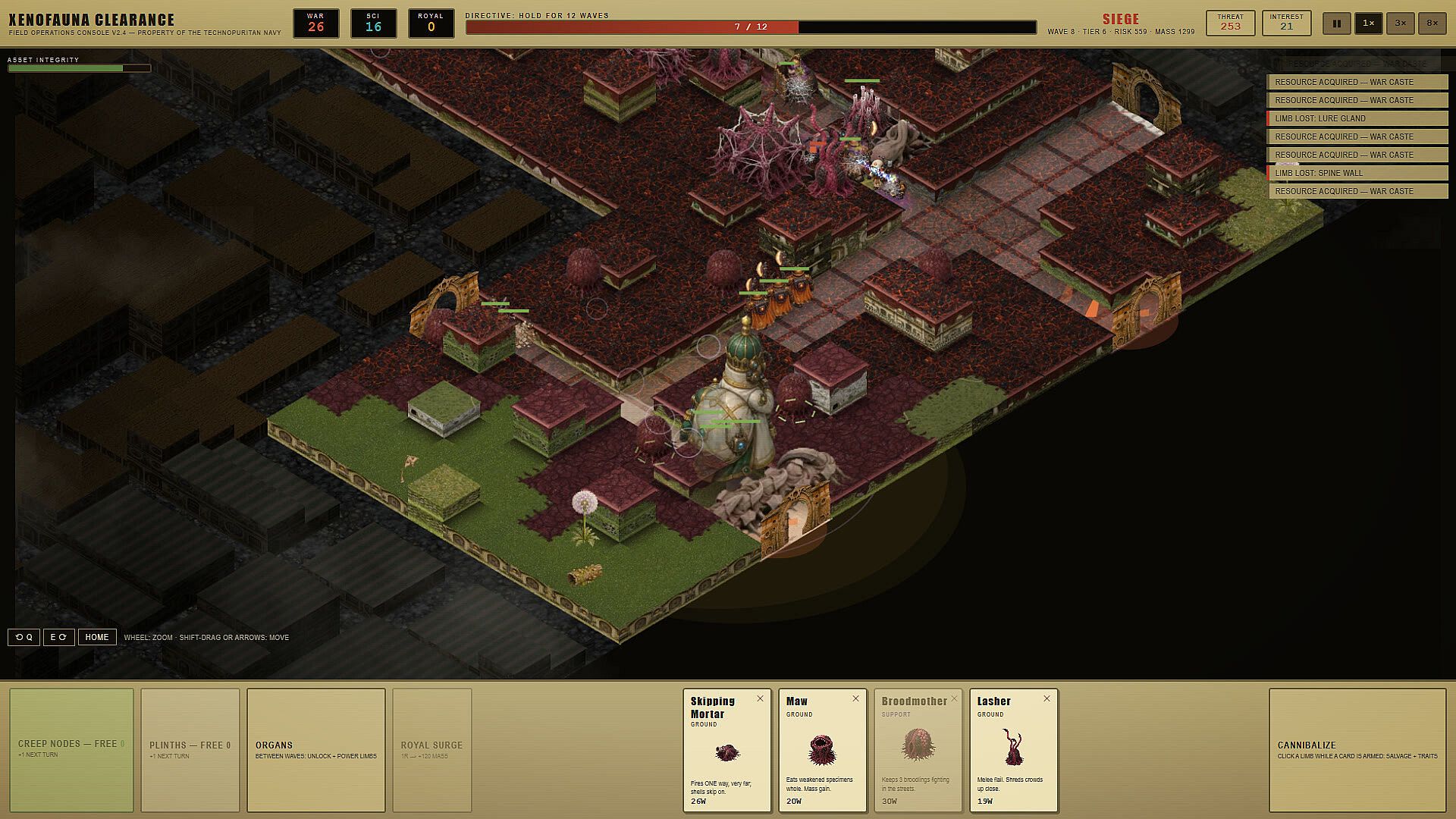
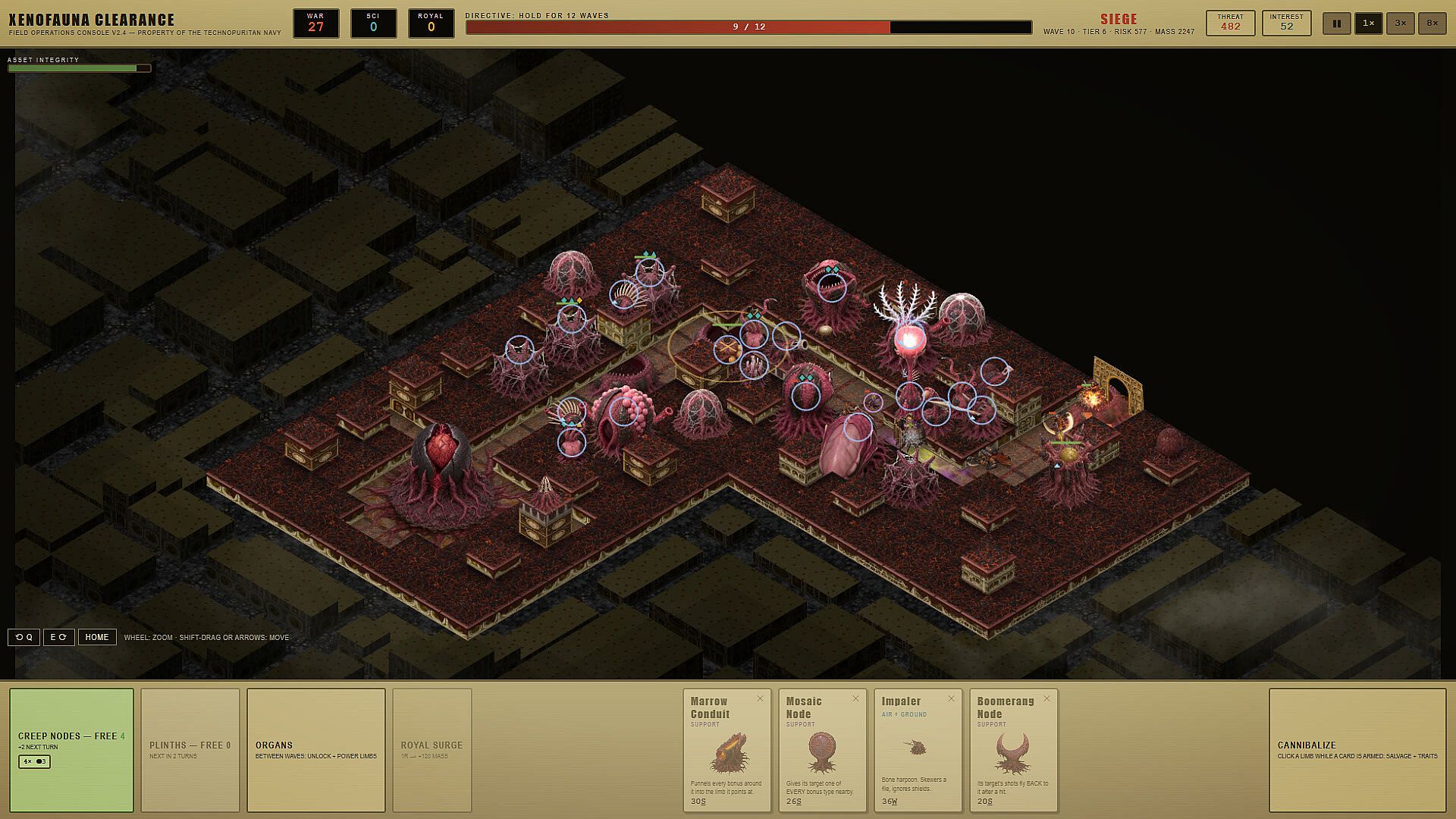
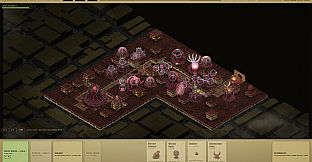
The core loop centers on growing a living body across city blocks while defending a buried core from advancing enemy waves. Creep spreads to claim territory, and limbs grown on rooftops serve as towers with distinct attack types. Height provides range advantages on rolling terrain, and players read upcoming threats through telegraphed gates and wave compositions on the interface bar.
Seventeen limb families offer thirty six options, including acid spitters, chaining lightning fronds, aimed spore bombards, swallowing maws, snare beds, blight vents, ember sacs, broodmothers that spawn their own units, shielding ward membranes, and spine walls. Each limb targets ground, air, or both. Between waves, the view shifts underground to tile shaped organs around the meteor core. Theme organs unlock and upgrade groups of limbs, while adjacent organs share effects such as poison or other traits. Hearts, brains, and glands provide direct boosts, and unspent meat carries no value into the next wave.
Three enemy castes shape the challenge. War caste units provide meat for growth. Science caste researchers analyze defenses and attempt to remove limbs unless intercepted. Royal caste units appear during crises, strengthen nearby forces, and supply raw mass. Players can cannibalize their own limbs to recover resources and bank traits as stacking pips for future growth. Every limb progresses through three stages with branching A or B choices, the final stage requiring a royal point.
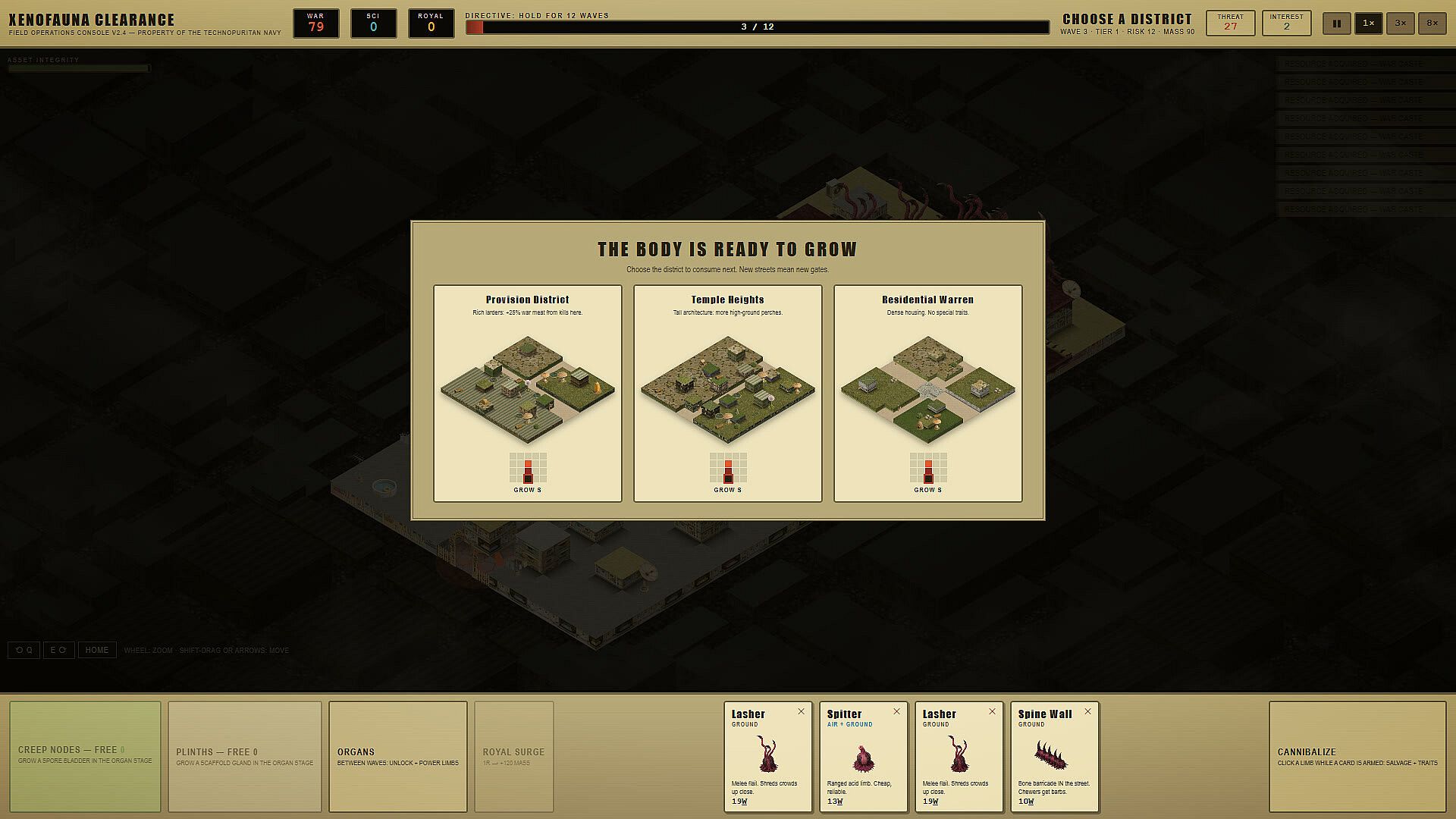
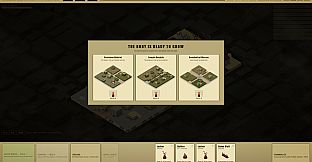
Science meat funds combo engines such as conduits, amplifiers, mosaic nodes, twinning glands, capacitors, and mitosis nodes that duplicate bonuses. The map expands by drafting one of three handmade districts every third wave, each featuring unique streets, high ground, and gates. Spore bladders generate free creep nodes whose properties depend on touching organs, allowing nodes to spread further if they survive.
Game Modes
Campaign mode follows directives across a globe of seventeen landing sites, with story unfolding aboard the drop ship between deployments. Each deployment requires holding for twelve waves, eliminating a royal target, or meeting a science quota. Quick Deployment offers a skirmish with all content unlocked on random or chosen seeds. Defence deployments trigger when held territory faces counter attacks, presenting a single large siege with pre grown core and banked meat, announced one turn in advance.
A deployment typically lasts twenty to thirty minutes including the organ stage. The campaign consists of multiple such runs. Difficulty scales by opening additional gates at deployment for greater rewards and tougher sieges. Accessibility options include colour blind safe caste colours, reduced motion and flashes, adjustable text size, and subtitles.
Narrative and Progression
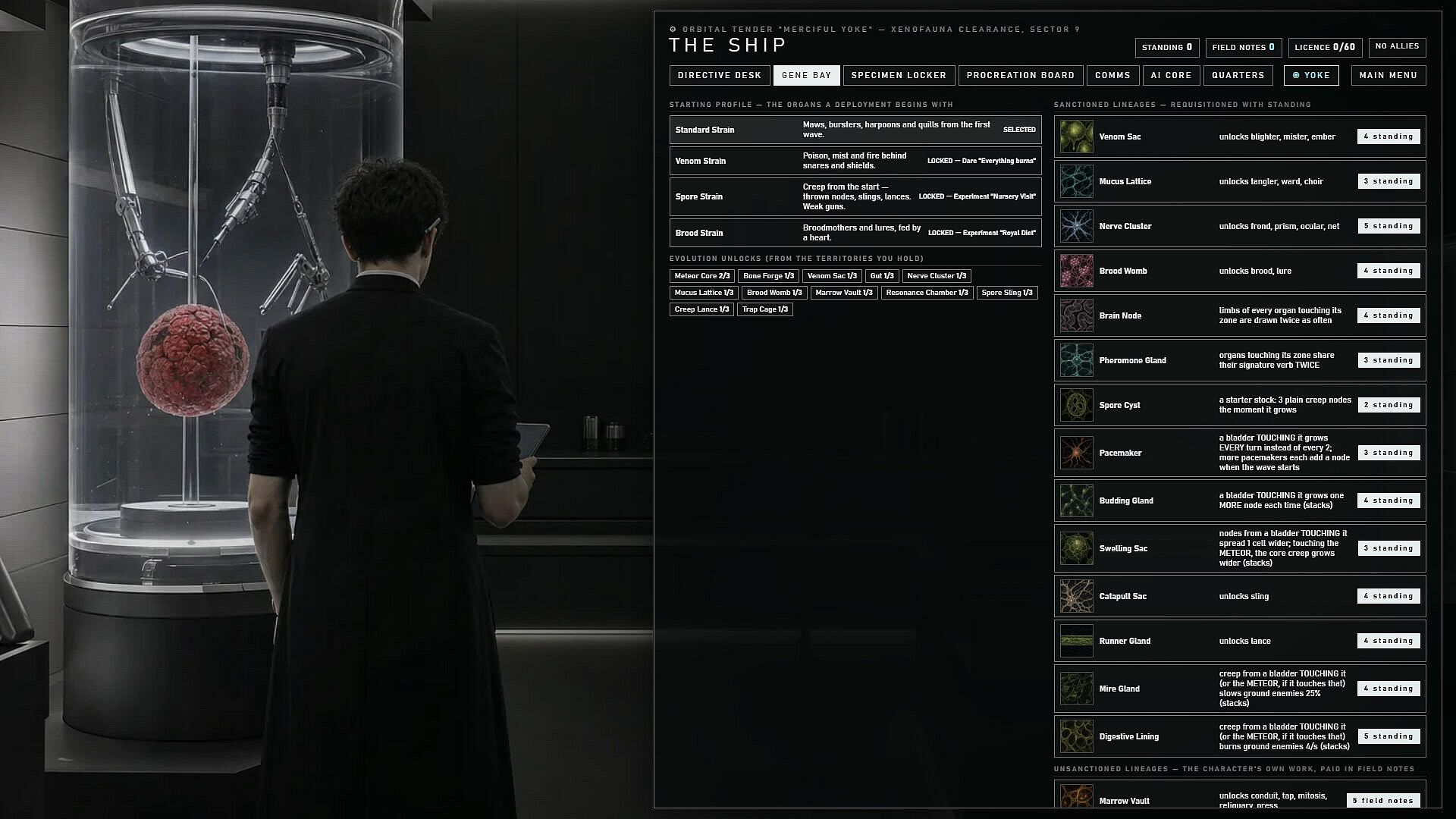
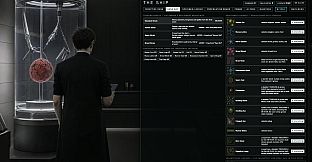
Story elements occur on the ship with the character YOKE, who reviews reports and responds to player dialogue. Directives span sites from the Crash Site and Granary Belt to Temple Terraces, Glass Spires, and the Hive House. Three local factions send signals with distinct routes and endings: the Friendship Delegation, the Faithful of the Last Hour, and the Institute for Long-Term Hive Flourishing. Additional activities include gene splicing in the Gene Bay, selecting a starting strain such as Standard, Venom, Spore, or Brood, maintaining a notebook of eight hobby missions, collecting comics, and intercepting broadcasts from the Roach King. The overarching goal involves securing a licence to have a family from the Empire.
Is It Worth Playing?
Broodfall suits players who enjoy tower defense combined with roguelite progression and layered decision making in both combat and resource management. The system of cannibalizing limbs to transfer traits, evolving through stages, and chaining organ effects creates meaningful runs that reward experimentation with limb families and engine builds. Those drawn to narrative driven strategy games with branching faction paths and ship based dialogue will find the campaign structure engaging, as each deployment ties into larger directives across the globe.
The mix of readable wave threats, height based positioning, and underground organ tiling adds tactical depth without overwhelming complexity. Accessibility features support varied play styles. For anyone seeking a focused single player experience that merges classic real time strategy pacing with modern roguelite and deck building influences, the game delivers a distinctive loop worth exploring through its demo or full campaign.












