




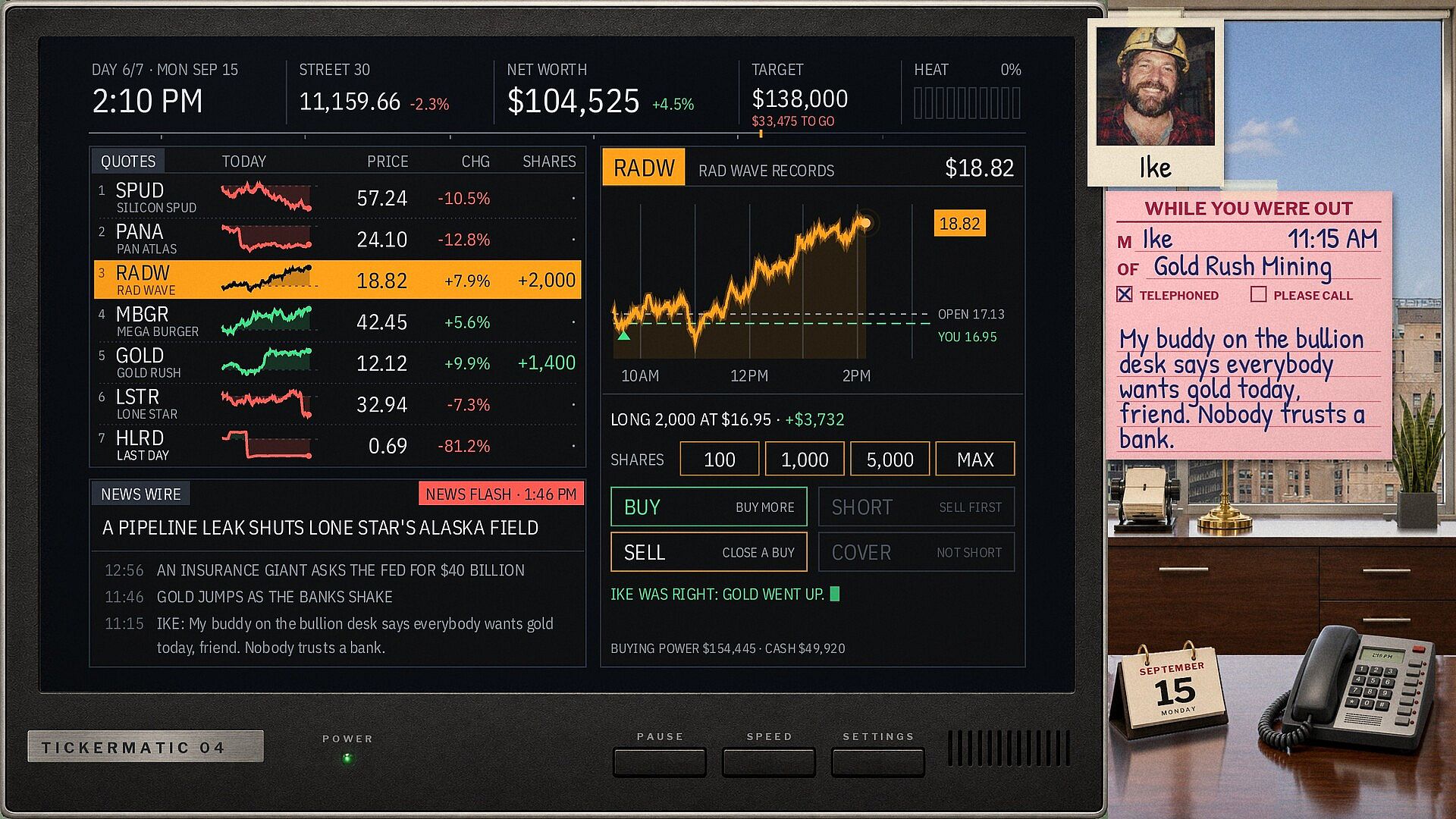
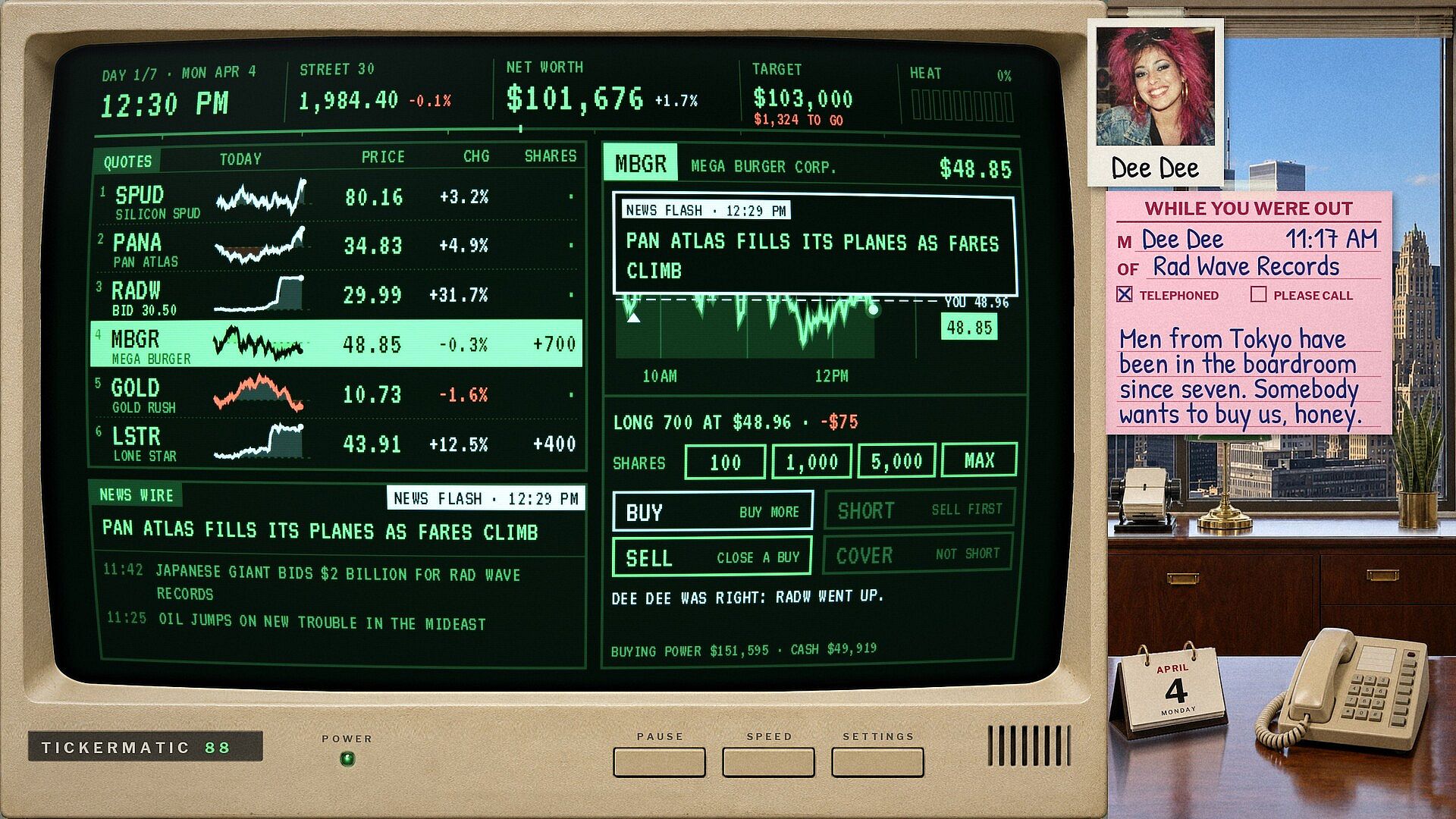
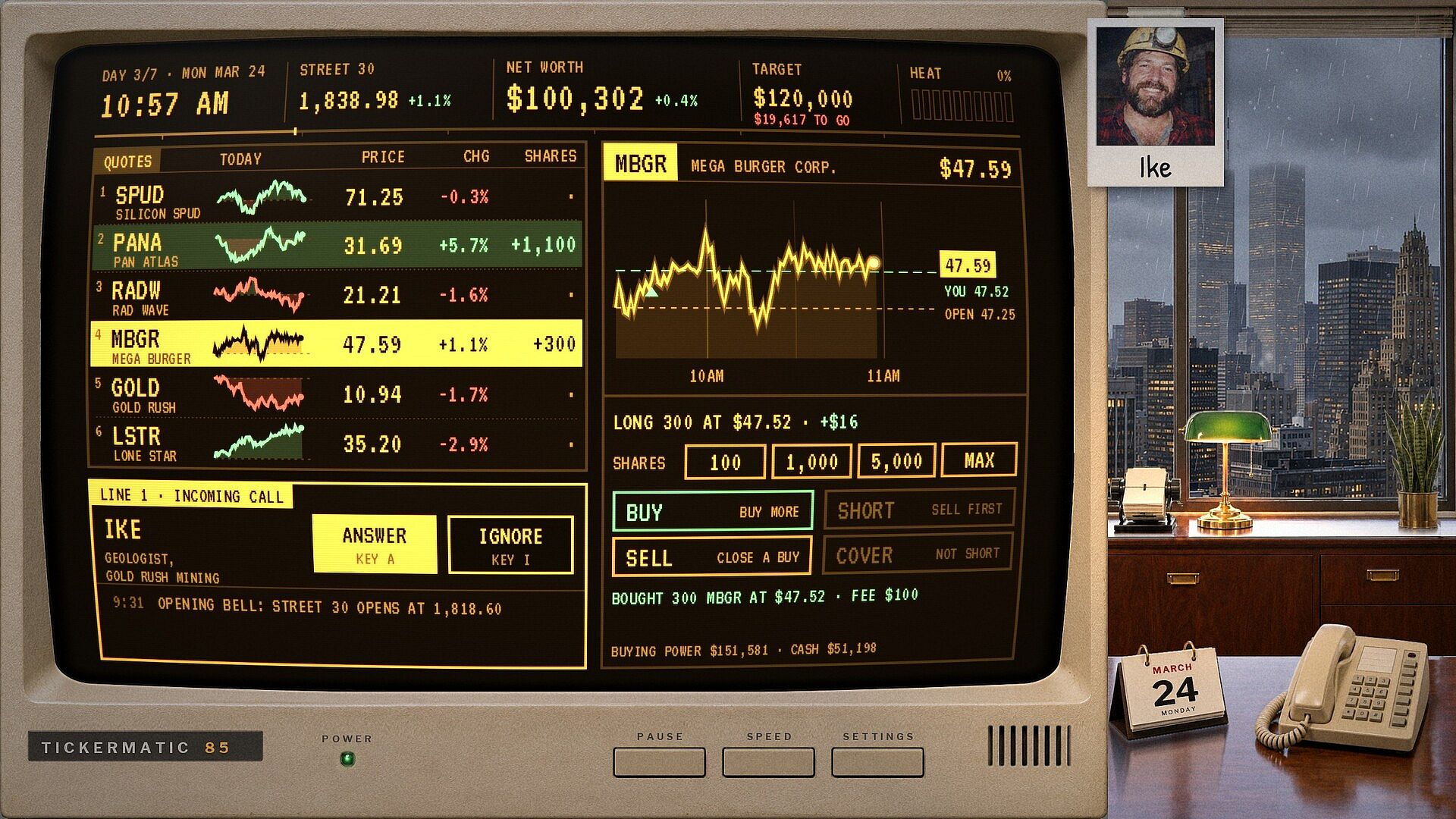
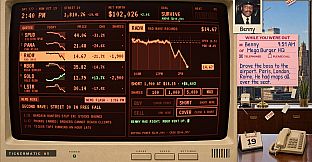
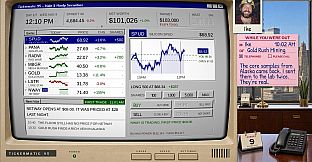
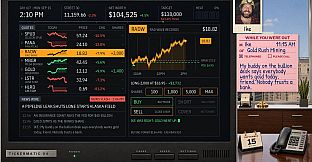
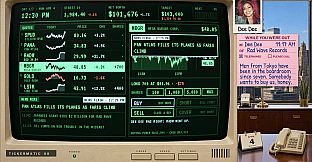
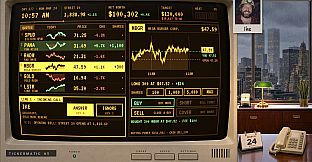
Bull Trap is a strategy, indie, and simulation game set on PC that places players in the role of a Wall Street trader navigating four distinct eras of market history. The experience unfolds through live trading sessions where decisions on buy, sell, short, and cover orders respond directly to incoming headlines, wire stories, and phone tips. Starting with a modest $100,000 account in 1985, the goal centers on building wealth ahead of major crashes while managing the growing attention from regulators and superiors.
Gameplay
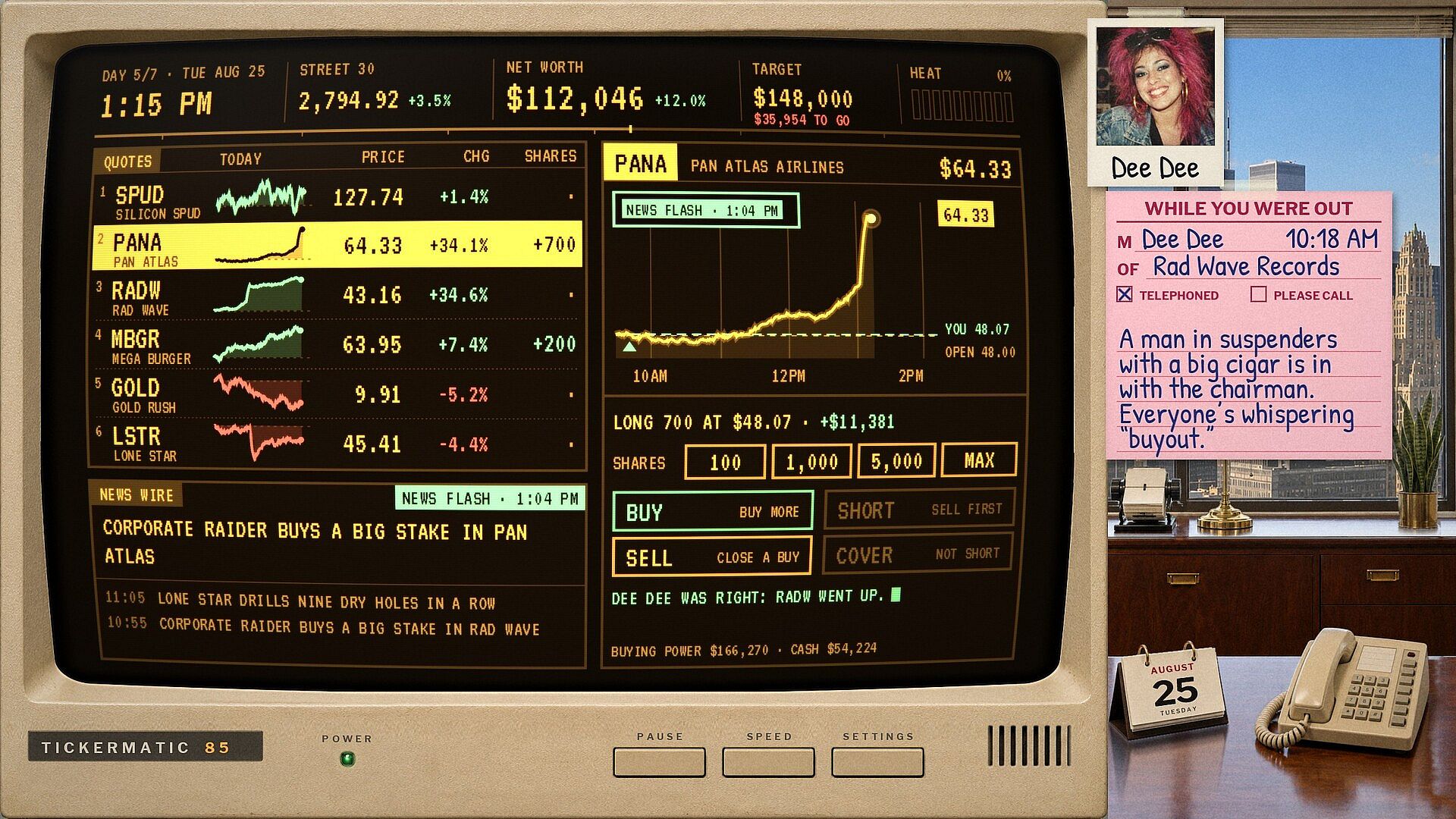
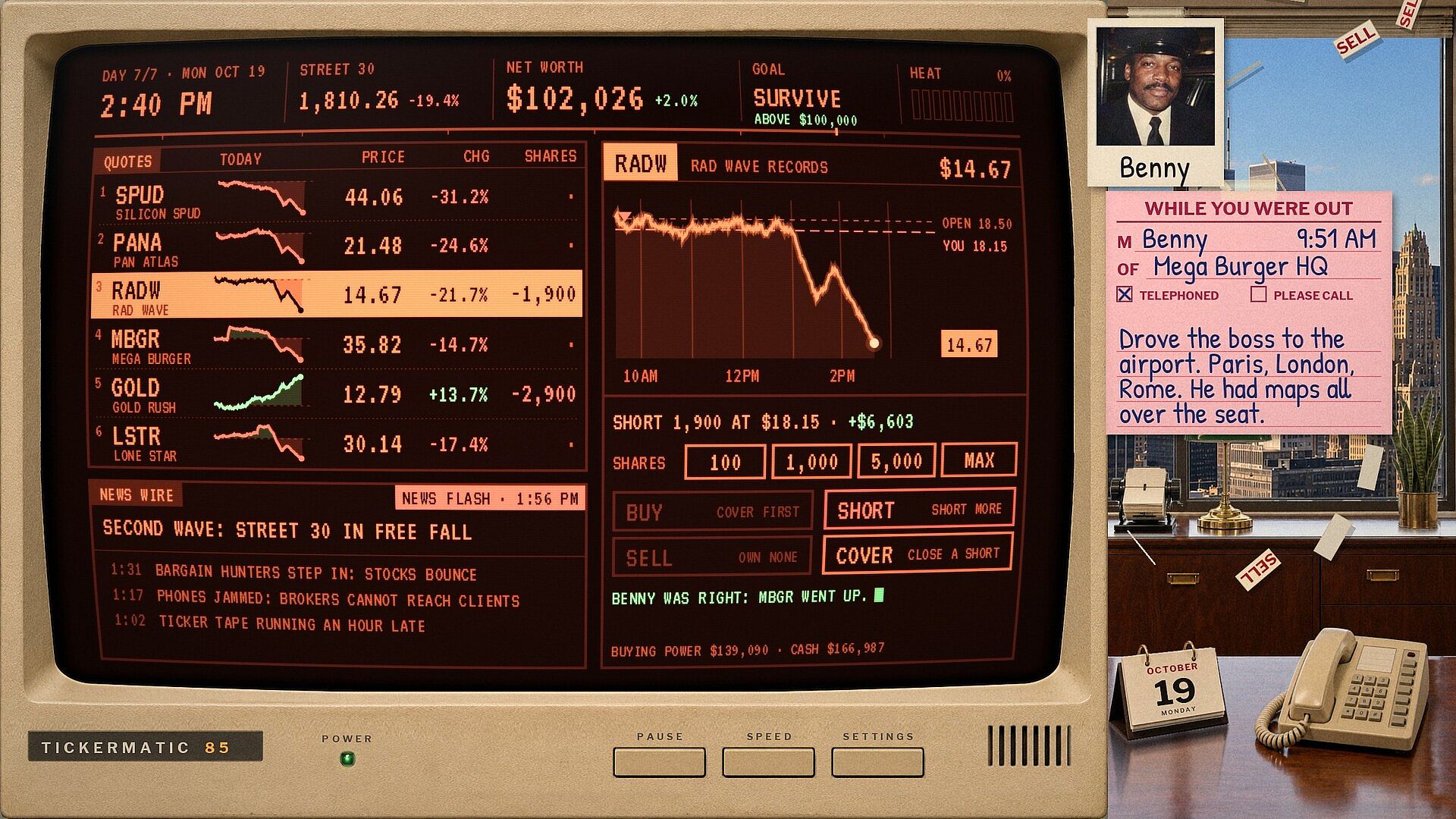
Each trading day runs in real time from the opening bell to the close. Players monitor an evolving board influenced by market movements and external events, using margin borrowing to scale positions and stop-loss orders to limit downside risk. Between sessions, evenings involve choices such as attending partner dinners, visiting Doyle's bar, or responding to SEC correspondence. Profits fund upgrades like a car phone or answering machine, and these items combine with contacts to improve outcomes. The core loop rewards careful risk assessment because aggressive tip usage draws warnings, investigations, and eventual federal intervention.
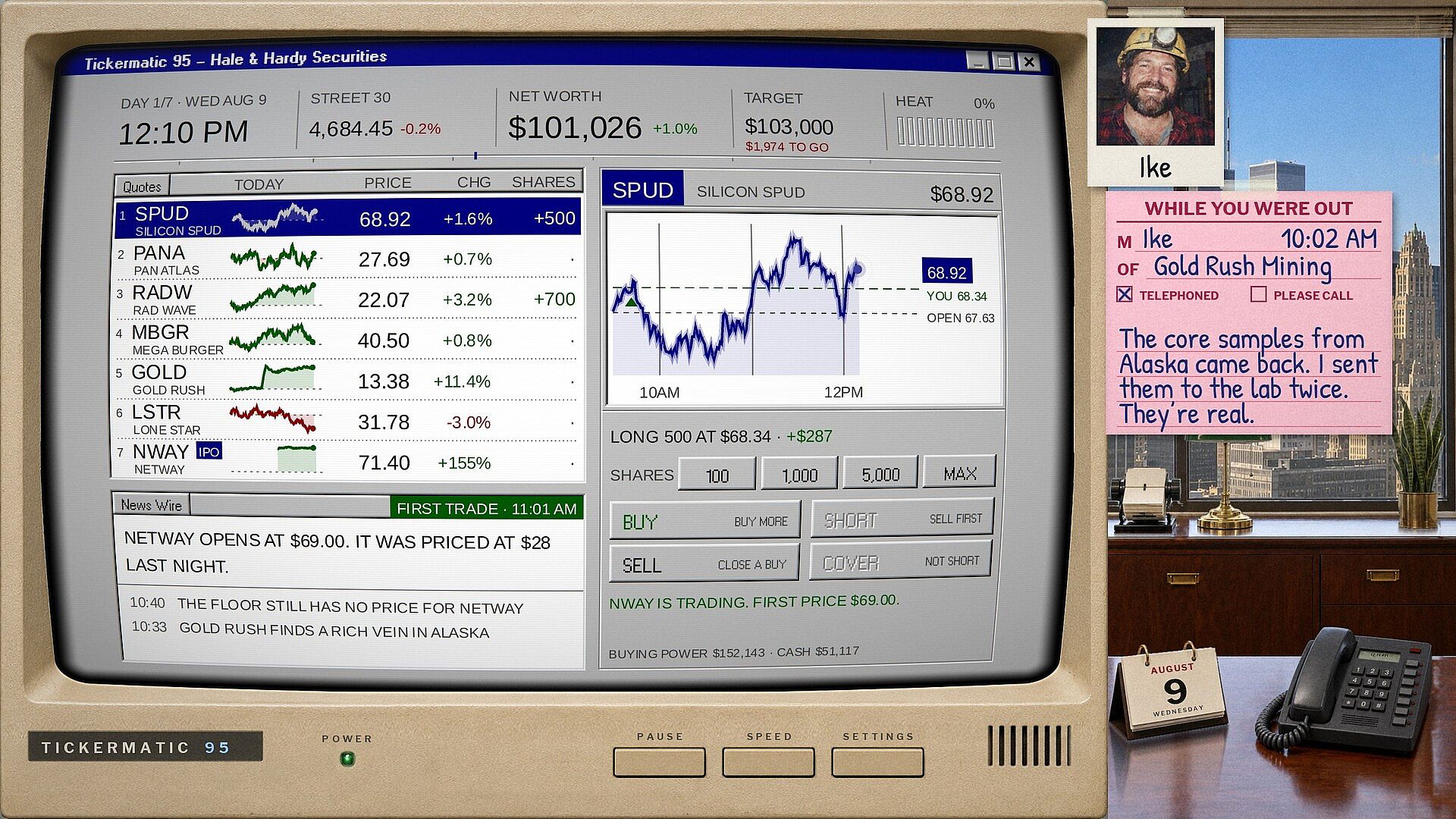
Contacts form the backbone of information flow. A card file holds sources ranging from a doorman at a computer company to an airline secretary, a mining geologist, a gossip columnist, an SEC clerk, and the enigmatic Mr. X. Each tip carries both profit potential and legal exposure, forcing players to balance gains against mounting heat. Gear selections further shape strategy, with options that support larger trades or better protection during volatile periods.
Game Modes
Four chapters cover specific Wall Street eras, each featuring seven market days drawn from real historical events. The Eighties chapter runs from 1985 to 1987 on an amber terminal amid record highs that culminate in Black Monday. Greed and Junk spans 1988 to 1991 with green-screen terminals, junk bonds, and buyout activity tied to the Gulf War. The Bubble era covers 1995 to 2000 through office PCs and browser IPOs that end with the dot-com collapse. The Meltdown chapter takes place from 2004 to 2008 on flat panels in glass towers during the housing boom and the congressional vote on bank rescue. Later careers allow substitution of some days with alternatives from the same years.
Surviving Black Monday unlocks the Free Market, an endless mode of procedurally generated trading days on one of four terminals spanning 1986 to 2006. The firm demands increasing weekly performance, newcomers enter and exit through buyouts or failures, and every seventh day presents a major event. Reaching 42 days in this mode grants Legend of the Street status. Three difficulty desks Rookie, Broker, and Shark adjust starting conditions and pressure levels across all modes.
Contacts, Gear, and Progression
Thirteen contacts supply tips that range from highly profitable to legally risky. Eleven pieces of gear, including stop-loss orders and communication tools, enhance trading efficiency when paired effectively. Progression tracks across 26 achievements that recognize milestones such as completing eras or mastering the Free Market. An original soundtrack accompanies each era, shifting from 80s synth to 90s trip-hop and 2000s thriller styles. Full controller support extends to Steam Deck compatibility, allowing flexible play sessions.
Every company, character, and product remains fictional, while market days draw inspiration from documented historical moments like the Plaza Accord and the 2008 bank rescue vote. This separation keeps the simulation grounded in era-specific mechanics without direct real-world replication.
Is It Worth Playing?
Bull Trap suits players who enjoy deliberate strategy and simulation gameplay focused on risk management and information handling rather than fast reflexes. The structured chapters provide clear progression through historical market contexts, while the Free Market offers extended replayability for those seeking open-ended challenges. Difficulty options accommodate different experience levels, and the combination of contacts, gear synergies, and regulatory pressure creates layered decision-making. Those drawn to trading simulations with narrative tension around ethics and consequences will find consistent depth in the systems. Availability on PC with controller support broadens access for varied play styles.











