












CADRE: Centralized Administration, Data & Reporting Environment is a turn-based political simulator in the strategy, indie, and simulation genres. Players take on the role of Chairman in a fictional state and manage its affairs across a fixed ten-year term divided into forty quarters. The experience centers on issuing edicts, overseeing provinces, and balancing competing pressures while the gap between official statements and actual results shapes every outcome.
Gameplay
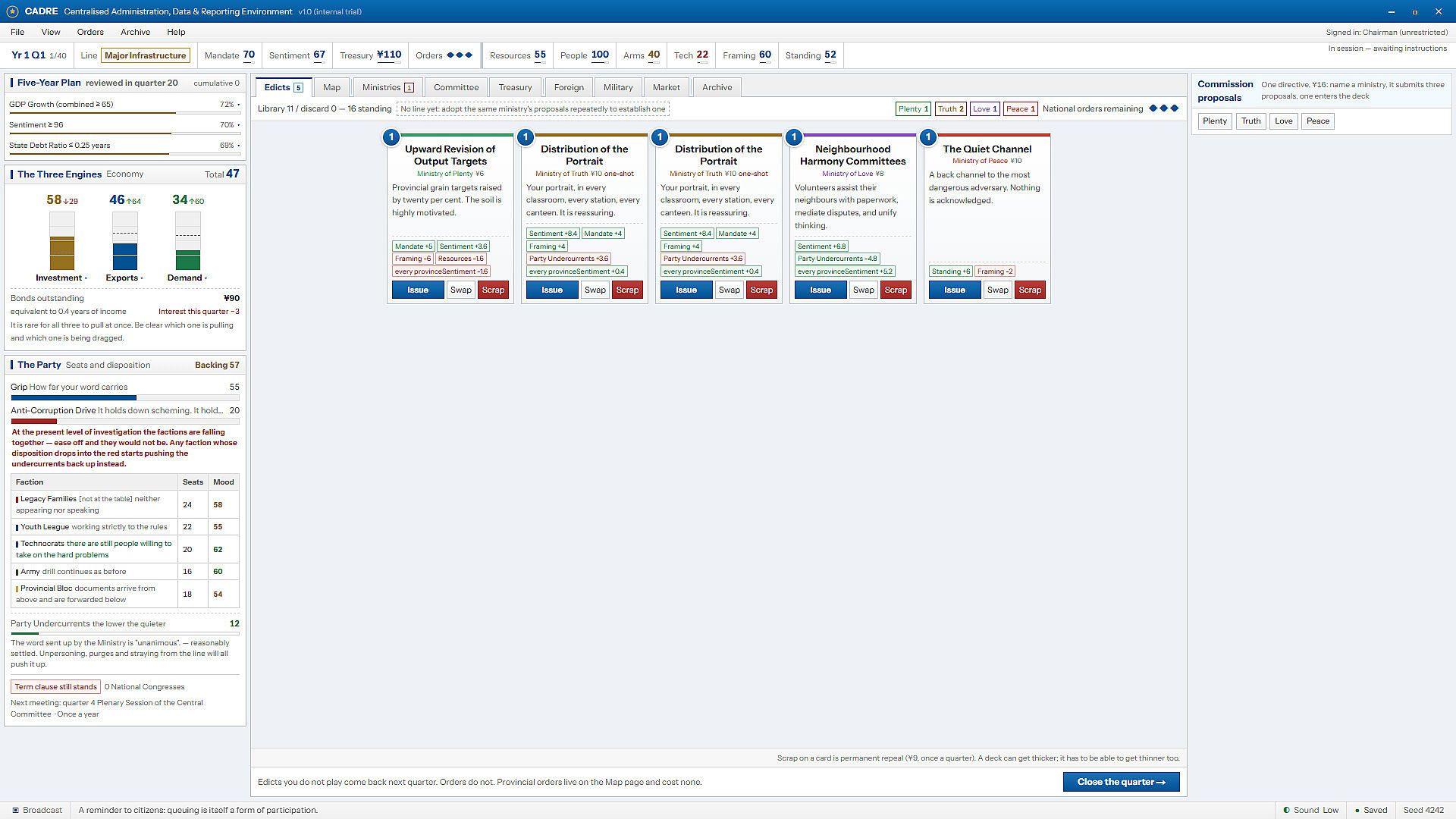
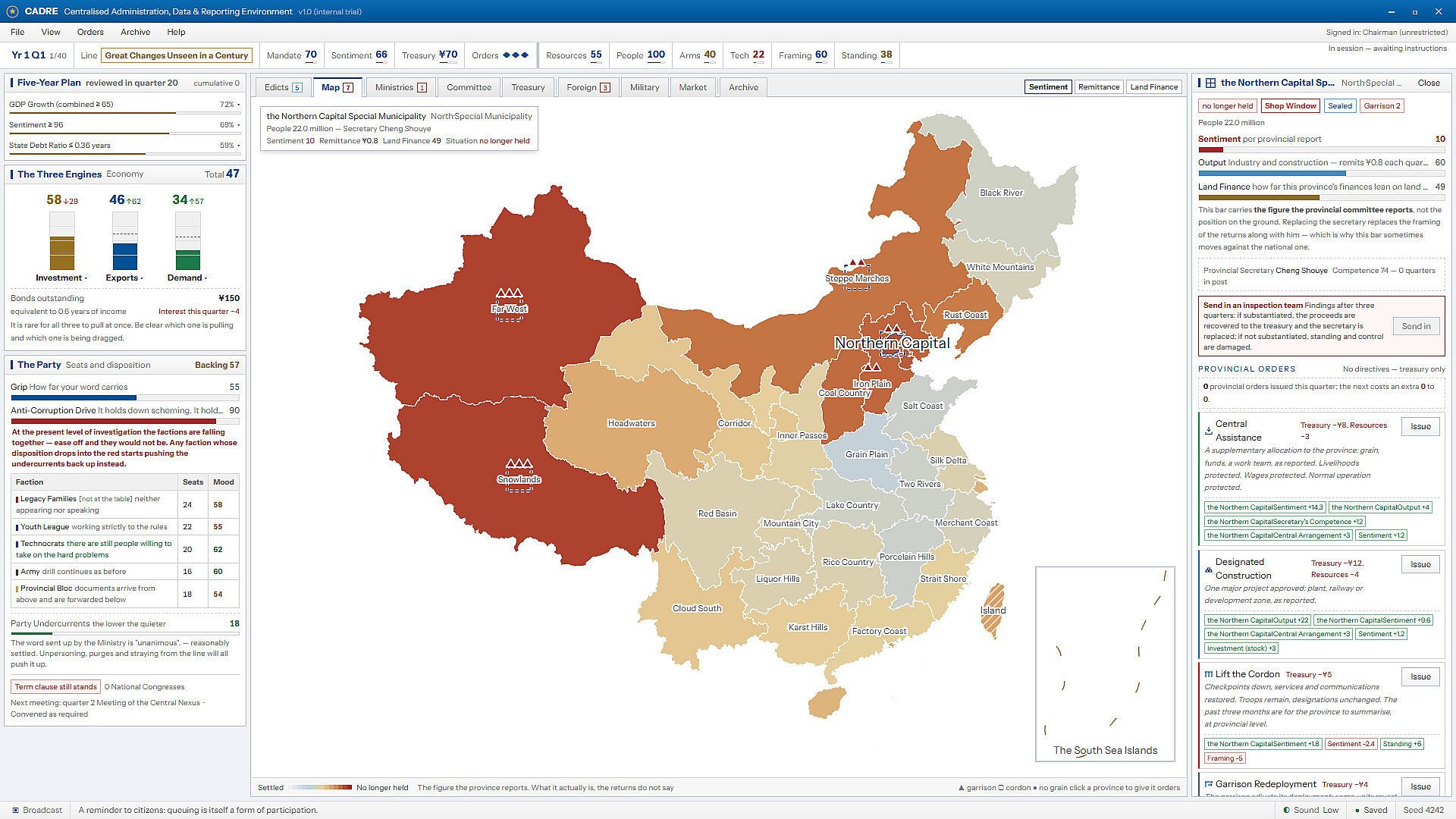
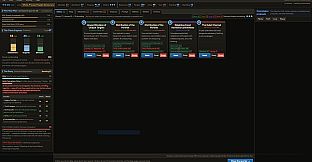
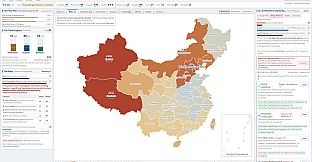
The core loop revolves around quarterly decisions presented through a governance terminal. Each edict arrives with a stated purpose that frames the action for external messaging and an actual outcome generated after the quarter resolves. Players handle grain distribution, garrison placements, land sales, currency printing, railway construction, colleague investigations, and record amendments. These actions affect thirty-four provinces whose self-reported figures form the only available data on national conditions.
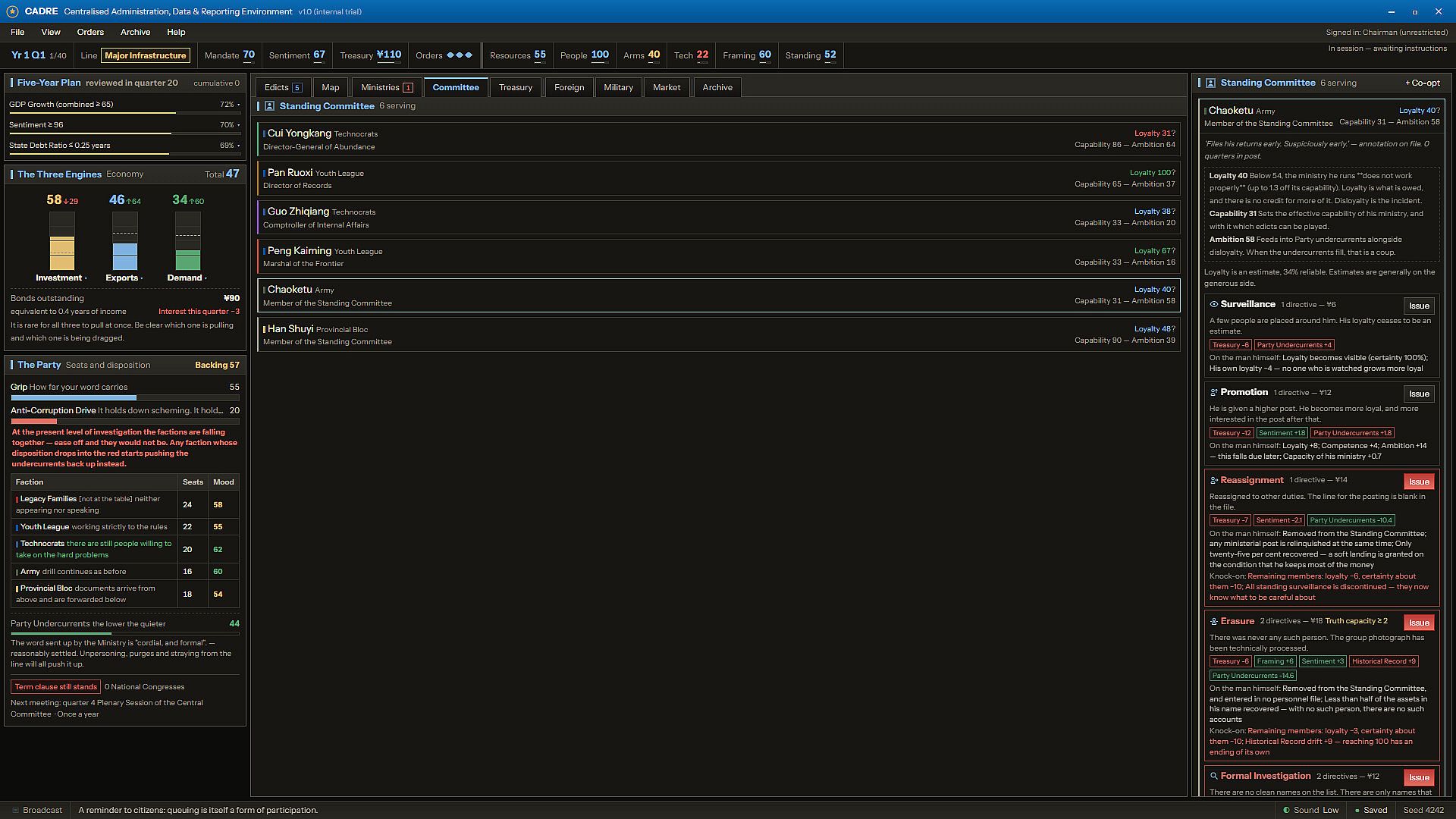
Provinces report unrest at roughly half its true level, with loyalty influencing how accurately information reaches the center. Investigations improve data honesty at a cost, while loyalty estimates carry confidence percentages that drop when surveillance is applied. Five factions issue demands with deadlines, and missing them carries lasting consequences for the Chairman's position. Events and set pieces interrupt the routine, requiring immediate responses that cannot be postponed.
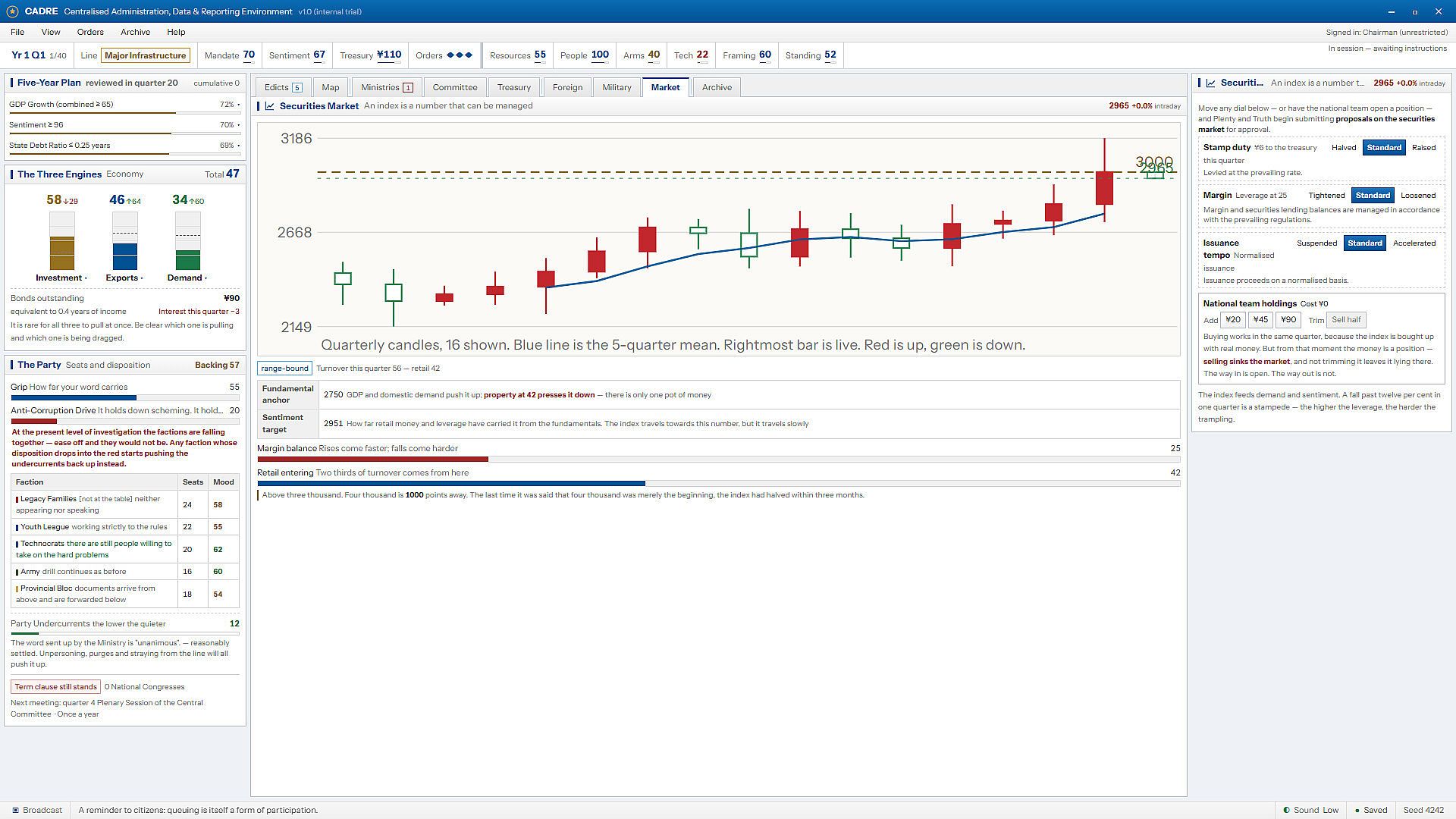
Three engines of growth, a stock market, and eight foreign policy instruments add layers of economic and diplomatic management. Personnel actions always list effects on the individual and on the broader group, forcing arithmetic on second-order impacts. Burning provinces or other crises generate formal requests that must be approved, delayed, or refused before the session ends.
Game Modes
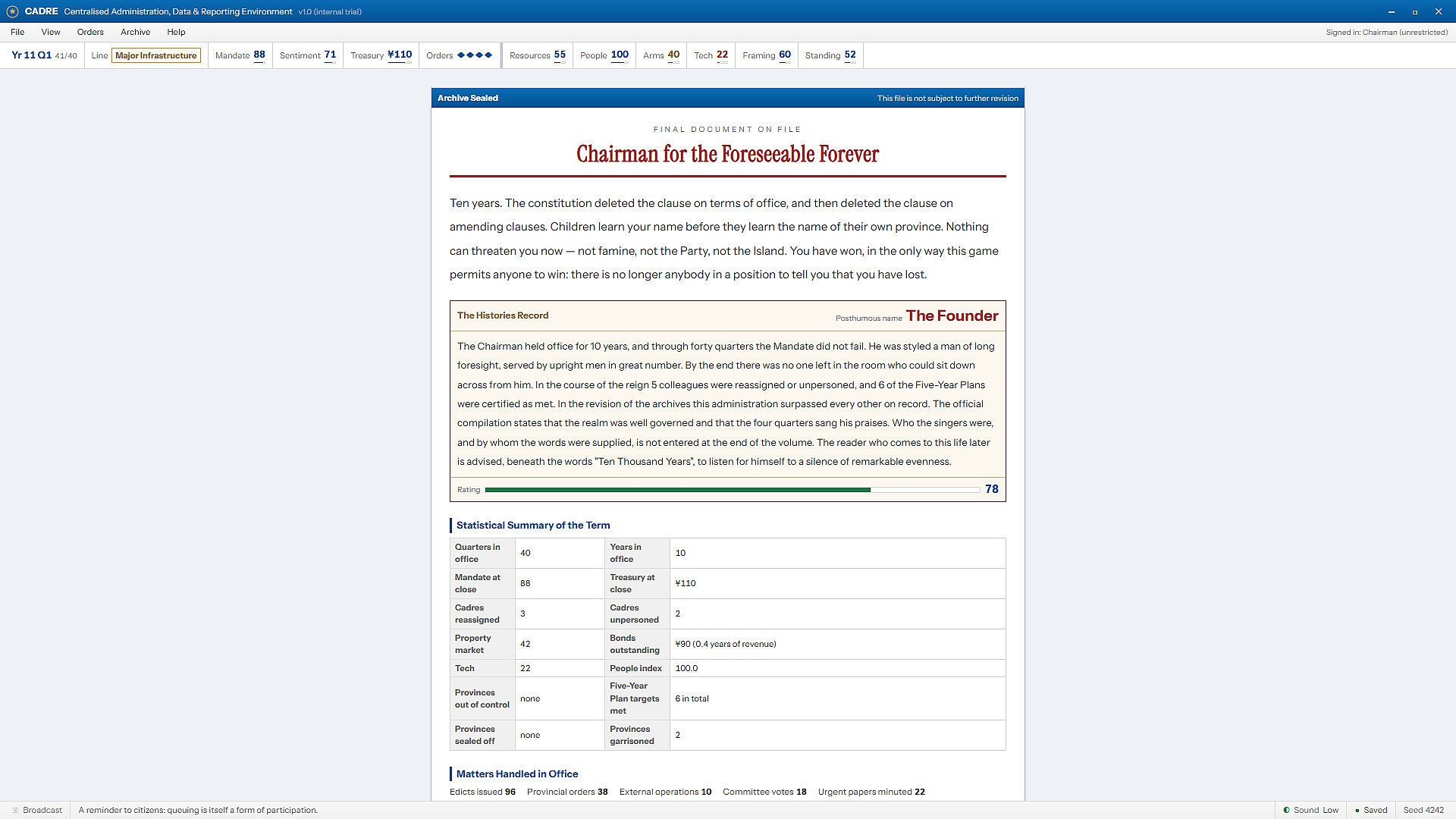
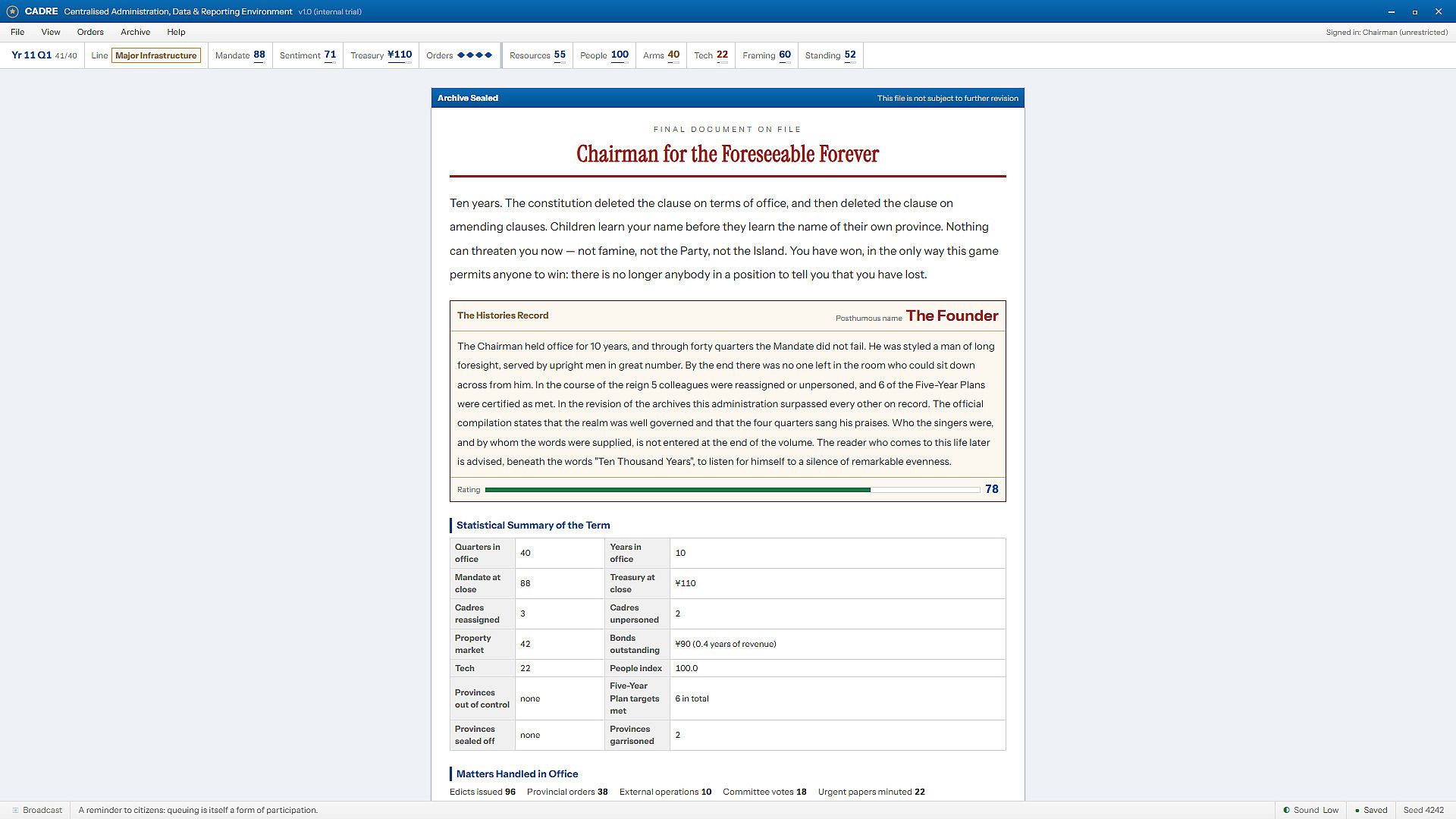
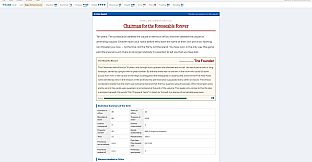
The game operates as a single-player experience with no multiplayer components. Six distinct openings set the initial conditions, ranging from an orderly handover to scenarios where the frontier is burning or particulars remain unavailable. Thirteen endings exist, each tied to a unique posthumous name assigned by historians after the term concludes. The codex records seen endings across runs while leaving unseen ones as single untitled lines.
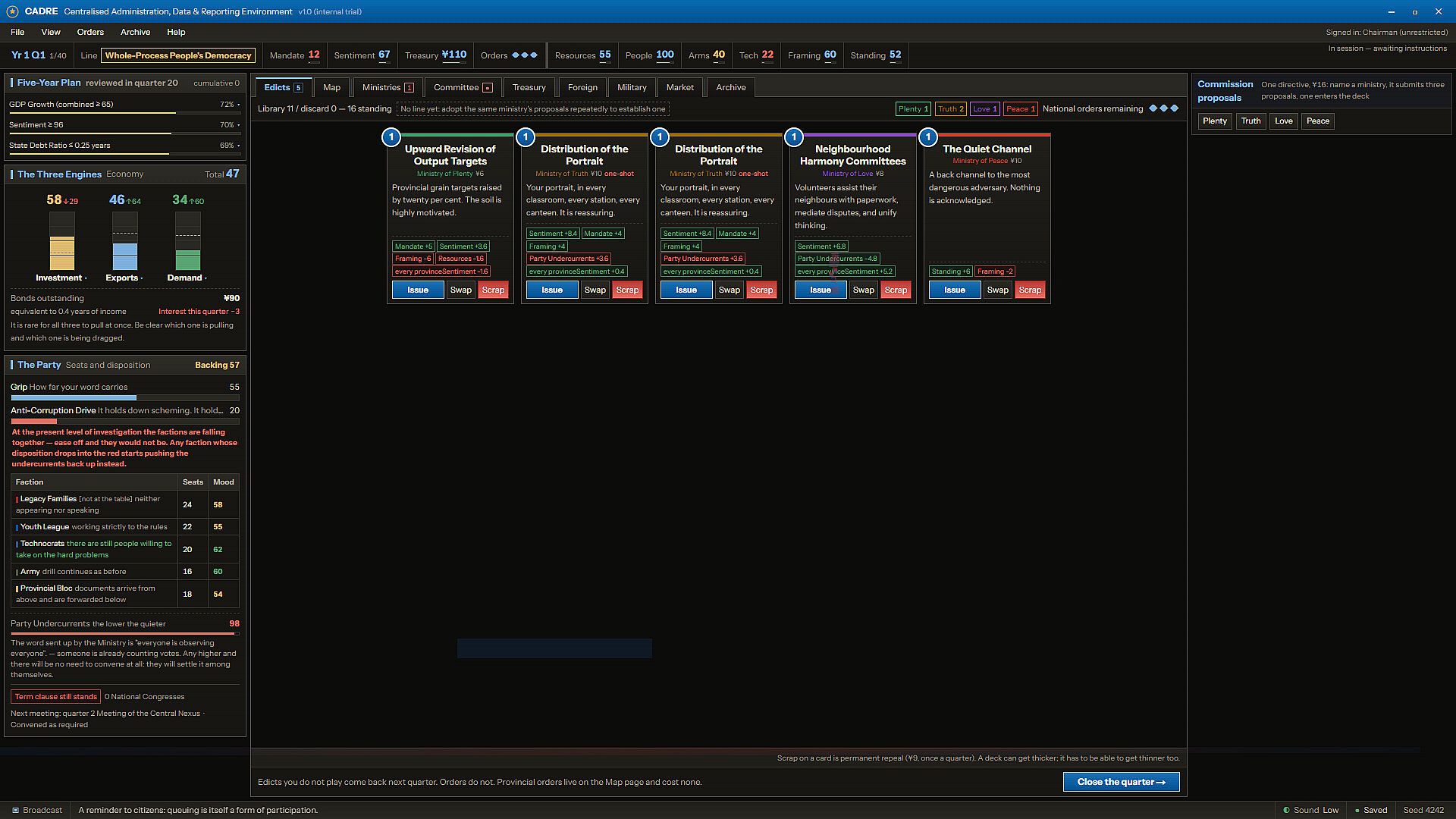
Deterministic simulation ensures the same starting seed produces identical events and outcomes on replay. A night duty mode alters the terminal interface to a subdued color palette suited for late sessions. The archive preserves every decision and allows amendments, though records of those changes disappear. Bilingual presentation delivers all text in two languages written independently rather than translated.
Key Mechanics and Systems
National sentiment emerges only as a weighted average of provincial reports adjusted for provinces that have stopped coping. Party undercurrents and records display ministry phrasing that labels low figures as unanimous or cordial. The standing committee shows loyalty estimates alongside the option for targeted surveillance that reduces the subject's loyalty by a fixed amount.
Trade-offs appear throughout. Selling land generates immediate funds and temporarily lowers unrest while inflating bubbles and debt. Garrisons reduce unrest at the expense of long-term loyalty, which in turn fuels further unrest. Self-reliance counters embargoes yet drains resources from other ministries. Propping up markets delivers short-term relief that locks funds away permanently.
Thirteen five-year plan targets appear across the term, with three per five-year segment and increasing difficulty. One hundred two edicts each carry paired stated and actual texts. Sixty events and twenty-seven set pieces provide additional narrative branches with openable attachments. Eleven kinds of formal requests demand on-the-spot answers.
Is It Worth Playing?
CADRE suits players who enjoy deliberate, systems-driven strategy with heavy emphasis on information asymmetry and unintended consequences. The deterministic structure rewards repeated runs to explore different openings and decision paths toward the thirteen endings. Its satirical tone emerges through the consistent gap between stated purposes and recorded results rather than through direct commentary.
Those seeking fast-paced action or transparent feedback loops may find the deliberate pace and opaque reporting frustrating. The game contains mature themes presented through official language, including famine concealment, purges, unrest suppression, and corruption. No graphic imagery appears. As an upcoming release with no player reviews available yet, its appeal rests on the detailed mechanics and replay structure outlined in the design.











