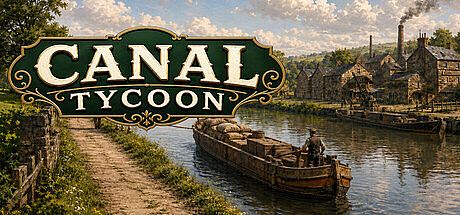


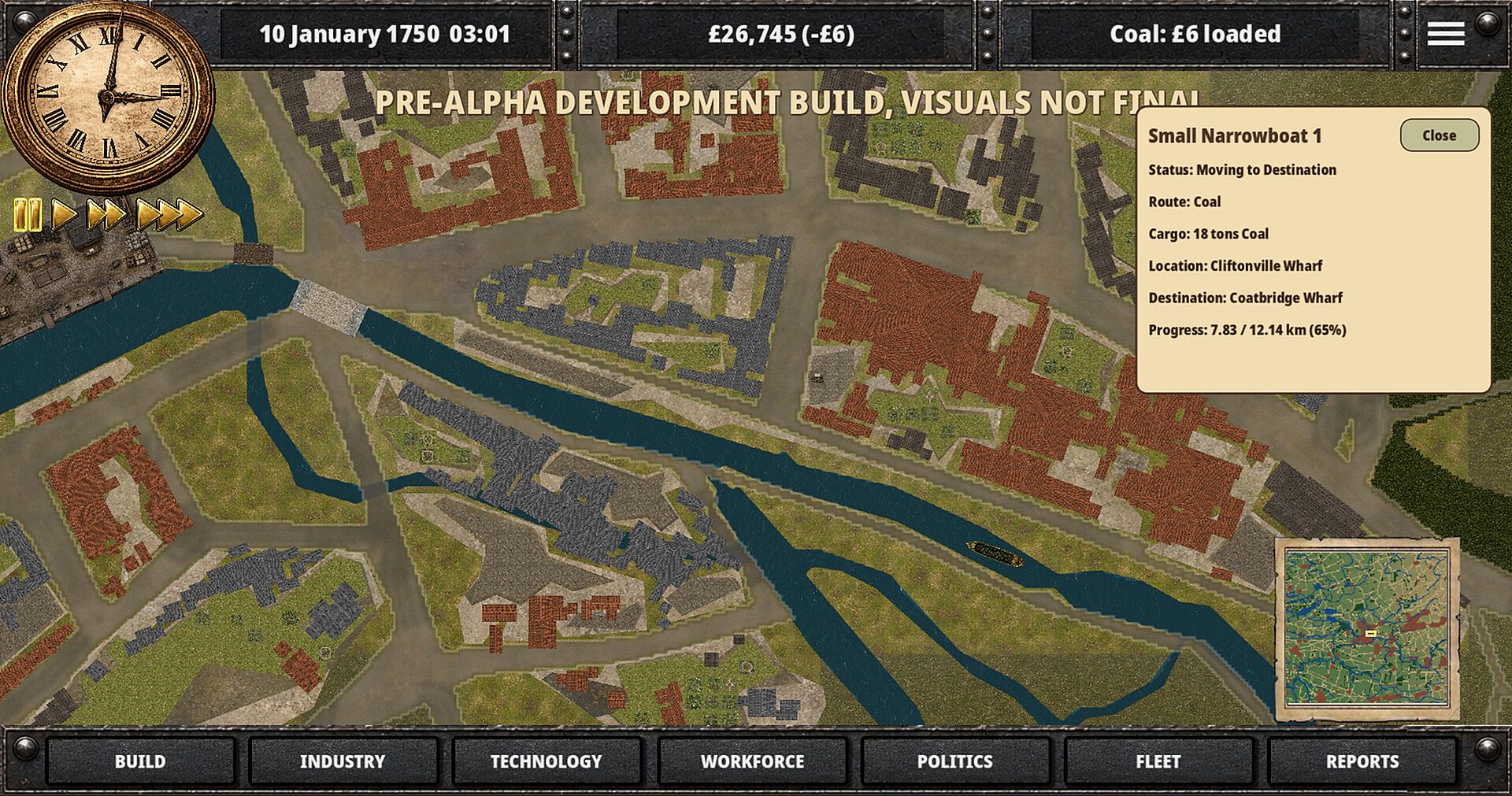
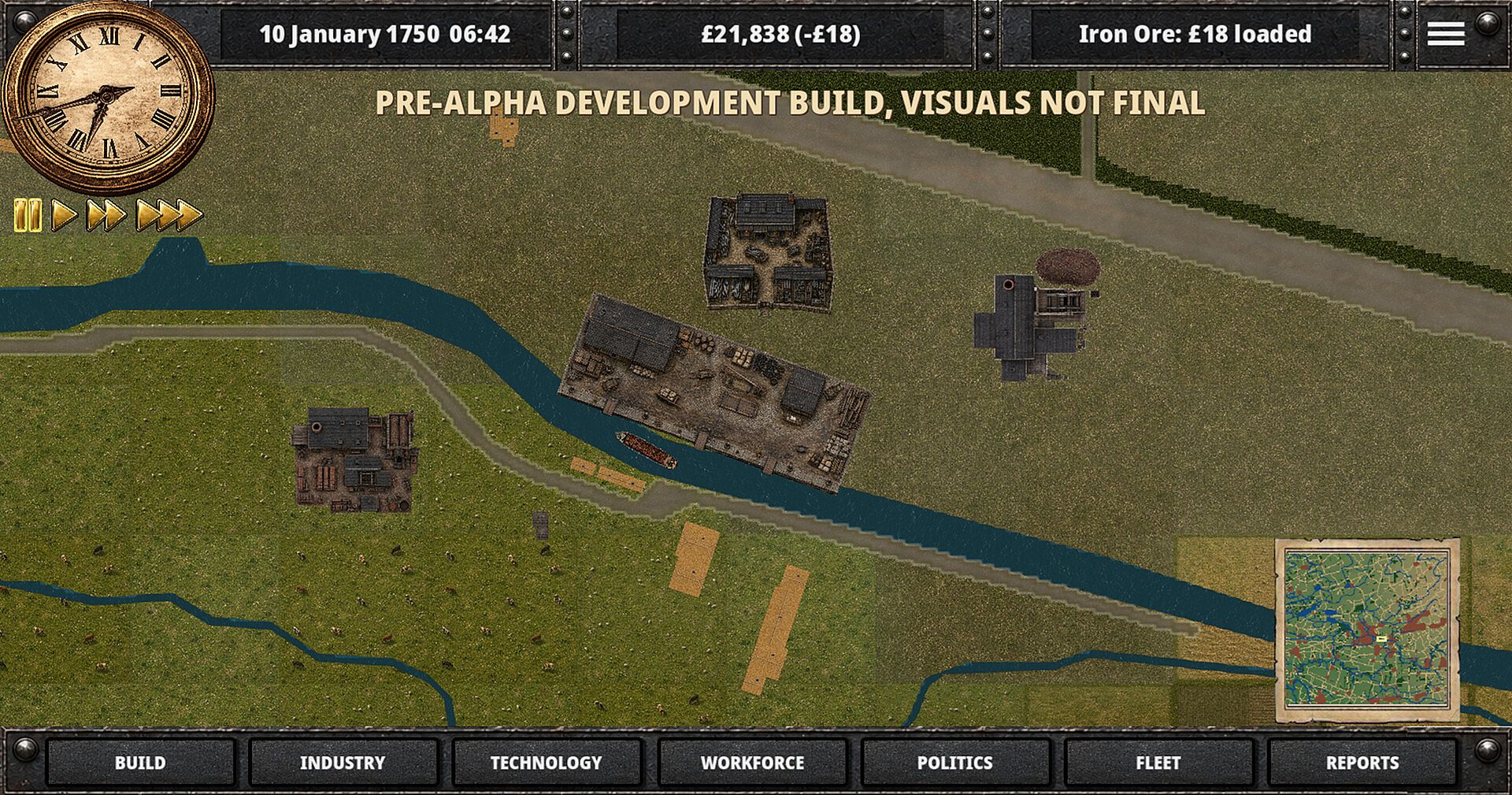
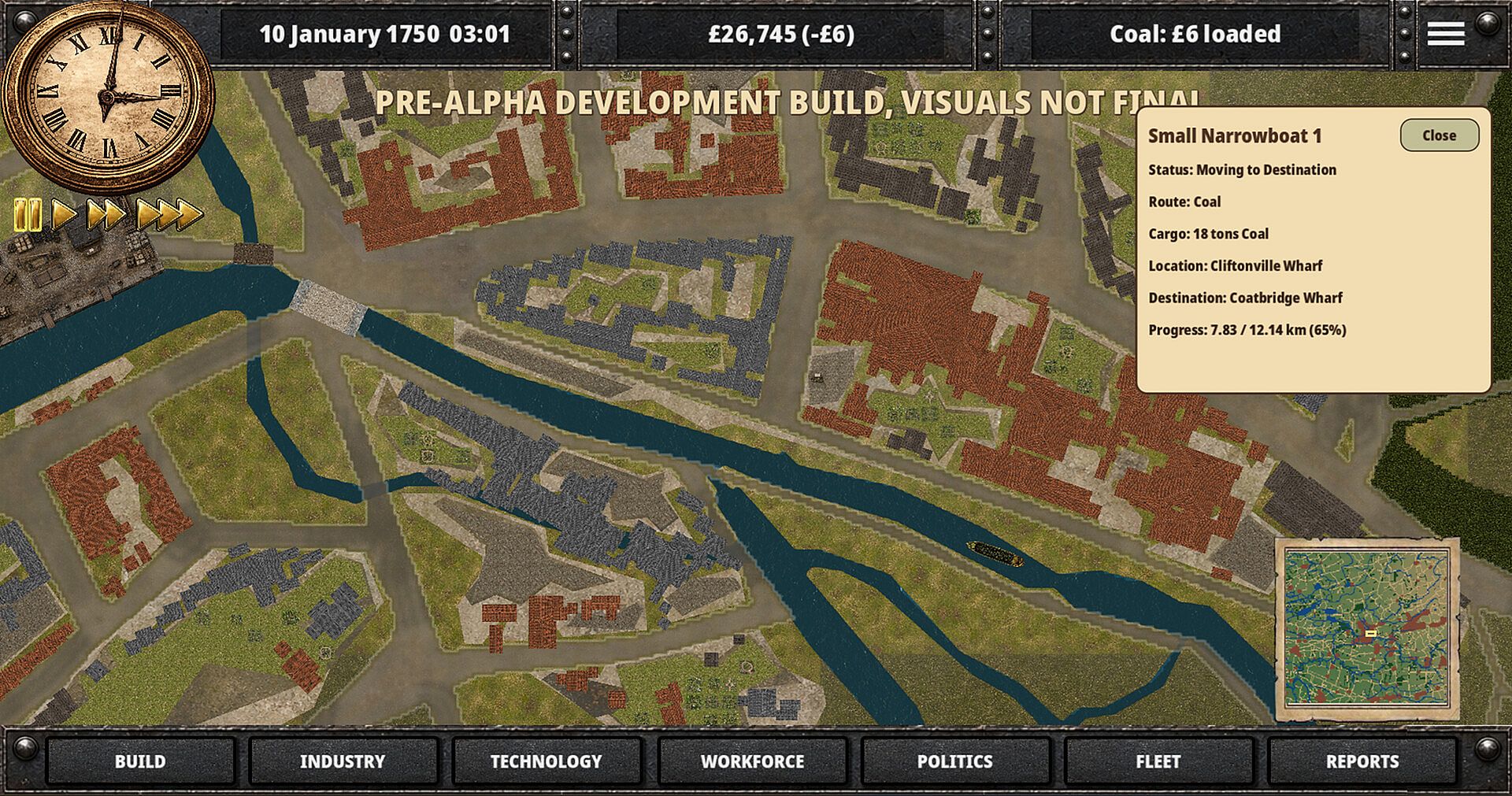
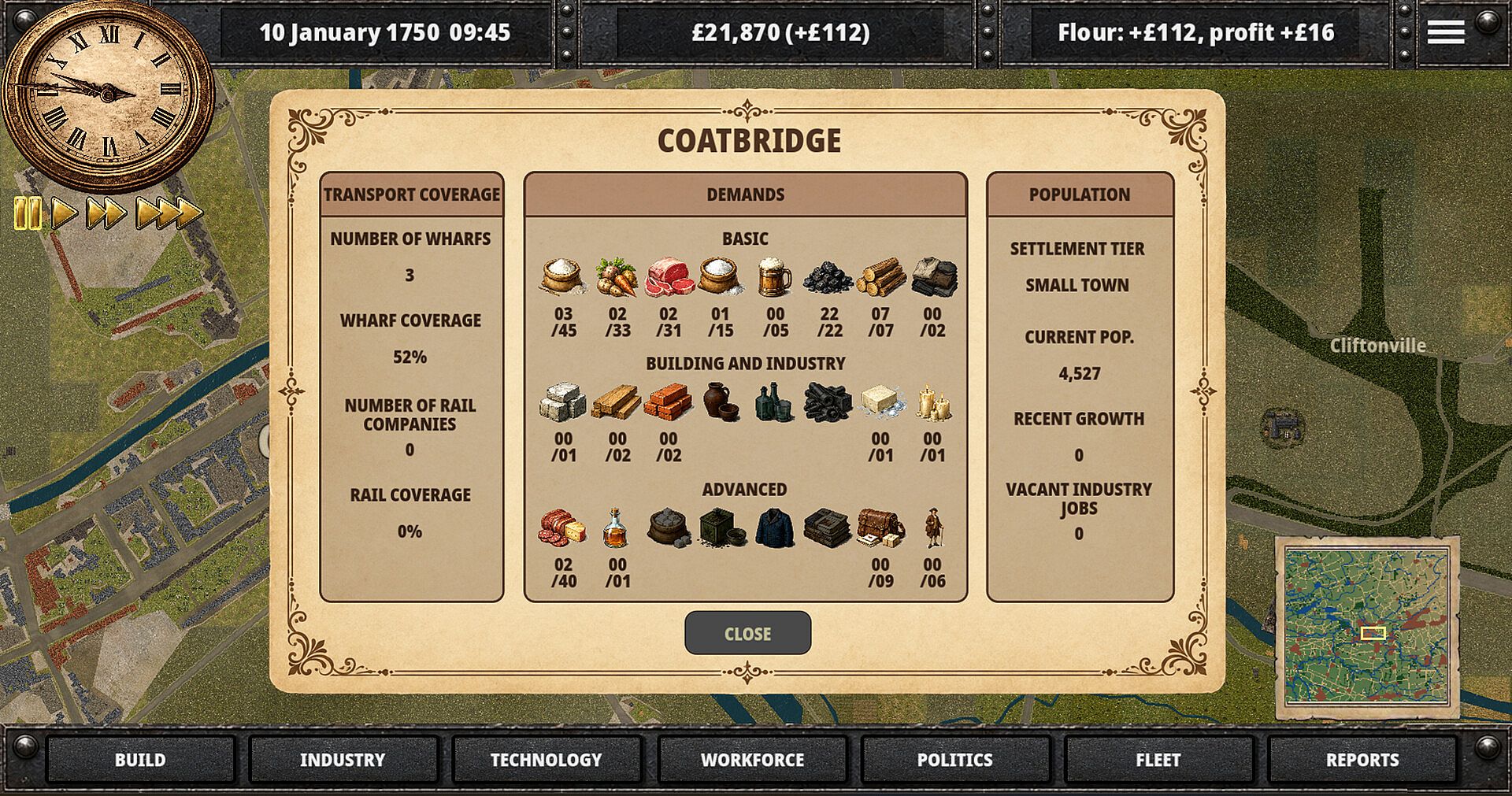
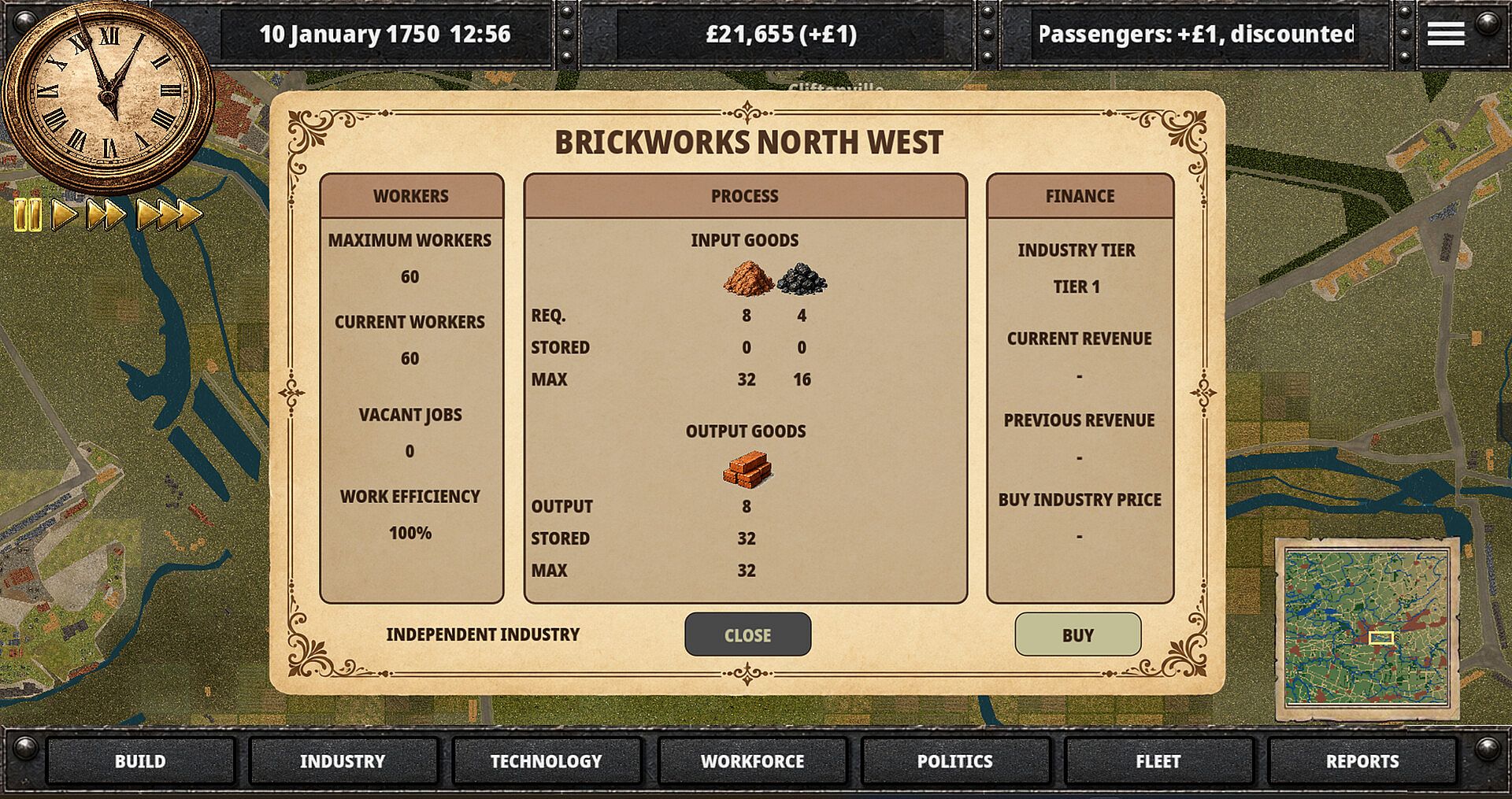
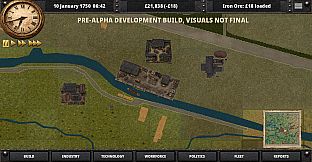
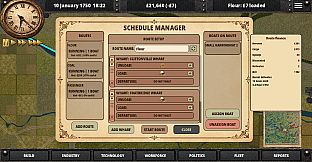
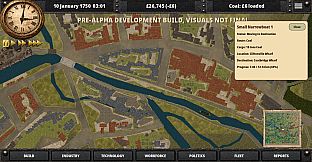
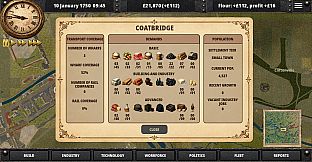
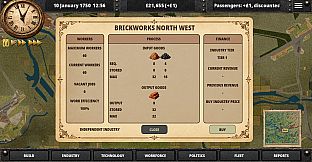
Canal Tycoon est un jeu de simulation stratégique centré sur la gestion historique des transports. Placé entre 1750 et 1899, il confie au joueur la direction d'une compagnie de canaux, de la construction du réseau jusqu'à son apogée puis son déclin en Grande-Bretagne. L'objectif principal consiste à relier industries, villes et ressources tout en s'adaptant aux évolutions économiques et techniques sur plus d'un siècle.
Gameplay
Le cœur du jeu repose sur la planification et l'entretien d'un réseau de canaux destiné au transport de marchandises : charbon, fer, céréales, bois, denrées alimentaires, matériaux de construction, produits manufacturés, passagers et courrier. Au début, il s'agit d'établir les premières liaisons pour permettre aux mines de trouver des acheteurs et aux villes d'être approvisionnées. Avec l'arrivée de la période dite du « Canal Mania », l'expansion s'intensifie et la concurrence entre compagnies s'accroît, obligeant à financer des ouvrages d'art coûteux. Dans les dernières décennies, l'apparition du chemin de fer impose de consolider les lignes rentables, d'améliorer l'efficacité et de se défendre face à des alternatives plus rapides.
La gestion de l'eau constitue une dimension stratégique à part entière. Les écluses consomment de l'eau, les réservoirs la stockent et les canaux d'alimentation la redistribuent. Le relief, les précipitations, l'accès aux rivières et les choix d'ingénierie déterminent la fiabilité de l'approvisionnement. Une mauvaise planification peut immobiliser des bateaux sur des itinéraires pourtant viables. Le joueur doit également composer avec les acteurs locaux : propriétaires de moulins, propriétaires fonciers et municipalités, pour négocier les droits d'eau et obtenir les autorisations de construction.
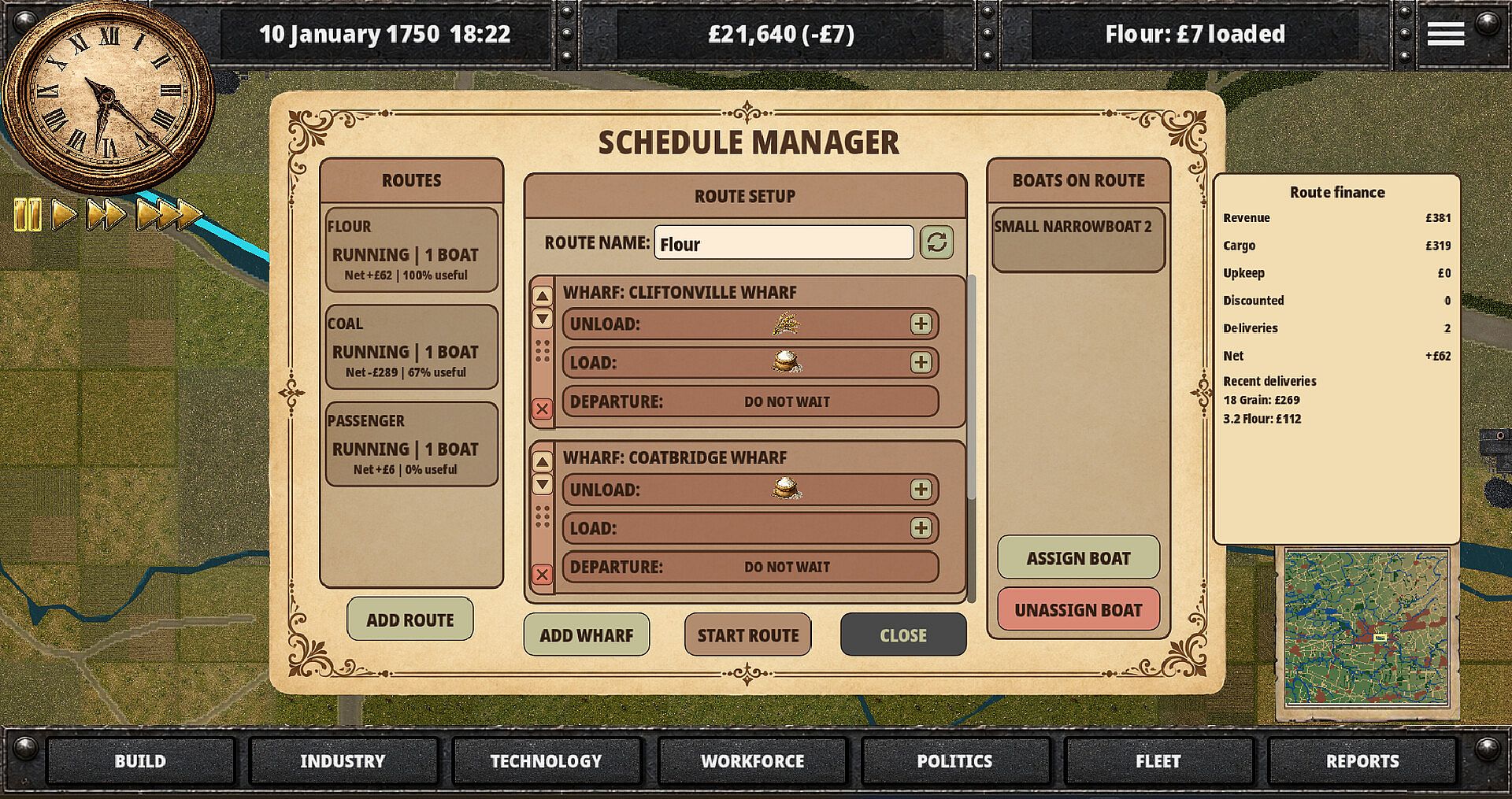
Les avancées technologiques débloquent progressivement de nouvelles possibilités de construction : tunnels, aqueducs, ascenseurs à bateaux et plans inclinés. Une fois posées, les routes et les embarcations fonctionnent de manière autonome, libérant le joueur de la gestion quotidienne des convois pour se concentrer sur la planification à long terme, les connexions industrielles et l'adaptation aux changements extérieurs. Les cartes s'appuient sur des sources historiques, reproduisant l'implantation réelle des villes, industries et reliefs liés à la construction des canaux.
Game Modes
Canal Tycoon ne propose qu'un mode solo. La campagne suit l'intégralité de la période historique, du tracé des premières voies à l'expansion concurrentielle puis à l'adaptation face à l'arrivée du rail. Aucune option bac à sable ni multijoueur n'est mentionnée. Toutes les parties se déroulent sur des cartes historiques intégrant routes, rivières et implantations industrielles de l'époque.
Key Mechanics and Features
La construction comprend écluses, bassins, quais, entrepôts, digues, tunnels et aqueducs pour franchir les différents reliefs. Le joueur peut racheter et améliorer des industries afin de sécuriser ses chaînes d'approvisionnement. Les systèmes hydrauliques exigent un placement précis des réservoirs et canaux d'alimentation en lien avec les écluses. Pendant les années fastes, les compagnies rivales se disputent les meilleurs tracés ; plus tard, il faut protéger ses lignes rentables contre des modes de transport plus rapides. Le système de navigation autonome des bateaux supprime la micro-gestion répétitive et permet de se focaliser sur les décisions stratégiques d'expansion, d'efficacité et de pérennité.
Is It Worth Playing?
Canal Tycoon s'adresse aux amateurs de simulations de transport et de gestion dotées d'un ancrage historique. Son accent sur l'approvisionnement en eau, les négociations politiques et l'adaptation du réseau sur le long terme le distingue des nombreux tycoons centrés sur le routage des véhicules ou les chaînes de ressources simplifiées. La structure solo offre une expérience continue sur plus d'un siècle de simulation, avec des cartes issues de sources historiques.
Jeu non encore sorti et prévu pour 2027, il ne dispose actuellement d'aucun avis ni de mises à jour terminées. Les joueurs attirés par les simulations stratégiques combinant planification d'infrastructures, logistique des ressources et adaptation aux mutations technologiques pourront y trouver leur compte à sa sortie. Positionné comme une expérience de niche plutôt que grand public, il convient particulièrement aux passionnés de jeux de gestion historique qui privilégient la profondeur de planification à l'action immédiate.