




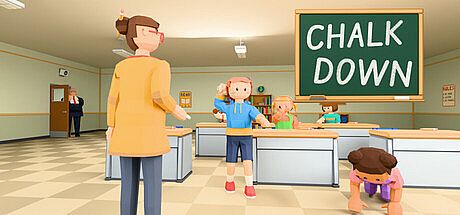


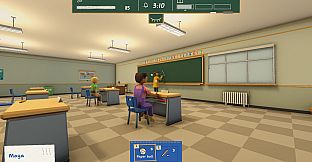
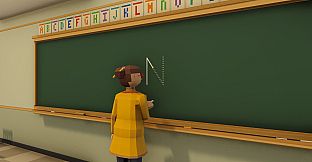
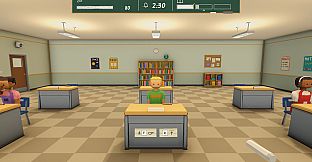
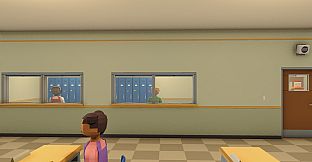
Chalk Down is a strategy, casual, and simulation party game built around chaotic classroom antics and quick thinking. Players join sessions of four to seven friends on PC, where one person steps into the role of substitute teacher while the others form the disruptive class. The core loop revolves around timing pranks during brief windows when the teacher faces away, then snapping into innocent poses the moment attention returns. This setup creates tense, humorous rounds filled with physical comedy and social deduction elements that reward coordination among the students and sharp observation from the substitute.
Gameplay
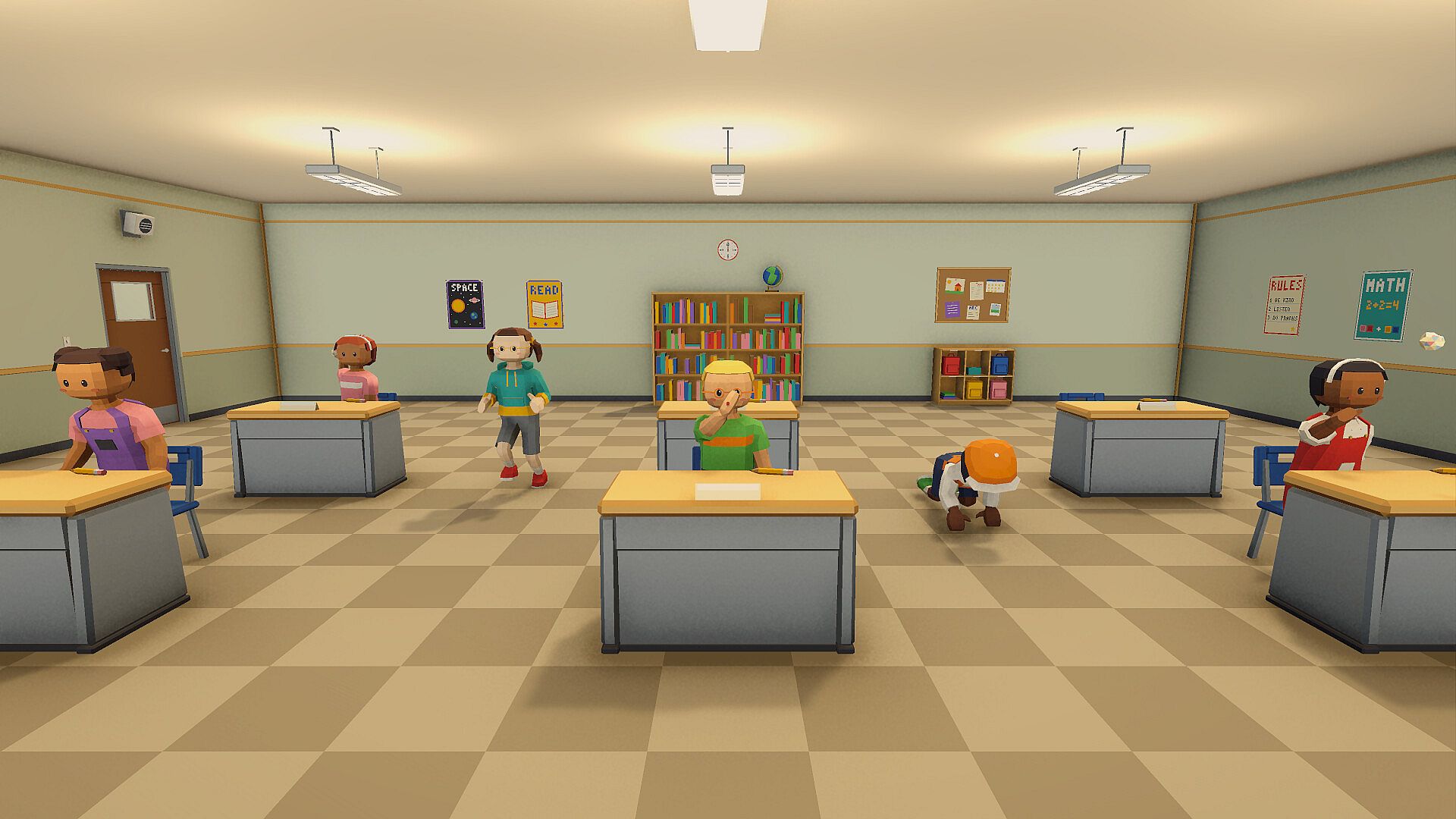
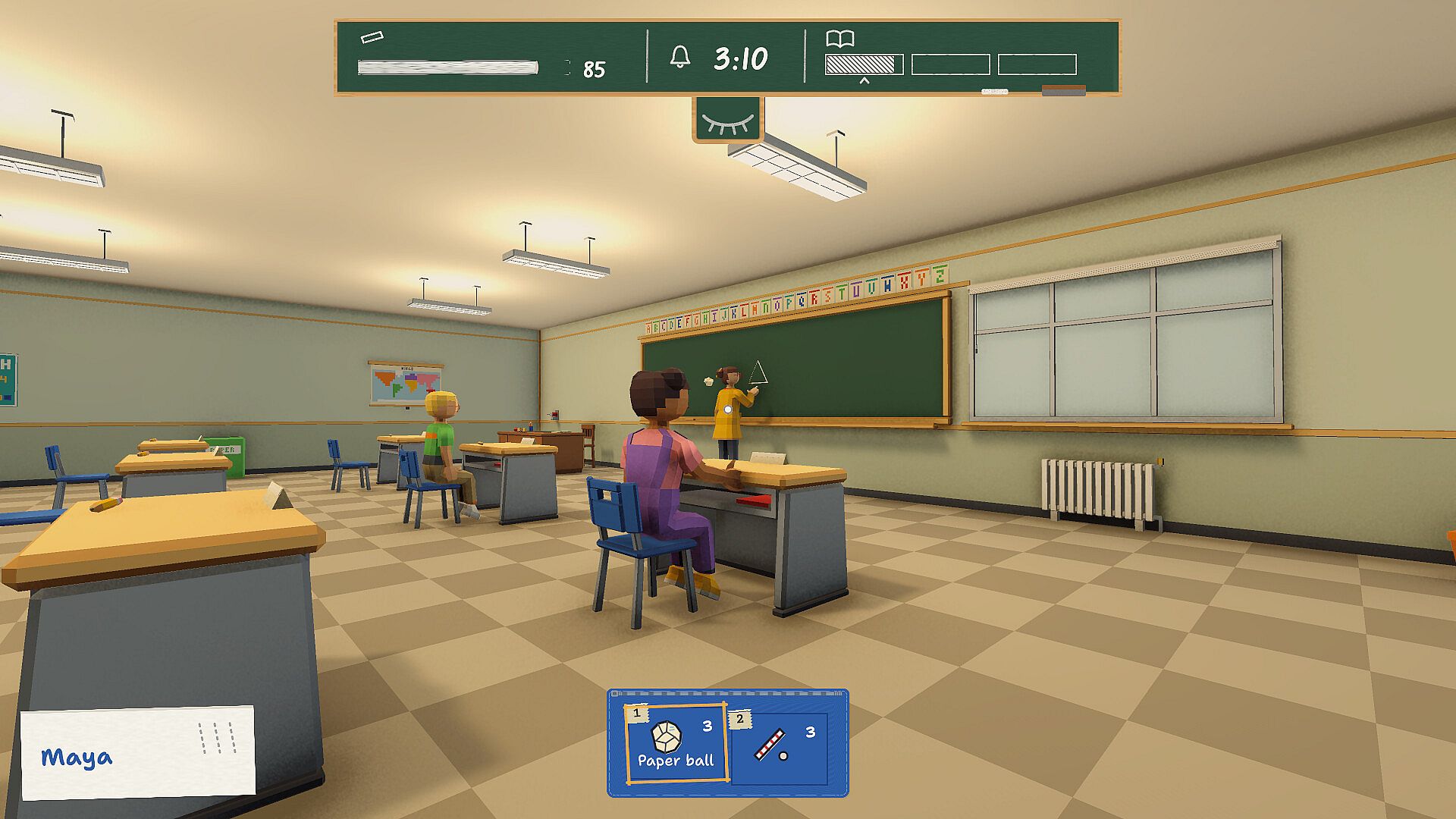
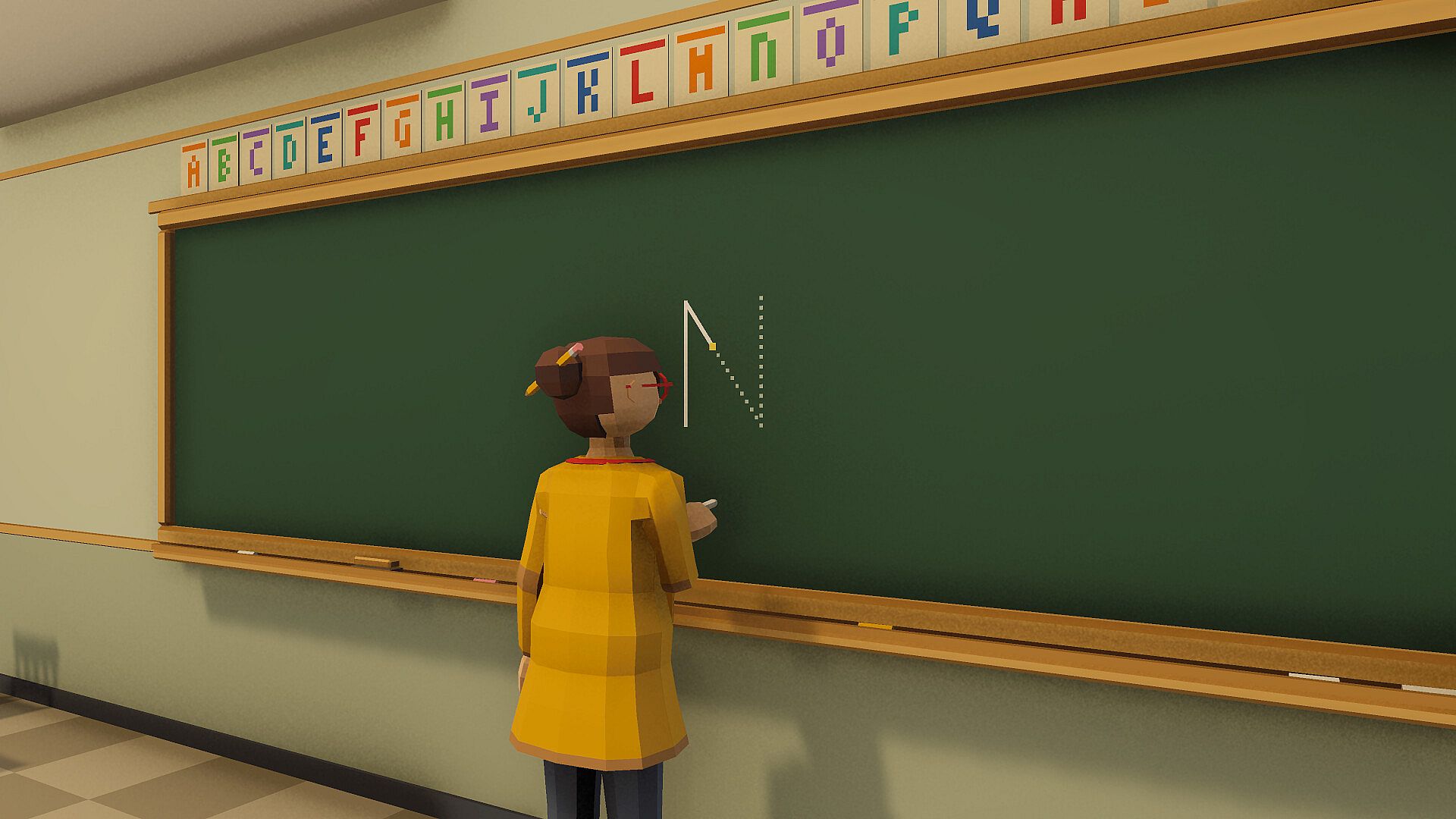
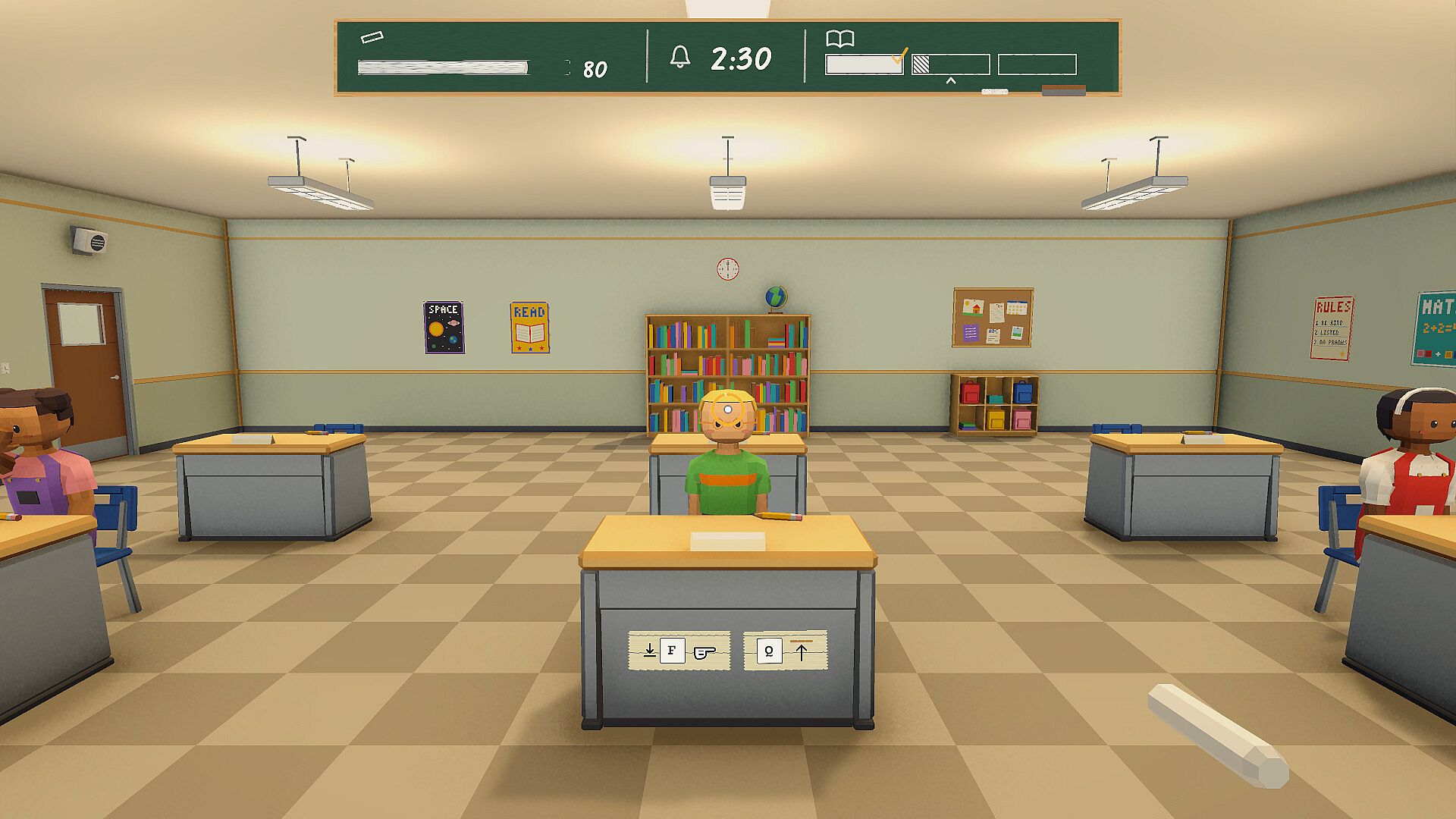
The substitute teacher spends most of the round with their back to the room, writing on the board or checking materials. Every second of that distraction lets the class act. Paper balls arc across desks, spitballs launch toward the front, and a whoopee cushion finds its way onto the chair. Students crawl between rows or swap seats to create confusion. The instant the chalk drops and the teacher turns, everyone must freeze in place, no matter how ridiculous the position. Holding that pose without breaking character determines whether the prank succeeds or the whole group gets caught in the act.
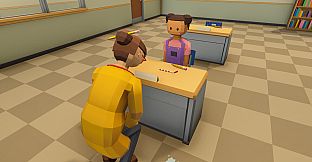
As a member of the class, participants pass notes, wipe sections of the board when the teacher is distracted, flip lights on and off, or plant evidence on a neighbor's desk during an inspection. The goal stays simple: keep the chaos going without drawing direct suspicion. Everyone shares guilt, so pointing fingers at others becomes part of the survival strategy. Proximity voice chat lets teammates coordinate plans aloud before the teacher spins around, then switch to denials once the round resumes.
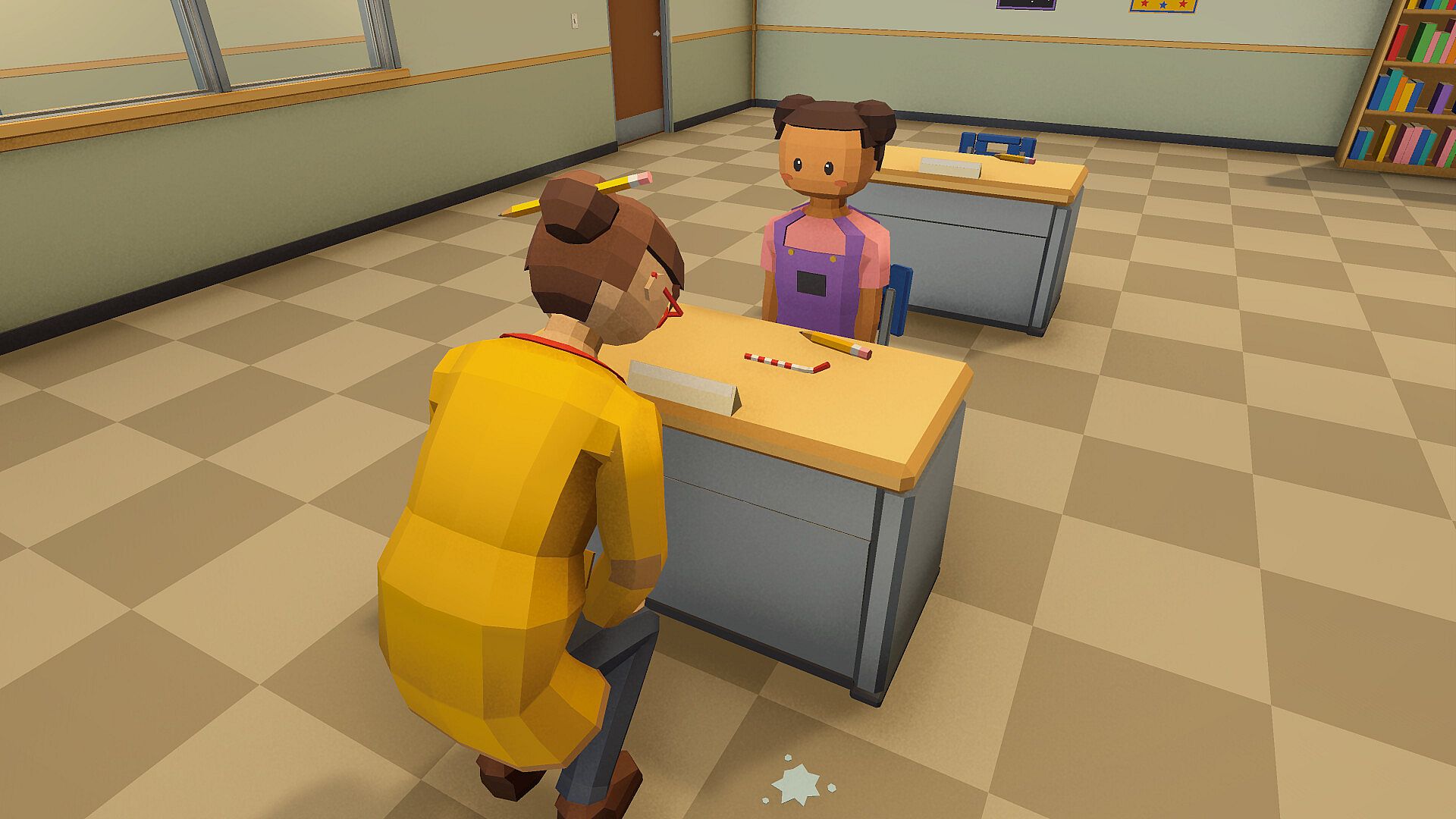
Playing as the substitute flips the perspective. A sudden impact from a paper ball or the sound of movement forces an immediate spin. The room appears frozen, but clues remain. Inspecting desks reveals planted items, accusations can single out a suspected prankster, or a call to the principal brings an outside authority figure to point at the culprit. Correct guesses remove the offender from the round, while mistakes let the class laugh and continue their schemes. Wrong calls erode authority and encourage bolder behavior from the students.
Game Modes
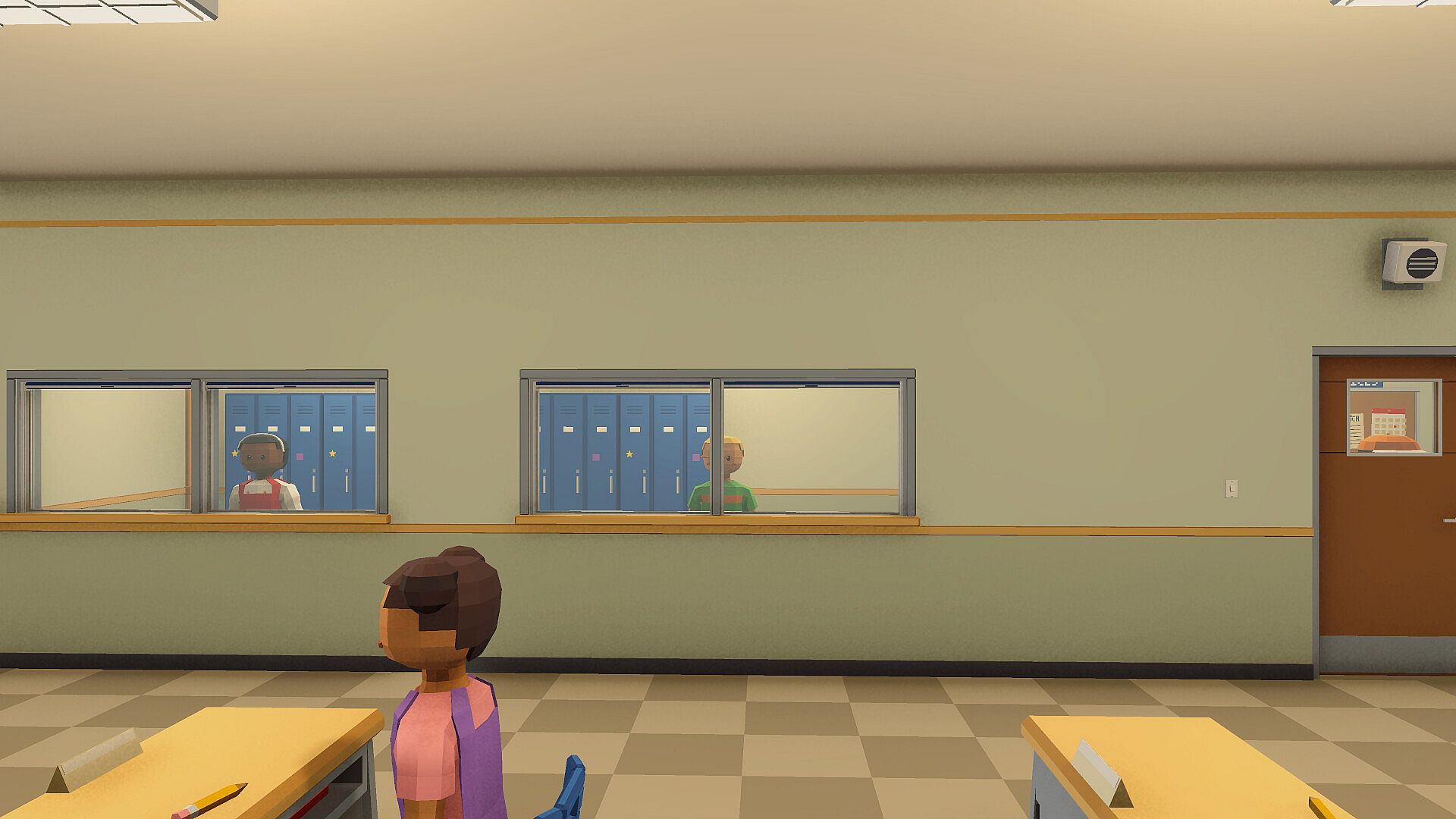
Chalk Down centers on a single core experience that alternates roles automatically so every participant takes turns as the substitute. Rounds build around the same prank-and-freeze loop, with escalating opportunities for the class to escalate mischief. When a student gets caught and sent to the principal's office, they return as a ghost. Ghosts observe through windows, knock on doors to force the teacher to investigate, and toggle lights to create fresh distractions. This adds a layer of indirect interference without breaking the frozen-pose rule for the living players.
At the end of each session a report card appears with letter grades for every participant. Performance metrics track successful pranks, accurate accusations, and survival time as the substitute. The grading system gives immediate feedback and encourages replay as players aim to improve their scores across different role assignments. Online lobbies support quick setup through host codes or direct invites, keeping the focus on short, repeatable matches suited to casual groups.
Core Mechanics and Features
Mechanics emphasize timing, positioning, and misdirection rather than complex controls. The class operates under strict rules about movement only when the teacher faces away, while the substitute relies on visual inspection and limited tools like desk checks or principal calls. Ghost abilities provide a secondary phase that keeps eliminated players engaged without dominating the main action. Proximity voice chat integrates directly into planning and deception, letting friends scheme in real time before switching to innocent chatter once the teacher turns.
The simulation aspects appear in the classroom layout and prank variety. Desks, chairs, and board space create natural paths for crawling or seat swapping, while items like paper balls and whoopee cushions serve as repeatable tools. No single strategy dominates because the substitute can adapt by changing inspection patterns or calling for help at key moments. This balance keeps matches unpredictable even after multiple rounds.
Is It Worth Playing?
Chalk Down suits groups that enjoy light strategy mixed with physical comedy and social deduction. The role rotation ensures everyone experiences both sides of the power dynamic, and the ghost phase prevents downtime for eliminated players. Sessions run quickly, making the game ideal for short online gatherings or longer evenings with frequent role changes. The report card system adds a light competitive edge without turning matches overly serious. Players who like party games built on timing, bluffing, and shared laughter will find the core loop consistently engaging, especially when voice chat lets the group coordinate elaborate schemes and then deny everything convincingly. Availability on PC through standard online lobbies supports easy access for small friend groups looking for something different from traditional competitive titles.











