




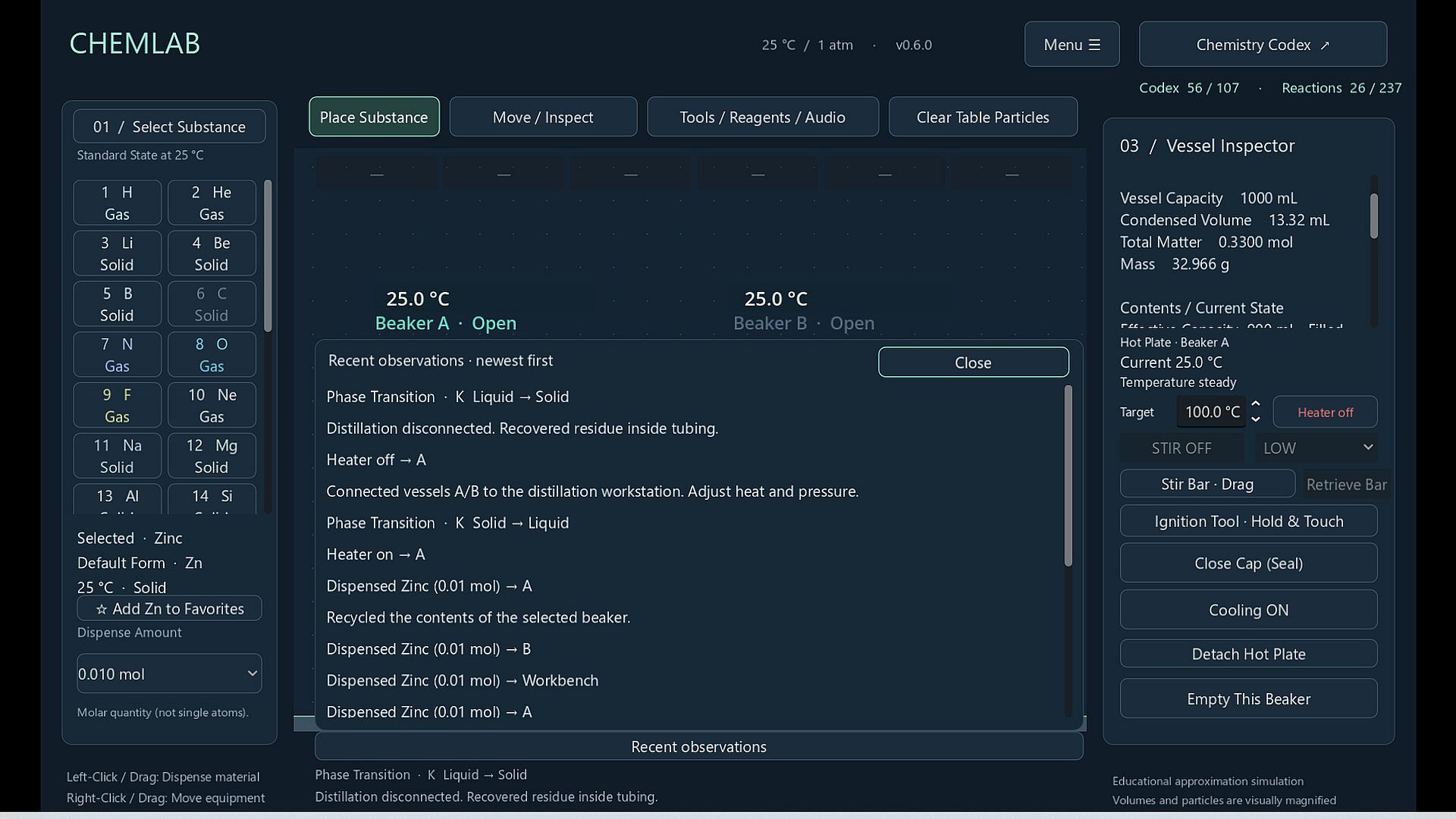
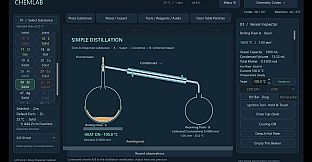
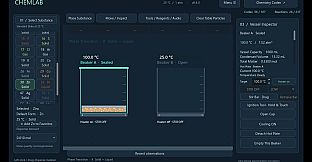
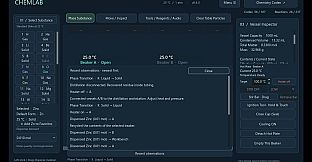
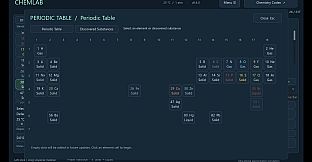
ChemLab is an indie simulation game available on PC in early access that puts players in charge of a virtual chemistry laboratory. Rather than presenting fixed questions or solutions, the experience centers on open-ended experimentation with substances and equipment drawn from real chemical principles, primarily in the realm of inorganic chemistry.
Gameplay
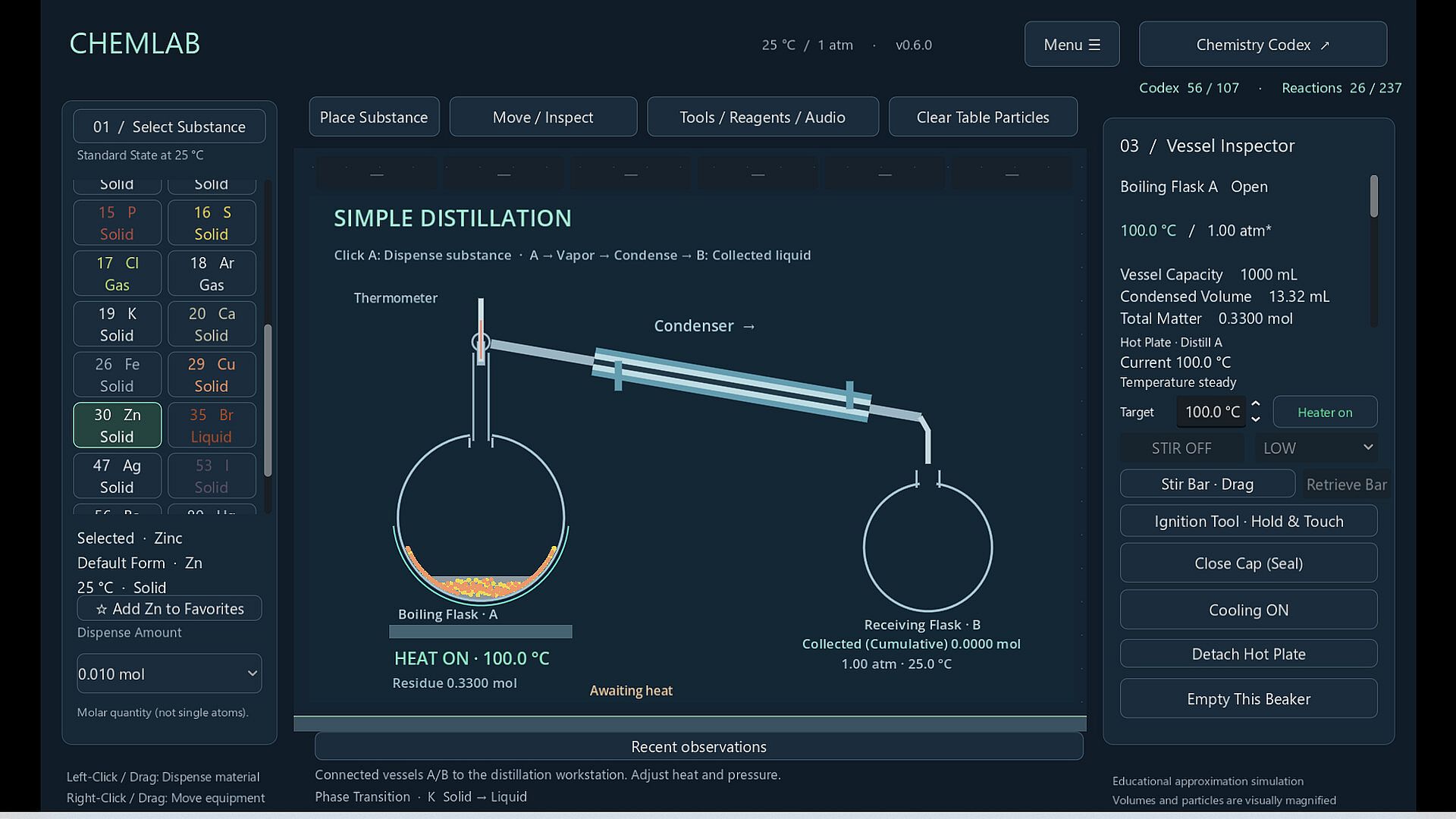
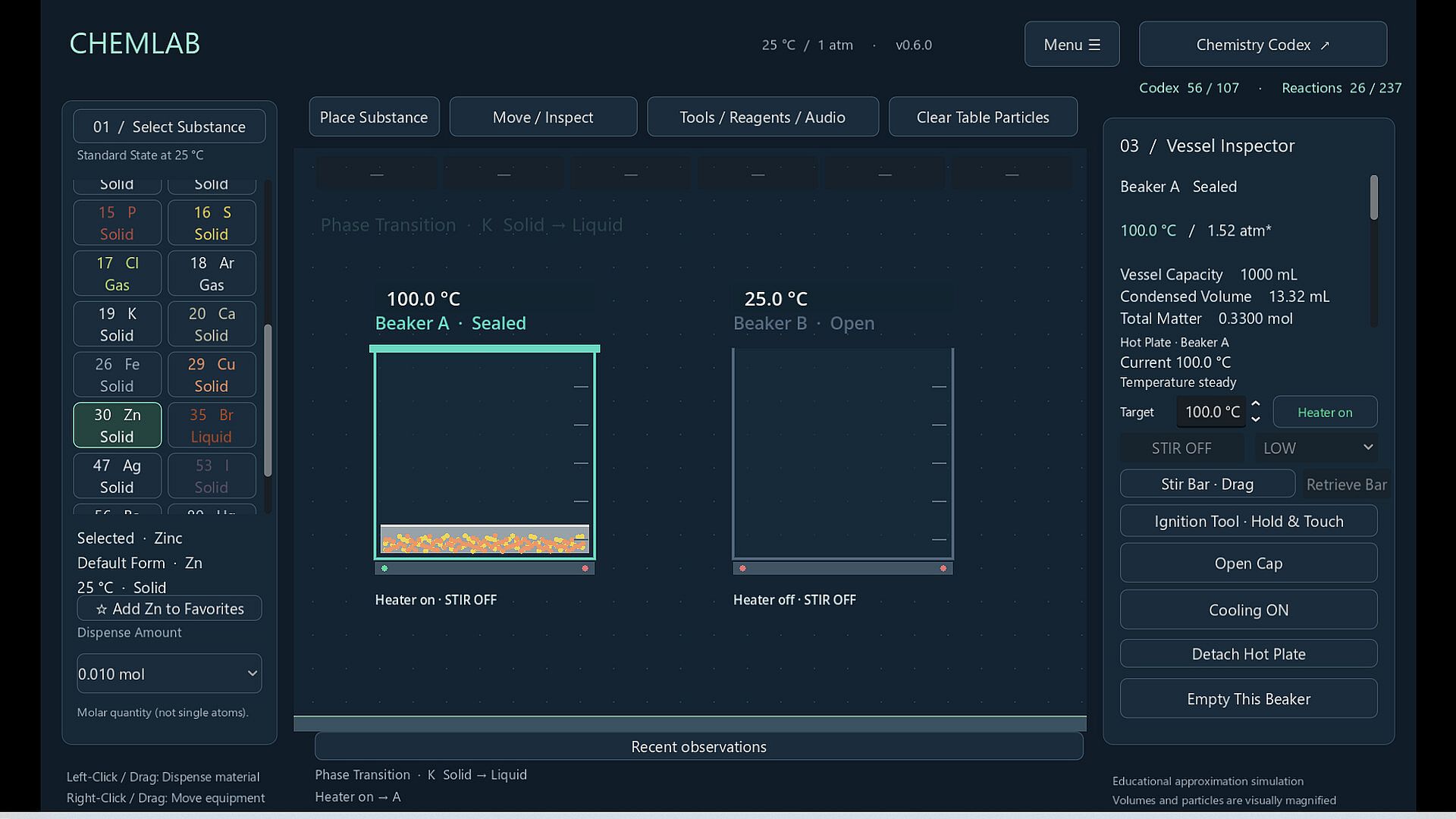
The core loop involves selecting available materials, combining them in various ways, applying heat or other conditions, and observing the outcomes. Substances react based on their properties, quantities, temperature, and setup, sometimes yielding new compounds, gases, precipitates, or color shifts while other attempts produce no visible change. Products from one reaction can feed directly into the next, creating chains of discovery where a single result opens pathways for further tests.
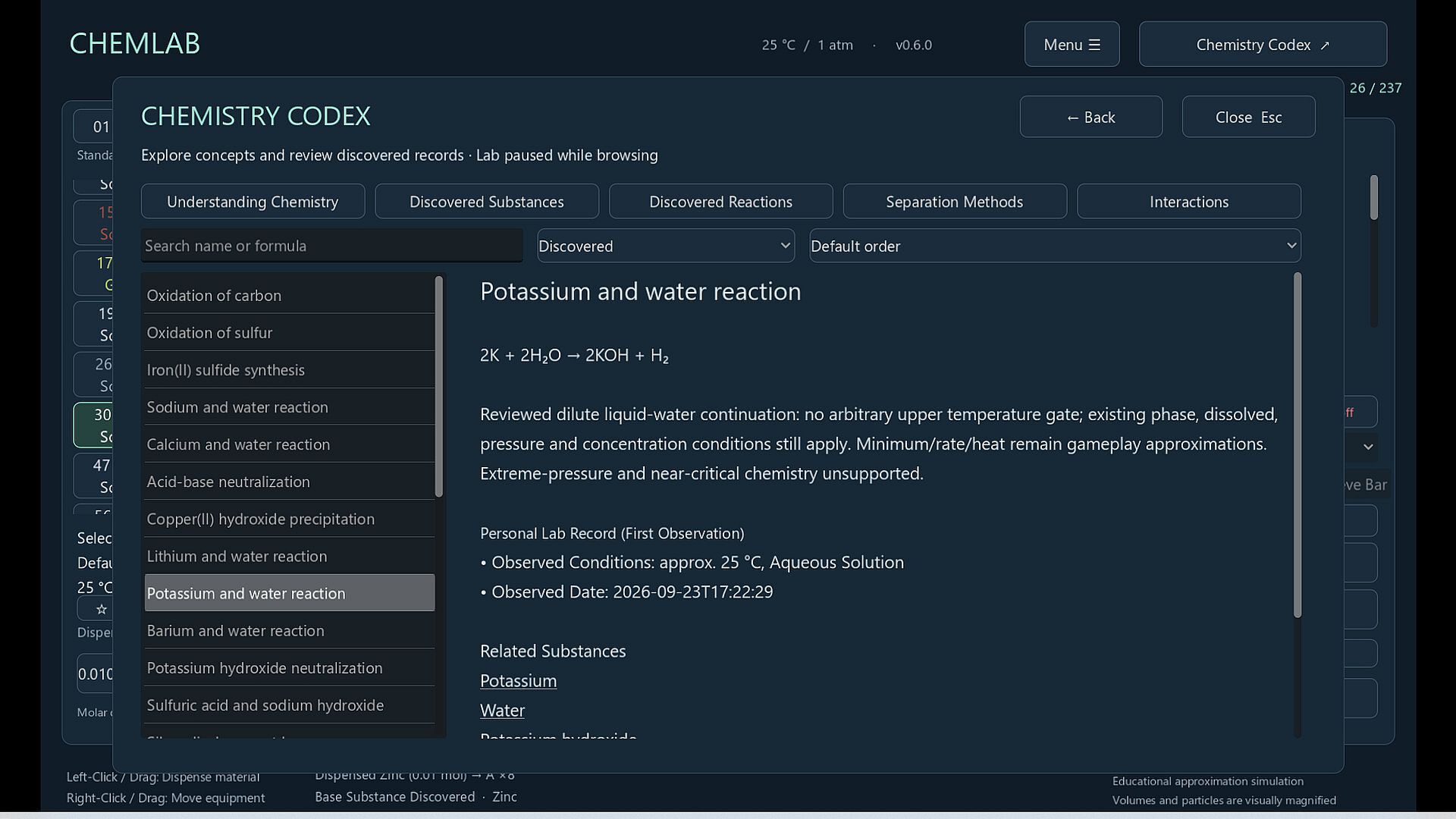
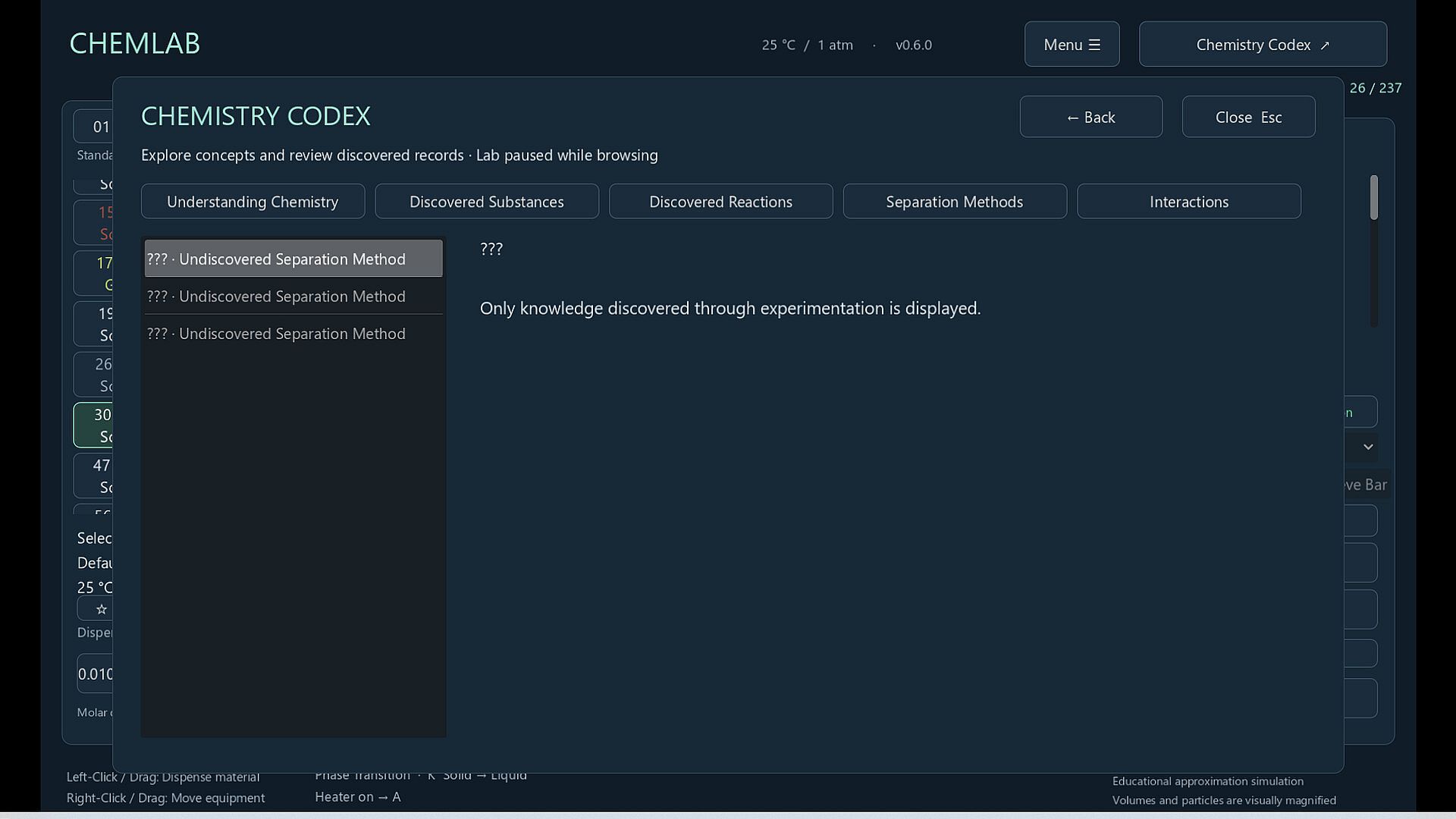
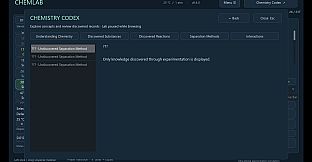
Players adjust experimental variables such as temperature levels or separation techniques to see how the same starting materials behave differently under altered conditions. A knowledge system tracks discoveries, gradually revealing details about encountered substances and linking them into broader networks of reactions. This setup encourages repeated trials, including those that yield nothing, as part of building understanding through direct interaction rather than memorization.
Game Modes
ChemLab operates as a single continuous sandbox environment focused on free-form experimentation. There are no structured levels, campaigns, or competitive elements. Instead, the entire experience functions as one open laboratory where curiosity drives the session, with the option to reuse outputs and explore new combinations indefinitely within the current scope of inorganic substances and processes.
Discovery and Progression
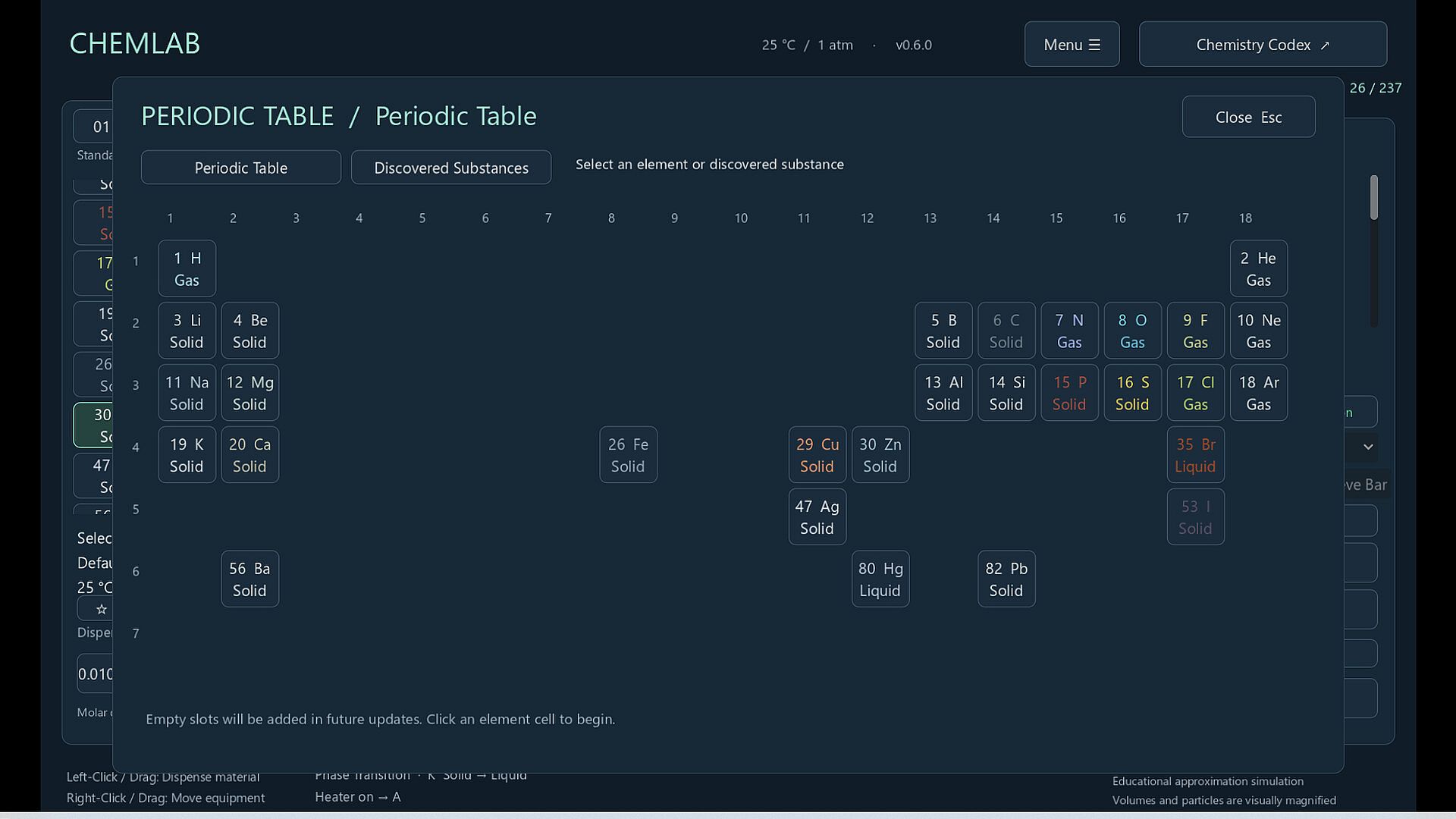
As experiments succeed or fail, the game's internal systems record findings and expand available information on materials. This creates a personal map of connections between substances, encouraging players to revisit earlier results with newly created compounds or refined conditions. The focus remains on inorganic chemistry elements like metals, acids, bases, gases, precipitation, and oxidation-reduction reactions, with the design intended to expand over time while keeping individual implementations grounded in real chemistry, though some aspects are simplified for practical play.
Is It Worth Playing?
ChemLab suits players who enjoy hands-on simulation and self-directed exploration over guided tutorials or competitive play. Its early access status means the current build emphasizes inorganic chemistry with room for future growth, making it a fit for those interested in testing chemical ideas in a safe virtual setting. The absence of predetermined objectives supports repeated sessions driven purely by curiosity, though the experience stays within its stated scope rather than attempting comprehensive real-world simulation.












