


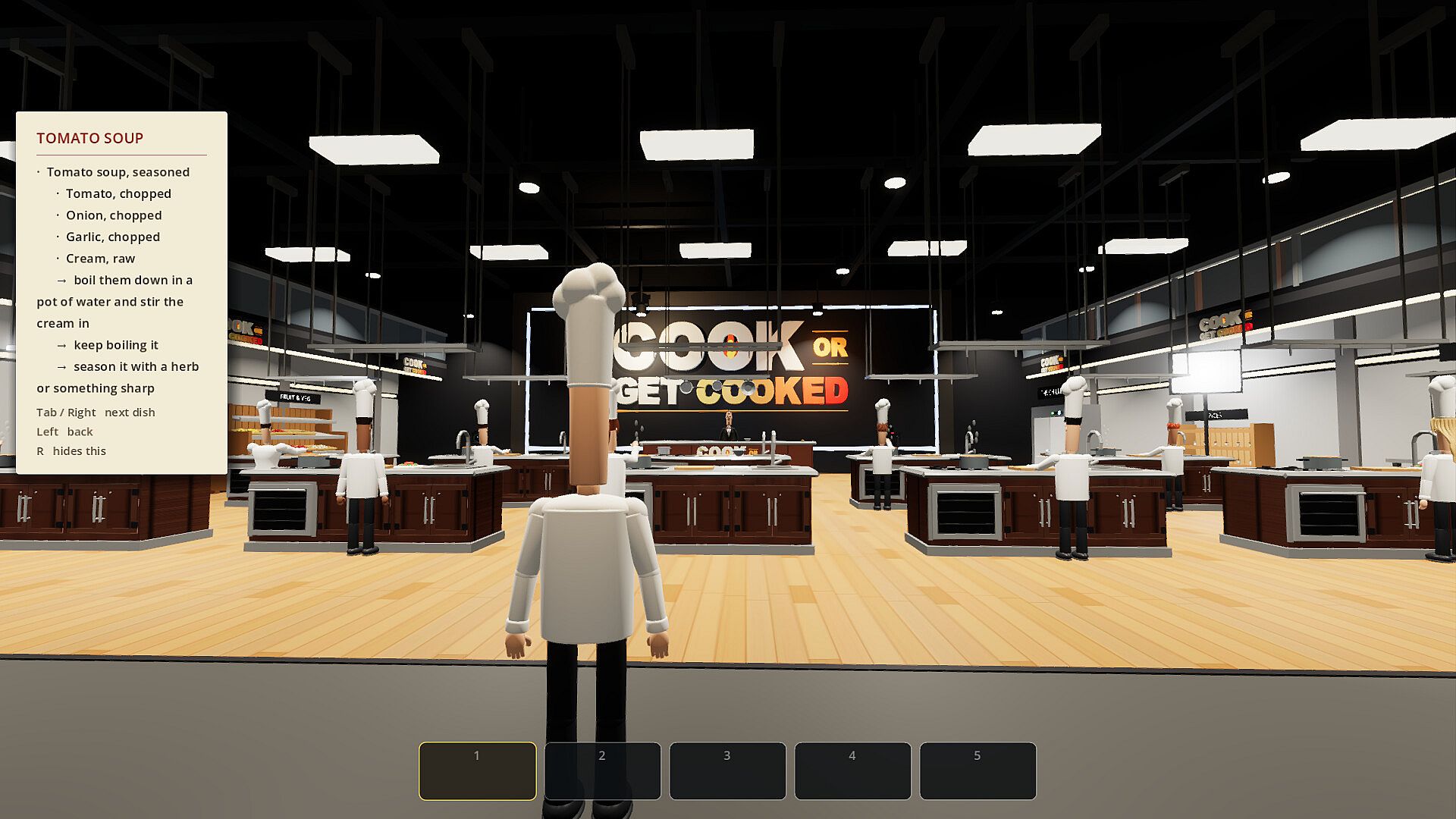
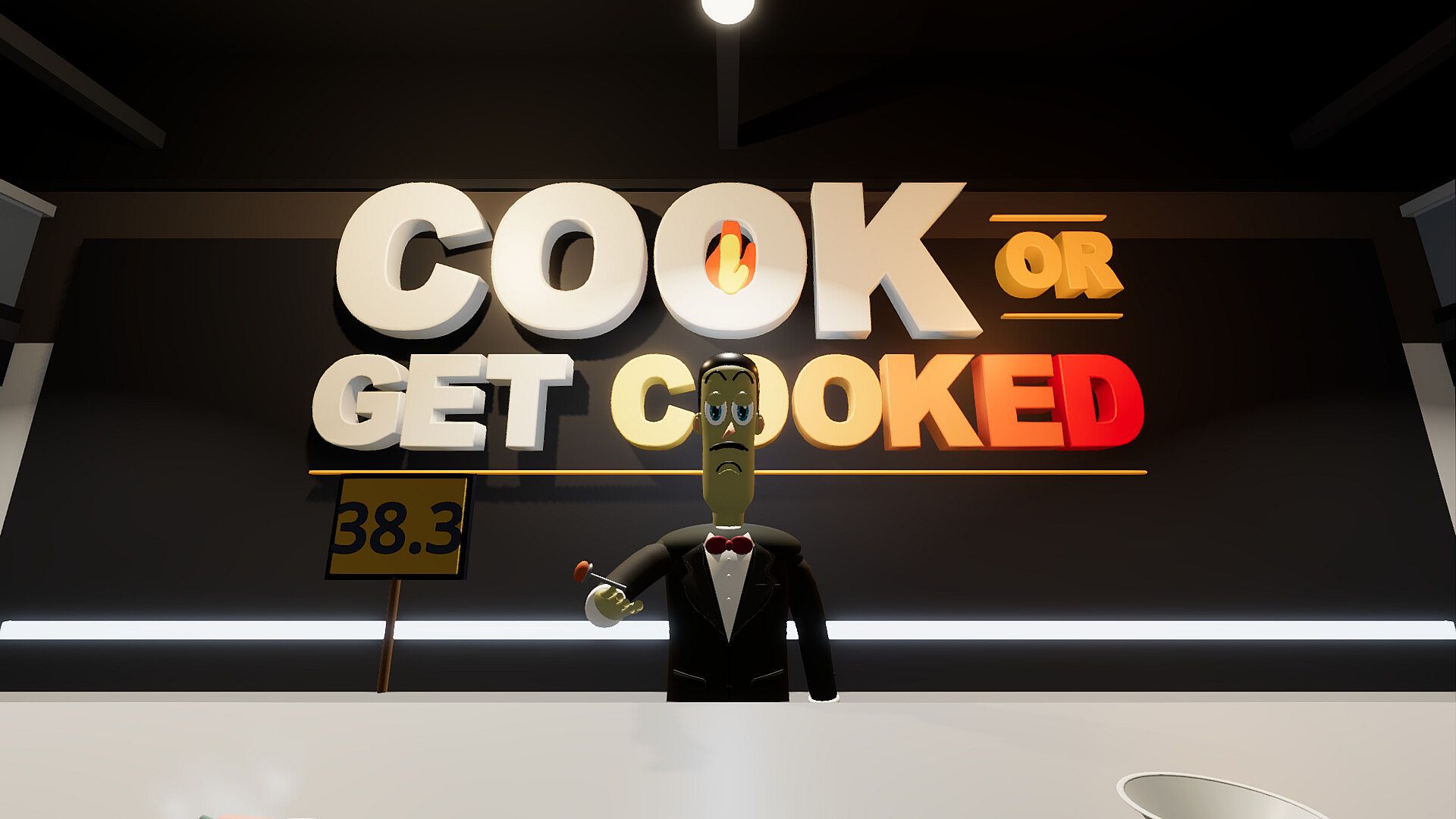



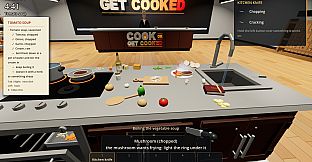


Cook Or Get Cooked is an indie simulation game built around realistic cooking in a high-stakes television contest format. Players step into the role of a chef who must prepare complete dishes from raw ingredients under time pressure, then present them to a judge for scoring out of one hundred. The lowest scorer each round is eliminated, creating a single-elimination tournament structure across eight rounds that ends with one champion.
Gameplay
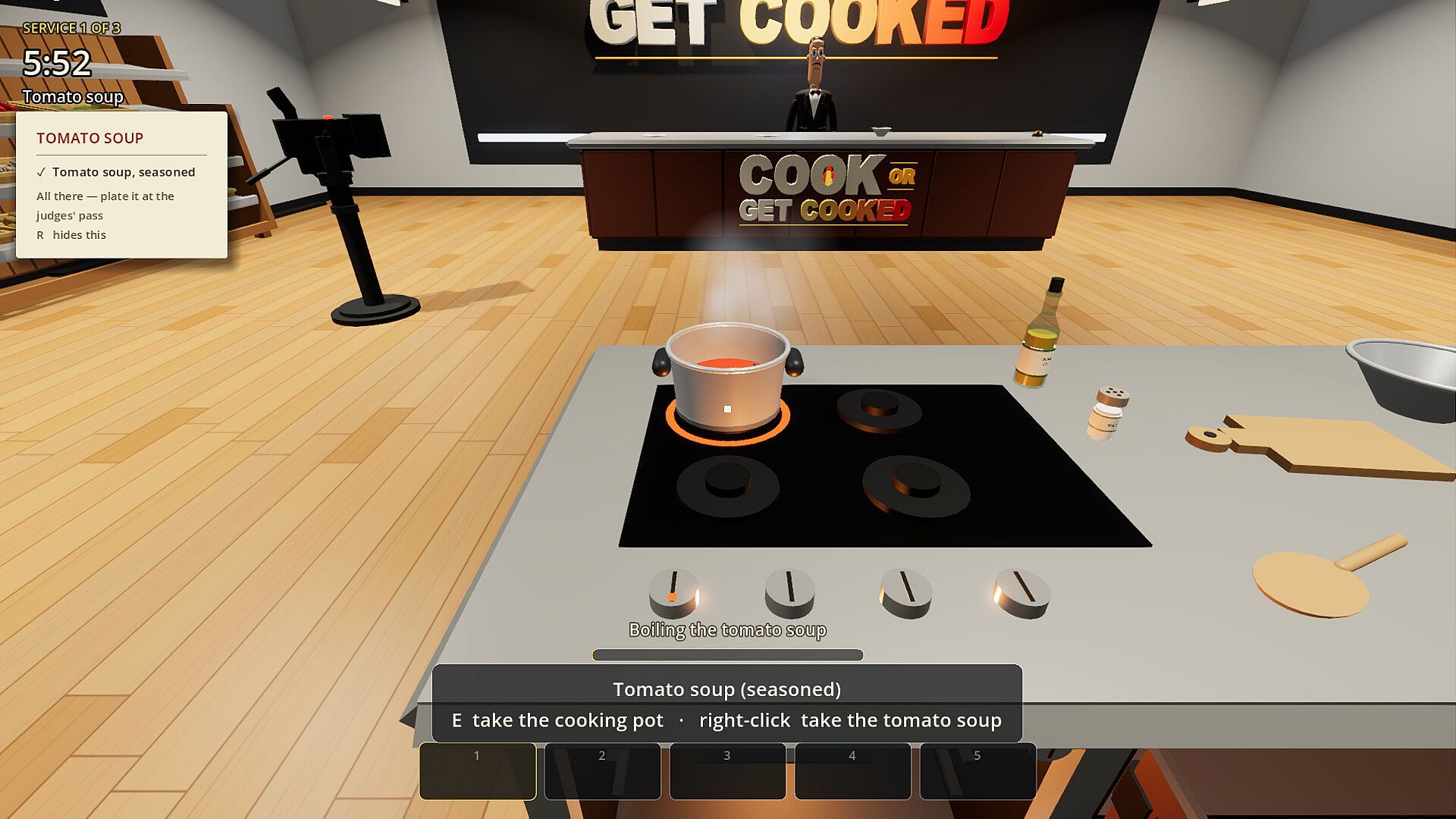
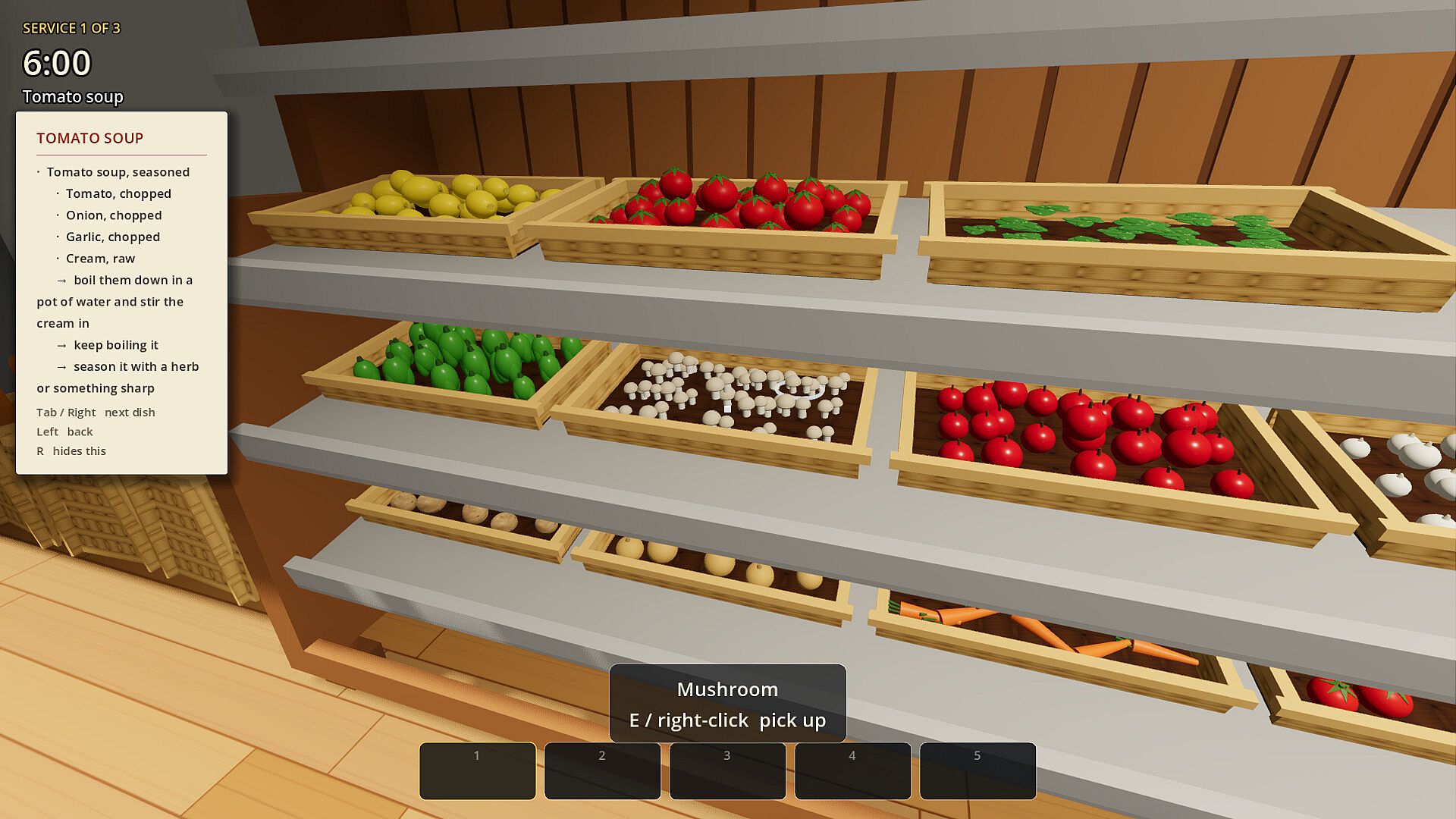
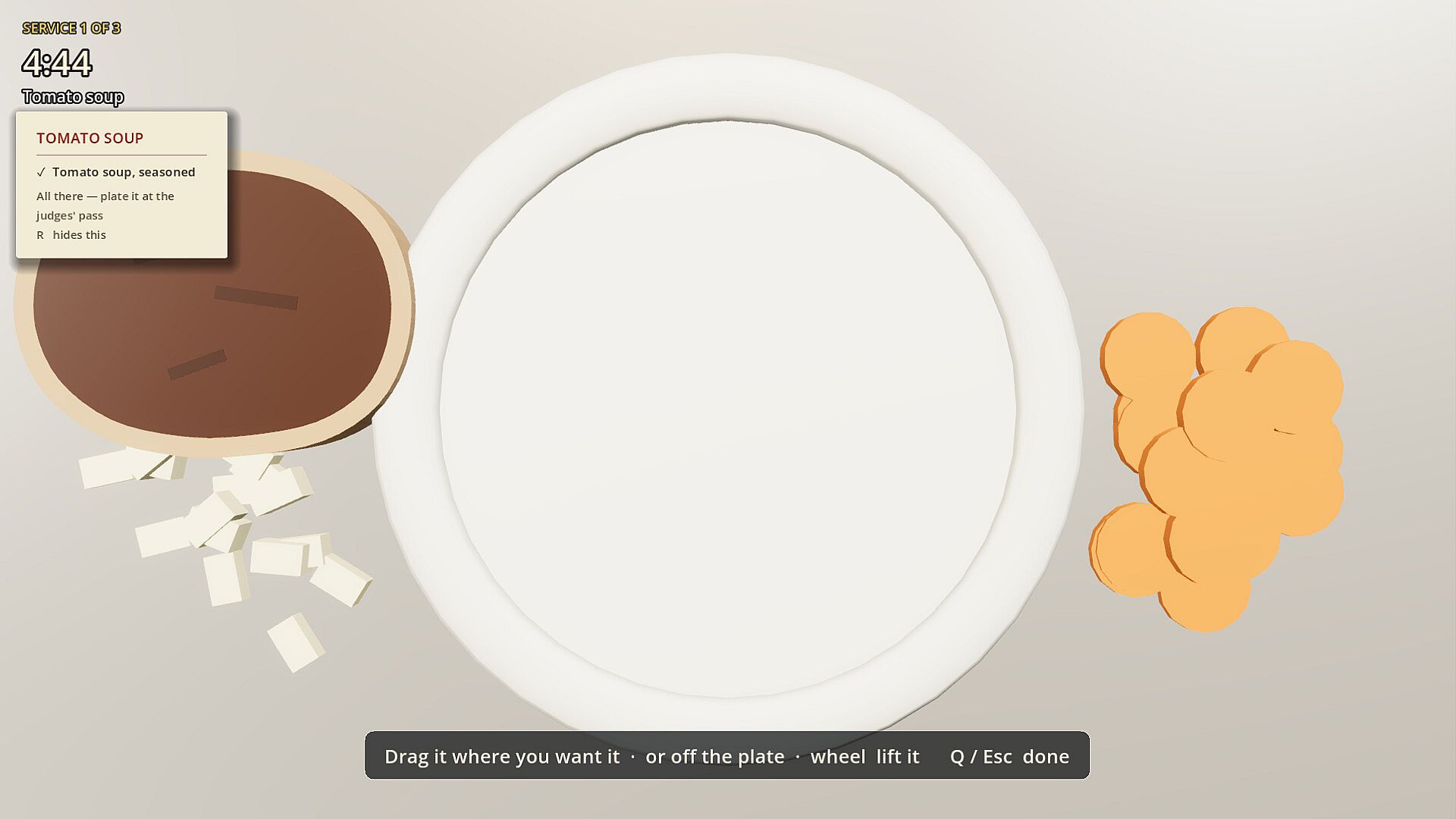
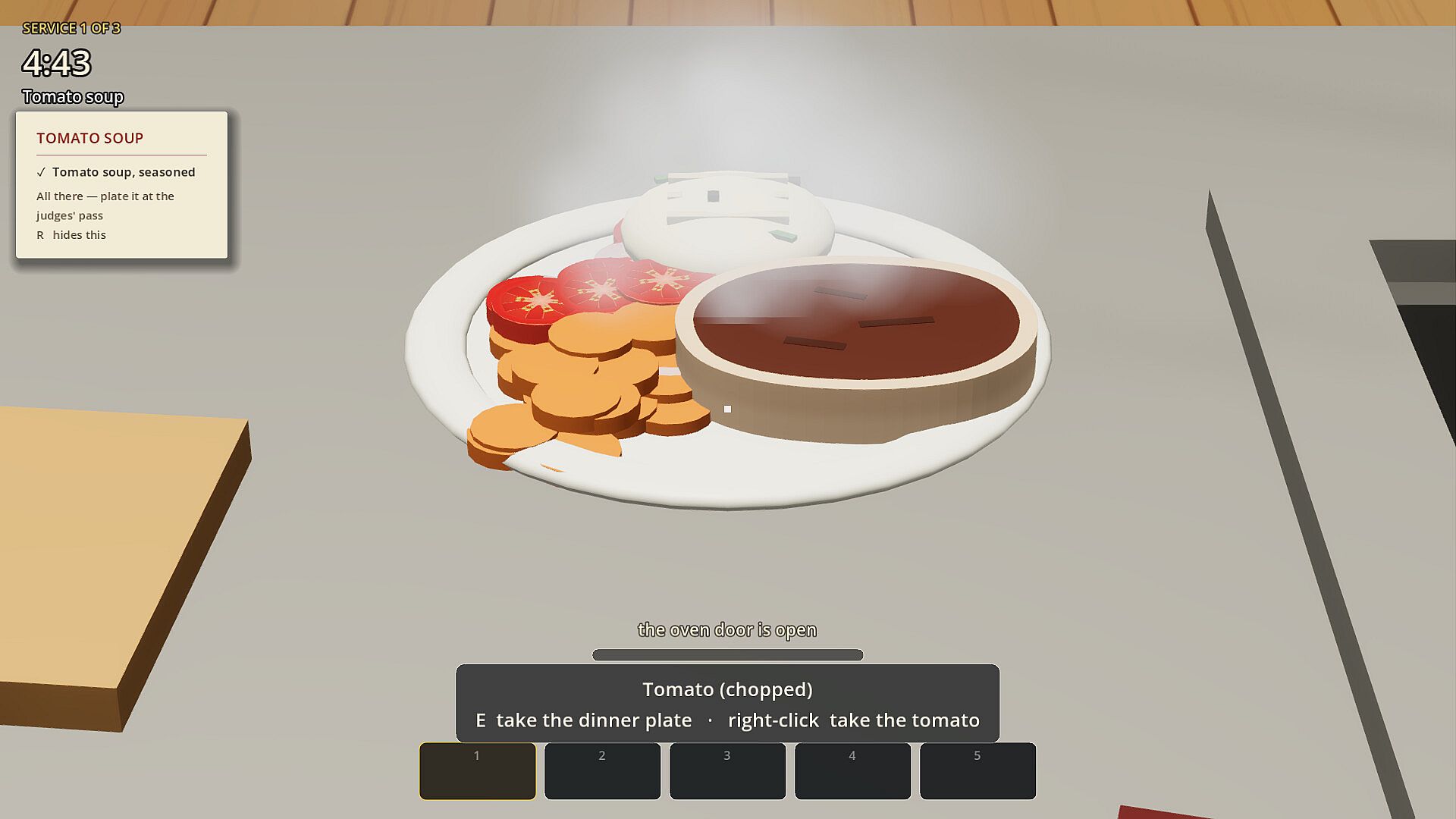
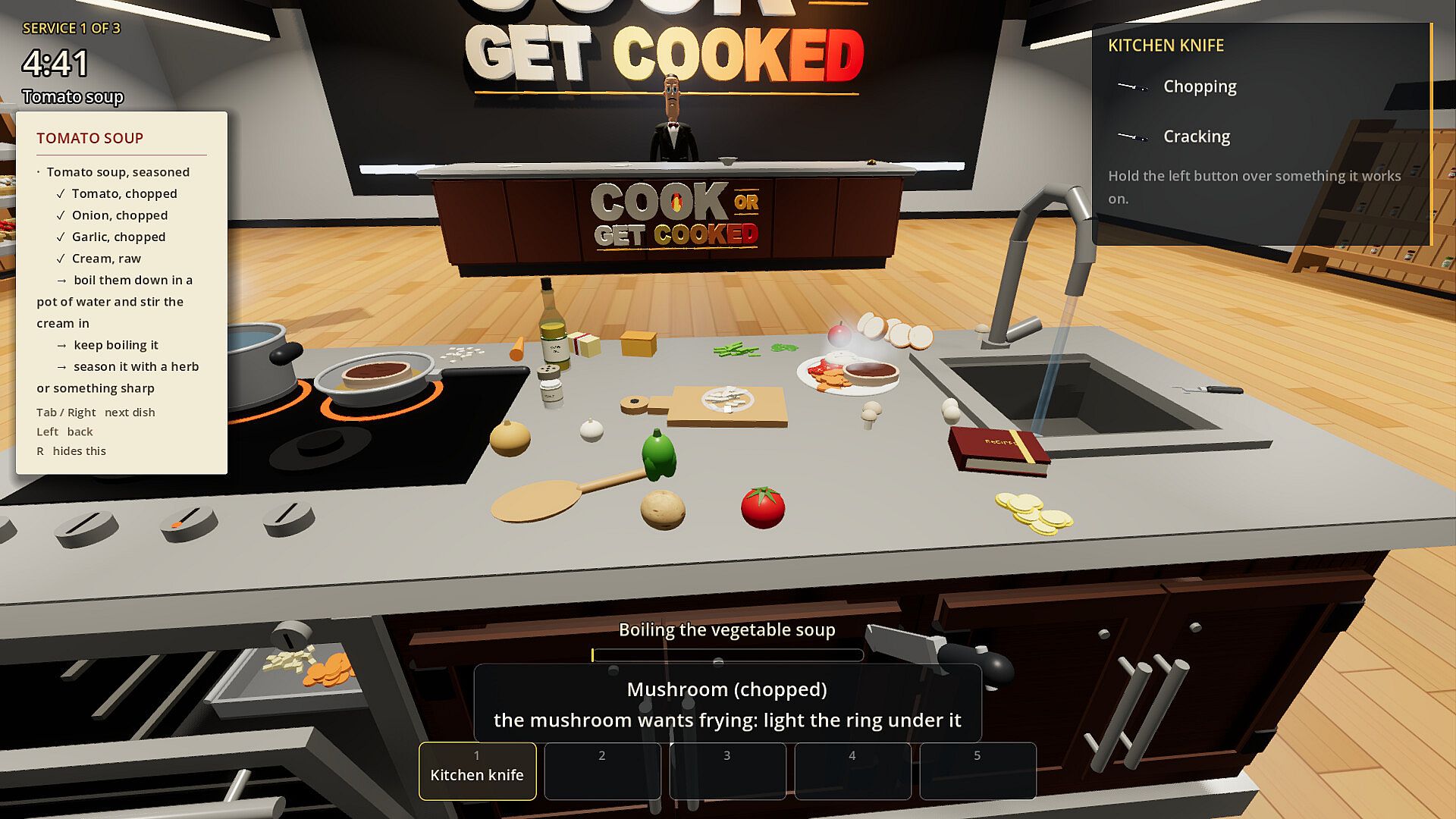
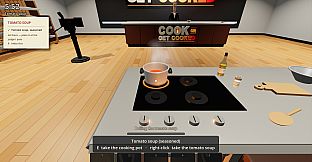
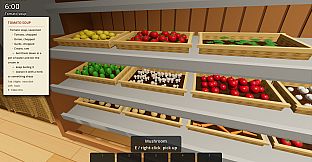
The core loop centers on four distinct phases performed in first-person view. Fetching requires navigating six storerooms while carrying up to five items at once. Preparation involves washing, peeling, and chopping, with the knife held down to cut at a steady automatic rate. Cooking uses four stovetop rings, an oven, a tap for water, and a bin for discarding errors. Plating is fully manual, as the player arranges the finished food on the plate before serving.
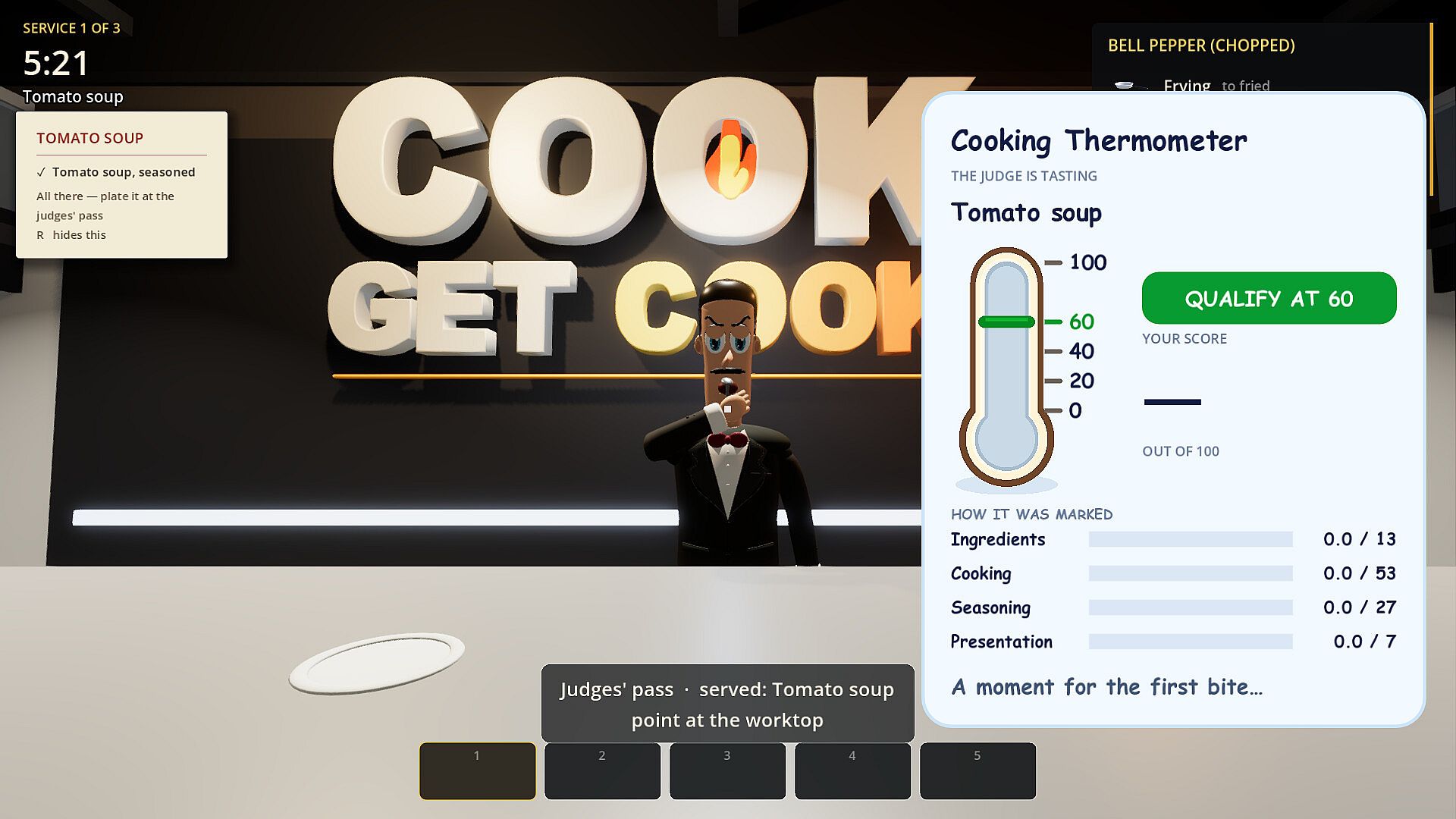
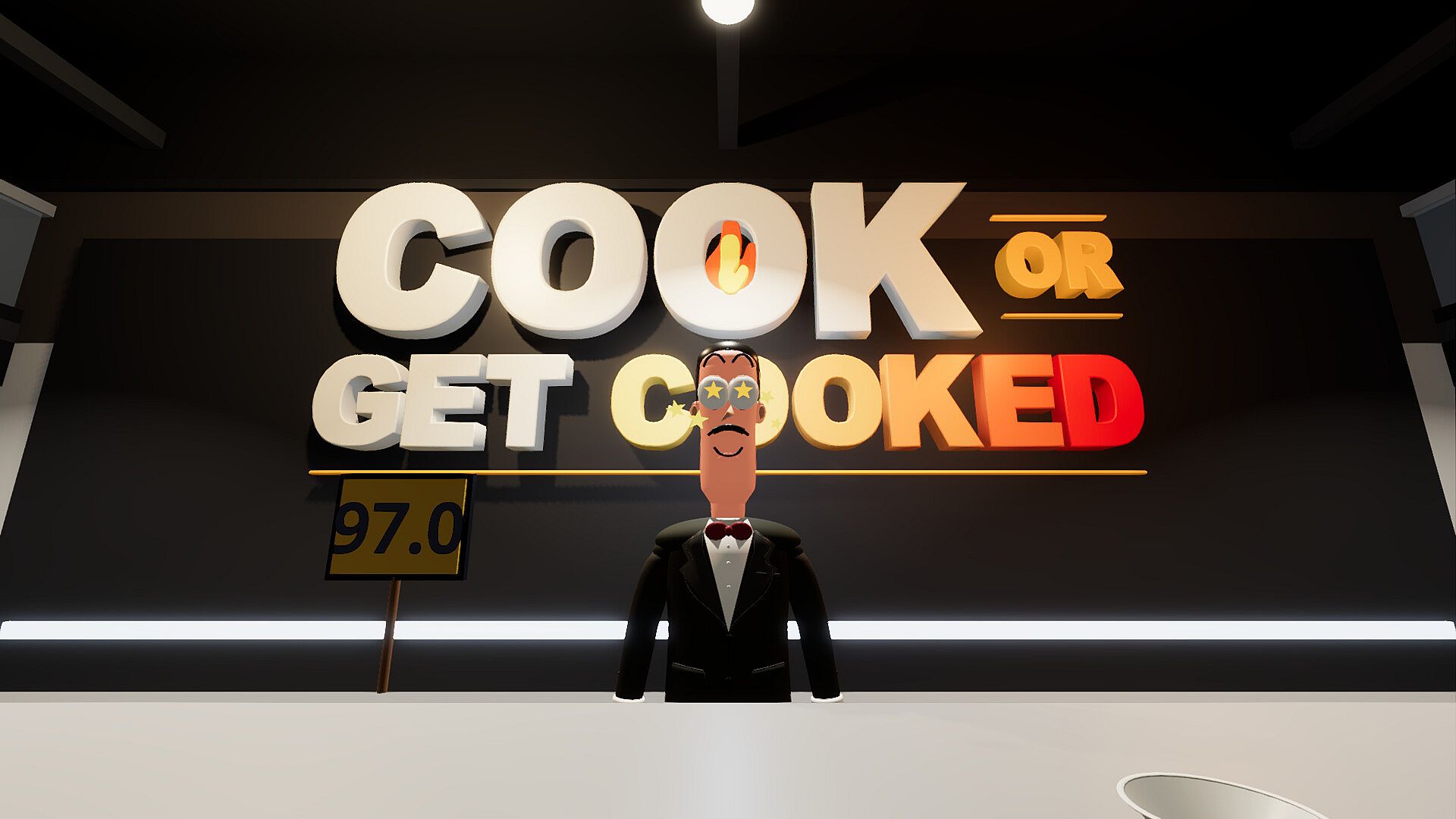
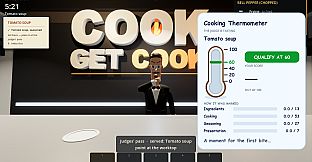
Every ingredient follows a precise sequence of states. A steak browns independently on each side, for example, and timing must align across multiple components. Mistakes carry direct consequences: dropped items reach the judge anyway, bland food prompts the judge to add salt himself, excess chili causes a fiery reaction, and toxic results produce a headstone behind the counter. Scoring breaks down into four categories: ingredients, cooking, seasoning, and presentation, each contributing to the final mark out of one hundred. Fifteen distinct judge reactions appear across different outcomes.
Game Modes
The game runs entirely as a single-player contest. Entry requires three named dishes to qualify for the show. Subsequent rounds introduce shifting constraints that alter how players source and prepare food. Some rounds supply ingredients directly. Others close the pantry entirely, forcing use of whatever sits on the bench. Later rounds allow eliminated competitors to select premium items first. These variations keep each of the eight rounds distinct while maintaining the same core service and judging loop.
Is It Worth Playing?
The game targets players who enjoy detailed simulation mechanics and time-management pressure rather than open-ended creativity or multiplayer competition. Its single-player structure focuses on mastering consistent execution across changing constraints, with immediate visual and audio feedback from the judge providing clear performance signals. System requirements remain modest, supporting a wide range of PCs, and the title includes Steam achievements for those who track completion milestones. Because the game has not yet released, player reception data remains unavailable. Those drawn to precise cooking simulations with a tournament elimination twist may find the described systems rewarding once it launches on November 5, 2026.