








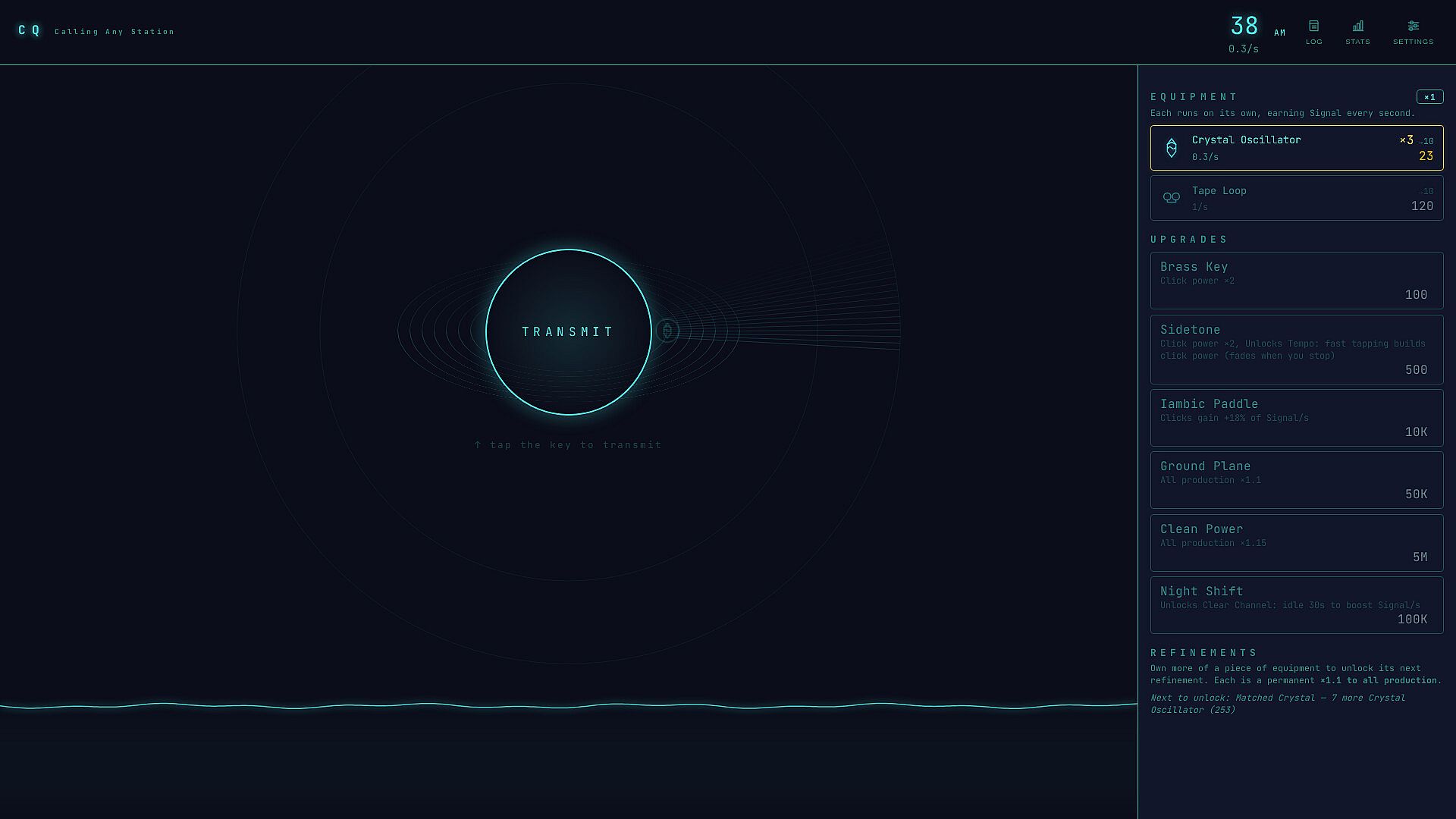
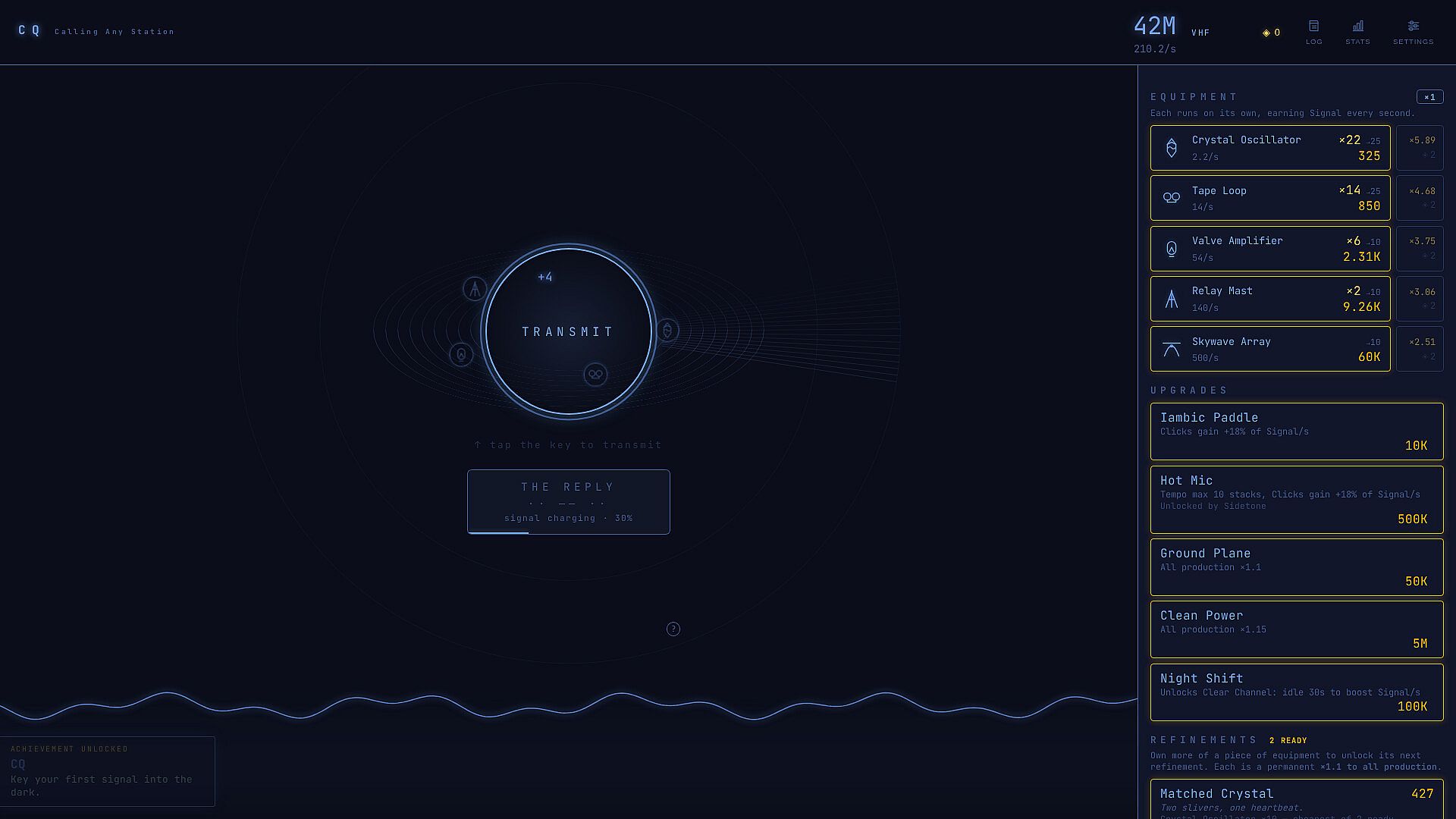

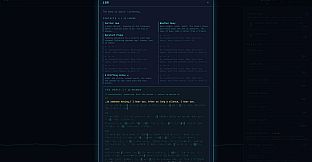
CQ: Calling Any Station est un jeu de simulation casual indépendant qui propose une expérience idle et incrémentale centrée sur l'opération radio dans un univers silencieux. Le joueur incarne un opérateur solitaire qui émet dans le vide, améliore son matériel et consigne ses contacts tout en alternant entre clics actifs et progression passive. L'attrait principal réside dans son atmosphère axée sur la mécanique radio, où chaque action contribue à construire une station capable d'atteindre des fréquences toujours plus lointaines.
Gameplay
La boucle de jeu repose sur deux approches complémentaires qui font progresser la station. Le mode actif consiste à transmettre à la main : chaque clic suit un rythme qui s'accumule au fil du temps, récompensant la précision et la constance. Le mode idle, via Clear Channel, permet à la station de continuer à fonctionner pendant les absences sans perte de progression.
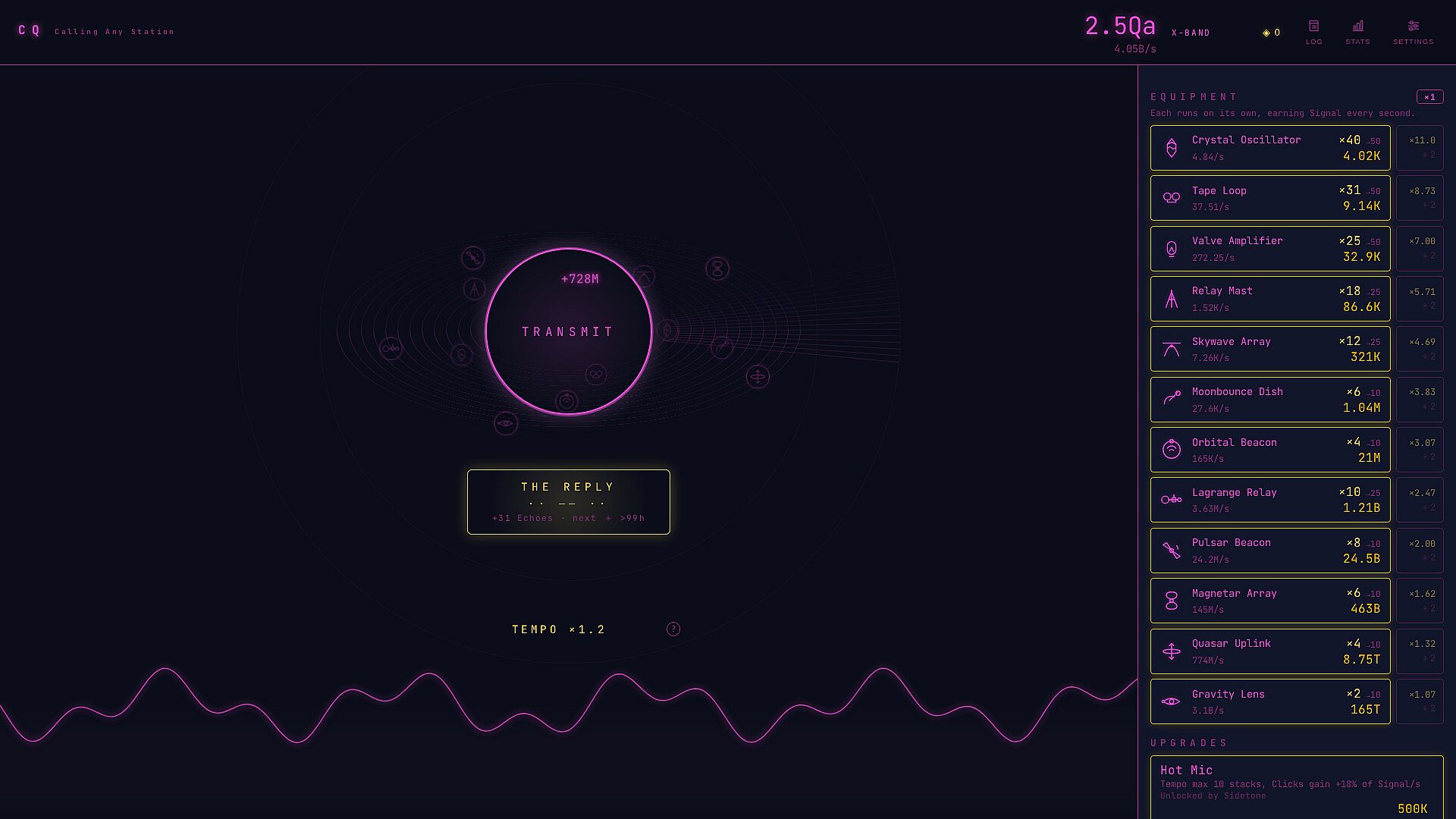
Le développement de la station commence avec des composants récupérés basiques, comme un oscillateur et un amplificateur à tubes. Les améliorations ouvrent la voie à des installations avancées, notamment un relais de Lagrange et un réseau de pulsars, jusqu'à des récepteurs capables de capter des signaux issus de la lumière déviée par la gravité. L'évolution de l'équipement influence directement la portée et la clarté des signaux sur les fréquences disponibles.
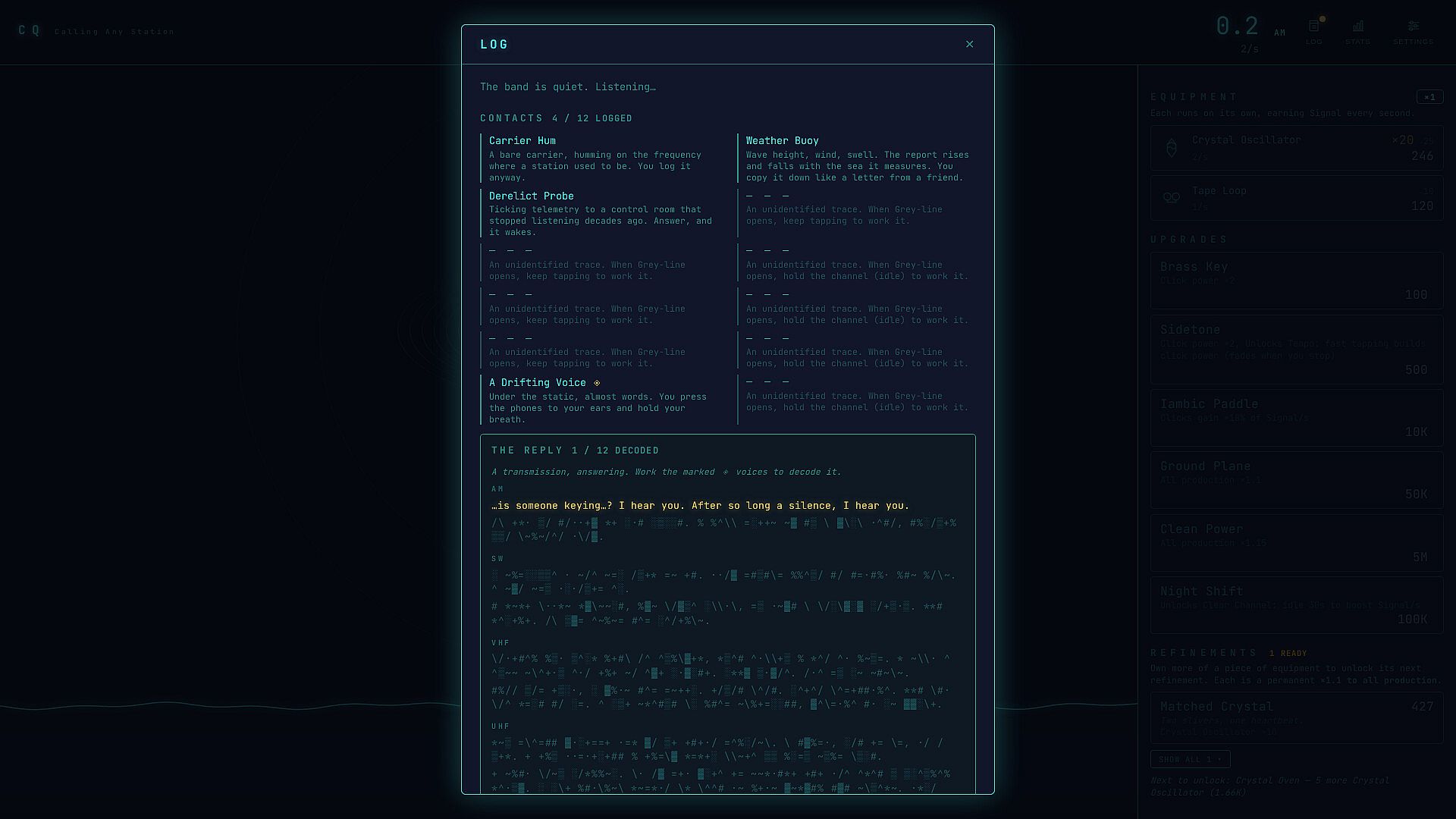
Le journal de bord centralise le suivi des contacts. Le joueur explore six bandes distinctes, de l'AM saturé de parasites jusqu'à la limite de la bande X. Chaque entrée nécessite accord et persévérance ; les stations les plus éloignées ne deviennent accessibles qu'après des améliorations suffisantes. La génération procédurale gère l'ensemble des formes d'onde, des tonalités et des lueurs visuelles, créant une expérience audio-visuelle cohérente, pensée comme un instrument plutôt que comme un assemblage d'échantillons.
Game Modes
CQ Field Day fonctionne comme un mode concours sur une bande ouverte. Le joueur annonce l'événement et gère un afflux d'appels entrants avant la fermeture de la fenêtre, en visant un record personnel qui persiste entre les resets. Ce mode met l'accent sur la réactivité et l'efficacité de la consignation sous contrainte de temps.
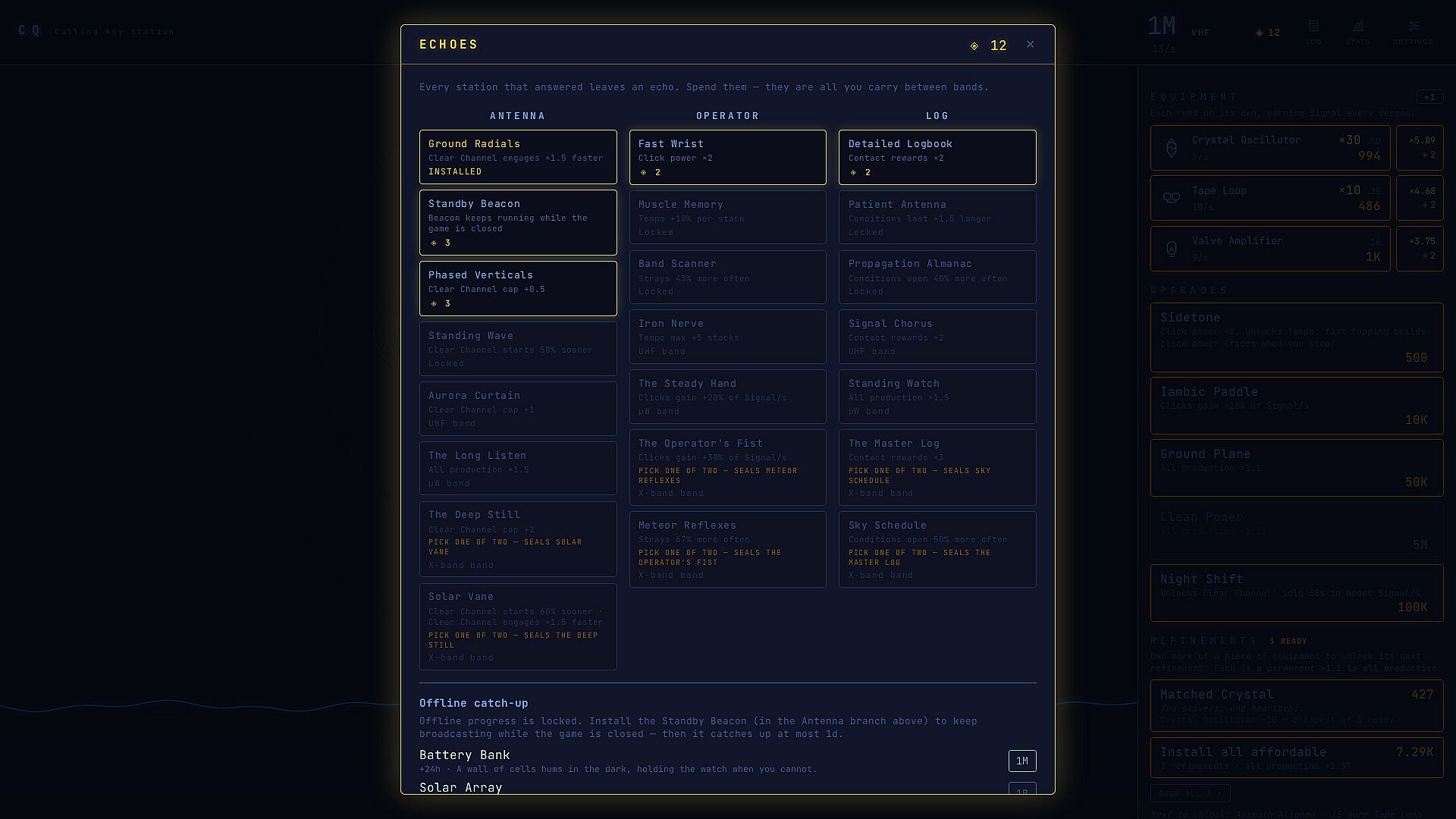
Les resets introduisent les Echoes, une ressource obtenue à chaque fin de cycle. Ces points financent trois axes de développement : Antenna pour la puissance et la portée du signal, Operator pour la vitesse et la précision de manipulation, et Log pour l'efficacité des contacts et la découverte. Les choix effectués dans ces branches orientent les sessions suivantes et encouragent les rejouées avec des priorités différentes.
The Reply se déploie comme un fil narratif en six chapitres. Des fragments d'une transmission entrante apparaissent progressivement et nécessitent un décodage lié aux capacités de la station. Cet élément ajoute une dimension de découverte qui progresse en parallèle de l'amélioration du matériel et de l'exploration des bandes.
Progression and Customization
Les resets constituent le système principal de progression. L'accumulation d'Echoes permet des améliorations permanentes qui subsistent d'un cycle à l'autre, transformant chaque run en base pour des explorations plus poussées. Le gilding des pièces favorites conserve des éléments précoces, comme l'antenne initiale, afin qu'ils restent utiles même aux stades avancés du jeu.
La gestion des bandes couvre l'ensemble du spectre ; chacune des six bandes propose des défis spécifiques en matière de clarté du signal et d'opportunités de contact. La progression, du bruit parasite de l'AM aux fréquences extrêmes et silencieuses de la bande X, reflète l'évolution technique de la station et maintient l'intérêt des choix de réglage tout au long de la partie.
Is It Worth Playing?
Ce titre s'adresse aux joueurs qui apprécient les jeux idle incrémentaux dotés d'un fort ancrage thématique dans la simulation et l'atmosphère. Les systèmes actif et idle offrent une flexibilité adaptée à différents rythmes de jeu, tandis que l'absence de publicités et de microtransactions concentre l'expérience sur la fantasy de l'opérateur radio. L'audio et les visuels procéduraux renforcent une cohérence qui récompense l'engagement sur le long terme, à travers les resets répétés et l'expérimentation des différentes branches. Ceux qui recherchent une simulation casual à la profondeur incrémentale et au ton calme et contemplatif trouveront des mécaniques en parfaite adéquation avec le concept d'émettre dans l'inconnu.












